world-business

Market turmoil has many afraid to check retirement savings
Michael Montgomery once checked his retirement account weekly with a sense of satisfaction. But recently, to avoid the stress and doubt about whether he can still retire soon, he’s taken a different approach.
“I’m not looking,” says the 66-year-old professor from Huntington Woods, Michigan.
As the White House fuels market uncertainty through its trade war while downplaying the risk of a recession, many retired and soon-to-retire Americans are growing uneasy—concerned about outliving their savings or delaying long-awaited bucket list plans.
Keeping logged off his account has made Montgomery’s days less worrisome. He and his wife adjusted their portfolio after Election Day, including moving more money into bonds. But he’s not sure what more he can do if the entire world economy can be affected by Washington’s decisions.
10 Best Free Online Courses to Become a Copywriter in 2025
“I hope like hell I don’t lose all my retirement savings,” he says. “But where else could you put the money that these people could not disorder? They can’t get into your mattress but that’s about it.”
Many experts warned U.S. stocks were overpriced and due for a correction even before President Donald Trump reclaimed the Oval Office. But a historic blanket of tariffs have injected new uncertainty into the market.
Though stocks rallied this week, the S&P 500 is down 10% from an all-time high reached in February. Losses in the Nasdaq and among small-cap stocks are steeper. Even bonds and the U.S. dollar have been volatile. Many economists are warning of a possible recession.
It has 71-year-old Jeanne Oats Estridge feeling so “paranoid” she called her financial planner with an idea.
“How about we put it all in cash?” Oats Estridge asked.
“I just don’t advise it,” she heard back.
Earlier this month, the Cboe Volatility Index, considered a “fear gauge” of investor pessimism, reached its highest level in five years. The index, known as VIX, has since retreated but is still in territory reflecting fearful investors. Another measure of market sentiment, the Cboe S&P 500 Left Tail Volatility Index, which tracks investor worry about so-called “black swan” events such as the 2008 housing crash that spurred the Great Recession, likewise has backed off from highs but remains elevated.
Trump has urged people to “be cool” in assessing the impact of tariffs on their investments. Asked about his own savings earlier this month, he chuckled and replied: “I haven’t checked my 401(k).”
Treasury Secretary Scott Bessent, meantime, brushed off the possibility that some might need to delay retiring, saying people “don’t look at the day-to-day fluctuations of what’s happening.”
That seeming nonchalance isn’t sitting well with some older investors.
Peter Rost, 72, retired from his software development job last year and planned to start tapping his retirement savings to supplement Social Security. But he doesn’t want to bake in his losses.
“I’m looking to take $2,000 and meanwhile the account drops by $30,000,” he says.
He’s been through serious downturns before, but those were different.
“I had the time to be patient and let it work its way back,” says Rost, who lives in New Hartford, Connecticut, “but now I’m retired and I need money from that account.”
At his age, he says, there’s one goal: “Make sure I don’t run out of money before I die.”
Americans’ retirement savings totaled about $44 trillion at the end of 2024, according to the Investment Company Institute. The composition of those savings has shifted increasingly toward stocks in the last couple decades as the 401(k) has become employers’ typical offering.
Among fund giant Vanguard’s nearly 5 million accounts, for example, the average investor puts three-quarters of their savings in stocks. Even older investors are still heavily steeped in equities: People 55 to 64 have 64% in stocks at Vanguard; those 65 and older have 49% in stocks.
With that exposure, financial advisers are getting an influx of calls amid the recent market uncertainty.
Paul Duesterhaus, a 68-year-old retiree from Quincy, Illinois, is passing up an IRA withdrawal this year to avoid selling at a low. Instead, the retired manager at an air compressor manufacturing company will put off buying a new car as planned and cut back on things like eating out.
Still, he can’t help but feel bigger impacts of a trade war are ahead.
“I think there’s going to be longer lasting effects that are going to affect every American,” he says.
That angst is more common among older adults than younger people. An April poll by The Associated Press-NORC Center for Public Affairs Research found just under half of U.S. adults ages 45 and older said their retirement savings are a “major” source of stress for them right now, compared to about one-third of younger people. Older Americans were also more likely to say they’re stressed about the stock market.
1 year ago
Asian shares soar after Wall Street rallies into a 3rd day
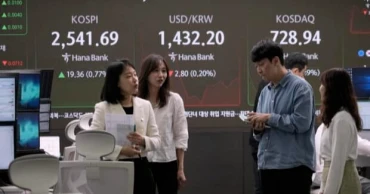
Asian stock markets climbed in early trading on Friday, following a third consecutive day of gains on Wall Street, fueled by optimism that the Federal Reserve may move to cut interest rates.
Japan's Nikkei 225 jumped 1.9% to reach 35,701.38, while South Korea's Kospi advanced 1% to 2,547.39. In Hong Kong, the Hang Seng Index rose 1.4% to 22,226.19. Meanwhile, China’s Shanghai Composite Index was mostly flat, hovering at 3,297.36.
Investor sentiment was lifted by speculation that former President Donald Trump may be easing his stance on tariffs and taking a softer tone toward the Federal Reserve. However, Beijing pushed back on Thursday, stating that China is not currently engaged in active trade talks with the U.S.
Elsewhere in the region, Taiwan’s Taiex saw a strong gain of 2.3%, while markets in Australia remained closed in observance of Anzac Day.
Growth slows for South Asia, Bangladesh hit too: WB
Wall Street’s rally kept rolling Thursday as better-than-expected profits for U.S. companies piled up in reports mainly from tech companies like ServiceNow and Texas Instruments, offsetting the uncertainties in the retail sector.
Federal Reserve officials boosted expectations for interest rate cuts as they said that they would slash the rate as early as June if Trump’s tariffs hurt the U.S. economy and job market.
The S&P 500 charged 2% higher to 5,484.77 and pulled within 11% of its record set earlier this year. The Dow Jones Industrial Average rose 1.2% to 40,093.40, while the Nasdaq composite jumped 2.7% to 17,166.04.
In other moves early Friday, U.S. benchmark crude oil gained 13 cents to $62.92 per barrel in electronic trading on the New York Mercantile Exchange.
Brent crude, the international standard, added 22 cents to $66.77 per barrel.
The U.S dollar rose to 142.96 Japanese yen from 142.69 yen. The euro edged lower, to $1.1349 from $1.1391.
1 year ago

Growth slows for South Asia, Bangladesh hit too: WB
Amid mounting global economic uncertainties, South Asia's growth outlook is showing signs of strain, with Bangladesh no exception, according to the latest assessment by the World Bank.
The multilateral lender has warned that the region’s economic momentum is losing steam due to a confluence of external shocks, tightening financial conditions, and domestic vulnerabilities, casting a shadow over near-term development prospects.
Bessent criticises IMF, World Bank; sees ‘big deal’ opportunity with China
A significant decrease in export growth and low investment have contributed to economic slowdown in Bangladesh in FY24, but growth is expected to rebound in the medium term, says the World Bank in its twice-yearly update, released on Thursday.
The latest Bangladesh Development Update highlights the recent economic developments and outlook for the medium term, with a special focus on financial sector stability.
After a fall in real GDP growth to 4.2 percent in FY24 from 5.8 percent in FY23, economic activity slowed further in FY25.
The economy continues to face significant challenges, including investment moderation, elevated inflation and vulnerabilities within the financial sector.
Meanwhile, external sector pressures have apparently eased, with robust growth in remittance inflows and exports bolstering the current account balance in FY25.
Reforms in key sectors could create millions of jobs in Bangladesh: World Bank
Real GDP growth is projected to further moderate to 3.3 percent in FY25 due to declining private and public investment.
Political uncertainty and rising costs associated with borrowing and inputs are expected to constrain private investment growth and keep industrial growth subdued. Public investment will decline as the government reduces capital expenditure in FY25.
The fiscal deficit is expected to remain under 5 percent of GDP in the medium term, with capital expenditure increasing only gradually. Inflation is likely to remain elevated in the near term.
World Bank’s Vice President for South Asia Martin Raiser said multiple shocks over the past decade have left South Asian countries with limited buffers to withstand an increasingly challenging global environment.
“The region needs targeted reforms to strengthen economic resilience and unlock faster growth and job creation. Now is the time to open to trade, modernize agricultural sectors, and boost private sector dynamism.”
World Bank Interim Country Director for Bangladesh Gayle Martin mentioned that the country will need bold and urgent reforms to bolster the financial sector, facilitate trade and enhance domestic revenue mobilization.
Real GDP is expected to rise gradually in the medium term, if backed by critical reforms.
Inflation is expected to gradually subside in the medium term on the back of tight monetary policy, fiscal consolidation and easing import restrictions on key food commodities. Rising trade uncertainties are expected to put pressure on the external sector.
World Bank’s Senior Economist Dhruv Sharma, who is also the co-author of the report, said the risks to the outlook are on the downside as uncertainties related to trade, persistent inflationary pressure, weak demand in Bangladesh's major export markets and intensifying financial sector vulnerabilities could weigh on growth.
The Bangladesh Development Update is a companion piece to the South Asia Development Update, a twice-a-year World Bank report that examines economic developments and prospects in the South Asia region and analyses policy challenges countries are facing.
The April 2025 edition, Taxing Times, projects regional growth to slow to 5.8 percent in 2025—0.4 percentage points below October projections—before ticking up to 6.1 percent in 2026.
This outlook is subject to heightened risks, including from a highly uncertain global landscape, combined with domestic vulnerabilities including constrained fiscal space.
It includes a special chapter analysing the state of domestic resource mobilization in the region. Despite often higher tax rates, the region's tax revenues remain below the average for emerging markets and developing economies.
The report outlines how countries can address inefficiencies in tax policy and administration to increase revenues so that they can enhance resilience amid an increasingly challenging global economic environment.
1 year ago
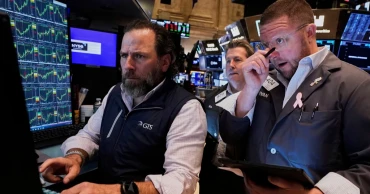
Asia shares trade mixed as uncertainty persists over Trump's tariff plans
Asian shares traded mixed Thursday, as worries crept back following a Wall Street rally that came after President Donald Trump appeared to back off his criticism of the Federal Reserve and his tough talk in his trade war.
Japan's benchmark Nikkei 225 added 0.6% in afternoon trading to 35,075.72. Australia's S&P/ASX 200 rose 0.8% to 7,983.00. South Korea's Kospi lost 0.3% to 2,517.83. Hong Kong's Hang Seng declined 1.2% to 21,805.29, while the Shanghai Composite fell 0.1% to 21,805.29.
Calling Trump's policy announcements “headline turbulence,” Tan Jing Yi of the Asia & Oceania Treasury Department at Mizuho Bank warned that global economies could be hurt in the long run, adding, “Sentiments swing from hopes of intense relief to inflicted economic gloom.”
On Wall Street, the S&P 500 climbed 1.7% and added to its big gain from Tuesday that more than made up for a steep loss on Monday. The Dow Jones Industrial Average rose 419 points, or 1.1%, and the Nasdaq composite gained 2.5%.
Swiss company Roche announces $50b investment in US over next 5yrs
Much of the recent market volatility is because of uncertainty about what Trump will do with his economic policies. Adding to some relief was Trump saying late Tuesday that he has “no intention” to fire the head of the Federal Reserve.
Trump’s tough talk had frightened investors because the Fed is supposed to act independently, without pressure from politicians, so that it can make decisions that may be painful in the short term but are best for the long term.
While a cut to interest rates by the Fed could give the economy a boost, it could also put upward pressure on inflation. Trump also said US tariffs on imports coming from China could come down “substantially” from the current 145%.
“It won’t be that high, not going to be that high,” he said.
Investors are hoping Trump would lower his tariffs after negotiating trade deals with other countries. Trump said this week that he would be “very nice” to the world’s second-largest economy and not play hardball with Chinese President Xi Jinping.
“There is an opportunity for a big deal here,” US Treasury Secretary Scott Bessent said Wednesday.
1 year ago
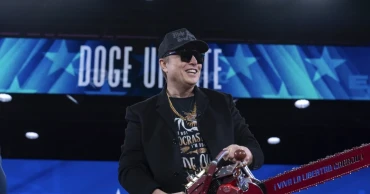
Musk damaged Tesla’s brand in just a few months. Fixing it will likely take longer
Elon Musk, often hailed as a “Moonshot Master,” the “Edison of Our Age,” and the “Architect of the Future,” is facing a serious challenge — and this time, it’s coming from within his flagship company, Tesla. The issue? A tarnished brand image that’s proving difficult to repair.
Tesla’s sales have taken a sharp downturn amid growing backlash and boycotts tied to Musk’s alignment with far-right political views. The fallout has been steep — profits have dropped by two-thirds so far this year — while competitors from China, Europe, and the U.S. are aggressively moving in to capture market share.
On Tuesday, Musk tried to reassure investors during Tesla’s earnings call, announcing that he would cut back his involvement in cost-cutting efforts in Washington to just “a day or two per week,” allowing him to refocus on leading Tesla.
Musk to scale back role in Doge amid Tesla profit slump
The market responded positively, with Tesla shares rising 5% on Wednesday. Still, the road ahead remains uncertain, with plenty of obstacles left to navigate.
Who wants a Tesla?
Musk seemed to downplay the role that brand damage played in the drop in first-quarter sales on the investor call. Instead, he emphasized something more fleeting — an upgrade to Tesla’s best-selling Model Y that forced a shutdown of factories and pinched both supply and demand.
While financial analysts following the company have noted that potential buyers probably held back while waiting for the upgrade, hurting results, even the most bullish among them say the brand damage is real, and more worrisome.
“This is a full blown crisis,” said Wedbush Securities’ normally upbeat Dan Ives earlier this month. In a note to its clients, JP Morgan warned of “unprecedented brand damage.”
Musk’s take on the protests
Musk dismissed the protests against Tesla on the call as the work of people angry at his leadership of the Department of Government Efficiency because “those who are receiving the waste and fraud wish it to continue.”
But the protests in Europe, thousands of miles from Washington, came after Musk supported far-right politicians there. Angry Europeans hung Musk in effigy in Milan, projected an image of him doing a straight-arm salute on a Tesla factory in Berlin and put up posters in London urging people not to buy “Swasticars” from him.
Sales in Europe have gone into a free fall in the first three months of this year — down 39%. In Germany, sales plunged 62%.
Another worrying sign: On Tuesday, Tesla backed off its earlier promise that sales would recover this year after dropping in 2024 for the first time a dozen years. Tesla said the global trade situation was too uncertain and declined to repeat the forecast.
Here come the rivals
Meanwhile, Tesla’s competition is stealing its customers.
Among its fiercest rivals now is Chinese giant BYD. Earlier this year, the EV maker announced it had developed an electric battery that can charge within minutes. And Tesla’s European rivals have begun offering new models with advanced technology that is making them real Tesla alternatives just as popular opinion has turned against Musk.
Tesla’s share of the EV market in the U.S. has dropped from two-thirds to less than half, according to Cox Automotive.
Pinning hopes on cybercabs
Another rival, Google parent Alphabet, is already ahead of Tesla in an area that Musk has promised will help remake his company: Cybercabs.
One of the highlights of Tesla’s call Tuesday was Musk sticking with his previous prediction that it will l aunch driverless cabs without steering wheels and pedals in Austin, Texas, in June, and in other cities soon after.
But Google’s service, called Waymo, already has logged millions of driverless cybercab trips in San Francisco, Phoenix, Los Angeles, and Austin as part of a partnership with ride-hailing leader Uber.
A driverless future for Tesla owners?
Musk also told analysts that this driverless capability will be available on the Tesla vehicles already on the road through software updates over the air, and put a timeline on it: “There will be millions of Teslas operating autonomously in the second half of the year.”
But he has made similar promises before, only to miss his deadlines, such as in April 2019 when he vowed full automation by the end of the next year. He repeated the prediction, moving up the date, several more times, in following years.
A big problem is federal investigators have not given the all-clear that Tesla vehicles can drive completely on their own safely. Among other probes, safety regulators are looking into Tesla’s so-called Full Self-Driving, which is only partial self-driving, for its tie to accidents in low-visibility conditions like when there is sun glare.
On the positive side
In competition with rivals in the U.S., Tesla currently has one clear advantage: It will get hurt by less by tariffs because most of its vehicles are built in the countries where they are sold, including those in its biggest market, the U.S.
“Tariffs are still tough on a company where margins are still low, but we do have localized supply chains,” Musk said Tuesday. “That puts us in a strong position.”
The company also reconfirmed that a cheaper version of its best-selling vehicle, the Model Y sport utility vehicle, will be ready for customers in the first half of this year. That could help boost sales.
Another plus: The company had a blow out first quarter in its energy storage business. And Musk has promised to be producing 5,000 Optimus robots, another Tesla business, by the end of the year.
Pricey stock
Even after falling nearly 50% from its December highs, Tesla’s stock is still very richly valued based on the one yardstick that really matters in the long run: its earnings.
At 110 times its expected per share earnings this year, the stock is valued more than 25 times higher than General Motors. The average stock on in the S&P 500 index trades at less than 20 times earnings.
That leaves Tesla little margin for error if something goes wrong.
1 year ago
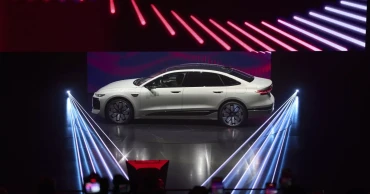
EVs in the spotlight as China claims a leading global role at Shanghai's auto show
Leading automakers will be showcasing their latest designed-for-China models at the Shanghai auto show this week, struggling not to be edged aside in the world’s largest car market while watching for U.S. President Donald Trump’s next steps in his trade war.
Some industry experts view this year's show in the sprawling industrial outskirts of Shanghai as a tipping point. Three decades after Beijing set out to build a world-class auto industry, local manufacturers account for about two-thirds of sales inside China, and a growing share of global exports.
The exhibition opens to the public on Thursday and runs until May 2.
Electrics gaining ground
Encouraged by government subsidies for scrapping older cars for the latest models, Chinese drivers have embraced the switch to electrics, with sales of battery powered and hybrid vehicles jumping 40% last year.
A total of 31.4 million vehicles including buses and trucks were sold last year in the world’s biggest market by sales, up 4.5% compared to a year earlier, the China Association of Automobile Manufacturers reported.
Growth in sales of EVs was offset by falling sales of traditional gasoline and diesel-powered vehicles, which still accounted for just over half of new car sales.
China cautions nations against trade deals with US that could harm Beijing
Chinese electric vehicle maker BYD nudged past Tesla as the world’s biggest maker of EVs by sales last year, reporting revenue of over $100 billion. It recently announced an ultra fast EV charging system that it says can provide a full charge for its latest EVs within five to eight minutes, about the time needed to fill up at the pump. It plans to build more than 4,000 of the new charging stations across China.
Survival of the fittest
To gain access to China's potentially huge market, foreign automakers like Volkswagen, General Motors, BMW and Ford set up joint ventures with state-owned local companies beginning in the 1980s and 90s, helping them build the capacity and technology to compete on a world scale.
They also created sprawling supply chains in Shanghai and other major manufacturing hubs, helping to nurture other big names in Chinese automaking, such as BYD, Geely and Great Wall Motors.
Facing brutal competition at home, Chinese automakers are expanding rapidly into many world markets, winning market share with relatively affordable sedans, SUVs and pickup trucks.
Shanghai’s auto show is a gathering for the “survival of the fittest,” Zhou Lijun, director and chief researcher of the industry analysis group Yiche Research Institute, said. It’s also a turning point in that local automakers have switched from a supporting role to being the real protagonists on the world stage, he said.
That doesn't mean all the EV makers go it alone. BYD teamed up with Daimler, now the Mercedes-Benz Group, to launch its Denza premium brand, featured on billboards in Southeast Asian capitals like Bangkok.
Tariffs and other challenges
Opening markets wider to foreign competition has given car buyers a choice of more affordable, innovative vehicles. But that has been a mixed blessing for older automakers like GM, Ford, Toyota and VW that now face fiercer competition both at home and abroad.
Trump doubled down on tariffs on Chinese goods, raising them to up to 145%. His recent announcement of a 90-day pause temporarily spared many other countries including Japan from 24% across-the-board tariffs. But a 10% baseline tariff and a 25% tax on imported cars, auto parts, steel and aluminum exports remains in place.
Higher U.S. and European tariffs on foreign-made EVs are prompting Chinese newcomers to shift production closer to those markets as more Western consumers opt for the latest Chinese models.
Not that long ago, Japanese automakers were doing the same, as they fought trade friction with the United States over their own exports. Now, Toyota, Honda and Nissan employ hundreds of thousands of U.S. workers at their U.S. factories.
Xi Jinping highlights China-Cambodia role in global south, urges multilateral cooperation
“The trade war between China and the United States has blocked direct exports from China to the United States, but it hasn't blocked local production there or the establishment of global production bases in Europe or elsewhere," Zhou said.
But as Trump's 25% tariffs on foreign-made vehicles shows, other factors may slow that expansion.
A report by the Rhodium Group shows that nearly half the world's markets are restricting imports from China, in part because of national security concerns linked to the advanced electronics in EVs and other high-tech vehicles. About 12% of the global market is relatively open, including countries like Australia and South Africa, and Russia is a major market but is nearly saturated, it says.
The road ahead
Chinese automakers lag behind global leaders like Toyota in conventional gasoline and diesel fueled vehicles, but they can sell EVs at roughly the same price, while also solving the problems of range and fast charging.
China has become part of what geopolitical analyst Yanmei Xie described, in a commentary in the Japanese financial publication Nikkei Asia, as a “technological paradigm shift.” Automakers in China are going electric not just because of the green transition, but as a route to “technological and industrial dominance,” she wrote.
EV makers in China have benefited from not having huge legacy operations that have to make the transition, Stefan Sielaff, vice president of global design for EV maker Zeekr Group, part of Geely's stable of brands. Founded in 2021, it's selling cars in more than 80 markets including in Europe.
“Therefore they can immediately react to market demand, to customer demand, and can deliver very, very fast,” he said. "We have done most of these cars in two years. From 0 to 100 in two years.
1 year ago

Swiss company Roche announces $50b investment in US over next 5yrs
Swiss pharmaceuticals powerhouse Roche announced Monday it plans to invest $50 billion in the United States over the next five years, creating 12,000 jobs.
The Basel-based company, whose array of products includes cancer medicines and multiple sclerosis treatment Ocrevus, said the investment would go toward high-tech research and development sites and new manufacturing facilities in places including California, Indiana, Massachusetts and Pennsylvania, reports AP.
The announcement comes as US President Donald Trump has urged foreign businesses to invest more in the United States, and announced sweeping tariffs earlier this month on imports as part of hopes to reduce a large US trade deficit when it comes to sales of goods.
Before the Trump administration backed off its most stringent tariff plans, products imported from Switzerland had been set to face tariffs of 31% — more than the 20% tariffs on goods from the European Union. Switzerland is not a member of the 27-country bloc but is virtually surrounded by four EU countries.
Trump's sweeping “Liberation Day” tariffs on April 2 set off turmoil in world stock markets. A week later, Trump spoke by phone with Swiss President Karin Keller-Sutter in a conversation that her office said focused on tariffs. She emphasized the “important role of Swiss companies and investments in the United States.”
Hours later, the US president announced the U-turn that paused the steep new tariffs on about 60 countries for 90 days, fanning speculation — which was not confirmed — in some Swiss media that her chat with Trump might have played a role in the change of course.
Asian shares trade mixed amid investor worries after Wall Street tumble
Roche, in its statement, said that once the new, expanded manufacturing comes on line, the company “will export more medicines from the US than it imports” — though it made no mention of tariffs.
"Today’s announced investments underscore our longstanding commitment to research, development and manufacturing in the US,” said Roche CEO Thomas Schinecker in a statement.
The company — like cross-town competitor Novartis — has deep ties to the US market and said it currently employs 25,000 people and operates 15 R&D centres and 13 manufacturing sites in the United States.
The planned investment will add 1,000 jobs at Roche in the US and “more than 11,000 in support of new US manufacturing capabilities,” it said, which will increase its footprint in the United States to 24 sites in eight states.
Roche tallied more than 60 billion Swiss francs (about $74 billion) in worldwide sales last year, and nearly 25 billion francs of sales in its key pharmaceuticals division alone came in the United States.
Roche’s share price has fallen by about 18% over the past month, with most of the drop coming after the US tariff announcement on April 2.
1 year ago

Asian shares trade mixed amid investor worries after Wall Street tumble
Asian shares were trading mixed amid global skepticism about U.S. investments and President Donald Trump’s trade war.
Trading was cautious in Asia, where the benchmark Nikkei 225 lost 0.3% to 34,174.38. Australia's S&P/ASX 200 was virtually unchanged, inching up less than 0.1% to 7,820.20. South Korea's Kospi gained 0.2% to 2,493.19. Hong Kong's Hang Seng slipped less than 0.1% to 21,387.51, while the Shanghai Composite added 0.3% to 3,301.59.
On Wall Street the previous day, the S&P 500 sank 2.4% in another wipeout. That yanked the index that’s at the center of many 401(k) accounts 16% below a record set two months ago.
Asian shares sink, with Japan's Nikkei down 5.6% as China-US trade war escalates
The Dow Jones Industrial Average dropped 971 points, or 2.5%, while losses for Tesla and Nvidia helped drag the Nasdaq composite down 2.6%.
U.S. government bonds and the value of the U.S. dollar also sank as prices retreated across U.S. markets. That's an unusual and worrying move because Treasurys and the dollar have historically strengthened during episodes of nervousness. This time around, though, it’s policies directly from Washington that are causing the fear and potentially weakening their reputations as some of the world’s safest investments.
1 year ago

Asian markets are mixed as US tech companies are due to release earnings
Asian stock markets opened the week with mixed performances on Monday, as investors kept a close watch on upcoming U.S. tech earnings and ongoing concerns over President Donald Trump’s trade policies.
Several markets remained closed following the Easter weekend.
U.S. futures were in the red as major tech companies prepared to report earnings in a tense economic climate shaped by rising tariffs and global uncertainty.
“The damage to the U.S. brand is now undeniable,” said Stephen Innes of SPI Asset Management. “This isn’t something that will be quickly forgotten in the news cycle.”
Unconfirmed reports said China has stopped its imports of some U.S. farm products and liquefied natural gas to avoid paying steep tariffs it imposed in retaliation for Trump’s tariffs of up to 145% on imports of Chinese products.
U.S. President Donald Trump’s trade war remains a source of deep uncertainty. Economists worry his use of sharp tariff hikes could cause a recession if fully implemented and left in place for a while.
Tokyo’s Nikkei 225 index lost 1% to 34,368.42 in the absence of signs of significant progress toward a trade deal with Trump. Japanese automakers, in particular, are facing 25% tariffs on exports to the U.S. of autos and auto parts.
The Shanghai Composite index gained 0.3% to 3,244.44, while the Kospi in South Korea was nearly unchanged at 2,484.23.
Taiwan’s Taiex lost 1.2%.
Markets were closed in Hong Kong and Australia.
U.S. markets were shut on Friday and were mixed at Thursday’s close. The Dow industrials sank 1.3%, while the S&P 500 edged up 0.1%. The Nasdaq composite shed 0.1%.
Weekly Market Review: All indices, turnover, share prices drop sharply
Treasury yields rose early Monday.
Big Tech’s “Magnificent Seven” companies, a group consisting of Apple, Microsoft, Nvidia, Amazon, Tesla, Google parent Alphabet and Facebook parent Meta Platforms kick off earnings season this week. Since Trump’s inauguration, their combined market value had plunged by $3.8 trillion, or 22%, as of April 20.
Trump’s tariffs are wreaking havoc with supply chains in China and other key markets around the world.
Tesla, which makes its electric vehicles in Shanghai, is scheduled to release its full financial report Tuesday after already revealing that its first-quarter car sales dropped by 13% from the same time last year.
Also early Monday, U.S. benchmark crude oil sank $1.20 to $62.81 per barrel. Brent crude, the international standard, gave up $1.20 to $66.76 per barrel.
The U.S. dollar bought 141.08 Japanese yen, its weakest level since September, down from 141.80 yen. The euro rose to $1.1473 from $1.1404.
A recent drop in the dollar has economists worried that it might reflect something more ominous than the usual ups and downs as Trump tries to reshape global trade: a loss of confidence in the U.S. as a safe haven for investments.
In the bond market, the yield on the 10-year Treasury rose to 4.35% from 4.32% late Thursday.
1 year ago

U.S. small manufacturers hope to benefit from tariffs, but some worry about uncertainty
Drew Greenblatt is fully on board with the Trump administration’s use of tariffs to rebalance a global trading system that it says favors foreign companies over U.S. manufacturers.
Greenblatt is the president and owner of Marlin Steel Wire Products in Baltimore, Maryland, which makes baskets and racks for medical device manufacturers, aerospace companies, food processing companies and others. It has 115 employees and makes its products in three locations in Maryland, Indiana and Michigan. The steel is sourced from Tennessee, Illinois and Michigan.
Currently, it’s hard to compete with baskets made overseas., Greenblatt says, because the countries he competes against have an “unfair advantage.” For example, due to European tariffs and taxes, it costs much more for a German consumer or company to buy Marlin wire baskets than it does for Americans to buy a German-made basket, creating an uneven playing field, Greenblatt said.
“It’s wildly unfair to the American worker,” he said. “And this has, by the way, been going on for decades.”
What Trump is doing
The Trump administration has called U.S. manufacturing an “economic and national security” priority. U.S. manufacturing has been declining for decades. In June 1979, the number of manufacturing workers peaked at 19.6 million. By January of 2025, employment was down 35% to 12.8 million, according to the Bureau of Labor Statistics. Small manufacturers, which make up 99% of all American manufacturing, have been hit particularly hard.
The administration has implemented some tariffs against major U.S. trading partners, while putting a hold on other tariffs pending negotiations. The Trump administration says tariffs will force companies to have more products made in the U.S. to avoid steep price increases on their imports, which will mean “better-paying American jobs,” for people making cars, appliances and other goods.
Spanish PM in China to boost ties amid Trump tariffs
Greenblatt agrees, saying he could double his staff if “parity” in tariffs becomes a reality.
Uncertainty for businesses
While other small manufacturing businesses also support the tariffs, other owners have concerns. The Trump tariffs threaten to upend the existing economic order and possibly push the global economy into recession. And the uneven rollout of the policy has created uncertainty for businesses, financial markets and U.S. households.
For Corry Blanc, the injection of uncertainty around the economy outstrips any potential benefit.
He started his business, Blanc Creatives in Waynesboro, Virginia, in 2012. He makes handcrafted cookware such as skillets and other kitchenware and bakeware with American steel and wood and employs 12 staffers. He gets his steel from a plant in South Carolina and a distributor in Richmond. Wood comes from local regional sawmills near the company’s headquarters in Waynesboro, Virginia.
He said he’s been fielding worried calls from customers in Canada and overseas. And he says the infrastructure isn’t in place to increase production if more people do start buying American-made goods.
Blanc said he survived the pandemic and other tough times, but conditions now are the hardest they’ve ever been.
“There’s so much uncertainty and not a lot of direction,” he said.
Michael Lyons is the founder of Rogue Industries, a company that makes wallets and other leather goods in a workshop in Standish, Maine, with a staff of nine. He uses leather from Maine and the Midwest. About 80% of his products are made in Maine and 20% are imported.
He said the uncertainty around the tariffs is outweighing any potential long-term benefit. A long-time customer from Canada recently told Lyons that he would no longer be buying from Rogue Industries because of the friction between the two countries.
“Hopefully this will pass, and he’ll be able to come back,” he said. “But I did think that was kind of an interesting indicator for him to reach out.”
Lyons would like to expand his business, but says, “at the time being, it’s probably going to be, we hold with what we have.”
Hoping for more American-made products
Asian stocks tumble following Wall Street drop on Trump tariffs
American Giant CEO Bayard Winthrop takes a more positive view. He founded his clothing company in 2011 after watching the textile industry go offshore, and seeing a lack of quality, affordable American-made clothing. He started by selling one sweatshirt, and now sells a wider range of clothing, mostly direct-to-consumer, but he also has a contract with Walmart.
He sources cotton from Southeastern states like Georgia, Florida and North Carolina and has a factory in North Carolina and a joint partnership facility in Los Angeles.
“People forget that in about 1985 that all the clothing that Americans bought was made in America,” he said. “It is only in the last 40 years that that we really pursued as a country a very aggressive approach to globalization.”
In 1991, more than half of U.S. apparel, about 56%, was made in the U.S., according to statistics from the American Apparel and Footwear Association. By 2023 that number had shrunk to less than 4%.
Winthrop hopes the tariffs will bring about a return to more American-made products.
“The imbalances between our trading, in particularly with China, particularly the textiles, it’s just shocking, to be honest with you,” he said, adding that he hopes Trump's policies "put domestic manufacturers on a bit more of a competitive footing.”
Winthrop understands people’s concerns but said it’s important to think longer term.
“Americans are worried about tariffs, and I think there’s a lot of justification for the worry because I think the administration can be volatile and unpredictable,” he said. But he added that people should put that aside.
Trump tariffs ignite global backlash, shake markets, trade alliances
“The idea that we’re going to be more protective of our domestic marketplace and have an industrial policy that includes manufacturing jobs is, an old idea. It’s not a new idea,” he said.
1 year ago