world-business
New US envoy to Japan optimistic on tariff deal
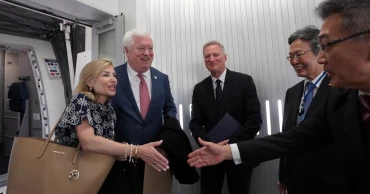
The new US ambassador to Japan arrived in Tokyo on Friday and said he is optimistic that his country and its key Asian ally will reach a deal in their ongoing tariff negotiations.
George Glass, a prominent businessperson known for his background in finance, investment banking and technology, arrives as Washington and Tokyo are negotiating President Donald Trump's tariff measures, which have triggered worldwide concern about their impact on the economy and global trade, AP reports.
“I'm extremely optimistic ... that a deal will be get done,” Glass told reporters after landing at Tokyo's Haneda international airport.
His arrival comes a day after the two countries held their first round of tariff talks between their top negotiators in Washington where both sides agreed to try to reach an agreement as quickly as possible and hold a second round of meetings later this month.
Trump, alongside his top economic advisers, Treasury Secretary Scott Bessent and Commerce Secretary Howard Lutnick, attended the meeting with the Japanese delegation headed by Economic Revitalization Minister Ryosei Akazawa at the White House.
With his reputation as a dealmaker being tested, Trump likely wants to finalize a series of trade deals as countries around the world seek to curb damages from the US tariffs.
US tariffs will weaken global economy and trigger inflation but not a global recession, IMF says
Trump's recent announcement of a 90-day pause temporarily spared Japan from 24% across-the-board tariffs, but a 10% baseline tariff and a 25% tax on imported cars, auto parts, steel and aluminium exports remains in place.
Japanese Prime Minister Shigeru Ishiba has said the tariffs would deal a blow to Japan's economy and chill Japanese companies' investment in the US and that the two sides should seek a settlement that would benefit both.
Trump is also pushing Tokyo to further increase its defence spending and shoulder more burden for hosting some 50,000 American troops as the allies strengthen military cooperation. He brought up the issue during his tariff talks with Japan.
“We sit with Japan in a very tough neighborhood. You have Russia, you have China, and you have North Korea,” Glass said Friday, adding that the allies need to make sure their militaries have all the materials they need “to push back against a country like China.”
1 year ago
US tariffs will weaken global economy and trigger inflation but not a global recession, IMF says
Surging U.S. tariffs will weaken the global economy and push up inflation this year, according to projections to be released next week by the International Monetary Fund.
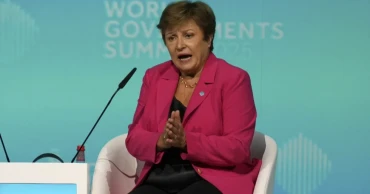
The IMF’s Managing Director, Kristalina Georgieva, said Thursday that the Trump administration’s sharp increases in duties have caused global uncertainty to spike. The import taxes will slow global growth, but not cause a worldwide recession, she added. The details of the IMF’s outlook will be issued Tuesday.
The world economy’s resilience is being tested “by the reboot of the global trading system” that threatens to cause turbulence in financial markets, Georgieva said.
That turbulence has been playing out in financial markets for weeks now, especially on Wall Street, which has experienced wild swings from day-to-day and often times even hour-to-hour.
The IMF chief also echoed some Trump administration concerns. She called on countries to reduce their tariffs and lower other barriers to trade, a process that she said had stalled out in the past decade after making steady progress for many years after World War II.
“Trade distortions — tariff and nontariff barriers — have fed negative perceptions of a multilateral system seen to have failed to deliver a level playing field,” she said. “This feeling of unfairness in some places feeds the narrative: we play by the rules while others game the system without penalty.”
Spanish PM in China to boost ties amid Trump tariffs
Georgieva added that tariffs cause uncertainty, which can be costly. Due to the complexity of supply chains, the cost of a single item can be affected by tariffs in dozens of countries, she said.
Increased trade barriers also tend to immediately impact growth, and while it can lead to more domestic production, that takes time to implement, she added.
In its most recent projections issued in January, the IMF forecast the world economy to grow nominally faster and for inflation to come down, though it warned that outlook was clouded by President Donald Trump's policies, including tax cuts and increased tariffs on foreign imports.
The Washington-based lending agency said at the time that it expected the world economy to grow 3.3% this year and next, up from 3.2% in 2024.
Global inflation, which had surged after the COVID-19 pandemic disrupted global supply chains and caused shortages and higher prices, was forecast to fall from 5.7% in 2024 to 4.2% this year and 3.5% in 2026.
However, in a blog post that accompanied those projections, the fund’s chief economist, Pierre-Olivier Gourinchas, wrote that the policies Trump has promised to introduce “are likely to push inflation higher in the near term.’’
Those forecasts from January are expected to change — possibly significantly — as Trump's trade war has escalated in recent months, particularly with the U.S.'s biggest trade partner, China.
Trump has paused or pulled back on many of his tariff threats — leading to more volatility in the stock market — but has been in a tit-for-tat tariff battle with China and has shown no sign of backing down. Each time Trump has raised tariffs on China, Beijing has retaliated with tariffs on U.S. imports.
EU welcomes Trump tariff pause, silent on retaliation
The IMF is a 191-nation lending organization that works to promote economic growth and financial stability and to reduce global poverty.
1 year ago

China-founded e-commerce sites Temu and Shein say they're raising prices due to tariffs
China-founded e-commerce sites Temu and Shein say they plan to raise prices for U.S. customers starting next week, a ripple effect from President Donald Trump's attempts to correct the trade imbalance between the world's two largest economies by imposing a sky-high tariff on goods shipped from China.
Temu, which is owned by the Chinese e-commerce company PDD Holdings, and Shein, which is now based in Singapore, said in separate but nearly identical notices that their operating expenses have gone up “due to recent changes in global trade rules and tariffs.”
Both companies said they would be making “price adjustments” starting April 25, although neither provided details about the size of the increases. It was unclear why the two rivals posted almostidentical statements on their shopping sites.
Since launching in the United States, Shein and Temu have given Western retailers a run for their money by offering products at ultra-low prices, coupled with avalanches of digital or influencer advertising.
The 145% tariff Trump slapped on most products made in China, coupled with his decision to end a customs exemption that allows goods worth less than $800 to come into the U.S. duty-free, has dented the business models of the two platforms.
Asian shares mostly gain as Trump temporarily eases tariffs
E-commerce companies have been the biggest users of the widely used exemption. Trump signed an executive order this month to eliminate the “de minimis provision” for goods from China and Hong Kong starting May 2, when they will be subject to the 145% import tax.
As many as 4 million low-value parcels — most of them originating in China — arrive in the U.S. every day under the soon-to-be canceled provision.
U.S. politicians, law enforcement agencies and business groups lobbied to remove the long-standing exemption, describing it as a trade loophole that gave inexpensive Chinese goods an advantage and served as a portal for illicit drugs and counterfeits to enter the country.
Shein sells inexpensive clothes, cosmetics and accessories, primarily targeting young women through partnerships with social media influencers. Temu, which promoted its goods through online ads, sells a wider array of products, including household items, humorous gifts and small electronics.
Last year the companies were among the largest advertising spenders on social media platforms, but they've both slashed that spending in recent weeks, according to data analytics provider Sensor Tower. That could be bad news for the platforms such as Facebook, Instagram, Snap, X and TikTok that rely on advertising.
In November, American e-commerce giant Amazon launched a low-cost online storefront featuring electronics, apparel and other products priced at under $20. Many of the electronics, apparel and other products on the storefront Wednesday resembled the types of items typically found on Shein and Temu.
In their customer notices about the pending price increases, the companies encouraged customers to keep shopping in the days ahead.
China’s exports surge while imports dip amid rising US tariffs
“We've stocked up and stand ready to make sure your orders arrive smoothly during this time,” Temu's statement said. “Were doing everything we can to keep prices low and minimize the impact on you.”
1 year ago
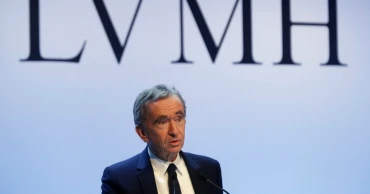
French luxury conglomerate LVMH's CEO calls for calming trade tensions with US
Bernard Arnault, chairman and CEO of French luxury conglomerate LVMH, called on Thursday for a free trade zone between the European Union and the United States and said that unresolved trade tensions could seriously hurt European industries.
His remarks, in the wake of the tariffs announced by President Donald Trump, appeared to echo a similar call by Elon Musk on April 5 for a zero-tariff zone between the U.S. and EU. The EU has long pushed for a “zero-for-zero” trade agreement — with both sides dropping tariffs — but Trump has rejected the offer.
Speaking at LVMH’s annual shareholder meeting, Arnault said European leaders should negotiate “cleverly” with the U.S. administration and that national governments should take a more prominent role instead of than leaving negotiations solely in the hands of Brussels, the center of EU’s “bureaucratic power.”
Trump joins tariff talks with Japan as US seeks deals amid trade wars
France’s LVMH has for decades been the world’s dominant luxury group — known for products such as Moët & Chandon Champagne, Hennessy Cognac, Louis Vuitton handbags and Dior perfumes — but this week lost its title as the world’s largest luxury company to rival Hermès.
“Europe is not run by a political power, but by a bureaucratic power that spends its time issuing regulations that are unfortunately imposed on all member states and that penalize our business sectors,” the 76-year-old CEO said.
The European Commission, the EU’s executive branch, negotiates trade deals on behalf of all 27 member states. The bloc is the largest trading entity in the world.
LVMH shares fell 7.8% earlier this week, following an unexpected drop in first-quarter sales.
Arnault said the company may be forced to expand U.S. operations. "We would be forced to increase our American production to avoid tariffs if Europe failed to negotiate with intelligence,” he said.
In 2019, LVMH shifted part of its production to the U.S. by opening a Louis Vuitton workshop in Alvarado, Texas, during Trump’s first term. Trump and Arnault toured the facility together, promoting it as a symbol of U.S. manufacturing revival.
But on Thursday, Arnault admitted the Texas site has underperformed so far. According to documents presented at the meeting, the U.S. accounts for 25% of LVMH’s total sales.
Arnault also criticized France’s proposed corporate tax increases, calling them a “tax on ‘Made in France’” and warned they could push companies to relocate abroad.
He praised the U.S. model, citing lower taxes and state-backed industrial investment. “When you come back to France after spending a few days in the U.S., it’s a bit of a cold shower,” he said.
1 year ago
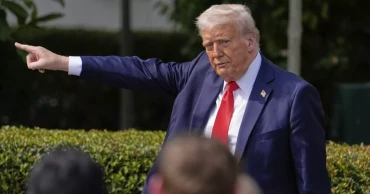
Trump joins tariff talks with Japan as US seeks deals amid trade wars
President Donald Trump on Wednesday inserted himself directly into trade talks with Japanese officials, a sign of the high stakes for the United States after its tariffs rattled the economy and caused the administration to assure the public that it would quickly reach deals.
The Republican president attended the meeting alongside Treasury Secretary Scott Bessent and Commerce Secretary Howard Lutnick, top economic advisers with a central role in his trade and tariff policies.
“Hopefully something can be worked out which is good (GREAT!) for Japan and the USA!” Trump wrote in a social media post ahead of the meeting.
Afterward, he posted: “A Great Honor to have just met with the Japanese Delegation on Trade. Big Progress!”
The president's choice to get directly involved in negotiations points to his desire to quickly finalize a slew of trade deals as China is pursuing its own set of agreements. It's an open test of Trump's reputation as a dealmaker as countries around the world seek to limit the potential damage unleashed by his import taxes.
The sweeping tariffs that Trump announced on April 2 triggered panic in the financial markets and generated recession fears, causing the U.S. president to quickly put a partial 90-day hold on the import taxes and increase his already steep tariffs against China to as much as 145%.
The pause temporarily spared Japan from 24% across-the-board tariffs, but there continues to be a 10% baseline tariff and a 25% tax on imported cars, auto parts, steel and aluminum exports.
With Japan charging an average tax rate of 1.9% on other countries' goods and having a longstanding alliance with the U.S., the talks on Wednesday are a crucial indicator of whether the Trump administration can achieve a meaningful deal that reassures the markets, American voters and foreign allies.
U.S. economic rival China, meanwhile, is trying to capitalize on the turmoil around Trump's announcements, with its leader, President Xi Jinping, touring nations of Southeast Asia and promoting his country as a more reliable trade partner.
Japan is among the first countries to start open negotiations with the U.S. Trump and other administration officials have said the phones have been “ringing off the hook” with dozens of countries calling, eager to strike deals with a president who views himself as a master negotiator to avoid tariffs when the 90-day pause ends. Israel and Vietnam have offered to zero out their tariff rates, but Trump has been noncommittal as to whether that would be sufficient.
On Thursday, Trump is scheduled to meet with Italian Prime Minister Giorgia Meloni, who will likely be carrying messages on behalf of the European Union about how to resolve the tariffs Trump placed on the 27-state group.
China's economy grows at a 5.4% annual pace in Jan-March quarter
Still, the U.S. president may also be feeling increased domestic pressures to settle any tariffs as many voters say they returned Trump to the White House with the specific goal of improving the economy. California Gov. Gavin Newsom filed a lawsuit Wednesday that argues that Trump overstepped his authority by declaring an economic emergency to levy his tariffs, with the Democrat saying in a statement that the tariffs have caused economic chaos.
Federal Reserve Chair Jerome Powell said Wednesday that Trump's tariff policies would hurt the U.S. economy, a direct warning to a White House trying to sell the import taxes as a long-term positive for the country.
“The level of tariff increases announced so far is significantly larger than anticipated, and the same is likely to be true of the economic effects which will include higher inflation and slower growth,” Powell said at the Economic Club of Chicago.
Japan, like many other nations trying to minimize the possible economic fallout from Trump's tariffs, has been scrambling to respond. It has set up a special task force to assess the impact of the tariffs and offer loans to anxious companies.
Although Prime Minister Shigeru Ishiba has been working hard to coax exemptions out of Trump, the government has said little officially on what concessions it might offer during these talks.
Nor has the administration been transparent about its asks. The Trump administration is seeking to close the $68.5 billion trade deficit with Japan and seeking greater access for U.S. goods in foreign markets, yet the president has also insisted that tariff revenues can be used to pay down the federal budget deficit.
“Japan is coming in today to negotiate Tariffs, the cost of military support, and ‘TRADE FAIRNESS,’” Trump posted Wednesday.
U.S. officials met in Washington with Japan’s chief trade negotiator, Economic Revitalization Minister Ryosei Akazawa.
After the meeting, Akazawa said he stressed Japan’s consistent position that the U.S. tariffs are “all regrettable” and sought a full review. He said he conveyed Ishiba’s intention “to reach a comprehensive agreement as soon as possible, a win-win deal that would strengthen both Japanese and U.S. economies.”
Akazawa told Japanese reporters that the two sides agreed to hold a next round of ministerial negotiations by the end of this month, while continuing working-level discussions.
Japan has contended that Trump's tariff measures are likely to violate bilateral trade agreements or World Trade Organization rules. While Ishiba has said he opposes retaliatory tariffs, he also has said he is in no rush to push for a settlement because he doesn't want concessions.
Xi, meanwhile, stopped in Malaysia on Wednesday and told its leader that China will be a collaborative partner and stand with its Southeast Asian neighbors after the global economic shocks.
Asian shares mostly gain as Trump temporarily eases tariffs
Xi is touring Vietnam, Malaysia and Cambodia this week on a trip that likely was planned before the tariffs' uncertainty but that he's also using to promote Beijing as a source of stability in the region and shore up relationships in that part of the world as he looks for ways to mitigate the 145% tariffs that Trump is keeping on China.
“In the face of shocks to global order and economic globalization, China and Malaysia will stand with countries in the region to combat the undercurrents of geopolitical ... confrontation, as well as the counter-currents of unilateralism and protectionism,” Xi said in remarks at a dinner with Malaysian Prime Minister Anwar Ibrahim.
“Together, we will safeguard the bright prospects of our Asian family,” he added.
Xi has promised Malaysia and Vietnam greater access to Chinese markets on his visits, although few details were shared.
In Washington, Trump has indicated that he also wants to discuss how much the Japanese contribute to the cost of U.S. troops stationed there, largely as a deterrent to China.
Trump’s demand for more defense spending concerns the Japanese government.
Under its national security strategy, Japan aims to double annual defense spending to nearly $10 trillion, or 2% of GDP, in 2027, while there is a concern that Trump may ask for that to be increased to 3% of GDP. Japanese Defense Minister Gen Nakatani said Tuesday that the military budget for this year is about 1.8% of Japan’s GDP.
1 year ago
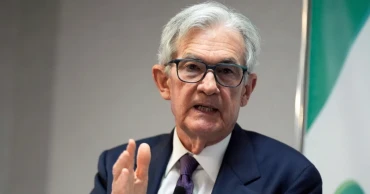
Powell says Federal Reserve can wait on any interest rate moves
The Federal Reserve can stay patient and wait to see how tariffs and other economic policies of the Trump administration play out before making any changes to interest rates, Chair Jerome Powell said Wednesday.
“As that great Chicagoan Ferris Bueller once noted, ‘Life moves pretty fast,'" Powell said in a speech to the Economic Club of Chicago. "For the time being, we are well positioned to wait for greater clarity” on the impact of policy changes in areas such as immigration, taxation, regulation, and tariffs, Powell said, AP reports.
The sharp volatility in financial markets since President Donald Trump announced sweeping tariffs April 2, only to put most of them on hold a week later, has led to speculation about whether the Fed would soon cut its key interest rate or take other steps to calm investors. Yet the Fed is unlikely to intervene unless there is a breakdown in the market for Treasury securities or other malfunctions, economists say.
In his prepared remarks, Powell reiterated that the Trump administration's tariffs are “significantly larger than anticipated."
“The same is likely to be true of the economic effects, which will include higher inflation and slower growth,” he said.
Powell also repeated that the Fed could face threats to both of the mandates it's been given by Congress, maximum employment and stable prices, which he called a “challenging scenario," because the Fed would essentially have to choose whether to keep interest rates high to fight inflation, or cut them to spur growth and hiring.
WTO says global trade could slide because of Trump's tariff policies
Powell said the inflation will likely be temporary, but “could also be more persistent,” echoing a concern expressed by a majority of the Fed's 19-member interest rate-setting committee in the minutes of their meeting last month.
Yet some splits among the Fed's interest rate-setting committee have emerged. On Monday, Fed governor Christopher Waller said that he expects the impact of even a large increase in tariffs to be temporary, even if they are left in place for several years. At the same time, he also expects such large duties would weigh on the economy and even threaten a recession.
1 year ago
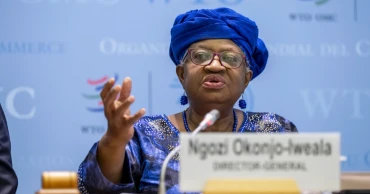
WTO says global trade could slide because of Trump's tariff policies
The World Trade Organization (WTO) says the volume of trade in goods worldwide is likely to decrease by 0.2% this year due to US President Donald Trump’s shifting tariff policies and a standoff with China, but it would take a more severe hit if Trump carries through on his toughest “reciprocal” tariffs.
The decline in trade will be particularly steep in North America even without the stiffest tariffs, the global trade forum said Wednesday, with exports there this year expected to fall by 12.6% and imports by 9.6%, AP reports.
The WTO based its report on the tariff situation as of Monday. Initially, 2025 and 2026 were expected to have continued expansion of world trade, but Trump’s trade war forced WTO economists to substantially downgrade their forecast, the forum said.
Trade in goods worldwide would slump by 1.5% if Trump follows through on his stiffest tariffs on most nations, due to the uncertainty unsettling businesses.
China's economy grows at a 5.4% annual pace in Jan-March quarter
Trump suspended the toughest set of tariffs for 90 days earlier this month so more than 70 countries have a chance to address US trade concerns. Meanwhile, he is increasing taxes on Chinese imports to 145% and engaging in a lengthy back and forth with Canada and Mexico about tariffs on their goods.
Despite the 90-day pause, “the enduring uncertainty threatens to act as a brake on global growth, with severe negative consequences for the world, the most vulnerable economies in particular,” WTO Director-General Ngozi Okonjo-Iweala said in a statement.
“Our simulations show that trade policy uncertainty has a significant dampening effect on trade flows, reducing exports and weakening economic activity,” WTO chief economist Ralph Ossa said in the statement. “Moreover, tariffs are a policy lever with wide-ranging and often unintended consequences. In a world of growing trade tensions, a clear-eyed view of those trade-offs is more important than ever."
1 year ago
China's economy grows at a 5.4% annual pace in Jan-March quarter
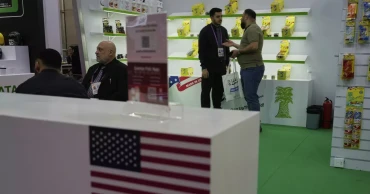
China's economy expanded at a 5.4% annual pace in January-March, supported by strong exports ahead of U.S. President Donald Trump’s rapid increases in tariffs on Chinese exports, the government said Wednesday.
Analysts are forecasting that the world’s second largest economy will slow significantly in coming months, however, as tariffs as high as 145% on U.S. imports from China take effect.
Exports were a strong factor in China’s ability to attain a 5% annual growth rate in 2024 and the official target for this year remains at about 5%.
Beijing has hit back at the U.S. with 125% tariffs on American exports, while also stressing its determination to keep its own markets open to trade and investment.
In the near term, the tariffs will put pressure on China's economy, but they won't derail long-run growth, Sheng Laiyun, a spokesperson for the National Bureau of Statistics, told reporters.
“China’s economic foundation is stable, resilient and has great potential. We have the confidence, ability and confidence to cope with external challenges and achieve our established development goals,” Sheng said.
Asian shares mostly gain as Trump temporarily eases tariffs
In quarterly terms the economy grew 1.2% in January-March, slowing from 1.6% in the last quarter of 2024.
Chinese exports surged more than 12% from a year earlier in March and nearly 6% in U.S. dollar terms in the first quarter, as companies rushed to beat Trump’s tariffs. That has supported robust manufacturing activity in the past several months.
“Much of this was front-loaded — fueled by a burst of preemptive activity ahead of U.S. tariff escalations and an inventory binge stateside as importers scrambled to get ahead of the curve,” Stephen Innes of SPI Asset Management said in a commentary.
Industrial production rose 6.5% from a year earlier in the last quarter, led by a nearly 11% increase in output of equipment manufacturing.
The strongest growth was in advanced technologies, such as production of battery electric and hybrid vehicles, which jumped 45.4% year-on-year. Output of 3D printers soared almost 45% and of industrial robots surged 26%.
But despite relatively fast growth by global standards, the Chinese economy has struggled to regain momentum since the COVID-19 pandemic, partly due to a downturn in the property market resulting from a crackdown on excess borrowing by developers.
Consumer prices fell 0.1% in the first quarter, suggesting that demand is not keeping up with supply for many industries. Investment in real estate also remained weak, falling nearly 10% from a year earlier despite government efforts to spur more lending for housing purchases.
The tariffs crisis looms as another massive blow at a time when Beijing is striving to get businesses to invest and hire more workers and to persuade Chinese consumers to spend more.
Those efforts appear to be bearing fruit. Retail sales rose 4.2% from a year earlier
Both private and public sector economists have remained cautious about what to expect, given how Trump has kept switching his stance on the details of his trade war.
“Given the events over the past two weeks, it is extremely difficult to predict how the U.S. and China tariffs on each other might evolve,” Tao Wang and other UBS economists said in a report.
The International Monetary Fund and Asian Development Bank have stuck with more optimistic forecasts of about 4.6% growth this year.
China’s exports surge while imports dip amid rising US tariffs
After taking office, Trump first ordered a 10% increase in tariffs on imports from China. He later raised that to 20%. Now, China is facing 145% tariffs on most of its exports to the United States.
UBS estimates that the tariffs, if they remain roughly as they are, could cause China’s exports to the United States to fall by two-thirds in coming months and that its global exports could fall by 10% in dollar value. It cut its forecast for economic growth this year to 3.4% from an earlier 4%. It expects growth to slow to 3% in 2026.
China has stepped up efforts to spur more consumer spending and private sector investment over the past seven months, doubling down on subsidies for auto and appliance trade-ins and channeling more funding for housing and other cash strapped industries.
1 year ago
Asian shares mostly gain as Trump temporarily eases tariffs
Most Asian stocks advanced on Tuesday, tracking gains on Wall Street after U.S. President Donald Trump temporarily relaxed certain tariffs, especially on electronics, while signs of easing pressure in the U.S. bond market also supported sentiment.
Japan’s Nikkei 225 jumped 0.9% to 34,336.74.
Do you consider Bangladesh as a cashless economy?
Automakers led the gains, with Toyota Motor Corp. climbing 4.9% and Honda Motor Co. up 4.8%. Sony Corp. rose 3.1%, Nintendo edged 0.3% higher, and semiconductor producers Tokyo Electron and Renesas added 1.1% and 1.4%, respectively.
In Australia, the S&P/ASX 200 advanced 0.5% to 7,787.40, while South Korea’s Kospi gained 0.8% to 2,475.25.
Chinese markets showed mixed performance. Hong Kong’s Hang Seng dipped before inching up by less than 0.1% to 21,423.44. Meanwhile, the Shanghai Composite slipped 0.1% to 3,260.55.
“This is becoming the norm: one step forward, two steps back, followed by sudden shifts to carrot-and-stick tactics. That seems to be this administration’s approach — issue a strong policy, then dilute it with selective exemptions or temporary delays. It’s a kind of market management resembling whack-a-mole,” said Stephen Innes, managing partner at SPI Asset Management.
On Monday, Wall Street rebounded. The S&P 500 rose 0.8% to 5,405.97, although trading remained volatile. The Dow Jones Industrial Average climbed 0.8% to 40,524.79, and the Nasdaq composite added 0.6% to 16,831.48.
Technology stocks like Apple helped buoy markets after Trump announced exemptions for smartphones, computers, and other electronics from certain steep tariffs that could have significantly increased prices for American consumers. These exemptions mean U.S. importers can avoid raising prices or absorbing higher costs themselves.
Apple gained 2.2%, and Dell Technologies advanced 4%.
Carmakers also benefited after Trump hinted at potential pauses on automotive tariffs. General Motors rose 3.5%, while Ford Motor rallied 4.1%.
Still, the relief could be short-lived. Trump's tariff measures have been marked by abrupt changes, and his administration has stressed that the electronics exemptions are only temporary.
This ongoing uncertainty complicates long-term planning for companies and consumers alike, as policy direction shifts frequently. Financial markets have experienced dramatic swings as investors attempt to react to the shifting landscape.
China’s exports surge while imports dip amid rising US tariffs
A more promising development for investors was the stabilisation of the bond market, which had been volatile the previous week.
Typically, Treasury yields fall when investor anxiety is high, since U.S. government bonds are seen as safe havens. But last week saw an unusual spike in yields, coupled with a decline in the U.S. dollar’s value against other major currencies — hinting that global investors might be reconsidering the U.S. as their preferred refuge during turbulent times.
Last week, Trump announced a 90-day pause on many of the tariffs, citing concerns from bond market participants who were “getting a little queasy.”
By early Tuesday, the yield on the 10-year Treasury note had eased to 4.35%, down from 4.48% on Friday and 4.01% a week earlier.
Yields fell following positive data regarding inflation expectations from U.S. households. While consumers projected slightly higher inflation over the next year, expectations for inflation over the next three to five years either held steady or declined, according to a survey from the Federal Reserve Bank of New York.
This is potentially favourable for the Federal Reserve, which is wary of rising long-term inflation expectations, as they can trigger behavioural shifts that further fuel inflation.
In other early Tuesday trading, benchmark U.S. crude increased by 17 cents to $61.70 a barrel, while Brent crude, the global standard, rose 16 cents to $65.04 a barrel.
The U.S. dollar strengthened to 143.14 Japanese yen from 143.04 yen. The euro edged down slightly to $1.1346 from $1.1351.
1 year ago
China’s exports surge while imports dip amid rising US tariffs
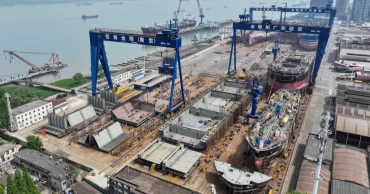
China’s exports soared 12.4% in March compared to the same period last year, as exporters rushed shipments ahead of higher U.S. tariffs introduced under President Donald Trump’s trade policies, the country’s customs authority reported on Monday.
Imports, however, declined by 4.3% in March.
In the first quarter of the year, exports from the world’s second-largest economy rose by 5.8%, while imports dropped 7% year-on-year.
China recorded a trade surplus of $27.6 billion with the United States in March, with exports to the U.S. climbing 4.5%. For the first three months of the year, the surplus reached $76.6 billion.
Following recent changes in U.S. trade policy, Chinese goods are now subject to tariffs as high as 145%.
Despite trade tensions with the U.S., China saw notable growth in exports to other regions. Shipments to Southeast Asia rose nearly 17% in March from a year earlier, while exports to Africa increased over 11%.
Chinese President Xi Jinping was in Vietnam on Monday, kicking off a regional tour that includes stops in Malaysia and Cambodia. The trip, which appears to be aimed at strengthening trade ties with neighboring nations also facing potential U.S. tariffs, gained additional relevance amid ongoing trade disputes with Washington. Last week, the U.S. delayed enforcement of some of the tariffs by 90 days.
Trade between China and Vietnam saw significant changes in March, with exports from China rising nearly 17% and imports from Vietnam slipping by 2.7%.
Though Xi’s visit was likely scheduled in advance, it carries added diplomatic and economic importance as trade tensions intensify.
Lyu Daliang, a spokesperson for the customs administration, acknowledged the difficult global trade environment but emphasized China’s resilience. He noted the country’s diverse export markets and its vast domestic economy as stabilizing factors.
He also highlighted China’s consistent role as the world’s second-largest importer for 16 consecutive years, growing its share of global imports from around 8% to 10.5%.
“Looking ahead, China still has significant potential for import growth, and our large domestic market continues to offer vast opportunities for global businesses,” Lyu said.
1 year ago