world-business

Asian stocks tumble following Wall Street drop on Trump tariffs
Asian markets fell on Friday following a steep sell-off on Wall Street, triggered by the latest round of tariffs announced by Donald Trump, which dealt a fresh blow to the global economy on a scale not seen since the onset of the COVID-19 crisis.
Futures for U.S. equities and oil prices also moved lower.
Trump tariffs ignite global backlash, shake markets, trade alliances
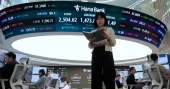
Japan’s Nikkei 225 dropped 2.6% to 33,818.18, while South Korea’s Kospi declined 0.8% to 2,467.14, as both nations moved toward talks with Trump’s administration to negotiate tariff reductions.
Australia’s S&P/ASX 200 retreated 1.9% to 7,713.60. Chinese markets remained closed due to a public holiday.
Trump introduced a base tariff of 10% on imports, with significantly higher rates imposed on goods from certain nations, including China and EU member states. UBS analysts estimated that the full scope of these tariffs—comparable to levels not seen in nearly a century—could slash U.S. economic growth by two percentage points this year and push inflation toward 5%.
Such a dramatic economic impact makes the likelihood of the tariffs being sustained seem “low,” according to Bhanu Baweja and other strategists at UBS.
Trump previously acknowledged tariffs might cause “a little disturbance” in the economy and financial markets, and on Thursday, he again downplayed their effects as he departed for Florida from the White House.
“The markets are going to boom, the stock is going to boom, and the country is going to boom,” he asserted.
On Thursday, the S&P 500 plunged 4.8% to 5,396.52—its worst single-day performance since the pandemic-induced crash of 2020. The Dow Jones Industrial Average slid 4% to 40,545.93, and the Nasdaq composite sank 6% to 16,550.61.
Markets across the board were hit by fears of a damaging combination of slowing economic growth and rising inflation driven by the tariffs.
From crude oil to Big Tech stocks and even the U.S. dollar, prices fell. Gold, which had recently reached record highs as a safe haven, also edged lower. Smaller U.S. firms were especially affected, with the Russell 2000 index diving 6.6%, pushing it more than 20% below its all-time high.
While investors were bracing for sweeping tariffs, Trump’s announcement still delivered what Mary Ann Bartels, CIO at Sanctuary Wealth, called “the worst case scenario.”
For some time, Wall Street had assumed Trump would use tariffs mainly as leverage in trade negotiations, rather than implement them as permanent policy. But his remarks on reshoring manufacturing jobs suggest a more ideological commitment, rather than a tactical manoeuvre. Achieving such a shift could take years.
If the tariffs are fully implemented, stock values may need to fall significantly more than the current 10% from their peak to factor in a potential recession and the decline in corporate earnings that could result. As of now, the S&P 500 is down 11.8% from its February record.
“Markets may still be underestimating the full impact, especially if these rates turn out to be final,” said Sean Sun, a portfolio manager at Thornburg Investment Management, though he suggested the announcement might still represent an opening move.
Trump's Tariff Hike: How will it affect Bangladesh?
When asked about the market reaction as he headed to his Florida golf club, Trump remained optimistic.
“I think it’s going very well,” he said. “We’re conducting a sort of economic surgery, like a major operation. This is exactly how I said it would go.”
One variable in the situation is the Federal Reserve, which could lower interest rates to stimulate the economy. The Fed had been cutting rates late last year but paused in 2025. Lower rates can help businesses and consumers by making borrowing cheaper.
Treasury yields plunged amid growing expectations of rate cuts and broader concerns about the U.S. economy. The 10-year Treasury yield fell sharply to 4.04% from 4.20% on Wednesday, down from around 4.80% in January—a significant move in the bond market.
However, the Fed’s flexibility may be limited. While lower rates can spur economic activity, they can also drive inflation higher—something tariffs are already intensifying. American consumers are bracing for higher costs across the board.
Despite the turmoil, recent data shows the U.S. economy is still expanding. A report released Thursday revealed a decline in jobless claims, surprising economists who had expected a rise in unemployment. A strong labour market has been key in preventing a recession so far.
Another report showed growth in the U.S. services sector—encompassing transportation, finance, and other areas—though the pace was slower than forecast, and business sentiment was mixed.
Worries over slowing economic momentum and stubborn inflation drove declines in a wide array of stocks, with four out of five S&P 500 companies finishing lower.
Best Buy fell 17.8%, hurt by concerns over its global supply chain. United Airlines dropped 15.6%, as fears over the economy may reduce both business and leisure travel. Target declined 10.9%, amid worries that consumers already grappling with inflation might cut back further.
In early Friday trading, the U.S. dollar strengthened slightly to 146.05 yen from 145.93 yen. The euro also edged up, rising to $1.1068 from $1.1052.
1 year ago

Trump tariffs ignite global backlash, shake markets, trade alliances
World leaders have reacted with dismay, threats of countermeasures, and calls for negotiations in response to sweeping new tariffs announced by U.S. President Donald Trump.
The import taxes, ranging from 10% to 49%, aim to bring factories and jobs back to the U.S. but have rattled global markets. Asian stocks fell sharply, and U.S. futures tumbled, signaling a volatile trading day ahead.
Trump's Tariff Hike: How will it affect Bangladesh?
Global Reactions
Norway: Foreign Minister Espen Barth Eide said the tariffs might violate NATO’s Article 2, which promotes economic cooperation among allies. He plans to raise the issue with U.S. Secretary of State Marco Rubio.
Poland: Prime Minister Donald Tusk warned that Poland’s GDP could shrink by 0.4% but vowed that Polish-U.S. ties would endure.
Spain: Prime Minister Pedro Sánchez announced a €14.1 billion spending package to counter the tariffs' effects, calling the move "19th-century protectionism."
Australia: Prime Minister Anthony Albanese criticized tariffs on remote Australian territories that do not export to the U.S., stressing Australia’s free trade policy.
Hong Kong: Strongly opposed the tariffs and urged the U.S. to withdraw them, arguing that Hong Kong maintains a free trade policy.
India: The Trade Ministry is expediting negotiations with the U.S. for a trade agreement to offset the impact of tariffs. The U.S. is India’s largest trading partner, with trade valued at $129 billion in 2024.
Vietnam: The stock market plunged while gold prices hit a record high. Vietnam’s Prime Minister Pham Minh Chinh remained hopeful for 8% growth despite the heavy 46% tariffs.
Ukraine: Economy Minister Yuliia Svyrydenko said Ukraine is negotiating for better tariff conditions, stressing its low tariffs on U.S. goods.
Japan: Prime Minister Shigeru Ishiba expressed deep regret over the 25% auto tariff, saying Japanese firms have been major investors in the U.S.
Germany: Chancellor Olaf Scholz called the tariffs an “attack” on global trade and warned of economic losses worldwide. Vice Chancellor Robert Habeck labeled the move "Inflation Day," predicting it would trigger recessions.
Fiji: Deputy Prime Minister Biman Prasad called the 32% tariffs on Fijian exports “disproportionate” and “unfair,” particularly since the U.S. is a major trading partner.
China: The Foreign Ministry condemned the tariffs as "unilateral bullying actions" and a violation of WTO rules.
United Kingdom: Prime Minister Keir Starmer pledged a "cool and calm" response and said negotiations for an economic prosperity deal would continue.
Thailand: Prime Minister Paetongtarn Shinawatra said Thailand is ready to negotiate and urged exporters to diversify markets.
Trump set to announce 'reciprocal' tariffs in a risky move that could reshape the economy
Industry and Business Impact
Automakers: Stellantis will shut its Windsor, Canada, assembly plant for two weeks due to market uncertainty caused by the tariffs. Honda CEO Toshihiro Mibe said the company needs time to assess the situation.
Southeast Asia: Some of the highest tariffs hit Vietnam (46%), Cambodia (49%), Bangladesh (37%), and Sri Lanka (44%). These measures could disrupt supply chains as multinational companies have shifted production to these countries to avoid earlier trade tensions.
European Union: The European Commission called the tariffs a “major blow” to the global economy. Germany’s industry federation BDI urged the EU to coordinate a response with other major trading partners.
Trump’s tariffs have triggered immediate global pushback, with nations considering countermeasures and negotiations. The economic fallout remains uncertain, but experts warn of rising costs and potential recessions worldwide. As affected countries prepare responses, global markets brace for continued volatility.
1 year ago
Wall Street declines ahead of Trump's upcoming tariff announcement
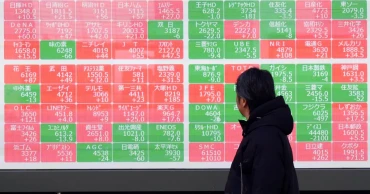
Wall Street was poised for losses before Wednesday’s opening bell as investors awaited President Donald Trump’s disclosure of the latest round of U.S. tariffs on trade partners.
Futures for the S&P 500 fell by 0.6%, while Dow Jones Industrial Average futures declined by 0.5%. Nasdaq futures, already in correction territory due to the heavy presence of major technology firms, dropped a further 0.7%.
Trump set to announce 'reciprocal' tariffs in a risky move that could reshape the economy
Every sector in the S&P was in negative territory except for consumer staples. The hardest-hit sectors included autos, transportation, industrials, and technology.
Trump’s new tariffs—set to be unveiled on what he has dubbed “Liberation Day”—aim to revive U.S. manufacturing while penalising countries he accuses of engaging in unfair trade practices for years. However, most economists believe these tariffs could push the economy into a recession and strain longstanding alliances.
The reciprocal tariffs Trump is set to introduce follow previous measures, including 25% duties on auto imports, levies against China, Canada, and Mexico, and expanded tariffs on steel and aluminium. He has also imposed tariffs on countries importing oil from Venezuela and plans to implement separate import taxes on pharmaceutical drugs, lumber, copper, and computer chips.
Markets have been highly volatile in recent weeks, with momentum shifting frequently due to uncertainty surrounding Trump’s tariffs and concerns over their impact on inflation and economic growth.
Gold, traditionally a safe haven in uncertain times, has been trading at record highs, continuing that trend on Wednesday.
Even before Trump’s latest tariff announcement, businesses have already been feeling the effects of his trade policies, and markets have experienced weeks of turbulence.
"With uncertainty around tariff details, risk sentiment remained broadly fragile," Tan Jing Yi of Mizuho Bank commented.
Even if the announced tariffs are less severe than expected, the unpredictable manner in which Trump has introduced his trade policies could still generate enough uncertainty to cause American consumers and businesses to cut back on spending, potentially harming the economy.
Meanwhile, European markets saw declines by midday, with France’s CAC 40 dropping 0.7%, Germany’s DAX falling nearly 1.3%, and Britain’s FTSE 100 sliding 0.6%.
In Asia, Japan’s Nikkei 225 edged up 0.3% to close at 35,725.87.
Asian stocks rebound after Wall Street gains amid tariff concerns
Hong Kong’s Hang Seng remained nearly unchanged at 23,202.53, while the Shanghai Composite rose by less than 0.1% to 3,350.13.
Australia’s S&P/ASX 200 gained 0.1% to reach 7,934.50, while South Korea’s Kospi slipped 0.6% to 2,505.86.
1 year ago
Trump set to announce 'reciprocal' tariffs in a risky move that could reshape the economy
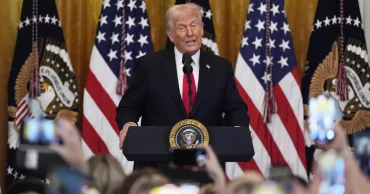
After weeks of White House hype and public anxiety, President Donald Trump is set Wednesday to announce a barrage of self-described “reciprocal” tariffs on friend and foe alike.
The new tariffs — coming on what Trump has called “Liberation Day” — is a bid to boost U.S. manufacturing and punish other countries for what he has said are years of unfair trade practices. But by most economists’ assessments, the risky move threatens to plunge the economy into a downturn and mangle decades-old alliances.
The White House is exuding confidence despite the political and financial gamble being undertaken.
“April 2, 2025, will go down as one of the most important days in modern American history,” White House press secretary Karoline Leavitt said at Tuesday’s briefing while adding that the new tariffs will take effect immediately.
The reciprocal tariffs Trump plans to announce follow similar recent announcements of 25% taxes on auto imports; levies against China, Canada and Mexico; and expanded tariffs on steel and aluminum. Trump has also put tariffs against countries that import oil from Venezuela and plans separate import taxes on pharmaceutical drugs, lumber, copper and computer chips.
None of the warning signs about a falling stock market or consumer sentiment turning morose have caused the administration to publicly second-guess its strategy.
White House trade adviser Peter Navarro has suggested that the new tariffs would raise $600 billion annually, which would be the largest tax increase since World War II. Treasury Secretary Scott Bessent told lawmakers that the tariffs would be capped and could be negotiated downward by other countries, according to the office of Rep. Kevin Hern, R-Okla. But the White House has yet to confirm policy details, despite Trump saying on Monday that he had made his decision.
Importers would likely pass along some of the cost of the taxes on to consumers. The Budget Lab at Yale University estimates that a 20% universal tariff would cost the average household an additional $3,400 to $4,200.
The administration's premise is that manufacturers will quickly increase domestic production and create new factory jobs — and the White House is expressing confidence that Trump’s approach is absolutely correct.
“They’re not going to be wrong,” Leavitt said. “It is going to work. And the president has a brilliant team of advisers who have been studying these issues for decades. And we are focused on restoring the golden age of America and making America a manufacturing superpower.”
The bold optimism has done little to reassure the public or allies who see the import taxes as a threat.
Asian stocks rebound after Wall Street gains amid tariff concerns
Based on the possibility of broad 20% tariffs that have been floated by some White House aides, most analyses see an economy tarnished by higher prices and stagnation. U.S. economic growth — as measured by gross domestic product — would be roughly a percentage point lower, and clothing, oil, automobiles, housing, groceries and even insurance would cost more, the Budget Lab analysis found.
Trump would single-handedly be applying these tariffs, since he has ways of legally doing so without congressional approval. That makes it easy for Democratic lawmakers and policymakers to criticize the Republican administration, if the uncertainty expressed by businesses and declining consumer sentiment are, in fact, signs of trouble to come.
Heather Boushey, who served as a member of the Biden White House's Council of Economic Advisers, noted that the less aggressive tariffs Trump imposed during his first term failed to stir the manufacturing renaissance he promised voters.
“We are not seeing indications of the boom that the president promised," Boushey said. “It's a failed strategy.”
Senate Democratic leader Chuck Schumer of New York said the tariffs were fundamentally a way for Trump to raise revenues in order to pay for his planned extensions of income tax cuts that disproportionately favor millionaires and billionaires.
“Almost everything they do, including tariffs, it seems to me, is aimed at getting those tax cuts for the wealthy,” Schumer said Tuesday on the Senate floor.
Even Republicans who trust Trump's instincts have acknowledged that the tariffs could be disruptive to an economy with an otherwise healthy 4.1 % unemployment rate.
“We’ll see how it all develops,” said House Speaker Mike Johnson, R-La. “It may be rocky in the beginning. But I think that this will make sense for Americans and help all Americans.”
Longtime trading partners are preparing their own countermeasures. Canada has already imposed some in response to the 25% tariffs that Trump tied to the trafficking of fentanyl. The European Union, in response to the steel and aluminum tariffs, put taxes on 26 billion euros' worth ($28 billion) of U.S. goods, including on bourbon, which prompted Trump to threaten a 200% tariff on European alcohol.
Many allies feel they have been reluctantly drawn into a confrontation by Trump, who routinely says that friends and foes have essentially ripped off the United States with a mix of tariffs and other trade barriers.
Global automakers say Trump’s tariffs to hurt them and US consumers
The flip side, of course, is that Americans also have the incomes to choose to buy designer gowns by French fashion houses and autos from German manufacturers, whereas World Bank data show the EU has lower incomes per capita than the United States.
“Europe has not started this confrontation,” said European Commission President Ursula von der Leyen. “We do not necessarily want to retaliate but, if it is necessary, we have a strong plan to retaliate and we will use it.”
Because Trump has hyped his tariffs without providing specifics, he has provided a deeper sense of uncertainty for the world, a sign that the economic slowdown could possibly extend beyond U.S. borders to other nations that would see one person to blame.
Ray Sparnaay, general manager of JE Fixture & Tool, a Canadian tool and die business that sits across the Detroit River, said the uncertainty has crushed his company's ability to make plans.
“There’s going to be tariffs implemented. We just don’t know at this point,” he said Monday. “That’s one of the biggest problems we’ve had probably the last — well, since November — is the uncertainty. It’s basically slowed all of our quoting processes, business that we hope to secure has been stalled.”
1 year ago
Asian stocks rebound after Wall Street gains amid tariff concerns
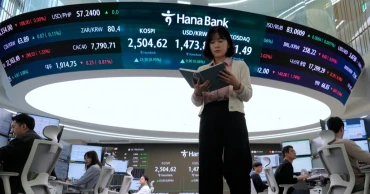
Asian stocks mostly advanced on Tuesday after U.S. markets moved higher, as anticipation of President Donald Trump’s imminent “Liberation Day” on Wednesday caused global market fluctuations.
Instead of equities, investors have been favouring traditionally safer assets amid economic uncertainty. Gold climbed early Tuesday, reaching $3,172.80 per ounce.
Petroleum fuel prices to remain unchanged in April
Tokyo’s Nikkei 225 inched up by 0.1% to 35,663.86, as Prime Minister Shigeru Ishiba urged Trump to refrain from increasing auto tariffs on Japan, a longstanding U.S. ally. Meanwhile, a central bank survey indicated deteriorating business sentiment among major manufacturers.
Hong Kong’s Hang Seng gained 1.1% to 23,363.96, while China’s Shanghai Composite Index added 0.6% to 3,355.31.
In South Korea, the Kospi surged 1.8% to 2,525.44, and Australia’s S&P/ASX 200 climbed 1% to 7,919.50.
Taiwan’s Taiex soared 2.6%, whereas India’s Sensex dipped 0.2%. Thailand’s SET rose 1.1%.
On Monday, the S&P 500 gained 0.6% to close at 5,611.85. However, the index ended March with a 4.6% decline for the first quarter of the year, marking its worst performance in two-and-a-half years.
The Dow Jones Industrial Average advanced 1% to 42,001.76, while the Nasdaq Composite edged down 0.1% to 17,299.29, weighed down by declines in Tesla, Nvidia, and other major tech stocks.
Such dramatic swings have become a frequent occurrence on Wall Street due to uncertainty surrounding Trump’s tariff policies and their potential impact on inflation and economic growth. Monday’s global sell-off stemmed from mounting concerns over the repercussions of the tariffs, which Trump claims will revitalise U.S. manufacturing jobs.
On Wednesday, the United States is expected to implement what Trump describes as “reciprocal” tariffs, aimed at balancing the perceived trade burden imposed by different countries, including adjustments for value-added taxes. However, details remain unclear regarding the exact measures to be enacted on “Liberation Day.”
Goldman Sachs economists anticipate Trump will impose an average reciprocal tariff of 15%. Consequently, they have revised their projections, increasing their inflation forecast while lowering their outlook for U.S. economic growth by year-end.
They now estimate a 35% likelihood of a recession in the coming year, up from a previous 20%, citing slower growth, declining confidence, and statements from White House officials signalling a readiness to endure economic strain, according to Goldman Sachs economist David Mericle.
Gold prices reach record high in Bangladesh ahead of Eid
If the tariffs announced on April 2 turn out to be less severe than feared—such as excluding additional levies on Chinese imports—stocks may rally. However, a worst-case scenario could erode business confidence, prompting workforce reductions and triggering further market declines. Moreover, April 2 may not resolve the prevailing uncertainty.
Even if the tariffs prove to be milder than anticipated, lingering ambiguity could lead U.S. households and businesses to curtail spending, potentially dampening economic activity.
Tesla fell 1.7% on Monday, extending its year-to-date decline to 35.8%. It remains one of the worst-performing stocks in the S&P 500, largely due to concerns that the electric vehicle maker’s reputation is too closely linked to its CEO, Elon Musk.
Musk has spearheaded U.S. government cost-cutting initiatives, making him a focal point of political controversy. As a result, Tesla showrooms have been the site of mounting protests.
On a brighter note, Mr. Cooper surged 14.5% after announcing it would be acquired by mortgage company Rocket in an all-stock transaction valued at $9.4 billion. This comes shortly after Rocket’s acquisition of real estate listing firm Redfin, though Rocket’s shares slid 7.4%.
Warren Buffett’s Berkshire Hathaway advanced 1.2%, contributing to the S&P 500’s gains.
Meanwhile, Newsmax soared 735% on its first day of trading, experiencing such extreme volatility that trading was temporarily halted a dozen times throughout the session.
In commodity markets early Tuesday, U.S. benchmark crude rose 17 cents to $71.65 per barrel, while Brent crude, the global standard, climbed 19 cents to $74.96 per barrel.
In currency trading, the U.S. dollar weakened to 149.57 Japanese yen from 149.97 yen, while the euro edged up to $1.0825 from $1.0817.
1 year ago

Global automakers say Trump’s tariffs to hurt them and US consumers
Global automakers are bracing for severe financial strain as U.S. President Donald Trump prepares to impose a 25% tariff on imported cars, a move experts say could disrupt global supply chains, increase prices for American consumers, and trigger retaliatory measures from trade partners.
The tariffs, set to take effect on April 3, target both imported vehicles and auto parts, which were valued at $197 billion last year. While the Trump administration argues the measures will boost domestic manufacturing and create jobs, industry experts and policymakers warn of significant economic fallout.
Global Impact and Industry ConcernsAutomakers across Japan, South Korea, Mexico, Canada, and Europe employ millions of workers who depend on U.S. buyers, who collectively spend over $240 billion annually on imported cars and light trucks.
“The impact will be really huge and very disruptive,” said Sigrid de Vries, director general of the European Automobile Manufacturers’ Association. She and other critics argue that American car shoppers will face higher prices as costs rise.
The tariffs have already affected global stock markets, with major automakers such as Toyota, Mercedes-Benz, Kia, and BMW seeing their shares decline.
Trump places 25% tariff on imported autos, expecting to raise $100 billion in tax revenues
Even U.S. automakers, which export only 2% of their production to the European Union, saw stocks fall due to their reliance on cross-border auto parts trade—though Tesla’s stock price rose as the company relies less on foreign supply chains.
Retaliation and Trade TensionsGovernments around the world are weighing countermeasures. The European Union, which counts the U.S. as its largest auto export market, is considering re-imposing tariffs on American goods such as jeans, bourbon, and motorcycles.
“We have our plans ready,” said EU foreign affairs representative Kaja Kallas, though she noted that negotiations could still prevent a trade war.
Japanese Prime Minister Shigeru Ishiba urged Trump to exempt Japanese automakers, while Canada’s Prime Minister Mark Carney vowed to protect his country’s auto industry. Canadian union leader Lana Payne called for retaliation, stating, “If U.S. automakers want to sell in Canada, they should be required to build in Canada.”
Economic Fallout and UncertaintyEconomists warn the tariffs could backfire, driving up costs for American consumers and potentially reducing overall trade.
“There’s a risk of retaliatory tariffs and then a tit-for-tat, and then we end up with significant barriers to trade and we all lose out,” said David Bailey, a business economics professor at the University of Birmingham.
Analysts at Sanford C. Bernstein estimate that if the tariffs remain long-term, they could add up to $12,000 per imported vehicle in the U.S., though automakers will decide whether to pass on the full cost to consumers or absorb some of the losses.
Despite Trump’s claim that the tariffs are “permanent,” industry observers believe they may not last, as previous trade disputes—such as the U.S.-China auto tariff escalation in 2018—were short-lived due to economic pressures.
European automakers, already struggling with a shrinking domestic market and rising competition from Chinese electric vehicle makers, now face an additional challenge.
“This would deliver a substantial blow to a sector that not only sustains millions of jobs but also contributes to a large proportion of the bloc’s GDP,” said Clarissa Hahn, an analyst at Oxford Economics.
Vermont businesses feel impact of Trump's tariffs on Canada
As the April 3 deadline approaches, the global auto industry remains on edge, awaiting potential negotiations or countermeasures from affected nations.
Source: With input from agency
1 year ago

US economy expands 2.4% in Q4 after growth revision
The US economy expanded at an annual rate of 2.4% in the final quarter of 2024, buoyed by a surge in consumer spending towards the end of the year, according to a government report released on Thursday.
This marks a slight upward revision from the previous estimate of fourth-quarter growth.
Bangladesh Bank re-fixed MFS transaction limit
However, uncertainty remains regarding the country’s ability to maintain steady growth, as President Donald Trump pursues trade wars, undertakes mass dismissals in the federal workforce, and vows to deport undocumented immigrant workers.
The Commerce Department reported that the gross domestic product (GDP) — the total output of goods and services in the nation — slowed from a 3.1% growth rate recorded between July and September 2024.
For the entirety of 2024, the world's largest economy expanded by 2.8%, a slight decrease from the 2.9% growth seen in 2023.
Consumer spending increased at a 4% rate, up from 3.7% in the third quarter of 2023. However, business investment declined, primarily due to an 8.7% drop in spending on equipment.
A reduction in business inventories subtracted 0.84 percentage points from fourth-quarter GDP growth.
A specific GDP component that reflects the economy’s fundamental strength rose at an annual rate of 2.9% in the fourth quarter, down from the earlier estimate of 3.2% and the third quarter’s 3.4%. This measure includes consumer spending and private investment while excluding more volatile elements such as exports, inventories, and government expenditure.
The report released on Wednesday highlighted ongoing inflationary pressures at the end of 2024. The Federal Reserve’s preferred inflation gauge, the personal consumption expenditures (PCE) price index, climbed at an annual rate of 2.4%, rising from 1.5% in the third quarter and surpassing the Federal Reserve’s 2% target. When excluding volatile food and energy costs, core PCE inflation stood at 2.6%, compared to 2.2% in the previous quarter.
Thursday’s release represents the government’s third and final assessment of fourth-quarter GDP.
NBR preparing stricter tax exemption policy
Looking ahead, the economic outlook appears more uncertain. Trump's recent decision to impose tariffs on various imports, including a newly announced 25% tax on foreign automobiles, may drive up inflation and discourage investment, potentially hindering economic growth.
1 year ago

Asian markets rise modestly after Wall Street’s slow session
Asian markets made modest gains on Wednesday following a subdued session on Wall Street, where buying activity slowed after a broad rally the previous day.
This rally had been driven by optimism that President Donald Trump’s tariffs might not be as extensive as initially feared.
Tesla sales fall by 49% in Europe even as the EV market grows
Hong Kong’s Hang Seng increased by 0.3% to 23,403.40, while the Shanghai Composite index dipped by less than 0.1% to 3,367.98. Tokyo’s Nikkei 225 climbed 0.7% to 38,027.29. Meanwhile, South Korea’s Kospi rose 1.1% to 2,643.94, and Australia’s S&P/ASX 200 advanced 0.7% to 7,999.00.
On Tuesday, the S&P 500 edged up by 0.2% to 5,776.65, following a 1.8% surge on Monday—one of its strongest performances in the past year. The Dow Jones Industrial Average gained 4 points, or less than 0.1%, to 42,587.50, while the Nasdaq composite added 0.5% to 18,271.86.
U.S. stocks have recouped some of their losses after declining 10% below their all-time high earlier this month, marking their first “correction” since 2023. The S&P 500 is now down 6% from its peak, making the market appear less overvalued than before—a key concern after its rapid growth in previous years.
However, Wall Street strategists caution that further volatility is likely, with an April 2 deadline approaching. This date, which Trump has dubbed “Liberation Day,” marks the implementation of tariffs on trading partners that he claims impose a disproportionate burden on the U.S. Monday’s market rally was fueled by hopes that these “reciprocal” tariffs may be more targeted than initially feared.
Even if the tariffs are less severe than expected, the uncertainty surrounding them has already shaken confidence among U.S. consumers and businesses, potentially leading to reduced spending and slowing economic growth.
A report released on Tuesday revealed worsening sentiment among American households. The Conference Board’s consumer confidence index fell more than anticipated, largely due to a steep decline in short-term economic expectations. This measure hit its lowest point in 12 years, remaining “well below the threshold of 80 that typically signals an impending recession.”
Similar to other recent surveys, the data indicated that U.S. households are more concerned about the economy’s future than its current state. Despite this pessimism, economic activity and the job market have so far remained resilient.
On Wall Street, Trump Media & Technology Group surged 8.9% after announcing a partnership with Crypto.com to launch a series of “America-First” investment funds. These exchange-traded funds (ETFs) will include bitcoin and other digital assets, as well as stocks in U.S.-focused industries like energy. Crypto.com will provide the technology infrastructure, custody, and cryptocurrency supply for these ETFs, which will operate under TMTG’s Truth.Fi brand.
BYD reports 2024 revenue over $100b, topping Tesla's sales
Tesla gained 3.4%, fluctuating between minor gains and losses after weak sales data from Europe. Despite this, the stock remains down nearly 29% for 2025.
Homebuilder KB Home fell 5.2% after reporting lower-than-expected profit and revenue for the latest quarter. Homebuilders, already struggling, may face rising costs due to tariffs, which could be passed on to homebuyers. A report on Tuesday indicated that U.S. new home sales in the previous month were slightly weaker than economists had predicted.
In early trading on Wednesday, U.S. benchmark crude oil rose 31 cents to $69.31 per barrel, while Brent crude, the global benchmark, gained 30 cents to $72.69 per barrel.
The U.S. dollar strengthened to 150.47 Japanese yen from 149.86 yen on Tuesday, while the euro slipped to $1.0784 from $1.0790.
1 year ago

Tesla sales fall by 49% in Europe even as the EV market grows
European sales of Tesla electric vehicles tumbled 49% in the first two months of the year compared with a year earlier even as overall sales of EVs grew, according to the European Automobile Manufacturers' Association.
There have been complaints about an aging lineup of vehicles from Tesla and also a significant backlash against CEO Elon Musk and his affiliation with the Trump administration in the U.S. In Europe, Musk's endorsement of Germany's far-right Alternative for Germany party in last month's national election drew broad condemnation.
Tesla faces increasing competition from major automakers as they ramp up EV production, including China's BYD. On Tuesday, BYD reported a record 777.1 billion yuan ($107 billion) in revenue for 2024 as sales of its electric and hybrid vehicles jumped 40%. Earlier this month, BYD announced an ultra fast EV charging system that it says is nearly as quick as a fill up at the gas pump.
BYD reports 2024 revenue over $100b, topping Tesla's sales
Tesla sales for January and February slumped to 19,046 from 37,311 in the same period in 2024. That comes against the background of a 28.4% increase in sales of all battery-electric cars in Europe.
German politicians and opinion media sharply criticized Musk over his support for the AfD, while Tesla vehicles and dealerships have been the target of protesters in the U.S. and Europe over the AfD endorsement and his role advising U.S. President Donald Trump in drastically reducing the size of the US federal government.
Tesla sales are falling globally, however. The company posted its first annual sales drop in more than a dozen years in January. Tesla's new Cybertruck has had multiple recalls including last week, when the company recalled nearly all of them because panels that run along the left and right side of the windshield can fly off when driving.
It was the eighth recall of the Cybertruck since deliveries to customers began just over a year ago.
1 year ago

BYD reports 2024 revenue over $100b, topping Tesla's sales
Chinese electric vehicle maker BYD logged a record 777.1 billion yuan ($107 billion) in revenue last year as its sales of battery electric and hybrid vehicles jumped 40%.
The report late Monday coincided with BYD’s launch earlier this week of its Qin L EV sedan, a mid-sized model similar to Tesla's Model 3 but at just over half the price. Tesla’s 2024 revenue was nearly $97.7 billion.
BYD’s net profit last year was about 40 billion yuan ($5.6 billion), up 34% from the year before.
Last week, the company announced it was rolling out a super fast EV charging system that it says is nearly as quick as a fill up at the pumps.
BYD’s Hong Kong-traded shares fell 3.2% on Tuesday, despite its upbeat earnings report.
Asian shares mostly lower after tech-driven Wall Street gain
The lion's share, nearly 80%, of BYD's sales last year were related to its automotive businesses. BYD reported it sold about 4.3 million pure electric and hybrid vehicles last year.
Nearly 29% of the company's sales were in markets outside Greater China, including Hong Kong and Taiwan, last year, up slightly from 27% the year before.
The automaker has rapidly expanded its exports, though it has yet to try to sell in the U.S., where U.S. President Donald Trump has pledged to raise tariffs on car imports. BYD faces a 17% tariff on exports of EVs to the European Union.
1 year ago