world-business
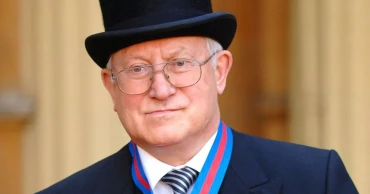
Oleg Gordievsky, Britain's most valuable Cold War spy inside KGB, dies at 86
Oleg Gordievsky, the Soviet KGB officer who played a crucial role in shaping the course of the Cold War by secretly passing intelligence to Britain, has died at the age of 86.
Gordievsky passed away on March 4 in England, where he had lived since defecting in 1985. Police confirmed Saturday that his death is not being treated as suspicious.
Historians regard Gordievsky as one of the most significant spies of the Cold War era. His intelligence, particularly in the 1980s, helped prevent a dangerous escalation of nuclear tensions between the Soviet Union and the West.
From KGB Insider to British SpyBorn in Moscow in 1938, Gordievsky joined the KGB in the early 1960s, serving in Moscow, Copenhagen, and eventually London, where he became the agency’s station chief.
Disillusioned with the Soviet regime—particularly after the USSR crushed Czechoslovakia’s Prague Spring in 1968—he was recruited by Britain’s MI6 in the early 1970s.
In his 1990 book KGB: The Inside Story, co-authored with British intelligence historian Christopher Andrew, Gordievsky wrote that he believed “the Communist one-party state leads inexorably to intolerance, inhumanity, and the destruction of liberties.” He saw working for the West as his way of fighting for democracy.
For over a decade, he provided critical intelligence to Britain and its allies during some of the Cold War’s most tense moments.
Belgian actor Émilie Dequenne dies at 43 from cancer
Preventing Nuclear EscalationIn 1983, Gordievsky warned the U.S. and U.K. that Soviet leaders were so convinced of an imminent Western nuclear attack that they were considering a preemptive strike. Amid heightened tensions during a NATO military exercise in Germany, his intelligence helped reassure Moscow that the exercise was not a precursor to war—potentially averting catastrophe.
Shortly afterward, U.S. President Ronald Reagan took steps to ease nuclear tensions with the USSR.
Gordievsky also played a key role in shaping early interactions between Britain and Mikhail Gorbachev. In 1984, he briefed both Gorbachev—then a rising Soviet leader—before his visit to the U.K. and the British government on how to approach him. The meeting between Gorbachev and Prime Minister Margaret Thatcher was a major success, paving the way for future diplomacy.
Ben Macintyre, author of The Spy and the Traitor, a book about Gordievsky’s life, told the BBC that the double agent “secretly helped launch the beginning of the end of the Cold War.”
A Daring Escape to the WestIn 1985, Gordievsky was summoned back to Moscow—a call he feared meant his double life had been exposed. He was interrogated and drugged but not immediately charged. Britain soon launched a covert operation to extract him from the USSR, successfully smuggling him across the Finnish border in the trunk of a car.
He became the highest-ranking Soviet spy to defect to the West.
Declassified documents from 2014 revealed that Britain considered Gordievsky so valuable that Thatcher offered Moscow a deal: If his wife and daughters were allowed to join him in London, Britain would refrain from expelling all the KGB agents he had exposed. The Soviet government refused. In response, Thatcher ordered the expulsion of 25 Russian agents, triggering diplomatic tit-for-tat expulsions but no permanent rupture in relations.
Gordievsky’s family remained under KGB surveillance for six years before finally being allowed to join him in 1991.
Grammy-nominated R&B singer Angie Stone dies in car crash
Life in Britain and Continued RisksIn Russia, Gordievsky was sentenced to death for treason—a sentence that remains in force. In Britain, he was honored for his service, receiving the title of Companion of the Order of St. Michael and St. George in 2007, an accolade also held by the fictional spy James Bond.
Despite living under U.K. protection in the quiet town of Godalming, he believed he remained a target. In 2008, he claimed he had been poisoned and spent 34 hours in a coma after taking sleeping pills given to him by a Russian associate.
His fears were underscored in 2018 when former Russian intelligence officer Sergei Skripal and his daughter were poisoned with a Soviet-developed nerve agent in Salisbury, England.
Death Not Considered SuspiciousSurrey Police said officers responded to a call at a residence in Godalming on March 4, where they found an 86-year-old man deceased. Counterterrorism officers are leading the investigation, but authorities say there is “nothing to suggest any increased risk to members of the public.”
Gordievsky's extraordinary life—from KGB insider to one of Britain’s most valuable Cold War spies—left an enduring impact on history.
Source: With input from agency
1 year ago
Johnson & Johnson plans $55b in US investments over the next 4yrs
Johnson & Johnson says it will invest more than $55 billion within the United States over the next four years, including four new manufacturing plants.
A number of companies have highlighted investments in the U.S. in recent months, a focus of Trump administration. J&J rival Eli Lilly and Co. announced in late February that it planned to build four new factories in the U.S. Both Lilly and J&J cited tax cut legislation passed in 2017 as factors in their U.S. investments.
Johnson & Johnson said Friday that it is a 25% increase in investment compared with the prior four years and estimates the U.S. economic impact will be more than $100 billion a year.
“Our increased U.S. investment begins with the ground-breaking of a high-tech facility in North Carolina that will not only add U.S.-based jobs but manufacture cutting edge medicines to treat patients in America and around the world,” Chairman and CEO Joaquin Duato said in a statement.
The North Carolina plant is in Wilson, just east of Raleigh. The locations of the other three facilities were not disclosed.
Aside from building four new plants, Johnson & Johnson said that it will expand several existing sites. The company is also planning to make investments in research and development infrastructure and technology.
Johnson & Johnson's efforts are among several companies pledging to enhance their manufacturing in the U.S. Earlier this month chip giant Taiwan Semiconductor Manufacturing Co. said that it plans to invest $100 billion in the U.S., on top of $65 billion in investments the company had previously announced.
Asian shares mixed as Wall St dips on US uncertainty
In February Apple announced that it plans to invest more than $500 billion in the U.S. over the next four years, including plans to hire 20,000 people and build a new server factory in Texas.
Apple outlined several concrete moves in its announcement, the most significant of which is the construction of a new factory in Houston — slated to open in 2026 — that will produce servers to power Apple Intelligence, its suite of AI features.
1 year ago
Asian shares mixed as Wall St dips on US uncertainty
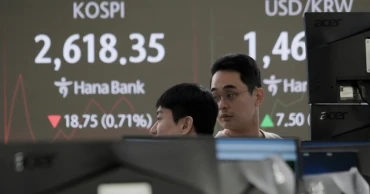
Asian stocks displayed mixed performance on Friday after Wall Street declined, unsettled by uncertainties stemming from US President Donald Trump.
U.S. futures remained largely unchanged, while oil prices edged higher.
Chinese markets fell for the second consecutive day. Hong Kong’s Hang Seng plunged 2% to 23,733.02 after China maintained its key lending rates. Investors have been selling off technology stocks following recent gains.
The Shanghai Composite Index declined 0.9% to 3,376.96.
In Tokyo, the Nikkei 225 gained 0.5% to 37,933.13 as markets resumed trading after a holiday on Thursday. Japan’s core inflation rate dropped less than anticipated, partly driven by rising rice prices due to supply shortages.
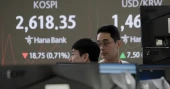
Elsewhere in Asia, South Korea’s Kospi inched up 0.1% to 2,643.59, while Australia’s S&P/ASX 200 advanced 0.4% to 7,947.30.
Bangkok’s SET increased 0.5%, whereas Taiwan’s Taiex declined 0.4%.
On Thursday, the S&P 500 slipped 0.2% to 5,662.89, while the Dow Jones Industrial Average dipped by less than 0.1% to 41,953.32. The Nasdaq Composite dropped 0.3% to 17,691.63.
Wall Street has been experiencing volatility for weeks, with stock prices fluctuating due to uncertainty over the economic consequences of Trump’s trade war. Markets received a boost on Wednesday when Federal Reserve Chair Jerome Powell stated that the economy remains strong enough to justify keeping interest rates unchanged.
Additional data released Thursday reinforced this outlook. One report indicated that slightly fewer U.S. workers filed for unemployment benefits last week than analysts had anticipated.
Another report revealed stronger-than-expected sales of previously owned homes last month, while a third suggested that manufacturing growth in the mid-Atlantic region exceeded economists’ forecasts.
Powell emphasised on Wednesday that exceptionally high uncertainty makes economic forecasting challenging—not only due to the trade war but also because of potential repercussions from efforts to shrink the U.S. federal government.
The recent decline in the broader U.S. stock market, which brought it more than 10% below its all-time high within weeks, may have been inevitable after stock prices surged at a pace that outstripped corporate profit growth, making valuations appear overly expensive.
On Wall Street, Darden Restaurants rose 5.8% after reporting quarterly profits in line with analysts’ projections, despite what the company—owner of Olive Garden, Ruth’s Chris Steak House, and other chains—described as a “challenging environment.”
Accenture suffered one of the market’s steepest losses on Thursday, even though the consulting and professional services firm posted slightly better-than-expected quarterly profit and revenue. Concerns arose over potential revenue impacts from U.S. government budget cuts, with Elon Musk leading efforts to curb federal spending. The federal government accounted for 17% of Accenture’s North American revenue last fiscal year, causing its stock to drop 7.3%.
Meanwhile, Britain’s FTSE 100 fell 0.1% on Thursday after the Bank of England left its main interest rate unchanged.
In early trading on Friday, U.S. benchmark crude oil rose by 31 cents to $68.38 per barrel in electronic trading on the New York Mercantile Exchange.
Brent crude, the global benchmark, gained 27 cents to $72.27 per barrel.
The U.S. dollar strengthened to 149.40 Japanese yen from 148.78 yen late Thursday, while the euro dipped to $1.0831 from $1.0854.
1 year ago
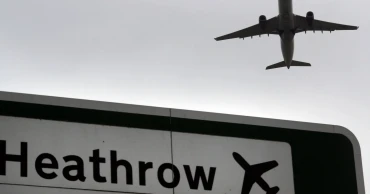
Heathrow Airport to shut down Friday after fire causes power outage in London
Heathrow Airport, one of Europe’s busiest travel hubs, will remain closed throughout Friday after a fire at an electrical substation caused a widespread power outage in parts of west London. The closure is expected to disrupt travel for hundreds of thousands of passengers.
The fire, which broke out late Thursday, resulted in power cuts affecting thousands of homes and businesses. Around 150 people were evacuated after a transformer caught fire at the substation.
“To ensure the safety of passengers and staff, Heathrow will remain closed for the entire day on Friday,” the airport said in a statement. “Significant disruptions are expected in the coming days, and passengers should not attempt to travel to the airport until further notice.”
Airport officials said they will provide updates once more information is available regarding power restoration.
Why monkey is blamed for Sri Lanka’s nationwide power cut?
Fire and Power Outages Impact ThousandsThe London Fire Brigade deployed 10 fire engines and approximately 70 firefighters to tackle the blaze. Social media footage showed intense flames and thick plumes of smoke rising from the site.
“The fire has led to a power outage impacting thousands of homes and businesses,” said Assistant Commissioner Pat Goulbourne. “We are working closely with partners to minimize disruption.”
Scottish and Southern Electricity Networks reported that over 16,300 homes had been affected by the outage. Emergency crews responded to the fire at 11:23 p.m. on Thursday, but the exact cause remains under investigation. Authorities have advised people to avoid the area as firefighting efforts continue.
Flight Cancellations and Travel DisruptionsFlightAware, a real-time flight tracking website, reported several cancellations, including two flights from New York’s John F. Kennedy International Airport—one operated by Delta Airlines and another by American Airlines. A United Airlines flight from Washington Dulles International was also canceled.
Tiny Kuwait, in grip of desert summer heat, announces power cuts after fuel disruption
Due to nighttime flying restrictions, Heathrow typically opens at 6 a.m. The airport’s closure is set to last until 11:59 p.m. on Friday.
Earlier this year, the UK government approved plans for a third runway at Heathrow, aiming to enhance economic growth and global connectivity.
Source: With input froma agency
1 year ago
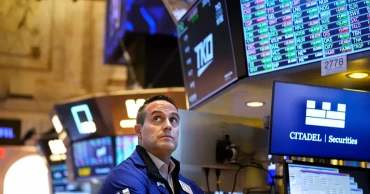
Wall Street pulls back, losing some previous day's gains
US stocks are experiencing a decline, giving back some of the previous day's gains. The S&P 500 dropped by 0.7% in early trading Thursday.
The Dow Jones Industrial Average decreased by 227 points, or 0.5%, and the Nasdaq composite fell by 0.7%. Stocks were boosted on Wednesday after Federal Reserve Chair Jerome Powell stated that the economy remains strong enough for interest rates to remain unchanged.
Bank of England joins US Fed in pausing interest rates
Powell also highlighted the challenges in forecasting future outcomes due to extremely high uncertainty. European markets also saw losses following a mixed performance in Asia.
On Thursday, Wall Street markets gave back some of their gains from the previous day when the Federal Reserve reassured that the U.S. economy is robust and decided to keep its key interest rate unchanged.
Before the bell, futures for the S&P 500 dropped by 0.4%, while Dow Jones Industrial Average futures fell by 0.3%. Nasdaq futures decreased by 0.5%.
Discount retailer Five Below surged more than 11% in premarket trading after reporting better-than-expected fourth-quarter sales and profits. The Philadelphia-based company also provided a positive sales forecast and announced plans to open 150 stores this year.
Later Thursday, companies such as FedEx and Nike are scheduled to report earnings after market close. The Labor Department will also release its latest data on layoffs, while the National Association of Realtors will report existing home sales for February.
In addition to the Fed’s announcement on Wednesday, stock prices were supported by falling yields in the bond market. Lower Treasury yields can make stocks more attractive as investors seek higher returns.
This rally follows weeks of significant volatility in the U.S. stock market, with investors concerned about the economic impact of President Donald Trump's policies, particularly his decisions on tariffs. His numerous policy announcements have created uncertainty, prompting concerns that U.S. businesses and consumers may reduce their spending.
Fed Chair Jerome Powell acknowledged the growing pessimism among U.S. consumers and businesses, as indicated by recent surveys. However, he also pointed to positive economic data, such as low unemployment, which suggests that the economy remains strong.
The Fed has kept interest rates steady this year after making significant cuts at the end of last year. While lower rates can help stimulate the economy, they also pose the risk of rising inflation.
Fed officials have suggested that they still expect two additional rate cuts by the end of this year.
Jewellery shops see Eid sales decline amid soaring gold prices
Powell also reassured that concerns about “stagflation,” where the economy stagnates while inflation remains high, are unfounded.
In Europe, markets fell following a mixed day in Asia, where Chinese markets dropped due to heavy selling of tech stocks.
Germany’s DAX index fell 1.5%, while the CAC 40 in Paris dropped 1%. The FTSE 100 in London was down by just 0.1% at midday.
Markets in Japan were closed for a holiday.
Hong Kong’s Hang Seng index fell by 2.2% to 24,219.95, and the Shanghai Composite dropped by 0.5% to 3,408.95. Shares of search engine company Baidu fell by 5.4%, and e-commerce giant Alibaba saw a 4% decline, while JD.com dropped 4.9%.
In South Korea, the Kospi index gained 0.3% to 2,637.10, while Australia’s S&P/ASX 200 rose by 1.2% to 7,918.90.
Taiwan’s Taiex jumped by 1.9%, while Thailand’s SET index dropped by 0.7%.
1 year ago
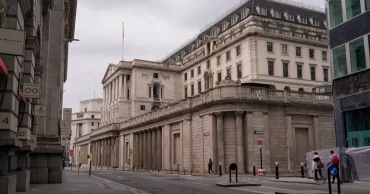
Bank of England joins US Fed in pausing interest rates
On Thursday, the Bank of England kept its main UK interest rate steady at 4.50%, despite sluggish economic growth and heightened uncertainty due to tariff measures introduced by the Trump administration in the US.
The widely anticipated decision by the nine-member Monetary Policy Committee follows the US Federal Reserve’s move a day earlier to leave interest rates unchanged.
Jewellery shops see Eid sales decline amid soaring gold prices
Meeting minutes revealed that eight members voted to maintain the current policy, while one supported a quarter-point reduction.
Since last August, the Bank of England has lowered its main rate three times from a 16-year peak of 5.25%, most recently in February, following a decline in inflation from over 10%—a multi-decade high reached after the energy price surge triggered by Russia’s full-scale invasion of Ukraine in early 2022.
However, inflation remains at 3%, still above the bank’s 2% target, and is expected to climb in the coming months, even before factoring in potential tariffs from the Trump administration. Many economists predict inflation could reach 4% as businesses raise prices in response to a significant minimum wage hike and increased payroll taxes.
“There’s a lot of economic uncertainty at the moment,” said Bank Governor Andrew Bailey. “We still think that interest rates are on a gradually declining path, but we’ve held them at 4.5% today.”
If policymakers maintain their measured approach, another rate cut is likely in May when they will have access to the bank’s latest economic forecasts, and Bailey will hold his next press conference.
Bailey noted that rate-setters will be “looking very closely at how the global and domestic economies are evolving” and reiterated that their priority is to ensure inflation remains “low and stable.”
On Wednesday, the US Federal Reserve also kept borrowing rates unchanged and voiced concerns over the short-term economic outlook, particularly regarding US President Donald Trump’s tariff policies, which economists fear could dampen global growth and drive up prices.
Bangladesh set to achieve record remittance inflow in March
The UK, the world’s sixth-largest economy, recorded meagre growth of 0.1% in the fourth quarter—a major disappointment for the newly elected Labour government, which has prioritised economic expansion. Since the 2008-2009 global financial crisis, the UK’s economic performance has consistently lagged behind its long-term average.
Critics argue that Treasury chief Rachel Reeves bears some responsibility for the bleak economic outlook since Labour’s return to power in July after 14 years. They claim she adopted an overly pessimistic stance upon assuming office and subsequently raised taxes, particularly on businesses.
Reeves, who is set to deliver a highly anticipated fiscal update to lawmakers on 26 March, will be hoping for further rate cuts by the Bank of England in the coming months, as lower borrowing costs could help stimulate growth.
Economists suggested the bank’s latest update provided little clarity on the broader outlook, though most still anticipate a quarter-point reduction in May.
“But beyond that, much will depend on trade policy from the US and upcoming fiscal announcements from the Chancellor,” said Luke Bartholomew, deputy chief economist at asset management firm Aberdeen.
1 year ago
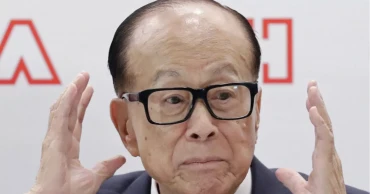
Hong Kong tycoon Li Ka-shing faces scrutiny over Panama Ports Deal
A business deal involving Hong Kong’s richest man, Li Ka-shing, has sparked controversy after his company, CK Hutchison Holdings, agreed to sell its Panama Canal port assets to a consortium that includes U.S. investment firm BlackRock Inc. The move has reportedly angered Beijing.
In recent days, Beijing’s Hong Kong affairs offices have shared sharp critiques from state-backed media regarding the proposed sale. This has raised concerns about the deal’s future and highlighted the complex balancing act that Hong Kong businesses face between aligning with Beijing’s expectations and pursuing their own economic interests.
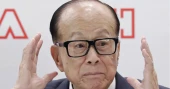
Li Ka-shing’s Influence and Ties to BeijingNicknamed “Superman,” 96-year-old Li is among the world's wealthiest individuals, with Forbes estimating his net worth at $38 billion. Though he retired as chairman of CK Hutchison in 2018, handing the reins to his son Victor, he remains one of Hong Kong’s most powerful figures.
Li built his vast business empire from humble beginnings, mirroring Hong Kong’s transformation into a global financial hub. His conglomerate spans multiple sectors, including real estate, supermarkets, telecommunications, and utilities. Internationally, his company owns British drugstore chain Superdrug and European mobile carrier Three.
CK Hutchison has operated ports at both ends of the Panama Canal since 1997—an arrangement that once led former U.S. President Donald Trump to claim Chinese interference in the critical shipping route.
Business tycoon killed by grandson over property dispute
Over the years, Li has maintained close ties with Beijing, serving on elite political committees and meeting with top Chinese leaders. The Chinese Communist Party (CCP) has historically viewed support from Hong Kong’s business community as crucial for maintaining the city's capitalist economy and global trade networks. However, Li has occasionally faced criticism from Beijing, particularly when he sold off mainland Chinese assets in 2015.
During Hong Kong’s 2019 pro-democracy protests, he was also criticized for his perceived neutrality, while other business leaders took a more pro-Beijing stance.
The Panama Ports Sale and Beijing’s ReactionOn March 4, CK Hutchison announced plans to sell its port operations, including holdings in Hutchison Port Holdings and Hutchison Port Group Holdings, to a consortium featuring BlackRock subsidiary Global Infrastructure Partners and Terminal Investment Limited. The latter is chaired by Italian shipping magnate Diego Aponte, whose family reportedly has long-standing business ties with Li.
The deal, valued at nearly $23 billion (including $5 billion in debt), would grant the consortium control over 43 ports in 23 countries, including the Balboa and Cristobal ports at either end of the Panama Canal. The transaction does not include any ports in Hong Kong or mainland China. CK Hutchison has stated the sale is purely a commercial decision.
While the deal was welcomed by Trump, it has drawn strong criticism from Beijing. A state-backed newspaper editorial accused CK Hutchison of betraying China and urged the company to reconsider its loyalties. Another editorial suggested that great entrepreneurs must also be patriots, warning against aligning with "predatory" American politicians.
On Chinese social media platform Weibo, public sentiment has been largely critical of Li, with some users accusing him of prioritizing profit over national interest.
Hong Kong’s Chief Executive John Lee refrained from directly criticizing the deal or Trump but reiterated Beijing’s opposition to “bullying tactics” in international trade.
Geopolitical ImplicationsSome reports suggest that Chinese leaders were frustrated at not being consulted before the deal was announced. Analysts believe Beijing was caught off guard and had little time to formulate a response.
Ports are strategically sensitive assets, and transactions involving them often attract government scrutiny, said Wilson Chan, co-founder of the Pagoda Institute, a think tank specializing in public policy and global economics.
Top Hong Kong court overturns convictions of 3 former organizers of Tiananmen vigils
It remains unclear whether Beijing’s pressure will impact the deal, which requires approval from Panama’s government. When asked whether Chinese authorities were investigating the sale, China’s Foreign Ministry redirected reporters to other government agencies. CK Hutchison has yet to comment on the controversy and has postponed its planned financial results news conference.
Analysts warn that canceling the deal could carry risks. “If Beijing forces CK Hutchison to back out, Trump will take credit for securing the deal and then react aggressively if it is reversed,” said Chan. This could further erode global confidence in Hong Kong’s business environment.
Long-Term Implications for Hong KongThe first Trump administration imposed sanctions on Chinese and Hong Kong officials for undermining the city's autonomy, promised under the "One Country, Two Systems" framework established when Britain handed the territory to China in 1997. However, following the 2019 protests, Beijing has tightened political control over Hong Kong.
Li may attempt to appease Beijing by reinvesting proceeds from the port sale into Hong Kong or mainland China’s port infrastructure, aligning with government priorities. However, tensions between Beijing and private businesses remain unpredictable.
Although Chinese President Xi Jinping recently met with business leaders to signal support for the private sector, companies may still feel pressured to align with the CCP’s political agenda. If Beijing moves to block Li’s port deal, analysts believe Washington could retaliate with further sanctions on Hong Kong and Chinese businesses.
“This situation underscores U.S. concerns about Hong Kong’s shrinking business autonomy,” said George Chen of The Asia Group, a Washington-based consultancy. “It weakens the credibility of ‘One Country, Two Systems.’”
1 year ago
Vermont businesses feel impact of Trump's tariffs on Canada
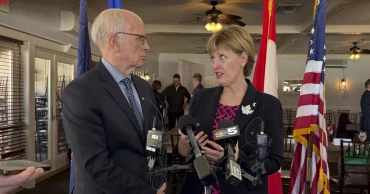
Business owners from both sides of the U.S.-Canada border gathered in Vermont on Tuesday to discuss the effects of President Donald Trump’s tariffs on Canadian steel and aluminum, which have disrupted industries and strained economic ties.
Trump’s repeated remarks suggesting Canada should become the 51st U.S. state have fueled anger among Canadians, leading to a boycott of American products.
“This situation in Canada is unprecedented. The threat extends beyond just tariffs,” said Marie-Claude Bibeau, a Canadian Member of Parliament representing Compton-Stanstead. “It’s an attack on our sovereignty, and that makes me emotional.”
The roundtable discussion included representatives from breweries, a maple syrup producer, a furniture company, an electrical firm, and a ski resort.
Donna Young of Judd’s Wayeeses Farms in Morgan explained that much of the equipment she relies on for maple syrup production is sourced from Canada.
“Between tariffs and political uncertainty, it’s been extremely disruptive,” she said. “Weather is already a major challenge in our business—we don’t need this extra burden.”
Bob Montgomery of Hill Farmstead Brewery in Greensboro warned that the 25% tariff on aluminum, used for beer cans, will ultimately raise beer prices.
China plans to boost consumer spending as Trump's tariff war threatens exports
“That extra cost is going to be passed directly to us,” he said.
Senator Peter Welch, a Democrat from Vermont who hosted the meeting, criticized Trump’s actions, saying they have damaged what was once a stable and mutually beneficial economic relationship.
“This should not be happening,” Welch said. “We are neighbors, allies, and friends. We need to keep it that way.”
Canada is the leading export destination for 36 U.S. states. Every day, nearly C$3.6 billion (US$2.7 billion) in goods and services flow between the two countries. In Vermont, trade with Canada accounts for more than a third of exports and two-thirds of imports. Welch noted that one in four Vermont businesses depends on trade with Canada and cannot afford a 25% increase in import costs.
“Everyone understands—except apparently President Trump—that tariffs are ultimately paid by consumers,” Welch said in a recent Senate floor speech. “This is a really bad idea. It’s going to hurt Vermont.”
Bibeau urged American businesses to pressure Trump into reconsidering the tariffs.
EU to impose retaliatory tariffs against Trump's steel and aluminum duties starting April 1
“This isn’t just bad for our economy—it’s bad for yours, too,” she said. “We need to work together and show that these policies are harming both countries and their people.”
Source: With input from agency
1 year ago
India, New Zealand strengthen ties after reviving free trade talks
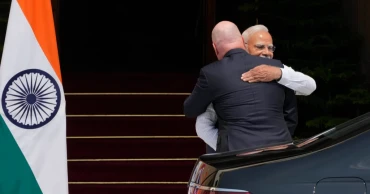
Indian Prime Minister Narendra Modi and New Zealand Prime Minister Christopher Luxon met on Monday to reinforce their defence and economic relations, a day after both nations announced the revival of free trade agreement negotiations.
The two leaders convened in New Delhi, where they signed agreements aimed at strengthening cooperation in defence, food processing, pharmaceuticals, renewable energy, and critical minerals.
Chinese company to invest US$ 12.25 mln to establish a high-end garment industry in Mongla EPZ
Luxon described his meetings with Modi and other Indian leaders as “highly productive,” stating that they would help enhance ties between the two countries. He noted that the defence partnership encompasses joint military training.
“New Zealand is committed to deepening its engagement with India across multiple sectors, including defence and security, trade and economics, people-to-people connections, education, tourism, sports, and culture,” Luxon said at a joint press conference with Modi.
Accompanied by business leaders and several parliamentarians, Luxon is on a five-day visit to India.
On Sunday, India and New Zealand agreed to resume free trade negotiations that had remained stalled for over a decade.
The announcement followed discussions between New Zealand’s Trade and Investment Minister Todd McClay and his Indian counterpart, Piyush Goyal. This development aligns with India’s recent efforts to secure trade agreements with other countries, particularly in the wake of former U.S. President Donald Trump’s imposition of reciprocal tariffs on imports from nations including India.
Last month, India and the European Union agreed to finalise a long-pending free trade agreement by the end of the year, while a similar deal between India and the United Kingdom is also under negotiation.
India’s Commerce Ministry stated that the free trade agreement with New Zealand aims to “achieve balanced outcomes that enhance supply-chain integration and improve market access,” though it did not disclose further details.
In a statement on Sunday, Luxon emphasised the benefits of trade, saying, “It is through trade that we can strengthen both our economies, creating more jobs and higher incomes for Kiwis and Indians.”
China plans to boost consumer spending as Trump's tariff war threatens exports
Bilateral trade between India and New Zealand amounted to $1.7 billion in the 2023-24 financial year.
1 year ago

China plans to boost consumer spending as Trump's tariff war threatens exports
Chinese government officials on Monday outlined steps they are taking to try to boost domestic demand by getting consumers to spend more as a tariff war launched by U.S. President Donald Trump threatens to curb the country's exports.
The central bank will study creating new tools to increase low-cost funding for important consumption areas, said Che Shiyi from the People’s Bank of China, the central bank.
On the spending side, the government has already provided a first tranche of 81 billion yuan ($11.2 billion) to local governments in January for a rebate program to boost auto and appliance sales, announced Li Chunlin, the vice chairman of the National Development and Reform Commission.
The officials spoke at a news conference one day after the government, together with the ruling Communist Party, released a multi-faceted plan to try to boost consumer spending. The moves seemed designed to demonstrate that the government is committed to reviving a sluggish economy.
“While there are few new details on how the government will increase spending, the details of the plan show a greater determination to tackle China’s consumption problem this year,” Lynn Song, the chief Greater China economist at ING bank, wrote in a report on the plan.
New government data released Monday showed signs of improvement in the first two months of the year, though housing market weakness remained a drag on growth.
Retail sales were up 4% in January and February compared to last year, more than forecast. Industrial production rose 5.9%, the National Bureau of Statistics reported. The stronger than expected data helped buoy stock markets in Asia.
A bureau spokesperson said the economy is moving in the right direction but cautioned that challenges remain at home and abroad. Trump has imposed a 20% tariff on Chinese products, which could set back an economy with a high dependence on exports and late on Sunday, he reiterated his intention to push ahead with more tariffs in early April.
“The external environment has become more complex and grim, domestic effective demand is insufficient, some companies are facing difficulties in production and operation, and the foundation for the continuous recovery of the economy is still unstable,” Fu Linghui said at a news conference.
He added, though, that China’s foreign trade has proven resilient.
“China’s industrial system is complete, and its innovation capabilities are gradually improving,” he said. “There is a foundation and conditions for the steady development of foreign trade.”
The long-running real estate crisis has depressed consumer confidence and spending. Real estate investment fell 9.8% in the first two months of the year, the statistics bureau said.
The good news is that real estate price declines have slowed, though they have yet to bottom out. Prices for both new and existing homes fell in January and February, but at a much slower pace than most of last year.
ING bank said it expects real estate prices to stop falling this year but they likely will not rebound quickly.
“February’s data showed that it would be wise for officials not to take their foot off the pedal in terms of policy support,” Song wrote in a report.
The plan released Sunday includes various initiatives, from accelerating the development of artificial-intelligence related products such as autonomous driving and smart wearables to developing winter tourism in parts of the country that get a lot of snow and ice, the official Xinhua News Agency said.
It also included measures to boost spending power by expanding the minimum age, benefits for older people and health insurance for rural residents, Xinhua said.
Earlier this month, the government announced the rebate program, now in its second year, would double to 300 billion yuan in 2025. It offers rebates to people who trade in old appliances or automobiles for new ones.
1 year ago