Asia

China’s new coal power plant projects hit highest level in 10yrs, report says
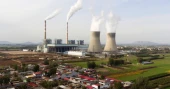
China’s power industry began construction on nearly 100 gigawatts of new coal plant capacity last year, the most in nearly a decade, a report from two clean-energy groups said Thursday.
The development raises concerns about the country’s ability to meet its carbon reduction goals and threatens to undercut China's massive expansion in solar and wind power, which has far outpaced that in the United States and Europe, the report said.
“Instead of replacing coal, clean energy is being layered on top of an entrenched reliance on fossil fuels,” it said.
China establishes over 30,000 smart factories
The report is part of a review of China’s coal projects done every six months by the Europe-based Centre for Research on Energy and Clean Air and the U.S.-based Global Energy Monitor.
Construction began on 94.5 gigawatts of coal power plant capacity in 2024, more than in any year since 2015, according to a worldwide database of coal plants maintained by Global Energy Monitor.
Work also resumed on 3.3 gigawatts of suspended projects, the report said.
"A substantial number of new plants will come online in the next 2-3 years, further solidifying coal’s role in the power system,” it said.
The concern is that coal power will displace solar and wind capacity. The report said that in the last three months of 2024, electricity generation from fossil fuels remained high, while solar and wind utilization dropped sharply.
Chinese President Xi Jinping announced two climate goals in 2020 — a peak in carbon emissions by 2030 and reaching carbon neutrality by 2060.
The country's carbon emissions may have already peaked, analysts say, and the next challenge is to begin reducing them.
China was among the many nations that missed a U.N. deadline this week to submit a national plan to cut emissions by 2035.
Foreign Ministry spokesperson Guo Jiakun said the government is working on a plan and will submit it “in due course this year.”
The report from the two clean energy groups said that China accounted for 93% of construction starts globally for coal power plants last year.
South Korea's top think tank lowers economic growth projection, citing Trump's tariffs
Proposals for new or revived coal plant projects in China fell last year to 68.9 gigawatts from more than 100 gigawatts the two previous years, suggesting that construction starts could slow, the report said.
The amount of new coal power capacity approved in China last year also fell to 66.7 gigawatts, after a sharp rise in 2022-23.
1 year ago

Young Chinese turn to DeepSeek for emotional support
Each night before bed, 28-year-old Holly Wang logs into DeepSeek for what she calls her "therapy sessions." Since the launch of the Chinese AI app in January, Holly has turned to the chatbot to share her struggles, including the grief of losing her grandmother. Its thoughtful, empathetic responses have moved her to tears more than once.
"DeepSeek has been an incredible counsellor," Holly says. "It helps me view situations from new perspectives, often more effectively than the paid therapy services I've tried." Holly requested anonymity to protect her privacy.
AI apps like DeepSeek have become part of daily life for many around the world, assisting with tasks like writing reports, planning trips, and learning new skills. In China, however, young people are increasingly turning to these tools for emotional support—a role not traditionally associated with algorithms and code.
DeepSeek's success has not only sparked national pride but has also provided solace to a generation facing uncertainty. Experts attribute this growing emotional reliance to a sluggish economy, high unemployment, and the psychological toll of prolonged COVID-19 lockdowns. Additionally, China's tightening controls have limited public forums for airing frustrations.
The chatbot stands out from domestic alternatives like those from Alibaba, Baidu, and ByteDance, primarily because of its unique "thought process" feature. Users can see how the AI formulates its responses, offering a sense of transparency and personal connection.
On social media platform RedNote, Holly shared how one interaction with DeepSeek brought her to tears. "I don’t know why, but it’s been so long since I felt such comfort," she wrote. "I’ve been overwhelmed by distant dreams and endless work. Thank you, AI."
Unlike ChatGPT and Google's Gemini, which are restricted in China, DeepSeek is readily accessible without the need for VPN services. Holly, who works in the creative industry, describes it as superior to other Chinese AI apps, especially in generating creative and literary content.
AI's growing role in emotional support is supported by research. Nan Jia, a professor at the University of Southern California, notes that chatbots can help people feel genuinely heard. "Friends and family often jump to solutions when someone just wants to feel understood," she explains. "AI appears more empathetic because it listens to everything without interruption."
Despite a rising demand for mental health services, social stigma remains a barrier in parts of Asia. Another woman from Hubei province recounted her positive experience with DeepSeek after previous disappointments with other apps. When she asked if she was oversharing with her family, DeepSeek suggested her feelings might stem from a deep-seated desire for approval. The response, paired with a step-by-step framework for self-reflection, left her in tears.
"DeepSeek introduced me to new perspectives," she says. "It genuinely seems to understand you before responding."
As more young Chinese turn to AI for companionship and counsel, DeepSeek stands out as more than just a digital assistant—it has become a virtual shoulder to lean on in uncertain times.
With input from BBC
1 year ago

Thousands in Taiwan and China celebrate the Lantern Festival with high hopes and rice dumplings
Thousands in Taiwan and China celebrated the Lantern Festival on Wednesday by releasing paper lanterns into the night sky, visiting light installations and snacking on glutinous rice dumplings.
The holiday marks the end of the Lunar New Year period and is celebrated annually on the 15th day of the first month of the lunar calendar.
At the Pingxi Sky Lantern Festival in northern Taiwan, thousands lined up in the rain to light up and observe wish lanterns. Among them were Mae Alegonero and Shine Ceralvo, friends from the Philippines who work in central Taiwan. They decided to join the event after seeing images of the floating lanterns trending on TikTok.
“You experience this once in a lifetime,” Alegonero said, as she sheltered under an umbrella with her friend and waited for the festivities to begin.
Some visitors came from as far as Europe and Latin America to witness in person the iconic images of paper lanterns filling the night sky.
Villagers in Taiwan started using paper lanterns more than a century ago to signify to others it was safe to return after bandits raided their communities. Today, the lanterns carry hopes of peace and prosperity in the New Year.
For Charlotte Cadinot, an exchange student from France, the fascination with wish lanterns started when she watched the Disney movie “Tangled,” which features a scene where Princess Rapunzel and her beau wish upon lanterns floating above a lake.
From South Korea to India, devotees mark the birthday of Buddha with lanterns and prayers
Cadinot and her boyfriend, Remi Delmas, recreated that scene to an extent when they wrote their own common wish on a lantern before releasing it into the sky.
A total of nine waves of lantern releases were interspersed with music and dance performances as part of the festival. The stars of the show were a pair of 12-foot (3.6 meters) pink and golden snake-shaped lanterns, in a nod to the Year of the Snake.
People in China also celebrated the Lantern Festival, although no officially-organized event there sees the release of large amounts of paper lanterns.
Instead, Beijing residents lined up for glutinous rice dumplings — the festival’s most sought-after snack — and visited light shows across the city. The largest among them, at the Beijing Garden Expo Park, in the city’s suburbs, displayed more than 10,000 installations of various sizes and designs.
Some installations were up to 60 feet (18 meters) tall and depicted everything from cultural landmarks to traditional symbols such as the God of Fortune, dragons and phoenixes to modern interpretations such as a cyberpunk-style Beijing opera headdress.
Lantern Festival celebrated at CMG Bangla Dhaka office
1 year ago

Seoul says North Korea is destroying facility that hosted reunions of war-separated families
North Korea is demolishing a South Korea-built property that had been used to host reunions of families separated during the 1950-53 Korean War, the South’s government said Thursday, as it continues to eliminate symbols of engagement between the war-divided rivals.
Relations between the Koreas are at their worst in years, with North Korean leader Kim Jong Un continuing to flaunt his expanding nuclear weapons program and declaring to abandon long-standing goals of inter-Korean reconciliation, while describing the South as a permanent enemy.
The 12-story building at the North’s scenic Diamond Mountain resort, which has 206 rooms and banquet facilities for hosting meetings, had been used for family reunions since 2009. The Koreas last held a family reunion in 2018, after Kim initiated diplomacy with Seoul and Washington in an effort to leverage his nuclear program for economic benefits.
Negotiations derailed in 2019 after a failed summit between Kim and U.S. President Donald Trump, who was serving his first term, when the Americans rejected North Korea’s demands for a major release of U.S.-led economic sanctions in exchange for a partial surrender of its nuclear capabilities. The North has since suspended virtually all diplomatic activity with the South and ignored U.S. requests to resume talks while accelerating the development of nuclear weapons and missiles.
South Korea's top think tank lowers economic growth projection, citing Trump's tariffs
Seoul’s Unification Ministry, which handles inter-Korean affairs, said it had confirmed that North Korea was demolishing the building, named the Reunion Center for the Separated Families, and urged the North to suspend the destruction. The North had previously removed a South Korea-built hotel, golf course and other tourist facilities from the Diamond Mountain resort.
“Demolishing the reunion center is an act against humanity that crushes the yearning of separated families, as well as a grave infringement of our state-owned property,” the ministry said in a statement. The ministry said the South’s government will consider “necessary” countermeasures, including legal action and international pressure, but it isn’t clear whether Seoul has any effective options.
North Korea's Kim slams US-South Korea-Japan partnership and vows to boost his nuclear program
In 2023, South Korea filed a 44.7 billion won ($30 million) damage suit against North Korea for blowing up a joint liaison office just north of their border in 2020. The lawsuit was seen as symbolic as there’s no clear way for South Korea to force North Korea to pay if it is found liable for damages.
1 year ago
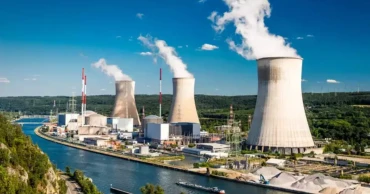
India commits $2 billion to expand nuclear power capacity
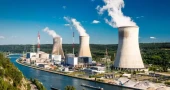
India wants more nuclear power, has pledged over $2 billion toward research and will change laws to boost investment to do it.
The pledges were made by India's finance minister earlier this month as part of a plan to expand electricity generation and reduce emissions. Nuclear power is a way to make electricity that doesn't emit planet-warming gases, although it does create radioactive waste. India is one of the world’s biggest emitters of planet-heating gases and over 75% of its power is still generated by burning fossil fuels, mostly coal. India wants to install 100 gigawatts of nuclear power by 2047 — enough to power nearly 60 million Indian homes a year.
Energy experts say that for the world to move away from carbon-polluting fuels like coal, oil and gas, sources like nuclear that don't rely on the sun and the wind — which aren't always available — are needed. But some are skeptical about India's ambitions as the country's nuclear sector is still very small, and negative public perceptions about the industry remain.
To grow the sector, Shayak Sengupta, a senior research associate at Columbia University’s Center on Global Energy Policy, said the new Trump administration's desire to reconfigure trade could be beneficial. India's nuclear growth plan provides “ample opportunity” for U.S. exports, as the nuclear power sector there is much more mature, and companies are working on developments in the technology, like smaller and cheaper nuclear reactors. India is also investing in small reactors.
Indian Prime Minister Narendra Modi’s is set to meet President Trump on Wednesday. The pair are expected to discuss nuclear power, among other topics, according to India's oil minister.
Nuclear power is around three times as expensive as solar energy in India and can take up to six years to install as opposed to similar amounts of solar that usually take less than a year. Newer small modular reactors are cheaper and faster to build, but they also make less electricity.
India has managed to double the amount of nuclear power installed in the country in the last decade, but it still makes up just 3% of its electricity.
Still, “the first challenge remains convincing the public to let the projects get deployed in their vicinity,” said Ruchita Shah, an energy analyst at the climate think-tank, Ember. Local communities have protested at the Kudankulam nuclear power plant in southern India and at proposed nuclear sites in the western state of Maharashtra in the last decade, citing security and environmental concerns.
But for investors and governments, “the level of interest (in nuclear power) now is the highest it's been since the oil crises in the 1970s,” said Brent Wanner, head of the power sector unit at the International Energy Agency. That's because it's reliable and clean, he said.
The IEA found that 63 nuclear reactors are currently under construction globally, the most since 1990.
Wanner said governments are critical in getting nuclear power projects underway and India's plan “very positive” for the nuclear industry.
Even with its eye on nuclear, India shouldn't forget about other sources of energy that don't emit greenhouse gases, said Madhura Joshi, from the climate think tank E3G.
“Solar, other renewables and storage can come up much faster and quicker," Joshi said, delivering “the immediate solutions that are needed.”
1 year ago

Why monkey is blamed for Sri Lanka’s nationwide power cut?
A nationwide blackout in Sri Lanka has been attributed to a monkey that entered a power station south of Colombo, disrupting the electricity supply across the island nation of 22 million people.
Authorities have begun restoring power, prioritising medical facilities and water purification plants.
Energy Minister Kumara Jayakody told reporters that the outage occurred when the monkey came into contact with a grid transformer, causing an imbalance in the system.
The blackout, which began around 11:00 local time (05:30 GMT) on Sunday, left many reliant on generators. Officials said it could take several hours to fully restore power.
The incident sparked criticism and humour on social media. “A rogue monkey knocked out Sri Lanka’s entire power grid after triggering a total failure at a substation in Colombo,” wrote X user Mario Nawfal. “One monkey = total chaos. Time to rethink infrastructure?” he added.
Tiny Kuwait, in grip of desert summer heat, announces power cuts after fuel disruption
Another X user, Sreeni R, posted an illustration of Hanuman, the Hindu deity depicted as a monkey, remarking, “Sri Lanka tasted monkey business in the past.”
Daily Mirror editor-in-chief Jamila Husain also commented: “Only in Sri Lanka can a group of monkeys fighting inside a power station cause an islandwide power outage.”
Power cuts plague Sylhet: Frustration growing among residents and businesses
A report published by the Daily Mirror on Monday noted that engineers had long warned successive governments about the need to upgrade the national power grid to prevent frequent blackouts. The report cited an unnamed senior engineer, who cautioned that the grid’s deteriorating state made it vulnerable to widespread outages even from minor disturbances.
Sri Lanka previously faced prolonged power cuts during its economic crisis in 2022.
Source: BBC
1 year ago
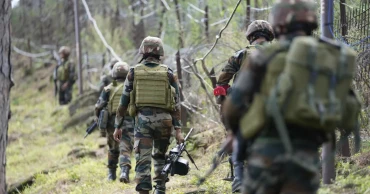
31 suspected Maoists, 2 police officers killed in central India
At least 31 suspected Maoist rebels and two police officials were killed on Sunday in the deadliest combat so far this year in central India, police said.
Hundreds of police and paramilitary soldiers launched an operation in the forests of the Indravati area of Chhattisgarh state based on intelligence that large number of rebels had gathered there, said state police Inspector General Pattilingam Sundarraj.
Sundarraj said as the troops conducted a search operation fighting erupted in the forest, killing at least 31 insurgents and two police officials. Two other police were injured . He said search operations were continuing in the area and the troops had recovered some arms and ammunition, including automatic rifles.
There was no immediate statement from the rebels.
North Korea's Kim slams US-South Korea-Japan partnership and vows to boost his nuclear program
Sunday's fighting is the biggest so far this year and the second major clash in less than a month in Chhattisgarh, according to police officer Jitendra Yadav.
At least 16 rebels were killed in the state's Gariband district on Jan. 23. According to Indian officials, the government had issued a bounty for 12 of them totaling about $345,000. Eight rebels were killed in a gunbattle with troops in the Bijapur district on Jan. 31.
Indian soldiers have been battling the Maoist rebels across several central and northern states since 1967, when the militants, also known as Naxalites, began fighting to demand more jobs, land and wealth from natural resources for the country’s poor indigenous communities. The insurgents are inspired by Chinese revolutionary leader Mao Zedong.
Years of neglect have isolated many locals, who face a lack of jobs, schools and health care clinics, making them open to overtures by the rebels. The rebels speak the same tribal languages as many villagers and have promised to fight for a better future especially in Chhattisgarh, one of India’s poorest states despite its vast mineral riches.
The rebels have ambushed police, destroyed government offices and abducted officials. They’ve also blown up train tracks, attacked prisons to free their comrades and stolen weapons from police and paramilitary warehouses to arm themselves.
1 year ago
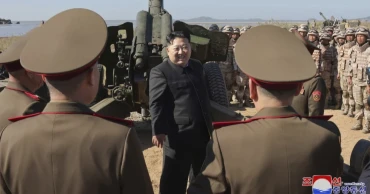
North Korea's Kim slams US-South Korea-Japan partnership and vows to boost his nuclear program
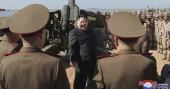
North Korean leader Kim Jong Un said an elevated U.S. security partnership with South Korea and Japan poses a grave threat to his country and vowed to further bolster his nuclear weapons program, state media reported Sunday.
Kim has previously made similar warnings, but his latest statement implies again that the North Korean leader won’t likely embrace President Donald Trump’s overture to meet him and revive diplomacy anytime soon.
In a speech marking the 77th founding anniversary of the Korean People’s Army on Saturday, Kim said the U.S.-Japan-South Korea trilateral security partnership established under a U.S. plot to form a NATO-like regional military bloc is inviting military imbalance on the Korean Peninsula and “raising a grave challenge to the security environment of our state,” according to the official Korean Central News Agency.
“Referring to a series of new plans for rapidly bolstering all deterrence including nuclear forces, he clarified once again the unshakable policy of more highly developing the nuclear forces,” KCNA said.
Amid stalled diplomacy with the U.S. and South Korea in recent years, Kim has focused on enlarging and modernizing his arsenal of nuclear weapons. In response, the United States and South Korea have expanded their bilateral military exercises and trilateral training involving Japan. North Korea has lashed out at those drills, calling them rehearsals to invade the country.
Since his Jan. 20 inauguration, Trump has said he would reach out to Kim again as he boasted of his high-stakes summit with him during his first term.
North Korean leader Kim inspects nuclear facility as Pyongyang pressures Trump administration
During a joint news conference with Japanese Prime Minister Shigeru Ishiba on Friday, Trump said that “We will have relations with North Korea, with Kim Jong Un. I got along with him very well, as you know. I think I stopped the war."
During a Fox News interview broadcast on Jan. 23, Trump called Kim “a smart guy” and “not a religious zealot.” Asked whether he will reach out to Kim again, Trump replied, “I will, yeah.”
Trump met Kim three times in 2018-19 to discuss how to end North Korea’s nuclear program in what was the first-ever summitry between the leaders of the U.S. and North Korea. The high-stakes diplomacy eventually collapsed because Trump rejected Kim’s offer to dismantle his main nuclear complex, a partial denuclearization step, in return for broad sanctions relief.
North Korea hasn’t directly responded to Trump's recent overture, as it continues weapons testing activities and hostile rhetoric against the U.S. Many experts say Kim is now preoccupied with his dispatch of troops to Russia to support its war efforts against Ukraine. They say Kim would still eventually consider returning to diplomacy with Trump if he determines he would fail to maintain the current solid cooperation with Russia after the war ends.
In his Saturday speech, Kim reaffirmed that North Korea “will invariably support and encourage the just cause of the Russian army and people to defend their sovereignty, security and territorial integrity.” Kim accused the U.S. of being behind “the war machine which is stirring up the tragic situation of Ukraine.”
In South Korea, some worry that Trump might abandon the international community’s long-running goal of achieving a complete denuclearization of North Korea to produce a diplomatic achievement.
Ukraine claims to have captured 2 North Korean soldiers fighting for Russia
But a joint statement issued by Trump and Ishiba after their summit stated the two leaders reaffirmed “their resolute commitment to the complete denuclearization of the DPRK,” the acronym of North Korea’s official name, the Democratic People’s Republic of Korea. The statement said the U.S. and Japan also affirmed the importance of the Japan-U.S.-South Korean trilateral partnership in responding to North Korea.
1 year ago
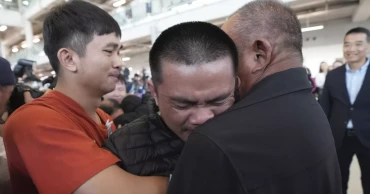
Released Thai hostages return to Bangkok after being held for over a year in Gaza
Five Thai workers released after being held hostage for over a year in Gaza arrived in Bangkok on Sunday.
Sarusak Rumnao, 32, Watchara Sriaoun, 33, Sathian Suwannakham, 35, Pongsak Thaenna, 36, and Bannawat Saethao, 27, were freed on Jan. 30 as part of an exchange arrangement.
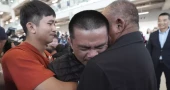
They were embraced by family members, some of whom cried, in the arrivals hall at Suvarnabhumi airport. Thai Foreign Minister Maris Sagniampongsa and the Israeli Ambassador to Thailand Orna Sagiv were both at the airport to welcome home the freed hostages.
“We are all very grateful and very happy that we get to return to our homeland. We all would really like to thank you. I don’t know what else to say," Pongsak told a news conference at the airport.
Maris said the Thai government "never gave up hope and here is the result today. The tears of joy are our encouragement.” He added that Bangkok would continue working to secure the release of the remaining Thai hostage.
The group quickly left the news conference to return to their hometowns in Thailand's northern and northeastern regions.
They were the second batch of Thai hostages released since the war broke out. During an earlier ceasefire in November 2023, 23 Thai nationals were released in a deal negotiated between Thailand and Hamas, with assistance from Qatar and Iran.
Italian journalist Cecilia Sala released from Iran
All five men were assessed at a hospital outside Tel Aviv prior to their return. Four of them were joined by one relative each earlier this week. The trip was sponsored by the Israeli government, according to the Thai Embassy in Tel Aviv.
Hamas militants kidnapped 31 Thai nationals during the Oct. 7, 2023, assault on southern Israel, making them the largest group of foreigners held captive. Many of the Thai agricultural workers lived in compounds on the outskirts of southern Israeli kibbutzim and towns, and Hamas militants overran those places first.
A total of 46 Thais have been killed during the conflict, including two Thai citizens who were killed during the attack and their bodies taken into Gaza, according to Thailand’s Ministry of Foreign Affairs.
There was no immediate information available about Nattapong Pingsa, who is the last Thai hostage left in Gaza, nor the two Thai workers whose bodies were taken into Gaza.
Maris, the Thai foreign minister, traveled to Israel to visit the five freed men shortly after their release. Maris met with his Israeli counterparts seeking support to secure the release of the remaining Thai hostage and retrieve the bodies of the two deceased Thais.
Trump vows to hit hard Hamas if hostages are not released by Jan 20
Thai workers remain the largest group of foreign agricultural laborers in Israel. The countries implemented a bilateral agreement a decade ago specifically easing the way for Thai agricultural workers. Many Palestinian workers had since returned, and before the Hamas attack about half of Israel’s workforce was made up of foreign and Palestinian laborers.
1 year ago

Rescuers search for 30 people after southwest China landslide
Rescuers in southwest China are searching for around 30 people following a landslide in Sichuan province on Saturday, which buried 10 homes, reports AP.
The Ministry of Emergency Management dispatched hundreds of rescuers, including firefighters, to the scene in a village in Junlian county. Two individuals were rescued alive, according to state broadcaster CCTV.
Death toll in deadly flooding and landslides in Indonesia rises to 21
President Xi Jinping expressed concern, urging authorities to spare no effort in locating the missing and reducing casualties, as reported by Xinhua news agency.
Premier Li Qiang called for an investigation into the geological risks in surrounding areas and recommended evacuating residents at risk to prevent further disasters, as stated by Xinhua.
Search resumes after deadly flooding and landslides in Indonesia
The National Development and Reform Commission has allocated 50 million yuan ($6.9 million) from the central budget for emergency repairs to infrastructure and public services.
1 year ago