Asia
Delhi Polls: BJP returns after 27 years breaking ‘Kejri-wall’
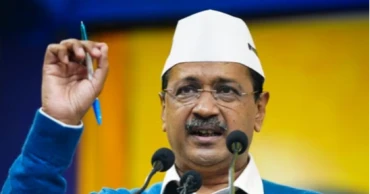
Aam Aadmi Party (AAP) Chief Arvind Kejriwal has accepted his party’s defeat in the Delhi assembly elections and pledged to serve as a constructive opposition.
"We accept the people’s mandate with humility. I congratulate the BJP on their victory and hope they fulfil their promises," Kejriwal said in a video message.
He emphasised that AAP will remain active in public service. "Over the last 10 years, we have worked in health, education, and infrastructure. We will continue serving the people while playing the role of a responsible opposition," he added.
The BJP has secured 12 seats and is leading in 38, while AAP has won 10 and leads in another 10. The Congress is yet to open its account.
US diplomat in India summoned over comments on Kejriwal's Arrest
Kejriwal lost in the New Delhi constituency, with BJP's Parvesh Verma defeating him by 4,089 votes.
AAP first came to power in 2013 with Congress support, later winning 67 out of 70 seats in 2015 and securing 62 in 2020. However, the party has never won a parliamentary seat in Delhi.
In recent years, several AAP leaders, including Kejriwal and Manish Sisodia, faced corruption allegations and were jailed before securing bail.
However, Prime Minister Narendra Modi hailed BJP’s victory, calling it a mandate for development and good governance. "We are honoured by this historic win and will work tirelessly to develop Delhi," he wrote on X.
Souce: with inputs from Indian media
1 year ago
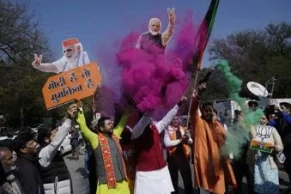
Modi's BJP takes early lead in tightly contested Delhi election
Dhaka, Feb 8 (UNB)- Prime Minister Narendra Modi’s Bharatiya Janata Party (BJP) has gained an early lead in the closely fought Delhi legislative assembly elections as vote counting progresses.
According to initial data from the Election Commission of India (EC), the BJP is ahead in 41 out of 70 seats, while the incumbent Aam Aadmi Party (AAP) leads in 28 constituencies. However, with counting still underway, these figures remain subject to change. A party needs at least 35 seats to secure a majority and form the government.
Exit polls conducted after Wednesday’s voting had predicted a decisive victory for the BJP, but analysts caution that such projections have often been unreliable in the past.
Winning Delhi is a high-stakes battle for both BJP and AAP, given its status as the nation’s capital. The city has been governed by AAP since 2013, with voters supporting its welfare-focused policies. However, the party is facing corruption allegations, which its leaders have denied.
For the BJP, a victory in Delhi would be a major political milestone, as the party has not been in power in the capital since 1998. Following recent electoral successes in Maharashtra and Chhattisgarh, BJP has deployed top leaders, including Modi and Home Minister Amit Shah, to bolster its campaign.
Meanwhile, the Congress party, once a dominant force in Delhi politics, remains on the sidelines. Ousted in 2013 amid corruption allegations, it has struggled to regain voter confidence, and projections suggest a poor showing in this election.
Source: BBC
1 year ago
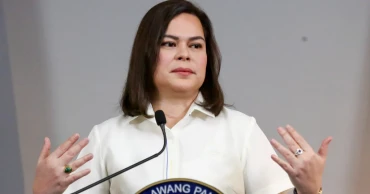
Philippine VP prepares for impeachment, avoids commenting on resignation
Philippine Vice President Sara Duterte announced on Friday that her legal team is preparing for her upcoming impeachment trial, but she declined to comment on whether resignation is an option to avoid a potential conviction that could prevent her from running for president in the future, reports AP.
Duterte's remarks came after the House of Representatives impeached her on Wednesday, citing various criminal charges, including an alleged plot to have President Ferdinand Marcos Jr. assassinated, which she denied. Marcos, who was her running mate in the 2022 elections, has since had a bitter fallout with Duterte.
Four killed in US military-contracted plane crash in Philippines
During a news conference, she highlighted the economic difficulties facing Filipinos, noting that the cost of living has risen significantly. "God save the Philippines,” she said, urging her supporters to express their views on social media rather than holding street protests to avoid disrupting their lives.
A conviction and subsequent disqualification from office would be a severe blow to one of the country's most influential political families, which is seen as aligning more with China. The impeachment complaint, according to its proponents, revolves around alleged threats to Marcos, misuse of government funds, and Duterte's failure to confront Chinese aggression in the South China Sea. The Senate is expected to address the case in June.
While Marcos has strengthened defence ties with Washington, Duterte’s father, former President Rodrigo Duterte, cultivated close relations with Chinese President Xi Jinping and Russian leader Vladimir Putin, all while hinting at ending U.S. military engagements in the Philippines.
When asked about the possibility of resignation, Duterte did not provide a clear answer, saying, "We're still too far from those matters,” and mentioned that many lawyers have offered to defend her in the impeachment process.
China's Xi and Thailand's leader vow to crack down on scam networks that plague Southeast Asia
She confirmed that she is still considering a presidential run in 2028 but emphasized the need to evaluate her chances carefully, as her approval ratings have declined in recent independent surveys, though she is still regarded as a top contender. "We're seriously considering that but it's difficult to decide without the numbers," she said.
1 year ago
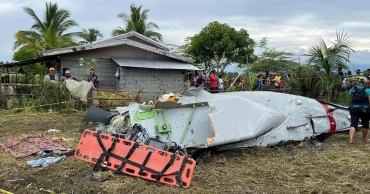
Four killed in US military-contracted plane crash in Philippines
At least four people were killed when a U.S. military-contracted plane crashed in a rice field in the southern Philippines on Thursday, according to officials from the U.S. Embassy and the Philippines, reports AP.
The Civil Aviation Authority of the Philippines confirmed the crash of a light aircraft in Maguindanao del Sur province but did not immediately provide further details.
Skating community mourns after US plane crash kills athletes
The plane, which was contracted by the U.S. military, crashed in the southern province, as confirmed by U.S. Embassy spokesperson Kanishka Gangopadhyay. The U.S. Indo-Pacific Command is expected to release a more detailed statement regarding the incident.
The bodies of four individuals, believed to be foreign nationals, were recovered from the wreckage in Ampatuan town, according to Ameer Jehad Tim Ambolodto, a safety officer from Maguindanao del Sur.
Windy Beaty, a provincial disaster-mitigation officer, reported to the AP that residents had seen smoke coming from the plane and heard an explosion before it crashed less than a kilometre (about half a mile) from a cluster of farmhouses.
No injuries were reported on or near the crash site, which was sealed off by military personnel, Beaty said.
Local officials confirmed that a water buffalo on the ground was also killed in the crash.
18 killed in Sudan plane crash
U.S. forces have been stationed at a Philippine military camp in the south for decades, providing advice and training to Filipino forces fighting Muslim militants. The region is home to the country’s Muslim minority in the predominantly Roman Catholic nation.
1 year ago

China's Xi and Thailand's leader vow to crack down on scam networks that plague Southeast Asia
China's leader Xi Jinping and visiting Thai Prime Minister Paetongtarn Shinawatra vowed to crack down on the scam networks that plague Southeast Asia as the two leaders met on Thursday in Beijing.
Myanmar, Cambodia and Laos, which are south of China and share borders with Thailand, have became major centers of online scam operations where people lured by false advertising of well-paid jobs are trafficked to secretive compounds where they are forced to work by criminal groups that run online scams targeting people all over the world.
That has impacted Thailand’s reputation, as multiple high-profile stories of Chinese people being lured to work in Bangkok only to be trafficked into a scam compound in Myanmar have surfaced, with Chinese actor Wang Xing being the latest such victim.
Thai and Chinese officials have taken public steps to address the scam issue, including a reported visit to the border region by Liu Zhongyi, China’s vice minister of public security.
“China appreciates Thailand’s strong measures to combat online gambling fraud. Both sides should continue to strengthen law enforcement, security, and judicial cooperation," Xi said, according to state broadcaster CCTV.
Paetongtarn echoed that, saying “Thailand is willing to strengthen law enforcement cooperation with China and other neighboring countries and take resolute and effective measures to combat cross-border crimes such as online gambling and fraud.”
China sanctions 7 companies over US military assistance to Taiwan
Ahead of her visit, Thailand cut off electricity to some areas in Myanmar by its border to try to disrupt the operations of the scam compounds. The effect of that is unclear as the compounds often have their own generators.
The visit to China was Paetongtarn's first as prime minister and comes as the two countries celebrate 50 years of establishing diplomatic relations.
On other bilateral issues, Xi said China was willing to work on a new railway project between the countries. On Tuesday, Thailand approved a $10 billion railway project that will eventually connect Bangkok to the Laos-China high speed railway. He also said they hoped to deepen cooperation in electric vehicles, with Thailand being an emerging market for Chinese automakers.
China was once a significant part of Thailand’s tourism segment but was down to 6.7 million visitors in 2024, less than the 11 million visitors in 2019 before the coronavirus pandemic when Chinese visitors were nearly a third of all arrivals.
Paetongtarn has shown Thailand is willing to accommodate Chinese interests on key issues.
In January, a group of Chinese Uyghur detainees in Thailand pleaded for help before they were deported to China. Thailand’s decision to deport the Uyghurs, a largely Muslim ethnic group that faces persecution, came ahead of the two countries 50th anniversary of relations.
Ex-Taiwanese Presidential candidate Ko Wen-je indicted for corruption
After the meeting in beijing, Paetongtarn said that Thailand "firmly" abides by the one-China principle, Beijing's position that the island of Taiwan is part of China.
1 year ago
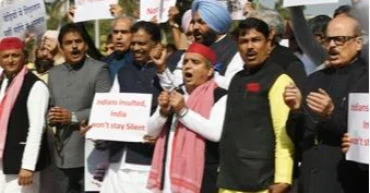
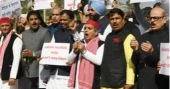
Opposition lawmakers protest alleged mistreatment of Indian deportees by US
India’s Parliament was disrupted on Thursday as opposition lawmakers protested the alleged mistreatment of 104 Indian immigrants deported by the United States.
A U.S. military plane on Wednesday carrying 104 deported Indian migrants arrived in a northern Indian city, the first such flight to the country as part of a crackdown ordered by the Trump administration.
The lawmakers and media reports said the deportees’ arms and legs were shackled while on the aircraft.
Parliament's proceedings were adjourned Thursday as the lawmakers chanted slogans and called to discuss the deportation.
Renuka Chowdhury, a lawmaker in the Congress party, said the deportees were “handcuffed, had their legs chained and even struggled to use the washroom.”
Her colleague, Gaurav Gogoi, called it “degrading.”
Parliament speaker Om Birla tried to calm the lawmakers, saying the transportation of the deportees was a matter of U.S. foreign policy.
“The foreign country also has its own rules and regulations,” he said.
The Press Trust of India news agency quoted one of the deportees, Jaspal Singh, saying deportees' handcuffs and leg chains were taken off only at the Amritsar airport in India.
Singh, 36, said they initially thought they were being taken to another camp in the U.S.
“Then a police officer told us that we were being taken to India,” he said.
The U.S. government usually carries out deportations on commercial and chartered flights. The use of the U.S. military to return people to their home country is a relatively new method that started under the Trump administration.
Making climate-friendly lifestyle choices isn't always easy. India learned the hard way
Opposition lawmakers, including Congress leader Rahul Gandhi, also protested outside the Parliament building as they demanded a response from the government. Some wore handcuffs and carried placards that read: “Humans, not prisoners.”
The deportation came ahead of Indian Prime Minister Narendra Modi’s visit to Washington, which is expected next week. U.S. President Donald Trump and Modi discussed immigration in a phone call last week and Trump stressed the importance of India buying more American-made security equipment and fair bilateral trade.
A spokesman at the U.S. Embassy in New Delhi said enforcing immigration laws was critical for the country's national security and public safety.
"It is the policy of the United States to faithfully execute the immigration laws against all inadmissible and removable aliens,” he said.
India has cooperated with the U.S. and said it is ready to accept the deported Indians after verification.
New Delhi says it is against illegal immigration, mainly because it is linked to several forms of organized crime, and it has not objected to the U.S. deporting its citizens.
U.S. Secretary of State Marco Rubio said earlier this week the deportation flights were an effective way to stem the flow of illegal migration, which he said is destructive and destabilizing.
India’s budget focuses on tax cuts for middle class, agriculture
The State Department said such deportations deter other people considering migrating illegally.
India’s junior External Affairs Minister Kirti Vardhan Singh recently told India’s Parliament that 519 Indian nationals were deported to India between November 2023 and October 2024, citing U.S. government data.
A Pew Research Center report said that as of 2022, India ranked third — after Mexico and El Salvador — on the list of countries with the largest number of unauthorized immigrants — 725,000 — living in the U.S.
1 year ago
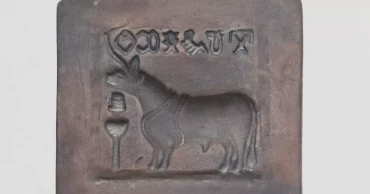
$1 million prize announced for decoding this ancient Indian civilization script
Despite the mystery surrounding the script of the Indus Valley Civilization (IVC) for over a century, India’s Tamil Nadu Chief Minister MK Stalin has declared a $1 million prize for anyone who can successfully decode the ancient writing system.
Speaking at a conference in Chennai on Sunday to commemorate the centenary of the IVC's discovery, Stalin remarked, “We have yet to fully understand the writing system of the once-thriving Indus Valley,” reports the Hindustan Times.
At new Museum of Black Civilizations, a call to come home
The discovery of the IVC was first announced by English archaeologist Sir John Marshall on September 20, 1924.
"The enigma remains unsolved after 100 years, despite numerous efforts by archaeologists and experts," Stalin said. "I am announcing a $1 million reward for individuals or organizations who can decipher the script to the satisfaction of archaeological experts."
The Chief Minister also reaffirmed that the history of the Indian subcontinent cannot be written without acknowledging Tamil Nadu and the Tamil language.
"Our state's efforts are focused on ensuring Tamil Nadu's rightful place in the nation's history," he said.
He also pointed out that bulls, which are significant symbols in Dravidian culture, are found in the Indus Valley, and referenced the rich historical connections between the bull-taming tradition in Tamil literature and the IVC.
"One of the seals from the Indus Valley shows a man trying to tame a bull," Stalin noted, linking this to ancient Tamil traditions.
Marshall's discovery marked a turning point in Indian archaeology, as he suggested that the language spoken in the IVC could be Dravidian. As Director-General of the Archaeological Survey of India from 1902 to 1928, Marshall was responsible for uncovering the Harappa and Mohenjodaro cities. Stalin also announced that a life-sized statue of Marshall would be installed in Tamil Nadu.
On Sunday, Stalin launched a book by the Tamil Nadu State Department of Archaeology (TNSDA), which revealed that 60% of the signs and 90% of graffiti marks found in Tamil Nadu excavation sites show similarities with those from the IVC, added the report.
20 years is the timeline to build a new civilization: Prof Yunus
Additionally, the state has allocated Rs 2 crore to establish a research chair in honor of Iravatham Mahadevan, an epigraphist, and to present an annual award to encourage archaeological research.
1 year ago
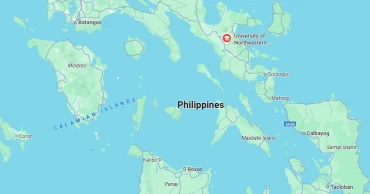
Pilot killed in northern Philippines helicopter crash
A helicopter crashed in a northern Philippine province, killing its pilot, who was the only person on board after she transported a passenger to a nearby city, Philippine officials said Sunday.
The four-seat helicopter owned by a domestic carrier took off from the Philippine capital, Manila, on Saturday for the northern mountain resort city of Baguio, where it dropped off the passenger, the Civil Aviation Authority of the Philippines said.
From Baguio, the helicopter landed at an airstrip in Binalonan town in nearby Pangasinan province to refuel on its way back to Manila.
Binalonan airport officials noted that "the aircraft experienced difficulty restarting its engine” before it managed to take off before nightfall, according to the civil aviation authority.
The helicopter later crashed in a swampy area in Guimba town in Nueva Ecija province, southeast of Pangasinan. The body of the pilot was retrieved from the wreckage, which was partly submerged in the swamp, police officials said.
Aviation authorities were investigating the cause of the crash. The Philippines has had a history of accidents involving small aircraft in recent years.
1 year ago
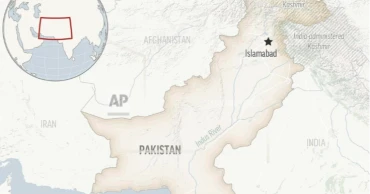
18 Pakistani soldiers killed in clashes with separatist rebels
Eighteen Pakistani soldiers were killed in clashes with separatist rebels in Balochistan, Pakistan, after troops engaged insurgents who had set up roadblocks in the volatile northwestern region, officials reported on Saturday, reports AP.
The military stated that casualties occurred during an operation against insurgents who had blocked a vital highway in Kalat, a district in Balochistan near Afghanistan. The security forces successfully removed the barricades after overnight fighting.
Pakistani journalists protest after Senate passes bill allowing control over social media content
The operation resulted in 18 paramilitary soldiers' deaths, and the military vowed to bring those responsible for the attack to justice. The bodies of 12 insurgents were recovered. The Baloch National Army, a separatist group, claimed responsibility for the assault.
The BLA regularly targets security forces, civilians, and foreigners, especially Chinese nationals working on major infrastructure projects in Pakistan. In November, a BLA suicide bombing at a train station in Quetta killed 26 people, including soldiers and railway workers.
30 killed in Pakistan in military drive
Following this attack, military and police operations in Balochistan, a region rich in oil and minerals, have intensified. The province is home to the ethnic Baloch minority, who claim to suffer discrimination and exploitation by the central government. Balochistan has long been the site of an ongoing insurgency, with various separatist and militant groups waging attacks in pursuit of independence.
1 year ago

India’s budget focuses on tax cuts for middle class, agriculture
Indian Prime Minister Narendra Modi’s government unveiled its annual budget on Saturday, introducing tax cuts to benefit the salaried middle class while prioritising economic growth through investments in agriculture and manufacturing.
Finance Minister Nirmala Sitharaman, in her budget speech, emphasised the government's commitment to boosting private investment, strengthening agriculture, and enhancing the spending power of middle-class citizens.
“The budget aims to take everyone forward on an inclusive path,” Sitharaman said, adding that the government targets a fiscal deficit of 4.4% of GDP for the 2025-26 financial year.
India, the world’s fifth-largest economy, is projected to experience its slowest growth in four years due to sluggish manufacturing, persistent food inflation, stagnant job creation, and weak urban consumption. A report released Friday by the country’s chief economic advisor estimated GDP growth of 6.3% to 6.8% in the next fiscal year.
The government announced major tax reforms, including an increase in the income tax exemption threshold from $8,074 to $14,800. Sitharaman said a new income tax bill will be introduced next week to further ease the tax burden on middle-class earners.
“The revised tax structure will significantly reduce liabilities for middle-class households, boosting disposable income, savings, and investment,” she said.
Modi’s government has been under pressure to address middle-class concerns and generate jobs to sustain growth.
Several people feared dead in stampede at India's massive Maha Kumbh festival
Economists had recommended tax cuts and employment programs to counter rising unemployment, with youth joblessness reaching 7.5% in January, according to the Center for Monitoring the Indian Economy.
To enhance agricultural productivity, the government will launch a nationwide initiative promoting high-yielding crops, with a focus on pulses and cotton. The plan aims to benefit at least 17 million farmers, increasing their subsidized credit limit from $3,460 to $5,767.
Additionally, the budget includes measures to formally register gig workers, ensuring better access to healthcare and welfare programs. The government will issue identity cards and maintain a national registry for gig workers, a sector expected to employ over 23 million people by 2030, according to estimates from government think tank NITI Aayog.
The budget also introduced a new startup fund to drive innovation in collaboration with the private sector. Further investments will support manufacturing and exports, with a long-term goal of increasing manufacturing’s share in the economy from 17% to 25%.
India celebrates Republic Day with Indonesian president as chief guest
In an effort to create tourism-driven employment, the government will allocate more funds to improve infrastructure and connectivity in key states.
Sitharaman also announced a Nuclear Energy Mission, targeting 100 GW of nuclear power capacity by 2047 as part of India’s clean energy transition.
1 year ago