Asia

Taiwan's leader calls for tougher measures against Chinese spying
Taiwan's president, William Lai Ching-te, stated on Thursday that stricter measures are necessary to combat China's increasing infiltration, espionage, and other efforts to undermine Taiwan’s security and hasten Beijing's ambition to seize control of the self-governing island republic, a key ally of the U.S.
Lai pointed to several recent incidents involving China that fall into a “gray area,” including psychological warfare that stops short of direct military conflict. He explained that Beijing’s attempts to “subvert, steal secrets, lure military personnel, and manipulate public opinion to erode trust in our national defense” require Taiwan to enhance its legal protections to prevent and identify such activities.
Lai outlined proposed actions to counter China’s influence, such as reintroducing military tribunals for crimes like espionage and making it harder for individuals from China and the Chinese territories of Hong Kong and Macau to acquire Taiwanese identification. This is complicated by the high rate of intermarriage between Taiwanese and Chinese.
China says US has 'gravely backpedaled' on Taiwan
Taiwan will also restrict contact with individuals linked to China’s Communist Party’s United Front department, which aims to use cultural exchanges and personnel to promote Beijing's unification agenda.
This decision followed an incident last year in which a student in a delegation backed by a pro-unification Taiwanese group used disparaging language about Taiwan, causing public outrage, though no legal action was taken.
Lai's Democratic Progressive Party supports Taiwan's de facto independence from Beijing. Since Lai’s predecessor, Tsai Ing-wen, took office eight years ago, China has largely cut off official communication with the DPP.
China frequently sends ships and planes into Taiwan's airspace and waters to intimidate its 23 million citizens and weaken Taiwan’s military and morale.
Taiwan’s government recently expelled the Chinese wife of a Taiwanese man after she posted videos on Chinese social media claiming that China could conquer Taiwan in half an hour and praising the Chinese leadership. These actions violate Taiwan’s laws on aiding the enemy. The woman, who also held Chinese government roles, will be allowed to reapply for residency in five years.
Other recent cases include Taiwanese influencers and artists in China sharing Chinese state media statements affirming China's sovereignty over Taiwan. Retired Taiwanese military personnel have also provided information about Taiwan’s weapons systems to Chinese agents and attempted to recruit active-duty soldiers as spies.
The Defense Ministry confirmed a recent case where a retired air force major, claiming to work for a U.S. think tank, convinced an air force intercept controller to provide classified documents in exchange for money. The retired major, surnamed Shih, sent the files to his Chinese handlers for around $45,000, sharing $6,000 of it with the active-duty officer, surnamed Hsu.
The leaked information pertained to Taiwan’s domestically developed Hsiung Feng III anti-ship missiles and Taiwan’s response to Chinese incursions into its air defense identification zone.
The two sides have been separated since the 1949 civil war, with China continuing to view Taiwan as its territory to be reclaimed by force if needed. Lai’s remarks coincided with the 20th anniversary of China’s Anti-Succession Act, which sets out conditions for an invasion, including if Taiwan declares formal independence or refuses unification indefinitely.
Taiwan maintains that it is already functionally independent, a stance supported by most of the population, and does not see the need for a formal declaration of independence.
Thousands in Taiwan and China celebrate the Lantern Festival with high hopes and rice dumplings
To strengthen its defenses, Taiwan has been bolstering its military with new missiles, U.S. tanks and planes, and domestically produced submarines. The country has also recently extended mandatory national military service for all men from four months to one year.
1 year ago

Duterte resisted fingerprinting, threatened lawsuits during chaotic arrest
Former Philippine President Rodrigo Duterte refused to be fingerprinted and threatened legal action against a police general during a chaotic arrest, according to Philippine authorities.
Police Maj. Gen. Nicolas Torre revealed details of the tense 12-hour standoff that took place on Tuesday at a Philippine air base. Despite resistance from Duterte, his family, lawyers, and friends, police eventually succeeded in placing the 79-year-old former leader onto a government-chartered jet bound for The Hague, Netherlands. There, the International Criminal Court (ICC) detained him on charges of crimes against humanity.
Former Philippine president Duterte arrested on ICC warrant for killings
Once a feared figure for his harsh anti-crime policies and controversial remarks—such as calling Pope Francis a “son of a bitch” and telling former U.S. President Barack Obama to “go to hell”—Duterte’s dramatic downfall has been hailed by human rights advocates as a major victory against state impunity.
Duterte was apprehended upon arrival at Manila’s Ninoy Aquino International Airport, accompanied by his common-law wife, daughter, and friends returning from Hong Kong. He was then taken under heavy police escort to the presidential lounge at Villamor Air Base for booking, which included fingerprinting before his transfer to the Netherlands. However, Duterte and his entourage resisted, preventing his immediate transport to a Gulfstream G550 executive jet, Torre said.
The standoff lasted about 12 hours and was highly tense. According to Torre, one of his officers sustained a head injury after being struck with a cellphone by Duterte’s common-law wife, while Duterte’s daughter hurled expletives at him. Despite the hostility, Torre maintained his composure.
The former president, a former prosecutor and congressman, refused to comply with the police booking process. “We wanted to have him fingerprinted, but he resisted,” Torre said. In a separate interview, he confirmed that he had arrested and handcuffed Duterte’s executive secretary for obstructing the transfer.
A widely circulated video on social media captured Duterte surrounded by his family, lawyers, and friends, questioning Torre: “Are you going to bring me straight to the airplane?” Torre recalled Duterte defiantly stating, “You have to kill me to bring me to The Hague.” Torre responded, “That’s not our intention, sir,” as officers removed individuals blocking Duterte’s path.
Duterte’s legal team has challenged the arrest, arguing that Philippine authorities failed to present an official copy of the ICC warrant and violated his constitutional rights. His lawyers and supporters also criticized President Ferdinand Marcos Jr.’s government for allowing the ICC to take custody of Duterte, despite the Philippines having withdrawn from the court.
Vice President Sara Duterte, the former president’s daughter, condemned the move, calling it a “blatant affront” to national sovereignty and an insult to Filipinos. “This is not justice—this is oppression and persecution,” she said.
President Marcos, who has since had a political rift with the vice president following their short-lived alliance in the 2022 elections, appeared on national television at midnight, refuting her accusations.
Days before his arrest, Duterte spoke to supporters in Hong Kong, acknowledging the ICC warrant and expressing his willingness to face imprisonment. “If this is my fate in life, it’s OK, I’ll accept it. I can’t do anything if I get arrested and jailed,” he said, peppering his remarks with expletives.
Impeachment complaint filed against Philippine VP Duterte for threatening President Marcos
Duterte’s political career was built on his ruthless stance against crime, particularly his bloody war on drugs, which resulted in thousands of deaths. Throughout his presidency, he remained unapologetic, even lashing out at world leaders who criticized his policies. He infamously told Obama to “go to hell” after being condemned for his violent anti-drug campaign.
In 2015, he shocked the Catholic Church when he cursed Pope Francis while venting frustration over a traffic jam during the pontiff’s visit to Manila. “I wanted to call. ‘Pope, you son of a bitch, go home. Don’t visit here anymore,’” he told a cheering crowd. Following widespread outrage from Filipino bishops, he later issued an apology.
1 year ago

Pakistani forces rescue 190 hostages from hijacked train
Pakistani forces remained in a tense standoff on Wednesday with hundreds of militants holding around 250 hostages aboard a hijacked train in the country's remote southwest, officials reported.
Security forces refrained from launching a full-scale assault as the militants, equipped with explosive-laden vests, had fortified themselves inside the train along with the hostages.
Pakistani insurgents attack a train carrying hundreds of people and take hostages
The separatist Baloch Liberation Army claimed responsibility for Tuesday’s attack, which took place inside a tunnel in Bolan, a district of the conflict-ridden Balochistan province. The group's spokesperson, Jeeyand Baloch, stated that they were willing to release the passengers if the authorities agreed to free imprisoned militants.
The government has yet to respond, though it has consistently rejected such demands in the past.
Since the clashes began on Tuesday, at least 30 militants have been killed in initial exchanges of gunfire. By late Wednesday, security forces had rescued 190 of the 450 passengers originally on board, according to three senior security officials.
Helicopters were providing aerial support to Pakistani forces in the rugged terrain, according to spokesman Shahid Rind, who described the attack as “an act of terrorism.”
While the BLA has previously targeted trains, this marks the first instance of the group hijacking one. The organisation routinely carries out attacks against Pakistani security forces and has also targeted civilians, including Chinese nationals involved in multibillion-dollar China-Pakistan Economic Corridor (CPEC) projects. Estimates suggest the BLA has around 3,000 fighters.
Pakistan is home to thousands of Chinese workers contributing to Beijing’s extensive Belt and Road Initiative, which includes major infrastructure developments such as ports and airports in Balochistan. Condemning the attack, Chinese Foreign Ministry spokeswoman Mao Ning reaffirmed China’s commitment to supporting Pakistan’s counterterrorism efforts.
Pakistan militants attack train carrying hundreds of passengers
Latest Developments
Authorities confirmed that the rescued passengers include women and children. Additionally, an undisclosed number of security personnel have been killed, according to the three security officials, who spoke anonymously as they were not authorised to address the media.
Officials reported that the Jafer Express was partially inside a tunnel when the militants detonated explosives on the tracks, bringing the engine and nine coaches to a halt. The train’s driver sustained injuries, and onboard security guards were attacked, though details regarding their number or condition were not disclosed.
Rescued passengers were being transported to their hometowns, while the injured were receiving medical care at hospitals in the Mach district. Some were transferred to Quetta, the provincial capital, located approximately 100 kilometres (62 miles) away. The train was en route from Quetta to the northern city of Peshawar when the attack occurred.
A Region of Insurgency
Balochistan, which shares borders with Iran and Afghanistan, has long been plagued by insurgencies, with separatists demanding greater autonomy and a larger share of the region’s natural resources.
Cross-border insurgencies have also created tensions between Iran and Pakistan, with both nations accusing each other of either supporting or tolerating militant groups operating along their shared border.
In Iran, the militant group Jaish al-Adl has carried out numerous attacks in recent years, prompting Tehran to seek Pakistan’s assistance in countering the threat. Similarly, Pakistan has urged Iran to take action against BLA fighters.
In January 2024, tensions escalated as Islamabad and Tehran launched retaliatory airstrikes targeting insurgents in each other’s territories, resulting in at least 11 fatalities. However, both nations quickly deescalated the situation through diplomatic discussions.
The Hijackers’ Demands
On Wednesday, the BLA stated that the hostages, along with captured security personnel, were under the guard of suicide bombers. The group warned that the hostages' lives would be at risk if the government failed to engage in negotiations.
Trains in Balochistan generally carry security personnel, as military members frequently use them to travel between Quetta and other regions. In November, the BLA carried out a suicide bombing at a Quetta train station, killing 26 people.
Experts believe that targeting civilians in such attacks could ultimately backfire on the group.
“Having failed to inflict significant damage on the Pakistan Army within Balochistan, the BLA has now shifted its focus from military targets to unarmed civilians. While this tactic may generate immediate public and media attention, it risks eroding their support base among the civilian population, which remains their primary objective,” said Syed Muhammad Ali, an independent security analyst based in Islamabad.
Rich in oil and minerals, Balochistan is Pakistan’s largest but least populated province. It is home to the country’s ethnic Baloch minority, many of whom claim they face discrimination and economic exploitation by the central government.
1 year ago

Pakistani insurgents attack a train carrying hundreds of people and take hostages
Pakistani insurgents attacked a passenger train carrying several hundred people as it passed through a tunnel on Tuesday and claimed to have taken more than 100 hostages, though officials later said at least 104 were rescued. The fate of the other passengers wasn't immediately known.
Security officials said the attackers blew up the railroad track in southwestern Balochistan province, and exchanged fire with security guards aboard the train while using women and children as human shields.
Officials said some passengers, including women and children, were wounded in the attack.
The train was traveling from the provincial capital, Quetta, to the northern city of Peshawar when it came under attack in Bolan district, government spokesman Shahid Rind said, calling it “an act of terrorism." Rind said access to the area wasn’t easy because of the rugged, mountainous terrain.
The separatist Baloch Liberation Army known as the BLA, which has waged a yearslong insurgency, claimed responsibility and said the hostages included members of the security forces who had been on board.
Pakistani officials did not confirm that security forces were captured. Trains in Balochistan typically have security personnel on board.
Pakistan mourns as 18 killed in suicide bombing
In a statement, BLA spokesman Jeeyand Baloch said the group was ready to free passengers if the government agrees to release the group's jailed militants. Government officials weren't immediately available to discuss the offer, but authorities have rejected such offers in the past. Pakistan and the United States have designated the BLA as a terrorist organization.
Officials at Pakistan Railways said the Jafar Express train was carrying an estimated 500 passengers.
Three security officials told The Associated Press that troops rescued at least 104 passengers, including 31 women and 15 children, and 16 attackers had been killed. The officials spoke on condition of anonymity because they weren't authorized to speak to the media.
President Asif Ali Zardari and Prime Minister Shehbaz Sharif in separate statements denounced the attack.
U.N. Secretary-General Antonio Guterres strongly condemned the attack and called for the immediate release of the hostages, U.N. spokesman Stephane Dujarric said.
Oil- and mineral-rich Balochistan is Pakistan’s largest and least populated province. It’s a hub for the country’s ethnic Baloch minority, whose members say they face discrimination and exploitation by the central government.
Separatists have previously carried out deadly attacks on trains there. In November, a separatist group carried out a suicide bombing at a train station in Quetta that killed 26 people.
Pakistani authorities and analysts estimate that the BLA has around 3,000 fighters. BLA regularly targets Pakistani security forces, but has also attacked civilians as well as Chinese nationals working on multibillion-dollar projects related to the China-Pakistan Economic Corridor, or CPEC.
Pakistani mortar fire injures Afghan journalists
BLA has enhanced its operational capability, and that “means that BLA has access to funding and weapons," according to Abdullah Khan, a senior defense analyst and managing director of the Islamabad-based Pakistan Institute for Conflict and Security Studies.
1 year ago

Pakistan militants attack train carrying hundreds of passengers
A train carrying hundreds of passengers has been attacked and halted by armed militants in Pakistan's Balochistan region.
The Baloch Liberation Army confirmed it had attacked the Jaffar Express Train which was travelling from Quetta to Rawalpindi, BBC reports.
The militant group has also claimed the train is under their control.
Pakistani police told local reporters that they had received information that three people, including the train driver, had been injured in the attack.
Police added that security forces had been sent to the scene of the attack.
UNF US legal troubles for tycoon Adani expose shortcomings in India's booming solar sector
A Balochistan government spokesman told local newspaper Dawn that there were reports of "intense firing" at the train.
The BLA claims that it is holding a number of passengers including security officers hostage, and has warned of "severe consequences" if an attempt is made to rescue those it is holding.
However, officials have not yet confirmed that anyone is being held hostage.
A senior police official from the area bordering Sibi said "the train remains stuck just before a tunnel surrounded by mountains."
Meanwhile the country's interior minister Mohsin Nawaz has condemned the attack and said he prayed for the speedy recovery of those injured.
1 year ago

UNF US legal troubles for tycoon Adani expose shortcomings in India's booming solar sector
President Donald Trump's decision to freeze a law banning business bribes overseas could offer Indian tycoon Gautam Adani, one of Asia's richest people, a reprieve from American corruption allegations linked to a major solar project in India.
U.S. prosecutors allege that one of Adani's companies duped investors by hiding that its project was backed by a $265 million bribery scheme. The case now may be reviewed, and enforcement of any potential decision against it is uncertain. Whatever its fate, the case has highlighted vulnerabilities in India’s solar sector that are hindering its capacity to switch to clean energy, help limit climate change and cut heavy pollution in many of its cities.
The Adani Group, whose business interests span much of the economy from ports and airports to energy and media, has denied the U.S. allegations. It declined requests from The Associated Press for comment.
Earlier this month, Trump suspended the Foreign Corrupt Practices Act, raising expectations among some in India that the allegations against Adani might be put on ice. Shares in Adani’s companies surged but then fell just days later when the U.S. Securities and Exchange Commission sought help from Indian authorities in serving its complaint against Adani.
The allegations have had wider repercussions outside India. Adani Green Energy has withdrawn its wind energy projects from Sri Lanka after the island nation sought to renegotiate prices. Kenya canceled energy and airport expansion deals with the company, while investor TotalEnergies, a French oil giant, has paused new investments.
Adani's energy projects
Adani Green Energy, or AGEL, is India’s largest renewable energy company. It is building one of the world’s largest clean power projects in salt deserts bordering Pakistan in the Western Indian state of Gujarat. Once completed, they would produce 30 gigawatts of clean power, enough to power nearly 18 million Indian homes.
Adani Enterprises to sell entire Adani Wilmar
AGEL has projects in 12 Indian states, with 11.6 gigawatts of clean power capacity. It aims to generate 50 gigawatts of renewable power by 2030, a tenth of India’s clean energy goal for the same time period.
In November, Adani said his company would invest $35 billion over five years in large-scale solar, wind, and hybrid power plants across India. It is also one of the country's few large-scale producers of solar and wind power components. But the industry itself is struggling.
Cash-strapped Indian states
India's state-owned electricity companies are chronically short on cash. By 2022-23 their losses totaled $7.8 billion — 2.4% of India’s GDP, according to government data. Operations are plagued by bad planning, fears of public anger over higher electricity rates and large electricity losses during transmission.
“Waiving the costs upfront makes it cheap for those building power plants, but ultimately the system has to bear that cost,” said Rohit Chandra, a professor at the Indian Institute of Technology in New Delhi.
Accommodating inevitable fluctuations in solar and wind power is also costly, said Vibhuti Garg, an energy economist at the Institute for Energy Economics and Financial Analysis or IEEFA. That means keeping expensive coal power on standby.
Renewable energy is cheaper than coal in India, but utilities still view clean power as just a “statutory obligation,” said Alexander Hogeveen Rutter, an energy analyst in Bengaluru.
A backfiring federal scheme
To troubleshoot state utilities' financial woes, the federal government agency established the Solar Energy Corporation of India, or SECI, to help manage risks.
SECI awarded a contract of 12 gigawatts of solar energy to the Adani Group and another New York Stock Exchange-listed company, Azure Power, at a specific price. The U.S. indictment alleges that state utilities balked at buying power at that rate and that the bribery was aimed at getting them to sign on.
Azure Power said in a statement in November that it was cooperating with American agencies and that it had ceased to employ the people mentioned in the indictment. SECI didn't respond to queries from The Associated Press.
SECI doesn’t buy clean power but facilitates sales to Indian states. That cuts risks of power developers going unpaid but it has raised administrative costs, Rutter said. "This whole scheme, which was supposed to drive down costs is actually driving up costs,” he said.
Rising manufacturing costs
India restricts imports of cheap Chinese solar modules and is subsidizing local manufacturers. That helped raise domestic production by six-fold in 2021-2023, according to the Press Trust of India, though Indian-made solar components are more expensive than Chinese one.
But India lags behind countries like Brazil and Australia in rooftop solar, having installed only 11 gigawatts so far -– far less than the 40 gigawatts it aimed to have by 2022. Policies favoring large installations have constrained growth of solar, which mainly comes from football-field-sized farms, Rutter said.
Adani group commits to compliance after US bribery charges: Gautam Adani
Many large renewable energy companies, like Adani's, manufacture parts like solar panels and cells to help reduce their own costs and remain profitable while selling power at lower prices acceptable to the state-owned utilities, Garg said. But this limits competition since small companies — considered vital for India's clean energy ambitions — can't match the prices set by corporate giants that make the equipment used to generate solar power.
A weak regulatory framework
The U.S. indictment has exposed weaknesses spots in India’s regulatory framework, which is prone to “crony relationships” between companies and the government, said Joe Athialy, executive director of the New Delhi-based Centre for Financial Accountability.
Most government bids are conducted transparently, with some even driving down prices to unviable levels, said Vinay Rustagi, an independent energy consultant. But occasional “one-off tenders” are poorly publicized or slip under the radar, limiting competition.
The fraud allegations against Adani reflect "an extreme example of trying to combine solar project development with solar manufacturing,” he said.
Slowing solar
Slower progress for India's transition away from fossil fuels matters. It's the most populous nation, with 1.4 billion people in 2023, and its electricity demand is projected to grow by at least 6% annually for the next few years, according to the International Energy Agency.
India's solar capacity has been growing rapidly with record-high solar power installations reported in 2024. But while solar makes up 16% of India's total generating capacity, it accounts for only 4% of the electricity used, according to government data compiled by IEEFA. The global average was over 5% in 2023, according to the London-based think tank Ember.
By late 2024, SECI still didn’t have buyers for 9 gigawatts or more than a third of the 24.5 gigawatts of solar power capacity it can offer.
As is true in many places, insufficient storage capacity means solar projects struggle to find buyers since the utilities prefer to purchase stable, ready-to-use power. This is why only 16% of last year’s new solar projects had found buyers by November, compared to 44% the year before, according to a report by the financial services firm JM Financial Institutional Securities.
“India’s solar story, while still growing, is slowing down,” said Chandra.
1 year ago
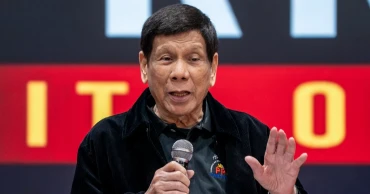
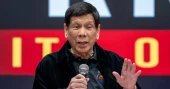
Former Philippine president Duterte arrested on ICC warrant for killings
Former Philippine President Rodrigo Duterte was taken into custody at Manila's international airport on Tuesday following an arrest order from the International Criminal Court (ICC) over a crime against humanity case filed against him, according to the Philippine government.
Duterte was apprehended upon arrival from Hong Kong, with police enforcing the ICC’s arrest warrant in connection to the large-scale killings that took place under his violent anti-drug campaign, President Ferdinand Marcos' office stated.
Philippine VP prepares for impeachment, avoids commenting on resignation
“Upon his arrival, the prosecutor general presented the ICC notification of an arrest warrant to the former president for crimes against humanity,” the government said. “He is now in the custody of authorities.”
The unexpected arrest led to a commotion at the airport, where Duterte’s lawyers and aides vocally protested, claiming they, along with a doctor and legal representatives, were denied access to him after he was detained. “This is a violation of his constitutional rights,” said Sen. Bong Go, a close ally of Duterte.
Duterte’s arrest and subsequent downfall left families of those killed in his anti-drug campaign in shock, with many breaking down in tears.
“This is a long-awaited victory for justice,” said Randy delos Santos, the uncle of a teenager who was fatally shot by police in a 2017 anti-drug operation in Metro Manila.
“Now we feel that justice is moving forward. We hope that senior police officials and the hundreds of officers involved in these unlawful killings will also be held accountable and punished,” he added.
Three officers responsible for the killing of his nephew, Kian delos Santos, were convicted in 2018 for the high-profile murder, which led Duterte to temporarily halt his brutal anti-drug campaign at the time.
This conviction was among only a few against law enforcers linked to the campaign, reinforcing victims’ families' concerns that justice within the country remained elusive, prompting them to seek the ICC’s intervention.
It was unclear where Duterte was taken after his arrest, but the government confirmed that the 79-year-old former president was in good health.
The ICC’s investigation into Duterte’s drug-related killings covers the period from November 1, 2011—when he was mayor of Davao City—until March 16, 2019. Duterte withdrew the Philippines from the Rome Statute in 2019, a move that human rights advocates believe was aimed at evading accountability.
Afghans arrive in the Philippines to complete visa processing for resettlement in US
Duterte’s administration attempted to block the ICC probe in 2021, arguing that Philippine authorities were already investigating the same allegations, and therefore, the ICC—meant to be a last resort—had no jurisdiction.
However, in 2023, ICC appeals judges ruled that the investigation could proceed, dismissing the Duterte administration’s objections. The Hague-based ICC intervenes when national authorities are either unwilling or unable to prosecute individuals for serious international crimes, such as genocide, war crimes, and crimes against humanity.
President Ferdinand Marcos Jr., who took office in 2022 and has since had a contentious relationship with Duterte, has opted not to rejoin the ICC. However, his administration has stated that it would comply if the ICC requested international law enforcement to arrest Duterte through a Red Notice, a global alert for locating and detaining a suspect temporarily.
1 year ago

North Korea fires several ballistic missiles after the US and South Korea began military drills
North Korea fired several ballistic missiles into the sea Monday, South Korea’s military said, hours after South Korean and U.S. troops kicked off their large annual combined drills, which the North views as an invasion rehearsal.
South Korea’s Joint Chiefs of Staff said the missile firings, North Korea’s fifth missile launch event this year, were detected from the North’s southwestern Hwanghae province. It called the weapons close-range but didn't say how far they flew. The military said South Korea bolstered its surveillance posture and is closely coordinating with the United States.
Earlier Monday, the South Korean and U.S. militaries began their annual Freedom Shield command post exercise, their first major combined training of President Donald Trump's second term. The allies have already been engaging in diverse field training exercises in connection with the Freedom Shield training.
North Korea’s Foreign Ministry warned Monday the latest training risks triggering “physical conflict” on the Korean Peninsula. It called the drills an “aggressive and confrontational war rehearsal" and reiterated leader Kim Jong Un’s stated goals for a “radical growth” of his nuclear force to counter what he claims as growing threats posed by the U.S. and its Asian allies.
This year's training came after the South Korean and U.S. militaries paused live-fire training while Seoul investigates how its fighter jets mistakenly bombed a civilian area during a warm-up drill last week.
About 30 people were injured, two of them seriously, when two South Korean KF-16 fighter jets mistakenly fired eight MK-82 bombs on a civilian area in Pocheon, a town near the North Korean border, on Thursday. The bombing occurred while South Korean and U.S. forces were engaging in a live-fire drill ahead of the Freedom Shield exercise.
North Korea unveils nuclear-powered submarine for the first time
The initial assessment from the South Korean air force was that one of the KF-16 pilots entered the wrong coordinates and failed to visually verify the target before proceeding with the bombing. The second pilot had the correct coordinates but focused only on maintaining flight formation and dropped the bombs on the first pilot’s instructions without recognizing the target was wrong, according to the content of the latest briefing provided to The Associated Press.
Gen. Lee Youngsu, chief of staff of the South Korean air force, bowed and apologized Monday over the injuries and property damage caused by the bombing, which he said “should have never happened and must never happen again.”
Both the South Korean and U.S. militaries have halted all live-fire exercises in South Korea following the mistake. South Korean military officials say live-fire training will resume after they complete the investigation of the bombing and form preventative steps.
US aircraft carrier in South Korea as North Korea test-fire missiles
The South Korean air force earlier suspended the training flights of all its planes too but lifted the steps on Monday, except aircraft affiliated with the unit the two KF-16s belong to.
1 year ago
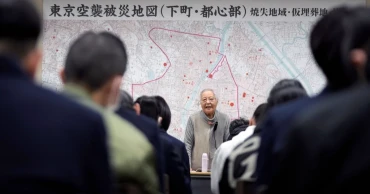
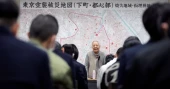
US firebombing of Tokyo 80 years ago; survivors seek compensation
Eighty years ago, on March 10, 1945, the U.S. firebombing of Tokyo resulted in the deaths of over 100,000 people in a single night.
The attack, carried out using conventional bombs, devastated central Tokyo, leaving streets filled with charred bodies.
Nissan tests driverless cars on busy Japan city streets
The destruction was comparable to the atomic bombings later that year in August, yet, unlike those attacks, the Japanese government has not provided compensation to the victims, and the event has largely been overlooked or forgotten.
Elderly survivors are now making a final push to share their stories and seek both financial aid and formal recognition. Some are speaking out for the first time, hoping to pass on their lessons to the younger generation.
Shizuyo Takeuchi, aged 94, is determined to continue telling the story of what she witnessed when she was 14, speaking for those who perished.
On the night of the firebombing, hundreds of B-29 bombers dropped cluster bombs with sticky napalm on the densely packed wooden homes of Tokyo's "shitamachi" neighborhoods. Takeuchi and her family had lost their home in a previous bombing and were sheltering at a relative's house by the river. Her father’s decision to cross the river in the opposite direction from the crowds saved their lives. Takeuchi recalls walking through the night beneath a red sky, a memory that still makes her uneasy when she sees orange sunsets or hears sirens.
By morning, everything was reduced to ashes. She recalled seeing two blackened figures, one of which turned out to be a woman with her baby, who had died. “I was terribly shocked... but after seeing so many others, I became numb,” she said.
In total, more than 105,000 people died that night, with another million displaced. The death toll surpassed that of the atomic bombing of Nagasaki on August 9, 1945, but the firebombing has largely been overshadowed by the two atomic bombings, and the other firebombings across Japan have received even less attention.
The bombing occurred after Japan’s air and naval defenses collapsed, allowing U.S. bombers to strike the main islands. This came amid growing frustration in the U.S. over the length of the war and Japan's past military actions.
Ai Saotome, daughter of Katsumoto Saotome, a firebombing survivor and writer, has inherited her father’s extensive collection of notes, photos, and records from the bombing. Her father worked to raise awareness of the civilian deaths and advocate for peace. Saotome points out that younger generations are less aware of these events.
Her father’s writings, including books about the bombing, have inspired her to digitize and preserve the materials at the Center of the Tokyo Raids and War Damage, a museum her father opened in 2002. “Our generation may not know much about the survivors’ experiences, but it is our responsibility to record their stories,” she says. She hopes the documents will serve as a reminder in the future.
Despite the support offered to military veterans and survivors of the atomic bombings, civilian victims of the firebombings have received no compensation. A group of survivors has met to renew their demands for recognition and financial assistance, but their efforts have faced significant opposition. A proposed one-time payment of 500,000 yen ($3,380) has stalled in the Japanese government, and a court has rejected their claims for compensation, citing that citizens were expected to endure suffering during wartime.
“This year is our last chance,” said Yumi Yoshida, who lost her parents and sister in the bombing, reflecting on the 80th anniversary of Japan’s WWII defeat.
Japan fights a forest fire that has damaged dozens of homes and caused hundreds to evacuate
Reiko Muto, a former nurse, was in her uniform when the sirens rang on March 10, 1945. She rushed to the pediatric ward, where she helped transport infants to a basement shelter. As the raid continued, truckloads of severely burned victims arrived, many crying for water. The screams and the smell of burned skin haunted her for a long time.
After the war, she was relieved that the firebombings had ended. She completed her nursing studies and spent her career helping children and teenagers. “What we went through should never be repeated,” she said.
End/UNB/AP/MB
1 year ago

Iran open to talks on nuclear militarization concerns
Iran said on Sunday that it would be open to discussions with the United States if the focus of the talks is specifically on addressing concerns regarding the militarization of its nuclear programme.
The country’s U.N. mission posted a statement on X, saying, "If the purpose of negotiations is to address concerns regarding the possible militarization of Iran’s nuclear programme, such discussions may be considered."
US plans to cut Iran’s oil exports by over 90% in renewed pressure campaign
This comes after Iran's Supreme Leader Ali Khamenei rejected talks with the U.S. the previous day, arguing that the aim would be to impose restrictions on Iran's missile programme and regional influence.
Khamenei's comments followed President Donald Trump’s acknowledgement of having sent a letter to Khamenei, seeking a new agreement with Tehran to limit its fast-developing nuclear programme, and to replace the nuclear deal from which he had pulled the U.S. during his first term.
Khamenei argued that U.S. demands would be military and related to Iran's regional influence, and that such negotiations would not resolve issues between Iran and the West.
Trump's offer comes amid warnings from both Israel and the U.S. that they will prevent Iran from obtaining a nuclear weapon, sparking fears of military conflict as Tehran enriches uranium to near-weapons-grade levels, a move typically only undertaken by nuclear-armed countries.
Tehran has consistently asserted that its nuclear programme is for peaceful purposes, despite increasing threats to pursue nuclear weapons. Tensions with the U.S. over sanctions and with Israel amid a fragile ceasefire in the Gaza Strip also contribute to the high tensions.
While allowing for discussions on militarization concerns, Iran’s statement made it clear that it would not negotiate away what it insists is its peaceful nuclear programme.
Iran speeds up near weapons-grade uranium production as US tensions rise: IAEA
"However, if the goal is the dismantling of Iran’s peaceful nuclear programme, to claim what Obama failed to achieve has now been accomplished, such negotiations will never take place," the Iranian mission emphasized.
1 year ago