Asia
Explosion claims lives of 12 Vietnamese soldiers during training
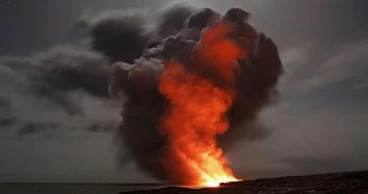
Twelve Vietnamese soldiers tragically lost their lives in an accidental explosion during a military training exercise in Dong Nai province, southern Vietnam, on Monday night.
According to state media, the incident occurred at a shooting range of the 7th Military Region. The soldiers were reportedly transporting explosives when a lightning strike during a severe storm triggered an electronic detonator, leading to the fatal explosion.
Read: Fireworks explosion at Indian temple injures over 150 people
A local military newspaper reported that most of the bodies have been recovered, but authorities are continuing the search for any missing personnel. An urgent investigation into the incident has been initiated by the Ministry of Defence, as confirmed by the Vietnam News Agency.
The tragedy unfolded just a day after Defence Minister Phan Van Giang had delivered a speech inaugurating the combat exercise, according to the state-run Nhan Dan newspaper.
Source: With inputs from agencies
1 year ago
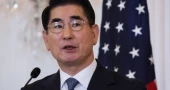
South Korean Defence Minister resigns
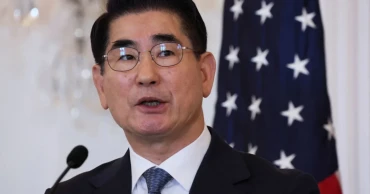
South Korean President Yoon Suk Yeol has accepted the resignation of Defense Minister Kim Yong-hyun following widespread criticism over the president’s brief imposition of martial law. Choi Byung-hyuk, South Korea’s ambassador to Saudi Arabia, has been nominated to replace Kim, according to the defense ministry.
Kim resigned on Wednesday shortly after the opposition Democratic Party filed a motion to impeach him. Leaders within Yoon’s People Power Party had also demanded his removal for advising the martial law declaration. Accepting responsibility, Kim stated that all actions related to the martial law order were carried out under his authority, apologizing for the “concerns and confusion” caused to the public.
South Korea’s opposition parties submit a motion to impeach President Yoon over sudden martial law
President Yoon himself is under mounting pressure to resign after issuing—and subsequently withdrawing—the martial law decree. Six opposition parties have introduced a motion to impeach him, with a parliamentary vote anticipated by midnight on Friday or Saturday. Additionally, the Democratic Party is preparing to pursue treason charges against Yoon.
The martial law announcement, made in a sudden late-night address on Tuesday, accused the opposition of supporting North Korea and engaging in anti-state actions, citing their attempts to impeach prosecutors and block a government budget proposal. However, lawmakers swiftly overturned the decree with 190 votes in the 300-seat parliament, prompting Yoon to retract the order and withdraw deployed troops early Wednesday.
South Korean Parliament overturns President’s Martial Law declaration
Source: CNN
1 year ago

Second impeachment complaint against Philippine VP over president threat
A coalition of leftist activists lodged a second impeachment complaint against Philippine Vice President Sara Duterte on Wednesday, citing alleged misuse of government funds and seeking her permanent disqualification from public office, reports AP.
The complaint, supported by at least 74 activists including leaders from human rights, labour, and student organisations, was submitted to the House of Representatives, highlighting the ongoing political challenges faced by Vice President Duterte. She has yet to comment on this new complaint or the first one filed on Monday.
Impeachment complaint filed against Philippine VP Duterte for threatening President Marcos
Duterte, a 46-year-old lawyer, is the daughter of the controversial former president Rodrigo Duterte, whose administration was marked by a violent anti-drug campaign that resulted in thousands of deaths and is under investigation by the International Criminal Court for possible crimes against humanity.
Her main political rival is President Ferdinand Marcos Jr., whom she publicly threatened with death during an online news conference on November 23.
A criminal probe has been initiated into her threats against Marcos, his wife, and House Speaker Martin Romualdez, a cousin and ally of the president. Duterte clarified that her statements were not intended as a direct threat but as expressions of concern for her safety.
Philippines vice president publicly threatens President Marcos with assassination
The latest impeachment complaint accuses Duterte of breaching public trust through the unlawful use and mismanagement of 612.5 million pesos ($10.3 million) in confidential funds. The complainants allege that she and her team tried to conceal these discrepancies by submitting forged reports and obstructing congressional investigations.
It claims that in December 2022, Duterte’s office spent 125 million pesos ($2 million) over 11 days during the Christmas season on dubious expenses, including renting "safe houses," paying for unidentified confidential information, and providing unclear rewards.
“Misuse of confidential funds is a profound betrayal of the people,” said Liza Maza from the Makabayan coalition. “This is not just a technical breach but a systematic plunder of public resources.”
Renato Reyes of the Bayan coalition added, “Impeachment is essential for addressing impunity. Citizens and taxpayers must hold officials accountable.”
Earlier, a group of civil society activists, including priests and pro-democracy advocates, submitted an initial impeachment case citing approximately 24 alleged crimes and irregularities. These included Duterte’s threats against Marcos, alleged involvement in extrajudicial killings linked to her father's anti-drug campaign, and her perceived failure to counter Chinese assertiveness in the South China Sea.
The House of Representatives, dominated by Marcos allies and Speaker Martin Romualdez—who is also at odds with Duterte—will review the impeachment complaints. This process could take weeks or even months, as Congress is set to go into its Christmas break on December 20 and reconvene on January 13. Many lawmakers will then begin campaigning for the May 12 midterm elections.
Duterte's offices, as vice president and former education secretary, have been under investigation for their handling of confidential and intelligence funds. She has since stepped down from her education role.
Duterte has avoided providing detailed responses during tense televised hearings. Additionally, Philippine police have filed criminal charges against her and her security detail for allegedly assaulting authorities and defying orders during an incident at Congress involving her chief of staff, who was accused of obstructing the funds inquiry.
The National Bureau of Investigation has summoned Duterte to appear on December 11 regarding her threats against the president.
Duterte and Marcos won their 2022 election campaign in a landslide as running mates but have since had significant political differences. In the Philippines, the vice presidency and presidency are elected separately, leading to a situation where rivals may hold the highest political offices.
1 year ago

5.3 magnitude earthquake jolts Telangana’s Mulugu in India
A 5.3 magnitude earthquake jolted Telangana’s Mulugu district on Wednesday morning, the National Centre for Seismology (NCS) reported.
The earthquake occurred at approximately 7:27 am, originating at a depth of 40 kilometers near Mulugu, as per NCS data.
The tremors were felt across Mulugu and neighboring districts, including Hyderabad, prompting residents to share videos and reactions on social media.
“For the first time in 20 years, Telangana experienced one of the strongest earthquakes, with a 5.3 magnitude quake centered in Mulugu. Tremors were felt across the state, including Hyderabad. Yet again, an earthquake at the Godavari riverbed, but this time, a stronger one,” wrote a user named Telangana Weatherman on X.
Read: Moderate earthquake strikes Eastern Turkey
Fortunately, there were no immediate reports of casualties or property damage.
Telangana lies in Seismic Zone II, which is categorized as the lowest-risk zone in India’s seismic classification system. The country is divided into four seismic zones, with Zone V being the most earthquake-prone.
Source: With inputs from agencies
1 year ago
Resignation of South Korean President Yoon demanded over Martial Law
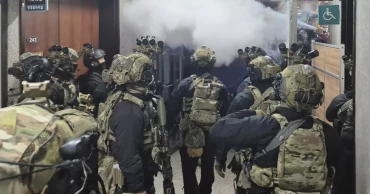
South Korea’s political landscape was shaken on Wednesday as the main opposition Democratic Party called for President Yoon Suk Yeol’s immediate resignation or impeachment. The demand came hours after Yoon rescinded a controversial martial law declaration, which had briefly brought military troops to parliament.
Yoon’s abrupt announcement of martial law on Tuesday evening aimed to combat what he termed “anti-state” forces but was overturned by a unanimous parliamentary vote. This marked South Korea’s first use of martial law in over 40 years, harking back to its pre-democracy era.
Opposition Outrage and Impeachment Threat
The Democratic Party, holding a parliamentary majority, condemned Yoon’s actions as unconstitutional and accused him of rebellion.
“President Yoon Suk Yeol’s martial law declaration was a clear violation of the constitution... a grave act of rebellion,” the party said in a statement, promising impeachment proceedings if Yoon refused to step down.
An impeachment would require a two-thirds parliamentary vote, needing support from at least 200 lawmakers. The Democratic Party and smaller opposition factions collectively control 192 seats. Notably, 18 members of Yoon’s ruling People Power Party (PPP) joined the 190-0 vote to annul the martial law.
If impeached, Yoon would be stripped of presidential powers pending a Constitutional Court ruling, with Prime Minister Han Duck-soo assuming interim responsibilities.
Yoon’s Declaration and Military Deployment
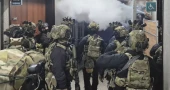
Yoon’s martial law authorized troop deployments to restrict parliamentary activities, sparking comparisons to South Korea’s military-backed governments of the past. Protesters outside the National Assembly faced soldiers armed with assault rifles and military helicopters.
While lawmakers were initially blocked from entering the National Assembly, opposition leader Lee Jae-myung livestreamed himself scaling a wall to access the chamber. Despite the heavy military presence, no major violence was reported, and troops withdrew after the vote to lift the martial law.
Read: South Korean Parliament overturns President’s Martial Law declaration
Critics, including legal experts and opposition leaders, argued Yoon’s actions violated constitutional provisions that limit martial law to wartime or comparable national emergencies. The constitution explicitly prohibits restrictions on parliamentary functions, which Yoon’s declaration attempted to enforce.
International and Domestic Responses
In Washington, the White House expressed “serious concern” over the events, noting that the Biden administration was not informed in advance of Yoon’s martial law declaration. Pentagon officials confirmed no impact on the 27,000 U.S. troops stationed in South Korea.
Domestically, the People Power Party leader Han Dong-hun criticized Yoon’s actions as unconstitutional, urging him to dismiss Defense Minister Kim Yong Hyun, who reportedly recommended the declaration.
Public reaction remained relatively muted, with life in Seoul appearing normal on Wednesday. Tourists and residents went about their routines, though increased police presence and lingering tension hinted at the political turmoil.
Echoes of South Korea’s Democratic Struggles
President Yoon’s martial law declaration and its swift reversal highlighted South Korea’s turbulent political history, including its transition to democracy in the late 1980s. Observers compared the current crisis to the 2017 impeachment of former President Park Geun-hye, who was removed from office and later imprisoned for corruption.
Read: Emergency martial law declared in South Korea
Natalia Slavney, an analyst with the Stimson Center’s 38 North program, described the martial law as a “serious backslide of democracy” in South Korea, noting an “alarming trend of abuse” during Yoon’s presidency.
As calls for Yoon’s resignation grow louder, South Korea faces an uncertain political future. The crisis underscores the fragility of democratic norms in the face of escalating political conflicts.
Source: With inputs from agencies
1 year ago
South Korean Parliament overturns President’s Martial Law declaration
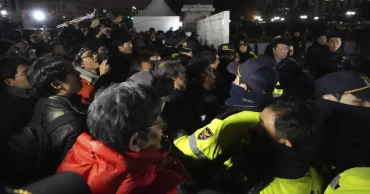
South Korean President Yoon Suk Yeol declared martial law late Tuesday, accusing opposition forces of sympathizing with North Korea and vowing to eliminate “anti-state” elements. His declaration followed months of political tensions, with the opposition controlling the parliament. However, within hours, South Korea's parliament voted to reverse the president's decision, with National Assembly Speaker Woo Won Shik declaring that lawmakers would “protect democracy with the people.” Woo called for the military and police to withdraw from the Assembly grounds.
The president’s move, reminiscent of past authoritarian measures not seen in South Korea since the 1980s, was swiftly condemned by both the opposition and the leader of Yoon’s own conservative party. In the wake of the declaration, South Korea’s military announced that political gatherings, including those in parliament, would be suspended. The military also instructed striking doctors to return to work within 48 hours, threatening arrest without a warrant for violators.
Read: Emergency martial law declared in South Korea
Under South Korean law, martial law can be lifted by a majority vote in parliament, which is currently dominated by the opposition Democratic Party. The National Assembly’s swift response saw all 190 participating lawmakers voting in favor of rescinding the martial law, with TV footage showing soldiers leaving the parliament grounds afterward.
Earlier, there were scenes of military and police presence around parliament, with soldiers seen carrying rifles and helicopters circling overhead. The conservative People Power Party’s leader, Han Dong-hoon, described the martial law declaration as “wrong,” while opposition leader Lee Jae-myung called it “illegal and unconstitutional.”
In a televised address, President Yoon stated that martial law was necessary to prevent the nation from "falling into the depths of national ruin." He vowed to eliminate pro-North Korean forces and protect South Korea’s democratic order. Yoon, who has faced political challenges and a dip in approval ratings, has been struggling to push his agenda against an opposition-controlled parliament.
Yoon’s martial law declaration is the first in South Korea since its democratization in 1987 and the first since the last martial law was imposed in 1979.
Source: With inputs from agencies
1 year ago

Emergency martial law declared in South Korea
South Korean President Yoon Suk Yeol declared an “emergency martial law,” Tuesday accusing the country’s opposition of controlling the parliament, sympathizing with North Korea and paralyzing the government with anti-state activities.
Yoon made the announcement in a televised briefing, vowing to “eradicate pro-North Korean forces and protect the constitutional democratic order.”
It wasn’t immediately clear how Yoon’s step would affect the country’s governance and democracy. The move drew immediate opposition from politicians, including the leader of his own conservative party, Han Dong-hoon, who called the decision “wrong” and vowed to “stop it with the people.” Opposition leader Lee Jae-myung, who narrowly lost to Yoon in the 2022 presidential election, called Yoon’s announcement “illegal and unconstitutional.”
“Through this martial law, I will rebuild and protect the free Republic of Korea, which is falling into the depths of national ruin,” Yoon said during a televised speech, invoking South Korea’s formal name.
“I will eliminate anti-state forces as quickly as possible and normalize the country,” he said, while asking the people to believe in him and tolerate “some inconveniences.”
Yoon — whose approval rating has dipped in recent months — has struggled to push his agenda against an opposition-controlled parliament since taking office in 2022.
Yoon’s conservative People Power Party had been locked in an impasse with the liberal opposition Democratic Party over next year’s budget bill. The opposition has also been attempting to pass motions to impeach three top prosecutors, including the chief of the Seoul Central District Prosecutors’ Office, in what the conservatives have called a vendetta against their criminal investigations on Lee, who has been seen as the favorite for the next presidential election in 2027 in opinion polls.
Syrian insurgents seize four towns amid clashes
Yoon has also been dismissing calls for independent investigations into scandals involving his wife and top officials, drawing quick, strong rebukes from his political rivals. The Democratic Party reportedly called an emergency meeting of its lawmakers following Yoon’s announcement.
1 year ago

China bans gallium, germanium exports to US over chip sanctions
China announced Tuesday it is banning exports to the United States of gallium, germanium, antimony and other key high-tech materials with potential military applications.
The Chinese Commerce Ministry announced the move after the Washington expanded its list of Chinese companies subject to export controls on computer chip-making equipment, software and high-bandwidth memory chips. Such chips are needed for advanced applications.
The ratcheting up of trade restrictions comes at a time when President-elect Donald Trump has been threatening to sharply raise tariffs on imports from China and other countries, potentially adding to simmering tensions over trade and technology.
In July 2023, China said that it would require exporters to apply for licenses to send to the US the strategically important materials such as gallium and germanium.
In August, the Chinese Commerce Ministry said it would restrict exports of antimony, which is used in a wide range of products from batteries to weapons.
China is the biggest global source of gallium and germanium, which are produced in small amounts but are needed to make computer chips for mobile phones, cars and other products, as well as solar panels and military technology.
UN court hears landmark climate case as island nations fear rising seas
China’s Commerce Ministry protested and said it would act to protect China’s “rights and interests” after the US side announced it was adding 140 companies to a so-called “entity list” subject to strict export controls. Nearly all are based in China, though some are Chinese-owned businesses in Japan, South Korea and Singapore.
Both governments said their respective export controls were needed for “national security.” In hitting back at the latest move by Washington to slow China's progress in developing advanced technology with potential military applications, China is tightening controls announced in July 2023.
China's government has been frustrated by US curbs on access to advanced processor chips and other technology on security grounds but was cautious in retaliating, possibly to avoid disrupting China’s fledgling developers of chips, artificial intelligence and other technology.
The US gets about half its supply of both gallium and germanium metals directly from China, according to the US Geological Survey.
China exported about 23 metric tons (25 tons) of gallium last year and produces about 600 metric tons (660 tons) of germanium per year.
1 year ago
Impeachment complaint filed against Philippine VP Duterte for threatening President Marcos
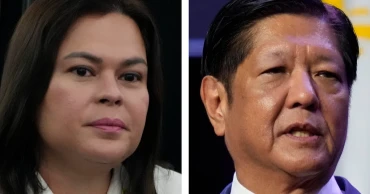
Philippine Vice President Sara Duterte is facing an impeachment complaint filed Monday in the House of Representatives, citing death threats she made against the president and her alleged involvement in extra-judicial killings, corruption, and failure to oppose Chinese aggression in the South China Sea, reports Associated Press (AP).
The complaint, brought forward by prominent civil society activists, accuses Duterte of violating the Constitution, betrayal of public trust, and committing “high crimes.” Among the allegations are death threats directed at President Ferdinand Marcos Jr., his wife, and House Speaker Martin Romualdez.
Representative Percival Cendana, who endorsed the complaint, stated, “We’re hoping that with this complaint, we can end the nightmare that our vice president has brought to the people.” A copy of the complaint obtained by AP described Duterte’s actions as reflecting “mental incapacity, depravity, and lack of mental fitness,” qualifying as both betrayal of public trust and a high crime warranting impeachment.
Philippines vice president publicly threatens President Marcos with assassination
Duterte, 46, also faces allegations of unexplained wealth and of permitting the continuation of extra-judicial killings of drug suspects initiated by her father, Rodrigo Duterte, during his tenure as mayor of Davao City.
The impeachment comes amid a bitter political rivalry between Duterte and President Marcos Jr. She acknowledged in a Nov. 23 online news conference that she had hired an assassin to target Marcos, his wife, and Romualdez if she were killed. Duterte later clarified that her comments were not intended as a threat but reflected concerns about her safety.
The Philippine Congress, dominated by Marcos and Romualdez allies, will now scrutinise the impeachment complaint. The legislative process may extend into the new year, as Congress is set to recess on Dec. 20 and resume on Jan. 13, with elections in May adding further political complexity.
A key issue in the House’s ongoing investigation concerns the alleged misuse of PHP 612.5 million ($10.3 million) in confidential and intelligence funds by Duterte’s offices as vice president and former education secretary. Duterte has refused to respond to detailed questions in tense televised hearings and strongly objected to the detention of her chief of staff, Zuleika Lopez, who was accused of obstructing the inquiry.
Criminal complaints have also been filed against Duterte and her security staff for alleged assault and defiance of authorities during an altercation in Congress.
The rivalry between Marcos and Duterte, former running mates who won by a landslide in the 2022 election, has escalated due to disagreements over policy, including approaches to China’s territorial claims and the controversial anti-drug crackdown led by Duterte’s father.
The impeachment complaint includes accusations that Duterte failed to condemn Chinese aggression in the South China Sea and allowed extra-judicial killings of drug suspects during her tenure as mayor of Davao City. Arturo Lascanas, a former police officer and key witness, claimed Duterte permitted these killings to continue.
The impeachment effort highlights the fallout from Rodrigo Duterte’s deadly anti-drug campaign, which resulted in thousands of deaths and is under investigation by the International Criminal Court as a potential crime against humanity.
President Marcos has dismissed the impeachment effort as a distraction, but critics argue it is necessary to uphold accountability and the rule of law.
1 year ago

Taiwan President visits Hawaii Think Tank amid Chinese criticism
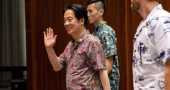
Taiwan’s President Lai Ching-te visited the U.S.-funded East-West Center in Hawaii on Sunday during a two-day stopover that has drawn sharp rebukes from Beijing. The visit is part of Lai’s Pacific island tour, which includes stops in the Marshall Islands, Tuvalu, and Palau—three of the 12 nations that maintain formal diplomatic ties with Taiwan.
At the East-West Center, located on the University of Hawaii’s Manoa campus, Lai exchanged gifts with the center’s president, Suzanne Puanani Vares-Lum, and addressed an audience, though journalists were not allowed to remain during his speech. Vares-Lum emphasized Hawaii’s strategic role in fostering dialogue between the U.S., Asia, and the Pacific, noting that the state regularly hosts global leaders.
Lai’s predecessor, Tsai Ing-wen, made similar visits to the East-West Center in 2017 and 2019, underscoring its importance in Taiwan’s outreach strategy.
Beijing’s Strong Opposition
China’s Foreign Ministry condemned Lai’s Hawaii visit and criticized the U.S. for facilitating it. Beijing also protested a recently announced U.S. arms sale to Taiwan, which includes $385 million in spare parts for F-16 fighter jets and support for tactical communication systems.
“China will closely monitor the situation’s development and take resolute and forceful measures to safeguard its sovereignty and territorial integrity,” the ministry stated.
The arms deal aligns with the Taiwan Relations Act, under which the U.S. is committed to supporting Taiwan’s self-defense. However, Washington has long maintained a policy of strategic ambiguity regarding whether it would directly intervene in the event of a Chinese invasion.
Strengthening U.S.-Taiwan Relations
Lai’s Hawaii itinerary included meetings with local leaders, including Governor Josh Green, who discussed disaster preparedness and shared experiences as former healthcare professionals. Lai also attended a banquet with Taiwanese American community members and posed for photos with Hawaii congressional representatives.
Representative Ed Case highlighted the enduring ties between the U.S. and Taiwan, rooted in shared values and interests.
Read: Taiwan president’s US visit draws criticism from China
While it remains unclear whether Lai will meet with Biden administration officials or representatives of the incoming Trump administration, his visit signals Taiwan’s continued efforts to solidify international relationships.
Rising Tensions in the Taiwan Strait
Lai’s stopover comes amid heightened tensions between Taiwan and China, with Beijing increasingly vocal in opposing any perceived international recognition of Taiwan’s sovereignty. Last year, the Chinese military conducted drills near Taiwan following Lai’s U.S. visit as vice president.
China’s objections extend to high-level visits to Taiwan by U.S. politicians. Beijing views such engagements as infringing on its claims over Taiwan, despite Washington’s shift in formal recognition from Taipei to Beijing in 1979.
Lai’s Pacific tour and U.S. stopover underscore Taiwan’s diplomatic resilience even as Beijing seeks to isolate the self-governing island on the world stage.
Source: With inputs from agencies
1 year ago