Asia
India to host BRICS Foreign Ministers’ Meeting on May 14-15
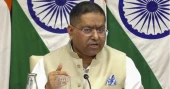
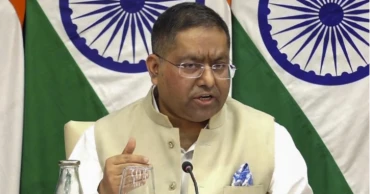
India will host the BRICS Foreign Ministers’ Meeting on May 14–15, says Spokesperson for the Indian Ministry of External Affairs Randhir Jaiswal on Tuesday.
BRICS brings together 11 major emerging markets and developing countries of the world – Brazil, China, Egypt, Ethiopia, India, Indonesia, Iran, Russia, Saudi Arabia, South Africa and the United Arab Emirates (UAE).
It serves as a “useful platform” for consultation and cooperation on contemporary issues having global as well as regional significance, and issues of global political and economic governance.
Indian High Commission hosts interaction with media delegation after India visit
The meeting will be chaired by External Affairs Minister of India Dr S Jaishankar, Jaiswal said in a regular media briefing in New Delhi.
He said BRICS Foreign Ministers and Heads of Delegation from member and partner countries will participate in the meeting. They will also call on Prime Minister of India Narendra Modi.
During the meeting, they will exchange views on global and regional issues of mutual interest.
On the second day, BRICS member and partner countries will participate in a session themed "BRICS@20: Building for Resilience, Innovation, Cooperation and Sustainability.”
This will be followed by a session on the "Reforms of Global Governance and Multilateral System.”
The BRICS Foreign Ministers held their last meeting on the margins of the 80th Session of the United Nations General Assembly (UNGA 80) on 26 September 2025. The meeting was chaired by India in its capacity as the incoming BRICS Chair for 2026.
BRIC was formalised at the first meeting of BRIC Foreign Ministers on the sidelines of the United Nations General Assembly (UNGA) in New York in 2006.
The inaugural BRIC Summit was convened in Yekaterinburg, Russia, in 2009.
It was agreed to expand BRIC into BRICS with the inclusion of South Africa at the BRIC Foreign Ministers’ meeting in New York in 2010. Accordingly, South Africa attended the 3rd BRICS Summit in Sanya in 2011.
Egypt, Ethiopia, Iran, Saudi Arabia and the UAE became full member of BRICS in January 2024 and Indonesia in January 2025.
Belarus, Bolivia, Kazakhstan, Cuba, Malaysia, Nigeria, Thailand, Uganda, Uzbekistan and Vietnam joined BRICS as partner countries in 2025.
2 months ago
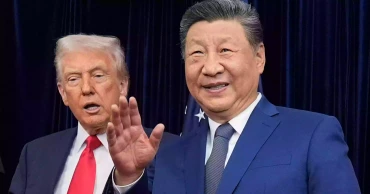
Trump-Xi summit to focus on trade, Taiwan and Iran
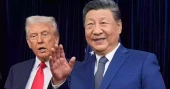
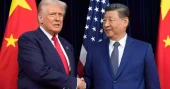
Chinese President Xi Jinping and US President Donald Trump are set to hold a closely watched summit, with both sides describing their recent ties as relatively stable while acknowledging that major challenges remain.
Despite expectations of continued dialogue, analysts say the meeting is unlikely to produce major breakthroughs, as longstanding tensions — from trade disputes to Taiwan and global security issues — remain unresolved.
“There is a shared understanding that stability in US-China relations is important, but what comes next is far more complicated,” said Henrietta Levin of the Center for Strategic and International Studies, adding that the meeting may yield limited concrete outcomes.
There may be a trade deal, but not a resolution
Trade tensions that began during Trump’s first term intensified last year when Washington imposed steep tariffs on Chinese imports, prompting retaliatory measures from Beijing, including restrictions on rare earth exports.
Tariffs escalated sharply before both sides agreed to a truce, suspending several punitive steps. During a previous meeting in South Korea, the two leaders extended the truce, with China pledging increased soybean purchases and the US reducing tariffs.
Experts say a new agreement could emerge from the summit, but it would likely come with conditions and fall short of ending the broader trade conflict.
“Both sides may reach a comprehensive deal, but that does not mean the trade war is over,” said Zhao Minghao, a professor at Fudan University.
Analysts also note that China has introduced new regulatory tools to counter foreign economic pressure, while the US continues targeted actions. The White House has indicated plans to discuss forming a “Board of Trade” to maintain economic dialogue.
China's ability to buy high-tech chips is still a thorny issue
Restrictions imposed by the US on exports of advanced semiconductors and related technologies remain a key sticking point.
American chipmaker Nvidia has urged Washington to ease limits, arguing that continued exports would maintain US technological influence over China’s growing artificial intelligence sector.
However, observers say Beijing is increasingly focused on strengthening its domestic chip industry, reducing reliance on US technology amid tightening controls.
China sees Taiwan as the ‘biggest risk’ in ties with the US
The issue of Taiwan continues to be the most sensitive point in bilateral relations.
Chinese Foreign Minister Wang Yi recently described Taiwan as the “biggest risk” in ties with Washington, a position reiterated ahead of the summit.
While China claims the island as its territory, Taiwan operates as a self-governed democracy. Tensions have escalated in recent years, with Beijing increasing military activities near the island.
The US, while maintaining strategic ambiguity, is legally bound to support Taiwan’s self-defense, further complicating the issue. Analysts suggest that a possible outcome could involve mutual restraint, such as reduced US arms sales in exchange for fewer Chinese military drills.
The US wants China to put pressure on Iran
The ongoing conflict involving Iran is also expected to feature in the discussions.
Washington is urging Beijing to use its influence over Tehran, particularly regarding the Strait of Hormuz, a vital global energy route.
US Treasury Secretary Scott Bessent recently called on China to step up diplomatic efforts, while also criticizing Beijing for its continued purchase of Iranian oil.
China, however, has taken a cautious stance, criticizing US actions in the Middle East but showing little willingness to play a direct mediating role.
“I don’t think China has any interest in solving the problems the U.S. has created for itself in the Middle East,” Levin, of the Center for Strategic and International Studies, said.
A few days before the trip, U.S. Treasury Secretary Scott Bessent called on China to pressure Iran to open the Strait of Hormuz, and said that by buying Iranian oil, Beijing is funding terrorism.
With multiple complex issues on the table, the summit is expected to focus more on managing tensions than resolving them, as both powers seek to maintain a fragile stability in their relationship.
2 months ago
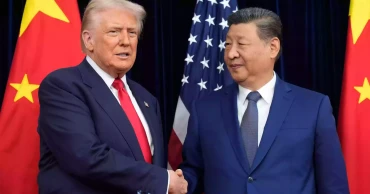
Xi, Trump to discuss bilateral ties and global peace during China visit
Chinese President Xi Jinping and US President Donald Trump will hold extensive talks on key issues related to China-US relations, as well as world peace and development, a Chinese foreign ministry spokesperson said on Monday.
Speaking at a regular press briefing, Guo Jiakun said the two leaders are expected to exchange views on a wide range of bilateral and global issues during Trump's state visit to China from May 13 to 15.
The visit will be the first by a sitting US president to China in nine years.
Guo said Xi and Trump last met in October 2025 in Busan, where they discussed ways to strengthen communication and cooperation.
He said direct engagement between the two presidents plays a vital strategic role in guiding relations between the world’s two largest economies.
China is ready to work with the United States on the basis of equality, mutual respect and shared benefit to expand cooperation, properly manage differences and bring greater stability and certainty to an increasingly uncertain world, the spokesperson added.
2 months ago
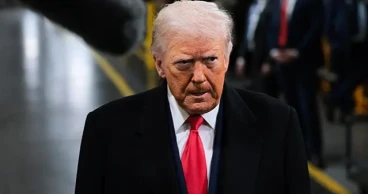
Trump’s China visit seen as key step toward stabilising Beijing-Washington ties
US President Donald Trump’s upcoming visit to China from May 13 to 15 is being viewed as a strategically significant move aimed at improving relations between the world’s two largest economies amid rising geopolitical and technological tensions.
According to Zhu Chenge, a researcher at the Institute of American Studies under the Chinese Academy of Social Sciences, direct engagement between national leaders remains the most effective way to stabilise China-US relations during periods of uncertainty and competition.
In an article published by a Chinese state-owned media outlet, Zhu said head-of-state diplomacy has historically played a vital role in managing differences between Beijing and Washington and preventing strategic miscalculations.
He noted that relations between the two countries over the past nine years have experienced trade disputes, technological rivalry and geopolitical tensions, making the upcoming summit particularly important.
The article recalled that previous meetings between Chinese President Xi Jinping and Trump helped reopen communication channels, expand cooperation and reduce areas of confrontation.
Zhu argued that routine diplomatic exchanges alone are insufficient to manage the complexity of China-US relations, stressing that direct leader-to-leader communication is necessary to clarify strategic intentions, define core interests and maintain stability.
The commentary also highlighted growing global uncertainty, including instability in the Middle East, risks to global energy supplies and trade routes, and intensifying strategic competition in the Asia-Pacific region.
It further pointed to expanding technological competition between China and the US, particularly in sectors such as artificial intelligence and quantum computing.
According to the article, Trump’s visit is expected to focus on strategic dialogue, including discussions on differences, red lines and future cooperation between the two powers.
Zhu said both countries have already made progress in areas such as tariffs and trade negotiations and gained a clearer understanding of each other’s strategic goals, creating favourable conditions for the upcoming meeting.
However, he cautioned that deeper challenges remain, including the need for clearer communication regarding cooperation, better understanding of China’s core interests by the US, and joint management of risks arising from major-power competition in the age of AI.
The article said any new strategic understandings reached during the visit could provide long-term guidance for China-US relations and contribute to greater global stability.
Zhu added that while differences between the two countries will continue, mature major-power relations depend on coexistence despite disagreements, maintaining strategic guardrails and expanding cooperation where possible.
He also stressed the importance of policy continuity in the US, arguing that China’s development should be viewed as an opportunity rather than a threat and that cooperation between the two nations serves the interests of both peoples.
2 months ago
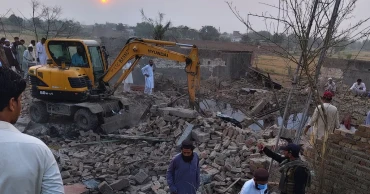
Pakistan protests to Afghanistan over suicide attack that killed 15
Pakistan on Monday summoned a senior Afghan diplomat and lodged a formal protest over a suicide attack in the northwestern district of Bannu that killed 15 police officers.
The attack took place late Saturday in Bannu, near the border with Afghanistan.
Pakistani authorities blamed the attack on Tehrik-e-Taliban Pakistan, also known as the Pakistani Taliban or TTP.
In a statement, Ministry of Foreign Affairs of Pakistan said the protest was conveyed to Afghanistan’s charge d'affaires in Islamabad. It said a detailed investigation, along with evidence and technical intelligence, suggested that the attack was planned by militants based in Afghanistan.
Pakistan also told Kabul that it reserved the right to take decisive action against those responsible for the attack.
There was no immediate response from the Afghan authorities.
According to police, a suicide bomber drove an explosives-laden vehicle into a security post in Bannu. Several gunmen then launched an assault, triggering a gunfight.
Some officers were killed in the exchange of fire, while others died when part of the building collapsed. Four officers were also injured.
A newly formed militant group, Ittehad-ul-Mujahideen Pakistan, claimed responsibility for the attack. Pakistani officials say the group is a front for the TTP.
Pakistan has repeatedly accused the Taliban administration in Afghanistan of allowing TTP militants to use Afghan territory to launch attacks inside Pakistan. Kabul has denied the allegations.
Militant violence has increased in Pakistan in recent years, with many of the attacks linked to the TTP.
Relations between Islamabad and Kabul have remained tense, with border clashes since late February leaving hundreds dead. Although peace talks were held in April with mediation by China, occasional cross-border skirmishes have continued.
2 months ago
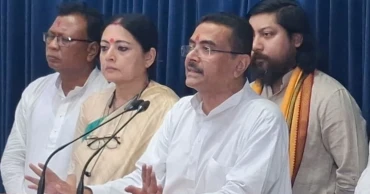
BSF to gain complete authority over border fencing land in 45 days, says Suvendu at first Cabinet meeting
At the first Cabinet meeting West Bengal Chief Minister of Suvendu Adhikari announced that the process of transferring land to the Border Security Force for completing fencing along the India–Bangladesh border would start immediately and be finished within 45 days.
He said the decision was taken as part of the government’s priority to speed up border security measures and address concerns over cross-border movement.
The Chief Minister added that once the land is fully handed over, the BSF will be able to complete the remaining fencing work, which the government believes will help curb illegal infiltration from Bangladesh.
The announcement follows a key election promise made by the Bharatiya Janata Party during the campaign, where Union Home Minister Amit Shah had pledged that all required land for fencing would be transferred within 45 days if the party came to power.
The issue of infiltration was a major theme in the recent Assembly elections, with the BJP accusing the former state administration led by the Trinamool Congress and Chief Minister Mamata Banerjee of delaying border fencing due to political considerations. The TMC, however, has argued that land acquisition is complex and requires balancing local livelihoods and administrative concerns.
West Bengal shares a long international border of over 4,000 km with Bangladesh, of which most has already been fenced, while a few hundred kilometres still remain unfinished, particularly in difficult terrain. The state government emphasized that while operational control of border security remains with the BSF under the central government, cooperation from the state is essential for land-related clearances.
Source: India Today
2 months ago
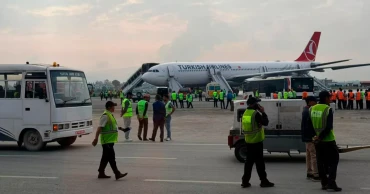
Turkish airlines jet catches fire during landing in Kathmandu; all passengers safe
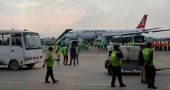
A Turkish Airlines passenger jet caught fire while landing at Nepal’s main airport on Monday, forcing the closure of the airport, though all passengers were safely evacuated and no injuries were reported.
The flight, arriving from Istanbul, landed at Tribhuvan International Airport in Kathmandu when fire and smoke were seen coming from the right landing gear, according to airport officials.
Frontier plane hits pedestrian during takeoff at Denver airport
Emergency response teams quickly intervened and brought the fire under control, after which all passengers were safely evacuated from the Airbus A330 aircraft. A total of 277 passengers were on board.
Following the incident, Kathmandu airport was shut down on Monday morning, and several incoming flights were placed on hold while authorities investigated the situation and worked to clear the only available runway.
Nepal has a history of frequent aviation accidents due to its challenging mountainous terrain and unpredictable weather conditions, which often make flying difficult.
In a similar incident in 2015, another Turkish Airlines aircraft landing in dense fog in Kathmandu skidded off a slippery runway, leading to the airport’s closure for several days. No injuries were reported in that case, and the aircraft was later removed and converted into a museum.
2 months ago
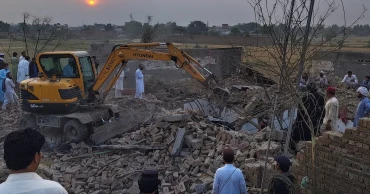
Suicide attack in Pakistan: Death toll rises to 14
The death toll from a suicide attack on a security post in northwest Pakistan rose to 14 police officers, authorities said early Sunday. A self-proclaimed breakaway group of the Pakistan Taliban has claimed the attack.
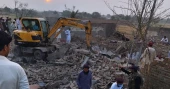
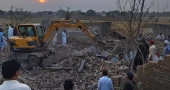
A suicide bomber and several gunmen detonated an explosives-laden vehicle near the post in Bannu, a district in Khyber Pakhtunkhwa province bordering Afghanistan, late Saturday, said senior police official Sajjad Khan. The attack triggered an intense shootout, and some officers were killed in the exchange, while others died later after the building collapsed.
Rescuers conducted an hourslong search operation using heavy machinery to retrieve bodies from under the rubble, Khan said, adding that three police officers were wounded in the attack.
Meanwhile, hundreds gathered Sunday at the police headquarters in Bannu to attend the funerals of the slain officers. Uniformed colleagues stood in silence as coffins draped in the national flag were carried past grieving families. Some relatives broke down upon seeing the coffins, as a Muslim cleric led funeral prayers under tight security
Security forces have launched an operation to track down the perpetrators.
A newly formed militant group, Ittehad-ul-Mujahideen Pakistan, claimed responsibility for the attack in a statement sent to reporters. While the group claims it was formed by splinter factions of the Pakistani Taliban, known as Tehrik-e-Taliban Pakistan, authorities have accused it of being a front for the TTP.
Pakistan has witnessed a surge in militant violence in recent years, much of it blamed on the TTP, a separate group but an ally of the Afghan Taliban, who returned to power in Afghanistan in 2021. Islamabad often accuses Afghanistan’s Taliban government of providing sanctuary to the TTP, a claim that Kabul denies.
President Asif Ali Zardari condemned the attack and offered condolences to the victims’ families in a statement. He also instructed local authorities to assist the wounded and residents whose homes were damaged in the attack.
Zadari also said, “terrorists operating from sanctuaries in Afghanistan under the Taliban administration and supported externally are targeting civilians and law enforcement personnel in Pakistan.” He also vowed to target "their facilitators and sponsors.”
Prime Minister Shehbaz Sharif also condemned the attack.
Tensions between the two neighbors have persisted, and both sides have engaged in fighting that has killed hundreds of people since late February.
In early April, Afghan and Pakistani officials held peace talks mediated by China. However, despite the talks, sporadic cross-border clashes have continued, though at a lower intensity than before.
2 months ago
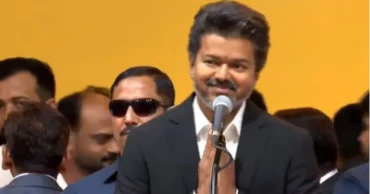
Vijay takes oath as Tamil Nadu CM, says this is a new beginning
“This is a new beginning, new era,” Tamilaga Vettri Kazhagam (TVK) President Chandrasekar Joseph Vijay told his supporters after taking oath as the new Chief Minister of Tamil Nadu on Sunday.
Actor-turned-politician Vijay was sworn in as Chief Minister after securing a majority in the 234-member Tamil Nadu Assembly following five days of negotiations, four meetings with the Governor, and extensive talks with potential allies to cross the required majority mark of 118, reports NDTV.
The 51-year-old TVK leader, whose party won 108 seats in last month’s election, met Governor Rajendra Vishwanath Arlekar on Saturday and claimed the support of five MLAs from the Congress, two lawmakers from the Viduthalai Chiruthaigal Katchi (VCK), and two each from the Communist Party of India (CPI), the Communist Party of India (Marxist) (CPI-M), and the Indian Union Muslim League (IUML).
As Vijay was elected from two constituencies and will vacate one seat, the alliance’s effective strength stands at 120 MLAs.
His government marks the first non-DMK and non-AIADMK administration in nearly 60 years in Tamil Nadu.
Women’s Safety Top Priority: Vijay
Vijay assured women in Tamil Nadu that their safety will be a top priority.
“Immediate action will be taken against crimes targeting women,” he said.
“I promise the people of Tamil Nadu that I will never misuse even a single rupee of public money. I have not entered politics for wealth, and all of you know that very well. I will never allow corruption or permit anyone to make money through corrupt practices. This government will belong to the people, and together we will build a stronger and better Tamil Nadu,” Vijay told his supporters.
Indian Prime Minister Narendra Modi congratulated Vijay on assuming office as Chief Minister of Tamil Nadu, “Best wishes for his tenure ahead. The Central Government will keep working with the Tamil Nadu Government to improve the lives of people,” he said in a post on X.
After taking oath, Vijay also recorded a video on his phone with Rahul Gandhi, TVK leaders, and supporters present at the Jawaharlal Nehru Stadium in Chennai. Governor Rajendra Vishwanath Arlekar attended the event and was welcomed by Vijay.
How Vijay formed the government
Vijay initially received support from Congress, a DMK ally with five MLAs, and met the Governor on Wednesday staking claim to form the government. However, he was told that he needed more support.
He met the Governor again on Thursday after discussions with other parties but could not convince him that he had the required numbers.
“During the meeting, the Hon'ble Governor explained that the requisite majority support in the Tamil Nadu Legislative Assembly, essential for forming the government, has not been established,” Lok Bhavan said in a statement.
On Friday, Vijay received a major boost when the Communist Party of India (CPI) and the Communist Party of India (Marxist) (CPI-M), with two MLAs each, extended their support. This brought his alliance tally to 116, still two short of the 118 required for a simple majority.
He met the Governor again on Friday evening but failed to provide written proof of support from at least 118 MLAs.
On Saturday, Viduthalai Chiruthaigal Katchi (VCK), led by Thol Thirumavalavan and a DMK ally, announced support for Vijay, taking the total to 118.
Subsequently, the Indian Union Muslim League (IUML), which has two MLAs, also declared support, raising the coalition strength to 120 MLAs.
2 months ago

Russia holds Victory Day parade in Moscow amid heightened security
Russian President Vladimir Putin on Saturday expressed confidence in victory in Ukraine as he oversaw a military parade at Moscow’s Red Square marking the defeat of Nazi Germany in World War II, amid tight security and the presence of several foreign leaders.
The Victory Day parade, Russia’s most important secular holiday, was held under heightened security, even as a U.S.-brokered three-day ceasefire reduced fears of possible Ukrainian disruption. Putin, in power for more than 25 years, has used the occasion to showcase military strength and rally support for the ongoing Ukraine war, now in its fifth year.
Top diplomats of Russia, UAE hold talks on Hormuz Strait tensions
Addressing troops, Putin said Russian forces are fighting an “aggressive force supported by the entire NATO bloc,” adding: “Victory has always been and will be ours,” and stressed unity, courage and moral strength.
Unlike previous years, the parade did not feature tanks, missiles or heavy weapons, except for a traditional combat jet flyover. Officials cited the “current operational situation” and security concerns over potential Ukrainian attacks. For the first time, North Korean troops also participated.
Separately, ceasefire efforts between Russia and Ukraine failed, with both sides trading blame. US President Donald Trump said a temporary ceasefire and prisoner exchange had been agreed, calling it a possible “beginning of the end.” Ukrainian President Volodymyr Zelenskyy warned of drone threats, while Kremlin dismissed his remarks.
The event was attended by several foreign leaders, including Belarus President Alexander Lukashenko.
2 months ago