Asia

Xi, Saudi prince discuss strategic ties, regional tensions in Middle East
Chinese President Xi Jinping on Monday held a telephone conversation with Saudi Arabia’s Crown Prince and Prime Minister Mohammed bin Salman bin Abdulaziz Al Saud. During the call, both sides agreed to further strengthen their comprehensive strategic partnership and discussed the volatile situation in the Middle East.
According to China’s Ministry of Foreign Affairs and state media, President Xi underscored that China attaches great importance to its relations with Saudi Arabia and adheres to the principles of mutual respect, equality and mutual benefit.
China-Russia ties ‘precious’ amid global uncertainty, says Xi
This year marks the 10th anniversary of the establishment of the China-Saudi Arabia comprehensive strategic partnership. Xi said China is ready to take this opportunity to deepen mutual strategic trust, expand practical cooperation, increase exchanges at all levels, and continuously broaden the scope and depth of bilateral ties, setting a positive example for China-Arab relations.
On the current situation in the Middle East and the Gulf region, President Xi called for an immediate and comprehensive ceasefire, supported all efforts aimed at restoring peace, and advocated resolving disputes through political and diplomatic channels.
He stressed that normal passage through the Strait of Hormuz should be maintained, as it serves the common interests of regional countries and the international community. China supports regional nations in building a shared home featuring good-neighborliness, development, security and cooperation, so that they can hold their future in their own hands and promote lasting peace and stability.
Crown Prince Mohammed bin Salman described the Saudi-China relationship as strategic and of vital importance to his country. He noted that the ongoing conflict in the Middle East is undermining the security of Gulf states and severely disrupting global energy supplies and economic stability.
Saudi Arabia remains committed to resolving disputes through dialogue and preventing further escalation, he said. The Crown Prince praised China as a responsible major power that upholds a just position and supports Middle Eastern countries in pursuing good-neighborliness, dialogue and cooperation.
He expressed Saudi Arabia’s readiness to strengthen communication and coordination with China to maintain the ceasefire, prevent the resumption of hostilities, ensure the safety and freedom of navigation in the Strait of Hormuz, and jointly explore pathways toward lasting peace and stability in the region.
The phone call comes amid heightened tensions in the Gulf following the recent Iran-related conflict, which has affected maritime traffic through the critical Strait of Hormuz a vital chokepoint for global oil supplies.
Both leaders reaffirmed their commitment to closer bilateral cooperation as the two countries mark a decade of their elevated strategic partnership.
3 months ago
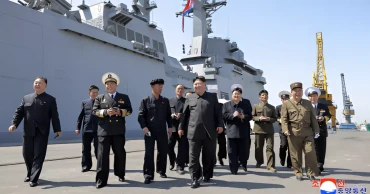
North Korea fires ballistic missiles toward sea
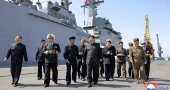
North Korea launched multiple ballistic missiles toward the sea on Sunday, its neighbours said, days after the U.N. nuclear watchdog warned of “very serious” progress in Pyongyang’s nuclear weapons development.South Korea’s Joint Chiefs of Staff said the missiles were fired Sunday morning from the Sinpo area on the country’s east coast, a region that hosts a major shipyard used for submarine construction. South Korea’s military said it has strengthened surveillance and is closely sharing intelligence with the United States and Japan.The presidential office in Seoul said the National Security Council plans to hold an emergency meeting to assess the situation.
North Korea tests upgraded missile engine aimed at U.S. mainlandJapan’s Defence Ministry also detected the launches, saying the missiles were believed to have landed in waters off North Korea’s east coast. Tokyo lodged a strong protest, calling the launches a threat to regional and global peace and a violation of UN Security Council resolutions banning ballistic missile activity by North Korea.The latest launches come amid a series of weapons tests this year. Last week, North Korean leader Kim Jong Un oversaw missile tests from a destroyer, while earlier Pyongyang conducted three days of trials involving ballistic missiles with cluster warheads and other systems. In March, it tested an upgraded solid-fuel engine capable of reaching the U.S. mainland.North Korea has expanded its nuclear programme since the collapse of talks with former U.S. President Donald Trump in 2019. While Trump has expressed interest in resuming dialogue, Kim has indicated openness only if Washington drops denuclearisation demands.
3 months ago
Deadliest Year: 900 Rohingya missing or dead in 2025 sea crossings: UNHCR
UNHCR, the UN Refugee Agency, on Friday called on States to address the root causes of displacement, expand safe and legal pathways, and strengthen regional cooperation to save lives and combat smuggling and trafficking, noting that 2025 was deadliest year yet for maritime movements of Rohingya refugees.
"In 2025, nearly 900 Rohingya refugees were reported missing or dead in the Andaman Sea and Bay of Bengal, making it the deadliest year on record for maritime movements in South and South‑East Asia," said UNHCR spokesperson Babar Baloch in response to questions received at press briefing at the Palais des Nations in Geneva.
Grandi welcomes Barham Salih as newly elected UNHCR chief
Over 1.3 million Rohingya refugees and asylum-seekers remain displaced across the region, including 1.2 million in Bangladesh, where the 2025 Joint Response Plan was only 53 per cent funded, underscoring the urgent need for increased international support, according to data from UNHCR.
More than 6,500 Rohingya attempted perilous sea crossings that year, with one in seven reported missing or dead, the highest mortality rate worldwide of any major route for refugee and migrant sea journeys.
In recent years, over half of those attempting these crossings have been women and children.
The trend continues in 2026, with more than 2,800 Rohingya undertaking dangerous sea journeys between January and 13 April.
The severity of the data has been underlined by the most recent and tragic incident in the Andaman Sea, where an extremely overcrowded boat that departed Bangladesh on 26 March reportedly capsized due to rough seas, leaving an estimated 250 people missing, Babar Baloch said.
Nine survivors were rescued on 9 April near the Andaman Islands.
UNHCR is providing counselling and referrals for medical and psychosocial support to Rohingya survivors and is ready to support local authorities.
Despite the extreme dangers – including trafficking, exploitation, and death at sea – thousands of Rohingya refugees continue to undertake these journeys, said the UNHCR spokesperson.
Boats, often overcrowded and unseaworthy, typically depart from Cox’s Bazar in Bangladesh or from Rakhine State in Myanmar towards Indonesia or Malaysia.
While most Rohingya refugees wish to return to Myanmar once conditions allow for a voluntary, dignified and safe return, ongoing conflict, persecution and the absence of citizenship prospects leave them with little hope, Babar Baloch said.
Meanwhile, severe funding shortfalls have significantly reduced humanitarian aid in Bangladesh, compounded by insecurity in the camps and limited access to education and livelihoods, pushing refugees towards dangerous onward movement, UNHCR said.
3 months ago
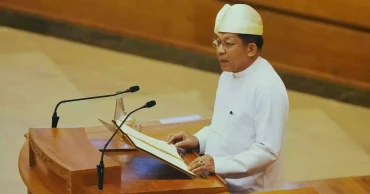
Myanmar frees former President Win Myint in broad prisoner amnesty
Myanmar’s former President Win Myint has been released as part of a sweeping prisoner amnesty announced by newly inaugurated President Min Aung Hlaing, state media reported Friday.
The pardon, issued to mark the country’s traditional New Year, covers more than 4,500 prisoners, though it remains unclear how many political detainees are included. There was no immediate indication that detained former leader Aung San Suu Kyi has been freed.
Win Myint, a close ally of Suu Kyi and elected president in 2018, was arrested during the military takeover on February 1, 2021, and later sentenced to multiple prison terms that were reduced in 2023.
State broadcaster MRTV confirmed that he was released from a prison in Bago region under the amnesty order.
The announcement came as buses carrying freed prisoners arrived outside Yangon’s Insein Prison, where families gathered to welcome detainees. Among those released was filmmaker Shin Daewe, previously sentenced to life imprisonment under a counterterrorism law.
Officials said the amnesty includes more than 4,300 domestic prisoners and nearly 180 foreigners who will be deported.
Under the terms of the pardon, reduced sentences apply broadly, with provisions that freed inmates could be required to serve remaining terms if they reoffend.
A senior military official also indicated that Aung San Suu Kyi is expected to be transferred to house arrest, although she remains under multiple convictions linked to the 2021 coup.
Rights groups estimate that since the military takeover, thousands have been killed and tens of thousands detained amid ongoing conflict and crackdowns on dissent.
3 months ago
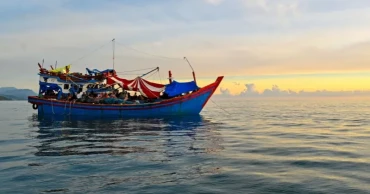
Over 250 missing after migrant boat sinks in Andaman Sea on Malaysia route including Bangladeshis
At least 250 people, including Rohingya refugees and Bangladeshi nationals, are missing after a boat sank in the Andaman Sea while heading to Malaysia, according to the United Nations refugee and migration agencies.
The UNHCR and International Organization for Migration said the boat departed from Teknaf in Cox’s Bazar carrying many passengers when it reportedly sank due to heavy winds, rough seas and overcrowding.
The exact timing of the incident remains unclear. However, on April 9, a Bangladesh-flagged vessel rescued nine people who were found “clinging to drums and wooden debris” to stay afloat, according to the Bangladesh Coast Guard.
Bangladesh Coast Guard spokesperson Lt Com Sabbir Alam Suzan told the media on Wednesday that the nine survivors included three Rohingya refugees and six Bangladeshi nationals. They were rescued by the Bangladesh-flagged vessel M.T. Meghna Pride after being spotted floating at sea following the capsize.
He said the survivors were later handed over to the coast guard and taken to Teknaf police station. The rescued group comprised eight men and one woman, all are safe.
Suzan added that the rescue was not part of any official search operation, as the incident occurred outside Bangladesh’s territorial waters. He said the M.T. Meghna Pride, which was travelling from Chittagong to Indonesia, came across the survivors during its voyage.
UNHCR communications officer in Cox’s Bazar, Shari Nijman, said on Wednesday that the agency had no further updates on the situation.
A separate Bangladesh Coast Guard media official, speaking to the media by phone on condition of anonymity, confirmed that the rescued individuals were all safe after being handed over to authorities in Teknaf.
The agencies said the incident highlights the prolonged displacement of Rohingya refugees and the lack of durable solutions to their situation.
They noted that ongoing violence in Myanmar’s Rakhine State has made safe repatriation uncertain. Limited humanitarian aid, along with restricted access to education and employment in refugee camps, continues to push vulnerable Rohingya to undertake dangerous sea journeys in search of better opportunities abroad, often driven by false promises of higher wages.
UNHCR and IOM urged the international community to increase funding and solidarity to ensure life-saving assistance for Rohingya refugees in Bangladesh, which currently hosts more than 1 million displaced Rohingya from Myanmar.
#From Agencies
3 months ago

Japan announces $10bln fund to help Southeast Asia tackle oil price spike
Prime Minister Sanae Takaichi, after holding a video conference with leaders from Southeast Asia, told reporters that the assistance, dubbed as “Power Asia,” is aimed at providing loans needed to secure crude oil, petroleum products and to maintain the supply chain in an emergency response to help hard-hit nations.
The fund also aims to expand an oil reserve system within Asia, diversify energy, and to promote energy conservation and industrial advancement, Takaichi said.
Japan, which imports petroleum-related products such as medical supplies from Southeast Asia, is increasingly worried that the region’s oil supply shortages would affect the Japanese economy.
The fund is one year’s worth of oil imports for the Association of Southeast Asian Nations member countries, or about 1.2 billion barrels, Takaichi said. The assistance is not meant to just provide oil, but for Asian nations to support each other.
3 months ago
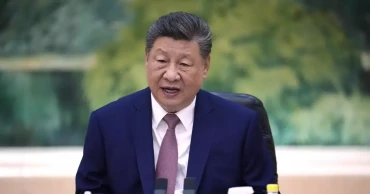
China-Russia ties ‘precious’ amid global uncertainty, says Xi
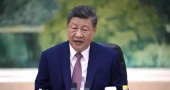
Chinese President Xi Jinping on Wednesday described China’s relations with Russia as “precious,” saying their stability brings certainty at a time of global change and uncertainty.
Speaking during a meeting with Russian Foreign Minister Sergey Lavrov in Beijing, Xi said the long-standing friendship treaty between the two countries shows strong vitality and growing importance under current global conditions.
He stressed the need for closer strategic cooperation between China and Russia to protect their shared interests and support unity among Global South countries, according to state broadcaster CCTV.
Xi also urged both nations to act responsibly as major powers and permanent members of the UN Security Council by promoting multilateralism and strengthening the role of the United Nations. He said the international order should move in a more fair and balanced direction.
Although Xi highlighted global “changes and chaos,” he did not specify what he meant. His remarks come amid continued uncertainty over the duration of the Iran war.
Meanwhile, U.S. President Donald Trump said in an interview that the conflict was “close to over,” repeating earlier claims of U.S. success despite ongoing complexities on the ground.
China-Russia relations have grown closer in recent years, especially after Russia’s invasion of Ukraine in 2022. While Trump’s approach to the Ukraine war has added new dynamics, it has not significantly altered ties between Beijing and Moscow.
During Russian President Vladimir Putin’s visit to China in September, both leaders referred to each other as close friends.
Xi on Wednesday called on both countries’ foreign ministries to implement agreements reached at the leadership level, strengthen communication and deepen diplomatic coordination. He said the partnership should continue to grow stronger and move forward steadily.
Lavrov said Russia-China relations remain resilient despite global challenges, noting progress in trade, investment and coordination at the UN and other international platforms.
He added that Russia is ready to work with China to promote global fairness, strengthen bilateral ties and contribute to world peace.
Lavrov arrived in China on Tuesday for a two-day visit at the invitation of Chinese Foreign Minister Wang Yi.
3 months ago

About 9 million removed from voter list in West Bengal
Around nine million people have been removed from the voter list in India’s West Bengal, triggering political tensions ahead of the state election later this month.
Muhammad Daud Ali, 65, a former Indian army technician said, he recently found that his name and those of his three children were missing from the electoral roll, despite having valid documents such as a passport and service records. Only his wife’s name remains on the list.
Officials said the deletions were made under a Special Intensive Revision (SIR) process. The removed names account for about 12 percent of the state’s 76 million voters reports BBC.
More than six million names were dropped after being marked as absent or deceased. Another 2.7 million people, including families like Ali’s, are still under review, and their status will be decided by special tribunals.
The Election Commission said the update aims to remove duplicate and outdated entries while keeping the voter list accurate. However, the exercise has faced criticism and legal challenges since it was first carried out in Bihar last year.
The issue has become more sensitive in West Bengal, where the ruling Trinamool Congress (TMC) is in conflict with the Election Commission over the process.
Chief Election Commissioner Gyanesh Kumar said the goal is to ensure a clean voter list, with no eligible voter left out.
Tensions have grown after comments by political leaders, including Prime Minister Narendra Modi, who said the revision would help identify “illegal Bangladeshi infiltrators.” The TMC claims the term is being used to target Muslims, although some Hindu voters have also been affected.
West Bengal shares a long and porous border with Bangladesh, making migration and voter identity a sensitive political issue.
The state has been ruled by Chief Minister Mamata Banerjee’s TMC since 2011, with the Bharatiya Janata Party (BJP) as its main rival.
The TMC has alleged that the voter list revision has removed millions of voters, especially Muslims, to benefit the BJP. The BJP and the Election Commission have denied the claim.
After several court challenges, the Supreme Court allowed the Election Commission to go ahead with the April polls without resolving all disputes. As a result, the fate of about 2.7 million voters remains uncertain.
3 months ago
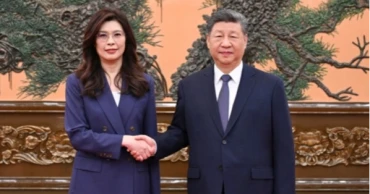
China to restart direct flights and trade links with Taiwan, says report
China on Sunday announced it would resume some suspended ties with Taiwan, including direct flights to several mainland cities and imports of Taiwanese aquaculture products, as the island’s opposition party leader concluded her visit.
The Taiwan Work Office under China’s Communist Party said it would explore establishing a long-term communication mechanism between the Communist Party and Taiwan’s Kuomintang (KMT) party. It also said it would facilitate the import of Taiwanese aquaculture goods, which had been banned in recent years.
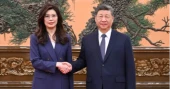
KMT leader Cheng Li-wun and Chinese President Xi Jinping held a high-profile meeting on Friday, where both sides called for peace, though no specific details were provided. Taiwan is self-ruled, but China considers it part of its territory.
Relations between Beijing and Taipei have remained strained since 2016, when Taiwan elected Tsai Ing-wen of the Democratic Progressive Party as president. Since then, China has largely suspended official dialogue with Taiwan’s government and has regularly deployed military aircraft and naval vessels near the island.
The statement outlined a series of measures affecting ties that China had gradually restricted amid rising tensions. Beijing said it plans to resume direct flights from mainland cities such as Xi’an and Urumqi to Taiwan, although details of implementation remain unclear.
China had banned individual travel to Taiwan in 2019. Under current rules, Chinese visitors must hold a valid residence visa from a third country, such as the United States or the European Union, to apply for a Taiwanese visitor visa.
Beijing also said it would work toward building a bridge linking Matsu and Kinmen, two Taiwanese islands located close to the Chinese mainland, reviving a long-discussed proposal.
China previously banned imports of Taiwanese pineapples in 2021 and later extended restrictions to other agricultural products, including grouper fish, squid, tuna and fruits. Following the grouper ban, Taiwan’s Agriculture Ministry said it sought adjustments to meet import requirements, but China responded with a limited list of approved exporters without explanation.
3 months ago
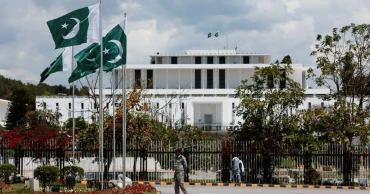
Pakistan assures foolproof security for foreign delegations ahead of US-Iran talks in Islamabad
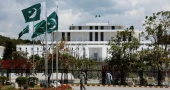
Pakistan’s Interior Minister Mohsin Naqvi on Thursday assured US Ambassador Natalie Baker of comprehensive security arrangements for all foreign delegations ahead of the US-Iran talks scheduled in Islamabad this week.
The in-person negotiations are set for Saturday, following a two-week ceasefire between the US and Iran, aimed at pausing hostilities that began on February 28
In a meeting with the envoy, Naqvi described US Vice President JD Vance, US Middle East Envoy Steve Witkoff, and Jared Kushner as “special guests,” and emphasized a foolproof security plan for their movements, stay, and meetings, reports DAWN.
The Islamabad and Rawalpindi administrations have declared local holidays on April 9 and 10 to facilitate security. Traffic diversions will be in place on the Express Highway, and all entry points to the capital and the Red Zone will be restricted during the delegations’ stay. Hospitals, emergency services, and state-run rescue departments have been placed on high alert.
Pakistan has played a central role as mediator, maintaining diplomatic contacts with Tehran and Washington and coordinating with regional partners, including China, to ensure de-escalation. These efforts led to the announcement of the two-week ceasefire on Wednesday, hours before PM Shehbaz’s ultimatum to Iran regarding the reopening of the Strait of Hormuz.
The US delegation, led by Vance with Witkoff and Kushner, will participate in the talks on Saturday, with Pakistan providing full security coverage in line with VVIP protocols.
3 months ago