asia

South Korea presidential security chief questioned amid tensions
South Korean police interrogated the head of the presidential security service on Friday amidst escalating tensions between agencies over the detainment of impeached President Yoon Suk Yeol, reports AP.
The Corruption Investigation Office for High-Ranking Officials and the police plan a renewed effort to detain Yoon, investigating whether his brief declaration of martial law on December 3 constituted an attempted rebellion. The security service had previously obstructed an attempt to detain Yoon at his official residence, where he has been confined for weeks.
South Korean anti-corruption agency receives new court warrant to detain impeached President Yoon
Presidential security chief Park Jong-joon, defending his role as the president’s protector, warned of potential "bloodshed" and faced criticism that the security agency is acting as Yoon's private army. After ignoring two summonses, Park appeared for questioning over allegations of justice obstruction, following last week’s clash where security forces repelled investigators attempting to detain Yoon.
Authorities are considering arresting Park and other security leaders to facilitate Yoon’s detainment. Yoon remains at his fortified residence in Seoul, with heightened security measures, including barbed wire and blocked roads.
South Korean anti-graft agency asks police to measures to detain impeached Yoon
On December 3, Yoon briefly declared martial law, deploying troops around the National Assembly. This measure was overturned the same day when lawmakers breached the blockade and voted to lift martial law. Subsequently, Yoon’s presidential powers were suspended after his impeachment on December 14, with the Constitutional Court deliberating on whether to remove him from office or reinstate him.
Park criticized the investigation, urging an approach that respects Yoon’s status as president and the dignity of the nation. He stated that he sought mediation from acting leader Deputy Prime Minister Choi Sang-mok and Yoon’s legal team but received no satisfactory response.
Yoon’s lawyers have accused the police of undermining the presidential security service, arguing that national security is being disregarded. While the Presidential Security Act mandates protecting the president, legal experts argue that the security service’s actions might be unlawful if they obstruct court-ordered detainments.
South Korean fire fighters tackle blaze in commercial building in Seongnam
National Court Administration head Cheon Dae-yeop remarked that unwarranted resistance to such orders could constitute a crime. Although sitting presidents enjoy broad immunity from prosecution, charges of rebellion or treason are exceptions.
Yoon’s legal team questioned the legitimacy of the detention warrant issued by the Seoul Western District Court, asserting that the anti-corruption office lacks authority to investigate rebellion or enforce detainment at a location potentially linked to military secrets without the resident's consent.
The lawyers have called for the anti-corruption agency to either indict Yoon or seek a formal arrest warrant, which requires a court hearing. However, they insist Yoon would only comply with an arrest warrant from the Seoul Central District Court, accusing the agency of judge-shopping by choosing a more favourable jurisdiction.
1 year ago
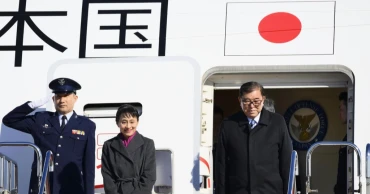
Japan's Ishiba heads to Malaysia and Indonesia to strengthen defense, economic ties
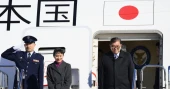
Japanese Prime Minister Shigeru Ishiba on Thursday began a trip to Malaysia and Indonesia as part of an effort to strengthen defense and economic ties with Southeast Asia as China's threats grow in the region.
The visit, his first for bilateral talks outside of international meetings, shows Japan’s commitment to further those ties even as the US presence in the region may decrease after President-elect Donald Trump takes office later this month.
Malaysia and Indonesia are maritime regional powers near vital shipping lanes and are key to Japanese and global security and the economy, and they share concerns over China's increasing assertiveness, officials say.
Sri Lanka extends tax relief for 3 int'l airports to attract airlines
Ishiba, who will meet Friday with Malaysian Prime Minister Anwar Ibrahim, hopes to strengthen security cooperation and discuss efforts to ensure stable supply chains with Malaysia, which is chair of the Association of Southeast Asian Nations this year.
On Saturday, Ishiba and Indonesian President Prabowo Subianto will reportedly sign a deal for Japan's provision of high-speed patrol boats. Talks between the two leaders, who are both former defense ministers, are expected to focus on military cooperation and arms transfers.
1 year ago
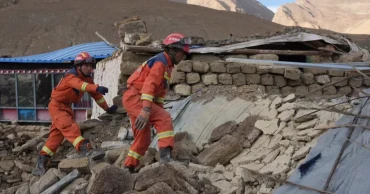
Tents delivered to quake survivors in freezing Tibetan city
Tents and other essential supplies are being distributed to survivors of a deadly earthquake in Tibet, which killed 126 people and rendered thousands homeless in freezing high-altitude conditions, reports AP.
Rescue workers continued searching on Wednesday for victims and survivors near the holy Tibetan Buddhist city of Xigaze, the traditional seat of the Panchen Lama, following the quake that struck a day earlier.
Strong earthquake kills at least 95 people in western China near Mount Everest
The confirmed death toll stands at 126, with 188 injured, as of Tuesday evening. Temperatures in the region, averaging an altitude of 4,200 meters (13,800 feet), dropped well below freezing overnight. Over 3,600 houses collapsed, forcing 30,000 residents to relocate, according to a preliminary survey cited by the city government.
The epicenter of the earthquake, measuring a magnitude of 7.1 according to the U.S. Geological Survey, was approximately 25 kilometers (15 miles) from Xigaze and about 75 kilometers (50 miles) from Mount Everest and Nepal's border. Chinese authorities recorded the magnitude at 6.8. The quake also caused widespread panic in Nepal, where people fled their homes in the capital, it said.
Earthquake kills 126 people in China near Mount Everest
Gurum village, with a population of 222, reported 22 deaths, including the mother of its Communist Party chief, Tsering Phuntsog, who noted that even young residents struggled to escape collapsing buildings. Several of his relatives remain buried under debris.
The region’s historical and political significance has added complexity to the disaster response. Xigaze is home to the Tashi Lhunpo Monastery, associated with the Panchen Lama, Tibetan Buddhism’s second-highest figure. A decades-long dispute exists between the Chinese government and followers of the Dalai Lama regarding the Panchen Lama’s legitimacy, following the disappearance of a Dalai Lama-appointed boy in the mid-1990s, added the report.
The Chinese government claims Tibet as part of its territory, while many Tibetans argue they were largely independent before China’s 1950 invasion. This tension, coupled with Tibet’s restrictions on foreign journalists, often limits external reporting on the region.
Rescue operations are ongoing, with 1,850 rescuers, including firefighters and emergency personnel, deployed, as reported by state broadcaster CCTV. Communications in the area have been restored, facilitating the delivery of relief items such as tents and quilts.
Chinese President Xi Jinping called for “all-out rescue efforts to save lives and minimize casualties,” Xinhua reported. Despite this, Chinese Foreign Ministry spokesperson Guo Jiakun criticized the Dalai Lama's plans to lead a prayer ceremony in Dharamsala, India, for the earthquake victims, reaffirming the government's stance against him. Dharamsala, home to the Dalai Lama and a significant Tibetan exile community, also plans to hold a candlelight vigil on Wednesday night.
Strong earthquake kills at least 95 people in western China near Mount Everest
More than 500 aftershocks have been recorded, underscoring the earthquake’s intensity. Chinese officials remain confident in their ability to rebuild under the Communist Party’s leadership.
1 year ago

Sri Lanka extends tax relief for 3 int'l airports to attract airlines
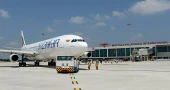
Sri Lanka's cabinet has approved a proposal to extend further relief which is relevant to tax deviations for three international airports in the country, according to the government's information department on Tuesday.
Minister of Transport, Highways, Ports and Civil Aviation Bimal Rathnayake submitted the proposal, the department said.
According to the department, concessionary motivation schemes have been introduced by the Airport and Aviation Services for attracting international airline services for Jaffna International Airport, Colombo International Airport (Ratmalana), and Mattala Rajapaksa International Airport.
The cabinet approved the extension of a concession of 50 percent fee waiver from the presently implemented deviation tax for airlines operating fixed-time flights to Jaffna International Airport till January 30, 2026, extension of a concession of 50 percent fee waiver from the presently implemented deviation tax for airlines operating fixed-time flights to Colombo International Airport (Ratmalana) for one year from March 27, 2025, and extension of full concession relevant to the presently implemented deviation tax for airlines operating fixed-time flights to Mattala Rajapaksa International Airport for a further one-year period from December 29, 2024, the department added.
1 year ago
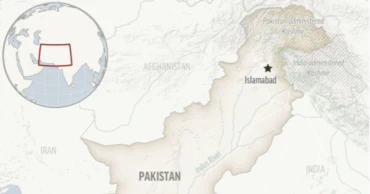
3 Pakistani soldiers, 19 insurgents killed in separate raids in northwest
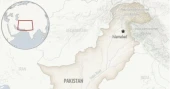
Pakistani security forces killed 19 insurgents in three separate raids on militant hideouts in northwest Pakistan bordering Afghanistan, the military said Tuesday. Three soldiers also died in the shooting.
Troops killed 16 insurgents in two separate raids in the northwestern Peshawar and Mohmand districts in Khyber Pakhtunkhwa province, the military said in a statement. Another three insurgents were killed in the third assault in Karak, also in the same province, it said.
The military said that three soldiers were killed in the ensuing shoutouts.
Afghan forces target Pakistan in retaliation for deadly airstrikes
President Asif Ali Zardari and Prime Minister Shehbaz Sharif praised troops for eliminating the insurgents. In separate statements, they also paid tributes to the “martyred” soldiers.
In recent months, Pakistan has stepped up intelligence-based operations against the Pakistani Taliban, which has become emboldened since the Afghan Taliban seized power in Afghanistan in 2021. The TTP is a separate group, but a close ally of the Afghan Taliban.
1 year ago
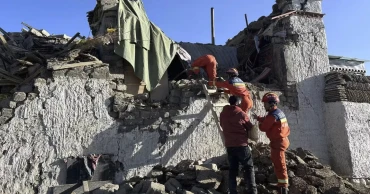
Earthquake kills 126 people in China near Mount Everest
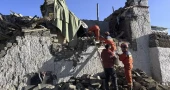
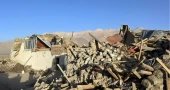
A strong earthquake shook a high-altitude region of western China and areas of Nepal on Tuesday, damaging hundreds of houses, littering streets with rubble and killing at least 126 people in Tibet. Many others were trapped as dozens of aftershocks shook the remote region.
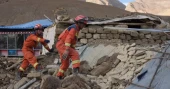
Rescue workers climbed mounds of broken bricks, some using ladders in heavily damaged villages, as they searched for survivors. Videos posted by China's Ministry of Emergency Management showed two people being carried on stretchers by workers treading over the debris from collapsed homes.
At least 188 people were injured in Tibet on the Chinese side of the border, the official Xinhua News Agency said.
More than 1,000 homes were damaged in the barren and sparsely populated region, state broadcaster CCTV reported. In video posted by the broadcaster, building debris littered streets and crushed cars.
People in northeastern Nepal strongly felt the earthquake, but there were no initial reports of injuries or damage, according to the country's National Emergency Operation Center. The area around Mount Everest, about 75 kilometers (50 miles) southwest of the epicenter, was empty in the depth of winter when even some residents move away to escape the cold.
The quake woke up residents in Nepal’s capital of Kathmandu — about 230 kilometers (140 miles) from the epicenter — and sent them running into the streets.
Read: Bangladesh on edge as earthquake threats escalating
The U.S. Geological Survey said the earthquake measured magnitude 7.1 and was relatively shallow at a depth of about 10 kilometers (6 miles). China's Earthquake Networks Center recorded the magnitude as 6.8. Shallow earthquakes often cause more damage.
The epicenter was in Tibet's Tingri county, where the India and Eurasia plates grind against each other and can cause earthquakes strong enough to change the heights of some of the world’s tallest peaks in the Himalayan mountains.
Tibet is part of China, but many Tibetans’ loyalties lie with the Dalai Lama, the spiritual leader who has lived in exile in India since a failed anti-Chinese uprising in 1959. Western governments and human rights organizations have repeatedly accused the Chinese government of abuses in Tibet, where it has cracked down on dissent while investing heavily in economic development.
There have been 10 earthquakes of at least magnitude 6 in the area where Tuesday’s quake hit over the past century, the USGS said.
About 150 aftershocks were recorded in the nine hours after the earthquake, and the Mount Everest scenic area on the Chinese side was closed.
Read more: Earthquake activity near Alaskan Volcano sparks concerns
Chinese leader Xi Jinping called for all-out efforts to rescue people, minimize casualties and resettle those whose homes were damaged. More than 3,000 rescuers were deployed, CCTV said.
Vice Premier Zhang Guoqing was dispatched to the area to guide the work, and the government announced the allocation of 100 million yuan ($13.6 million) for disaster relief.
About 6,900 people live in three townships and 27 villages within 20 kilometers (12.5 miles) of the epicenter on the Chinese side, state media said. The average altitude in the area is about 4,200 meters (13,800 feet), the Chinese earthquake center said in a social media post.
On the southwest edge of Kathmandu, a video showed water spilling out into the street from a pond in a courtyard with a small temple.
“It is a big earthquake," a woman can be heard saying. "People are all shaking.”
1 year ago
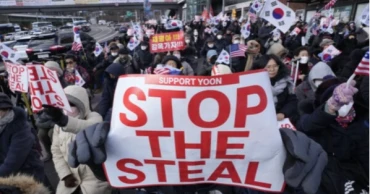
South Korean anti-corruption agency receives new court warrant to detain impeached President Yoon
South Korea’s anti-corruption agency says it has received a new court warrant to detain impeached President Yoon Suk Yeol after its previous attempt was blocked by the presidential security service last week.
The Corruption Investigation Office for High-Ranking Officials on Tuesday did not immediately confirm how long the warrant would remain valid. The agency’s chief prosecutor, Oh Dong-woon, refused to answer when asked by lawmakers when the warrant would expire, saying such information is sensitive as the agency and police contemplate ways to execute the warrant. Warrants typically last seven to 10 days.
The Seoul Western District Court last week had initially issued a warrant to detain Yoon and a separate warrant to search his residence after he defied authorities by refusing to appear for questioning over his Dec. 3 martial law decree.
About 150 anti-corruption agency investigators and assisting police officers attempted to detain Yoon on Friday but retreated from his residence in Seoul after a tense standoff with the presidential security service that lasted more than five hours. The investigators did not make another attempt to detain Yoon before the previous court warrants expired on Monday.
The anti-corruption agency and police have pledged to make a more forceful effort to detain Yoon, which could be a complicated process as long as he remains in his official residence.
The anti-corruption agency, which is leading a joint investigation with police and the military, has been weighing charges of rebellion after Yoon declared martial law and dispatched troops to surround parliament. Lawmakers who managed to get past the blockade voted to lift martial law hours later.
Yoon’s presidential powers were suspended after parliament voted to impeach him on Dec. 14, accusing him of rebellion. The Constitutional Court has started deliberations on whether to formally remove Yoon from office or reinstate him.
Members of the presidential security staff were seen installing barbed wire near the gate and along the hills leading up to the presidential compound over the weekend. Oh confirmed to lawmakers that the agency was debating with police on whether to arrest members of the presidential security staff if they forcefully obstruct efforts to detain Yoon.
If investigators manage to detain Yoon, they will likely ask a court for permission to make a formal arrest. Otherwise, he will be released after 48 hours.
Yoon’s lawyers argued the detention and search warrants against the president cannot be enforced at his residence due to a law that protects locations potentially linked to military secrets from search without the consent of the person in charge — which would be Yoon. They also argue the anti-corruption office lacks the legal authority to investigate rebellion charges and delegate police to detain Yoon.
1 year ago
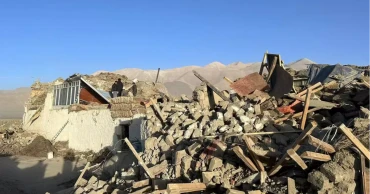
Strong earthquake kills at least 95 people in western China near Mount Everest
A strong earthquake shook a high-altitude region of western China and areas of Nepal on Tuesday, damaging hundreds of houses, littering streets with rubble and killing at least 95 people in Tibet. Many others were trapped as dozens of aftershocks shook the remote region.
Rescue workers climbed mounds of broken bricks, some using ladders in heavily damaged villages, as they searched for survivors. Videos posted by China's Ministry of Emergency Management showed two people being carried out on stretchers by workers treading over the uneven debris from collapsed homes.
At least 130 people have been injured in the earthquake-hit area in Tibet on the Chinese side of the border, state broadcaster CCTV reported, citing the vice mayor of Shigatse city.
More than 1,000 homes were damaged in the barren and relatively sparsely populated region, CCTV said. In video posted by the broadcaster, fallen building debris littered streets and crushed cars.
People in northeastern Nepal strongly felt the earthquake, but there were no initial reports of injuries or damage, according to the country's National Emergency Operation Center. The area around Mount Everest, about 75 kilometers (50 miles) southwest of the epicenter, was empty in the depth of winter when even some residents move south to escape the cold.
The morning quake woke up residents in Nepal’s capital of Kathmandu — about 230 kilometers (140 miles) from the epicenter — and sent them running out of their homes into the streets.
The U.S. Geological Survey said the earthquake measured magnitude 7.1 and was relatively shallow at a depth of about 10 kilometers (6 miles). China's Earthquake Networks Center recorded the magnitude as 6.8. Shallow earthquakes often cause more damage.
The epicenter was in Tibet's Tingri county, in a seismically active area where the India and Eurasia plates clash and can cause earthquakes strong enough to change the heights of some of the world’s tallest peaks in the Himalayan mountains.
Tibet is part of China, but may Tibetans’ loyalties lie with the Dalai Lama, the spiritual leader who has lived in exile in India since a failed anti-Chinese uprising in 1959.
Western governments and human rights organizations have repeatedly accused the Chinese government of abuses in Tibet, where it has cracked down on dissent while investing heavily in economic development.
There have been 10 earthquakes of at least magnitude 6 in the area where Tuesday’s quake hit over the past century, the USGS said.
About 50 aftershocks were recorded in the three hours after the earthquake, and the Mount Everest scenic area on the Chinese side was closed.
Chinese leader Xi Jinping. called for all-out efforts to rescue people, minimize casualties and resettle those whose homes were damaged. More than 3,000 rescuers were deployed, CCTV said.
Vice Premier Zhang Guoqing was dispatched to the area to guide the work, and the government announced the allocation of 100 million yuan ($13.6 million) for disaster relief.
About 6,900 people live in three townships and 27 villages within 20 kilometers (12.5 miles) of the epicenter on the Chinese side, state media said. The average altitude in the area is about 4,200 meters (13,800 feet), the Chinese earthquake center said in a social media post.
On the southwest edge of Kathmandu, a video showed water spilling out into the street from a pond in a courtyard with a small temple.
“It is a big earthquake," a woman can be heard saying. "People are all shaking.”
1 year ago

First international commercial flight since Assad's ouster lands in Syria's capital
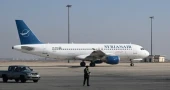
The first international commercial flight since the fall of former Syrian President Bashar Assad landed Tuesday at the Damascus airport, arriving from Qatar.
Jordanian state-run Petra news agency reported that a Royal Jordanian Airlines plane departed for Damascus on a test flight.
The head of the Civil Aviation Regulatory Commission, Capt. Haitham Misto, who was on board the flight with a team of specialists, said that the aim was to evaluate the technical condition of the Damascus airport before resuming regular flights.
Since the lightning rebel offensive that unseated Assad a month ago, Arab and Western countries that had cut off relations with the former government have been reopening diplomatic relations with Syria’s new de facto authorities, headed by the Islamist former insurgent group Hayat Tahrir al-Sham, or HTS.
Syria’s new foreign minister, Asaad al-Shibani, has traveled to Qatar, Saudi Arabia and the United Arab Emirates in recent days. The Gulf countries are likely to be key to funding Syria’s reconstruction after nearly 14 years of civil war that preceded Assad's ouster.
On Tuesday, al-Shibani traveled to Jordan to meet with his counterpart in Amman. The Jordanian foreign ministry said that the officials were set to discuss “mechanisms of cooperation in many areas including borders, security, energy, transportation, water, trade and other vital sectors.”
Under Assad's rule, Jordan had been a main conduit for smuggling highly addictive Captagon amphetamines produced in Syria into Gulf states, which was a point of tension between the two countries.
Syria's new authorities have made a show of cracking down on the Captagon trade, dismantling former factories in locations including the Mazzeh air base in Damascus, a car trading company in Latakia and a factory that once made snack chips in the Damascus suburb of Douma.
1 year ago
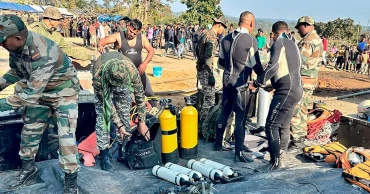
9 miners trapped in coal mine in Assam
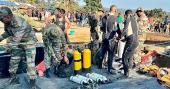
At least nine miners are trapped in a coal mine in Assam, a state in northeastern India, according to officials, reports AP.
The incident occurred on Monday morning in the Umrangso area of Dimapur Hasao district, located about 125 miles (200 kilometers) south of the state capital, Guwahati.
South Africa refuses aid for thousands of illegal miners trapped
The miners are believed to be stuck 300 feet underground after water from a nearby unused mine flooded the area. "We are mobilising resources to rescue them," said Kaushik Rai, a local government minister overseeing the rescue operation.
In response, authorities have deployed army personnel and a national disaster management team to assist in the ongoing rescue efforts.
Gunmen kill 20 miners and wound others in an attack in southwest Pakistan
Workers at the site reported that more than a dozen miners had been trapped, with some managing to escape as the water from the adjacent unused mine started flooding the coal mine. The mine has minimal safety measures.
In the eastern and northeastern regions of India, miners often work in dangerous conditions in small "rat hole" mines, which are prevalent in the hilly areas. During extraction, coal is placed in boxes that are then lifted to the surface using pulleys.
Coal miners in North Dakota unearth a mammoth tusk buried for thousands of years
Accidents are common in illegal mining operations, where miners rely on the illicit sale of coal for their livelihoods.
1 year ago