asia
Kim vows toughest anti-US policy before Trump takes office
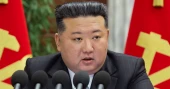
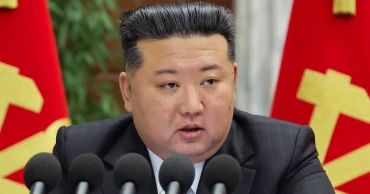
North Korean leader Kim Jong Un vowed to implement the “toughest” anti-U.S. policy, state media reported Sunday, less than a month before Donald Trump takes office as U.S. president.
Trump’s return to the White House raises prospects for high-profile diplomacy with North Korea. During his first term, Trump met Kim three times for talks on the North's nuclear program. Many experts however say a quick resumption of Kim-Trump summitry is unlikely as Trump would first focus on conflicts in Ukraine and the Middle East. North Korea's support for Russia's war against Ukraine also poses a challenge to efforts to revive diplomacy, experts say.
During a five-day plenary meeting of the ruling Workers’ Party that ended Friday, Kim called the U.S. “the most reactionary state that regards anti-communism as its invariable state policy.” Kim said that the U.S.-South Korea-Japan security partnership is expanding into “a nuclear military bloc for aggression."
Tragedy in South Korea: 167 killed as plane skids off runway
“This reality clearly shows to which direction we should advance and what we should do and how,” Kim said, according to the official Korean Central News Agency.
It said Kim's speech “clarified the strategy for the toughest anti-U.S. counteraction to be launched aggressively” by North Korea for its long-term national interests and security.
KCNA didn't elaborate on the anti-U.S. strategy. But it said Kim set forth tasks to bolster military capability through defense technology advancements and stressed the need to improve the mental toughness of North Korean soldiers.
The previous meetings between Trump and Kim had not only put an end to their exchanges of fiery rhetoric and threats of destruction, but they developed personal connections. Trump once famously said he and Kim “fell in love.” But their talks eventually collapsed in 2019, as they wrangled over U.S.-led sanctions on the North.
North Korea has since sharply increased the pace of its weapons testing activities to build more reliable nuclear missiles targeting the U.S. and its allies. The U.S. and South Korea have responded by expanding their military bilateral drills and also trilateral ones involving Japan, drawing strong rebukes from the North, which views such U.S.-led exercises as invasion rehearsals.
Russia's Gazprom to stop supplying gas to Moldova from Jan. 1
Further complicating efforts to convince North Korea to abandon its nuclear weapons in return for economic and political benefits is its deepening military cooperation with Russia.
According to U.S., Ukrainian and South Korean assessments, North Korea has sent more than 10,000 troops and conventional weapons systems to support Moscow's war against Ukraine. There are concerns that Russia could give North Korea advanced weapons technology in return, including help to build more powerful nuclear missiles.
Ukrainian President Volodymyr Zelenskyy said last week that 3,000 North Korean troops have been killed and wounded in the fighting in Russia's Kursk region. It was the first significant estimate by Ukraine of North Korean casualties since the North Korean troop deployment to Russia began in October.
Russia and China, locked in separate disputes with the U.S., have repeatedly blocked U.S.-led pushes to levy more U.N. sanctions on North Korea despite its repeated missile tests in defiance of U.N. Security Council resolutions.
Last month, Kim said that his past negotiations with the United States only confirmed Washington’s “unchangeable” hostility toward his country and described his nuclear buildup as the only way to counter external threats.
1 year ago

Tragedy in South Korea: 179 killed as plane skids off runway
A jetliner skidded off a runway, slammed into a concrete fence and burst into flames Sunday in South Korea after its landing gear apparently failed to deploy. All but two of the 181 people aboard were killed in one of the country’s worst aviation disasters, officials said.
The Boeing 737-800 operated by Jeju Air plane arrived from Bangkok and crashed while attempting to land in the town of Muan, about 290 kilometers (180 miles) south of Seoul.
Footage of the crash aired by South Korean television showed the plane skidding across the airstrip at high speed, evidently with its landing gear still closed, and slamming into the wall, triggering an explosion and generating plumes of thick, black smoke.
The crash killed 179 people, the South Korean fire agency said. Emergency workers pulled two crew members to safety. They were conscious and did not appear to have any life-threatening injuries, health officials said.
The chief of the Muan fire station, Lee Jeong-hyeon, told a televised briefing that the plane was completely destroyed, with only the tail assembly still recognizable in the wreckage. Officials were investigating the cause of the crash, including whether the aircraft was struck by birds, Lee said.
The control tower issued a warning about birds to the plane shortly before it intended to land and gave the crew permission to land in a different area, Transport Ministry officials said. The crew sent out a distress signal shortly before the crash, officials said.
Investigators retrieved the jet's flight data and cockpit voice recorders, said senior Transport Ministry official Joo Jong-wan. He said it may take months to complete the probe into the crash. The runway will be closed until Jan. 1, the ministry said.
Video of the crash indicated that the pilots did not deploy flaps or slats to slow the aircraft, suggesting a possible hydraulic failure, and they did not manually lower the landing gear, suggesting they did not have time, said John Cox, a retired airline pilot and CEO of Safety Operating Systems in St. Petersburg, Florida.
Despite that, the jetliner was under control and traveling in a straight line, and damage and injuries likely would have been minimized if not for a barrier being so close to the runway, Cox said.
“It’s all in one piece. Everything is coming along fine until it hits that wall, at which point it disintegrates into a catastrophe,” he said.
Another aviation expert said videos showed the aircraft had used up much of the runway before touching down. With little braking ability, the aircraft skidded atop its engine cowlings, said Ross “Rusty” Aimer, CEO of Aero Consulting Experts.
“It's basically like skidding on ice,” he said.
The Boeing 737-800 is a "proven airplane" that belongs to a different class of aircraft than the Boeing 737 Max jetliner that was linked to fatal crashes in 2018 and 2019, added Alan Price, a former chief pilot at Delta Air Lines and now a consultant.
More than 4,500 of the planes are in service around the world, according to the aviation analytics company Cirium.
One of the survivors was being treated for fractures to his ribs, shoulder blade and upper spine, said Ju Woong, director of the Ewha Womans University Seoul Hospital. Ju said the man, whose name was not released, told doctors he “woke up to find (himself) rescued.” Details on the other survivor were not immediately available.
The passengers were predominantly South Korean and included two people from Thailand. Officials identified 88 of them in the hours after the crash, the fire agency said.
Thailand’s prime minister, Paetongtarn Shinawatra, expressed condolences to the families of those aboard the plane in a post on X. Paetongtarn said she ordered the Ministry of Foreign Affairs to provide assistance.
Boonchuay Duangmanee, the father of a Thai passenger, told The Associated Press that his daughter, Jongluk, had been working in a factory in South Korea for several years and returned to Thailand to visit her family.
Putin apologizes for 'tragic incident' but stops short of saying Azerbaijani plane shot down
"I never thought that this would be the last time we would see each other forever,” he said.
Kerati Kijmanawat, the director of Thailand's airports, confirmed in a statement that Jeju Air flight 7C 2216 departed from Bangkok's Suvarnabhumi Airport with no reports of anything abnormal aboard the aircraft or on the runway.
Jeju Air in a statement expressed its “deep apology” over the crash and said it will do its “utmost to manage the aftermath of the accident.”
In a televised news conference, the company's president, Kim E-bae, bowed deeply with other senior company officials as he apologized to bereaved families and said he feels “full responsibility” for the crash. He said the company had not identified any mechanical problems with the aircraft following regular checkups and that he would wait for the results of government investigations.
Family members wailed as officials announced the names of some victims at a lounge in the Muan airport.
Boeing said in a statement on X that it was in contact with Jeju Air and was ready to support the company in dealing with the crash.
The crash happened as South Korea is embroiled in a political crisis triggered by President Yoon Suk Yeol’s stunning imposition of martial law and ensuing impeachment. South Korean lawmakers on Friday impeached acting President Han Duck-soo and suspended his duties, leading Deputy Prime Minister Choi Sang-mok to take over.
Choi, who traveled to the site in Muan, called for officials to use all available resources to identify the dead as soon as possible. The government declared Muan a special disaster zone and designated a weeklong national mourning period.
Ukrainian drone attack linked to Azerbaijani plane crash, says Russian aviation chief
Yoon’s office said his chief secretary, Chung Jin-suk, presided over an emergency meeting between senior presidential staff to discuss the crash and reported the details to Choi. Yoon expressed condolences to the victims in a Facebook post.
In Rome’s St. Peter’s Square, Pope Francis said he joined in “prayer for the survivors and the dead.” U.S. President Joe Biden said the United States was ready to offer “any necessary assistance.”
The Muan crash is one of the deadliest disasters in South Korea’s aviation history. The last time South Korea suffered a large-scale air disaster was in 1997, when a Korean Airlines plane crashed in Guam, killing 228 people on board. In 2013, an Asiana Airlines plane crash-landed in San Francisco, killing three and injuring about 200.
Sunday’s accident was also one of the worst landing disasters since a July 2007 crash that killed all 187 people on board and 12 others on the ground when an Airbus A320 slid off a slick airstrip in Sao Paulo, Brazil, and hit a nearby building, according to data compiled by the Flight Safety Foundation, a nonprofit group aimed at improving air safety.
In 2010, 158 people died when an Air India Express aircraft overshot a runway in Mangalore, India, and plummeted into a gorge before erupting into flames, according to the safety foundation.
1 year ago
Former Indian PM Manmohan Singh cremated in New Delhi
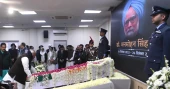
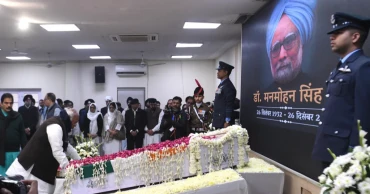
Manmohan Singh, the former Indian prime minister widely regarded as the architect of the country’s economic reform program, was cremated after a state funeral on Saturday as politicians and the public mourned his death.
The veteran leader, who was also credited for a landmark nuclear deal with the United States, died late Thursday at age 92.
Singh’s body was taken Saturday morning to the headquarters of his Congress party in New Delhi, where party leaders and activists paid tributes to him and chanted “Manmohan Singh lives forever.”
India's former prime minister Manmohan Singh passes away
Abhishek Bishnoi, a party leader, said Singh's death was big loss for the country. “He used to speak little, but his talent and his actions spoke louder than his words,” he said.
Later, Singh’s body was transported to a crematorium ground for his last rites as soldiers beat drums.
Government officials, politicians and family members paid their last respects to Singh, whose casket was adorned with flowers and wrapped in the Indian flag. Security personnel honored him with a ceremonial gun salute.
Indian President Draupadi Murmu and Prime Minister Narendra Modi, who called Singh one of the country's “most distinguished leaders,” and several Cabinet ministers participated in the funeral ceremony.
Singh’s body was then transferred to a pyre as religious hymns played and cremated.
Authorities declared a seven-day mourning period and canceled all cultural and entertainment events during that time. Government buildings across India are flying the national flag at half-staff.
A mild-mannered technocrat, Singh was prime minister for 10 years and leader of the Congress party in Parliament’s upper house, earning a reputation as a man of great personal integrity. He was chosen to be prime minister in 2004 by Sonia Gandhi, the widow of assassinated Prime Minister Rajiv Gandhi.
Singh was reelected in 2009, but his second term was clouded by financial scandals and corruption charges over the organization of the 2010 Commonwealth Games. This led to the Congress party’s crushing defeat in 2014 national elections by the Hindu nationalist Bharatiya Janata Party under the leadership of Narendra Modi.
Manmohan Singh will be remembered for his contributions to India's economic transformation: Chief Adviser Yunus
Singh adopted a low profile after relinquishing the post of prime minister.
As finance minister, Singh in 1991 instituted reforms that moved India away from a socialist-patterned economy and toward a capitalist model in the face of a huge balance of payments deficit, skirting a potential economic crisis.
Singh was the first Sikh to hold the country’s top post and made a public apology in Parliament for the 1984 Sikh Massacre in which some 3,000 Sikhs were killed after then-Prime Minister Indira Gandhi was assassinated by her Sikh bodyguards.
In a move hailed as one of his biggest achievements apart from economic reforms, Singh ended India’s nuclear isolation by signing a deal with the U.S. that gave India access to American nuclear technology.
India declares 7-day mourning in honour of former PM Manmohan Singh
But the deal hurt his coalition government, with Communist allies withdrawing their support and criticism of the agreement growing within India in 2008 when it was finalized.
1 year ago
India's former prime minister Manmohan Singh passes away
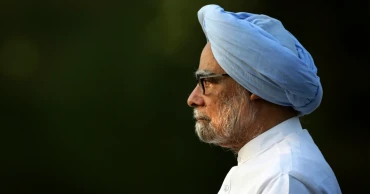
India’s former Prime Minister Manmohan Singh, widely regarded as the architect of India’s economic reform program and a landmark nuclear deal with the United States, has died. He was 92.
Singh was admitted to New Delhi’s All India Institute of Medical Sciences late Thursday after his health deteriorated due to a “sudden loss of consciousness at home,” the hospital said in a statement.
Renowned Indian filmmaker Shyam Benegal passes away
“Resuscitative measures were started immediately at home. He was brought to the Medical Emergency” at 8:06 p,m., the hospital said, but “despite all efforts, he could not be revived and was declared dead at 9:51 PM.”
Singh was being treated for “age-related medical conditions,” the statement said.
A mild-mannered technocrat, Singh became one of India’s longest-serving prime ministers for 10 years and earned a reputation as a man of great personal integrity. He was chosen to fill the role in 2004 by Sonia Gandhi, the widow of assassinated Prime Minister Rajiv Gandhi.
Indian industrial Icon Ratan Tata passes away
But his sterling image was tainted by allegations of corruption against his ministers.
Singh was elected to a second term as prime minister from 2009-2014 that was clouded by financial scandals and corruption charges over the organization of the 2010 Commonwealth Games. This led to the Congress Party’s crushing defeat in the 2014 national election by the Hindu nationalist Bharatiya Janata Party under the leadership of Narendra Modi.
Singh adopted a low profile after relinquishing the post of prime minister.
Prime Minister Modi, who succeeded Singh in 2014, called him one of India’s “most distinguished leaders” who rose from humble origins and left “a strong imprint on our economic policy over the years.”
“As our Prime Minister, he made extensive efforts to improve people’s lives,” Modi said in a post on social platform X. He called Singh’s interventions in Parliament as a lawmaker “insightful” and said “his wisdom and humility were always visible.”
1 year ago
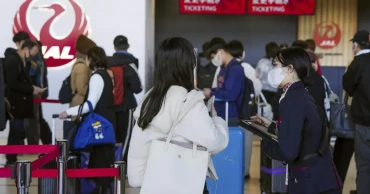
Japan Airlines hit by a cyberattack, delaying flights during the year-end holiday season
Japan Airlines said it was hit by a cyberattack Thursday, causing delays to more than 20 domestic flights but the carrier said it was able to stop the onslaught and restore its systems hours later. There was no impact on flight safety, it said.
JAL said the problem started Thursday morning when the company's network connecting internal and external systems began malfunctioning.
The airline said it was able to identify the cause as an attack intended to overwhelm the network system with massive transmissions of data. Such attacks flood a system or network with traffic until the target cannot respond or crashes.
The attack did not involve a virus or cause any customer data leaks, JAL said. It said that as of late morning, the cyberattack had delayed 24 domestic flights for more than 30 minutes.
Experts have repeatedly raised concerns about the vulnerability of Japan's cybersecurity, especially as the country steps up its defense capabilities and works more closely with the United States and other partners with much tighter cyber defenses. Japan has taken steps but experts say more work is needed.
Read: Bangladesh, India to collaborate with each other to combat cyberattacks: Palak
In June, Japan's space agency said it had suffered a series of cyberattacks since 2023, though sensitive information related to rockets, satellites and defense was not affected. It was investigating to take preventive measures. Last year, a cyberattack paralyzed operations at a container terminal at a port in the city of Nagoya for three days.
JAL's ticket sales for both domestic and international fights scheduled for departure on Thursday were suspended temporarily but resumed several hours later.
Chief Cabinet Secretary Yoshimasa Hayashi told a regular news conference Thursday that the transport ministry told JAL to hasten efforts to restore the system and to accommodate affected passengers.
Other Japanese airlines, including ANA Holdings, Skymark and Starflyer, were not affected.
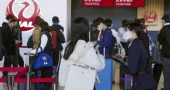
Television footage showed many passengers at Tokyo's Haneda airport crowded into its terminals as the attack hit the year-end holiday travel season. Offices will close from this weekend for the New Year holidays, the biggest celebration of the year, when millions of people travel back to their hometowns from the cities.
1 year ago
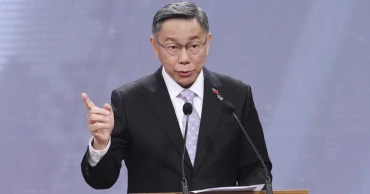
Ex-Taiwanese Presidential candidate Ko Wen-je indicted for corruption
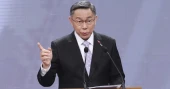
Prosecutors in Taiwan indicted former presidential candidate and Taiwan People's Party founder Ko Wen-je on corruption charges Thursday, accusing him of taking bribes during his time as mayor of the island's capital.
Ko, a former mayor of Taipei, is accused of accepting bribes related to a real estate development during his time in office, according to the prosecutors' statement. He's also accused of embezzling political donations.
If convicted on all charges, he faces a possible 28.5 years in jail.
Core to the case is a development owned by Core Pacific City group in Taipei. Prosecutors say Ko allowed the company to evade city building regulations in exchange for bribes.
“The defendant, Ko, violated his vow as a mayor to not accept bribes, and abide by our national laws. Instead, Ko intended to help the group obtain billions of dollars in illegal benefits, while collecting millions in bribes,” said Kao Yi-shu, the lead prosecutor, while unveiling the charges Thursday.
While Ko could not be reached, he has previously denied the allegations of bribery and corruption. His party said the charges were a case of political persecution.
Read: Taiwan asks China to cease military activities in nearby waters
"With this kind of abuse of power, the government is being reduced to a political thug,” said Lin Fu-nan, a member of the TPP’s central committee. “We call on the black hand of politics not to reach into the judiciary."
Ko, a former doctor, burst onto the political scene to win Taipei's 2014 mayoral race. He served two terms from 2014 to 2022.
Ko founded the TPP in 2019 as an alternative to the two-party system, promising a break from politics as usual.
He ran for President this year. Despite finishing third, he attracted attention for his appeal to young voters. Taiwan's politics is mostly dominated by two main political parties, the Nationalist Party (Kuomingtang) and the Democratic Progressive Party.
Read more: Taiwan President visits Hawaii Think Tank amid Chinese criticism
Ko's Taiwan People's Party, while small, is allied with the Kuomingtang in Taiwan's legislature and helped it pass three laws last week that critics say have paralyzed the Constitutional Court and will weaken Taiwan President Lai Ching-te's ability to carry out his political agenda.
1 year ago

Motion to impeach South Korea’s acting president submitted
South Korea’s main opposition party submitted a motion on Thursday to impeach the country’s acting leader over his reluctance to fill three Constitutional Court vacancies ahead of the court’s review of rebellion charges against impeached President Yoon Suk Yeol stemming from his short-lived martial law decree on Dec. 3.
The court appointments have stalled amid an intensifying dispute between the liberal opposition and Yoon’s conservative party, and the potential impeachment of Prime Minister Han Duck-soo may deepen the political paralysis that has halted high-level diplomacy and rattled financial markets.
The opposition-controlled National Assembly also passed motions calling for the appointment of three Constitutional Court justices as the court prepares to start deliberations on whether to dismiss or reinstate Yoon. The vote came shortly after Han reiterated in a televised statement that he wouldn’t appoint the justices without bipartisan consent.
National Assembly Speaker Woo Won Shik urged Han to swiftly appoint the justices, saying that his calls for bipartisan consent essentially amounted to a refusal and “infringes on the National Assembly’s right to select Constitutional Court justices.”
Yoon’s People Power Party, whose members mostly boycotted the National Assembly vote, argued that Han shouldn’t exercise presidential authority to appoint the proposed justices while Yoon has yet to be formally removed from office.
The main opposition Democratic Party has accused the conservatives of undermining the court process to save Yoon’s presidency, and its motion to impeach Han could go to a floor vote as early as Friday. The Democrats’ floor leader, Park Chan-dae, said Han’s comments showed “he lacks both the qualifications to serve as the acting leader and the will to uphold the Constitution.”
Yoon’s presidential powers were suspended after the National Assembly voted to impeach him on Dec. 14 over an attempted power grab that lasted only hours but has triggered weeks of political turmoil that has shaken one of Asia’s most robust democracies.
To formally end Yoon’s presidency, at least six justices on the nine-member Constitutional Court must vote in favor. Three seats remain vacant following retirements and a full bench could make conviction more likely.
The court, which is to hold a pretrial hearing in Yoon’s case on Friday, has said it believes the acting president can exercise the right to appoint justices.
Read: South Korea's opposition party vows to impeach acting president
Three of the court’s nine justices are directly appointed by the president. Three are nominated by the head of the Supreme Court and three by the National Assembly, and they are then formally appointed by the president in what is widely considered a procedural matter.
The three seats that are currently open are to be nominated by lawmakers. South Korea’s Constitution states that the National Assembly “selects” three spots on the court rather than recommends, suggesting that the presidential appointments for these spots are a formality rather than a substantive authority, according to some legal experts.
“The consistent spirit reflected in our Constitution and laws is that an acting president should focus on maintaining stability in governance to help the country overcome crisis while refraining from exercising significant powers exclusive to the president, including appointments to constitutional institutions,” Han said. “I will withhold the appointment of Constitutional Court justices until the ruling and opposition parties submit an agreed-upon proposal.”
Han has also clashed with the Democrats over his vetoes of controversial agricultural bills endorsed by the opposition and refusal to approve bills calling for independent investigations of Yoon and corruption allegations involving his wife, Kim Keon Hee.
If Han is impeached, Choi Sang-mok, the country’s deputy prime minister and finance minister, is next in line.
The impeachment vote against Han could face legal ambiguities. Most South Korean officials can be impeached with a simple majority of the National Assembly, but impeaching presidents requires two-thirds. The rival parties differ on which standard should apply to an acting president. The Democratic Party controls 170 of the National Assembly’s 300 seats, so it would need support from members of other parties including Yoon’s own to get a two-thirds majority.
Read more: South Korea's opposition chief urges swift action from top court on impeachment
While focusing on defending himself in the Constitutional Court, Yoon has dodged several requests by law enforcement authorities to appear for questioning over rebellion charges and also blocked searches of his office. The Corruption Investigation Office for High-Ranking Officials, which is leading a joint investigation with police and military authorities of Yoon, summoned him for questioning this Sunday after he ignored a request to appear on Christmas Day. The office plans to question Yoon on charges of abuse of authority and orchestrating a rebellion.
Authorities have already arrested Yoon’s defense minister, police chief and several other military commanders involved in the attempt to implement martial law, which harkened back to the days of authoritarian leaders the country hasn’t seen since the 1980s.
In a news conference in Seoul, Yoo Seung Soo, lawyer for former Defense Minister Kim Yong Hyun, repeated Yoon’s claim that his martial law decree was to “sound alarm against ... political abuse” by an opposition that has bogged down his agenda, and did not amount to a rebellion.
1 year ago
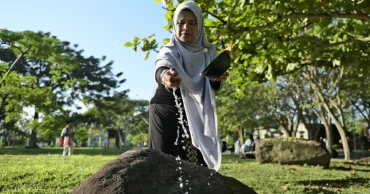
Prayers, tears mark 20 years of Indian Ocean tsunami that killed some 230,000 people
People gathered in prayer and visited mass graves in Indonesia’s Aceh province on Thursday to mark 20 years since the massive Indian Ocean tsunami hit the region in one of modern history’s worst natural disasters.
Many wept as they placed flowers at a mass grave in Ulee Lheue village, where more than 14,000 unidentified tsunami victims are buried. It is one of several mass graves in Banda Aceh, the capital of Indonesia’s northernmost province, which was one of the areas worst hit by a magnitude 9.1 earthquake and the massive tsunami it triggered.
“We miss them and we still don’t know where they are. All we know is that every year we visit the mass grave in Ulee Lhue and Siron,” said Muhamad Amirudin, who lost two of his children 20 years ago and has never found their bodies.
"This life is only temporary, so we do our best to be useful to others,” Amirudin, visiting the grave with his wife, said.
The powerful earthquake off the coast of the Indonesian island of Sumatra on Dec. 26, 2004, triggered a tsunami that killed around 230,000 people across a dozen countries, reaching as far as East Africa. Some 1.7 million people were displaced, mostly in the four worst-affected countries: Indonesia, Sri Lanka, India and Thailand.
More than 170,000 people died in Indonesia alone.
Even though 20 years have passed, survivors in Indonesia are still grieving the loved ones they lost to the giant wave that flattened buildings all the way to the provincial capital of Banda Aceh.
Hundreds of people gathered to pray at the Baiturrahman Mosque in downtown Banda Aceh. Sirens sounded across the city for three minutes to mark the time of the earthquake.
Read: Small tsunami waves splash ashore on remote Japanese islands
Infrastructure in Aceh has been rebuilt and is now more resilient than before the tsunami struck. Early warning systems have been installed in coastal areas to alert residents of incoming tsunamis, providing crucial time to seek safety.
The rebuilding efforts were made possible by the support of international donors and organizations, which contributed significant funds to help the region recover. Schools, hospitals, and essential infrastructure destroyed by the disaster have been reconstructed.
In Thailand, people gathered at a memorial ceremony in Ban Nam Khem, a small fishing village in Phang Nga province that bore the brunt of the devastating wave in the country.
The tsunami claimed the lives of over 8,000 people in Thailand, including many who remain missing, leaving a deep scar in the nation’s history. Nearly 400 bodies remain unclaimed.
Mourners shed tears and comforted each other as they laid flowers at the village’s tsunami memorial. Around 300 people joined a modest ceremony with Muslim, Christian and Buddhist prayers.
Urai Sirisuk said she avoids the seaside memorial park the rest of the year because the loss of her 4-year-old daughter still cuts deep every time she's reminded of it.
“I have this feeling that the sea has taken my child. I’m very angry with it. I can’t even put my foot in the water,” she said.
But, she said, “I still hear her voice in my ears, that she’s calling for me. I can’t abandon her. So I have to be here, for my child.”
In India, hundreds gathered at Marina beach in the southern city of Chennai in Tamil Nadu state. They poured milk into the sea to propitiate gods and offered flowers and prayers for the dead as drums beat in the background.
Read more:7.1 magnitude earthquake hits off southern Japan; tsunami advisory issued
According to official data, 10,749 people were killed in India, including nearly 7,000 people in Tamil Nadu alone.
“It has been 20 years since the tsunami,” said 69-year-old Sadayammal, who uses one name. “We are here to pay respects to the people who lost their lives.”
In Sri Lanka, survivors and relatives of tsunami victims gathered at the coastal village of Pereliya and laid flowers at a memorial that commemorates nearly 2,000 passengers who died when their train, the Queen of the Sea, was hit by the wave. Only a few dozen people are believed to have survived.
Anura Ranjith joined the mourners to pay respects to his younger sister, Anula Ranjani, and her 9-year-old daughter who were passengers on the train. Ranjith never heard from them after that day.
“I looked for them everywhere for years and still, no information about them. Their loss is a great sorrow and pain for me. I am still grieving,” he said.
Overall, more than 35,000 people died in Sri Lanka in the tsunami. People across the country observed two minutes of silence on Thursday in memory of those who lost their lives.
1 year ago

Japan's FM seeks ‘positive’ direction in bilateral ties during his visit to China
Japanese Foreign Minister Takeshi Iwaya met with top Chinese leaders Wednesday during his visit to Beijing, the first since the heads of the two countries met at a summit in Peru last month, in an effort to make positive inroads in the bilateral relationship.
The two neighbors have had a tense relationship in recent years. At the top of Iwaya's agenda is China’s ban on Japanese seafood in response to the release of treated radioactive wastewater into the sea from the Fukushima Daiichi nuclear power plant, as well as China’s increasingly assertive military activity in the East and South China Seas.
Iwaya met with China's premier, Li Qiang Wednesday as well as Wang Yi, his Chinese counterpart.
"Currently the China-Japan relations are at a critical period of improvement and development,” said Li, in his remarks. “ China is willing to work together with Japan to move towards the important direction proposed by the leaders of the two countries.”
"I want to build a relationship where the people of both countries feel that Japan-China relations have developed and progressed in a positive direction," said Iwaya, ahead of his meeting with Wang.
France gets a new government again amid political crisis
His trip comes just before US President-elect Donald Trump is to take office in January.
Tokyo considers the Japan-US alliance the lynchpin of its diplomatic and security policies, a tone emphasized in the past four years under US President Joe Biden’s direction, but it’s unclear how Trump will impact the alliance.
Japan has revamped its approach to defense i n response to Chinese actions in recent years, boosting military spending and shifting away from a principle of self-defense.
Earlier this year, Japan protested when a Chinese military plane flew into Japan's airspace, while in the summer, a Chinese survey ship sailed into Japanese territorial waters.
While how US-China relations come out under the Trump administration is unclear, Japan is seeking stability in its relationship with its neighbor and hopes to develop ties in areas of mutual interest, including the economy and the elderly care industry.
South Korea's opposition party vows to impeach acting president
Iwaya told reporters before his departure Tuesday that he will also hold bilateral high-level people and cultural exchange talks, joined by the education ministers from the two sides.
“The relationship with China, our neighboring country, is one of Japan’s most important,” Iwaya told reporters Tuesday.
Though there are many issues and concerns, Japan and China share a variety of possibilities, he said. “The two countries share important responsibilities for the peace and prosperity of the region and the international society.”
Iwaya, a security expert, is also expected to reiterate his concern about Japanese nationals detained in alleged spying allegations.
Japan maintains that the water discharged from the Fukushima plant is treated and diluted to levels much safer than international standards and adequately monitored, but China calls the water contaminated.
Japan and China agreed in September to work toward easing the seafood ban by allowing China in multinational sampling missions under the framework of the International Atomic Energy Agency.
Chinese experts joined an IAEA monitoring mission to Fukushima in October, when China took water samples from the sea just off the coast of the Fukushima plant, as well as the water discharge system on the plant, for analysis.
1 year ago
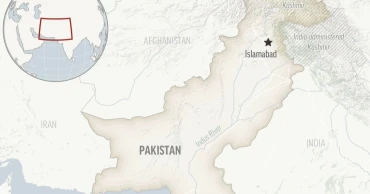
At least 13 people killed in Pakistani strikes on suspected militant hideouts in Afghanistan
Local Afghans and the Pakistani Taliban said Wednesday that civilians, including women and children, were killed after Pakistan launched rare airstrikes inside neighboring Afghanistan.
Pakistani security officials, speaking on the condition of anonymity in line with regulations, told The Associated Press that Tuesday's operation was to dismantle a training facility and kill insurgents in the province of Paktika, bordering Afghanistan.
Residents in the area told an AP reporter over the phone that at least 13 people were left dead, adding that the death toll could be higher. They also said the wounded were transported to a local hospital.
Meanwhile, in a statement, Mohammad Khurasani, the spokesman for the Pakistani Taliban or Tehreek-e-Taliban Pakistan, claimed that 50 people, including 27 women and children, have died in the strikes.
Pakistan has not commented on the strikes. However, on Wednesday, the Pakistani military said security forces killed 13 insurgents in an overnight intelligence-based operation in South Waziristan, a district located along eastern Afghanistan's Paktika province.
The strikes are likely to further spike tensions between the two countries. Afghanistan’s ruling Taliban government denounced the attack, saying on Tuesday that most of the victims were refugees from the Waziristan region and promising retaliation.
The TTP is a separate group but also a close ally of the Afghan Taliban, who seized power in Afghanistan in August 2021.
In March, Pakistan said intelligence-based strikes took place in the border regions inside Afghanistan.
Pakistan has seen innumerable militant attacks in the past two decades but there has been an uptick in recent months. The latest was this weekend when at least 16 Pakistani soldiers were killed when TTP attacked a checkpoint in the country’s northwest.
Pakistani officials have accused the Taliban of not doing enough to combat militant activity across the shared border, a charge the Afghan Taliban government denies, saying it does not allow anyone to carry out attacks against any country.
1 year ago