asia

US, UK criticise Pakistan military court convictions of Imran Khan supporters
The United States and the United Kingdom have expressed deep concern over the recent handing down of convictions by Pakistani military courts to 25 civilian supporters of former Prime Minister Imran Khan over their alleged involvement in riots last year.
The convictions had previously also been criticized by the European Union and domestic human rights activists.
“The United States is deeply concerned that Pakistani civilians have been sentenced by a military tribunal for their involvement in protests on May 9, 2023. These military courts lack judicial independence, transparency, and due process guarantees,” according to a statement released by State Department on Monday.
South Korea's opposition party vows to impeach acting president
It asked Pakistan to respect the right to a fair trial and due process.
In London, the Foreign Office said that “while the UK respects Pakistan’s sovereignty over its own legal proceedings, trying civilians in military courts lacks transparency, independent scrutiny and undermines the right to a fair trial. We call on the Government of Pakistan to uphold its obligations under the International Covenant on Civil and Political Rights.”
The statements were referring to the violence that erupted after Khan’s arrest in Islamabad in May 2023. The former premier was ousted through a no-confidence vote in the parliament in 2022, and he was convicted of corruption and sentenced in August 2023.
Since then, Khan has been behind bars. Khan’s popular opposition party is in talks with the government to secure his release.
The 25 supporters on Monday received prison terms ranging from two years to 10 years, which the army in a statement warned acted as a “stark reminder” for people to never take the law into their own hands.
Khan's opposition Pakistan Tehreek-e-Insaf party, or PTI, has rejected the convictions of civilians, demanding they should be tried in the normal courts if they were involved in the riots.
Pakistani health workers' boycotting halts polio vaccination drive in southwest
There was no response from Prime Minister Shehbaz Sharif's government to the criticism from the US and the UK, but state-run Pakistan Television on Tuesday showed people welcoming the convictions, saying the punishments were given to people who attacked military installations.
Earlier this month, Khan and dozens of others were indicted by a civilian court on charges of inciting people on May 9, 2023, when demonstrators attacked the military’s headquarters in Rawalpindi, stormed an air base in Mianwali in the eastern Punjab province and torched a building housing state-run Radio Pakistan in the northwest.
1 year ago
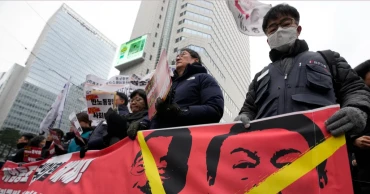
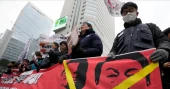
South Korea's opposition party vows to impeach acting president
South Korea’s main opposition party said Tuesday it will seek to impeach acting leader Han Duck-soo after he missed an opposition-set deadline to approve independent investigations into impeached President Yoon Suk Yeol and his wife.
If realized, Han’s impeachment would further deepen South Korea’s political tumult and worries by neighboring countries caused by Yoon’s stunning December 3 martial law declaration and ensuing impeachment.
Han, the country’s No. 2 official, has taken over presidential powers and duties since Yoon’s impeachment. If he's impeached too, the finance minister is next in line.
The main liberal opposition Democratic Party, which holds a majority in parliament, has slammed Han for vetoing several opposition-sponsored bills, including a controversial agriculture bill.
It also urged Han to quickly appoint justices to vacant seats on the Constitutional Court, which is reviewing Yoon's impeachment and will determine whether to dismiss or reinstate him.
Filling the court's three empty posts could make conviction more likely, as it requires the support of six of the court's nine possible members.
The Democratic Party also demanded that Han approve by Tuesday bills calling for the appointments of special prosecutors to investigate Yoon for rebellion over his marital law decree, and his wife for corruption and other allegations.
But Han didn’t do so during Tuesday’s Cabinet Council meeting, calling for the ruling and opposition parties to negotiate.
Democratic Party floor leader Park Chan-dae responded that there's no room for negotiations about a Yoon investigation, and that his party would begin steps toward an impeachment at once.
“We’ve clearly warned that it’s totally up to Prime Minister Han Duck-soo whether he would go down in history as a disgraceful figure as a puppet of rebellion plot leader Yoon Suk Yeol or a public servant that has faithfully carried out the orders by the public,” Park told a televised party meeting.
China says US is 'playing with fire' after latest military aid for Taiwan
Korean prosecutors and other officials are separately probing whether Yoon committed rebellion and abuse of power, but he’s ignored requests by investigative agencies to appear for questioning and allow searches of his office.
Yoon’s defense minister, police chief and several other senior military commanders have already been arrested over the deployment of troops and police officers to the National Assembly, which prompted a dramatic standoff that ended when lawmakers managed to enter the chamber and voted unanimously to overrule Yoon's decree.
The governing People Power Party said that the opposition's impeachment threats are interfering with Han’s “legitimate exercise of authority." Floor leader Kweon Seong-dong, a Yoon loyalist, said the Democratic Party’s “politics of intimidation have reached their peak.”
An impeachment vote would face legal ambiguities. Most Korean officials can be impeached with a simple majority of parliament, but impeaching the presidents takes two-thirds. The rival parties differ on which standard would apply to an acting president.
The Democratic Party controls 170 of the National Assembly's 300 seats, so it would need support from members of other parties including Yoon's own to get a two-thirds majority.
The Constitutional Court has up to six months to determine Yoon's fate. If he's thrown of office, a national election to find his successor must take place within two months.
1 year ago

Iran's rial hits a record low, battered by regional tensions, energy crisis
The Iranian rial on Wednesday fell to its lowest level in history, losing more than 10% of value since Donald Trump won the U.S. presidential election in November and signaling new challenges for Tehran as it remains locked in the wars raging in the Middle East.
The rial traded at 777,000 rials to the dollar, traders in Tehran said, down from 703,000 rials on the day Trump won.
Iran’s Central Bank has in the past flooded the market with more hard currencies as an attempt to improve the rate.
In an interview with state television Tuesday night, Central Bank Gov. Mohammad Reza Farzin said that the supply of foreign currency would increase and the exchange rate would be stabilized. He said that $220 million had been injected into the currency market.
The currency plunged as Iran ordered the closure of schools, universities, and government offices on Wednesday due to a worsening energy crisis exacerbated by harsh winter conditions. The crisis follows a summer of blackouts and is now compounded by severe cold, snow and air pollution.
Despite Iran’s vast natural gas and oil reserves, years of underinvestment and sanctions have left the energy sector ill-prepared for seasonal surges, leading to rolling blackouts and gas shortages.
In 2015, during Iran’s nuclear deal with world powers, the rial was at 32,000 to $1. On July 30, the day that Iran’s reformist President Masoud Pezeshkian was sworn in and began his term, the rate was 584,000 to $1.
Trump unilaterally withdrew America from the accord in 2018, sparking years of tensions between the countries that persist today.
Iran’s economy has struggled for years under crippling international sanctions over its rapidly advancing nuclear program, which now enriches uranium at near weapons-grade levels.
Pezeshkian, elected after a helicopter crash killed hard-line President Ebrahim Raisi in May, came to power on a promise to reach a deal to ease Western sanctions.
Tensions still remain high between the nations, 45 years after the 1979 U.S. Embassy takeover and the 444-day hostage crisis that followed. Before the revolution, the rial traded at 70 for $1.
Iran remains deeply involved in the Middle East conflicts that have roiled the region, with its allies battered — including the militant groups and fighters of its self-described “axis of resistance,” such as Palestinian Hamas, Lebanon’s Hezbollah and Yemen’s Houthi rebels.
1 year ago

Pakistani health workers' boycotting halts polio vaccination drive in southwest
Pakistani authorities on Wednesday postponed a polio vaccination campaign in the country's restive southern Balochistan province after health workers boycotted it to oppose a proposed privatization of hospitals.
Authorities on Monday launched the final nationwide polio vaccination campaign for the year, aiming to protect 45 million children. According to the World Health Organization, Pakistan and neighboring Afghanistan remain the only two countries where the potentially fatal, paralyzing virus has not been eradicated.
Anwarul Haq of the National Emergency Operation Center for Polio Eradication, said the polio vaccination campaign in Balochistan was delayed until Dec. 30 for “better preparedness." He provided no further details.
However, other health and government officials said the campaign in Balochistan was postponed after health workers refused to join it and demanded that the government stop plans to privatize state-run hospitals where they work.
Representatives of health workers have also urged the government not to employ unqualified workers to carry out the campaign.
Read: Pakistan begins another vaccination campaign after a worrying surge in polio cases
Restive Balochistan has reported the highest number of polio cases, with 26 out of the nationwide 63 confirmed cases since January. The campaign continue until Dec. 22 in other areas in Pakistan.
Pakistan regularly launches campaigns against polio despite attacks on the workers and police assigned to the inoculation drives. Militants falsely claim the vaccination campaigns are a Western conspiracy to sterilize children.
More than 200 polio workers and police assigned for their protection have been killed since the 1990s, according to health officials and authorities.
1 year ago
Iran's rial hits a record low, battered by regional tensions and an energy crisis
The Iranian rial on Wednesday fell its lowest level in history, losing more than 10% of its value since Donald Trump won the U.S. presidential election in November and signaling new challenges for Tehran as it remains locked in the wars raging in the Middle East.
The rial traded at 777,000 rials to the dollar, traders in Tehran said, down from 703,000 rials on the day Trump won.
Iran’s Central Bank has in the past flooded the market with more hard currencies as an attempt to improve the rate.
In an interview with state television Tuesday night, Central Bank Gov. Mohammad Reza Farzin said that the supply of foreign currency would increase and the exchange rate would be stabilized. He said that $220 million had been injected into the currency market.
The currency plunged as Iran ordered the closure of schools, universities, and government offices on Wednesday due to a worsening energy crisis exacerbated by harsh winter conditions. The crisis follows a summer of blackouts and is now compounded by severe cold, snow and air pollution.
Despite Iran’s vast natural gas and oil reserves, years of underinvestment and sanctions have left the energy sector ill-prepared for seasonal surges, leading to rolling blackouts and gas shortages.
In 2015, during Iran’s nuclear deal with world powers, the rial was at 32,000 to $1. On July 30, the day that Iran’s reformist President Masoud Pezeshkian was sworn in and began his term, the rate was 584,000 to $1.
Trump unilaterally withdrew America from the accord in 2018, sparking years of tensions between the countries that persist today.
Iran’s economy has struggled for years under crippling international sanctions over its rapidly advancing nuclear program, which now enriches uranium at near weapons-grade levels.
Pezeshkian, elected after a helicopter crash killed hard-line President Ebrahim Raisi in May, came to power on a promise to reach a deal to ease Western sanctions.
Tensions still remain high between the nations, 45 years after the 1979 U.S. Embassy takeover and the 444-day hostage crisis that followed. Before the revolution, the rial traded at 70 for $1.
Iran remains deeply involved in the Middle East conflicts that have roiled the region, with its allies battered — including the militant groups and fighters of its self-described “axis of resistance,” such as Palestinian Hamas, Lebanon’s Hezbollah and Yemen’s Houthi rebels.
1 year ago
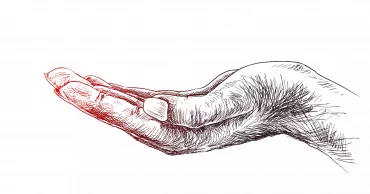
This Indian city will enforce police action against giving money to beggars
In a surprising move to eliminate begging, authorities in an Indian city will begin registering police cases against individuals who give money to beggars, starting January 1, 2025, according to media reports.
The initiative aims to make Indore the first city in India to be declared “beggar-free.”
The district administration has announced that an awareness campaign will continue until the end of December. However, from January, legal action will be taken against those found giving alms, marking the enforcement of a city-wide ban on begging in Indore.
This effort is part of a central government pilot project targeting the rehabilitation of beggars across ten cities, including Delhi, Bengaluru, and Mumbai. The initiative aims to reshape the lives of those who depend on begging while maintaining Indore’s reputation as a model urban center.
India listed as 'uncooperative' country by US Immigration and Customs Enforcement
The campaign is being supported by Madhya Pradesh’s Social Welfare Department and local organizations. According to officials, a local organization will provide six months of shelter to beggars while helping them secure employment opportunities.
Indore authorities believe this dual approach—combining enforcement with rehabilitation—will not only eliminate begging but also create pathways for vulnerable individuals to reintegrate into society.
1 year ago
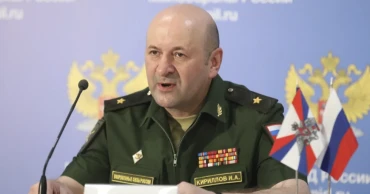
Russia’s nuclear defense forces head killed in explosion
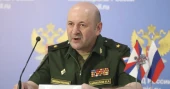
The head of Russia’s Nuclear, Biological, and Chemical Defence Forces, Lt. General Igor Kirillov, was killed early Tuesday by an explosive device planted close to a residential apartment block in Moscow, Russia’s Investigative Committee said.
Kirillov’s assistant also died in the blast.
Russia launches massive attack on Ukrainian infrastructure with missiles
Kirillov was sentenced in absentia by a Ukrainian court Monday for the use of banned chemical weapons during Russia’s military operation in Ukraine that started in Feb. 2022.
During the almost 3-year operation, Russia has made small-but-steady territorial gains to the nearly one-fifth of Ukraine it already controls.
1 year ago
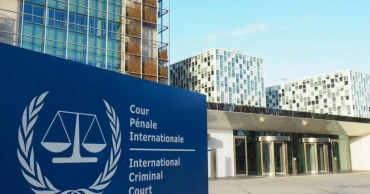
Seize momentum for justice created by application for ICC arrest warrant against Myanmar junta leader: UN expert
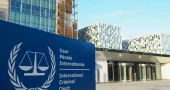
The International Criminal Court (ICC) Prosecutor Karim A.A. Khan’s decision to request an arrest warrant for Myanmar military commander-in-chief, Min Aung Hlaing, can build a momentum for justice and hope if it is seized and built upon now, a UN expert said on Monday, following meetings in The Hague with Khan and his team.
“The Prosecutor’s decision to request an arrest warrant for Min Aung Hlaing in relation to his crimes against the Rohingya was a long-awaited and critical step forward,” said Tom Andrews, UN Special Rapporteur on the human rights situation in Myanmar.
“There is not a moment to lose to move the wheels of justice forward. I am encouraged by the Prosecutor’s commitment to requesting further warrants and that this will be done as soon as possible. It is critical that governments lend their full support to enforcing them,” he said.
Andrews said this was an important moment for victims of the 2017 attacks against the Rohingya, who have waited for justice for far too long.
Myanmar's Arakan Army claims control of border with Bangladesh
“Min Aung Hlaing is not only accused of atrocity crimes against the Rohingya, he is also responsible for ongoing war crimes and crimes against humanity throughout Myanmar. He must be stopped and held accountable,” he said.
On 27 November, ICC Prosecutor Khan, speaking in Bangladesh, announced that his office had filed an application for an arrest warrant for Min Aung Hlaing in relation to the crimes against humanity of deportation and persecution of the Rohingya.
He stated that the alleged crimes, which took place between August and December 2017, were committed in part in the territory of Bangladesh, which is State Party to the ICC. Such crimes therefore fall within the Court’s jurisdiction. Myanmar itself is not a State Party to the ICC, and the Security Council has not referred the situation in Myanmar to the Court.
“Unfortunately, because of the jurisdictional limitations on the Court, the Prosecutor’s case does not address the full breadth of atrocities committed against the Rohingya, the ongoing international crimes committed by the junta since the February 2021 military coup, nor the historic crimes perpetrated by the military against pro-democracy activists and ethnic groups,” Andrews said.
ICC prosecutor requests arrest warrant for the head of Myanmar's military regime
He reiterated his call for governments to support universal jurisdiction cases concerning Myanmar in competent national courts and for States Parties to the ICC to consider referring the situation in Myanmar to the Prosecutor under Article 14 of the Rome Statute, further to the declaration made by the National Unity Government accepting the Court’s jurisdiction.
“All States that continue to engage with the junta should be re-evaluating their relationship with the Senior General in light of the Prosecutor’s application for an arrest warrant,” the Special Rapporteur said.
"Min Aung Hlaing is on notice that he and his brutal military junta can’t hide from justice,” Andrews said. “But the international community must act swiftly. The Prosecutor’s recent decision is an important step forward, but much more needs to be done to ensure robust accountability for the staggering catalogue of crimes committed in Myanmar,” he said.
1 year ago

South Korea's opposition chief urges swift action from top court on impeachment
South Korea’s opposition leader on Sunday urged the Constitutional Court to rule swiftly on a bid to remove President Yoon Suk Yeol from office, a day after parliament voted to impeach him over a short-lived attempt to impose martial law.
Yoon's powers will be suspended until the court rules on the case, either removing Yoon from office or restoring his powers. The court has up to 180 to decide, and if he’s dismissed, a national election to choose his successor must be held within 60 days.
Prime Minister Han Duck-soo, the country’s No. 2 official, took over presidential powers later Saturday. Han was appointed by Yoon, whose government has struggled to pass legislation in the opposition-controlled parliament.
SKorea’s parliament votes to impeach President Yoon Suk Yeol
Lee Jae-myung, the leader of the opposition Democratic Party, told reporters Sunday that a swift ruling is the only way to minimize national chaos.
Lee also proposed the creation of a national council where the government and the National Assembly would work together to stabilize state affairs. He said bipartisan cooperation is essential to navigating the political paralysis that has halted high-level diplomacy and spooked financial markets since Yoon's martial law decree.
Lee also said that the Democratic Party would not seek to impeach of Han, despite some calls to do so over his alleged inaction to prevent Yoon’s martial law enforcement. Lee said there was no need to introduce further political uncertainty.
“The Democratic Party will actively cooperate with all parties to stabilize state affairs and restore international trust,” Lee said. “The National Assembly and government will work together to quickly resolve the crisis that has swept across the Republic of Korea.”
Yoon’s Dec. 3 imposition of martial law, the first of its kind in more than four decades, lasted only six hours, but has caused massive political tumult, halted diplomatic activities and rattled financial markets. Yoon was forced to lift his decree after parliament unanimously voted to overturn it.
South Korean lawmakers to vote on Impeachment of President Yoon over martial law decree
Yoon sent hundreds of troops and police officers to the parliament in an effort to stop the vote, but they withdrew after the parliament rejected Yoon’s decree. No major violence occurred.
Opposition parties have accused Yoon of rebellion, and say that a president in South Korea is allowed to declare martial law only during wartime or similar emergencies and would have no right to suspend parliament’s operations even in those cases.
The conservative Yoon rejects the charges and says he aimed to issue a warning to the Democratic Party, which he has called an “anti-state force” as it's used its control of parliament to impeach many top officials and hold up the government’s budget bill for next year.
1 year ago

India listed as 'uncooperative' country by US Immigration and Customs Enforcement
The US Immigration and Customs Enforcement (ICE) has added India to its list of 'uncooperative' countries, accusing the listed nations of failing to cooperate adequately in deportation processes.
In addition to India, the list includes Bhutan, Cuba, Iran, Pakistan, Russia, and Venezuela. ICE stated that these countries have failed to assist in key processes such as conducting interviews, issuing travel documents in a timely manner, and facilitating the repatriation of their nationals on designated flights.
US closely monitoring Bangladesh situation, urges protection of minorities: WH
According to ICE, the US plans to deport 1.45 million undocumented immigrants, including 18,000 Indians. In recent years, nearly 90,000 Indian nationals have been detained while attempting to enter the US illegally.
Although many Indian migrants are seeking to regularize their status in the US, the process could take two to three years to complete.
Honduras tops the list of countries with the highest number of undocumented immigrants in the US, with 261,000 individuals. Among Asian nations, China leads with 37,908 undocumented immigrants, while India ranks 13th.
1 year ago