asia
South Korea’s ex-defense minister finally arrested over martial law
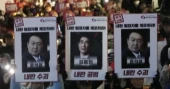
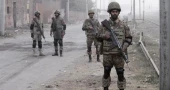
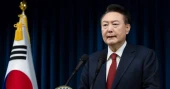
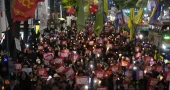
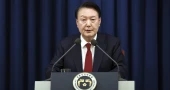
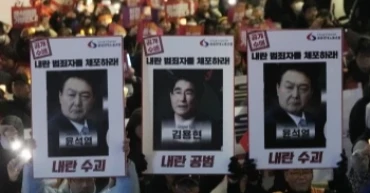
South Korea’s former Defense Minister Kim Yong Hyun was formally arrested Wednesday on charges of rebellion and abuse of power over his role in the brief imposition of martial law last week. The unprecedented move, lasting just six hours, has triggered widespread protests, criminal investigations, and impeachment efforts targeting President Yoon Suk Yeol and key officials.
The Seoul Central District Court approved Kim’s arrest, citing the seriousness of his alleged crimes and the potential for evidence tampering. Accused of orchestrating the martial law decree, Kim allegedly ordered troops to block lawmakers from overturning the decree in parliament. Despite his efforts, the National Assembly convened and unanimously rejected the order, forcing the government to rescind martial law by early December 4.
Kim, who resigned last Thursday and has been detained since Sunday, issued an apology, accepting sole responsibility and pleading for leniency for the troops involved. Prosecutors have 20 days to decide whether to indict him, with rebellion charges carrying a maximum penalty of death.
Parliament, controlled by the opposition Democratic Party, has passed a bill to appoint an independent special counsel to investigate Yoon and top military officials, citing mistrust in public prosecutors. During a parliamentary hearing, Army Special Warfare Commander Kwak Jong-keun testified that Kim directly ordered troops to block lawmakers and claimed Yoon instructed him to forcibly remove them if necessary.
Read: South Korea weighs travel ban on President Yoon
Additional testimony revealed plans to detain political opponents, with senior military and intelligence officials implicating Yoon and his associates. These revelations have intensified calls for accountability, as opposition leaders argue the martial law decree violated constitutional limits, which only allow such measures during war or comparable emergencies.
Critics contend the decree sought to suppress liberal opposition forces, which Yoon labeled as “anti-state.” The Democratic Party has pushed for Yoon’s impeachment, along with motions targeting other senior officials. Yoon narrowly avoided impeachment on Saturday but faces renewed efforts from opposition lawmakers, who plan another vote.
If impeached, Yoon’s presidential powers would be suspended until the Constitutional Court decides his fate. A dismissal would trigger a presidential election, potentially reshaping South Korea’s political landscape amid ongoing tensions.
Source: With inputs from agencies
1 year ago
Japan’s atomic bomb victim recalls its horrors in Nobel Peace Prize event
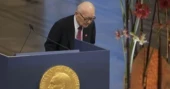
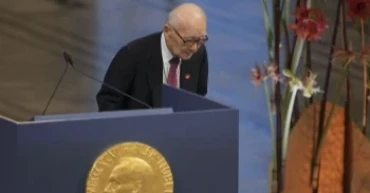
A 92-year-old survivor of the 1945 Nagasaki atomic bombing delivered a powerful speech recounting the horrors of nuclear war as he accepted the Nobel Peace Prize on behalf of Nihon Hidankyo, a group dedicated to nuclear disarmament. Terumi Tanaka, speaking in Oslo, detailed the devastation he witnessed, including the deaths of five family members and the charred ruins of his city, while urging the world to uphold the taboo against using nuclear weapons.
Nihon Hidankyo, a grassroots organization of Japanese atomic bomb survivors, received the award for nearly 70 years of advocacy against nuclear weapons. Their work gains urgency as geopolitical tensions rise, with nuclear powers like Russia and Israel hinting at the possibility of using such weapons. Tanaka expressed his sorrow and anger over the weakening of the nuclear taboo, which the Norwegian Nobel Committee also emphasized in its decision.
Committee chair Jørgen Watne Frydnes highlighted the increasing dangers posed by nuclear weapons, as none of the nine nuclear-armed states show significant interest in disarmament. Instead, many are modernizing their arsenals, a trend Frydnes described as a threat to global security. He called on nations, especially those bound by the Treaty on the Non-Proliferation of Nuclear Weapons, to fulfill their commitments to reduce nuclear stockpiles.
Read: Nobel Peace Prize awarded to Japanese organization of atomic bombing survivors Nihon Hidankyo
Tanaka’s vivid recollections of the Nagasaki bombing underscored the devastating human toll of nuclear warfare. He described the blinding flash, the ensuing shock wave, and the heartbreaking aftermath of finding his loved ones’ charred remains. Reflecting on decades of survivor-led efforts for nuclear abolition and justice, he called for global citizens to reject nuclear weapons and pressure their governments to change policies.
“The belief that nuclear weapons cannot—and must not—coexist with humanity must inspire change,” Tanaka said, urging action to prevent a repeat of such tragedies.
Source: With inputs from agencies
1 year ago
Myanmar's Arakan Army claims control of border with Bangladesh
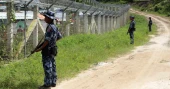
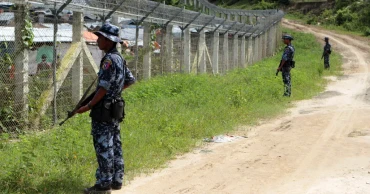
One of the most powerful ethnic minority armed groups battling Myanmar’s army has claimed the capture of the last army outpost in the strategic western town of Maungdaw, gaining full control of the 271-kilometer (168-mile) -long border with Bangladesh.
The capture by the Arakan Army makes the group’s control of the northern part of Rakhine state complete, and marks another advance in its bid for self-rule there.
ICC prosecutor requests arrest warrant for the head of Myanmar's military regime
Rakhine has become a focal point for Myanmar’s nationwide civil war, in which pro-democracy guerrillas and ethnic minority armed forces seeking autonomy battle the country’s military rulers, who took power in 2021 after the army ousted the elected government of Aung San Suu Kyi.
Khaing Thukha, a spokesperson for the Arakan Army, told The Associated Press by text message from an undisclosed location late Monday that his group had seized the last remaining military outpost in Maungdaw on Sunday.
Outpost commander Brig. Gen. Thurein Tun, was captured while attempting to flee the battle, Khaing Thukha said.
Myanmar's conflict-torn Rakhine state could face an imminent acute famine, UN report warns
The situation in Maungdaw could not be independently confirmed, with access to the internet and mobile phone services in the area mostly cut off.
Myanmar’s military government did not immediately comment.
Maungdaw, about 400 kilometers (250 miles) southwest of Mandalay, Myanmar’s second-largest city, has been the target of an Arakan Army offensive since June. The group captured Paletwa and Buthidaung, two other towns on the border with Bangladesh, earlier this year.
Since November 2023, the Arakan Army has gained control of 11 of Rakhine’s 17 townships, along with one in neighboring Chin state.
Ann, a town in Rakhine that hosts the strategically important military headquarters overseeing the western part of the country, appears to be on the verge of falling entirely to the Arakan Army.
The group posted on the Telegram messaging app late Friday that it had taken more than 30 military outposts, except the army’s western command, which controls Rakhine and the southern part of neighboring Chin state, as well as the country’s territorial waters in the Bay of Bengal.
Recent fighting in Rakhine has raised fears of a revival of organized violence against members of the Muslim Rohingya minority, similar to that which drove at least 740,000 members of their community in 2017 to flee to neighboring Bangladesh for safety.
The Arakan Army, which is the military wing of the Buddhist Rakhine ethnic group in Rakhine state, where they are the majority and seek autonomy from Myanmar’s central government, denies the allegations, though witnesses have described the group’s actions to the AP and other media.
Rohingya have lived in Myanmar for generations, but they are widely regarded by many in the country’s Buddhist majority, including members of the Rakhine minority, as having illegally migrated from Bangladesh. The Rohingya face a great amount of prejudice and are generally denied citizenship and other basic rights.
The border between Myanmar and Bangladesh extends from land to the Naf River and offshore in the Bay of Bengal.
The Arakan Army said Sunday it had ordered the suspension of transport across the Naf River because police and local Muslims affiliated with the army were attempting to escape by boat to Bangladesh.
The rebel group has been accused of major human rights violations, particularly involving its capture of the town of Buthidaung in mid-May, when it was accused of forcing an estimated 200,000 residents, largely Rohingyas, to leave, and then setting fire to most of the buildings. It was accused of attacking Rohingya civilians fleeing fighting in Maungdaw in August.
New sanctions target Myanmar's military suppliers
The Arakan Army is also part of an armed ethnic alliance that launched an offensive in northeastern Myanmar last year and gained strategic territory along the border with China.
1 year ago
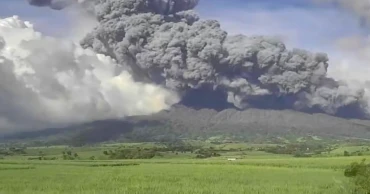
Philippine villages evacuated after major volcanic eruption
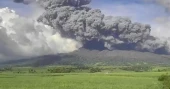
About 87,000 people were being evacuated in a central Philippine region Tuesday a day after a volcano briefly erupted with a towering ash plume and superhot streams of gas and debris hurtling down its western slopes.
The latest eruption of Mount Kanlaon on central Negros island did not cause any immediate casualties, but the alert level was raised one level, indicating further and more explosive eruptions may occur.
Earthquake activity near Alaskan Volcano sparks concerns
Volcanic ash fell on a wide area, including Antique province, more than 200 kilometers (124 miles) across seawaters west of the volcano, obscuring visibility and posing health risks, Philippine chief volcanologist Teresito Bacolcol and other officials said by telephone.
At least six domestic flights and a flight bound for Singapore were canceled and two local flights were diverted in the region Monday and Tuesday due to Kanlaon’s eruption, according to the Civil Aviation Authority of the Philippines.
The mass evacuations were being carried out urgently in towns and villages nearest the western and southern slopes of Kanlaon which were blanketed by its ash, including in La Castellana town in Negros Occidental where nearly 47,000 people have to be evacuated out of a 6-kilometer (3.7-mile) danger zone, the Office of Civil Defense said.
The far side of the moon once had erupting volcanoes too
More than 6,000 have moved to evacuation centers aside from those who have temporarily transferred to the homes of relatives in La Castellana by Tuesday morning, the town’s mayor, Rhumyla Mangilimutan, told The Associated Press by telephone.
Disaster-response contingents were rapidly establishing evacuation centers and seeking supplies of face masks, food and hygiene packs ahead of the Christmas season, traditionally a peak time for holiday travel and family celebrations in the largely Roman Catholic nation.
Authorities also shut schools and imposed a nighttime curfew in the most vulnerable areas.
The Philippines’ Institute of Volcanology and Seismology said the nearly four-minute eruption of Kanlaon volcano on Monday afternoon had caused a pyroclastic density current — a superhot stream of gas, ash, debris and rocks that can incinerate anything in its path.
“It's a one-time but major eruption,” Bacolcol told the AP, adding that volcanologists were assessing if Monday's eruption spewed old volcanic debris and rocks clogged in and near the summit crater or was caused by rising magma from underneath.
Few volcanic earthquakes were detected ahead of Monday's explosion, Bacolcol said.
The alert level around Kanlaon was placed on Monday to the third-highest of a five-step warning system, indicating “magmatic eruption" may have begun and may progress to further explosive eruptions.
Philippine villagers flee ashfall, sight of red-hot lava from erupting Mayon volcano
The 2,435-meter (7,988-foot) volcano, one of the country’s 24 most-active volcanoes, last erupted in June sending hundreds of villagers to emergency shelters.
In 1996, three hikers were killed near the peak and several others were later rescued when Kanlaon erupted without warning, officials said.
Located in the so-called Pacific “Ring of Fire,” a region prone to earthquakes and volcanic eruptions, the Philippines is also lashed by about 20 typhoons and storms a year and is among the countries most prone to natural disasters.
1 year ago

South Korea weighs travel ban on President Yoon
South Korean police are reportedly considering an overseas travel ban on President Yoon Suk Yeol in connection with his controversial imposition of martial law last week, Yonhap news agency reported Monday.
The potential travel restriction comes as authorities investigate Yoon’s decision to enforce martial law, which has drawn widespread criticism. Repeated attempts to reach the police for comment were unsuccessful.
On Sunday, prosecutors detained former Defense Minister Kim Yong Hyun, who is accused of advising Yoon to enact the brief but dramatic martial law. Kim's arrest marks the first detention in the ongoing probe.
Read: Ex-South Korean defense chief held amid Martial Law controversy
President Yoon narrowly escaped an impeachment attempt by opposition lawmakers on Sunday. A boycott by ruling party members prevented the parliamentary vote from reaching the two-thirds majority needed to suspend his powers.
Source: With inputs from agencies
1 year ago
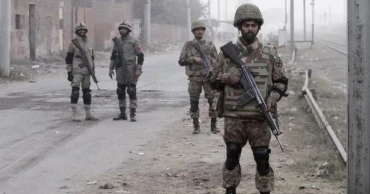
6 soldiers killed in Pakistan
Six Pakistani security personnel were killed, and seven others injured on Saturday during an armed assault on a Frontier Corps checkpoint in the Kurram district of Khyber Pakhtunkhwa, officials confirmed.
The attack occurred in Bagam, located 200 kilometers south of Peshawar, according to local official Saleem Khan. The wounded were transported to a military hospital, while no group immediately claimed responsibility for the assault.
This region has seen significant unrest in recent weeks, with at least 130 fatalities reported during sectarian clashes between Sunni and Shiite communities. However, authorities clarified that Saturday's attack was unrelated to these clashes, as a ceasefire between the two groups remains in place.
Read: Pakistan ends lockdown after dispersing Imran Khan supporters
Broader Security ChallengesThis incident comes amid rising security challenges across Pakistan. Last month, separatist militants targeted a border post in Balochistan’s Kalat district, killing seven soldiers and injuring 15 others. The Balochistan Liberation Army (BLA), known for targeting energy projects with foreign funding, has repeatedly launched deadly attacks against security forces, including a recent railway station bombing that killed 26 people.
Read more: Imran Khan supporters breach lockdown in Pakistani capital, at least 6 people killed in violence
The resurgence of militant violence underscores the ongoing instability in Pakistan's border provinces, as authorities face threats from both sectarian violence and insurgent groups.
Source: With inputs from agencies
1 year ago
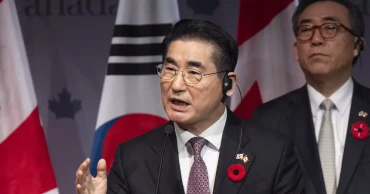
Ex-South Korean defense chief held amid Martial Law controversy
South Korean prosecutors have detained former Defense Minister Kim Yong Hyun in connection with the recent imposition of martial law, marking a significant development in a political crisis that has roiled the nation. Kim, who allegedly proposed the controversial decree to President Yoon Suk Yeol, was taken into custody on Sunday, making him the first high-ranking official detained over the incident, according to local media reports.
Kim voluntarily appeared at the Seoul Central District Prosecutors' Office, where his mobile phone was confiscated before being transferred to a detention center. Authorities also searched his former office and residence. Prosecutors and detention officials have yet to issue formal statements on the matter.
The detention comes days after President Yoon narrowly avoided impeachment, as his ruling People Power Party boycotted a parliamentary vote to prevent the opposition from reaching the two-thirds majority needed to suspend his presidential powers. Despite this, the opposition Democratic Party has vowed to file a fresh impeachment motion.
Martial Law and Political Turmoil
The martial law declaration earlier this week saw troops encircle the National Assembly and helicopters hover over the building, prompting immediate backlash. Parliament unanimously overturned the decree, forcing Yoon’s Cabinet to rescind it by early Wednesday morning.
Kim has been accused by opposition lawmakers of orchestrating the martial law order and directing troop deployments to the National Assembly. The Defense Ministry has suspended three senior military commanders implicated in the event.
Read: South Korean president apologises for imposing martial law
In a statement issued through the Defense Ministry, Kim took full responsibility for the military’s actions, stating, “All troops who performed duties related to martial law were acting on my instructions, and all responsibility lies with me.”
Charges and Investigation
The Democratic Party has labeled the martial law declaration an unconstitutional rebellion or coup, filing legal complaints against at least nine individuals, including Yoon and Kim. Under South Korean law, sitting presidents are mostly immune from prosecution, except in cases of rebellion or treason, leaving open the possibility of further investigations into Yoon’s actions.
Prosecutor General Shim Woo Jung confirmed plans to investigate rebellion charges following the opposition's formal complaints. Meanwhile, President Yoon issued an apology on Saturday, pledging accountability and promising not to pursue another attempt at martial law.
Political and Public Reaction
The martial law declaration—the first in South Korea in over 40 years—has plunged the nation into political chaos, drawing criticism domestically and internationally. Yoon justified the decree by accusing parliament of obstructing state affairs and harboring "anti-state forces."
Public sentiment appears to favor impeachment, with recent surveys showing widespread support for Yoon's ouster. His approval ratings have been further damaged by scandals involving himself and his wife, as well as criticism from his own party over the martial law imposition.
The crisis has alarmed South Korea's allies, including the United States and Japan, and deepened divisions within the ruling conservative People Power Party, which has so far resisted calls for Yoon's impeachment.
Read more: South Korean President Yoon under fire for Martial Law declaration
As protests intensify and political uncertainty grows, the detainment of Kim Yong Hyun marks a pivotal moment in South Korea’s ongoing political upheaval.
Source: With inputs from agencies
1 year ago
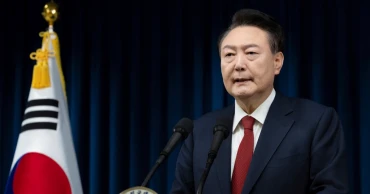
South Korean president apologises for imposing martial law
South Korea’s president apologized Saturday for public anxiety caused by his short-lived attempt to impose martial law earlier this week hours ahead of a parliamentary vote on impeaching him.
Yoon said in a brief televised address Saturday morning he won’t shirk legal or political responsibility for the declaration and promised not to make another attempt to impose it. He said he would leave it to his conservative political party to chart a course through the country's political turmoil, “including matters related to my term in office."
South Korean President Yoon under fire for Martial Law declaration
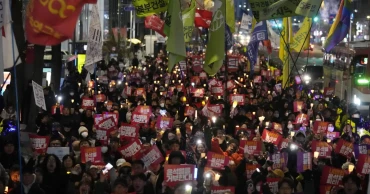
South Korean lawmakers are set to vote later Saturday on impeaching President Yoon Suk Yeol over his short-lived attempt to impose martial law, as protests grew nationwide calling for his removal.
It wasn’t immediately clear whether the motion submitted by opposition lawmakers would get the two-thirds majority required for Yoon to be impeached. But it appeared more likely after the leader of Yoon’s own party on Friday called for suspending his constitutional powers, describing him as unfit to hold the office and capable of taking more extreme action, including renewed attempts to impose martial law.
Who is South Korean leader Yoon who sought martial law?
Impeaching Yoon would require support from 200 of the National Assembly’s 300 members. The opposition parties that jointly brought the impeachment motion have 192 seats combined.
That means they would need at least eight votes from Yoon’s People Power Party. On Wednesday, 18 members of the PPP joined a vote that unanimously canceled martial law 190-0 less than three hours after Yoon declared the measure on television, calling the opposition-controlled parliament a “den of criminals” bogging down state affairs. The vote took place as hundreds of heavily-armed troops encircled the National Assembly in an attempt to disrupt the vote and possibly to detain key politicians.
Key facts about martial law and the push to impeach South Korea’s president
Parliament said Saturday that it would meet at 5 p.m. It will first vote on a bill appointing a special prosecutor to investigate influence peddling allegations surrounding Yoon's wife, and then on impeaching Yoon.
The turmoil resulting from Yoon’s bizarre and poorly-thought-out stunt has paralyzed South Korean politics and sparked alarm among key diplomatic partners, including neighboring Japan and Seoul’s top ally the United States, as one of the strongest democracies in Asia faces a political crisis that could unseat its leader.
Opposition lawmakers claim that Yoon’s martial law declaration amounted to a self-coup and drafted the impeachment motion around rebellion charges.
The PPP decided to oppose impeachment at a lawmakers' meeting, despite pleas by its leader Han Dong-hun, who isn’t a lawmaker and has no vote.
Following a party meeting on Friday, Han stressed the need to suspend Yoon’s presidential duties and power swiftly, saying he "could potentially put the Republic of Korea and its citizens in great danger.”
Han said he had received intelligence that during the brief period of martial law Yoon ordered the country’s defense counterintelligence commander to arrest and detain unspecified key politicians based on accusations of “anti-state activities."
Hong Jang-won, first deputy director of South Korea’s National Intelligence Service, later told lawmakers in a closed-door briefing that Yoon called after imposing martial law and ordered him to help the defense counterintelligence unit to detain key politicians. The targeted politicians included Han, opposition leader Lee Jae-myung and National Assembly speaker Woo Won Shik, according to Kim Byung-kee, one of the lawmakers who attended the meeting.
The Defense Ministry said it had suspended the defense counterintelligence commander, Yeo In-hyung, who Han alleged had received orders from Yoon to detain the politicians. The ministry also suspended Lee Jin-woo, commander of the capital defense command, and Kwak Jong-geun, commander of the special warfare command, over their involvement in enforcing martial law.
Former Defense Minister Kim Yong Hyun, who has been accused of recommending Yoon to enforce martial law, has been placed under a travel ban and faces an investigation by prosecutors over rebellion charges.
Vice Defense Minister Kim Seon Ho, who became acting defense minister after Yoon accepted Kim Yong Hyun’s resignation on Thursday, has testified to parliament that it was Kim Yong Hyun who ordered troops to be deployed to the National Assembly after Yoon imposed martial law.
1 year ago
South Korean President Yoon under fire for Martial Law declaration
South Korean President Yoon Suk Yeol’s legacy may now hinge on his controversial decision to impose martial law, citing vague claims of “anti-state forces” influenced by North Korea. The move has sparked political outrage and raised questions about the motivations behind his decision, as he faces impeachment proceedings and mounting criticism.
A Career Rooted in LawYoon, a conservative leader and former prosecutor, ascended to the presidency in 2022 after a meteoric rise in politics. Despite his legal expertise and reputation for being tough and uncompromising, critics argue that his temperament and reliance on a close-knit group of loyalists make him ill-suited for high-level leadership.
Born to academics, Yoon studied law at Seoul National University. In 1980, as a student, he participated in a mock trial condemning dictator Chun Doo-hwan, only to flee to the countryside when martial law was extended. This early brush with military rule contrasts sharply with his current actions.
Impulsive Leadership StyleObservers describe Yoon as impulsive and emotionally driven. His presidency has been marked by friction with an opposition-controlled parliament, scandals involving him and his wife, and escalating tensions with North Korea.
Choi Jin, director of the Institute of Presidential Leadership in Seoul, noted, “President Yoon tends to handle issues with a small group of loyalists and expresses emotions too directly.”
A Presidency Defined by TensionYoon’s declaration of martial law is seen as a response to prolonged gridlock with the liberal opposition. He accused his political rivals of undermining his administration by attempting to impeach officials and blocking next year’s budget. He also labeled them “North Korea followers” plotting rebellion.
Read: Who is South Korean leader Yoon who sought martial law?
The opposition-controlled parliament has been a significant obstacle for Yoon, who narrowly won the presidency in 2022 in one of South Korea’s closest elections. His tenure has been fraught with domestic political strife and bitter rhetoric on both sides.
Scandals and CriticismYoon’s administration has faced multiple scandals, including allegations of influence-peddling involving him and his wife. Critics argue that his martial law declaration was an attempt to distract from these controversies.
“Whether Yoon will survive politically or not, his declaration of martial law was a desperate move to shift focus,” Choi added.
North Korea and the Return to Hardline PoliticsYoon’s presidency has also been defined by a hardline stance against North Korea. Early efforts to offer economic incentives in exchange for denuclearization were met with hostility. Pyongyang ramped up weapons tests and personal insults, calling Yoon a “diplomatic idiot.”
North Korea’s perceived role in domestic destabilization echoes South Korea’s past, when authoritarian leaders used the threat from the North to suppress dissent. Yoon’s martial law declaration has revived fears of a return to those times.
Read more: Key facts about martial law and the push to impeach South Korea’s president
A Troubled LegacyYoon’s decision to invoke martial law has raised alarms in South Korea’s vibrant democracy, with many questioning the legitimacy of his claims. Whether this move will define his presidency or mark its end remains uncertain, as public and political opposition mounts.
Source: With inputs from agencies
1 year ago
Who is South Korean leader Yoon who sought martial law?
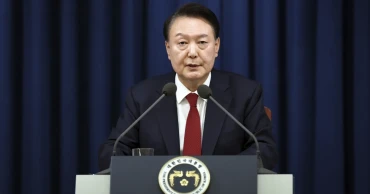
Yoon Suk Yeol's rise to the pinnacle of South Korean politics was built on decades of legal achievements, yet his legacy may ultimately be defined by one mystifying decision: deploying troops under martial law based on ambiguous claims that one of Asia's leading democracies faced an existential threat, report AP.
What in Yoon’s background hinted at this dramatic turn?
Yoon, a staunch conservative and a veteran prosecutor, transitioned from a political newcomer to the presidency in 2022. His election marked the end of five years of liberal governance characterised by unsuccessful attempts to address North Korea’s nuclear ambitions and economic stagnation.
However, Yoon’s presidency has been marred by relentless friction with an opposition-controlled parliament, threats from North Korea, and scandals involving him and his wife. Critics describe him as impulsive, thin-skinned, and overly reliant on a close circle of loyalists.
Key facts about martial law and the push to impeach South Korea’s president
Amid impeachment proceedings in parliament, no single factor explains his move to override democratic norms with martial law, justified by his vague claim that “anti-state forces” influenced by North Korea were active. Yet, threads from Yoon's background, including his intense animosity towards the liberal opposition and his confrontational approach to North Korea, shed light on this pivotal moment in his presidency.
A Turbulent Journey to Top Prosecutor
Despite 2 1/2 years as president, Yoon’s career has primarily revolved around law enforcement rather than politics.
Born in Seoul to two professors, Yoon studied law at Seoul National University. A defining moment came in 1980 when he enacted a mock trial against dictator Chun Doo-hwan during a university event, sentencing him to life imprisonment. This act forced Yoon into hiding as Chun extended martial law and deployed troops to the university.
Yoon later returned to Seoul to pursue a nearly three-decade career as a state prosecutor, earning a reputation for being tough and unyielding.
South Korean Defence Minister resigns
A Confrontational Style
Yet, his leadership style has drawn criticism for being unsuitable for high office.
“President Yoon isn’t well-prepared and acts impulsively,” said Choi Jin, director of the Seoul-based Institute of Presidential Leadership. “He shows his emotions openly and tends to operate within a tight-knit group, sidelining broader consensus.”
This trait was evident during a 2013 parliamentary audit, where Yoon, then a senior prosecutor, accused his superiors of pressuring him to stop investigating allegations of election interference by the country’s spy agency. His bold declaration, “I’m not loyal to (high-level) people,” led to his demotion.
Following the impeachment of conservative President Park Geun-hye in 2017, liberal President Moon Jae-in elevated Yoon to head of a key prosecution office, which investigated Park. Moon later appointed Yoon as South Korea’s top prosecutor.
A Political Neophyte
Yoon only entered politics about a year before his presidential victory, parting ways with Moon over a deadlock involving prosecution reforms. Moon’s allies accused Yoon of using the probe to bolster his own political ambitions.
In 2022, Yoon narrowly defeated liberal firebrand Lee Jae-myung in South Korea’s closest presidential race, marred by vitriolic exchanges. Yoon likened Lee’s party to “Hitler” and “Mussolini,” while Lee’s allies called Yoon “a beast” and mocked his wife’s alleged cosmetic surgery.
Domestic Discord
Yoon’s presidency has been dominated by political gridlock and acrimony. His narrow electoral victory and his party’s inability to secure parliamentary control have exacerbated tensions.
The opposition, which retains parliamentary dominance until 2027, has repeatedly clashed with Yoon over legislative and budgetary issues. Yoon justified his martial law declaration by accusing the opposition of plotting rebellion, citing their impeachment efforts against his officials and budgetary obstructions.
Scandals have further eroded Yoon’s approval ratings. Last month, he denied involvement in an influence-peddling scandal linked to him and his wife, Kim Keon Hee. Separate footage purportedly shows Kim accepting a luxury gift from a pastor.
Choi speculates that Yoon’s “clumsy martial law” attempt may have been an effort to distract from these controversies.
“Yoon likely believed he had no other option to shake up the political landscape, but he failed,” Choi said.
A Hardline Standoff with North Korea
While domestic scandals have shaped Yoon’s presidency, his foreign policy has been marked by a hardline stance on North Korea.
Yoon initially proposed economic incentives to encourage North Korea to abandon its nuclear programme. However, relations soured as Pyongyang intensified weapons testing and threats. By last year, North Korea was openly mocking Yoon, calling him “a diplomatic idiot” and sending balloons filled with trash over the border, some reaching the presidential compound.
Yoon’s invocation of North Korea as a domestic threat echoes South Korea’s authoritarian past, when strongmen used fears of northern aggression to suppress political dissent.
1 year ago