asia
Adani group commits to compliance after US bribery charges: Gautam Adani
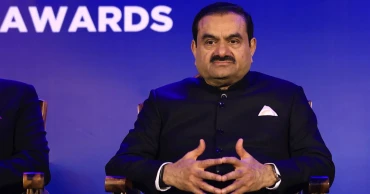
Indian tycoon Gautam Adani said his conglomerate is committed to “world-class regulatory compliance” after being indicted in the US on fraud charges and an alleged bribery scheme worth millions of dollars, his first remarks since the accusations surfaced.
Adani, 62, is one of Asia’s richest men and perceived as close to Prime Minister Narendra Modi. He was thrust into the spotlight on November 20 when US prosecutors in New York charged him and seven of his associates with securities fraud, conspiracy to commit securities fraud, and wire fraud, as well as duping investors by concealing that his company’s huge solar energy project on the subcontinent was being facilitated by bribes.
They were accused of allegedly paying or planning to pay about $265 million in bribes to government officials to help secure contracts and financing amounting to billions of dollars.
Adani fraud allegations rock Indian Parliament as opposition demands probe into billionaire's firms
“This is not the first time we have faced such challenges. What I can tell you is that every attack makes us stronger. And every obstacle becomes a stepping stone for a more resilient Adani Group,” Adani said late Saturday at an awards ceremony in the northern Indian city of Jaipur.
The businessman said roadblocks his group faces are “the price of pioneering.”
“The more bold your dreams, the more the world will scrutinize you,” he said. “In today’s world negativity spreads faster than facts. And as we work through the legal process, I want to reconfirm our absolute commitment to world-class regulatory compliance.”
The Adani Group, in a statement last week, said the allegations by the US Department of Justice and the US Securities and Exchange Commission against directors of Adani Green were baseless.
Adani’s imprint across India’s economy runs deep. His group is the country’s largest operator of coal mines and largest infrastructure developer, operating several ports and airports, and employing tens of thousands of people.
India's opposition protests billionaire Gautam Adani accused of US bribery, fraud
Despite his fossil fuel roots, Adani has ambitions to become the world’s largest player in renewable energy by 2030.
Analysts say a key factor in his meteoric rise over the years has been his knack for aligning his group’s priorities with those of the Modi government.
His critics accuse him of crony capitalism and gaining preferential treatment from the state which has facilitated him winning governmental contracts. The group has repeatedly denied the accusation.
The controversy has already affected Adani’s interests overseas.
Kenya’s president on November 21 canceled multimillion-dollar deals with the Adani Group for airport modernization and energy projects.
A Sri Lankan government spokesperson said earlier this week that it is reviewing projects to be implemented by the Adani Group in Sri Lanka. The group was set to invest over $440 million under a 20-year agreement to develop 484 megawatts of wind power in the northeastern regions of Sri Lanka and develop a terminal in the Colombo port.
Bangladesh’s interim government is also reviewing an agreement under which the Adani Group supplies electricity to Bangladesh from a power project in India.
1 year ago

China sentences journalist to 7yrs for espionage
A court in Beijing on Friday sentenced a prominent Chinese journalist to seven in years in prison for espionage, his family said.
Dong Yuyu, a commentator and editor, was taken away by police while meeting a Japanese diplomat at a restaurant in February 2022. He has been in police custody since then.
The Beijing Number 2 Intermediate People's Court read the verdict but did not share a copy with Dong's lawyers or family. No announcement was available on the court's website or its Weibo account.
The verdict named then-Japanese ambassador Hideo Tarumi and Shanghai-based chief diplomat Masaru Okada as agents belonging to an espionage organization, according the family's statement.
Dong had served as the deputy head of the editorial department at Guangming Daily, one of the five major state-owned papers in China. The paper was once considered more liberal than other state-backed papers. Dong also contributed to the Chinese edition of the New York Times.
In his published writings, including essays as well as opinion articles, Dong had voiced his support for constitutional democracy and political reform, which later were considered to be against the stance of the Communist Party.
He had contacts with foreign diplomats, scholars and other journalists as part of his decades-long career and counted Tarumi, the ambassador, as a friend.
Still, his family said he knew he was always watched by state security, and therefore sought to be as open as possible while meeting his Japanese or American contacts.
What to know about sudden rebel gains in Syria's long war
“With Yuyu’s conviction, every Chinese citizen, when dealing with the Japanese embassy — or perhaps any other foreign embassy and diplomat — will be expected to know that the Chinese government may consider those embassies to be ‘espionage organizations,’” said the family in a statement. “Every sensible Chinese citizen should be appalled by this reasoning.”
The U.S. Ambassador to China, Nicholas Burns, condemned Dong's conviction. “Punishing Dong for exercising his freedom of speech and the press, guaranteed by the PRC’s constitution for all its citizens, is unjust.”
1 year ago

North Korea's Kim vows steadfast support for Russia’s war in Ukraine
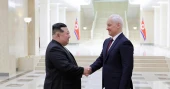
North Korean leader Kim Jong Un vowed his country will “invariably support” Russia’s war in Ukraine as he met Russia's defense chief, the North’s state media reported Saturday.
A Russia military delegation led by Defense Minister Andrei Belousov arrived in North Korea on Friday, amid growing international concern about the two countries’ expanding cooperation after North Korea sent thousands of troops to Russia last month.
The official Korean Central News Agency said that Kim and Belousov reached “a satisfactory consensus” on boosting strategic partnership and defending each country’s sovereignty, security interests and international justice in the face of the rapidly-changing international security environments in a Friday meeting.
Kim said that North Korea “will invariably support the policy of the Russian Federation to defend its sovereignty and territorial integrity from the imperialists’ moves for hegemony,” KCNA said.
North Korea has supported Russia’s invasion of Ukraine, calling it a defensive response to what both Moscow and Pyongyang call NATO’s “reckless” eastward advance and U.S.-led moves to stamp out Russia’s position as a powerful state.
Kim slammed a U.S. decision earlier in November to let Ukraine strike targets inside Russia with U.S.-supplied longer-range missiles as a direct intervention in the conflict. He called recent Russian strikes on Ukraine “a timely and effective measure" demonstrate Russia's resolve, KCNA said.
According to U.S., Ukrainian and South Korean assessments, North Korea has sent more than 10,000 troops to Russia and some of them have already begun engaging in combat on the frontlines. U.S., South Korean and others say North Korea has also shipped artillery systems, missiles and other conventional weapons to replenish Russia’s exhausted weapons inventory.
Both North Korea and Russia haven’t formally confirmed the North Korean troops’ movements, and have steadfastly denied reports of weapons shipments.
South Korea, the U.S. and their partners are concerned that Russia could give North Korea advanced weapons technology in return, including help to build more powerful nuclear missiles.
Last week, South Korean national security adviser Shin Wonsik told a local SBS TV program that that Seoul assessed that Russia has provided air defense missile systems to North Korea. He said Russia also appeared to have given economic assistance to North Korea and various military technologies, including those needed for the North’s efforts to build a reliable space-based surveillance system.
North Korean leader calls for expanding his nuclear forces in the face of alleged US threats
Belousov also met North Korean Defense Minister No Kwang Chol on Friday. During a dinner banquet later the same day, Belousov said the the two countries' strategic partnership was crucial to defend their sovereignty from aggression and the arbitrary actions of imperialists, KCNA said.
In June, Kim and Putin signed a treaty requiring both countries to provide immediate military assistance if either is attacked. It's considered the two countries’ biggest defense deal since the end of the Cold War.
1 year ago
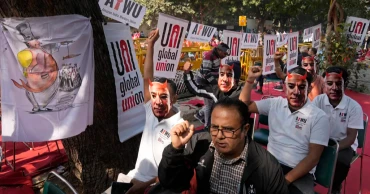
Amazon India workers strike on Black Friday for better pay
Amazon workers in India joined a global Black Friday strike, demanding higher wages and improved working conditions as the company gears up for its busiest shopping season.
Around 200 warehouse employees and delivery drivers gathered in New Delhi under the “Make Amazon Pay” campaign, with some wearing masks resembling Amazon founder Jeff Bezos. The protest mirrored similar walkouts at Amazon facilities worldwide, as workers called for better pay, safer workplaces, and union rights.
Manish Kumar, a 25-year-old warehouse worker participating in the rally, said their monthly basic salary of 10,000 rupees ($120) should be increased to at least 25,000 rupees ($295). “The work environment is very stressful,” he added.
Union leader Nitesh Das said the protests aim to draw government attention to their grievances.
In response, Amazon India dismissed the allegations, stating, “These claims are misleading and promote a false narrative.” The company emphasized that it offers industry-leading pay, safe working conditions, and modern facilities designed to ensure workers’ well-being.
“We have created over 1.5 million jobs globally and provide engaging workplaces, whether in offices or operations centers,” Amazon said in its statement.
The Amazon India Workers Union announced plans for similar demonstrations across the country and globally, including in the United States, Germany, Japan, and Brazil. The protests demand fair wages, union rights, and a commitment to sustainability. The union also plans to submit its demands to India’s Labor Minister, Mansukh Mandaviya.
New cases have been filed against Imran Khan and his wife
India’s rapidly growing gig economy has seen workers grapple with low wages and tough working conditions. In June 2023, the National Human Rights Commission issued a notice to Amazon India following reports of workers being forced to work without breaks during extreme heat. Amazon denied the claims.
Source: With inputs from agencies
1 year ago

New cases have been filed against Imran Khan and his wife
Pakistani police have filed multiple charges against former Prime Minister Imran Khan, his wife Bushra Bibi, and others for allegedly inciting violence, following a wave of protests and clashes that resulted in at least six deaths and numerous injuries, officials reported on Thursday.
Bushra Bibi, leading thousands of supporters from the northwestern region of Pakistan, marched to Islamabad to demand the release of her husband, who has been incarcerated since August 2023. Khan, who faces over 150 charges, is said to be the target of politically motivated cases, according to his supporters.
Bibi, a spiritual leader, fled when police launched a raid on Tuesday night to disperse the demonstrators. At the time, she was out on bail in a corruption case. The authorities have arrested nearly 1,000 protesters since Sunday in Islamabad and surrounding areas.
Six people, including four security personnel, were killed when a vehicle struck them, with Islamabad police blaming Khan's supporters for the incident. Authorities have filed charges against Khan, Bibi, and others in both Islamabad and Rawalpindi under anti-terrorism laws, accusing them of inciting attacks on security forces and disturbing the peace.
While Khan faces a lengthy list of charges, his political party, Pakistan Tehreek-e-Insaf (PTI), remains committed to pushing for his release. On Thursday, Planning and Development Minister Ahsan Iqbal and Information Minister Attaullah Tarar told international media that Khan’s supporters were attempting to seize control of the capital and that some were armed. They said weapons were seized during the midnight raid.
Read: Pakistan ends lockdown after dispersing Imran Khan supporters
Iqbal emphasized that security forces had used tear gas and batons to control the crowds and dismissed PTI’s claims that Khan’s supporters had been killed by live police fire, asserting that the protesters had used guns. This protest came on the heels of a deadly attack in Kurram district earlier in the month, where 42 Shiites were killed in gunfire, sparking retaliatory violence that also claimed many lives.
In new developments on Thursday, local police reported that eight people were killed in further sectarian violence in Kurram, according to police official Salim Shah.
Separately, Islamabad police filed terrorism charges against journalist Matiullah Jan, who was allegedly abducted by unknown men after his family reported him missing. Police claim Jan was arrested after refusing to stop at a checkpoint and for allegedly snatching a weapon from an officer while intoxicated, a charge Jan denied.
Read more: Imran Khan supporters breach lockdown in Pakistani capital, at least 6 people killed in violence
These events add to the ongoing political turmoil that has followed Khan’s removal from office in 2022. On Tuesday, political tensions caused Pakistan’s stock market to lose over $1.7 billion, but by Thursday, it had recovered, surpassing 100,000 points for the first time, with Prime Minister Shehbaz Sharif citing the rebound as evidence of an improving economy.
Sources: With inputs from agencies
1 year ago

NX Bangladesh conducts relief efforts in flood-stricken areas
Nippon Express Bangladesh Ltd. (hereinafter "NX Bangladesh"), a group company of NIPPON EXPRESS HOLDINGS, INC., distributed food and medical supplies, and conducted other relief efforts to assist parts of eastern Bangladesh affected by rain-driven flooding.
Heavy rains in Bangladesh that began in mid-August caused extensive flood damage across the country’s eastern region, impacting more than 5.8 million people. Highways and railway networks were damaged, and some areas saw mobile networks and other communications disrupted, leaving more than one million people isolated in locales cut off by the floodwaters.
NX Bangladesh carried out a relief distribution program in the six sub-districts of Feni District, one of the hardest-hit districts. Four employees transported relief supplies to areas lacking clean water and food due to flooded roads. Working with residents, they provided foodstuffs, emergency medicines, oral rehydration solution, drinking water, and other supplies to approximately 100 households. NX Bangladesh will continue helping to improve the lives of locals through various initiatives.
The entire NX Group sincerely hopes that the disaster-stricken areas will recover and rebuild as soon as possible, and it remains committed to fulfilling its responsibility for social development by connecting people, companies, and communities.
Source: NIPPON EXPRESS HOLDINGS, INC.
1 year ago
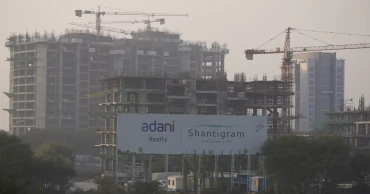
Adani fraud allegations rock Indian Parliament as opposition demands probe into billionaire's firms
India’s Parliament was disrupted for a third day Thursday by opposition parties protesting the government’s silence over allegations against billionaire Gautam Adani, who was recently indicted in the U.S. for alleged fraud and a scheme to pay bribes.
As Speaker Om Birla convened the powerful lower house of Parliament, opposition members shot up from their seats and crowded the aisles, shouting anti-government slogans. The Congress and other opposition parties have accused the government of Prime Minister Narendra Modi of protecting Adani, an Indian coal magnate.
"I don’t appreciate the manner of protest,” Birla said, adjourning the session over the opposition disruptions. The session later resumed but was adjourned for the day with the deadlock between the government and the opposition continuing.
Proceedings in Parliament's upper house were also adjourned, and the Congress party was unyielding in its stance.
The opposition called for a joint committee to investigate Adani’s companies, which include agriculture, renewable energy, coal and infrastructure.
Adani, 62, one of Asia’s richest men, was thrust into the spotlight last week when U.S. prosecutors in New York charged him a nd seven of his associates with securities fraud, conspiracy to commit securities fraud, and wire fraud. The charges allege that Adani duped investors in a massive solar project in India by concealing that it was being facilitated by bribes.
The indictment outlines an alleged scheme to pay about $265 million in bribes to Indian government officials.
ILO to launch new report highlighting wage trends, inequality today
The Adani Group, in a statement last week, said the allegations by the U.S. Department of Justice and the U.S. Securities and Exchange Commission against directors of Adani Green are baseless.
“The charges in the indictment are allegations and the defendants are presumed innocent unless and until proven guilty. All possible legal recourse will be sought,” the statement said.
In the absence of a statement by the Indian government, Amit Malviya, the governing Bharatiya Janata Party’s IT head, also said in a post on the social media platform X that the U.S. charges are “allegations and the defendants are presumed innocent unless and until proven guilty,” which critics interpreted as a show of support by the Modi government for the Adani Group.
The controversy has already affected Adani’s interests overseas. Kenya’s president canceled multimillion-dollar deals with the Adani Group for airport modernization and energy projects.
Adani will also face scrutiny in Sri Lanka and Bangladesh.
A Sri Lankan government spokesperson said earlier this week that it is reviewing projects to be implemented by the Adani Group in Sri Lanka. The group was set to invest over $440 million under a 20-year agreement to develop 484 megawatts of wind power in the northeastern regions of Sri Lanka and develop a terminal in the Colombo port.
Masato Kanda elected ADB President, succeeds Masatsugu Asakawa
“We are taking it seriously. The foreign ministry and the finance ministry are inquiring into it. We will take the decision according to the reports of both ministries,” spokesperson Nalinda Jayatissa said,
Bangladesh's interim government is reviewing an agreement under which the Adani Group supplies electricity to Bangladesh from a power project in India.
1 year ago
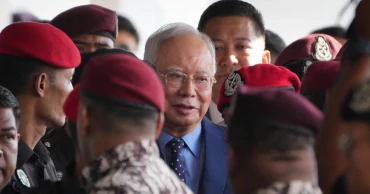
Malaysian court drops one of graft cases against former premier Najib Razak
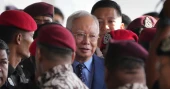
A Malaysian court on Wednesday dropped charges against jailed former Prime Minister Najib Razak over criminal breach of trust linked to the multibillion-dollar looting of a state fund.
Najib had already been convicted in his first graft case tied to the 1Malaysia Development Berhad state fund, or 1MBD, scandal and began serving time in 2022 after losing his final appeal in his first graft case.
But he faces other graft trials including Wednesday's case in which he was jointly charged with ex-treasury chief Irwan Serigar Abdullah with six counts of misappropriating 6.6 billion ringgit ($1.5 billion) in public funds. The money was intended as 1MDB’s settlement payment to Abu Dhabi’s International Petroleum Investment Company.
Namibia votes potentially electing its first female president
The Kuala Lumpur High Court discharged the pair after ruling that procedural delays and prosecutors’ failure to hand over key documents were unfair to the defense, said Najib’s lawyer, Muhammad Farhan. A discharge doesn’t mean an acquittal as prosecutors reserve the right to revive charges against them, he said.
“The decision today was based on the non-disclosure of critical documents, six years after the initial charges were brought up, which are relevant to our client’s defense preparation. Therefore the court correctly exercised its jurisdiction to discharge our client of the charges,” Farhan said.
Najib set up 1MDB shortly after taking power in 2009. Investigators allege more than $4.5 billion was stolen from the fund and laundered by his associates to finance Hollywood films and extravagant purchases. The scandal upended Najib’s government and he was defeated in the 2018 election.
Najib, 71, issued a rare apology in October for the scandal “under his watch” but reiterated his innocence.
Merkel reflects on Putin's tactics, US presidents' contrasts in her memoirs
Last month, he was ordered to enter his defense in another key case that ties him directly to the 1MDB scandal. The court ruled that the prosecution established its case on four charges of abuse of power to obtain over $700 million from the fund that went into Najib’s bank accounts between 2011 and 2014, and 21 counts of money laundering involving the same amount.
In addition, Najib still has another money laundering trial. His wife Rosmah Mansor and other senior government officials also face corruption charges.
1 year ago

Displaced people return to south Lebanon as ceasefire appears to hold
Long-displaced residents of south Lebanon started returning to their homes amid celebrations hours after a ceasefire between Israel and the Hezbollah militant group took effect early Wednesday morning.
The ceasefire has brought relief across the tiny Mediterranean nation, coming after days of some of the most intense airstrikes and clashes since the war began, though many wondered if the agreement to stop fighting would hold. Israel has said it will attack if Hezbollah breaks the ceasefire agreement, which was announced Tuesday.
Hundreds of cars made their way into southern Lebanon, defying a warning from the Israeli military to stay away from previously evacuated areas.
At least 42 people were killed by Israeli strikes across Lebanon on Tuesday, according to local authorities. Hezbollah also fired rockets into Israel on Tuesday, triggering air raid sirens in the country’s north.
The Israel-Hezbollah ceasefire marks the first major step toward ending the regionwide unrest triggered by Hamas’ attack on Israel on Oct. 7, 2023, but it does not address the devastating war in Gaza.
Hezbollah began attacking Israel a day after Hamas’ attack. The fighting in Lebanon escalated into all-out war in September with massive Israeli airstrikes across the country and an Israeli ground invasion of the south.
In Gaza, more than 44,000 people have been killed and more than 104,000 wounded in the nearly 14-month war between Israel and Hamas, according to Gaza’s Health Ministry.
1 year ago

Pakistan ends lockdown after dispersing Imran Khan supporters
Authorities reopened roads linking Pakistan's capital with the rest of the country, ending a four-day lockdown, on Wednesday after using tear gas and firing into the air to disperse supporters of imprisoned former Prime Minister Imran Khan who marched to Islamabad to demand his release from prison.
“All roads are being reopened, and the demonstrators have been dispersed," Interior Minister Mohsin Naqvi said.
Khan’s wife, Bushra Bibi, who was leading the protest, and other demonstrators fled in vehicles when police pushed back against the rallygoers following clashes in which at least seven people were killed.
The police operation came hours after thousands of Khan supporters, defying government warnings, broke through a barrier of shipping containers blocking off Islamabad and entered a high-security zone, where they clashed with security forces.
Tension has been high in Islamabad since Sunday when supporters of the former prime minister began a “long march” from the restive northwest to demand his release. Khan has been in a prison for over a year and faces more than 150 criminal cases that his party says are politically motivated.
Hundreds of demonstrators have been arrested since Sunday.
Bibi and leaders of her husband's Pakistan Tehreek-e-Insaf party fled to Mansehra in Khyber Pakhtunkhwa province, where the party still rules.
Khan, who remains a popular opposition figure, was ousted in 2022 through a no-confidence vote in Parliament.
1 year ago