asia
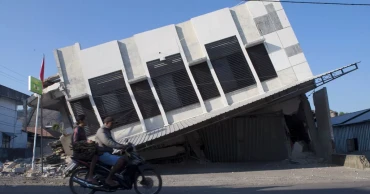
Death toll from Indonesia's 7.7-magnitude quake rises to 54
The death toll from a 7.7-magnitude earthquake that struck Indonesia's East Nusa Tenggara (NTT) province has risen to 54, the National Disaster Management Agency (BNPB) said Monday.
BNPB chief Suharyanto said authorities were continuing to assess casualties and damage, while rescue teams were providing medical assistance to hundreds of injured people.
As of Sunday, more than 12,000 people had been left homeless, with the earthquake damaging homes and public facilities. The Meteorology, Climatology and Geophysics Agency said aftershocks were continuing.
Authorities have deployed land, sea and air transportation, including 11 aircraft and helicopters, to deliver relief supplies and support evacuation efforts in remote areas, including Palue Island in Sikka regency.
A field hospital is also being prepared at Golo Dukal Stadium after the earthquake damaged Manggarai Regional Hospital and disrupted local health services.
2 months ago
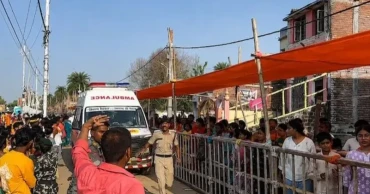
14 Killed in temple stampede and hotel fire in eastern India
A stampede at a Hindu temple and a hotel fire in eastern India have left 14 people dead and several others injured.
The stampede occurred Monday near Ashok Dham Temple in Lakhisarai, Bihar, where thousands of devotees had gathered during the holy month of Shravan. Seven people died and more than a dozen were injured. Preliminary reports suggest that an electrical wire may have snapped outside the temple, causing panic among worshippers who feared electrocution. As the crowd rushed to safety, part of a barricade collapsed, resulting in a deadly crush.
Hours earlier, a fire broke out at a four-story hotel in Tarapith, West Bengal, where many guests were pilgrims visiting nearby temples. The fire started on the ground floor while most people were asleep. At least seven people were killed, while several others suffered serious injuries, including burns and breathing difficulties caused by smoke. The hotel management suspected that an electrical component may have triggered the fire, but authorities are still investigating.
Crowd-related deaths are not uncommon in India during major religious gatherings, where huge numbers of worshippers often gather in limited spaces. Similar tragedies have occurred during religious festivals in recent years, including the Maha Kumbh festival in 2025, when at least 30 people died in a crowd crush.
2 months ago
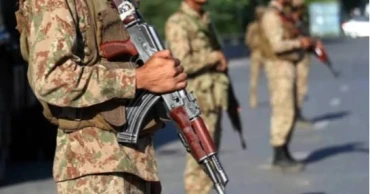
7 terrorists killed in security operation in Pakistan
Pakistani security forces killed seven terrorists during an intelligence-based operation in the southwest Balochistan province, the security sources said Sunday.
The operation was conducted in Lajay area of Kharan district following reports of terrorist presence, according to security sources.
A cache of modern weapons, ammunition and military equipment, along with two vehicles and a motorcycle, was recovered, while terrorist hideouts were destroyed, the sources said.
The killed terrorists were allegedly involved in robbery, extortion, kidnapping for ransom, targeted killings and planning suicide attacks in Kharan and surrounding areas.
Interior Minister Mohsin Naqvi stressed that the nation remains united and resolute in the fight against terrorism, saying intelligence-based operations will continue until the "last terrorist" is eliminated.
2 months ago

Former Bengal deputy speaker Asish Banerjee found dead at Trinamool office
Asish Banerjee, a former deputy speaker of the West Bengal Legislative Assembly and a close aide of Trinamool Congress chief Mamata Banerjee, was found dead at a party office in Birbhum district on Sunday, police said.
The body of Banerjee was found hanging at the Trinamool Congress office next to his residence in Rampurhat. Police sent the body for postmortem examination.
Banerjee served as deputy speaker during Mamata Banerjee’s tenure as West Bengal chief minister and represented Rampurhat as an MLA five times.
He contested the state assembly election earlier this year but lost to BJP candidate Dhruba Saha.
Banerjee lived in the Hattalapara area of Rampurhat. A large number of people gathered outside the Trinamool office after news of his death spread.
He had also served as West Bengal’s education and agriculture minister after the Trinamool Congress first came to power under Mamata Banerjee.
In June, Banerjee stepped down as chairman of the Trinamool Congress’ Birbhum district core committee, although he said he would continue as a general member of the party.
His death comes at a time of major political changes in West Bengal following the Trinamool Congress’ defeat after 15 years in power.
In the latest state election, the BJP won six of Birbhum district’s 11 assembly constituencies, compared with just one seat won by the party in 2021. The Trinamool had won 10 constituencies in the district in the previous election.
Several former Trinamool legislators and leaders are also facing corruption investigations and arrests following the party’s electoral defeat.
Police said further details about Banerjee’s death would be known after the postmortem examination and investigation.
Source: NDTV
2 months ago
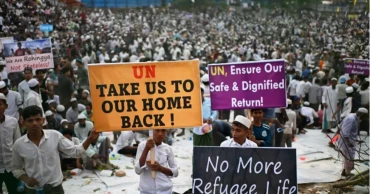
Myanmar to take back over 3 lakh Rohingya if security improves
Myanmar’s military-backed government said Saturday that more than 300,000 Rohingya refugees living in camps in Bangladesh are former residents of western Rakhine state and that it will accept their return once security conditions improve.
The Ministry of Foreign Affairs statement comes as the Rohingya refugee crisis enters its ninth year, with hundreds of thousands of refugees still living in camps in Bangladesh after fleeing Myanmar in August 2017 when the military launched a crackdown following attacks by a Rohingya insurgent group on guard posts in Rakhine.
The operation drove more than 700,000 Rohingya across the border into Bangladesh, joining hundreds of thousands of others already living there for decades in the wake of waves of previous violence perpetrated by Myanmar’s military.
The scale, organization and ferocity of the operation led to accusations of ethnic cleansing and genocide from the international community, including the U.N.
Myanmar, formerly known as Burma, does not recognize the Rohingya as one of the country’s 135 lawful ethnic minorities, instead referring to them as Bengalis to imply they are natives from Bangladesh and are illegally settled in Myanmar.
Myanmar said it had verified 426,545 of the 828,824 refugees on a list provided by Bangladesh as of the end of July, and determined that 308,797 of those verified were former residents of Rakhine.
The Ministry of Foreign Affairs said 113,507 people could not be verified and that 4,241 people were found to have been involved in what it called terrorist activities.
The statement said it will continue working with Bangladesh to receive verified former residents when the security situation in Rakhine becomes more stable.
The ministry also rejected claims that more than 1 million people were displaced from Rakhine, saying that more than 540,000 people crossed into Bangladesh after the violence in 2017 while more than 200,000 remained in northern Rakhine.
Myanmar and Bangladesh agreed to a two-year repatriation process in 2018. However, security in Myanmar worsened following an army takeover in 2021 that ousted the elected government of Aung San Suu Kyi, triggering widespread armed resistance. Plans to repatriate the refugees have not succeeded.
The renewed chaos brought about by fighting between the Rakhine-based ethnic Arakan Army group and the military over control of the region in 2023 forced more refugees to flee toward Bangladesh and elsewhere in a desperate move to save their lives. The Arakan Army controls much of Rakhine after capturing territory from the military in recent years.
In recent years, poor conditions in refugee camps, steep cuts to foreign aid and the lack of safe prospects for returning to Myanmar have led to an increasing number of Rohingya refugees attempting to make the dangerous ocean crossing to Malaysia and Indonesia on rickety boats.
Malaysian Prime Minister Anwar Ibrahim said in late July that Myanmar had agreed to take back 5,000 Rohingya refugees currently living in Malaysia as part of a repatriation program.
However, an official from Myanmar's foreign ministry, Han Win Aung, told The Associated Press at the time that the repatriation program was focused solely on verified Myanmar nationals currently held in detention centers in Malaysia and rejected reports that the government would accept Rohingya.
2 months ago
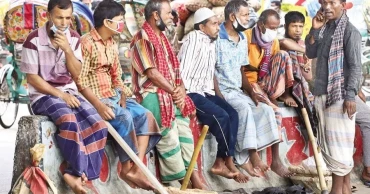
Indonesia hit by back-to-back powerful earthquakes
Indonesia was hit by two powerful earthquakes within about 12 hours on Saturday, with the first killing at least 38 people on the eastern island of Flores.
The magnitude-7.7 quake struck off Flores, leaving people trapped in buildings and triggering landslides that blocked roads in some of the hardest-hit areas.
About 12 hours later, a separate magnitude-6.8 earthquake struck thousands of kilometers away near Sumatra in western Indonesia.
There were no immediate reports of damage or casualties from the second quake.
2 months ago
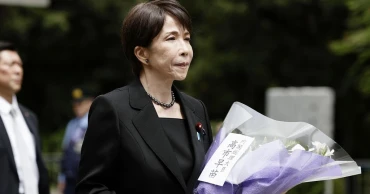
Japan PM skips Yasukuni Shrine on war surrender anniversary
Japanese Prime Minister Sanae Takaichi stayed away from Tokyo’s controversial Yasukuni Shrine on Saturday as Japan marked the 81st anniversary of its surrender in World War II, apparently seeking to avoid further tensions with China and South Korea.
However, in her address marking the anniversary, Takaichi did not refer to Japan’s wartime aggression in Asia or express remorse for atrocities committed during the war.
She paid tribute to those who died in the devastation of Hiroshima, Nagasaki and Okinawa, as well as Japanese troops who died on overseas battlefields, describing their sacrifice as the foundation of Japan’s peace and prosperity.
“Japan, since the end of the war, has consistently contributed to global peace and prosperity. We will never let the tragedy of the war be repeated,” she said, stressing that Japan could play an important role in addressing regional and global challenges as a reliable nation.
Defense Minister Shinjiro Koizumi, another Cabinet minister and three senior officials of Takaichi’s governing Liberal Democratic Party visited Yasukuni Shrine earlier Saturday.
The shrine honours Japan’s war dead, including 14 convicted Class-A war criminals, and visits by Japanese political leaders have long drawn strong criticism from China and South Korea, which regard them as signs that Japan has failed to properly confront its wartime past.
China’s Foreign Ministry lodged a protest with Japan over the shrine visits, accusing Japanese politicians of attempting to revise the historical judgment on wartime criminals, conceal Japan’s wartime atrocities and distort historical facts. Beijing called on Tokyo to seriously reflect on its wartime history and abandon militarism.
Relations between Japan and China have been strained since November, when Takaichi said a Chinese attack on Taiwan could create a situation threatening Japan’s survival and potentially require Tokyo to use force.
South Korean President Lee Jae Myung said Saturday that Seoul would continue pursuing pragmatic diplomacy based on national interests while expanding cooperation with Japan.
“Korea-Japan cooperation is now more important than ever,” he said, adding that the new bilateral relationship should also recognise those still suffering from historical grievances.
Takaichi had repeatedly said she would visit Yasukuni on Aug. 15, making her decision to stay away closely watched.
Koizumi, who has regularly visited Yasukuni on the anniversary of Japan’s wartime surrender, made the visit despite his position as defense minister in a government seeking to strengthen Japan’s military capabilities and expand weapons exports. He did not comment on the visit and walked past reporters at the shrine.
Three senior LDP officials also prayed at the shrine and made offerings on behalf of Takaichi. Party Secretary-General Shunichi Suzuki said he offered prayers with the prime minister’s thoughts for the spirits of the war dead in mind.
The move was also seen as an attempt to maintain Takaichi’s support among conservative and right-wing voters despite her decision not to visit personally.
Japanese Emperor Naruhito, meanwhile, struck a different tone in his address at a memorial ceremony in Tokyo. He expressed hope that the devastation of war would never be repeated and referred to the need to reflect on Japan’s past while keeping in mind feelings of deep remorse.
Naruhito also called for the memories of suffering during and after the war to be passed on to future generations.
Takaichi has previously resisted acknowledging Japan’s wartime aggression and has rejected calls for an apology over issues including forced labour and the exploitation of women as sex slaves for Japanese troops.
She has said that she belongs to a postwar generation and bears no responsibility for Japan’s wartime actions.
Her position is in line with a broader nationalist trend in Japan associated with former Prime Minister Shinzo Abe, whom Takaichi has regarded as a political mentor.
Since Abe’s government, Japanese prime ministers have largely avoided new apologies to Asian victims of Japan’s wartime atrocities. Former Prime Minister Shigeru Ishiba, however, expressed remorse over the war and described it as a mistake last year.
2 months ago
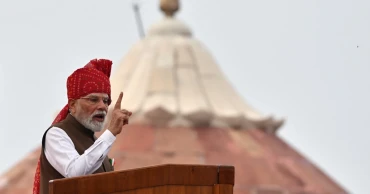
Modi says Maoist insurgency nearing end, warns of ideological threat
Indian Prime Minister Narendra Modi on Saturday said the country’s decades-old Maoist insurgency was nearing an end, but warned that people supporting the movement’s ideology could continue to pose a threat.
Addressing the nation on India’s 79th Independence Day from the Red Fort in New Delhi, Modi said years of security operations had pushed armed Maoist rebels to the brink of defeat.
He claimed that security forces had succeeded in removing armed Naxalites from forest areas, but warned of what he described as “dimagi Naxals,” or people who support the movement ideologically.
“We have succeeded in getting rid of armed Naxals in the jungles, but ‘dimagi Naxals’ are looking for opportunities to create violence and unrest,” Modi said, urging authorities to identify and isolate them.
The Maoist insurgency, also known as the Naxalite movement, has challenged state authority across parts of central and eastern India for decades. The conflict has claimed the lives of thousands of civilians, rebels and security personnel.
The movement began in 1967 with an uprising in Naxalbari village in eastern India and later developed into an armed rebellion inspired by Chinese revolutionary leader Mao Zedong. It has traditionally claimed to represent landless farmers, poor rural communities and Indigenous people.
Modi said the insurgency had damaged the future of generations of young Indians and credited his government’s security and development measures with reducing Maoist violence significantly since he came to power in 2014.
The prime minister also announced measures aimed at strengthening India’s self-reliance in areas including defence and agriculture, with a particular emphasis on young people.
He highlighted initiatives such as artificial intelligence skills training and free online coaching for competitive examinations, without directly referring to recent youth-led protests that posed a rare challenge to his government.
Modi said India had transformed from a “fragile” economy into the world’s fastest-growing major economy over the past decade. He also reiterated his government’s goal of making India a developed nation by 2047, marking 100 years of independence.
The term “dimagi Naxal” is similar to the politically contentious phrase “urban Naxal,” which Modi and leaders of his Bharatiya Janata Party have previously used for activists, academics, intellectuals and other critics.
Critics have accused the government of using such labels to stigmatise dissent.
International rights organisations, including Amnesty International and Human Rights Watch, have also criticised the Indian government over its use of anti-terror laws, sedition-related provisions and foreign-funding regulations, alleging that they have been used against civil society groups, activists and journalists critical of government policies.
2 months ago
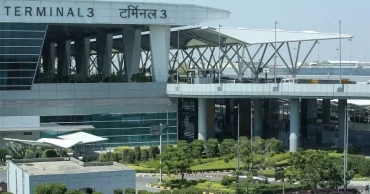
Delhi High Court, Airport receive bomb threats ahead of Independence Day
Security has been beefed up in the Indian capital after the Delhi High Court, Indira Gandhi International Airport, and several other key installations received bomb threats via email on Friday, just a day before the country’s 80th Independence Day celebrations.
The threatening email, titled "Blast Delhi High Court @2:11 PM" and sent in the name of the separatist movement "Khalistan," detailed plans to blow up multiple locations across the city. The message claimed that members of the movement, which seeks to create an independent sovereign state for Sikhs, have already reached Delhi.
According to the email, a bomb is set to explode at the Delhi High Court on Saturday afternoon at 2:11 PM, followed by blasts at various district courts an hour later. The message asserted that the attacks are a response to cases being heard in Delhi courts, alleging that the judiciary only hears cases against Sikhs.
Beyond the courts and IGI Airport Terminal 3, threats were issued for six other locations: Jamnagar House, the Jhandewalan building, the Saket office, the District Magistrate's Office, and the Sub-Divisional Magistrate (SDM) Office in Delhi Cantt. The email also threatened the Delhi Metro and trains bound for Ambala.
Indian authorities have dispatched fire tenders and security teams to all mentioned sites. While intensive investigations are currently underway, officials confirmed that nothing suspicious has been found so far.
With inputs from NDTV
2 months ago

Air India makes dope tests mandatory for all pilots
Air India has ordered a mandatory dope test for all its pilots days after a captain, found responsible for mid-air turbulence, tested positive for marijuana, multiple local media reports said Thursday.
According to local television news channel NDTV, the dope test is mandatory for both Air India and Air India Express pilots.
The tests will be conducted concurrently with training at the Gurugram academy, post-flight at Air India's flight briefing centers and offices, the media report said.
Earlier this month, 17 people, including four cabin crew members, onboard an Air India flight from Phuket to Delhi were injured after experiencing turbulence. The aircraft lost approximately 300 feet in altitude, triggering a mid-air scare among the passengers.
On Wednesday, the pilot-in-command tested positive for marijuana during a confirmatory test for psychoactive substances. Reports said he had earlier tested positive in a dope test conducted immediately after the flight landed.
2 months ago