asia

Japan's national population hits 42-year low
The total population of Japanese nationals in Japan fell below 120 million for the first time in 42 years to 119,736,483 as of Jan. 1 this year, government data showed Wednesday.
The figure marked a decline of 917,000 people compared to the previous year, the largest drop since comparable data became available in 1968, according to data from the Ministry of Internal Affairs and Communications.
Of Japan's 47 prefectures, Tokyo was the only one that recorded an increase of 0.09 percent in the number of Japanese nationals, data showed.
The number of foreign residents, meanwhile, increased 354,000 to a record 4,031,159. The figure is the highest since the ministry began taking count in 2013.
Japan's total population, including foreign residents, stood at 123,767,642, down by approximately 563,000 from the previous year. Population growth was reported only in Tokyo, Chiba and Osaka prefectures.
5 days ago
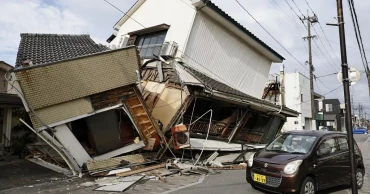
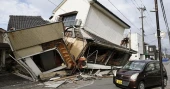
Japan quake death toll rises to 18
The death toll from a powerful earthquake in southwestern Japan has risen to 18 as soldiers and emergency workers continued searching through collapsed buildings and debris for survivors, authorities said Wednesday.
The magnitude 7.1 earthquake struck the Kumamoto region on Kyushu, Japan's southern main island, on Tuesday, leaving at least 62 people injured, including six critically, according to the prefectural government. Officials warned the number of casualties could increase as search operations continue.
Rescuers worked in sweltering heat to search damaged homes and commercial buildings, though authorities said it remained unclear how many people were still missing.
One of the hardest-hit locations was an Aeon Mall shopping centre in Kashima city, where thousands of shoppers were present when the quake struck. The company said about 3,000 customers were evacuated before a gas explosion occurred in another section of the mall.
The mall's second floor collapsed, trapping several people. Aeon President Akio Yoshida said four people were confirmed dead at the site, while three others remained missing.
"We take it seriously that an explosion happened and precious lives were lost," Yoshida told a news conference.
Elsewhere, a collapsed chimney at a Nippon Paper Industries factory in nearby Yatsushino killed five workers and injured others. Authorities said seven people were rescued from the debris, while four remained trapped.
In the first reported foreign fatality, a Vietnamese technical intern was killed after a crane collapsed at the factory where he worked. Seven other Vietnamese interns escaped safely, while the wife of one worker was injured when a wall fell and was receiving hospital treatment.
The earthquake also disrupted essential services, leaving nearly 34,900 households without electricity and about 15,000 without running water. More than 8,800 residents took shelter at over 400 evacuation centres, where authorities were installing additional power sources to provide air conditioning.
Japan's Self-Defense Forces joined rescue teams in the search operation, assisted by firefighters from Taiwan.
Prime Minister Sanae Takaichi said the government was making every effort to locate survivors and deliver food and other emergency supplies to the worst-hit areas.
Bullet train services remained suspended, while some flights were canceled despite the reopening of Aso Kumamoto Airport.
Kumamoto was also devastated by a major earthquake in 2016 that killed at least 50 people. Japan is among the world's most earthquake-prone countries.
5 days ago
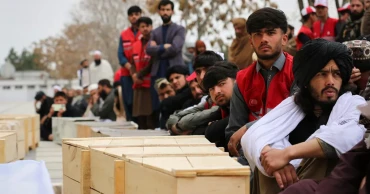
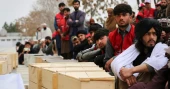
Nearly 500 Afghan civilians killed in cross-border fighting with Pakistan since October: UN
Nearly 500 Afghan civilians have been killed and more than 1,200 injured in months of cross-border fighting between Afghanistan and Pakistan, the United Nations said Tuesday, warning of mounting civilian casualties and worsening human rights conditions in Afghanistan.
In its latest human rights report, the UN Assistance Mission in Afghanistan (UNAMA) said it documented 499 civilian deaths and 1,216 injuries between October and the end of June as clashes between the neighboring countries intensified despite international efforts to ease tensions.
The report cited incidents in which civilians attempting to rescue victims from airstrikes were hit by subsequent attacks. In one of the deadliest incidents, two successive airstrikes on a residential building in Afghanistan’s eastern Paktia province on June 28 killed 22 people, including five children, and wounded at least 185 others. Most of the casualties occurred during the second strike as residents tried to rescue survivors from the first.
UNAMA Human Rights Director Fiona Frazer stressed that international humanitarian law prohibits attacks on first responders, medical personnel and humanitarian workers carrying out rescue operations.
Fighting between the two countries has escalated in recent months. Tensions sharply increased in February after Afghan forces launched raids into Pakistan following Pakistani airstrikes inside Afghanistan, prompting Islamabad to describe the situation as an "open war."
Pakistan has repeatedly accused Afghanistan of sheltering militants, including the Tehrik-e-Taliban Pakistan (TTP), responsible for deadly attacks inside Pakistan. Kabul has consistently rejected the allegations.
The UN report also referred to a March airstrike on a drug treatment center in Kabul that reportedly killed hundreds of civilians. Rights group Amnesty International has called for an investigation into the incident as a possible war crime.
Responding to the report, Pakistan’s Foreign Ministry maintained that its military operations targeted only militant hideouts and infrastructure linked to groups carrying out attacks in Pakistan. It did not address the reported civilian casualties.
Beyond the conflict, UNAMA expressed concern over Afghanistan’s deteriorating human rights situation, particularly for women and girls.
The report documented a crackdown in the western city of Herat in June, where at least 30 women were arrested for allegedly violating the Taliban’s dress code. At least one person was killed and several others injured after security forces opened fire during a rare protest against the detentions.
UNAMA also said officials from the Ministry for the Propagation of Virtue and the Prevention of Vice have instructed health facilities and businesses in several areas to deny services to women not accompanied by a male guardian.
Additionally, the report warned that newly introduced regulations governing marriage effectively permit child marriage by allowing marriage contracts to be arranged for minors, raising further concerns about the erosion of women's and children's rights under Taliban rule.
6 days ago

Iraq’s PM visits Turkey for talks on oil pipeline, security
Iraqi Prime Minister Ali al-Zaidi arrived in Turkey on Tuesday for high-level talks with President Recep Tayyip Erdogan, with discussions expected to focus on a proposed oil pipeline, security cooperation and broader bilateral ties.
According to Turkish officials, the leaders are set to discuss energy, trade, transportation, water management and regional security, while the Iraqi prime minister’s office said the meeting would also explore joint infrastructure projects aimed at strengthening cooperation between the two neighboring countries.
A key topic is a proposed pipeline linking Iraq’s southern oil hub of Basra to Haditha in western Iraq and onward to Turkey’s Mediterranean port of Ceyhan, with a further connection to Syria’s Baniyas port. The project is intended to reduce Iraq’s dependence on Gulf shipping routes, which remain vulnerable to regional tensions.
Al-Zaidi’s visit follows recent trips to Washington and Tehran. During his meeting with US President Donald Trump earlier this month, US companies signed agreements worth about $60 billion with Iraq, including energy and infrastructure projects designed to diversify the country’s oil export routes.
Security issues are also expected to feature prominently in the Ankara talks as Turkey continues efforts to end its decades-long conflict with the outlawed Kurdistan Workers’ Party (PKK), whose fighters have long been based in northern Iraq.
The PKK announced last year that it would disband and lay down its arms as part of an ongoing peace process. Turkey is preparing legislation that could include limited amnesty measures for some militants seeking to return home. The PKK has fought an insurgency against the Turkish state since 1984 and is designated a terrorist organization by Turkey, the United States and the European Union.
Following his Turkey visit, Al-Zaidi is scheduled to travel to Saudi Arabia on Thursday amid heightened regional tensions after Riyadh accused Iran-backed Iraqi militias of launching drone attacks against the kingdom.
The Iraqi leader has pledged to disarm non-state armed groups by the end of September, although analysts view the target as difficult given resistance from several powerful militias.
On Monday, Al-Zaidi ordered an investigation into the alleged drone attacks, reaffirming Iraq’s commitment to ensuring its territory is not used to launch attacks against neighboring countries.
The accused militias denied involvement, while the Islamic Resistance in Iraq, an umbrella group of Iran-backed factions, dismissed the Saudi allegations as fabricated and suggested the attacks were carried out by Yemen’s Houthi rebels. The group also warned that any Saudi retaliation would provoke a strong response.
6 days ago
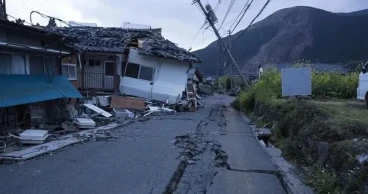
Magnitude 7.1 earthquake hits southern Japan, tsunami advisory issued
A preliminary magnitude 7.1 earthquake struck Kumamoto on Japan’s southern main island of Kyushu late Tuesday afternoon, prompting authorities to issue a tsunami advisory, the Japan Meteorological Agency said.
The advisory was issued for nearby Ariake Bay along the western coast of Kumamoto, located about 900 kilometres (560 miles) southwest of Tokyo.
Japan’s Nuclear Regulation Authority said no abnormalities were detected at three nearby nuclear power plants following the earthquake.
Kumamoto was struck by a deadly earthquake in 2016 that killed more than 50 people, injured around 1,800 and damaged or destroyed tens of thousands of homes.
6 days ago

Pakistan monsoon death toll exceeds 100 in a month as more heavy rain forecast
The death toll from monsoon rains and flash floods in Pakistan over the past month has crossed 100, while weather forecasters warned that more heavy rain is expected across the country later this week.
Pakistan’s National Disaster Management Authority said 109 people have died nationwide since June 26. Many of the deaths were caused by collapsing houses and roofs, with nearly half of the fatalities reported in the northwestern Khyber Pakhtunkhwa province along the Afghan border.
The latest figures came a day after the disaster management authority reviewed flood preparedness measures across the country.
Officials discussed plans to issue timely warnings to communities living along rivers so that residents can voluntarily move to safer areas or be evacuated before floodwaters inundate their communities.
Heavy rain lashed parts of Pakistan last week, including Lahore, the country’s cultural capital, where several neighbourhoods were flooded and commuters were forced to take lengthy detours.
Images shared on social media showed residents wading through floodwater, drawing criticism from people who questioned the government’s preparedness and response to extreme weather.
Authorities have warned in recent months that they cannot rule out a repeat of the extreme weather that triggered Pakistan’s devastating floods in 2022.
The disaster submerged about one-third of the country, killed 1,737 people and displaced millions.
6 days ago

House fire in Japan leaves 4 people dead
Four people, including two children, died in a house fire in southwestern Japan early Monday morning, local media reported.
According to public broadcaster NHK, firefighters received a report at around 5:30 a.m. local time that white smoke was coming from the second floor of a two-story wooden house in Imari City, Saga Prefecture. The blaze was extinguished at around 7 a.m. and did not spread to any neighboring buildings.
Police said two adults and two children were found inside the house and taken to the hospital unconscious. All four were pronounced dead shortly afterward.
Police believe the victims were members of the family living in the house. Authorities are working to confirm their identities while investigating the cause and circumstances of the fire.
7 days ago

‘Just the beginning, long way to go’: Abhijeet Dipke reflects on CJP movement after protest victory
Abhijeet Dipke, the face of India’s Cockroach Janta Party (CJP) movement, said the group’s recent success was only the beginning and that it had a long journey ahead, following the resignation of Education Minister Dharmendra Pradhan over allegations of exam paper leaks.
In a video message posted on his X account on Sunday morning, Dipke appeared relaxed after weeks of protests, saying he could finally rest without worrying about the next challenge.
“I could go to sleep and wake up in my bedroom without thinking about what to do next or what will happen till evening,” he said.
Recalling the 37-day protest campaign, Dipke described the period as “really, really difficult” but said there was “no panic” after the government accepted their demands and the movement called off its demonstrations.
“This is just the beginning. The Cockroach Janata Party has a long way to go,” he told his followers.
Dipke founded the CJP in May as a satirical response to a comment by India’s Chief Justice, but the initiative soon transformed into a nationwide youth movement over education reforms, unemployment and government accountability.
Thousands of supporters, who called themselves “cockroaches,” gathered at New Delhi’s Jantar Mantar protest site, demanding accountability over alleged irregularities in major entrance examinations, including NEET.
The protesters held Pradhan responsible for the exam paper leak crisis and the deaths of some students, and made his resignation one of their key demands. After weeks of demonstrations, Pradhan stepped down, while the government assured that no legal action would be taken against protesters. The CJP subsequently withdrew its agitation.
Reflecting on the movement, Dipke thanked supporters who stood by the campaign despite widespread doubts about its success.
Suffering from typhoid and fever, he also apologised for not being able to personally thank everyone who gathered at Jantar Mantar after the announcement.
“All the people who were waiting at Jantar Mantar for 37 days, I want to thank each and every one of you. I really, really, really appreciate what you did for this country,” he said.
Dipke also expressed gratitude to critics, saying their questions helped him improve and contributed to the movement’s ability to deliver results.
“I think that’s why we were able to deliver as well,” he added.
Source: NDTV
8 days ago

Typhoon Noul hits southern China, over 700,000 evacuated as flights canceled
Typhoon Noul made landfall in southern China early Sunday, bringing strong winds and heavy rainfall to Guangdong province and Hong Kong, forcing more than 700,000 people to evacuate and disrupting air and rail services.
China’s National Meteorological Center said Noul struck the coast of Huidong county in Huizhou city, Guangdong, around 3:50am Sunday. State media described it as the strongest typhoon to hit China so far this year.
Hong Kong’s Observatory said the storm had maximum sustained winds of 110 kilometres per hour near its centre as it moved inland over Guangdong, gradually weakening while continuing to affect the region with heavy rain and strong winds.
More than 715,000 people in Guangdong province were relocated as authorities placed the area on high alert, state media reported. Train services across the province were suspended on Sunday.
The weather authority warned that parts of southern Guangdong and southeastern Fujian provinces could experience heavy rainfall and strong winds over the weekend. State broadcaster CCTV reported that several trees were uprooted in coastal Huilai county.
Hong Kong’s airport authority said around 350 flights were canceled due to the storm. At least nine people were injured across the city during the typhoon period, according to local authorities.
Before reaching Hong Kong, parts of scaffolding attached to a high-rise building collapsed on Saturday afternoon, police said, though no injuries were reported initially.
Taiwan’s weather agency said Noul brought rainfall to parts of southern and eastern Taiwan before moving away from the island.
Earlier this month, Typhoon Bavi affected eastern China with strong winds and heavy rain, prompting the evacuation of more than 2 million people after making landfall on July 11. Another storm, Maysak, hit southern China on July 3.
8 days ago

China issues orange typhoon alert after Noul hits Guangdong coast
China’s National Meteorological Center issued an orange typhoon alert on Sunday after Typhoon Noul made landfall in southern Guangdong Province, bringing strong winds near its center.
The typhoon struck the province with maximum winds reaching Force 14 near its eye, according to the meteorological authority.
Later on Sunday morning, Noul weakened from a severe typhoon to a typhoon, the center said.
China follows a four-tier, color-coded warning system for typhoons, with red being the highest level, followed by orange, yellow and blue.
The weather authority also renewed a red alert for rainstorms and a yellow alert for severe convective weather on Sunday.
It urged local authorities to strengthen disaster prevention and emergency response measures, particularly against possible flash floods, landslides and mudslides caused by the storm.
8 days ago