asia

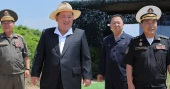
Kim oversees weapons tests aboard North Korea's new destroyer
North Korean leader Kim Jong Un has overseen a series of weapons tests aboard the country's newly built 5,000-ton destroyer Kang Kon, state media reported on Sunday, as Pyongyang continues its drive to strengthen its naval capabilities with nuclear-armed warships.
According to the official Korean Central News Agency (KCNA), Friday's tests included the launch of a nuclear-capable strategic cruise missile, live-fire exercises with the destroyer's main gun and automatic cannons, and evaluations of its electronic warfare systems, target-detection equipment and information-processing capabilities.
After observing the drills from shore, Kim instructed officials to complete the vessel's remaining sea trials and commission it into active service within two months, KCNA said.
The Kang Kon was repaired after being damaged during a failed launch ceremony in May last year. It was officially relaunched in June, although outside analysts have questioned whether the ship is fully ready for operational deployment.
The latest tests come shortly after North Korea commissioned its first 5,000-ton destroyer, the Choe Hyon, in late June. During the commissioning ceremony, Kim declared that efforts to build a nuclear-armed navy were progressing according to plan.
In recent years, North Korea has increasingly shifted its military focus from ballistic missile development to expanding its naval capabilities, including plans to build a nuclear-powered submarine and strengthen its maritime strike capacity.
Kim has also outlined plans to construct two new 5,000-ton destroyers each year over the next five years, alongside the development of a larger 10,000-ton warship.
South Korean officials and defence experts believe Russia may have provided technical assistance in building the destroyers as military cooperation between the two countries has deepened. However, some analysts remain skeptical about the vessels' operational effectiveness.
29 days ago
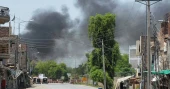
4 security personnel killed, 16 injured in suicide attack Pakistan
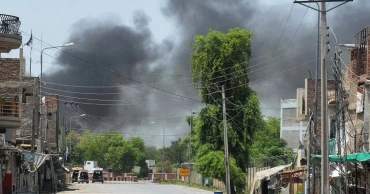
Four security personnel were killed and 16 others injured in a suicide vehicle-borne bomb attack targeting a Pakistan Coast Guards check post in Pakistan's southwestern Balochistan province, official sources said on Saturday.
The attack occurred at around 6:40 pm local time on Friday when a truck loaded with explosives rammed into the Pakistan Coast Guards check post in Jiwani city of Gwadar district.
The powerful blast demolished the check post building, killing three Pakistan Coast Guards personnel and one Pakistan Army soldier at the scene.
The injured included eight Pakistan Army soldiers and eight Coast Guards personnel. Several of them were reported to be in critical condition.
According to the sources, a group of militants positioned near the check post opened fire immediately after the explosion before fleeing the area.
Police, security forces and rescue teams rushed to the scene, sealed off the area and took the injured to a nearby hospital for treatment.
Security forces launched a search operation while investigators began collecting evidence from the site.
The outlawed Balochistan Liberation Army claimed responsibility for the attack, the sources said.
No further details were immediately available as the investigation and rescue operation continued.
30 days ago
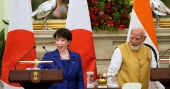
India, Japan agree to deepen defense and economic security cooperation
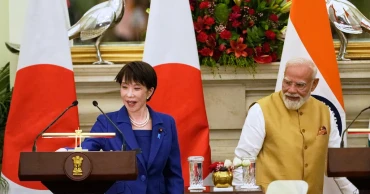
India and Japan have announced a series of agreements to strengthen cooperation in defense, economic security and maritime affairs following talks between Indian Prime Minister Narendra Modi and his Japanese counterpart, Sanae Takaichi, in New Delhi on Thursday.
Speaking after the meeting, Modi said the two countries will work together on naval radio antenna systems and have adopted a joint roadmap on economic security. The leaders also agreed to expand cooperation in artificial intelligence, shipbuilding, biogas, semiconductors and other critical technologies.
"India and Japan view economic security as a shared security interest," Modi said.
Japan is one of India's largest foreign investors and has supported several major infrastructure projects, including the Mumbai-Ahmedabad high-speed rail line. Around 1,400 Japanese companies operate in India, with nearly half of them engaged in manufacturing.
According to Indian government data, two-way trade between the two countries reached $27.5 billion during India's 2025-26 fiscal year. Japanese investment totaled $3.2 billion between April and December 2025.
Takaichi arrived in New Delhi for a three-day visit to attend the 16th annual India-Japan summit. Both countries are seeking to strengthen their partnership in the Indo-Pacific following Modi's visit to Tokyo last year, when Japan pledged to more than double its investment in India to over $61 billion during the next decade.
India and Japan are also members of the Quad, along with the United States and Australia. The grouping focuses on regional security, maritime cooperation and defense, and is widely seen as a counterbalance to China's growing influence in the Indo-Pacific.
Takaichi said New Delhi and Tokyo share a commitment to Japan's vision of a free and open Indo-Pacific based on freedom of navigation and respect for international law.
"Expansion of maritime security cooperation is especially important for regional peace and stability," she said.
Responding to the initiative, Chinese Foreign Ministry spokesperson Guo Jiakun said on Thursday that some countries spoke of "freedom and openness" while pursuing "confrontation and division."
He said such an approach went against the region's desire for peace, development and cooperation.
"Asia-Pacific needs stability, not turmoil; focus on cooperation, not division," Guo told a regular news briefing in Beijing.
1 month ago
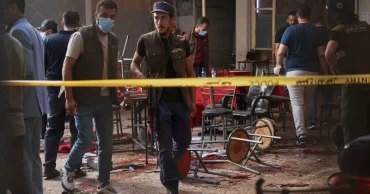
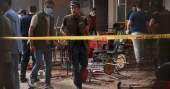
Blast at Damascus cafe in Syria kills at least 6, injures 22
At least six people were killed and 22 others injured after an explosive device detonated at a cafe in the Syrian capital on Thursday, according to the country's Health Ministry.
The blast occurred near Damascus' main courthouse complex, the ministry said, according to the state-run Al-Ikhbariya television network.
No group immediately claimed responsibility for the attack.
Security forces sealed off the area shortly after the explosion and launched an investigation. Damascus Governor Maher Idlibi said preliminary indications suggested the device was a "primitive" explosive and pledged that those responsible would be brought to justice. He added that the Interior Ministry would soon release its initial findings.
Videos circulating on social media showed several injured people lying outside the cafe as police and emergency responders arrived at the scene. Ambulances treated victims on site before transporting those with serious injuries to nearby hospitals.
Jalal Aljanani, who owns a restaurant next to the cafe, said he rushed to help after hearing the explosion.
He said local residents carried victims to vehicles before emergency services arrived, adding that many had suffered severe blast injuries and were bleeding heavily.
The attack comes as Syria's authorities continue efforts to improve security following the overthrow of the Assad government in December 2024.
Since taking power, President Ahmad al-Sharaa's administration has intensified operations against militants linked to the extremist Islamic State group, saying it aims to prevent attacks in Damascus and other parts of the country.
Although government forces have regained control over much of Syria and security agencies regularly announce raids on suspected militant cells, sporadic attacks continue. Incidents, including a suicide bombing at a church in July 2025, have heightened security concerns among residents in the capital and elsewhere.
1 month ago

9 monks killed after pickup truck driven by 11-year-old hits pilgrimage group in Thailand
Nine Buddhist monks were killed and 13 others injured after a pickup truck driven by an 11-year-old boy ploughed into a group of monks during a pilgrimage in northeastern Thailand on Thursday, officials said.
The monks, from Mukdahan province, were walking to neighboring Ubon Ratchathani province as part of a 260-kilometre pilgrimage when the crash occurred about 30 minutes after they began their journey.
According to provincial authorities, 35 monks were taking part in the pilgrimage. Five died at the scene, while four others succumbed to their injuries at a hospital.
Thirteen injured monks were admitted to hospital, with three reported to be in critical condition.
Security camera footage released by the Ruam Jai Mukdahan Rescue Association showed the monks walking in a single file along the roadside moments before the pickup truck veered off the road and struck them.
Police said the 11-year-old driver has been taken into custody and will be questioned in the presence of child protection officials.
Authorities have launched an investigation into the cause of the crash. Preliminary accounts from surviving monks indicated that the vehicle was swerving before leaving the roadway and hitting the group.
1 month ago

Syria's first post-Assad Parliament takes shape as interim president appoints lawmakers
Syria moved closer to restoring its legislative institutions on Wednesday as interim President Ahmad al-Sharaa appointed 70 members to the country's first Parliament since the fall of the Assad government.
The appointments complete the formation of the 210-member legislature, marking another step in Syria's political transition following the end of the Assad family's decades-long rule and years of conflict that claimed hundreds of thousands of lives.
Mohammed Taha al-Ahmad, head of Syria's electoral committee, said the new Parliament will convene for its inaugural session on Monday. During the first sitting, members will take the oath of office and elect the Parliament's leadership.
Among the 70 lawmakers appointed by al-Sharaa are 15 women, increasing the total number of female legislators in the assembly to 22.
The first phase of parliamentary elections was held in October but excluded the southern province of Sweida, where Druze armed groups opposed to the central government remain influential, as well as northeastern Syria, which was then under Kurdish control.
Elections were later held in northeastern Syria in May after government forces regained control of the region following intense clashes earlier this year.
Although voting has yet to take place in Sweida, al-Sharaa included two representatives from the predominantly Druze province in his latest appointments.
According to al-Ahmad, the new Parliament will serve a 30-month term. Its key responsibilities will include drafting a new electoral law and laying the groundwork for future nationwide elections.
Syria has been without a functioning Parliament since the December 2024 offensive led by al-Sharaa's former Hayat Tahrir al-Sham group, which toppled the Assad family's more than five decades in power.
1 month ago

Roof collapse at Lahore tutoring centre kills 14 children
At least 14 schoolchildren were killed and eight others injured after the roof of an under-construction tutoring centre collapsed in Pakistan's eastern city of Lahore on Tuesday.
Faisal Kamran, Senior police official, said rescue teams were continuing search operations amid concerns that more children could still be trapped beneath the rubble.
The injured children were taken to a hospital for treatment, he said, adding that authorities had arrested the owner of the tutoring centre and another individual in connection with the incident.
According to Kamran, the tutoring centre was operating in an aging building, and the roof of its unfinished second floor apparently gave way due to poor-quality construction.
Pakistan's President Asif Ali Zardari expressed deep sorrow over the tragedy. In a statement, he conveyed condolences to the bereaved families, prayed for the swift recovery of the injured and stressed the need for effective safety measures to prevent similar incidents in the future.
Building collapses occur frequently in Pakistan because construction standards are often inadequately enforced. Many buildings are erected using substandard materials, while safety regulations are routinely overlooked in an effort to reduce construction costs, making such accidents a recurring concern across the country.
1 month ago
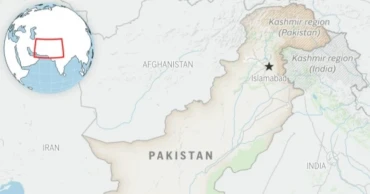
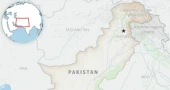
Pakistan says 29 militants killed in Afghan border operation
Pakistani security forces Sunday carried out a ground operation along the Pakistan-Afghanistan border, followed by “calibrated strikes” against militant hideouts and safe havens, killing 29 fighters, officials said.
In a post on X, Information Minister Attaullah Tarar said the operation was launched in response to multiple militant attacks across the country. There was no immediate response from Afghanistan.
Pakistan has witnessed a surge in militant attacks targeting police and security forces in recent years. Authorities have blamed the Pakistani Taliban, known as Tehrik-e-Taliban Pakistan, or TTP, and allied militant groups for most of the violence.
It comes a day after militants armed with guns and explosives targeted the regional headquarters of the paramilitary Rangers in the southern port city of Karachi, killing three soldiers. Security forces killed three attackers and arrested another assailant, whom the military identified as an Afghan national in wounded condition.
Jamaat-ul-Ahrar, a breakaway faction of the Pakistani Taliban, claimed responsibility for the Karachi attack in a statement Saturday night.
Tarar said Pakistan’s latest operation along the Afghan border targeted hideouts and safe havens of the Pakistani Taliban. The Pakistani Taliban are a separate militant group from the Afghan Taliban, although the two are allies. The Afghan Taliban returned to power in neighboring Afghanistan in 2021.
The latest operations are likely to further strain already tense relations between Islamabad and Kabul.
1 month ago

5.9-magnitude earthquake jolts Pakistan, Afghanistan; no casualties reported
A 5.9-magnitude earthquake struck parts of Pakistan and neighbouring Afghanistan on Saturday, triggering panic among residents who rushed out of their homes, officials said.
There were no immediate reports of casualties or property damage.
According to the Pakistan Meteorological Department, the quake's epicentre was located in Afghanistan's Hindu Kush region. Tremors were felt in Pakistan's capital Islamabad, the eastern province of Punjab, the northwestern province of Khyber Pakhtunkhwa bordering Afghanistan, and Pakistan-administered Kashmir.
Authorities in Khyber Pakhtunkhwa said district administrations had been put on alert following the earthquake.
Anwar Shahzad, spokesperson for the Provincial Disaster Management Authority, said preliminary assessments had not found any reports of deaths, injuries or damage.
Pakistan is situated on an active seismic belt and experiences frequent earthquakes. In 2005, a devastating 7.6-magnitude earthquake killed tens of thousands of people in Pakistan and Kashmir, the disputed Himalayan territory divided between Pakistan and India and claimed by both countries.
1 month ago

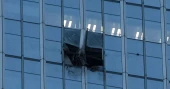
Pilot killed, 13 injured after small plane crashes into Beijing high-rise
A pilot was killed and 13 other people were injured after a small aircraft crashed into a high-rise building in Beijing on Friday evening, Chinese authorities said.
According to officials in Beijing's Chaoyang district, the two-seat light sport aircraft struck the building at around 5:55 pm, causing multiple casualties.
Authorities did not disclose the identity of the pilot or the name of the building involved in the incident.
However, flight tracking service Flightradar24 reported that the aircraft crashed into the 108-story CITIC Tower, also known as China Zun, one of Beijing's most iconic skyscrapers and the tallest building in the Chinese capital.
The tower, which stands 528 metres (1,700 feet) tall, is located in Beijing's central business district east of one of the city's major ring roads.
The cause of the crash was not immediately known. The incident has raised questions in a city that maintains strict controls over its airspace, including recent restrictions on drone operations.
Authorities said an investigation into the crash is underway.
1 month ago