asia
A month after Nepal floods, thousands are still missing and families face a long recovery
A month after devastating floods struck parts of Nepal, thousands of people remain missing while displaced families struggle to rebuild their lives and the government faces a lengthy and expensive recovery effort.
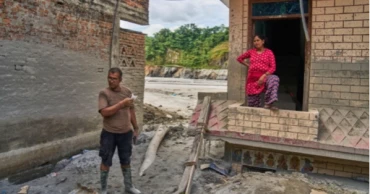
Narayan Prassan knows the pain of starting over. After working in Saudi Arabia for five years, he returned to Nepal with savings but lost his home in the 2015 earthquake. He later went abroad again, earned enough to rebuild the house and eventually settled there with his family.
The recent floods have destroyed it all again.
His home is now in a designated danger zone, and he has no clear idea where his family will live next. For now, Prassan is staying with his wife and children at a relative’s house and considering another move abroad.
“This flood has taken everything,” he said. “I don’t know what to do.”
The floods have displaced thousands like Prassan, while rescue teams continue searching for thousands of missing people, including those believed to be trapped inside six hydropower project tunnels. The disaster has left families mourning loved ones and losing homes and livelihoods, while the government faces a long-term reconstruction challenge.
Prime Minister Balendra Shah highlighted the disaster during his first address to the U.N. General Assembly on Thursday, describing the floods as a warning about increasing climate risks in the Himalayan region.
“The disaster was not just a local tragedy, but a warning to the world,” Shah said. “I ask you today: Have we really heard that warning?”
He urged the international community to provide greater support for Nepal’s recovery and called for stronger regional cooperation to prepare for climate-related disasters.
“Climate change does not recognize borders. Glaciers and floods do not travel with stamps and passports,” he said.
DNA testing delays final rites
Nepal’s disaster management agency said 1,453 bodies had been recovered, while 5,644 people remained missing. Of the recovered bodies, only 112 had been handed over to relatives, while 1,333 had been temporarily buried as authorities worked to establish their identities.
Officials in neighboring China reported 261 foreign nationals among those missing.
Tents have been installed at the Nepal Police Hospital in Kathmandu where relatives can provide DNA samples to help identify the dead. Authorities are matching those samples with DNA collected from recovered remains.
Laboratory officials did not disclose details of the identification process, citing privacy concerns. They said experts from India, China, the United States, Singapore and South Korea were helping with the work.
Rabi Kumar Thapa Magar, a hydropower worker who lost his wife, brother, sister-in-law and mother, said he identified his wife through a photograph of the dead. However, authorities had already buried her body before the family could see it.
Officials refused to release the body until DNA testing was completed, saying the process would take at least a month. The family later performed symbolic final rites using an effigy.
Families mourn children lost in floods
For many families, the emotional trauma continues.
Pasang Maya Tamang, 32, who lost her young son, said she continues to dream about him asking for help.
“The body of my son has been recovered but I was not able to see him for the last time. I am very sad about that. I hear in my dreams him saying why I left him alone,” Tamang said at a shelter in the flood-hit town of Nuwakot.
Her son had gone to school with a neighbor when the flood struck. By the time Tamang learned what had happened, the school had already been swept away. His body was found three days later in a southern district, but she could not travel there to see him.
The Aug. 26 flooding occurred in the morning when students were arriving at schools or traveling to them. Some children were later found still wearing school ties bearing their institutions’ logos, said Asta Man Dangol, a Nuwakot resident.
“The older students were able to run uphill and escape, but the little ones who were not able to run fast ... were swept away,” he said.
Efforts underway to reconnect flood-hit areas
The Nepal government estimates that reconstruction and recovery will require $4.77 billion. Nearly 33,000 people have been affected, while about 7,500 houses were damaged or destroyed.
Authorities are now prioritizing the restoration of roads and bridges cut off by the floods, particularly in remote areas where damaged infrastructure has hampered the delivery of relief.
Roads engineer Ishmita Shah said crews had been working with the Nepal Army since the second day after the floods to reopen routes in affected areas.
She said new bridges were being constructed to improve access to the worst-hit areas and facilitate the transportation of relief supplies.
However, the work remains difficult as more bad weather is expected in the coming days.
“The upcoming few days are going to be very challenging because of the weather, but we are fully prepared for that too,” she said.
1 month ago

Divers recover 52 bodies from capsized Indonesian ferry after dayslong search
Divers in Indonesia have recovered a total of 52 bodies in a dayslong operation following the capsizing of a ferry in rough seas earlier this month, officials said Friday.
Authorities have rescued 108 people, while 83 others remain missing.
The Virgo Transport 8 ferry was traveling from Surabaya in East Java to Banjarmasin in South Kalimantan on Borneo island with 243 people aboard when it issued a distress call on Sept. 13, reporting that the vessel was listing in rough seas, with waves reaching 3 meters (10 feet).
Authorities later learned that the ferry had capsized in the waters of the Masalembo archipelago in the Java Sea.
During the search operation, divers recovered passengers’ bodies after breaking through the ferry’s windows underwater to enter the vessel. Indonesia’s Search and Rescue Agency said all available resources were being deployed in the search.
“Our primary focus is to locate the missing victims and provide closure to their families,” said Mohammad Syafii, head of Indonesia’s National Search and Rescue Agency.
The agency is still planning to salvage the ferry and pull the wreckage from a depth of about 30 meters (98 feet).
The recovered bodies were taken to a police hospital in the Borneo city of Banjarmasin for identification before being handed over to their families.
Indonesia is an archipelago of more than 17,000 islands, where ferries are a common mode of transportation. Ferry disasters occur regularly, with weak safety enforcement often blamed.
1 month ago
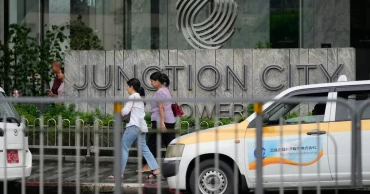
Australian executive in Myanmar linked to alleged financial misconduct freed from jail
An Australian businessperson who served as executive director of the American Chamber of Commerce in Myanmar has been released from jail after more than 100 days in detention over allegations of financial misappropriation, a Myanmar legal official said Wednesday.
Ye Khaung Kyaw, also known as Danny, was released following a court ruling in Yangon, Myanmar’s largest city, according to a legal official familiar with the case. The official spoke on condition of anonymity because they were not authorized to disclose information.
Ye Khaung Kyaw and two other men charged in connection with the case have denied the allegations, saying they are baseless.
Acting Police Brig. Gen. Soe Lin Aung, a spokesperson for Myanmar’s Home Affairs Ministry, confirmed that the court concluded proceedings in Ye Khaung Kyaw’s case on Tuesday but declined to provide further details.
It remains unclear whether he was convicted, had the charges dismissed or withdrawn, or was ordered to leave the country.
Ye Khaung Kyaw was detained in June, around the same time as former chamber president Adam Castillo, a U.S. businessperson who was released last week and deported without explanation.
The chamber’s current board accused Ye Khaung Kyaw, Castillo and former board member Munimul Islam of breach of trust and misappropriation of association assets linked to a $300,000 contract with Washington-based lobbying firm Mercury Public Affairs.
Islam lives outside Myanmar and has not been detained. The chamber is commonly known as AmCham.
Myanmar’s military-backed government issued no official statement on Ye Khaung Kyaw’s release.
Officials at the court and the police station in Yangon’s Pabedan township, where Ye Khaung Kyaw stood trial, did not respond to requests for comment. Authorities in Myanmar, which is currently experiencing a civil war, rarely comment to international media.
Supporters of the three men have said the allegations are baseless and contradicted by documentary evidence.
The police complaint did not specify Ye Khaung Kyaw’s exact role in the alleged misconduct during his tenure as executive director.
AmCham’s complaint focused on Castillo’s creation of the U.S.-Burma Economic Forum as a lobbying organization during his presidency from 2023 to 2025 and a contract signed with Mercury in 2024.
In its annual report issued in May, AmCham accused Castillo of improperly collecting funds using the association’s name. The chamber said its board had neither approved the agreement nor received any money or services under it, and that the matter had not been disclosed to auditors.
However, documents from AmCham obtained by The Associated Press appear to contradict the annual report.
A signed board resolution showed that the board had approved the lobbying initiative, authorized the hiring of Mercury and agreed that Islam’s company, Misfit Technologies, would provide sponsorship.
Current AmCham Executive Director Myat Phyu The described the resolution as a fabrication, although other records on the chamber’s website indicated that the board was aware of the arrangement.
An employee of Misfit, who spoke on condition of anonymity because of concerns about professional retaliation, said fees were paid through Misfit’s U.S. office because American sanctions made payments from Myanmar nearly impossible.
Mercury disclosed the payments to U.S. authorities under the Lobbying Disclosure Act.
Australia’s Foreign Ministry confirmed that it had provided consular assistance to an Australian citizen in Myanmar but declined to provide further details, citing privacy obligations.
1 month ago
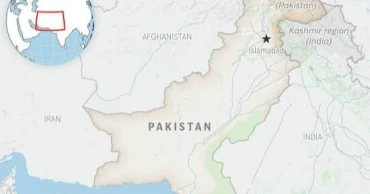
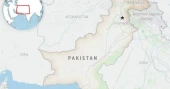
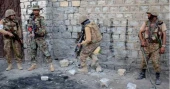
Pakistan says it struck 10 sites in Afghanistan after drone attacks
Pakistan said early Thursday that it had carried out airstrikes on 10 sites in Afghanistan that it claimed were used to launch drone attacks against Pakistan a day earlier, marking a sharp escalation in recent fighting between the two neighbors and threatening ongoing mediation efforts.
There was no immediate response from Kabul to the latest strikes. However, Zabihullah Mujahid, a spokesperson for Afghanistan's Taliban government, denied Wednesday that Afghan Taliban forces had carried out any attacks.
The conflicting claims came two days after Pakistani fighter jets struck targets in eastern Afghanistan, which Islamabad said were militant hideouts.
The latest announcement by Pakistani Information Minister Attaullah Tarar in a post on X came after officials said Afghan Taliban forces had launched eight drones and shelled Pakistani border posts after Pakistani troops foiled what they described as an attempted cross-border infiltration by militants.
The claims could not be independently verified.
The latest escalation threatens mediation efforts by China, Turkey, Qatar and Saudi Arabia to broker a lasting peace between Kabul and Islamabad.
Pakistan has repeatedly accused Afghanistan's Taliban government of allowing militants to operate from its territory and launch attacks across the border, an allegation Kabul denies.
“Instead of dismantling these networks and taking credible and verifiable action against those using Afghan territory to perpetrate terrorism against Pakistan, the Afghan Taliban regime has chosen to escalate the situation through hostile drone operations against Pakistan,” Tarar said.
“The strikes were deliberate, precise, calibrated, and proportionate and strictly limited to identified military objectives directly linked to the attempted attacks against Pakistan,” he added.
Pakistani officials also said Wednesday that security forces had neutralized eight rudimentary drones launched by the Afghan Taliban before they could enter the northwestern city of Kohat and the border town of Torkham.
They also said Afghan Taliban forces had fired mortars and other heavy weapons at Pakistani border posts, prompting Pakistani forces to respond with artillery fire targeting Taliban border posts, mortar sites and defensive positions.
The four officials spoke on condition of anonymity because they were not authorized to speak to the media about the latest flare-up.
In Monday's airstrikes, Pakistan's Information Ministry said 28 militants were killed, while Afghan authorities reported at least three civilian deaths and four injuries. The U.N. mission in Afghanistan confirmed the civilian casualties, and Kabul formally protested the attack.
On the sidelines of the U.N. General Assembly in New York, Pakistani Foreign Minister Ishaq Dar expressed concern over what he described as the presence of more than two dozen anti-Pakistani militant groups in Afghanistan.
Monday's Pakistani airstrikes followed a shootout with militants in Hangu, a district in northwestern Khyber Pakhtunkhwa province near the Afghan border, which killed six Pakistani security personnel.
Days earlier, a suicide bomber attacked a mosque inside a police compound in the nearby city of Kohat.
Eight gunmen then stormed the compound, triggering a 20-hour gunbattle that left at least 21 people dead, most of them police officers. No group claimed responsibility for the attacks.
Pakistani authorities blamed the violence on the Pakistani Taliban and allied militant groups.
The Pakistani Taliban, formally known as Tehrik-e-Taliban Pakistan, have intensified attacks on Pakistani security forces since the Afghan Taliban returned to power in Afghanistan in 2021.
1 month ago
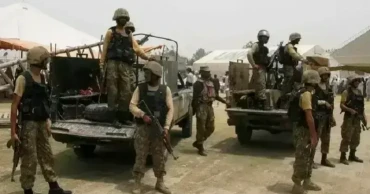
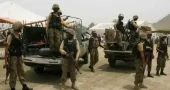
16 terrorists killed in Pakistan's Balochistan
At least 16 terrorists were killed in separate security operations across Pakistan's southwestern Balochistan province, security officials said Wednesday.
In Mastung district, security forces killed nine terrorists after they attempted to attack a security checkpost. One soldier was injured during a heavy exchange of fire, and security personnel recovered heavy weapons, ammunition and three motorcycles from the scene. Security officials said that operations will continue until the threat is eliminated.
Meanwhile, local police killed five terrorists in an exchange of fire after an early morning attack on a police station in the Aghbarg area on the outskirts of Quetta. Police personnel deployed at the station returned fire immediately, neutralizing the attackers.
Separately, security forces killed two more terrorists during an intelligence-based operation in Turbat.
1 month ago
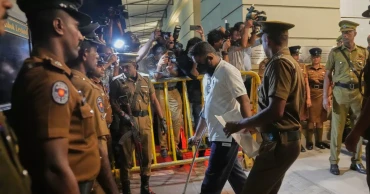
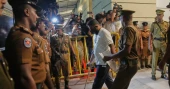
Sri Lankan court sentences 15 men to life in prison over 2019 Easter bombings
A Sri Lankan court on Tuesday sentenced 15 men to between 200 and 260 years in prison for helping plan and facilitate the 2019 Easter bombings that killed 267 people at churches and hotels.
Nine other defendants were acquitted after a trial lasting more than five years.
The April 21, 2019, attacks, inspired by the Islamic State group, targeted three churches and three hotels during Easter services and celebrations. Forty-two foreigners were among those killed and 574 people were injured.
The three-judge High Court panel also ordered the convicts’ property confiscated under the country’s anti-terror law. The defendants can appeal to the Supreme Court.
Prosecutors said the men were involved in a coordinated plot targeting Christian worshippers and tourists. They presented a video recorded a day before the bombings showing masked attackers pledging allegiance to then-Islamic State leader Abu Bakr al-Baghdadi.
Authorities filed 23,270 charges in 2021 against 25 suspects accused of planning or inspiring the attacks. One died before the trial ended.
The bombings also triggered allegations of a wider conspiracy and criticism of security agencies for failing to act on repeated warnings. In July, a former police chief and a senior former Defense Ministry official were sentenced to death for failing to respond to foreign intelligence warnings. Sri Lanka has not carried out an execution since 1976.
The Catholic Church welcomed Tuesday’s verdict. Rev. Jude Chrishantha Fernando, a spokesperson for the Archdiocese of Colombo, said the sentence would help deter similar attacks.
“We are happy — at least with this judgement, we know that in the future this type of crime will not take place in our country,” he said.
1 month ago

2 police officers killed while guarding polio workers in Pakistan
Gunmen shot and killed two police officers assigned to protect polio workers during a door-to-door vaccination campaign in southwestern Pakistan on Tuesday, officials said.
The attack in Balochistan province's Nushki district came a day after the government launched a weeklong campaign to vaccinate more than 31 million children.
The polio workers, who were administering oral vaccine drops to children inside a home, were unharmed, local police official Munawar Zaman said
No group has immediately claimed responsibility.
Separatist militants and the Pakistani Taliban have previously attacked security forces and civilians in Balochistan and elsewhere in Pakistan.
Interior Minister Mohsin Naqvi condemned the attack in a statement. Pakistan and neighboring Afghanistan remain the only countries where transmission of wild poliovirus has not been interrupted, according to the World Health Organization.
1 month ago
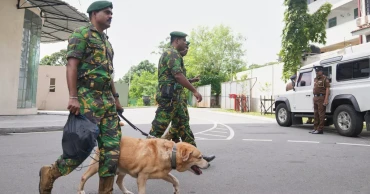
Sri Lankan court finds 15 guilty over 2019 Easter bombings
A Sri Lankan court found 15 men guilty on Tuesday of involvement in the 2019 Easter Sunday bombings, which killed more than 260 people and wounded about 500.
The April 21 attacks targeted three churches and three hotels across the island nation during Easter services and celebrations. The Islamic State group-inspired bombings, among the deadliest in Sri Lanka’s history, killed 42 foreigners and devastated communities across the country.
In 2021, authorities filed 23,270 charges against 24 suspects accused of planning or inspiring the attacks. The charges included murder, conspiracy to commit terrorism and firearms and explosives offenses under the Prevention of Terrorism Act.
None of those believed to have directly participated in the attacks are alive.
Sri Lanka has not carried out executions since 1976, meaning death sentences typically result in life imprisonment.
Two Sri Lanka-based Islamic militant groups were accused of carrying out the bombings.
Sri Lanka’s Catholic Church has claimed, without providing evidence, that those identified so far as perpetrators are not the masterminds behind the bombings, and that there was a bigger conspiracy behind the attacks.
In July, a former police chief and a former senior defense ministry official were also sentenced to death for failing to act promptly on foreign intelligence warnings of possible attacks.
1 month ago
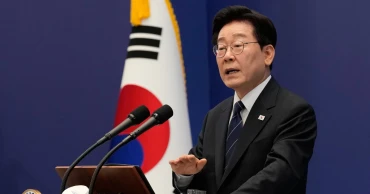
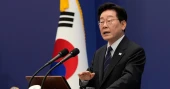
South Korea's Lee to call for phased denuclearization of North Korea at UN
South Korean President Lee Jae Myung said he will emphasize the need for a practical, step-by-step approach to denuclearizing North Korea at this week's UN General Assembly, saying both Seoul and Washington remain willing to resume dialogue with Pyongyang.
"To change the direction of a moving vehicle, it must be brought to a halt first," Lee said in written responses to questions from The Associated Press before leaving for New York on Monday.
"A phased approach of stop, reduction and dismantlement is a practical way of effectively resolving the North Korean nuclear issue," he said.
Lee's proposal comes as North Korea is stepping up weapons testing despite US President Donald Trump's decision to scale back a major military exercise with South Korea in what was seen as a conciliatory gesture toward North Korean leader Kim Jong Un, who has viewed such drills as rehearsals for invasion.
Lee advocates phased denuclearization
North Korea's expanding nuclear program has raised questions over whether denuclearization can be achieved in a single step and prompted calls for a phased process under which Pyongyang would receive corresponding economic and political benefits.
Trump said last month that North Korea possesses 57 nuclear weapons, while some experts estimate that the country has more than 100 warheads.
"Given the extent to which North Korea's nuclear and missile capabilities have advanced, it is not a realistic solution to wait until complete denuclearization can be achieved all at once," Lee said.
"This is because, in the interim, North Korea's nuclear capabilities will continue to advance, escalating the threat," he said.
During the annual UN gathering, Lee said he would pursue "a phased and pragmatic solution to the North Korean nuclear issue" and build on his vision of promoting peace on the Korean Peninsula.
He pointed to his recent proposal for talks among the countries concerned to formally end the 1950-53 Korean War, saying such discussions could also provide an opportunity to explore ways to restrain North Korea's nuclear program.
However, there are concerns that a phased approach could ultimately allow North Korea to refuse to completely abandon its nuclear arsenal after securing concessions such as sanctions relief in exchange for partially reducing its capabilities.
To guard against such an outcome, Lee called for comprehensive dialogue to establish a framework that benefits South Korea, the United States and North Korea.
He also stressed the importance of convincing North Korea that "moving toward stable and lasting peace is a realistic and feasible path to a secure and prosperous future."
Seoul, Washington seek resumption of talks
Despite the approaches being considered by the United States, South Korea and their partners, it remains uncertain whether North Korea will return to negotiations anytime soon.
When Trump last month scaled back the annual Ulchi Freedom Shield exercise with South Korea, citing his "very good relationship" with Kim, North Korea rejected the gesture, saying that reducing the drills would not change what it considers their provocative nature.
Since then, North Korea has conducted three rounds of weapons launches and issued numerous statements criticizing what it described as US hostility. Experts say Pyongyang is likely seeking larger concessions from Washington.
Lee, who hopes renewed Trump-Kim diplomacy could also lead to the reopening of inter-Korean dialogue, described Trump's decision as "a deliberate step to send a clear message that the United States has no hostile intent toward North Korea."
He said both South Korea and the United States "remain open to engaging in dialogue with North Korea without preconditions."
"What is needed now is a political decision at the leaders' level. The two leaders should build trust and work together to identify a common ground, face-to-face," Lee said.
Lee seeks stronger US ties
Trump's announcement on social media about reducing the military exercise came without prior consultations with South Korea and referred to what he called Lee's refusal to join the United States in the "denuclearization" of Iran.
The move raised concerns about the strength of the South Korea-US alliance.
Lee acknowledged that Trump's decision came "somewhat unexpectedly." However, he said he preferred to focus on the ultimate objective behind it, noting that Trump had expressed his commitment to creating conditions for dialogue and that he shared the goal of reducing confrontation on the Korean Peninsula.
Lee said the strategic interests of South Korea and the United States are closely linked across a wide range of areas and that he plans to build a more mutually beneficial partnership during the remainder of Trump's term.
As an example, he pointed to planned cooperation in shipbuilding, saying it would not only help revive US shipbuilding and strengthen its naval capabilities but also create new growth opportunities for South Korean companies.
Lee said Friday that he would not allow South Korea's military to become involved in the US-Iran conflict.
He said his government was considering expanding the operations of a South Korean naval unit deployed in the Gulf of Aden to protect South Korean vessels and oil shipping routes.
Lee was expected to meet Trump on the sidelines of the UN gathering.
Lee calls for UN reforms
Lee said the UN-centered multilateral system faces serious challenges, including growing geopolitical conflicts.
He said the current multilateral system has failed to keep pace with common challenges such as the climate crisis and the unintended consequences of the AI revolution.
Calling for reforms at the UN, Lee said duplication and inefficiency across the organization must be addressed.
He also said greater authority should be given to personnel working in the field so that crises can be addressed more quickly and effectively.
During the UN General Assembly, Lee said he would also present South Korea's efforts to ensure that more people benefit from advances in artificial intelligence and urge other countries to join the initiative.
Lee cautious on Kim's daughter
Asked about the prominent teenage daughter of 42-year-old North Korean leader Kim Jong Un, Lee said his government has taken note of "her rising status" and is keeping all possibilities open regarding her future role.
"However, I believe we have to be careful about expressing a definite view at this stage," Lee said.
Lee's comments differ from repeated assessments by South Korea's intelligence agency, which has described Kim's daughter as his likely successor.
Some experts have challenged that assessment, pointing to North Korea's male-dominated power structure.
1 month ago
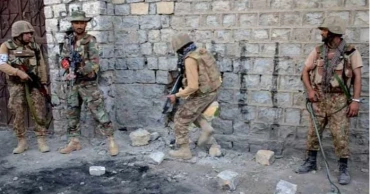
Five militants killed, 23 hostages freed in Pakistan operation
Pakistani security forces killed five militants and rescued 23 hostages during an operation in the southwestern Balochistan province, the military said Sunday.
The militants had set up an illegal checkpoint near Kalat overnight into Saturday, stopping vehicles to abduct people for ransom, extort money and seize vehicles, according to a military statement.
The military identified the militants as members of what it called “Fitna al-Hindustan”, a term used by the Pakistani government for the outlawed Baloch Liberation Army and other separatist groups operating in Balochistan. Pakistan alleges the groups receive support from India, a claim New Delhi has denied.
Security forces recovered six trucks, three buses and two cars, along with weapons, ammunition and explosives. Neither the security forces nor the rescued hostages suffered casualties, the military said.
Troops were conducting searches in the surrounding areas for any remaining militants, it added.
The operation came more than a week after Balochistan Chief Minister Sarfraz Bugti ruled out negotiations with insurgents and said security operations would continue until militancy was eliminated from the province.
Militants in Balochistan frequently use illegal checkpoints to abduct people for ransom. Last month, 18 police officers were killed after being abducted, according to reports.
Prime Minister Shehbaz Sharif praised the security forces for the latest operation and said counterterrorism operations would continue until what he described as foreign-sponsored terrorism was eliminated.
Balochistan has faced a long-running insurgency involving several separatist groups, including the BLA, which demand independence from Pakistan's central government. The groups have mainly targeted security forces and people from Punjab travelling to the province for business or work.
Despite Pakistani authorities' claims that the insurgency has been contained, violence has continued in the province.
1 month ago