Africa
12 killed in road accidents ahead of Senegal's Grand Magal pilgrimage
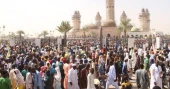
At least 12 people have been killed in road accidents ahead of Senegal's annual Grand Magal pilgrimage in the central city of Touba, the National Fire Brigade said on Saturday.
The fatalities have been recorded since the brigade launched its emergency operation on July 28, Lieutenant Djily Diouf, communications officer for the contingent deployed for the pilgrimage, was quoted as saying by the Senegalese Press Agency.
As of 8:00 am local time on Saturday, firefighters had responded to 182 emergency incidents involving 304 people, Diouf said.
Among those operations, 133 were road accidents involving 286 people. Firefighters provided assistance to 274 victims, while 12 people were confirmed dead.
To support the large influx of pilgrims, the brigade has also supplied 281 cubic metres of water in Touba to help meet increased demand and avert potential shortages.
For this year's pilgrimage, the National Fire Brigade has deployed 563 personnel along with 91 emergency and support vehicles to provide rescue, firefighting and medical services.
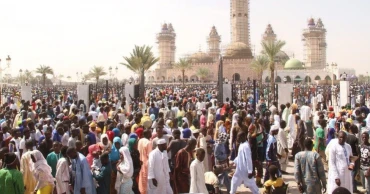
The Grand Magal, scheduled to take place on Sunday, is one of Senegal's largest annual religious gatherings. Organised by the Mouride Muslim brotherhood, the event commemorates the 1895 exile of its founder, Cheikh Ahmadou Bamba, by the French colonial authorities.
2 days ago
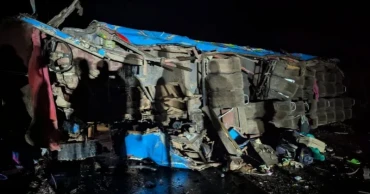
School bus crash in Uganda kills at least 21, mostly children
At least 20 children and one adult were killed after a school bus carrying primary school students overturned in eastern Uganda while returning from an educational trip, police said Friday.
The accident occurred Thursday night in Kapchorwa District as the bus was transporting students back to Kampala after visiting the scenic Sipi Falls, according to the Uganda Police Force.
Several survivors, including three adults and a number of children, were rushed to nearby hospitals for treatment. Police did not immediately disclose the total number of injured passengers.
Uganda's Minister of Local Government, Balaam Barugahara Ateenyi, said at least nine children remained in critical condition. He added that the adult killed in the crash appeared to be the founder and head of the school.
Residents of the nearby village were the first to respond, helping rescue victims from the wreckage and transporting the injured to hospitals before emergency services arrived.
Police identified the vehicle as belonging to King David Junior School, a primary school based in the capital, Kampala.
Preliminary investigations indicate that the driver lost control of the bus, which veered off the road, struck a rock and overturned. Authorities said the exact cause of the accident remains under investigation.
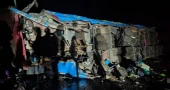
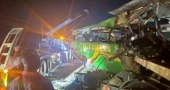
Images released by police showed the bus lying on its side with its roof torn off, exposing damaged seats. Personal belongings, including luggage and clothing, were scattered across the road.
Road accidents are common in Uganda, where authorities frequently cite speeding, poor vehicle maintenance and inadequate road infrastructure as major causes of crashes.
Earlier this month, at least 14 people were killed when a bus collided with a truck in northern Uganda.
According to the World Health Organization and the United Nations, Africa records the world's highest road fatality rate, with more than 300,000 road deaths annually, highlighting persistent road safety challenges across the continent.
18 days ago
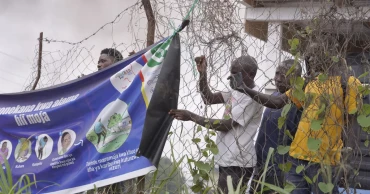
Ebola treatment workers strike in DR Congo over unpaid wages amid worsening outbreak
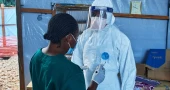
Dozens of workers at an Ebola treatment center in northeastern Democratic Republic of Congo launched a strike on Monday, protesting unpaid salaries and bonuses, adding fresh pressure to the country's rapidly expanding Ebola outbreak.
The strike comes as Congo continues to battle an outbreak of the rare Bundibugyo strain of the Ebola virus, which has no approved vaccine or treatment. Health authorities confirmed last week that the outbreak has spread to two additional provinces.
The protesting workers at Rwampara General Hospital in Ituri province—the epicenter of the outbreak—include epidemiologists, case investigators, drivers and gravediggers. They accuse authorities of failing to pay them for the past two months.
The demonstrators shut down the treatment center, blocked access roads and burned tires outside the facility in protest.
"We don't know how it is possible to go unpaid for two months," one health worker said, adding that despite the protest, they do not want to abandon their work.
The Rwampara facility is separate from another treatment center in Ituri where clinical trials of two experimental Ebola treatments began earlier this month.
Congolese authorities officially declared the outbreak on May 15 after the virus had spread undetected for several weeks. According to the World Health Organization (WHO), the delay in confirming the outbreak was partly due to initial testing for a more common Ebola strain.
During a recent visit to Ituri, Health Minister Roger Kamba said the government was reviewing payroll records after discovering that names of individuals not involved in the response had been added to payment lists.
He said the verification process aims to ensure that frontline workers receive their due compensation while addressing complaints from those who have not been paid.
According to Congolese health authorities, the outbreak has so far resulted in 1,926 confirmed cases, including 702 deaths.
Meanwhile, WHO Director-General Tedros Adhanom Ghebreyesus said a second American humanitarian worker infected with Ebola in eastern Congo had been transferred to Germany for treatment. The first infected American was a doctor working in Congo during the early stages of the outbreak.
21 days ago
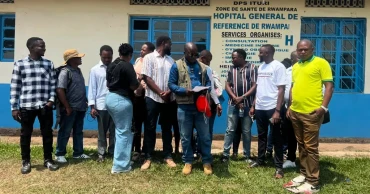
Dozens of Ebola treatment workers in DR Congo strike over unpaid wages
Dozens of workers at an Ebola treatment centre in northeastern Democratic Republic of Congo went on strike Monday, protesting unpaid salaries and bonuses.
The striking staff at Rwampara General Hospital in Ituri province include epidemiologists, case investigators, drivers and gravediggers, who say they have not received their wages from the Congolese authorities.
The protesters shut down the hospital and blocked the road leading to the medical facility.
Some health workers at the treatment centre and field staff had already begun their strike last week, accusing the authorities of failing to pay them since the Ebola outbreak began in May.
"We don't know how it is possible to not have been paid for two months," health worker Bahati Claude of the Rwampara health zone told The Associated Press. "We don't want to give up the job."
The Congolese government declared a new Ebola outbreak on May 15 after the disease had been spreading for weeks without official detection, according to the World Health Organization (WHO). The current outbreak is caused by the rare Bundibugyo strain of the virus, for which there is no approved vaccine or treatment.
During a visit to Ituri last week, Congolese Health Minister Roger Kamba said the government is reviewing the list of personnel involved in controlling the outbreak after discovering that some unrelated names had been added to the payroll.
"We must ensure that these payments reach the right people," Kamba said. "We have faced a few challenges, notably changes to the lists, which have led to complaints from people saying they are not being paid even though they are working. We have the means to sort this out."
According to Congolese authorities, the country has so far recorded 1,926 confirmed Ebola cases, including 702 deaths.
Meanwhile, WHO Director-General Tedros Adhanom Ghebreyesus said in a post on X on Monday that a second US citizen, a humanitarian worker in eastern Congo who contracted Ebola, had been transferred to Germany for treatment. The first American infected during the outbreak was a doctor working in Congo in its early stages.
Last week, the Africa Centres for Disease Control and Prevention said the current outbreak is the fastest-growing Ebola outbreak ever recorded on the African continent.
21 days ago
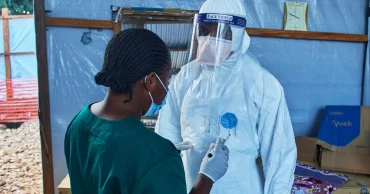
Congo's Ebola death toll reaches 600 as suspected cases emerge in new province
Congo's latest Ebola outbreak has claimed 600 lives, while health authorities are investigating two suspected cases in a province that had not previously reported infections, according to the government's latest update.
A report released late Wednesday said the two suspected cases were detected in Kisangani, in Tshopo province, marking the first possible spread of the outbreak to the area. The total number of confirmed Ebola cases across the country has now risen to 1,759.
Health officials said one of the suspected patients had links to the Nia-Nia health zone in Ituri province, where the outbreak first began. The second suspected case has no known connection to any previously affected area, prompting further investigation.
Congolese authorities officially declared the latest Ebola outbreak on May 15 after the virus had spread undetected for several weeks, according to the World Health Organization (WHO).
The current outbreak is caused by the rare Bundibugyo strain of the Ebola virus, for which there is currently no approved vaccine or specific treatment.
Last week, researchers launched clinical trials to test potential treatments in hopes of finding an effective way to combat the virus.
Efforts to control the outbreak have been complicated by a shortage of funding, attacks on healthcare facilities and the continuing conflict in eastern Congo, where most cases have been reported.
26 days ago
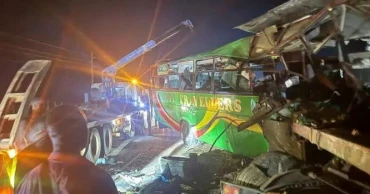
At least 14 killed, 28 injured in northern Uganda road crash
At least 14 people were killed and 28 others injured after a passenger bus collided head-on with a truck in a remote area of northern Uganda, police said on Wednesday.
The accident occurred late Tuesday at a trading centre along the highway leading to the northern city of Gulu, according to a police statement.
Preliminary investigations indicate that the bus driver, who was allegedly speeding, lost control of the vehicle while trying to avoid a pedestrian crossing the road. The bus then crashed into an oncoming trailer, police said.
The injured were taken to nearby medical facilities for treatment, while authorities launched an investigation into the crash.
Deadly road accidents are frequent in Uganda and other East African countries, where highways are often narrow and poorly maintained. Police regularly attribute such crashes to excessive speeding and reckless driving.
26 days ago
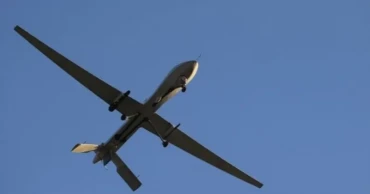
More than 20 civilians killed in Sudan drone attacks
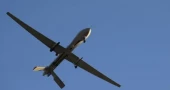
Drone strikes targeting civilian vehicles in war-ravaged Sudan have killed more than 20 people in recent days, rights groups said, highlighting the growing use of unmanned aircraft in the country's more than three-year conflict.
The Sudan Doctors Network said a drone strike on Tuesday hit a vehicle on the outskirts of Omdurman, west of the capital Khartoum, killing 10 civilians who were travelling to a wedding. The victims included five women from the same family.
The medical group blamed the paramilitary Rapid Support Forces (RSF) for what it described as a deliberate attack carried out with a guided drone. It urged the international community to pressure the RSF to halt attacks on civilians.
In a separate incident the same day, Emergency Lawyers, a rights group monitoring the conflict, said a drone strike hit a transport vehicle near a water facility in North Kordofan province, killing two people.
The group also reported that another drone attack a day earlier killed 13 civilians, including five women, as they travelled to a wedding in the town of al-Shaatout in North Kordofan.
Emergency Lawyers said the attacks reflect an increasing pattern of drone strikes targeting civilians, with drones reportedly monitoring residents' movements across northern parts of the province.
North Kordofan has witnessed intensified fighting in recent weeks amid concerns that the RSF is attempting to advance toward the strategic city of el-Obeid, where the Sudanese army maintains a major military base. According to the United Nations, repeated drone attacks have damaged civilian infrastructure, including power facilities, residential neighborhoods, bridges and key supply routes.
Sudan has been engulfed in conflict since April 2023, when fighting erupted between the Sudanese Armed Forces and the RSF following months of escalating tensions.
The war has killed at least 59,000 people, displaced about 13 million and pushed large parts of the country into famine, while more than 30 million people now require humanitarian assistance, according to humanitarian agencies.
27 days ago
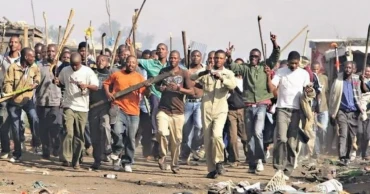
Land conflict kills 18 in Nigeria
At least 18 people have been killed in days of violence linked to a long-running land dispute in Nigeria's north-central Niger State, police said on Thursday.
The clashes occurred between Monday and Wednesday in the Rafi area and involved gun attacks as well as incidents of arson, according to police spokesperson Wasiu Abiodun.
Police said the violence began on Monday when two people were killed. The situation escalated on Wednesday, when 15 people were burned to death after attackers set a house on fire, while another person was killed in a separate incident.
Authorities said the unrest stemmed from a longstanding land dispute between two tribal communities.
Abiodun said a reconciliation committee led by local government officials was working with security agencies to defuse the tensions, while joint police and military patrols had been deployed to restore law and order in the affected area.
Communal violence over land ownership and access to resources is a recurring problem in parts of Nigeria, Africa's most populous nation.
Niger State has also witnessed frequent attacks by armed criminal groups involved in kidnappings for ransom and extortion targeting rural farming communities.
The latest violence comes only days after the reported abduction of 36 students in northeastern Nigeria.
1 month ago
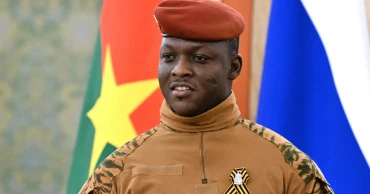
Burkina Faso severs diplomatic ties with former colonial ruler France
Burkina Faso's military-led government on Friday announced the immediate severance of diplomatic relations with France, accusing its former colonial ruler of pursuing "neo-colonial ambitions" and supporting destabilising activities.
In a statement, the junta alleged that France had provided backing to "subversive networks and terrorists," though it did not provide evidence to support the claims.
France expressed regret over the decision, describing it as "hostile and unfounded." French Foreign Ministry spokesman Pascal Confavreux said Paris was reviewing reciprocal measures and closely monitoring the safety of French officials and citizens in Burkina Faso.
"The decision reflects the worrying direction taken by the Burkinabè authorities," he said, urging French nationals in the country to exercise increased caution.
Burkina Faso, a nation of around 23 million people, has been grappling with years of violence linked to extremist groups affiliated with al-Qaida and the Islamic State, as well as accusations of abuses by government forces. The wider Sahel region has become the world's deadliest hotspot for extremist violence.
The immediate implications of the diplomatic break and its impact on the French embassy in Ouagadougou remain unclear.
Communications Minister Pingdwende Gilbert Ouedraogo said the conditions necessary for maintaining relations based on mutual respect, trust and non-interference in domestic affairs no longer existed.
Relations between the two countries have steadily deteriorated in recent years. Since coming to power in a 2022 coup, Burkina Faso's military rulers have repeatedly accused France of acting against the country's interests.
In 2023, the junta requested the recall of the French ambassador and declared the United Nations' resident and humanitarian coordinator persona non grata. The following year, three French diplomats were expelled over alleged subversive activities.
France had long been Burkina Faso's main security partner and deployed troops to help combat extremist groups, but the military government ordered the withdrawal of French forces after taking power.
Despite pledges by the junta to improve security, analysts say violence has worsened. According to a recent Human Rights Watch report, government forces were allegedly responsible for at least 1,200 of the 1,837 civilian deaths recorded in the country between January 2023 and August 2025.
1 month ago
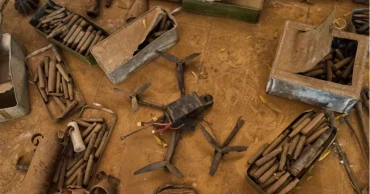
RSF drone strikes kill at least 15 in central Sudan
At least 15 people were killed and dozens injured after Sudan’s paramilitary Rapid Support Forces (RSF) launched overnight drone strikes in the central city of el-Obeid, health officials said on Thursday, amid an escalation in the use of unmanned aircraft in the country’s protracted conflict.
The attacks, which began late Wednesday, targeted several locations across el-Obeid, including areas near an army position, according to officials at el-Obeid Hospital. More than 10 others were injured, some of them critically.
Mohamed Elsheikh, spokesperson for the Sudan Doctors Network, said RSF drones also struck a funeral gathering at a cemetery, killing four people, and hit a gas station. It was not immediately clear whether the victims were civilians, combatants or both.
An aid worker with Mercy Corps said drone attacks have intensified across el-Obeid in recent days, targeting public gatherings and disrupting daily life. Schools have suspended classes and markets are operating only partially due to security concerns, the aid worker said.
Emergency Lawyers, a local monitoring group, warned that the death toll could rise as drones continued flying over the city. The group said residential homes near the military headquarters of the 5th Infantry Division were hit, along with a truck carrying food supplies into the city. The truck driver was killed in the attack.
The group described the strikes as part of a broader pattern of attacks on civilian neighbourhoods, gatherings and infrastructure, including during rescue efforts and funeral ceremonies, raising concerns about their indiscriminate nature.
Sudan’s conflict erupted in April 2023 following a power struggle between the Sudanese Armed Forces and the RSF. The war has since killed at least 59,000 people, displaced around 13 million and pushed large parts of the country into famine, with more than 30 million people requiring humanitarian assistance.
Now in its fourth year, the conflict has left the military in control of much of northern, eastern and central Sudan, while the RSF and allied groups dominate most of Darfur and parts of Kordofan, regions rich in oil and gold resources.
Analysts and humanitarian workers say drone warfare has emerged as one of the deadliest threats to civilians in Sudan, with both sides reportedly receiving military support from regional and international actors. A recent surge in drone attacks in Kordofan has also complicated humanitarian relief efforts in the area.
1 month ago