Africa
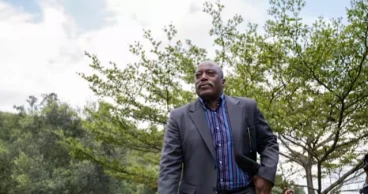
Ex-President Kabila faces death penalty demand in Congo war crimes trial
Congo’s public prosecutor on Friday requested the death penalty for former President Joseph Kabila, who is being tried in absentia on treason charges that include war crimes linked to his alleged support for the M23 rebel group.
Kabila, who led Congo from 2001 to 2019, has faced trial since July for war crimes, murder, and rape. He became president at 29 after the assassination of his father, former President Laurent Kabila, and extended his term by delaying elections for two years after 2017.
The Congolese government accuses him of backing the Rwanda-backed M23 rebels, who have seized key towns in eastern Congo in recent months. Kabila had lived in self-imposed exile since 2023 but returned in April to Goma after the city fell to the rebels. His current whereabouts are unknown. Supporters claim the trial is politically motivated.
Prosecutor Gen. Lucien René Likulia asked for, in addition to the death penalty, a 20-year sentence for allegedly condoning war crimes and 15 years for conspiracy, without detailing the specific incidents. No date has been set for the verdict.
Islamic State-linked rebels kill at least 21 in church attack in Eastern Congo
President Felix Tshisekedi accused Kabila last year of supporting the rebels and planning an insurrection, charges Kabila denies. Ferdinand Kambere, a former minister under Kabila, called the immunity revocation “the start of a campaign against him,” while analyst Henry-Pacifique Mayala described the prosecution’s demands as “more about settling scores than seeking truth.”
11 months ago
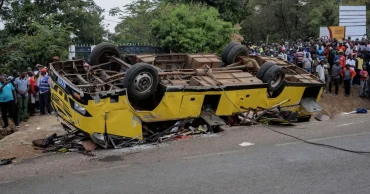
21 dead in fatal bus crash carrying funeral mourners in Kenya
A bus carrying mourners back home from a funeral in southwestern Kenya overturned and plunged into a ditch on Friday evening, killing at least 21 people, police said.
The bus was travelling from the western town of Kakamega to the city of Kisumu, where the accident happened.
The driver lost control of the bus as it approached a roundabout at high speed and plunged into a ditch, according to Peter Maina, a regional traffic enforcement officer for the province of Nyanza, where Kisumu is located.
The victims include 10 women, 10 men, and a 10-year-old girl, he said.
Road accidents are common in Kenya and the wider East African region, where roads are often narrow and in poor condition with many potholes. Police often blame road accidents on speeding drivers.
In another accident on Thursday, nine people were killed in a bus crash in the town of Naivasha in the county of Nakuru. The victims were among 32 workers going to work when the bus crashed at a railway crossing, police said.
11 months ago
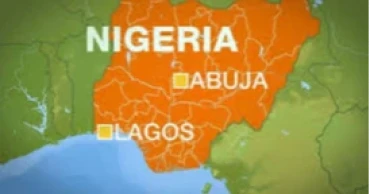
Nigerian forces kill 30 gunmen in northwest counter-attack
Nigerian security forces have killed at least 30 gunmen in a joint military and police operation following a wave of violent attacks in the country’s northwest, officials said Thursday.
The operation was launched on Wednesday in response to coordinated assaults by armed men on several villages the previous evening, according to a statement by Nasir Mua’zu, State Commissioner for Home Affairs. He confirmed that three police officers and two soldiers were killed during the counter-assault.
“We are working tirelessly with federal security agencies to ensure the safety of all citizens,” Mua’zu said.
Violence has surged across northwestern and north-central Nigeria in recent months, with armed gangs—often referred to as “bandits”—carrying out deadly raids and mass abductions for ransom. Hundreds have been killed, and many more injured or displaced as these groups exploit the region's limited security presence.
At least 10 Nigerian soldiers are killed in an ambush, the army says
The gangs, primarily composed of former herders, frequently clash with settled farming communities. Dozens of such groups now operate with near impunity in the mineral-rich northwest, attacking rural communities and travelers along major routes.
In addition to banditry in the northwest, Nigeria is grappling with a long-running insurgency in the northeast. The United Nations estimates that more than 35,000 civilians have been killed and over 2 million displaced due to ongoing conflict in that region.
Source: Agency
1 year ago
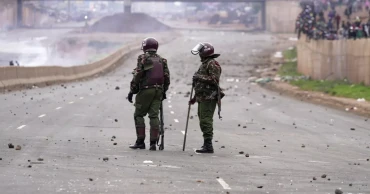
Kenya's president says 'enough is enough' and vows to end anti-government protests
Kenya’s President William Ruto on Wednesday broke his silence over the recent wave of anti-government protests that have left dozens dead, vowing to prevent what he described as “anarchy” disguised as peaceful demonstrations.
Addressing the unrest, President Ruto declared “enough is enough” and directed police to take firm action, including shooting looters and arsonists “in the leg,” to protect property and restore order.
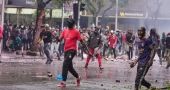
Kenya has been gripped by unrest in recent weeks following the death of a popular blogger in police custody—a case that sparked widespread anger and renewed accusations of police brutality. Public outrage intensified when a protester was shot at close range by a police officer during a demonstration. Massive rallies took place on June 25, marking one year since large-scale protests against tax hikes.
At least 8 dead in Kenya protests against police brutality
On Monday, police set up roadblocks across all main routes into Nairobi’s city center, restricting movement to essential workers. Clashes broke out between protesters and police on the outskirts of the capital and in 17 of Kenya’s 47 counties, resulting in 31 deaths and over 100 injuries. Authorities also arrested more than 500 people.
According to reports, at least 50 people have been killed during two separate waves of protests over the past two weeks.
UN High Commissioner for Human Rights Volker Türk on Tuesday called on the Kenyan government to address the root causes of the public grievances.
President Ruto alleged that the protests were politically driven and warned that the destruction of public and private property would not be tolerated.
“You can call me any name, but I will ensure peace and stability in Kenya at all costs,” he said, accusing his political opponents of attempting to destabilize his administration through violent means. “Attacking police stations amounts to a declaration of war,” he added.
Ruto emphasized that leadership in Kenya is determined through democratic elections—not violence.
Meanwhile, civil society organizations have continued to urge restraint by law enforcement during demonstrations. In a recent development, five police officers were charged in connection with the blogger’s death and the shooting of a civilian. Deputy Inspector General of Police Eliud Langat, who had filed a complaint against the blogger over corruption allegations, has stepped aside pending the outcome of the investigation.
1 year ago
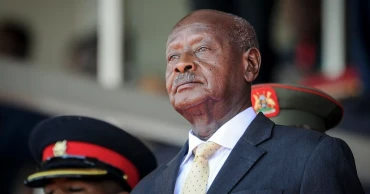
Uganda's Museveni seeks 7th term, nearing 5 decades in power
Ugandan President Yoweri Museveni on Saturday sought nomination for a seventh term, a move that would bring him closer to five decades in power.
Museveni, 80, has defied calls for his retirement, as critics warn that he as veered into authoritarianism with virtually no opposition even within his ruling National Resistance Movement party.
He was welcomed by a large crowd of supporters as he went to collect nomination papers from the offices of the ruling party in Kampala, the Ugandan capital, reports AP.
Museveni first took power as head of a rebel force in 1986. He has since been elected six times, though recent elections have been marred by violence and allegations of vote rigging. His main opponent in the last election was the popular entertainer known as Bobi Wine, who has also declared his candidacy in the polls set for January 2026.
Wine, whose real name is Kyagulanyi Ssentamu, has seen many associates jailed or go into hiding as security forces cracked down on opposition supporters.
At least 8 dead in Kenya protests against police brutality
Museveni has dismissed Wine as “an agent of foreign interests” who cannot be trusted with power. Wine has been arrested many times on various charges but has never been convicted. He insists he is running a nonviolent campaign.
Decades ago, Museveni himself had criticized African leaders who overstayed their welcome in office. In Uganda, lawmakers did the same thing for him when they jettisoned the last constitutional obstacle — age limits — for a possible life presidency. His son, army chief Muhoozi Kainerugaba, has asserted his wish to succeed his father, raising fears of hereditary rule.
A long-time opposition leader, Kizza Besigye, has been jailed since November over alleged treason charges his lawyers say are politically motivated. Besigye, a physician who retired from Uganda’s military at the rank of colonel, is a former president of the Forum for Democratic Change party, for many years Uganda’s most prominent opposition group.
The East African country has never seen a peaceful transfer of power since independence from Britain in 1962.
1 year ago
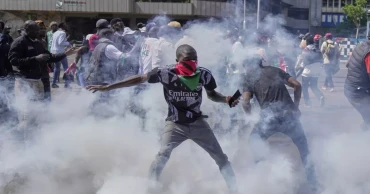
At least 8 dead in Kenya protests against police brutality
At least eight people have died and over 80 others are receiving specialized treatment, some with gunshot wounds, following nationwide protests in Kenya against police brutality and poor governance, according to human rights organizations.
The Kenya National Commission on Human Rights, a state-funded body, reported that Wednesday’s demonstrations, which took place across 23 of Kenya’s 47 counties, resulted in over 400 injuries and more than 60 arrests.
The protests were held to mark one year since anti-tax demonstrations left at least 60 people dead and 20 others missing.
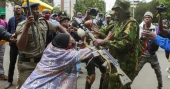
In the capital, Nairobi, access to Parliament and the president’s office was blocked with razor wire and road barricades as thousands of protesters confronted police, who responded with tear gas, live rounds, and batons, leaving several people injured.
The demonstrations quickly escalated, spreading to major cities such as Mombasa, Kisumu, Nakuru, and Nyahururu, with calls for President William Ruto to resign over allegations of mismanagement.
Last year’s anti-tax protests saw demonstrators storm Parliament, where tax hikes had been passed, setting parts of the building on fire as lawmakers fled. Witnesses and rights groups reported that police opened fire, leaving bodies in the streets, prompting the deployment of the military.
Frustration among young Kenyans has grown due to alleged government corruption, the rising cost of living, police violence, and the recent death of a blogger while in custody. Public outrage intensified further after a protester was shot at close range during recent demonstrations.
President Ruto, speaking at a funeral in coastal Kenya on Wednesday as protests intensified in Nairobi, called for calm, saying, “We do not have another country to go to. It is our responsibility to safeguard our nation.”
Youth-led protests erupt again in Kenya over police brutality and poor governance
Despite government efforts to downplay the protests, including statements by government spokesperson Isaac Mwaura calling Wednesday a “normal working day,” businesses in central Nairobi largely remained shut. Police restricted vehicle movement, while hundreds of protesters took to the streets early, chanting anti-government slogans as officers fired tear gas.
An Associated Press reporter witnessed one demonstrator suffer a mouth injury from police gunfire, while another protester was beaten over the head by anti-riot police and taken away by ambulance.
Wangechi Kahuria, executive director of the Independent Medico-Legal Unit, which monitors protest-related deaths, said citizens should be allowed to mourn peacefully.
Police Inspector General Douglas Kanja warned on Tuesday that unauthorized individuals would be barred from entering protected areas like Parliament and the State House.
Protester Rose Murugi accused police of contributing to the crisis, declaring, "We will say it boldly—police brutality must end, and Ruto must go.” Another demonstrator, 25-year-old Derrick Mwangi, said young people were "fed up" with the current state of affairs, citing abductions, killings, and increasing police violence.
Local media on Wednesday published the names and photos of some of those killed in last year’s protests. The Standard newspaper headlined its coverage with “A luta Continua,” Portuguese for “The struggle continues,” a phrase linked to Mozambique’s fight for independence.
Meanwhile, the Communication Authority banned live coverage of the protests and disrupted some free-to-air TV broadcasts, drawing condemnation from human rights defenders.
Political commentator Herman Manyora described the demonstrators as “heroes” who deserve recognition for their sacrifices. He called on the authorities to work with protesters to ensure a meaningful commemoration.
However, Manyora also noted that government inaction has fueled discontent, hardening the resolve of young people to continue their demonstrations.
Following last year’s protests, President Ruto dissolved the Cabinet amid allegations of corruption and incompetence, though many former ministers were reappointed. A controversial finance bill proposing higher taxes was initially withdrawn but new taxes were later introduced through amendments.
Protesters in Kenya’s Nairobi demand justice for blogger’s death in police custody
The president also brought opposition members into the Cabinet and, in March, signed a political agreement with opposition leader Raila Odinga, his main rival in the last election.
#Source: With input from agency
1 year ago

Youth-led protests erupt again in Kenya over police brutality and poor governance
Youth-led demonstrations against police brutality and poor governance erupted across Kenya once again on Wednesday, with thousands marching toward Nairobi’s central business district.
The protests coincide with the first anniversary of last year’s anti-tax hike demonstrations, which resulted in 60 deaths and at least 20 people reported missing. This latest wave of unrest follows protests last week demanding justice for a Kenyan blogger who died in police custody under suspicious circumstances.
Discontent is rising, particularly among Generation Z, over issues including police violence, economic hardship, and government mismanagement.
In response, the Communications Authority of Kenya ordered local media to halt live broadcasts of the protests midway through the day, while President William Ruto warned that acts of violence would not be tolerated.
Many Kenyans turned to social media to share real-time updates, post tributes to slain protesters, and express anti-government sentiments through posts and memes. Meanwhile, on the streets, volunteers provided water to protesters as demonstrations continued.
Protesters in Kenya’s Nairobi demand justice for blogger’s death in police custody
Police brutality
Demands for accountability in Kenya have intensified following the death of a street hawker during last week's protests. A Kenyan court has granted investigators 15 days to conclude their probe into two police officers suspected of involvement in the shooting.
The incident has fueled public outrage, with young people flooding social media platforms throughout the week to honor protesters killed during last year's demonstrations. At that time, President William Ruto apologized for the violence and pledged to end police brutality, which led to the resignation of the country’s top police official.
“Not a single officer has faced consequences,” said human rights activist Hussein Khaled, noting that people have taken to the streets to demand justice, including compensation for victims' families, arrests of those responsible, and urgent police reforms. He emphasized that far too many Kenyans are losing their lives due to police violence.
Economic frustration
Last year’s deadly protests in Kenya were driven by strong opposition to a finance bill that significantly increased taxes to tackle national debt, placing a heavy burden on young, educated citizens already facing high unemployment and a soaring cost of living. President William Ruto eventually withdrew the bill.
However, parts of those tax measures were later reintroduced, sparking public outrage and renewed demands for Ruto’s resignation, especially following the appointment of a new, but widely unpopular, cabinet. A revised healthcare levy also replaced standard premiums with a progressive tax based on income levels.
According to United Nations data, 70% of sub-Saharan Africa’s population is under 30, while Kenya faces a youth unemployment rate of 67%.
Macharia Munene, a professor of History and International Relations at United States International University Africa in Nairobi, said the situation is worsening for young people, as essential sectors like health and education suffer from poor policies and a lack of resources, while government spending on lavish perks for elites continues unchecked.
Rescuers in South Africa search for the missing after floods leave at least 49 dead
Poor governance
Ruto has been accused of misappropriating taxpayer money on lavish trips, most notably the use of a private jet on his trip to the United States right before last year’s protests. He apologized and dismissed ministers accused of incompetence, corruption and displays of opulence amid complaints about the high cost of living.
Meanwhile, Kenya's opposition received its share of criticism, with many saying it avoided challenging the status quo after some of its members were appointed in Ruto's new cabinet
“Enough is enough ... We are here for change, it is time for us to get our nation (back),” said protestor Sevelina Mwihaki. “The blood that we have shed is enough."
1 year ago
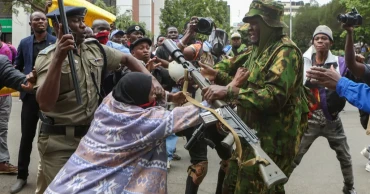
Protesters in Kenya’s Nairobi demand justice for blogger’s death in police custody
Protesters took to the streets of the Kenyan capital on Thursday to vent their anger over the death of a blogger in police custody.
Albert Ojwang was arrested June 6 in Homa Bay in western Kenya and driven 400 kilometers (248 miles) to Nairobi for what police said was publishing “false information” about a top police official on social media. He subsequently died at the Central Police Station after “hitting his head against the cell wall,” police said. Amnesty International and local activists have questioned that account.
The protesters occupied the road in Nairobi leading to the parliamentary building, where the national budget was due to be presented Thursday. At least two cars were set on fire in a street nearby, reports AP.
Police on Monday fired tear gas to disperse another protest demanding accountability for Ojwang's death.
Authorities have since said an official investigation is underway.
Rescuers in South Africa search for the missing after floods leave at least 49 dead
President William Ruto in a statement on Wednesday said Ojwang's death was “heartbreaking and unacceptable."
“I strongly condemn the actions and omissions, including any negligence or outright criminality, that may have contributed to his untimely death,” Ruto said.
The blogger’s death comes almost a year after several activists and protesters were killed and abducted by Kenyan police during finance bill protests. The rallies led to calls for the removal of Ruto, who has been criticized for what some say is his authoritarian streak.
1 year ago
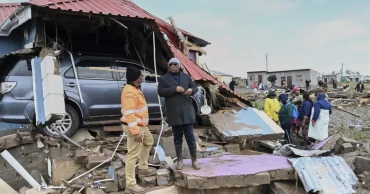
Rescuers in South Africa search for the missing after floods leave at least 49 dead
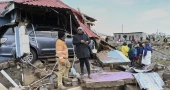
Rescue teams began a third day searching for missing people Thursday after floods devastated parts of South Africa's rural Eastern Cape province and left at least 49 dead.
Authorities said they expected the death toll to rise.
The missing included four high school students who were swept away when their bus was caught up in the floods near a river on Tuesday. Six students on the bus were confirmed dead, while three were rescued after clinging onto trees and calling out for help, according to the provincial government.
The floods hit the province early Tuesday after an extreme cold front brought heavy rain, strong winds and snow to parts of eastern and southern South Africa. Forecasters had warned about the damaging weather last week.
Eastern Cape provincial government officials said they believed people were still missing but did not give an exact number. They were working with families to find out who was still unaccounted for, they said.
On Wednesday, rescue teams brought bodies out of the water in blue body bags, while witnesses said many people had taken refuge on the top of buildings or in trees.
'The Herds' begins Climate-Themed Journey from Central Africa to the Arctic
The floods centered on the town of Mthatha and its surrounding district, which is around 430 kilometers (267 miles) south of the east coast city of Durban.
Officials said at least 58 schools and 20 hospitals were damaged, while hundreds of families were left homeless after their houses were submerged under water or washed away by the floods. Critical infrastructure including roads and bridges has been badly damaged, Eastern Cape Premier Oscar Mabuyane said.
He said it was one of the worst weather-related disasters his province had experienced.
South African President Cyril Ramaphosa announced he had activated the National Disaster Management Center to help local authorities in the Eastern Cape, while national officials were expected to visit the province on Thursday.
1 year ago
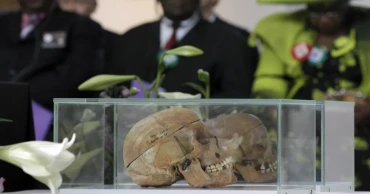
Namibia holds its first genocide remembrance day to mark mass killings by colonial ruler Germany
Namibia marked the mass killings of Indigenous people in the early 20th century by former colonial ruler Germany with its first genocide remembrance day on Wednesday.
The day was declared a national holiday last year by the government and was commemorated for the first time with a ceremony in the gardens of the national Parliament in the capital, Windhoek.
Between 1904 and 1908, tens of thousands of Herero and Nama people were massacred or forced into concentration camps and starved by German colonial forces under the command of Gen. Lothar von Trotha, in what was then German South West Africa.
Namibia votes potentially electing its first female president
Germany formally recognized the atrocities as a genocide in 2021 and agreed to pay Namibia 1.1 billion euros ($1.3 billion) over the course of 30 years to fund various projects. Namibia has rejected that and is pushing for more money and formal reparations for the massacres.
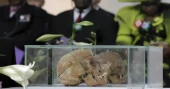
“Many people from the two communities were forced into concentration camps where they were starved to death and their skulls were taken to Germany for so-called scientific research," Namibian President Netumbo Nandi-Ndaitwah said at Wednesday's ceremony. “These horrendous acts are now part of our collective history of resistance and resilience.”
The killings of Herero and Nama men, women and children have been recognized as the first genocide of the 20th century. Historians say von Trotha, who was sent to German South West Africa to put down an uprising by the Herero people, instructed his troops to wipe out the entire tribe. They say that the majority of the Herero people, about 65,000, were killed as were at least 10,000 Nama.
Symbolic candles were lit at Wednesday's remembrance ceremony, which was also attended by leaders and descendants of the Herero and Nama people. Namibia chose May 28 as the day to mark the genocide because it was the date Germany finally gave the order to close down the concentration camps.
Germany was the colonial ruler of Namibia from 1884 until 1915, when it gave up the territory to South Africa. Namibia finally gained independence from South Africa in 1990.
There have been calls by the affected communities in Namibia for years for the government to declare a remembrance day in honour of those who died.
Horse Therapy Program in Namibia brings joy to children with learning challenges
Talks between Germany and Namibia over finding a suitable settlement for Germany's role in the genocide have been going on for a decade. In 2018, Germany also returned more than a dozen skulls and other human remains that were taken from Namibia for pseudo-scientific racial experiments. They had been stored in German hospitals, museums and universities for decades.
1 year ago