africa
Congo schools reopen in Ebola epicenter amid parents’ concerns
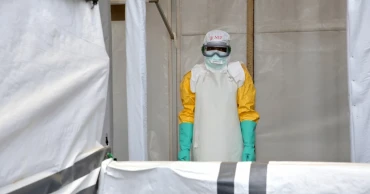
Schools reopened across the Democratic Republic of Congo on Tuesday for the new academic year, even as parents and teachers expressed concerns over the continued spread of Ebola in Ituri province, the epicenter of the outbreak.
The reopening comes as the deadly virus continues to spread rapidly. Government figures showed that 2,950 people had died from Ebola among 6,100 confirmed cases as of Tuesday.
The teachers’ union in Ituri had urged authorities to postpone the reopening of schools over health concerns. However, the government went ahead with the academic calendar.
UNICEF said it is working with authorities to strengthen measures aimed at preventing Ebola transmission in schools.
Several schools in Ituri, particularly government-run institutions, saw low attendance on the first day. A number of parents chose to keep their children at home.
Aimerance Vahweka, a parent in Bunia, the provincial capital, said she was surprised by the decision to reopen schools and decided not to send her child back yet.
“I do not really see an increase in prevention measures,” she said.
Education officials said schools were being provided with noncontact infrared thermometers, hand sanitizers and hand-washing facilities as part of preventive measures.
Teachers are also educating students about hygiene practices, including frequent handwashing and the proper use of hand sanitizer, said Etienne Ndjabu, a teacher at a private school in Bunia.
Health and education experts, however, warned that significant challenges remain, particularly because many schools do not have reliable access to clean water and funding for the response remains insufficient.
“There are also significant logistical challenges, particularly in remote areas, where the delivery of equipment and learning materials may be delayed,” said Greg Ramm, director of Save the Children in Congo.
Children aged four and below have been particularly vulnerable, with the highest case-fatality rate among all age groups at 60%, according to available health data.
Dounia Dekhili, UNICEF emergency coordinator in DRC, said authorities need to balance the protection of students, teachers and communities with children's right to education.
The current outbreak, caused by the rare Bundibugyo virus, is reportedly the fastest-spreading Ebola outbreak in history and has reached more than 60 health zones.
Authorities believe the virus had been circulating undetected in communities since at least February. The World Health Organization has warned that the outbreak could surpass the scale of the West African Ebola epidemic of 2014-2016.
The response has also been affected by repeated strikes by health workers over delays in salary payments.
Efforts to control the outbreak have been further complicated by the absence of an approved vaccine or specific treatment. Congolese authorities have begun administering thousands of doses of the Ervebo vaccine, which the WHO says may offer some protection.
Ongoing conflict between government forces and rebel groups in eastern Congo, attacks targeting health workers and large-scale population movements have also made containment efforts more difficult.
2 days ago
Guinea-Bissau votes on expanded presidential powers ahead of December election
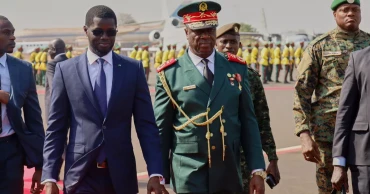
Voters in Guinea-Bissau went to the polls Sunday in a referendum on a proposed new constitution that would expand presidential powers and reduce parliamentary representation ahead of the country’s December general election.
The referendum is being held as the West African nation seeks to return to democratic rule following a military takeover last November after a disputed presidential election in which former President Umaro Sissoco Embaló and opposition candidate Fernando Dias both claimed victory.
The proposed constitution, drafted by the military-backed National Transitional Council, would strengthen the president’s authority over the prime minister and reduce the number of parliamentary seats from 102 to 65.
The authorities argue that a smaller parliament would facilitate more effective debate, while clearer presidential powers would help resolve longstanding tensions between the president and prime minister, which they blame for political instability.
Gen. Tomás Djassi, head of the armed forces, said the constitutional changes were intended to prevent recurring conflicts between the two top executive offices and clarify the president’s role as the country’s national symbol.
Opposition parties, however, have urged voters to boycott the referendum, arguing that the proposed constitution would concentrate power in the hands of the military leadership and weaken parliament, the prime minister and political parties.
Muniro Conté, spokesperson for the African Party for the Independence of Guinea and Cape Verde, said the proposed charter could deepen political and social divisions and undermine the will of voters.
The military takeover last year further deepened concerns over democratic governance in West Africa, where several countries have come under military rule in recent years.
Guinea-Bissau, which gained independence from Portugal in 1973, has experienced repeated coups and attempted coups. A failed coup attempt was reported just one month before last year’s military takeover.
The country, home to about 2.2 million people, has significant natural resources but more than half of its population lives in poverty. It is also considered a major transit point for drug trafficking between Latin America and Europe, which analysts say contributes to its political instability.
Nearly 915,000 voters are registered for Sunday’s referendum. However, many citizens say they are unfamiliar with the proposed constitution.
Some residents have decided to boycott the vote, while others plan to vote against the proposal.
Political analysts have also questioned whether the military government has the legitimacy to amend the constitution, amid growing public discontent.
Guinean political analyst Paulino Quadé questioned who drafted the proposed constitution, whose interests it serves and who would ultimately benefit from the changes.
4 days ago
Armed men ambush patrol in South Sudan, kill 2 UN peacekeepers
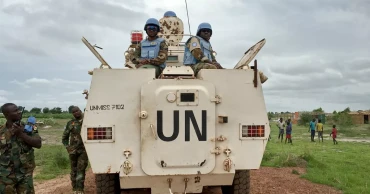
Armed men ambushed a patrol traveling to a remote area of South Sudan on Monday, killing two U.N. peacekeepers, the United Nations Mission in South Sudan (UNMISS) said.
Although violence is widespread in the African country, attacks targeting U.N. peacekeepers are rare.
No group immediately claimed responsibility for the attack. Seven others were wounded, including three peacekeepers, two members of the South Sudanese police and two civilian staff members, UNMISS said in a statement.
The two peacekeepers killed and the three wounded were from Ethiopia, U.N. spokesperson Stéphane Dujarric said.
The patrol was traveling to the Pajut area in Jonglei state when it came under attack. UNMISS said it deployed a “Quick Reaction Force” to secure the area and assist with the emergency response.
“Such deadly violence targeting UNMISS personnel who are serving to support peace in South Sudan is unacceptable,” Anita Kiki Gbeho, head of UNMISS, said in the statement.
The deaths bring to nine the number of peacekeepers killed by militias since Jan. 1, Dujarric said, warning that attacks against U.N. peacekeepers may constitute war crimes under international law.
U.N. Secretary-General António Guterres condemned the ambush “in the strongest possible terms” and called for a prompt investigation leading to the prosecution of those responsible, Dujarric said Monday.
“The secretary-general reaffirms the United Nations' commitment to stand with the victims and their families during this profoundly difficult time,” the spokesperson said.
Government forces in South Sudan have been fighting fighters and militias loyal to opposition leader Riek Machar, who was suspended last year as vice president and faces charges including treason and other offenses. Machar has rejected the allegations as politically motivated.
A 2018 peace agreement between President Salva Kiir and Machar, who is currently under house arrest, has effectively collapsed, raising fears that the country could return to full-scale civil war.
More than 450 incidents of violence against humanitarian workers and assets were reported between January and July, according to U.N. figures. That was more than double the number recorded during the same period last year.
The conflict intensified in December after opposition forces seized government outposts in Jonglei. The government has conducted a counteroffensive since January, including aerial bombardments and ground attacks, despite its stated commitment to the peace agreement.
The United States has called for dialogue between Kiir and Machar. Earlier this year, Washington urged “urgent action to uphold peace and mitigate the risk of civil war through an immediate return to dialogue among the parties to the 2018 peace agreement.”
9 days ago
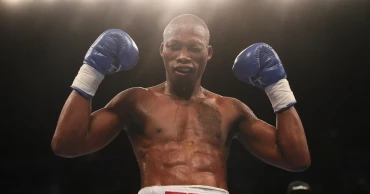
Four arrested over killing of former world boxing champion Zolani Tete
South African police have arrested four people in connection with the killing of former world boxing champion Zolani Tete, authorities said Monday.
Tete was sitting in his car outside his home in Mdantsane, Eastern Cape, last week when two armed men wearing balaclavas opened fire on the vehicle, police said.
Tete was reportedly waiting for the gate of his residence to open when the attackers ambushed him.
A woman who was inside the vehicle was also shot and injured. She was later taken to a hospital for treatment.
Police said one of the four suspects was arrested two days ago and was due to appear in court on Monday. The other three suspects are expected to appear in court at a later date.
Tete won the World Boxing Federation flyweight title in 2007 and held it until 2008. He later captured the World Boxing Organization bantamweight title in 2017 and again in 2019.
10 days ago
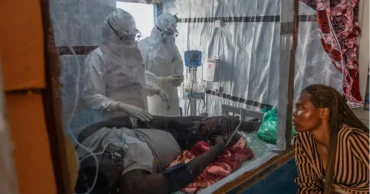
Here's data showing Congo's Ebola outbreak is on track to surpass history's largest
The Ebola outbreak spreading rapidly in Congo has yet to reach its peak and could be several times larger than currently reported, according to data from Congolese health authorities and the Africa Centres for Disease Control and Prevention (Africa CDC).
The World Health Organization says the outbreak is advancing at an unprecedented pace and could eventually surpass the 2014-2016 Ebola epidemic in West Africa, which killed more than 11,000 people.
The latest outbreak has so far resulted in 2,516 deaths among 5,290 confirmed cases in Congo’s vast eastern region. The spread has been fueled by a highly mobile population, including people displaced by armed conflict, as well as widespread mistrust of health authorities.
Only about 10% of current cases are linked to known contacts, far below the 90%-95% level considered necessary to bring an outbreak under control, according to Yap Boum, head of emergency preparedness and response at the Africa CDC.
Boum told reporters Thursday that authorities may be detecting only 30%-40% of the actual cases.
Rapid spread raises alarmBy the 13th week after the outbreak was officially declared, Congo had recorded about 10 times as many cases and seven times as many deaths as the West African Ebola outbreak had recorded at a comparable stage, according to Africa CDC data.
The 2014-2016 outbreak eventually caused more than 28,000 cases and over 11,000 deaths.
Congo’s previous deadliest Ebola outbreak, from 2018 to 2020, recorded about 3,400 cases and more than 2,200 deaths. The current outbreak is progressing much faster, with confirmed cases increasing at roughly 18 times the previous rate and deaths at about 13 times the rate.
Experts are particularly concerned that the outbreak may have started in the mining town of Mongbwalu as early as February, months before authorities officially declared it on May 15.
Contact tracing remains limitedAfrica CDC data from the past three weeks shows that health workers have traced 82% of the 19,630 contacts already identified.
However, the agency estimates that nearly 100,000 contacts should have been identified based on an average of 60 contacts per confirmed case. That means the actual contact-tracing rate is only about 16% of what was expected.
The outbreak is caused by the Bundibugyo virus, a strain for which there are no approved vaccines or treatments. Its symptoms can also be milder than those associated with the more common Ebola virus, potentially leading some patients to delay seeking medical help.
Outbreak reaches new provinceThe number of affected health zones has expanded from three at the beginning of the outbreak to 56 across six provinces.
Bas-Uele province, which had previously reported no cases, has recorded two cases in separate locations during the past week and a half, according to government data.
There are signs of improvement in some areas, however. South Kivu province, for example, has gone 79 days without reporting a new case.
Most deaths occur outside treatment centersCommunity deaths, meaning those occurring outside Ebola treatment centers, have increased steadily. They accounted for 97% of reported deaths on Aug. 17, according to Africa CDC figures.
Yet only about 20% of health alerts are coming from communities, highlighting the challenge of persuading people to report suspected cases.
The overall case fatality rate stands at 46.7%, but it is considerably higher in some areas. In North Kivu, one of the country's most populous provinces, the fatality rate has reached 68.2%.
Health officials say people are often delaying or avoiding treatment because of misinformation, reliance on traditional remedies, fears of isolation and concerns about being quarantined for symptoms that may turn out to be caused by other illnesses. The relatively mild early symptoms of the Bundibugyo strain may also discourage people from seeking care quickly.
12 days ago
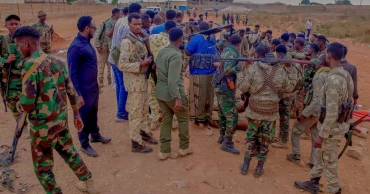
At least 4 civilians killed, 98 wounded in Somalia clashes
Fierce clashes between Somali government forces and militias in the southwestern city of Baidoa have killed dozens of fighters and left at least four civilians dead and 98 others injured, a hospital official said Tuesday.
The fighting erupted early Monday after militia groups attacked government positions on the outskirts of Baidoa, a city of more than half a million people, many of whom have been displaced by conflict and drought.
Somali government officials said nearly 30 attackers were killed, while authorities in the South West state claimed the death toll among the attackers was around 50. The figures could not be independently verified, and no official toll was immediately available for government casualties.
Dr. Abdikafi Omar Mohamud, head of the emergency department at Bay Regional Hospital, said four civilians were killed and 98 others wounded in the clashes. The injured included 28 women and an elderly man who was struck by stray bullets.
The violence further strained health services already struggling to care for residents and displaced people in Baidoa, located about 245 kilometers (150 miles) northwest of Mogadishu.
Mohamud said the hospital had only 40 beds available and was forced to set up an emergency tent to treat the large number of casualties. Medical staff were also facing shortages of essential medicines.
Calm returned to Baidoa on Tuesday, with security forces patrolling major streets and inspecting buildings and vehicles damaged during the fighting. Residents gradually came out of their homes, although troops maintained a strong presence in key areas.
The clashes began shortly after 5am Monday when two explosions were heard near a military base east of Baidoa. Heavy fighting then broke out around another military position in Bonkay, south of the city, before armed men entered Baidoa and exchanged gunfire with government forces.
Samira Gaid, a regional security analyst at Balqiis Insights, said fighters loyal to former South West state President Abdiaziz Hassan Mohamed Laftagareen managed to push government troops out of parts of the city for about six hours before being forced back.
She said fighters from al-Shabab, an al-Qaida-linked extremist group, separately attacked two Somali military positions around Baidoa. The timing of the attacks raised allegations that the group may have coordinated with Laftagareen's forces.
The federal government said the attackers included Laftagareen-aligned militias and al-Shabab fighters. It said its forces killed nearly 30 attackers and captured several others.
South West Internal Security Minister Isak Mohamed Korsaar said government forces recovered the bodies of al-Shabab fighters and detained others.
“The militias that attacked us were not alone,” Korsaar told reporters, saying authorities had confirmed that al-Shabab fighters had joined the assault.
The latest clashes came amid months of political tensions over the leadership and electoral process in South West state. The federal government rejected Laftagareen's disputed indirect re-election in March.
Federal forces took control of Baidoa on March 30, prompting Laftagareen, who had led South West since 2018, to announce his resignation.
Gaid warned that continued political disputes could provide extremist groups with opportunities to expand their influence.
“When elite disputes are settled militarily, they create the conditions that the terrorist group exploits,” she said, adding that Somali civilians ultimately bear the consequences.
15 days ago
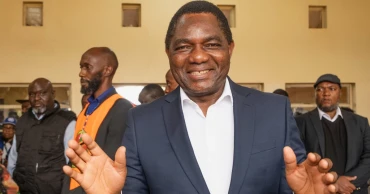
Zambia President Hichilema reelected for second term
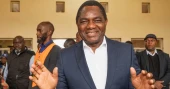
Zambian President Hakainde Hichilema has been reelected for a second five-year term, the Electoral Commission of Zambia announced early Tuesday.
Hichilema was declared the outright winner of last Thursday’s presidential election after securing 61.4% of the nearly 5 million votes cast, eliminating the need for a runoff.
According to the commission, Hichilema received 2,965,326 votes, while his closest rival, opposition leader Brian Mundubile, secured 1,856,217 votes, or about 38% of the total.
“I therefore declare, Hichilema Hakainde S, to be president-elect of the Republic of Zambia this 18th day of August, 2026,” commission chairperson Mwangala Zaloumis said.
In a statement Tuesday, Hichilema welcomed the results and thanked Zambians for giving him another term. He also extended a message to those who supported the opposition.
“To those citizens who preferred the ideas presented by our opponents, we hear you, and we will continue to work for you to ensure that every Zambian benefits from the development we are delivering,” he said.
There was no immediate reaction from Mundubile.
Hichilema’s victory came after a closely watched election in which vote counting was suspended Friday and resumed several hours later under heightened security. The commission said some polling station officials had been attacked and ballot papers stolen.
The government also confirmed that several prominent opposition figures were arrested on election night, with police accusing them of posing a threat to state security.
Mundubile said police raided his home in what he described as an attempt on his life.
The election was widely viewed as a test of Hichilema’s economic recovery efforts after Zambia, a copper-rich country, was plunged into a debt crisis in 2020. Hichilema was first elected in 2021 and oversaw the restructuring of the country’s sovereign debt while reducing inflation and helping stabilize the currency.
International observers, including the European Union, said the election was largely peaceful but noted that the wider electoral process took place in an environment that restricted fundamental freedoms.
“Late legal changes, legal uncertainty, and unequal campaign conditions distorted the playing field,” said Michael McNamara, head of the EU election observation mission.
In a pastoral statement, the Zambia Conference of Catholic Bishops also raised concerns over the deployment of the army during the vote-counting process.
“The maintenance of order during elections is constitutionally and statutorily the responsibility of the Zambia Police Service,” the bishops said.
16 days ago
Zambians vote in presidential election testing Hichilema’s economic reforms
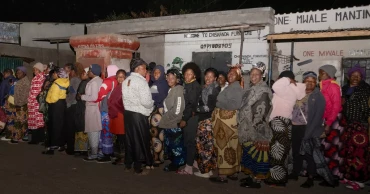
Zambians began voting Thursday in a presidential election that is expected to gauge whether President Hakainde Hichilema’s economic reforms have eased widespread concerns over the rising cost of living.
About 8 million of Zambia’s 22 million people are registered to vote in the one-day election. Voters are also electing members of Parliament and local government councilors. The electoral commission said results are expected Monday.
Before dawn, voters wearing thick jackets against the morning cold formed long lines outside polling stations across Lusaka.
Some gathered around small fires to keep warm as election officials set up ballot boxes, checked voter rolls and prepared polling stations. European Union election observers were present at one polling station in the capital.
Hichilema is facing 13 other presidential candidates, with Brian Mundubile of an opposition alliance expected to pose the strongest challenge.
The election is widely viewed as a referendum on Hichilema’s economic performance. He took office in 2021 and is seeking a second term, arguing that he inherited an economy in crisis.
His government has overseen the restructuring of Zambia’s large foreign debt, maintained economic growth and attracted investment, Hichilema says.
But many Zambians say they have yet to see the benefits of those measures, as unemployment, high food prices and unreliable electricity continue to put pressure on household finances.
Hichilema says he needs another five-year term to create jobs, develop infrastructure and expand public services.
The election is also being closely followed internationally because Zambia is a major copper producer and plans to significantly increase output of the metal, which is vital for electric vehicles, renewable energy systems and power grids.
China is Zambia’s largest foreign investor and has extensive interests in the country’s mining sector. The United States, meanwhile, has been seeking a larger role as it works to diversify supplies of critical minerals and reduce dependence on China.
Hichilema has sought investment from both China and Western countries, including the United States, as he aims to raise Zambia’s annual copper production to 3 million metric tons by 2031.
Security concerns and political tensions increased during the final days of the campaign. Police deployed additional personnel and warned against violence, disruptions at polling stations and the spread of fabricated election results.
Opposition parties have accused Hichilema’s government of using state institutions to target political opponents, allegations rejected by the government.
The Tonse Alliance said a police raid on its offices days before the election was politically motivated.
Hichilema himself spent four months in prison on treason charges when he was an opposition leader under former President Edgar Lungu, whom he defeated in the 2021 election.
Lungu remained a major political figure until his death in South Africa last year. A lengthy dispute between his family and the government over his funeral and burial further heightened tensions ahead of Thursday’s vote.
A presidential candidate must secure more than 50% of the vote to win outright and avoid a runoff.
Zambia has long been considered one of southern Africa’s more stable democracies, with a record of largely peaceful transfers of power. Hichilema’s 2021 victory marked the country’s third transfer of power to an opposition candidate since multiparty democracy was restored in 1991.
21 days ago
Zambia election to test Hichilema’s economic record
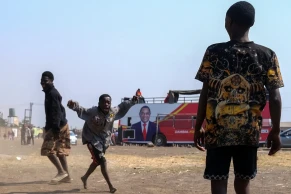
Zambia goes to the polls Thursday in an election that will determine whether President Hakainde Hichilema secures a second five-year term, with voters weighing his economic reforms against persistent concerns over the high cost of living.The southern African country, one of the world's leading copper producers, defaulted on sovereign debt in 2020 amid the COVID-19 pandemic. Since taking office in 2021, Hichilema's government has restructured more than $12 billion in debt owed to foreign governments and private creditors, while reducing inflation and helping stabilize the national currency.
Hichilema's long-term economic strategy includes increasing annual copper production to 3 million metric tons by 2031, more than three times current output. If achieved, the target could place Zambia ahead of the United States and China among major copper-producing nations.
Main challenger
Hichilema, 64, won the presidency in 2021 after losing five previous elections dating back to 2006. A former financial services executive and prominent cattle rancher, he has headed the United Party for National Development since 2006.
He faces 13 other presidential candidates, with analysts identifying opposition leader Brian Mundubile as his strongest challenger. The 55-year-old lawyer heads the Tonse Alliance, an opposition coalition he took charge of in January following internal disputes.
Key election issues
Although inflation has fallen and the kwacha has strengthened, many Zambians continue to struggle with expensive food and energy. Economist Trevor Hambayi said the country's improved economic indicators had yet to translate into significant benefits for ordinary citizens.
Hichilema has pledged to expand schools, healthcare facilities and roads and create more employment. His government has also faced criticism over alleged restrictions on political dissent.
The Tonse Alliance on Tuesday accused the government of ordering a raid on its offices in which vehicles and communications equipment were seized, calling the action politically motivated. Authorities have not accepted the allegation.
Dispute over former president's remains
Political tensions between Hichilema and his predecessor, the late Edgar Lungu, have continued after Lungu's death in South Africa in June 2025.
Lungu and Hichilema had a long-running political rivalry. In 2017, Hichilema was detained for four months on treason charges after Lungu accused his motorcade of failing to give way to the presidential convoy.
After Lungu's death, his family and the government became embroiled in a dispute over his burial. The government sought a state funeral, while Lungu's family opposed a ceremony presided over by Hichilema. South Africa's Supreme Court of Appeal eventually ruled in favor of the family, although burial arrangements remain unsettled.
Interest from China and US
China remains Zambia's largest foreign investor, with major interests in copper and cobalt, minerals considered essential for electronics, electric vehicles and other advanced technologies.
The United States has also increased its interest in Zambia's critical minerals. Zambia has alleged that Washington linked access to the minerals with a proposed $2 billion health agreement, a claim rejected by the US.
How voting works
About 8 million Zambians are registered to vote in Thursday's election, which will also elect members of Parliament and local government representatives.
A presidential candidate must secure more than 50% of the vote to win outright. If no candidate reaches that threshold, a second-round runoff will be held.
22 days ago
Drone strikes hit key oil facilities in western Libya as car bomb kills officer in east
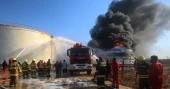
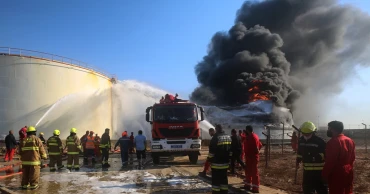
Firefighters in western Libya battled a huge blaze Tuesday caused by a drone strike on an oil facility a day earlier, as the Mediterranean coastal town came under a series of drone attacks targeting vital oil installations.
The drone strikes continued Tuesday, hitting the town’s power plant and oil refinery, Libya’s state-run National Oil Corporation said.
The attacks highlighted the fragile security situation surrounding Libya’s critical infrastructure. In the eastern city of Benghazi, meanwhile, a car bomb killed a senior military officer affiliated with a self-styled military force on Monday, in the latest bombing to hit the conflict-ridden North African country.
No group has claimed responsibility for either the drone attacks in Zawiya, about 47 kilometers (30 miles) west of the capital, Tripoli, or the bombing in Benghazi.
The first drone strike Monday sparked a major fire at a gasoline-storage tank at the refinery. The blaze continued through the night and into Tuesday afternoon, according to the Civil Defense agency. Health authorities reported no casualties.
Local media footage showed huge flames and fireballs erupting from the storage tank, sending thick black and orange smoke into the sky as firefighters used what appeared to be foam or water to battle the fire.
While firefighters were dealing with the blaze, another drone struck near a key oil tank but caused no casualties, the National Oil Corporation said. The tank, which contained 4.5 million liters of fuel when it was hit, collapsed, prompting the company to declare a state of maximum emergency at the facility.
On Tuesday, two drones struck the town’s power plant. One damaged the facility’s firefighting system, while the other landed near its main fuel-storage area and started a fire. The national oil company said firefighters quickly brought the blaze under control and no one was injured.
Zawiya’s oil infrastructure, which includes Libya’s largest refinery, an export terminal and a power plant, has frequently come under attack. Over the weekend, the national oil company said drones struck a fuel tank and a desalination plant connected to the oil facilities, damaging the tank.
By late Tuesday, the National Oil Corporation said all the fires had been extinguished.
The latest attacks come amid rising tensions between Libya’s western government and warlord Mohamed Bahroun, who controls Zawiya. Much of western Libya remains under the control of local militias that are loosely aligned with Prime Minister Abdul-Hamid Dbeibah’s government in Tripoli.
Jalel Harchaoui, an analyst affiliated with the Royal United Services Institute in London, said the warlord has been increasingly cornered by the government and that his forces “are likely to resort to desperate measures.”
The bombing in Benghazi on Monday evening killed a senior officer serving under powerful military commander Khalifa Hifter.
Maj. Gen. Fawzy al-Mansouri, director of military intelligence for Hifter’s self-styled Libyan National Army, was killed when an explosives-laden vehicle detonated near his car in the Sayyida Aisha neighborhood of Benghazi, the LNA said.
The LNA is allied with one of Libya’s two rival administrations, which controls much of the country’s eastern and southern regions.
Libya has remained largely unstable since the 2011 uprising that developed into a civil war, ultimately overthrowing and later leading to the death of longtime ruler Moammar Gadhafi.
The prolonged turmoil allowed militias to expand their wealth and influence, particularly in Tripoli and western Libya.
The country has for years been divided between rival administrations in the east and west, each supported by armed groups and foreign governments. Dbeibah’s government currently governs the west, while Prime Minister Ossama Hammad’s administration controls the east.
Turkish Foreign Minister Hakan Fidan is scheduled to visit Libya this week, with plans to travel to both Tripoli and Benghazi.
22 days ago