africa
Attacks on Darfur camps in Sudan leave at least 100 people dead
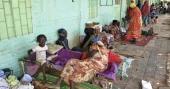
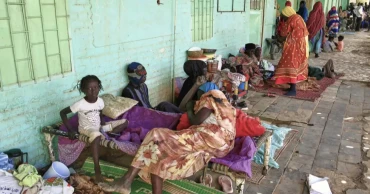
Sudan's notorious paramilitary group launched a two-day attack on famine-hit camps for displaced people that left more than 100 dead, including 20 children and nine aid workers, in the Darfur region, a UN official said Saturday.
The Rapid Support Forces and allied militias launched an offensive on the Zamzam and Abu Shorouk camps and the nearby city of el-Fasher, the provincial capital of North Darfur province, on Friday, said UN Resident and Humanitarian Coordinator in Sudan Clementine Nkweta-Salami, AP reports.
El-Fasher is under the control of the military, which has fought the RSF since Sudan descended into civil war two years ago, killing more than than 24,000 people, according to the United Nations, though activists say the number is likely far higher.
The camps were attacked again on Saturday, Nkweta-Salami said in a statement. She said that nine aid workers were killed “while operating one of the very few remaining health posts still operational” in Zamzam camp.
“This represents yet another deadly and unacceptable escalation in a series of brutal attacks on displaced people and aid workers in Sudan since the onset of this conflict nearly two years ago,” she said.
Nkweta-Salami didn’t identify the aid workers but Sudan’s Doctors’ Union said in a statement that six medical workers with the Relief International were killed when their hospital in Zamzam came under attack on Friday.
South Sudan teetering on the edge of renewed civil war, UN envoy says
In a statement Saturday evening, Relief International mourned the death of its nine workers, saying they were killed the previous day in a “targeted attack on all health infrastructure in the region,” including the group’s clinic.
The group said the central market in Zamzam along with hundreds of makeshift homes in the camp were destroyed in the attack.
The offensive forced about 2,400 people to flee the camps and el-Fasher, according to the General Coordination for Displaced Persons and Refugees, a local group in Darfur.
Zamzam and Abu Shouk shelter more than 700,000 people who have been forced to flee their homes across Darfur during past bouts of fighting in the region, Nkweta-Salami said.
1 year ago
Hope of finding survivors fades in aftermath of Dominican club roof collapse
Rescue crews in the Dominican Republic on Thursday dug through the remains of a legendary nightclub whose roof collapsed earlier this week, killing at least 184 people, but hope of finding survivors was slim.
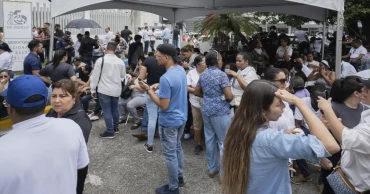
Meanwhile, dozens of people in the capital of Santo Domingo still searched for their loved ones, growing frustrated upon getting no answers after visiting hospitals and the country's forensic institute.
Doctors warned that some of the two dozen patients who remained hospitalized were still not in the clear, especially the eight who were in critical condition.
“If the trauma is too great, there's not a lot of time” left to save patients in that condition, said Health Minister Dr. Víctor Atallah.
He and other doctors said that injuries include fractures in the skull, femur and pelvis caused by slabs of cement falling on those attending a merengue concert at the Jet Set nightclub in Santo Domingo, where more than 200 were injured.
The government said Wednesday night that it was moving to a recovery phase focused on finding bodies, but Juan Manuel Méndez, director of the Center of Emergency Operations, said crews at the scene were still looking for victims and potential survivors although no one has been found alive since Tuesday afternoon.
98 people killed in Dominican Republic nightclub roof collapse
“We’re not going to abandon anyone. Our work will continue,” he said.
The legendary club was packed with musicians, professional athletes and government officials when dust began falling from the ceiling and into people’s drinks early Tuesday. Minutes later, the roof collapsed.
Victims include merengue icon Rubby Pérez, who had been singing to the crowd before the roof fell; former MLB players Octavio Dotel and Tony Enrique Blanco Cabrera; and Nelsy Cruz, the governor of the northwestern province of Montecristi whose brother is seven-time Major League Baseball All-Star Nelson Cruz.
Also killed was a retired United Nations official; saxophonist Luis Solís, who was playing onstage when the roof fell; New York-based fashion designer Martín Polanco; the son and daughter-in-law of the minister of public works; the brother of the vice minister of the Ministry of Youth; and three employees of Grupo Popular, a financial services company, including the president of AFP Popular Bank and his wife.
Randolfo Rijo Gómez, director of the country's 911 system, said it received more than 100 calls, with several of those made by people buried under the rubble. He noted that police arrived at the scene in 90 seconds, followed minutes later by first response units. In less than half an hour, 25 soldiers, seven fire brigades and 77 ambulances were activated, he said.
Crews used dogs and thermal cameras to search for victims, rescuing 145 survivors from the rubble, authorities said.
It wasn’t immediately clear what caused the roof to collapse, or when the Jet Set building was last inspected.
The government said late Wednesday that once the recovery phase ends, it will launch a thorough investigation.
At least 13 dead, 70 injured in roof collapse at Dominican Republic discotheque
The club issued a statement saying it was cooperating with authorities. A spokesperson for the family that owns the club told The Associated Press that she passed along questions about potential inspections.
Meanwhile, a spokesperson for the Ministry of Public Works referred questions to the mayor’s office. A spokesperson for the mayor’s office did not respond to a request for comment.
1 year ago
At least 13 dead, 70 injured in roof collapse at Dominican Republic discotheque
At least 13 people died and more than 70 were injured after a roof fell at a discotheque in the capital of the Dominican Republic early Tuesday, authorities said.
Crews were searching for potential survivors in the rubble at Jet Set in Santo Domingo, said Juan Manuel Méndez, director of the Center of Emergency Operations.
“We presume that many of them are still alive, and that is why the authorities here will not give up until not a single person remains under that rubble,” he said.
Among the injured is merengue singer Rubby Pérez, who was performing when the roof collapsed, officials said.
President Luis Abinader wrote on X that all rescue agencies are “working tirelessly” to help those affected.
5 killed as under-construction elevated road collapses in Bangkok
“We deeply regret the tragedy that occurred at the Jet Set nightclub. We have been following the incident minute by minute since it occurred,” he wrote.
At one hospital where the injured were taken, an official stood outside reading aloud the names of survivors as a crowd gathered around her and yelled out the names of their loved ones.
It wasn't immediately clear what caused the roof to collapse.
1 year ago
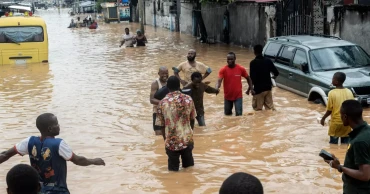
Death toll from Kinshasa flooding rises to 33 as authorities rush to aid victims
The number of confirmed deaths from severe flooding in Kinshasa, the capital of the Democratic Republic of Congo, rose to 33 on Monday, as emergency teams worked to evacuate and assist hundreds of residents trapped in their homes.
Congolese Interior Minister Jacquemin Shabani said 10 additional deaths were confirmed as of Sunday evening, adding to the 23 fatalities reported a day earlier. The flooding began after days of heavy rain last week, which caused the Ndjili River to overflow on Friday, inundating vast parts of the city and cutting access to over half of it.
Although water levels began to recede by Monday morning, several key roads remained blocked, limiting traffic flow. Many Kinshasa residents have criticized the government for its delayed response to the disaster. Officials stated that most of the casualties occurred due to collapsing walls as the floods hit.
At least 16 dead in flooding and tornadoes as storms slash from Texas to Ohio
The city’s main road connecting the airport and linking Kinshasa to the rest of the country was heavily damaged, but Governor Daniel Bumba assured that it would reopen to all vehicles within 72 hours.
Floodwaters also disrupted access to drinking water in at least 16 of the city's communes, with water treatment facilities among the damaged infrastructure, the Interior Ministry said.
Authorities have established at least four emergency shelters across Kinshasa to house the displaced, now numbering in the hundreds.
President Félix Tshisekedi was expected to visit affected communities and hospitals treating the injured on Monday.
Massive march storm to bring blizzards, tornadoes, flooding, and fires across US
This disaster echoes a similar tragedy in 2022 when flooding killed more than 100 people in the capital. It also comes as the country grapples with a worsening humanitarian crisis in its eastern region, more than 2,600 kilometers away, where fighting with armed rebel groups has intensified since February.
Source: With input from agency
1 year ago
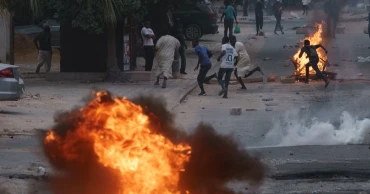
Senegal revises amnesty law that covered deadly protests
Senegal's parliament approved revisions to a law passed under the former president that granted amnesty for offences committed during deadly opposition protests in the West African country.
The law was passed in March 2024, shortly before the presidential election, and granted amnesty for offences by both security forces and protesters during violent demonstrations between 2021 and 2024. Rights group Amnesty International said at least 65 people were killed during the clashes.
Rights groups and lawyers criticized the law because it prevented any prosecution of the sponsors and perpetrators of the violence.
The protests were triggered by concerns that the president at the time, Macky Sall, was attempting to muzzle his opponents and seek a third term in office despite being prevented by the constitution. Sall denied seeking a third term.
The protests were exacerbated by the arrests in 2023 of the top opposition figures Bassirou Diomaye Faye and Ousmane Sonko on charges that were largely seen as politically motivated.
Faye and Sonko were released in March 2024 after the amnesty law took effect less than two weeks before the presidential election. Faye was catapulted into the presidency when Sonko — who was barred from running due to a previous conviction — backed the political novice and Faye easily beat the candidate backed by Sall.
Sudan aid groups say 54 killed in military airstrike
On Wednesday, Senegalese lawmakers adopted a revision of the law removing amnesty for specific crimes including murder, torture and forced disappearance. The measure passed by a vote of 126-20.
Aissata Tall Sall, the leader of the opposition coalition Takku Wallu Senegal, criticized the measure as a "law of settling scores that risks further dividing the Senegalese, instead of reconciling them.”
“The new law does not seek revenge but justice,” Ismaïla Diallo, a lawmaker for the ruling PASTEF party, said.
1 year ago

Sudan aid groups say 54 killed in military airstrike
Aid organisations in Sudan reported on Tuesday that at least 54 people were killed in a military airstrike on a local market in the country’s western region.
The attack on Monday targeted the village of Tora, causing a large fire, as stated by Adam Rejal, a spokesperson for the General Coordination, a local organisation assisting displaced people in Darfur.
Brig. Gen. Nabil Abdullah, a spokesman for the Sudanese military, denied targeting civilians, describing the allegations as “incorrect” and claiming they are often made when the military exercises its constitutional and legal right to address hostile threats.
South Sudan teetering on the edge of renewed civil war, UN envoy says
The airstrike severely damaged much of the weekly market in Tora, which lies 80 kilometres (50 miles) north of el-Fasher, the capital of North Darfur province.
Support Darfur Victims, a local group aiding those affected by the Darfur conflict, released graphic video footage that appeared to show burnt structures and charred bodies on the ground.
More than half of the deceased were women, according to a casualty list provided by Rejal. The list also showed that at least 23 people were injured and seven went missing.
Rejal described the strike as “a crime against humanity and a clear violation of all international and humanitarian laws and conventions.”
El-Fasher is under the control of the Sudanese military, despite daily attacks from the rival paramilitary group, the Rapid Support Forces (RSF).
The strike on Monday is the latest in a series of deadly attacks in the ongoing war, which began in April 2023 when tensions between the military and the RSF escalated into full-scale conflict across Sudan.
The war has devastated the capital and other urban areas, claiming over 28,000 lives, displacing millions, and forcing some families to resort to eating grass to survive as famine spreads throughout the country. Some estimates suggest a much higher death toll.
Sudan’s military retakes govt headquarters
The conflict has been marked by atrocities such as mass rape and ethnically motivated killings, which are considered war crimes and crimes against humanity, particularly in the western region of Darfur, according to the United Nations and international human rights groups.
The Sudanese military has made gradual advances against the RSF in recent months, including regaining control of most key strategic and government buildings in the capital, Khartoum, in March, including the Republican Palace, which housed the pre-war government.
1 year ago

South Sudan teetering on the edge of renewed civil war, UN envoy says
South Sudan is teetering on the edge of renewed civil war, the top UN official in the world’s youngest nation warned on Monday, lamenting the government’s sudden postponement of the latest peace effort.
Calling the situation unfolding in the country “dire,” Nicholas Haysom said international efforts to broker a peaceful solution can only succeed if President Salva Kiir and his rival-turned-vice president, Riek Machar, are willing to engage “and put the interests of their people ahead of their own.”
There were high hopes when oil-rich South Sudan gained independence from Sudan in 2011 after a long conflict. But the country slid into a civil war in December 2013 largely based on ethnic divisions when forces loyal to Kiir, an ethnic Dinka, battled those loyal to Machar, an ethnic Nuer.
More than 400,000 people were killed in the war, which ended with a 2018 peace agreement that brought Kiir and Machar together in a government of national unity. Under the agreement, elections were supposed to be held in February 2023, but they were postponed until December 2024 — and again until 2026.
The latest tensions stem from fighting in the country’s north between government troops and a rebel militia, known as the White Army, which is widely believed to be allied with Machar.
South Africa president denies white persecution
Earlier this month, a South Sudanese general was among several people killed when a United Nations helicopter on a mission to evacuate government troops from the town of Nasir, the scene of the fighting in Upper Nile state, came under fire. Days earlier on March 4, the White Army overran the military garrison in Nasir and government troops responded by surrounding Machar’s home in the capital, Juba, and arresting several of his key allies.
Haysom said tensions and violence were escalating “particularly as we grow closer to elections and as political competition increases, sharpens between the principal players.”
He said Kiir and Machar don’t trust each other enough to display the leadership needed to implement the 2018 peace deal and move to a future that would see a stable and democratic South Sudan.
“Rampant misinformation, disinformation and hate speech is also ratcheting up tensions and driving ethnic divisions, and fear,” Haysom said.
“Given this grim situation,” he said, “we are left with no other conclusion but to assess that South Sudan is teetering on the edge of a relapse into civil war.”
Haysom, who heads the nearly 18,000-member U.N. peacekeeping mission in South Sudan, warned that a relapse into open war would lead to the same horrors that ravaged the country, especially in 2013 and 2016.
He said the UN takes the threat of the “ethnic transformation” of the conflict very seriously.
To try to prevent a new civil war, the UN special envoy said the peacekeeping mission is engaging in intense shuttle diplomacy with international and regional partners, including the African Union.
Haysom said the collective message of the regional and international community is for Kiir and Machar to meet to resolve their differences, return to the 2018 peace deal, adhere to the ceasefire, release detained officials and resolve tensions “through dialogue rather than military confrontation.”
1 year ago

South Africa president denies white persecution
South African President Cyril Ramaphosa dismissed claims that white people are being persecuted in the country, calling it a "completely false narrative" in his latest attempt to refute allegations from US President Donald Trump, Elon Musk, and some white minority groups in South Africa.
Elon Musk, born in South Africa, has frequently accused the country's Black-led government of being anti-white. Over the weekend, he reiterated a claim on social media that some South African political figures are “actively promoting white genocide.”
South African NGOs fear HIV treatment disruptions amid Trump’s aid freeze
In his weekly address, Ramaphosa urged South Africans not to let external events divide them. He particularly emphasized the need to challenge the "completely false narrative" that the country is targeting individuals of a specific race or culture for persecution.
Though Ramaphosa did not name names, his statement appeared to be a direct response to accusations made by Trump and others that South Africa is deliberately mistreating the white Afrikaner minority by encouraging violent attacks on their farms and introducing a law to seize their land.
These allegations were central to an executive order Trump issued last month, which cut funding to South Africa’s government while offering refugee status to Afrikaners in the U.S.
Afrikaners, descendants of Dutch and French colonial settlers, played a key role in South Africa’s apartheid government, which oppressed non-white populations. However, since apartheid ended in 1994, South Africa has made significant progress in reconciling its racial groups.
Musk, in his social media post on X, referred to a rally in South Africa where leaders of a far-left opposition party, the Economic Freedom Fighters, sang a song with the lyrics “Kill the Boer, the farmer.” The term "Boer" refers to Afrikaners.
South African miner recalls horrors of months spent underground
“Very few people know that there is a major political party in South Africa that is actively promoting white genocide,” Musk wrote, linking to a video of the rally.
The Economic Freedom Fighters, South Africa's fourth-largest party in Parliament, opposes Ramaphosa's African National Congress. It received 9.5% of the vote in last year’s elections and has been criticised for inflaming racial tensions, particularly for singing the song, which was used during apartheid as a call to resist oppression.
The song's modern-day use has sparked controversy in South Africa. While some parties and groups, including an Afrikaner association, challenged its use in court, it was ruled as hate speech and banned more than a decade ago. However, in 2022, a court determined that it was not hate speech and protected under free speech as it did not incite violence.
Since Trump's executive order, the South African government has been working to correct what it says is misinformation surrounding the issue of white farmers, who sometimes fall victim to violent attacks. While the government condemns these attacks, experts argue there is no evidence of widespread targeting of whites. They suggest that such attacks are part of South Africa's broader violent crime rates, which affect all races.
The Afrikaner group has claimed that farm homicides have been underreported by the police. For instance, it reported eight farm homicides in the three-month period between October and December last year, while the police recorded only one. During the same period, South Africa's police reported a total of 6,953 homicides nationwide.
1 year ago

44 civilians killed in Niger attack
A jihadi group’s assault on a village in western Niger has resulted in the deaths of 44 civilians, according to the country's Interior Ministry.
The attack occurred on Friday afternoon in Fambita, a village within the rural commune of Kokorou, near the tri-border area with Mali and Burkina Faso, the ministry stated. It attributed the attack to the Islamic State in the Great Sahara (EIGS).
At least 10 Nigerian soldiers are killed in an ambush, the army says
The Associated Press was unable to contact EIGS for comment.
"Around 2 p.m., while Muslim worshippers were engaged in Friday prayers, these heavily armed terrorists surrounded the mosque and carried out their massacre with exceptional brutality," the statement said. The gunmen also set fire to a market and homes before withdrawing, it added.
According to the ministry, at least 44 civilians were killed, while 13 others sustained severe injuries. It declared three days of national mourning.
For more than a decade, Niger and its neighbouring countries, Burkina Faso and Mali, have struggled against an insurgency waged by jihadi groups, some of which are affiliated with al-Qaida and the Islamic State group.
Following military coups in all three nations in recent years, the ruling juntas expelled French forces and sought security assistance from Russian mercenary units. The three countries have pledged to enhance their cooperation through the establishment of a new security alliance, the Alliance of Sahel States.
Death toll from Nigerian gasoline tanker explosion rises to 86
However, analysts say the security situation in the Sahel—a vast region on the edge of the Sahara Desert—has deteriorated significantly since the juntas took control, with a surge in attacks and an increasing number of civilian casualties inflicted by both Islamic militants and government forces.
1 year ago

Sudan’s military retakes govt headquarters
Sudan’s military stated on Friday that it had regained control of the Republican Palace in Khartoum, the last heavily fortified stronghold of rival paramilitary forces in the capital, following nearly two years of conflict.
Videos shared on social media depicted soldiers inside the palace, mentioning the 21st day of Ramadan, the Muslim holy fasting month, which coincided with Friday. In the footage, a Sudanese military officer, identified by his captain’s epaulettes, confirmed the troops’ presence within the compound.
Can technology help more sexual assault survivors in South Sudan?
The palace appeared to be partially destroyed, with soldiers stepping on shattered tiles. Armed with assault rifles and rocket-propelled grenade launchers, they chanted, “God is the greatest!”
Khaled al-Aiser, Sudan’s information minister, announced in a post on the social platform X that the military had retaken the palace.
“Today, the flag is raised, the palace is reclaimed, and the journey continues until complete victory,” he wrote.
The Palace's Fall: A Symbolic and Strategic Shift
The capture of the Republican Palace, a complex along the Nile River that served as the government's seat before the war and is featured on Sudanese banknotes and postage stamps, marks another significant military gain for Sudan’s armed forces. Under the leadership of army chief Gen. Abdel-Fattah Burhan, they have made steady progress in recent months.
This development signifies that the rival Rapid Support Forces (RSF), led by Gen. Mohammed Hamdan Dagalo, have been largely expelled from Khartoum since the conflict erupted in April 2023. Sporadic gunfire was heard throughout the capital on Friday, though it was unclear whether it was due to ongoing clashes or celebratory gunfire.
The RSF did not immediately acknowledge the loss, and the battle is unlikely to end, as the group and its allies still control territory in other parts of Sudan.
On Thursday night, the RSF claimed it had seized al-Maliha, a strategically important desert city in North Darfur near the borders of Chad and Libya. Sudan’s military confirmed that clashes had occurred in the area but did not state that it had lost control of the city.
Al-Maliha is located approximately 200 kilometers (125 miles) north of El Fasher, which remains under the control of the Sudanese military despite frequent RSF attacks.
The head of the U.N. children’s agency has described the war as having created the world’s largest humanitarian crisis.
More than 28,000 people have been killed, and millions have been displaced. Some families are resorting to eating grass as famine devastates parts of the country. Other estimates suggest an even higher death toll.
The Republican Palace has historically been a centre of power, serving as the seat of government during Sudan’s British colonial period. It was also where Sudan’s independent flag was first raised in 1956. Before the conflict, it housed the offices of the president and other top officials.
The Sudanese military has long targeted the palace and its surroundings, subjecting it to shelling and heavy fire.
UN halts food aid to famine-hit Sudan displacement camp
Sudan’s Long History of Unrest and Conflict
Located in northeastern Africa, Sudan has faced persistent instability since a popular uprising led to the ousting of longtime autocratic President Omar al-Bashir in 2019. A brief transition to democracy was halted in 2021 when Burhan and Dagalo orchestrated a military coup.
The RSF and Sudan’s military eventually turned against each other in 2023.
Since early this year, Burhan’s forces—including Sudan’s military and allied militias—have advanced against the RSF, recapturing a crucial oil refinery north of Khartoum before launching attacks on RSF positions around the capital. The conflict has resulted in a growing number of civilian casualties.
Al-Bashir faces charges at the International Criminal Court for orchestrating a genocidal campaign in the early 2000s in the western Darfur region, using the Janjaweed militia, the RSF’s precursor. The U.N. and human rights organisations accuse the RSF and allied Arab militias of targeting ethnic African communities in the current war.
Both the Sudanese military and the RSF have been accused of human rights violations since the conflict began. Before leaving office, U.S. President Joe Biden’s administration declared that the RSF was committing genocide.
Both sides deny any wrongdoing.
1 year ago