africa
Sudanese military plane crashes in Port Sudan, killing entire crew
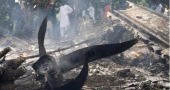
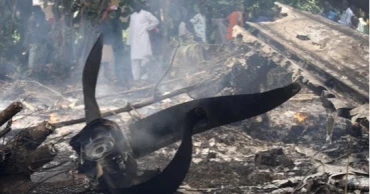
A Sudanese military cargo aircraft crashed while attempting to land in the country’s east, killing everyone on board, military officials said Wednesday, marking the latest in a series of deadly aviation incidents amid Sudan’s ongoing war.
The Ilyushin Il-76 transport plane went down on Tuesday at the Osman Digna Air Base in Port Sudan after suffering a technical malfunction during its landing attempt, according to two officials who spoke anonymously because they were not authorized to brief the media. They did not specify the number of crew members on the aircraft.
Relatives confirmed that pilot Omran Mirghani was among those killed. His uncle, well-known Sudanese journalist Osman Mirghani, publicly mourned him on social media. The military has not issued an official statement about the crash.
Sudan’s aviation safety record has long been poor, and fatal crashes are common. In February, a military plane plummeted into a densely populated neighborhood in Omdurman, killing at least 46 people, including women and children.
The latest crash comes as the Sudanese military faces mounting losses in its conflict with the Rapid Support Forces (RSF). In October, the army lost control of el-Fasher, its final foothold in Darfur, and earlier this week withdrew from the nation’s largest oil processing facility in Kordofan.
The RSF has been accused of severe abuses in el-Fasher, including executions, rape and other crimes. U.N. human rights chief Volker Türk said Wednesday that investigators believe war crimes — and possibly crimes against humanity — were committed during the group’s takeover of the city.
Türk warned that similar atrocities could unfold in Kordofan as RSF attacks escalate, urging an immediate ceasefire.
The conflict, which erupted in April 2023, has killed more than 40,000 people — a figure rights groups say is a major underestimate — and pushed parts of Sudan to the brink of famine.
7 months ago
19 killed as two buildings collapse in Morocco’s Fez
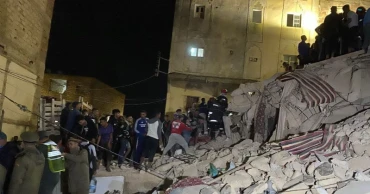
Nineteen people were killed and 16 others injured after two four-story residential buildings collapsed overnight in Morocco’s third-largest city, Fez, authorities said Wednesday.
The buildings, home to eight families, fell in one of the city’s older neighborhoods. Rescue teams continue searching for potential survivors, while the surrounding area has been evacuated as a precaution. Officials have not yet determined the cause of the collapse or how many residents remain unaccounted for.
Fez, a host city for this month’s Africa Cup of Nations and the 2030 FIFA World Cup, is famous for its historic walled medina, bustling souks, and traditional tanneries. However, much of the city faces deteriorating infrastructure, and building collapses have become a recurring concern.
Earlier this year, a similar incident in May killed 10 people in a building that had already been scheduled for evacuation. Experts say enforcement of building codes is often lax, particularly in older, densely populated neighborhoods.
Moroccan citizens have previously protested gaps in basic services, criticizing government spending on stadiums while infrastructure, health care, and education remain underfunded.
The Fez collapse marks the second deadly building accident in the city this year, highlighting ongoing concerns about urban safety in Morocco.
7 months ago

Tanzania on alert as police patrol cities before planned post-election protests
Police patrolled largely deserted streets in Tanzania’s major cities on Tuesday as the government moved to block planned demonstrations against the disputed October election, urging people to stay home for Independence Day.
Activists had called for nationwide protests against the ruling party’s victory in the October 29 vote, which sparked three days of unrest that left hundreds dead and saw more than two thousand people detained. Vehicles, polling centers and fuel stations were torched as protesters demanded the cancellation of President Samia Suluhu Hassan’s reelection, which officials declared with more than 97 percent of the vote.
On Tuesday morning, police trucks and foot patrols were seen across Dar es Salaam, the administrative capital Dodoma and Arusha. Roadblocks were set up near key government offices, including President Hassan’s heavily guarded workplaces in Dar es Salaam and Dodoma.
Public transport in Dar es Salaam was halted after bus owners pulled their vehicles from the roads, fearing a repeat of October’s destruction.
Prime Minister Mwigulu Nchemba had asked nonessential workers to stay home. Independence Day celebrations were cancelled last month, with the government saying the funds would instead go toward repairing damaged infrastructure.
The country’s two main opposition parties were barred from challenging Hassan, who first took office after the 2021 death of President John Magufuli. Leading opposition figure Tundu Lissu, who had called for electoral reforms before the vote, has been jailed since April on treason charges.
Human Rights Watch on Monday condemned what it described as a sweeping crackdown on activists, saying at least ten people have been arrested since mid-November over social media posts about the planned protests. Amnesty International urged authorities to allow peaceful assembly and warned against another internet shutdown like the one imposed after the October vote.
The UN human rights office appealed on Friday for Tanzanian authorities to avoid force and work to ease tensions.
In Kenya, dozens of activists voiced support for Tanzanian protesters and called for an investigation into killings and disappearances during the October unrest.
The Tanzanian government has set up a commission to investigate the post-election violence, but its report has not yet been released.
7 months ago

Suez Canal sees revenue boost as vessel traffic rises
The Suez Canal has recorded a notable rise in traffic and revenue since the start of Egypt’s current fiscal year in July, the Suez Canal Authority (SCA) said Monday.
SCA Chairman Osama Rabie told an IMF mission that 5,874 vessels transited the waterway since July 1, generating 1.97 billion U.S. dollars — a 17.5 percent year-on-year increase. Net tonnage grew 14.4 percent to 247.2 million tonnes, while total vessel numbers rose 5.2 percent.
Rabie said long-term indicators point to continued recovery, projecting revenues of 8 billion dollars in FY 2026/27 and 10 billion dollars in FY 2027/28.
Last month, he estimated revenues would reach 4.2 billion dollars in 2025, compared with 3.9 billion dollars in 2024 — still below the record 10.2 billion dollars in 2023, when regional tensions disrupted traffic.
Attacks by Yemen’s Houthi forces in the Red Sea and Gulf of Aden since late 2023 prompted many shipping lines to reroute around Africa, sharply reducing canal transits. Rabie noted that attacks have stopped since the Gaza ceasefire in October.
7 months ago

Bar shooting in South Africa claims 11 lives, including children
A mass shooting carried out Saturday by multiple suspects in an unlicensed bar near the South African capital left at least 11 people dead, police said. The victims included three children aged 3, 12 and 16.
Another 14 people were wounded and taken to the hospital, according to a statement from the South African Police Services. Police didn’t give details on the ages of those who were injured or their conditions.
The shooting happened at a bar inside a hostel in the Saulsville township west of the administrative capital of Pretoria in the early hours of Saturday. Ten of the victims died at the scene and the 11th died at the hospital, police said.
The children killed were a 3-year-old boy, a 12-year-old boy and a 16-year-old girl. Police said they were searching for three male suspects.
“We are told that at least three unknown gunmen entered this hostel where a group of people were drinking and they started randomly shooting,” police spokesperson Brig. Athlenda Mathe told national broadcaster SABC. She said the motive for the killings was not clear. The shootings happened at around 4.15 a.m., she said, but police were only alerted at 6 a.m.
South Africa has one of the highest homicide rates in the world and recorded more than 26,000 homicides in 2024 — an average of more than 70 a day. Firearms are by far the leading cause of death in homicides.
The country of 62 million people has relatively strict gun ownership laws, but many killings are committed with illegal guns, authorities say.
There have been several mass shootings at bars — sometimes called shebeens or taverns in South Africa — in recent years, including one that killed 16 people in the Johannesburg township of Soweto in 2022. On the same day, four people were killed in a mass shooting at a bar in another province.
Mathe said that mass shootings at unlicensed bars were becoming a serious problem and police had shut down more than 11,000 illegal taverns between April and September this year and arrested more than 18,000 people for involvement in illegal liquor sales.
Recent mass killings in South Africa have not been confined to bars, however. Police said 18 people were killed, 15 of them women, in mass shootings minutes apart at two houses on the same road in a rural part of Eastern Cape province in September last year.
Seven men were arrested for those shootings and face multiple charges of murder, while police recovered three AK-style assault rifles they believe were used in the shootings.
7 months ago
UN raises concern over rising violence in Central African Republic
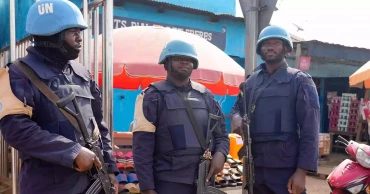
UN humanitarian agencies expressed deep concern on Thursday over escalating armed violence affecting civilians in southeastern Central African Republic (CAR).
The UN Office for the Coordination of Humanitarian Affairs (OCHA) reported that ambushes in the Mboki region over the past weekend killed several civilians and heightened intercommunal tensions. The attacks also led to the destruction of multiple homes and the displacement of around 1,000 people, many of whom sought refuge at a local Catholic church.
Mboki has experienced repeated clashes, and humanitarian access remains severely restricted due to insecurity and poor communications, OCHA noted. Last week, two staff members from a local NGO collaborating with the UN Population Fund were injured by stray bullets while providing essential food, protection, and water, sanitation, and hygiene support.
While some areas of CAR have seen improvements in security, violence continues to worsen conditions in other regions, with roughly 50,000 people currently in need of humanitarian assistance, OCHA said.
The International Crisis Group highlighted in its November CAR report that although the state’s overall security has improved and the country no longer faces an existential threat, pockets of insecurity persist in rural areas. Armed groups continue to attempt control over mining sites and engage in banditry, further destabilizing local communities.
The UN and humanitarian organizations stressed the urgent need for protection measures and continued support to assist affected populations amid ongoing insecurity.
7 months ago
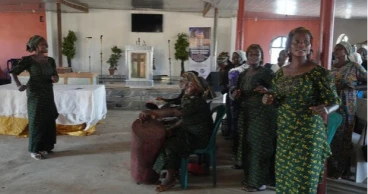
US to impose visa restrictions on Nigerians linked to violence against Christians
The United States will restrict visas for Nigerians and their family members responsible for mass killings and violence against Christians, the U.S. State Department said Wednesday.
“The United States is taking decisive action in response to the mass killings and violence against Christians by radical Islamic terrorists, Fulani ethnic militias, and other violent actors in Nigeria and beyond,” Secretary of State Marco Rubio said in a statement posted on social platform X.
The secretary added that the policy would apply to other governments or individuals engaged in violations of religious freedom.
The restrictions are in line with a new policy under Section 212(a)(3)(C) of the Immigration and Nationality Act, he said.
Attacks in Nigeria have varying motives. There are religiously motivated ones targeting both Christians and Muslims, clashes between farmers and herders over dwindling resources, communal rivalries, secessionist groups, and ethnic clashes.
Nigeria’s population of about 220 million people is split almost equally between Christians and Muslims.
The West African country has long faced insecurity from various fronts including the Boko Haram extremist group, which seeks to establish its radical interpretation of Islamic law and has also targeted Muslims it deems not Muslim enough.
Also, there has been an uptick in the activities of armed gangs in the central part of the country who kidnap locals for ransom.
Last month, President Donald Trump said he has ordered the Pentagon to begin planning for potential military action in Nigeria following the claims of Christian persecution in Nigeria.
8 months ago
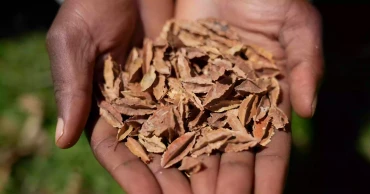
Kenya court strikes down law banning seed sharing
A Kenyan high court on Thursday ruled that portions of a 2012 seed law, which barred farmers from sharing or selling indigenous seeds, are unconstitutional, marking a major victory for food security advocates.
The law had imposed penalties of up to two years in prison and fines of 1 million Kenya shillings ($7,700) for farmers exchanging seeds through community seed banks. Justice Rhoda Rutto also struck down sections granting government officials authority to raid seed banks and seize seeds.
The legislation was originally intended to curb the sale of counterfeit seeds and gave exclusive trading rights to licensed companies. Fifteen smallholder farmers, members of long-standing community seed banks, challenged the law in court.
Samuel Wathome, one of the farmers, welcomed the ruling. “My grandmother saved seeds, and today the court has said I can do the same for my grandchildren without fear of the police or of prison,” he said.
Elizabeth Atieno of Greenpeace Africa called the decision a “victory for our culture, our resilience, and our future,” adding that it counters corporate control over the food system and validates the use of indigenous seeds.
Food campaigners have long promoted the preservation of local seeds as a means of improving food security, emphasizing their drought resistance and adaptability to local climates, which often surpass hybrid varieties.
Kenya maintains a national seed bank near Nairobi, but farmers argue that community seed banks are crucial for diversity and accessibility. The country has previously faced challenges from counterfeit seeds that caused substantial losses in its predominantly rain-fed agricultural sector.
The ruling is expected to empower farmers to continue traditional seed-saving practices and strengthen local resilience against climate challenges.
8 months ago
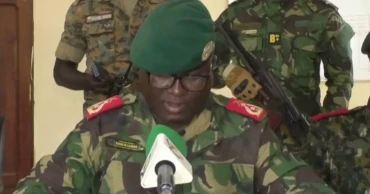
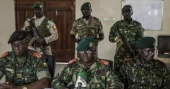
Guinea-Bissau names junta chief after disputed election coup
Guinea-Bissau’s military on Thursday announced Gen. Horta N’Ta as the head of a new junta, cementing a coup that followed the country’s tense presidential election earlier this week.
State television broadcast a declaration from the military high command confirming N’Ta, former army chief of staff and ally of deposed President Umaro Sissoco Embaló, as leader of a one-year transitional government. Embaló’s whereabouts remained unknown Thursday after he told French media he was arrested by soldiers amid gunfire near the presidential palace.
Opposition figures claimed Embaló staged the coup to avoid an electoral defeat in Sunday’s closely contested vote. Fernando Dias, Embaló’s rival, said the military takeover was “fabricated” to disrupt election results, though AP could not independently verify his claims. The African Party for the Independence of Guinea and Cape Verde and Dias urged citizens to protest and demand the release of election results. Despite the call, Thursday morning in Bissau appeared calm, with businesses and public transport gradually resuming.
Guinea-Bissau, one of the world’s poorest nations, has faced repeated coups since independence from Portugal more than 50 years ago. Analysts say the country’s role as a drug trafficking hub has fueled political instability. Gunfire erupted in the capital Wednesday just days after the election, with both Embaló and Dias claiming victory.
In a familiar pattern in the region, military officers appeared on state television to announce they had seized power. Dias said he escaped custody “through a backdoor” and vowed to continue resisting. He accused Embaló of fabricating the coup to retain power after losing the vote.
Military spokespeople cited the “discovery of an ongoing plan… to manipulate electoral results,” involving national politicians, a known drug lord, and foreign nationals. Several countries and international bodies have condemned the coup, with the United Nations expressing “deep concern” over the unfolding situation.
8 months ago
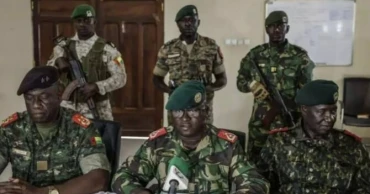
Soldiers in Guinea-Bissau claim takeover, arrest president amid election disputes
Soldiers in Guinea-Bissau appeared on state television Wednesday claiming they had seized control of the country, following reports of gunfire near the presidential palace just three days after national elections. President Umaro Sissoco Embaló told French media he had been deposed and detained.
The military said it acted to restore “national and public order,” suspending the president and all government institutions until further notice. Spokesperson Dinis N’Tchama cited the “discovery of an ongoing plan” to manipulate election results involving some politicians, a notorious drug lord, and domestic and foreign actors, without providing further details. The soldiers also suspended the electoral process, closed borders, and restricted media activity.
Gunfire was reported near the palace Wednesday midday. Roads leading to the complex were blocked by heavily armed, masked soldiers, and officials said armed men attempted to attack the building, leading to clashes with palace guards. Gunshots were also heard near the National Electoral Commission, whose chief was arrested, and the commission’s offices sealed.
Both Embaló and his rival Fernando Dias, as well as opposition leader Domingos Simões Pereira, were detained. Embaló, who assumed office in February 2020, faced a legitimacy dispute over his term, with the opposition claiming it expired in February 2025, though the Supreme Court extended it to September.
Jair Bolsonaro begins 27-year prison sentence for coup attempt in Brazil
The U.N. expressed deep concern and called for restraint and respect for the rule of law. Election observers from the African Union and ECOWAS denounced the military action as an attempt to disrupt the democratic process and demanded a return to constitutional order and the immediate release of election officials.
Civil society groups accused Embaló and the military of orchestrating a “simulated coup” to block the release of election results and maintain power, potentially allowing Embaló to organize fresh elections in which he could run again.
Guinea-Bissau is the latest West African nation to experience political instability. Since 2020, military takeovers have occurred in Mali, Niger, Burkina Faso, Guinea, and Gabon, often justified by promises to improve security or combat corruption.
Source: AP
8 months ago