Europe
Spain, Portugal, and Greece fight wildfires amid prolonged heatwave
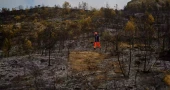
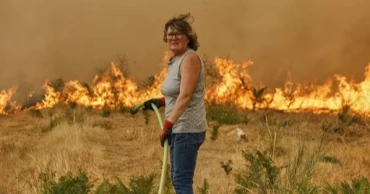
Firefighters in Spain, Portugal, and Greece continued battling wildfires Friday, a public holiday in all three countries, as hot, dry conditions hampered containment efforts.
Spain faced 14 major fires, with temperatures expected to rise over the weekend. “Today will once again be a very tough day, with an extreme risk of new fires,” Prime Minister Pedro Sánchez wrote on X. The national weather agency AEMET warned of extreme fire risk across most of the country, including northern and western regions where the largest blazes were burning. Fires in Galicia forced the closure of several highways, and the high-speed rail link to Madrid remained suspended. So far this year, wildfires have burned 158,000 hectares (610 square miles) in Spain, roughly the size of metropolitan London.
Firefighters struggle to contain wildfire near L.A. suburbs
In Portugal, nearly 4,000 firefighters were tackling seven major fires. Authorities extended the state of alert until Sunday amid continued high temperatures.
On the Greek island of Chios, a wildfire raged for a fourth day, prompting overnight evacuations. Two water-dropping planes and two helicopters aided firefighters as a brief lull in winds provided some relief. Authorities also remained on alert near Athens and southern regions following large fires earlier in the week.
The Ecumenical Patriarch Bartholomew expressed solidarity with wildfire victims during prayers for the Dormition of the Virgin Mary, an important Orthodox holiday.
Source: Agency
11 months ago
Wildfires kill at least 3, displace thousands across southern Europe
Wildfires raged across southern Europe on Wednesday after a nightlong battle to shield Greece’s third-largest city, with new fatalities reported in Spain, Turkey and Albania.
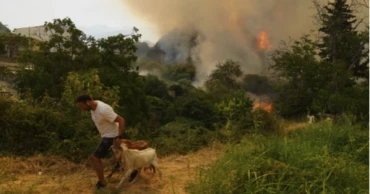
Near the Greek port city of Patras, flames swept through pine forests and olive groves, destroying homes, farmland and dozens of vehicles in an impound lot. Fire Service spokesman Vassilis Vathrakoyiannis warned that fire risk remains “very high” in many parts of the country.
After weeks of heatwaves, firefighting resources were stretched thin. Crews battled multiple blazes across Greece’s mainland, the island of Zakynthos, and Chios, while Athens sent aid to Albania, where an 80-year-old man died in a blaze south of Tirana. Explosions from buried WWII-era shells were reported near the Greek border.
Firefighters work to prevent France’s largest wildfire from reigniting as residents return home
In Spain’s Castile and León region, a volunteer firefighter died as thousands fled advancing flames. Prime Minister Pedro Sánchez urged extra caution as emergency shelters filled. In southern Turkey, a forestry worker was killed and four others injured in a fire truck accident while tackling a blaze. Turkey has recorded 18 wildfire-related deaths since late June.
Authorities across the region cited lightning storms, careless farming, faulty power lines and suspected arson as causes. The EU has dispatched aid, with Montenegro among the latest to receive help as major fires burn near its capital, Podgorica.
Source: Agency
11 months ago

Serbia protests escalate, several injured in Clashes
Clashes broke out in Serbia on Tuesday as government supporters and opponents confronted each other, escalating tensions after more than nine months of ongoing protests against populist President Aleksandar Vucic.
The incidents began in the town of Vrbas, northwest of the capital Belgrade, where riot police separated the two groups outside the offices of the ruling Serbian Progressive Party. Video footage from the scene showed government supporters throwing flares, rocks, and bottles at protesters, who retaliated with various objects. Police said dozens of people were injured, including 16 officers. Similar clashes were reported in other parts of the country.
The student-led protests in Serbia began in November after the collapse of a train station canopy in the northern city of Novi Sad killed 16 people, sparking allegations of corruption in state infrastructure projects. Since then, hundreds of thousands of people have joined the demonstrations, challenging Vucic’s firm grip on power. Recently, the president’s supporters have organized counter-demonstrations, raising fears of violence.
Serbian police detain 79 protesters as dissent persists against populist president
Police said several people were detained following the clashes in Vrbas. Police Commissioner Dragan Vasiljevic told state broadcaster RTS that the protesters “came to attack” supporters of the ruling party. Protesters, however, claimed government supporters initiated attacks in Vrbas and in other towns including Backa Palanka, Novi Sad, and the southern city of Nis. In Belgrade, riot police dispersed protesters gathered in a downtown area.
Protests in Serbia have largely remained peaceful since November. Led by university students, demonstrators are demanding that Vucic call an early parliamentary election, which he has refused. They have also called for the resignation of Interior Minister Ivica Dacic following recent clashes at demonstrations.
Serbia is formally seeking European Union membership, but Vucic has maintained strong ties with Russia and China. He has faced accusations of stifling democratic freedoms since coming to power 13 years ago.
Source: Agency
11 months ago
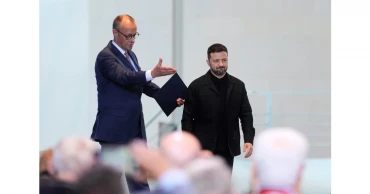
Zelenskyy to visit Berlin ahead of Trump-Putin summit
Ukrainian President Volodymyr Zelenskyy will visit Berlin on Wednesday for talks with German Chancellor Friedrich Merz, European leaders and U.S. officials ahead of the Trump-Putin summit later this week, the German government said.
Merz has convened a series of virtual meetings aimed at ensuring European and Ukrainian voices are heard before the summit, from which they have been excluded. Zelenskyy will first meet European leaders, followed by a virtual call with U.S. President Donald Trump and Vice President JD Vance.
EU urges Trump to protect European security in upcoming talks with Putin
A separate call with members of the “coalition of the willing” — nations ready to help enforce any future Moscow-Kyiv peace deal — will take place last.
Merz pledged to assist Ukraine in developing its own long-range missile systems without Western-imposed restrictions, as Kyiv continues to resist Russia’s invasion. Zelenskyy last visited Berlin in May.
Trump has described Friday’s meeting with Russian President Vladimir Putin as “a feel-out” session to assess Moscow’s intentions. However, he has unsettled European allies by suggesting Ukraine may have to cede some Russian-held territory and by raising the possibility of land swaps.
Zelenskyy rejects Putin’s demand for Ukraine’s withdrawal from Donetsk as ceasefire condition
Zelenskyy on Tuesday rejected a proposal for Ukraine to withdraw from the remaining 30% of Donetsk region it still controls, calling it unconstitutional and a potential prelude to further Russian aggression. He criticised U.S.-led diplomacy for failing to address key Ukrainian demands, including security guarantees and European participation in talks.
Since returning to office, Trump has ruled out Ukraine’s NATO membership, pressed NATO allies on defence spending, and raised EU import tariffs to 15%. Senior EU officials believe he may settle for a ceasefire, focusing instead on broader U.S.-Russia relations.
11 months ago

Zelenskyy rejects Putin’s demand for Ukraine’s withdrawal from Donetsk as ceasefire condition
Ukrainian President Volodymyr Zelenskyy has rejected a reported proposal from Russian President Vladimir Putin to withdraw Ukrainian forces from the remaining 30% of the Donetsk region under Kyiv’s control in exchange for a ceasefire.
Speaking at a press briefing Tuesday, Zelenskyy said surrendering the 9,000 square kilometers still held by Ukraine would be unconstitutional and would serve as a launchpad for future Russian offensives. “We will not leave Donbas. We cannot do this. Our territories are illegally occupied,” he said, likening the proposal to Russia’s annexation of Crimea in 2014.
The Ukrainian leader said the idea was conveyed by U.S. officials ahead of Friday’s planned summit between U.S. President Donald Trump and Putin in Alaska. Kyiv has yet to confirm whether it will take part. European leaders have also been excluded from the talks and have urged Trump to protect their interests, stressing that “the path to peace in Ukraine cannot be decided without Ukraine.”
Argentine President Milei launches major initiative to deepen Israel-Latin America partnerships
Zelenskyy warned that current U.S.-Russia talks have not addressed Ukraine’s demand for security guarantees and European participation. Kyiv sees European nations as its only partners offering long-term defense commitments.
Meanwhile, Russian forces are pushing toward the city of Pokrovsk in Donetsk, with analysts warning the next 48 hours could be critical. Ukrainian military officials described the situation as “difficult, unpleasant and dynamic,” as infantry units attempt to breach defensive lines.
Elsewhere, a Russian missile strike on a Ukrainian military training facility killed one soldier and wounded 11, the Ukrainian Ground Forces said.
Western analysts caution that any ceasefire favoring Moscow could undermine international law, weaken the transatlantic alliance, and embolden Russia to threaten other parts of Europe.
11 months ago

EU urges Trump to protect European security in upcoming talks with Putin
European Union leaders are pressing U.S. President Donald Trump to prioritize Europe's security interests during his upcoming summit with Russian President Vladimir Putin, which will focus on the ongoing war in Ukraine.
The EU, largely excluded from the planned Friday meeting, is eager to influence its outcome, especially as it's unclear if Ukraine itself will be involved. Trump has said he wants to gauge whether Putin is genuinely interested in ending the war, now in its fourth year.
However, Trump has drawn criticism from European allies by suggesting Ukraine may have to cede Russian-occupied territory, and that Russia should accept land swaps—though he hasn't clarified what concessions Putin would need to make.
This has raised alarm in both Ukraine and across Europe, where there's concern that any peace deal made without their input could favor Russia and embolden further aggression. Putin, having launched the largest land war in Europe since World War II and used energy exports to pressure the EU, may emerge with significant gains if not firmly challenged.
EU leaders issued a statement Tuesday acknowledging Trump’s efforts to end the war but insisted that peace in Ukraine “cannot be decided without Ukraine’s involvement.” They emphasized that a lasting and just peace must uphold international law, including respect for sovereignty, territorial integrity, and the inviolability of borders.
Ukrainian President Volodymyr Zelenskyy has firmly rejected proposals that require Ukraine to give up territory in exchange for a ceasefire. Russia currently maintains a shaky hold over four Ukrainian regions—two in the east and two in the south.
Meanwhile, tensions on the ground remain high. A Russian missile strike hit a Ukrainian military training site, killing one soldier and injuring 11 others. Cluster munitions were reportedly used as troops rushed to shelters.
Russia also appears close to capturing the strategic city of Pokrovsk in the Donetsk region. Analysts say the next 24 to 48 hours will be crucial, as losing the city would give Russia a significant victory just before the summit and threaten Ukrainian supply lines in the area.
“The situation will hinge heavily on Ukraine’s available reserves,” said Pasi Paroinen, a military analyst with Finland’s Black Bird Group, in a post on X.
On Monday, Trump reiterated that land swaps would be part of any peace process, calling it a compromise that would involve “bad stuff for both” sides. His relatively conciliatory stance toward Putin has alarmed Ukraine’s supporters, particularly as he criticized Zelenskyy for failing to achieve results during the war, while praising Putin’s long-standing grip on power.
There’s also confusion over the summit’s location. While Trump mentioned traveling to Russia, the meeting is actually set to take place in Alaska—a former Russian colony sold to the U.S. in 1867.
Ahead of the summit, EU leaders will make another attempt to persuade Trump to support Ukraine during virtual talks organized by German Chancellor Friedrich Merz on Wednesday. Trump hasn’t confirmed if he’ll attend but said he wants to hear different perspectives before meeting with Putin.
The EU's joint statement was intended to project unity, but Hungarian Prime Minister Viktor Orbán—Putin’s strongest ally in the bloc—refused to sign on, standing alone among the EU’s 27 leaders.
11 months ago

France's last newspaper hawker to receive national honour from President Macron
Ali Akbar, believed to be the last newspaper hawker in France—and perhaps in all of Europe—has spent over half a century walking the streets of Paris’s Left Bank, distributing papers and announcing the day’s headlines aloud.
His dedication to this fading trade is now being officially acknowledged.
President Emmanuel Macron, who once purchased newspapers from Akbar during his student years, will award him the Order of Merit next month—one of France’s most prestigious decorations.
“When I began here in 1973 there were 35 or 40 of us hawkers in Paris,” he says. “Now I am alone.
It became too discouraging. Everything is digital now. People just want to consult their telephones.”
Today, Akbar moves through the cafés of Saint-Germain, managing to sell around 30 copies of Le Monde each day. He keeps half of the cover price but receives no compensation for unsold papers. Decades ago, before the rise of the internet, he could move 80 copies in just an hour after the paper hit the stands.
Los Angeles Times editor resigns after newspaper withholds presidential endorsement
“In the old days people would crowd around me looking for the paper. Now I have to chase down clients to try to sell one,” he says.
Despite the decline in business, Akbar remains enthusiastic about his work.
“I am a joyous person. And I am free. With this job, I am completely independent. There is no-one giving me orders. That's why I do it.”
Now 72, Akbar is a beloved figure in the area. “I first came here in the 1960s and I've grown up with Ali. He is like a brother,” says one local. “He knows everyone. And he is such fun,” adds another.
Originally from Rawalpindi, Pakistan, Akbar traveled to Europe in the late 1960s, initially working on a cruise ship out of Amsterdam. In 1972, the ship docked in Rouen, and by the following year, he had settled in Paris. He received French residency in the 1980s.
“Me, I wasn't a hippy back then, but I knew a lot of hippies,” he says with his signature laugh.
“When I was in Afghanistan on my way to Europe I landed up with a group who tried to make me smoke hashish.
I told them sorry, but I had a mission in life, and it wasn't to spend the next month sleeping in Kabul!”
Khaborer Kagoj, a new daily newspaper, hits the stand on Sunday
Working in Saint-Germain—a former hotspot for intellectuals and artists—Akbar encountered many prominent figures. Elton John once treated him to a milky tea at Brasserie Lipp, and outside the Sciences Po university, he crossed paths with generations of students, including a young Emmanuel Macron.
Reflecting on how the neighbourhood has changed since he began calling out Le Monde headlines:
“The atmosphere isn't the same,” he laments. “Back then there were publishers and writers everywhere – and actors and musicians. The place had soul. But now it is just tourist-town.
The soul has gone,” he says – but he laughs as he does.
Source: BBC
11 months ago
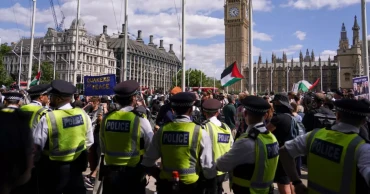
London police arrest 150 pro-Palestinian protesters for defying new law
Police in London have started making arrests after hundreds of people deliberately defied a new law banning support for the pro-Palestinian group Palestine Action, arguing the legislation infringes on freedom of expression.
Since early July, supporters of Palestine Action have held multiple protests across the UK following Parliament’s decision to outlaw the group and prohibit public support. The ban came after activists broke into a Royal Air Force base and damaged two tanker aircraft.
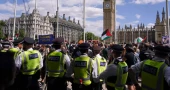
On Saturday afternoon, protesters gathered in the square outside Parliament, many holding signs saying “I oppose genocide. I support Palestine Action.” This prompted police intervention.
The Metropolitan Police Service said on X that many in the crowd displayed placards supporting Palestine Action, a proscribed organization, leading officers to move in and make arrests.
Home Secretary Yvette Cooper introduced the ban after activists damaged aircraft at RAF Brize Norton in Oxfordshire on June 20, protesting Britain’s military support for Israel’s conflict with Hamas. The group had also targeted Israeli defense contractors and related sites in the UK.
Palestine Action’s supporters are legally challenging the ban, arguing the government’s terrorism designation is excessive.
Federal trial begins over Trump-era crackdown on pro-Palestinian campus activists
The group Defend Our Juries said on its website that expanding the definition of terrorism to include economic damage or embarrassment to the powerful undermines freedom of expression and democracy itself.
The arrests occurred amid a weekend of expected protests in London, fueled by the Gaza war and immigration concerns, leading to demonstrations and counter-demonstrations nationwide.
While Prime Minister Keir Starmer’s plan to recognize a Palestinian state has upset Israel, many British Palestinians feel the government is not doing enough to halt the Gaza conflict.
Saturday’s pro-Palestinian march was planned to end outside No. 10 Downing Street, the prime minister’s residence.
On Sunday, multiple groups will march demanding the safe release of Israeli hostages held in Gaza since the October 7, 2023 militant attacks.
Police are also preparing for protests outside hotels housing asylum seekers, where clashes have occurred between those opposing migrants and those condemning anti-immigrant racism.
Deputy Assistant Commissioner Ade Adelekan warned the events would “put pressure” on police, calling for a significant policing presence during this busy weekend of simultaneous protests.
Source: Agency
11 months ago
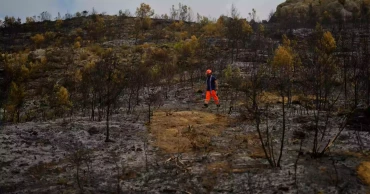
Firefighters work to prevent France’s largest wildfire from reigniting as residents return home
Around 1,400 firefighters remained deployed Saturday in France’s southern Aude region to prevent the country’s largest wildfire in decades from reigniting, as residents were allowed to return to their homes.
Aude Prefect Christian Pouget said the fire, which burned over 160 square kilometers in the forested, wine-producing area, has been contained since Thursday. All roads have reopened, but authorities have imposed a strict ban on forest access, Pouget told a press conference.
“The fight continues; firefighters are still working to prevent re-ignition,” he said.
The blaze has claimed one life and injured 25 people, including 19 firefighters, Pouget added.
Rising temperatures in the coming days pose challenges for firefighting efforts.
France battles largest wildfire in yars, bigger than Paris
Col. Christophe Magny, director of the Aude firefighters department, said the fire is unlikely to be fully extinguished for weeks due to several active “hot spots” under close watch.
France’s national weather agency, Meteo France, issued a “high vigilance” heatwave alert for the southern half of the country, forecasting temperatures up to 39 degrees Celsius in the Aude region on Saturday.
Southern Europe has faced numerous large fires this summer, with scientists warning that climate change is increasing the frequency and severity of heat and drought, heightening wildfire risks.
Source: Agency
11 months ago

UK Minister Rushanara resigns following eviction controversy
UK Homelessness Minister Rushanara Ali has stepped down after facing heavy criticism for evicting tenants from her property and subsequently increasing the rent.
The Labour MP was accused of hypocrisy after it was revealed she had removed four tenants from her east London property under the pretext of selling the home, only to re-let it weeks later at a higher rent—raising it from £3,300 to £4,000 a month, according to a report by i newspaper.
Ali announced her resignation on Wednesday evening, following growing pressure from housing advocates and political opponents to explain the apparent contradiction between her stated intentions and actions.
In her resignation letter to Prime Minister Keir Starmer, Ali maintained that she had adhered to all legal obligations and acted responsibly. However, she acknowledged that remaining in her role would be a distraction from the government’s agenda and chose to resign.
Starmer thanked her for her contributions at the Ministry of Housing, Communities and Local Government, noting her work would leave a lasting legacy. He expressed confidence that she would continue to serve her constituents from the backbenches.
Tulip Siddiq steps down as Treasury minister
Ali, who had previously voiced strong opposition to unfair rent hikes and exploitation of renters, faced backlash for what many saw as double standards. A new renters’ rights bill, expected to take effect next year, will prohibit landlords from re-letting properties at a higher rent after terminating tenancies for the purpose of sale, and will also end fixed-term tenancy agreements.
The Conservative Party was quick to respond, with party chair Kevin Hollinrake accusing Labour of hypocrisy and calling Ali’s resignation “the right outcome.” He criticised Starmer for leading what he described as a government “of sleaze and scandal.”
Other critics, including the SNP’s Peter Wishart and Labour’s Jess Barnard, demanded stricter standards for MPs who are landlords, questioning whether such roles are compatible with their duties.
Shelter’s campaigns director Mairi MacRae also condemned the situation, saying the case highlights the unfairness renters face and called for an end to so-called “fire-and-rehire” evictions.
Israeli defense minister officially steps down
A spokesperson for Ali said the tenants had stayed for the full term of their lease and were given the option to stay longer while the property remained for sale, but chose to leave. After they moved out, a repair cost request was issued by the property manager but later cancelled by Ali herself.
The house, located near her Bethnal Green and Stepney constituency, is currently listed for sale at £894,995, with its price reduced in February after initially being listed last November.
Source: Agency
11 months ago