Europe
Delegations from Russia and Ukraine are set to hold their first peace talks in 3 years
Russia and Ukraine are set to hold their first face-to-face peace talks in three years on Friday, convening in Istanbul under Turkish mediation. However, both officials and analysts anticipate little progress in halting the war, which has now stretched into its fourth year.
Ukraine’s delegation, led by Defense Minister Rustem Umerov, is expected to meet a lower-level Russian team headed by presidential aide Vladimir Medinsky.
Russia launches smallest nighttime attack on Ukraine in months in run-up to possible peace talks
The renewed attempt to revive peace talks began on a shaky note Thursday, as Russian President Vladimir Putin declined Ukrainian President Volodymyr Zelenskyy’s offer for direct talks. The two delegations also arrived in different Turkish cities and appeared mismatched in terms of diplomatic representation.
While expectations were low for a possible Zelenskyy-Putin meeting, the sluggish momentum of the peace process dashed hopes of a breakthrough in Turkey.
The two sides remain deeply divided on terms for ending the conflict. On Thursday, U.S. President Donald Trump, during a visit to the Middle East, said a meeting between him and Putin was essential to overcome the stalemate.
Ukraine has accepted a 30-day comprehensive ceasefire proposal backed by the U.S. and Europe, but Putin has dismissed it, instead laying out broad preconditions.
Meanwhile, Ukrainian officials and Western military analysts report that Russia is preparing for a renewed military offensive.
After Putin declined Zelenskyy’s invitation to meet in Ankara on Thursday, the Ukrainian president accused Moscow of not being genuinely interested in ending the war, criticizing Russia’s delegation as merely symbolic.
Nonetheless, Zelenskyy said Ukraine would still send a delegation led by his defense minister to the Istanbul talks, as a signal to Trump that Kyiv remains committed to peace despite Russia’s apparent reluctance.
According to the Kremlin, Russia’s delegation will include three additional senior officials, along with four junior “experts” assigned to the discussions.
U.S. Secretary of State Marco Rubio stated he would meet Friday in Istanbul with Turkish Foreign Minister Hakan Fidan and the Ukrainian delegation. He also noted that members of the U.S. team would hold talks with the Russian side, expressing hope that all parties might eventually sit down together.
“We’re not expecting major results tomorrow. Honestly, it’s clear by now that a real breakthrough would require a direct meeting between President Trump and President Putin,” Rubio told reporters Thursday in Antalya.
Meanwhile, Zelenskyy traveled to Albania to participate in a summit of European political leaders scheduled for Friday.
Russian House in Dhaka celebrates the 80th Anniversary of Victory in the Great Patriotic War
1 year ago
European Union accuses TikTok of breaching digital rules its ad database falls short
European Union regulators accused TikTok on Thursday of breaching digital safety rules because of shortcomings in the video sharing app's online ad database.
Mexican beauty influencer fatally shot during TikTok livestream
TikTok's ad repository isn't up to the standards required by the bloc's Digital Services Act, known as the DSA, the 27-nation EU’s executive Commission said in preliminary findings from its investigation.
The Commission said ad databases are vital for researchers to detect scam ads as well as so-called hybrid threat campaigns, coordinated information operations and fake ads, "including in the context of elections."
The DSA is a wide-ranging rulebook that aims to clean up social media platforms and protect users from risks including election-related disinformation. Provisions include requiring platforms to be transparent about digital ads, including informing users why they’re being shown a specific advertisement and who paid for it.
The Commission said TikTok doesn’t provide necessary information about the content of ads, the users targeted, and who pays for them. The database doesn’t allow for a comprehensive search for ads based on this information, “thereby limiting the usefulness of the tool,” it said.
TikTok did not respond immediately to a request for comment.
The shortcomings in TikTok's ad database prevent a “full inspection” of the risks posed by its ad targeting systems, said Henna Virkkunen, the commission's executive vice-president for tech sovereignty, security and democracy.
“Transparency in online advertising — who pays and how audiences are targeted — is essential to safeguarding the public interest," Virkkunen said. “Whether we are defending the integrity of our democratic elections, protecting public health, or protecting consumers from scam ads, citizens have a right to know who is behind the messages they see.”
TikTok now has a chance to reply before the Commission issues its final decision, which could result in a fine of up to 6% of the company’s annual global revenue.
TikTok is being scrutinized in a separate EU investigation into whether it failed to deal with risks to Romania’s presidential election, which was thrown into turmoil last year over allegations of electoral violations and Russian meddling.
TikTok fined $600 million for China data transfers that broke EU privacy rules
1 year ago
UK becomes fastest-growing G7 economy after strong first quarter
The British economy grew at its fastest rate in a year during the first quarter of 2025, official figures showed Thursday, in a welcome boost to the Labour government, which has made lifting the country's growth its top priority.
The Office for National Statistics said growth, as measured by gross domestic product, increased by 0.7% in the first quarter of the year from the final three months of 2024, with the country's dominant services sector doing particularly well.
Experts call for national coordinating authority to develop blue economy
The first quarter increase makes the British economy the fastest-growing among the Group of Seven leading industrial nations.
Growth was modestly ahead of market expectations for a 0.6% increase. It was also the biggest increase since the first quarter of 2024, when the economy expanded by 0.9%.
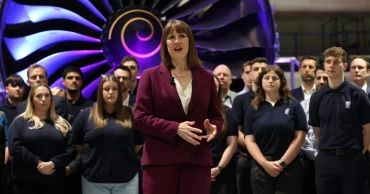
Treasury chief Rachel Reeves welcomed the growth leap, and said the figures showed the choices made by Labour since it was elected last July were beginning to pay off.
“We’re set to be the fastest growing economy in the G-7 in the first three months of this year and that’s incredibly welcome, but I know that there is more to do," she said while on a visit to a Rolls-Royce factory in Derby, northern England.
Most economists think is likely to slow down in the second quarter of the year, partly because of the global uncertainty generated by U.S. President Donald Trump's tariff policies.
Though most tariffs were paused for 90 days following the ensuing market turmoil, including the 10% baseline tariff applied to U.K. goods entering the U.S., the backdrop for the global economy remains highly uncertain, particularly if the U.S.-China trade war persists.
Some of that uncertainty, with regard to the British economy, lifted Thursday when both Trump and British Prime Minister Keir Starmer separately outlined details of a trade deal between the U.S. and the U.K. Though Trump kept the 10% baseline tariffs on U.K., he agreed to reduce the levies on British autos, steel and aluminum.
Sanjay Raja, chief U.K. economist at Deutsche Bank, said the growth uptick will likely be short-lived, especially during the second quarter when trade uncertainty will be at its peak.
“Exporters will likely see reduced demand as well from higher U.S. tariffs and weaker global demand,” he said.
Economists said growth will likely falter in the second quarter as new taxes on business were imposed in April. Also a raft of price rises during the month, including domestic energy and water bills, are expected to keep a lid on consumer demand.
Bangladesh’s recycling economy: Turning trash into treasure for thousands
1 year ago
UK High Court hears legal challenge over British government's role in arming Israel
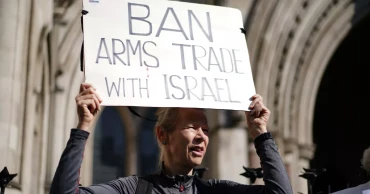
In a High Court hearing starting Tuesday, the U.K. government will defend its decision to continue supplying parts for F-35 fighter jets that may be used by Israel in Gaza,
The legal challenge was brought by human rights groups, which argue that the government is breaking domestic and international law and is complicit in atrocities against Palestinians by allowing essential components for the warplanes to be supplied to Israel.
UK’s Starmer announces stricter immigration plan; pledges sharp drop in migration numbers
The government said in September that it was suspending about 30 of 350 existing export licenses for equipment deemed to be for use in the conflict in Gaza because of a “clear risk” that the items could be used to “commit or facilitate a serious violation of international humanitarian law.” Those equipment included parts for helicopters and drones.
But an exemption was made for some licenses related to components of F-35 fighter jets, which have been linked to Israel’s bombardment campaign in the Gaza Strip.
Rights groups argue that the United Kingdom shouldn't continue the export of the parts through what they call a “deliberate loophole” given the government's own assessment of Israel’s compliance with international humanitarian law.
Palestinian human rights organization Al-Haq and the U.K.-based Global Legal Action Network, which brought the legal challenge, say the components are indirectly supplied to Israel through the global spare parts supply chain.
U.K. officials have argued that stopping the export of F-35 fighter jet components would negatively impact international peace and security.
Compared to major arms suppliers such as the U.S. and Germany, British firms sell a relatively small amount of weapons and components to Israel.
The Campaign Against Arms Trade nonprofit group estimates that the U.K. supplies about 15% of the components in the F-35 stealth combat aircraft, including its laser targeting system.
“British-made F-35s are dropping multi-ton bombs on the people of Gaza, which the U.N. secretary-general has described as a ‘killing field,’” said Charlotte Andrews-Briscoe, a lawyer for the Global Legal Action Network.
“The U.K. government has expressly departed from its own domestic law in order to keep arming Israel. This decision is of continuing and catastrophic effect," she added.
The hearing is expected to last four days and a decision is expected at a later date.
Israel resumed its bombardment in Gaza in March, shattering a two-month ceasefire with Hamas. More than 52,800 people, more than half of them women and children, have been killed in Gaza, according to the territory's health ministry. The ministry’s count doesn't differentiate between civilians and combatants. Israel says it has killed thousands of militants, without giving evidence.
The war began on Oct. 7, 2023, when Hamas militants attacked southern Israel, killing 1,200 people and taking 251 hostages.
In November, the International Criminal Court issued arrest warrants for Israeli Prime Minister Benjamin Netanyahu and Hamas’ military chief, accusing them of crimes against humanity in connection with the war in Gaza.
UK urges India-Pakistan to show restraint, engage in dialogue
1 year ago
Cyprus says Syria agrees to take back citizens who reach island nation by boat
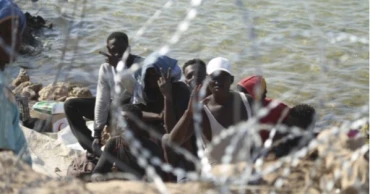
Syria has agreed to take back any of its citizens intercepted trying to reach Cyprus by boat, the Mediterranean island nation's deputy minister for migration said Monday.
Nicholas Ioannides says two inflatable boats each carrying 30 Syrians were already turned back in recent days in line with a bilateral agreement that Cyprus and Syria now have in place.
Cypriot navy and police patrol boats intercepted the two craft after they put out a call for help. They were subsequently escorted back to Syria.
Ioannides told private TV station Antenna Monday that there’s been an uptick of boatloads of migrants trying to reach Cyprus from Syria, unlike in recent years when vessels would primarily depart from Lebanon. Cyprus and Lebanon have a long-standing agreement to send back migrants.
He said Cypriot authorities in conjunction with their Syrian counterparts are trying to fight back against people traffickers who are supplying an underground market for laborers.
According to Ioannides, human traffickers apparently cut deals with local employers to bring in Syrian laborers who pick up work right away, despite laws that prevent asylum-seekers from working prior to the completion of a nine-month residency period.
Syria's interim leader al-Sharaa makes first trip to Europe with Paris visit
“The message we’re sending is that the Cyprus Republic won’t tolerate the abuse of the asylum system from people who aren’t eligible for either asylum or international protection and just come here only to work,” Ioannides said.
The bilateral agreement is compounded by the Cypriot government’s decision last week not to automatically grant asylum to Syrian migrants, but to examine their applications individually on merit and according to international and European laws.
From a total of 19,000 pending asylum applications, 13,000 have been filed by Syrian nationals, according to figures quoted by Ioannides. He said most of those applicants are Sunni Muslim and are no longer persecuted as they had been under the government of former President Bashar al-Assad.
Since Assad was toppled in December last year and a new transitional government took power, some 2,300 Syrians have either dropped their asylum claims or rescinded their international protection status, while 2,100 have already departed Cyprus for Syria.
Israeli airstrike targets area near Syrian presidential palace
Both the United Nations refugee agency and Europe’s top human rights body have urged the Cyprus government to stop pushing back migrants trying to reach the island by boat. Cyprus strongly denies it’s committing any pushbacks according to its definition.
1 year ago
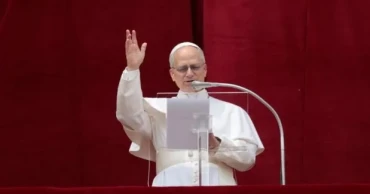
Pope Leo urges end to war in first Sunday message
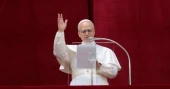
Pope Leo XIV, in his first Sunday blessing at the Vatican, made a heartfelt appeal to world leaders for an end to war.
Addressing thousands in St Peter’s Square, he called for a "lasting peace" in the Ukraine conflict, a ceasefire in Gaza, and praised a recent agreement between India and Pakistan reached on Saturday.
During the address, he also led the faithful in the Regina Caeli prayer, paying tribute to the Virgin Mary. The day before, the newly elected pope visited a shrine outside Rome and offered prayers at the tomb of his predecessor, Pope Francis, inside the basilica of Santa Maria Maggiore.
His formal inauguration is scheduled for 18 May in St Peter’s Square, where he will celebrate Mass and deliver a homily attended by numerous world leaders and dignitaries.
South Korean conservative party fails in a bid to switch presidential candidates
Pope Leo was elected on Thursday after a two-day conclave. Since then, he has led his first Mass as pope in the Sistine Chapel and held a meeting with cardinals, where he described himself as an "unworthy choice" for the papacy and pledged to uphold the "precious legacy" of his predecessor.
He emphasized the importance of missionary outreach, dialogue, and compassion for society’s marginalized, saying the Church must care for "the least and the rejected." Pope Leo explained his chosen name was inspired by a 19th-century pope recognized for championing social justice.
The pontiff also noted that modern developments, including artificial intelligence, make the Church's mission to defend human dignity and justice more vital than ever. He is expected to address the media on Monday ahead of his inauguration.
At 69, Pope Leo becomes the 267th leader of the Catholic Church and its first American pontiff. Born Robert Francis Prevost in Chicago, he served for years as a missionary in Peru, where he also gained citizenship and later became an archbishop.
Although American-born, the Vatican considers him the second pope from the Americas, following Pope Francis of Argentina. Seen as a moderate, Pope Leo is viewed as a figure of "continuity" and "unity" after the recent passing of Francis. He shares many of his predecessor’s views on migrants, poverty, and environmental issues.
In his first public message, Pope Leo told the crowd he hoped "to walk together with you as a united Church searching all together for peace and justice."
Source: BBC
1 year ago
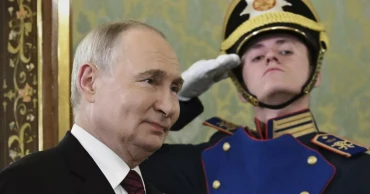
Putin proposes direct talks with Ukraine in Istanbul on May 15, 'without preconditions'
Russian President Vladimir Putin proposed restarting direct talks with Ukraine in Istanbul on May 15, “without preconditions," an offer that came in response to Ukraine and its allies urging Moscow to commit to an unconditional 30-day ceasefire or face additional sanctions.
Putin referenced the unsuccessful 2022 peace talks that took place in Istanbul in March, shortly after Moscow's full-scale invasion, and proposed "restarting" them without preconditions in remarks to reporters in the early hours of Sunday.
“We are committed to serious negotiations with Ukraine," Putin said, adding that he doesn't rule out agreeing to a ceasefire later, in the course of direct talks with Ukraine.
Putin's proposal came after leaders from four major European countries threatened to ratchet up pressure on Moscow if it does not accept an unconditional 30-day ceasefire in Ukraine that they offered on Saturday in a strong show of unity with Kyiv.
The leaders of France, the United Kingdom, Germany and Poland said their proposal for a ceasefire to start on Monday was supported by U.S. President Donald Trump, whom they had briefed over the phone earlier in the day.
Trump has called for Ukraine and Russia to meet for “very high level talks,” saying they are “very close to a deal” on ending the bloody three-year war.
Ukraine's President Volodymyr Zelenskyy has previously said he was ready for peace talks, but only after a ceasefire is in place.
Moscow's proposals
Putin said that Russia proposed several ceasefires in recent months — a halt on strikes on energy infrastructure, which Ukraine had agreed to, a unilateral 30-hour Easter truce and another unilateral ceasefire on May 8-10 that has since expired.
Ukrainian officials said Russia repeatedly violated all of those.
Putin on Sunday accused Ukraine of sabotaging “these initiatives time and time again" and launching multiple attacks on Russia.
In March, the United States proposed an immediate, limited 30-day truce, which Ukraine accepted, but the Kremlin has held out for terms more to its liking.
Putin on Sunday once again said the Kremlin needs a truce that would lead to a “lasting peace" instead of one that would allow Ukraine to rearm and mobilize more men into its armed forces.
He said he would speak to Turkish President Recep Tayyip Erdogan and ask him to facilitate the peace talks on May 15.
Shortly after Russia’s full-scale invasion of Ukraine in February 2022, Turkey hosted unsuccessful talks between Russian and Ukrainian negotiators aimed at ending the hostilities. The proposed deal reportedly included provisions for Ukraine’s neutral status and put limits on its armed forces, while delaying talks on the status of Russian-occupied areas.
China, Russia to shoulder special responsibility as major countries: Xi
Moscow has blamed Kyiv and the West for the talks collapsing.
Putin said that "those who truly want peace cannot but support" his proposal to restart the peace talks.
‘A very important signal’
Zelenskyy, speaking to reporters alongside the European leaders in Kyiv on Saturday, called their meeting "a very important signal.”
In a joint statement, as published on Zelenskyy's official website, the five leaders called for a ceasefire “lasting at least 30 days" from Monday, to make room for a diplomatic push to end the war.
“An unconditional ceasefire by definition cannot be subject to any conditions. If Russia calls for such conditions, this can only be considered as an effort to prolong the war and undermine diplomacy,” the statement read.
French President Emmanuel Macron said that the U.S. would take the lead in monitoring the proposed ceasefire, with support from European countries, and threatened “massive sanctions ... prepared and coordinated, between Europeans and Americans,” should Russia violate the truce.
Macron traveled to Kyiv with British Prime Minister Keir Starmer, German Chancellor Friedrich Merz and Polish Prime Minister Donald Tusk.
“This is Europe stepping up, showing our solidarity with Ukraine,” Starmer said.
Retired Lt. Gen. Keith Kellogg, Trump’s special envoy to Ukraine, said Saturday that a “comprehensive” 30-day ceasefire, covering attacks from the air, land, sea and on infrastructure, “will start the process for ending the largest and longest war in Europe since World War II.”
Meanwhile, Putin on Saturday held a series of bilateral talks with foreign officials who had attended Moscow's own celebrations marking the defeat of Nazi Germany, in an apparent attempt to underscore the West’s failure to isolate it on the global stage. Putin's interlocutors included To Lam, General Secretary of the Communist Party of Vietnam, and the leaders of Zimbabwe, Burkina Faso and the Palestinian Authority.
Europe threatens more sanctions if Russia ignores ceasefire offer
Progress on ending the three-year war has seemed elusive in the months since Trump returned to the White House, and his previous claims of imminent breakthroughs have failed to come to fruition. Trump has previously pushed Ukraine to cede territory to Russia to end the war, threatening to walk away if a deal becomes too difficult.
Since the start of U.S.-mediated talks, Russia has kept up attacks along the roughly 1,000-kilometer (600-mile) front line, including deadly strikes on residential areas with no obvious military targets.
The ceasefire would include a halt to fighting on land, sea and in the air. The European leaders threatened to ratchet up sanctions, including on Russia’s energy and banking sectors, if Putin did not comply.
The priority was to make it too costly for Russia to keep fighting in Ukraine, said Ukrainian Foreign Minister Andrii Sybiha.
When asked how the monitoring mechanism would work, Sybiha told The Associated Press the details were still being discussed.
Addressing skepticism over whether fresh sanctions against Moscow, which has so far managed to keep fighting in the war, Merz said “almost all member states of the European Union and a large coalition of the willing around the world are determined to enforce these sanctions even if our initiative of the weekend should fail.”
Chinese President Xi leaves for state visit to Russia
The leaders also discussed security guarantees for Ukraine.
Building up Kyiv's military capabilities will be a key deterrent against Russia and require supplying Ukraine with robust quantities of arms to deter future attacks and investing in its defense sector. A force comprised of foreign troops could also be deployed as an added “reassurance” measure, Macron said.
He said details about potential European deployments to Ukraine were still being fine-tuned. No mention was made of NATO membership, still Kyiv’s top choice for a security guarantee.
Earlier on Saturday, the European leaders joined a ceremony at Kyiv's Independence Square marking the 80th anniversary of the end of World War II. They lit candles alongside Zelenskyy at a makeshift flag memorial for fallen Ukrainian soldiers and civilians slain since Russia's invasion.
Russian attacks continue
Russian shelling in Ukraine’s northern Sumy region over the past day killed three residents and wounded four more, local officials said. Another civilian died Saturday as a Russian drone struck the southern city of Kherson, according to regional Gov. Oleksandr Prokudin.
The U.S. Embassy in Kyiv on Friday warned of a “potentially significant” Russian air attack in the coming days, without giving details.
Russia in November gave the U.S. brief advance warning before striking Ukraine for the first time with its Oreshnik intermediate-range ballistic missile, an experimental hypersonic weapon that Putin claimed could travel at 10 times the speed of sound.
Ukrainian Telegram channels linked the embassy's warning to reports of an imminent flight ban by Moscow over the Kapustin Yar military training and rocket launch complex. A similar flight ban preceded November’s strike. There was no immediate comment from Russian officials.
Russia declares a 72-hour ceasefire in Ukraine marking Victory Day in World War II
Trump said last week that he doubts Putin wants to end his war in Ukraine, expressing new skepticism that a peace deal can be reached soon, and hinted at further sanctions against Russia.
Ukraine’s European allies view its fate as fundamental to the continent’s security, and pressure is now mounting to find ways to support Kyiv militarily, regardless of whether Trump pulls out.
1 year ago
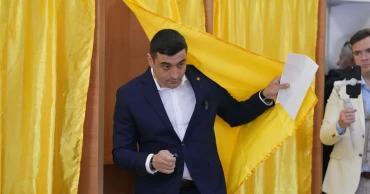
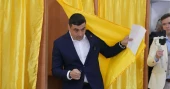
Hard-right candidate Simion secures decisive win in first round of Romania’s presidential redo
Hard-right nationalist George Simion emerged as the clear frontrunner in Sunday’s first round of Romania’s presidential election redo, according to nearly complete official results. The vote, held months after a previous election was annulled, followed a period of deep political turmoil in the EU and NATO member state. Simion, 38, who leads the Alliance for the Unity of Romanians (AUR), secured a commanding 40.5% of the vote, with 99% of ballots counted, putting him well ahead of his rivals.
Far behind in second place was Bucharest Mayor Nicusor Dan with 20.89%, and in third place the governing coalition’s joint candidate, Crin Antonescu, with 20.34%. He conceded defeat after midnight, saying he believes it’s an “irreversible result.”
Eleven candidates vied for the presidency and a runoff will be held on May 18 between the top two candidates. By the time polls closed, about 9.57 million people — or 53.2% of eligible voters — had cast their ballots, according to the Central Election Bureau, with 973,000 votes cast at polling stations set up in other countries.
Election redo held after vote annulled
The rerun was held after Romania’s political landscape was shaken last year when a top court voided the previous election in which the far-right outsider Calin Georgescu topped the first round, following allegations of electoral violations and Russian interference, which Moscow has denied.
In a prerecorded speech aired after polls closed, Simion said that despite many obstacles, Romanians “have risen up” and “we are approaching an exceptional result.”
“I am here to restore constitutional order,” said Simion, who came fourth in last year’s race and later backed Georgescu. “I want democracy, I want normalcy, and I have a single objective: to give back to the Romanian people what was taken from them and to place at the center of decision-making the ordinary, honest, dignified people.”
As in many EU countries, antiestablishment sentiment is running high in Romania, fueled by high inflation and cost of living, a large budget deficit and a sluggish economy. Observers say the malaise has bolstered support for nationalist and far-right figures like Georgescu, who is under investigation and barred from the rerun.
Georgescu, who appeared alongside Simion at a polling station on Sunday in the capital, Bucharest, called the vote rerun “a fraud orchestrated by those who have made deceit the only state policy,” but said he was there to “acknowledge the power of democracy, the power of the vote that frightens the system, that terrifies the system.”
The presidential role carries a five-year term and significant decision-making powers in national security and foreign policy.
Widespread distrust in the authorities
Dan, a 55-year-old mathematician and former anti-corruption activist who founded the Save Romania Union party (USR) in 2016, ran on a pro-EU “Honest Romania” ticket.
“It is about the trust of Romanians and our partners in democracy ... and in my opinion, it is a new beginning that we all have a responsibility to do correctly,” Dan said after the polls closed.
Antonescu, 65, a veteran centrist who campaigned on retaining Romania’s pro-Western orientation, said Sunday that he voted for “a united Romania, for a strong Romania, for a dignified Romania.”
Humanitarian situation in Gaza ‘beyond imagination’: UN agency
“Democracy means a battle, sometimes taken to the maximum, but it is a battle of ideas,” he said after voting had closed. “Let’s not forget that we are fellow citizens, sons of the same country, and we must move forward together.”
Victor Ponta, who was prime minister from 2012-2015, also pushed a MAGA-style “Romania First” campaign and boasted of having close ties to the Trump administration, stands in fourth place with 14.3% of the vote.
Elena Lasconi, who came second in last year’s first round ballot and participated in the rerun, only obtained about 2.6% of the vote. She positioned herself as a staunchly pro-Western, anti-system candidate, railing against what she described as a corrupt political class.
Cristian Andrei, a Bucharest-based political consultant, said Simion’s clear victory indicates a complete “reshape” of the political spectrum, and that if Dan reaches the runoff, “it will be a clear signal that the political class and the political establishment have lost.”
Crossroads moment for Romania
Distrust in the authorities remains widespread, especially for those who voted for Georgescu, a sizable electorate that Simion has sought to tap into.
“The antiestablishment sentiment is not like an anarchic movement, but is against the people who destroyed this country,” Simion told The Associated Press days before the rerun. “We are not a democratic state anymore.”
1 year ago
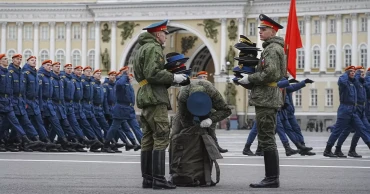
Russia declares a 72-hour ceasefire in Ukraine marking Victory Day in World War II
Russian President Vladimir Putin on Monday declared a unilateral 72-hour ceasefire next week in Ukraine to mark Victory Day in World War II as the U.S. presses for a deal to end the 3-year-old war. Kyiv insisted on a longer and immediate truce.
The Kremlin said the truce, ordered on “humanitarian grounds,” will run from the start of May 8 and last through the end of May 10 to mark Moscow's defeat of Nazi Germany in 1945 — Russia's biggest secular holiday. That timing means the truce would start at 2100 GMT, or 5 p.m. EDT, on May 7, lasting until 2100 GMT, or 5 p.m. EDT on May 10.
Ukraine, which has previously agreed to U.S. President Donald Trump's proposal of a full 30-day ceasefire, dismissed Putin's move as window dressing.
“If Russia truly wants peace, it must cease fire immediately,” Ukrainian Foreign Minister Andrii Sybiha said, according to the ministry. He emphasized that Kyiv is ready for a “lasting, reliable, and complete ceasefire” for at least 30 full days.
“Why wait for May 8? If we can cease fire now from any date and for 30 days — so that it is real, and not just for a parade,” he said without specifying whether Ukraine would be ready to accept the Moscow-proposed truce.
The Kremlin had urged Ukraine to follow suit.
“Russia believes that the Ukrainian side should follow this example,” it said, warning that “in case of violations of the ceasefire by the Ukrainian side, the Russian armed forces will give an adequate and efficient response."
Putin previously announced a unilateral 30-hour Easter ceasefire and Ukraine voiced readiness to reciprocate any genuine truce at the time, but it said Russian attacks continued. Moscow, in turn, accused Ukraine of failing to halt its attacks.
Russia and Ukraine had also earlier pledged to observe a 30-day halt on strikes on energy infrastructure that was brokered by the Trump administration, but they repeatedly accused each other of massive violations until the measure expired.
The truce attempts underlined the massive challenges for monitoring any possible halt to hostilities along the more than 1,000-kilometer (over 600-mile) line of contact.
Up until now, Putin had refused to accept a complete unconditional ceasefire, linking it to a halt in Western arms supplies to Ukraine and Ukraine’s mobilization effort.
The Kremlin reaffirmed that “the Russian side again declares its readiness for peace talks without preconditions aimed at removing the root causes of the Ukrainian crisis and constructive cooperation with international partners.”
North Korea confirms it sent troops to Russia to support its war against Ukraine
Ukrainians in Kyiv scoffed at Putin's move.
“There is no trust in any of Putin’s proposals," said Nazar Lutsenko, a lawyer. He added that “we absolutely want the war to end on terms that are favorable to us, on fair terms.”
A soldier with the 156th Brigade, who identified himself only by his first name, Kostiantyn, in keeping with military rules, dismissed the truce as “ridiculous,” adding that perhaps “there will not be such harsh shelling as there is every evening here, but fighting will be conducted in one way or another."
Student Oleksandra Serpilova viewed the declaration as “another attempt to keep America engaged, to give Trump hope that some kind of negotiations are possible.”
Just before the ceasefire announcement, Ukraine and Russia targeted each other with long-range strikes.
Russia's drone attack early Monday damaged an infrastructure facility in Cherkasy, central Ukraine, disrupting gas supplies to households in the city, Mayor Anatolii Bondarenko said.
The Russian Defense Ministry said its forces downed 119 Ukrainian drones overnight, most of them over Russia’s Bryansk border region. In Ukraine, air raid sirens rang out across the country Monday morning. There were no immediate reports of casualties or damage.
Rubio says this week is ‘very critical’
The outcome of a push by Trump’s administration to swiftly end the fighting, which has cost tens of thousands of lives, remains unclear, clouded by conflicting claims and doubts about how far each side might be willing to compromise amid deep hostility and mistrust.
The clock is ticking on Washington’s engagement in efforts to resolve Europe’s biggest conflict since World War II.
U.S. Secretary of State Marco Rubio said Sunday that this week would be “very critical.” The U.S. needs to “make a determination about whether this is an endeavor that we want to continue to be involved in,” he said on NBC’s “Meet the Press.”
American military aid has been crucial for Ukraine’s war effort, and further help could be at risk if the Trump administration walks away from attempts to end the war.
Trump's doubts about Putin's intentions
Trump said over the weekend he harbors doubts about Putin’s sincerity in pursuing a deal, as Russian forces have continued to strike civilian areas of Ukraine with cruise and ballistic missiles while the talks have proceeded.
But on Friday, Trump described a brokered settlement on the war as “close.”
Russia launches nearly 150 drones against Ukraine
Western European officials have accused the Kremlin of dragging its feet on peace talks so that Russia's larger forces, which have battlefield momentum, can seize more Ukrainian land.
Russian Foreign Minister Sergey Lavrov discussed the war in a phone call Sunday with Rubio, the Russian Foreign Ministry said. They focused on “consolidating the emerging prerequisites for starting negotiations,” the statement said, without elaborating.
Russia has effectively rejected a U.S. proposal for an immediate and full 30-day halt in the fighting by imposing far-reaching conditions. Ukraine has accepted it, Ukrainian President Volodymyr Zelenskyy says.
A French diplomatic official said over the weekend that Trump, Zelenskyy and French President Emmanuel Macron agreed “to pursue in the coming days the work of convergence” to obtain “a solid ceasefire.”
The diplomat said a truce is a “prior condition for a peace negotiation that respects the interest of Ukraine and the Europeans.”
The official was not authorized to be publicly identified in accordance with French presidential policy.
Ukraine unwilling to give up land
Ukraine, meanwhile, has balked at surrendering land to Russia in return for peace, which Washington has indicated could be necessary.
A key point of leverage for Ukraine could be a deal with Washington that grants access to Ukraine’s critical mineral wealth.
Ukraine and the U.S. have made progress on a mineral agreement, with both sides agreeing that American aid provided so far to Kyiv will not be taken into account under the terms of the deal, Ukrainian Prime Minister Denys Shmyhal said Sunday.
“We have good progress,” he said after talks with U.S. Treasury Under Secretary Scott Bessent in Washington.
“The main thing is that we clearly defined our red lines: The agreement must comply with Ukraine’s Constitution, legislation, and European commitments, and must be ratified by Parliament,” Shmyhal said.
Russia's full-scale invasion of its neighbor in February 2022 has developed a significant international dimension, further complicating negotiations.
Putin on Monday thanked North Korea for sending what the U.S. estimates are thousands of troops to help defeat Ukraine, as well as allegedly supplying artillery ammunition.
Trump says Zelenskyy is prolonging war in Ukraine by resisting calls to cede Crimea to Russia
Iran has also helped Russia in the war, with Shahed drones, and China has sold Russia machinery and microelectronics that Moscow can use to make weapons, Western officials say.
The U.S. and Europe have been Kyiv's biggest backers.
1 year ago
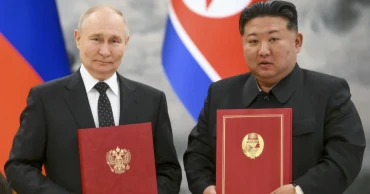
North Korea confirms it sent troops to Russia to support its war against Ukraine
North Korea acknowledged for the first time on Monday that it had deployed troops to Russia in support of its war effort against Ukraine. According to Pyongyang, the move was intended to assist Russia in reclaiming its Kursk region, which was captured by Ukrainian forces during a surprise offensive last year.
While U.S., South Korean, and Ukrainian intelligence agencies had previously reported that North Korea sent between 10,000 and 12,000 soldiers to Russia last fall—marking its first involvement in a major conflict since the Korean War ended in 1953—North Korea had remained silent on the matter until now.
Russia launches nearly 150 drones against Ukraine
The North Korean announcement came two days after Russia said its troops have fully reclaimed the Kursk region. Ukrainian officials denied the claim.
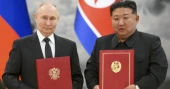
North Korean leader Kim Jong Un decided to send combat troops to Russia under a mutual defense treaty signed by him and Russian President Vladimir Putin in June 2024, the North’s Central Military Commission said in a statement carried by state media. The treaty — considered the two countries’ biggest defense agreement since the end of the Cold War — requires both nations to use all available means to provide immediate military assistance if either is attacked.
The statement cited Kim as saying the deployment was meant to “annihilate and wipe out the Ukrainian neo-Nazi occupiers and liberate the Kursk area in cooperation with the Russian armed forces.”
“They who fought for justice are all heroes and representatives of the honor of the motherland,” Kim said.Kim said that a monument will soon be erected in Pyongyang to mark North Korea’s battle feats and that flowers will be laid before the tombstones of the fallen soldiers. Kim said the government must take steps to preferentially treat and take care of the families of the soldiers who took part in the war.
The North Korean statement didn’t say how many troops North Korea eventually sent and how many of them had died. But in March, South Korea’s military said that around 4,000 North Korean soldiers had been killed or wounded in the Russia-Ukraine war fronts. the South Korean military also assessed at the time that North Korea sent about 3,000 additional troops to Russia earlier this year.
North Korean soldiers are highly disciplined and well trained, but observers say they’ve become easy targets for drone and artillery attacks on Russian-Ukraine battlefields due to their lack of combat experience and unfamiliarity with the terrain. Still, Ukrainian military and intelligence officials have assessed that the North Koreans gained crucial battlefield experience and have been key to Russia’s strategy of overwhelming Ukraine by throwing large numbers of soldiers into the battle for Kursk.
South Korea’s Unification Ministry on Monday urged North Korea to withdraw its troops from Russia immediately, saying the North’s support of Russia’s illegal invasion of Ukraine poses a grave provocation to international security. Spokesperson Koo Byoungsam also called the North’s troops’ deployment “an act against humanity” that has sacrificed young North Korean soldiers for their government.
In a Kremlin meeting Saturday, Valery Gerasimov, chief of the general staff for Russia’s armed forces, informed Putin of Russia’s regaining of the Kursk region. Gerasimov also confirmed that North Korean soldiers fought alongside Russia to repel Ukrainian troops from the Kursk region and “demonstrated high professionalism, showed fortitude, courage and heroism in battle.”
Ukraine’s General Staff countered that its defensive operation in certain areas in Kursk was continuing.
1 year ago