Europe
Ukraine resumes Russian oil transit via Druzhba pipeline
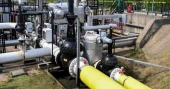
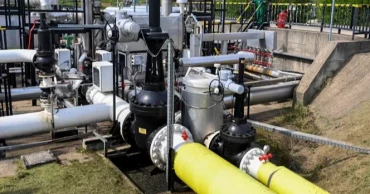
Ukraine has resumed oil transit from Russia to several European countries through the Druzhba pipeline, Interfax-Ukraine reported on Wednesday.
Oil flows through the pipeline had been suspended since late January after a Russian strike damaged the Ukrainian section of the route, halting deliveries to Hungary and Slovakia.
According to an industry source cited by the agency, pumping resumed at 12:35pm local time (0935 GMT).
Ukrainian President Volodymyr Zelenskyy said on Tuesday that repair work on the pipeline had been completed.
The Druzhba pipeline is one of Europe’s key oil supply routes, transporting Russian crude to several Central and Eastern European countries.
3 months ago
Spain, Slovenia, Ireland push EU to review Israel treaty amid rising tensions
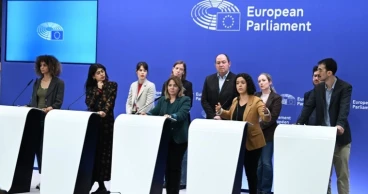
Spain, Slovenia and Ireland have called on the European Union to discuss the possible suspension of its association treaty with Israel, citing growing concerns over regional developments and recent policy measures.
Spanish Foreign Minister José Manuel Albares said the three countries submitted a joint letter last Friday to EU foreign policy chief Kaja Kallas, urging an urgent review of the bloc’s response, reports Al Jazeera.
The letter highlights concerns over the situation in Lebanon as well as a recently passed Israeli law that предусматриes the death penalty by hanging for Palestinians convicted in Israeli military courts.
The request comes ahead of a meeting of EU foreign ministers in Luxembourg, where the issue is expected to be discussed.
Meanwhile, international criticism has also intensified following reports of an Israeli soldier desecrating a statue of Jesus Christ in southern Lebanon. The incident has drawn condemnation from various quarters, including political figures and religious observers, who say it reflects a broader pattern of tensions in the region.
3 months ago
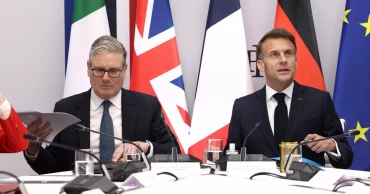
Macron, Starmer welcome Strait of Hormuz reopening, call for permanent stability
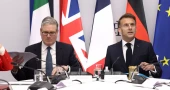
French President Emmanuel Macron and British Prime Minister Keir Starmer have welcomed the announced reopening of the Strait of Hormuz but said the key global shipping route must remain permanently open and secure.
Macron said after a meeting of around 50 countries in Paris that “we all demand the full, immediate and unconditional reopening of the Strait of Hormuz by all parties.” Starmer said announcements by Iran and the United States declaring the waterway open must become “both lasting and a workable proposal.” He added that France and the U.K. would lead a multinational mission to safeguard maritime shipping “as soon as conditions allow,” with military planners set to meet in London next week.
Iran, US say Strait of Hormuz is fully open to commercial vessels
The Paris gathering, attended by more than 30 heads of state and government either in person or virtually, excluded the United States. It aimed to advance plans for the Strait of Hormuz Maritime Freedom of Navigation Initiative, following disruptions linked to the U.S.-Israeli war on Iran that had pushed up global oil prices.
Iranian Foreign Minister Abbas Araghchi earlier said passage for commercial vessels would remain “completely open” during a 10-day ceasefire in Lebanon, while U.S. President Donald Trump said American naval restrictions would continue until a full agreement with Iran was reached.
Macron said the proposed mission would be “strictly defensive,” involving non-belligerent countries and deployed only when security conditions permit.
France and Britain are leading military planning efforts, considering roles such as mine-clearing, intelligence sharing and maritime coordination, rather than direct naval escorts. Experts said such tasks would be more feasible for coalition partners given limited naval capacity.
Dozens of countries, including Australia, Canada, South Korea and Ukraine, have participated in discussions, though commitments to deploy forces remain uncertain.
3 months ago
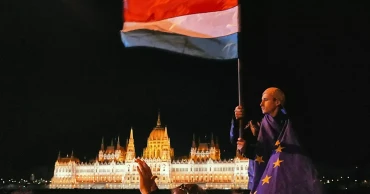
EU officials meet in Hungary to unlock €17bn funds ahead of new govt
European Union officials held talks in Budapest on Friday with representatives of election winner Péter Magyar, focusing on releasing billions of euros in frozen funds and advancing cooperation ahead of his government taking office next month.
The discussions include efforts to unlock around €17 billion ($20 billion) in EU aid withheld during the tenure of outgoing Prime Minister Viktor Orbán, as well as coordination on key issues such as financial support for Ukraine.
European Commission spokesperson Paula Pinho said preliminary talks are aimed at ensuring swift action once the new government assumes office, noting that “the clock is ticking” on several urgent matters.
The EU froze funding to Hungary over concerns about corruption, democratic backsliding and judicial independence during Orbán’s 16-year rule. Both Brussels and Magyar’s team have since prioritised unlocking the funds to support Hungary’s struggling economy.
European Commission President Ursula von der Leyen said reforms are needed to restore the rule of law, align with EU values and enable access to the funds.
Magyar, whose Tisza party secured a parliamentary supermajority, has pledged to pursue reforms in judicial independence, media freedom and anti-corruption measures to meet EU conditions. He has also signalled support for a previously agreed €90 billion EU loan package for Ukraine, which Orbán had blocked.
The frozen funds include €10 billion in post-pandemic recovery support and €6.3 billion in cohesion funds aimed at boosting weaker economies. Officials are racing to release the recovery funds before an August deadline.
Hungary, a major recipient of EU funding, has faced longstanding criticism from the bloc over its governance standards. While Orbán rejected such allegations, the European Commission suspended funds in 2022, partially releasing some in 2023 after reforms.
Analysts say Magyar could move quickly to implement required legislative changes, including reforms to judicial appointments, to unlock the funds.
Hungary may also benefit from additional financing under the EU’s €150 billion Security Action for Europe (SAFE) initiative, which supports defence readiness. If accessed, the combined funding could amount to a significant share of the country’s economy.
3 months ago
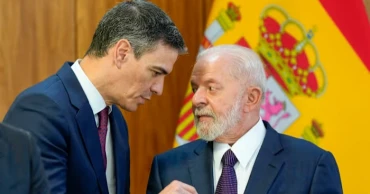
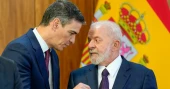
Lula, Sánchez host progressive leaders’ meetings in Barcelona
Brazil’s President Luiz Inácio Lula da Silva began a two-day visit to Spain on Friday, joining his Spanish counterpart Pedro Sánchez to host a series of meetings with global leaders focused on safeguarding democracy and countering the rise of far-right populism.
The two leaders, both vocal critics of Donald Trump and his tariff threats, are seen as leading figures of progressive politics in their regions, where right-wing movements have gained momentum.
Lula and Sánchez are scheduled to meet at a former royal palace in Barcelona along with senior ministers, where they are expected to sign agreements on economic cooperation, technology and social policy.
Their bilateral talks will be followed on Saturday by two major gatherings bringing together leaders from mid- and smaller-sized countries.
The first, the fourth “Meeting in Defense of Democracy,” was launched by Brazil and Spain in 2024 to address challenges such as extremism, political polarization and misinformation. Previous editions were held at the United Nations and in Santiago, Chile.
Lula said the forum should not be viewed as targeting Trump, stressing that it will instead focus on assessing the state of democracy and identifying ways to strengthen it.
Leaders expected to attend include Claudia Sheinbaum, Cyril Ramaphosa, Gustavo Petro and António Costa, along with representatives from countries across Europe, Latin America and Africa.
The same venue will later host the inaugural “Global Progressive Mobilization,” a gathering of left-leaning leaders and policymakers expected to draw around 3,000 participants. The event will feature speeches by Lula and Sánchez and discussions on issues such as inequality and electoral strategies.
The initiative was conceived after Sánchez and former Swedish prime minister Stefan Löfven discussed creating a global platform for progressive coordination.
The meetings come during a busy diplomatic period for Sánchez, who recently returned from China after meeting Xi Jinping, while his government has taken positions related to the Iran conflict, including restricting the use of Spanish airspace and bases by US forces.
Earlier this week, Lula also expressed solidarity with Pope Leo XIV following criticism from Trump over the pontiff’s stance on the Iran war.
Analysts say the gatherings reflect efforts by democratic leaders to counter the growing influence of far-right movements and to strengthen cooperation among what some describe as “middle powers” in an increasingly polarized global landscape.
3 months ago
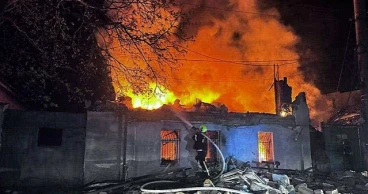
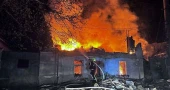
Russia and Ukraine accuse each other of violating Putin’s Easter ceasefire
Russia and Ukraine on Sunday accused each other of breaching a Kremlin-declared Easter ceasefire, even as Orthodox Christians marked the holiday amid the ongoing four-year war.
Russian President Vladimir Putin had announced a 32-hour truce over the Easter weekend, ordering a halt to hostilities from 4pm Saturday through Sunday. Ukrainian President Volodymyr Zelenskyy said Ukraine would observe the ceasefire but warned of a swift response to any violations.
Ukraine’s military said it recorded 2,299 ceasefire breaches by Sunday morning, including shelling, assaults and drone activity, though it reported no use of long-range missiles or guided bombs. A Ukrainian officer also said Russian forces continued attacks on frontline positions.
Russia’s Defence Ministry, meanwhile, claimed Ukrainian forces committed 1,971 violations, including drone strikes. Russian officials also reported civilian casualties in the Belgorod region following an alleged Ukrainian attack.
Despite the fighting, thousands of Ukrainians gathered at outdoor locations to celebrate Easter services. Worshippers attended traditional blessings of food baskets containing dyed eggs and cakes, although many expressed scepticism about the ceasefire’s effectiveness.
“Every time a ceasefire is announced for a holiday, the shelling continues regardless,” one resident said, while still expressing hope for peace and an end to the war.
3 months ago
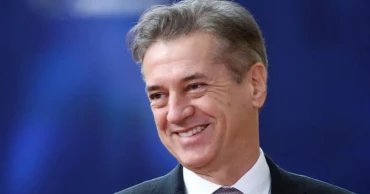
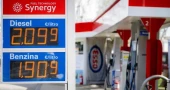
Slovenia introduces fuel rationing amid energy disruptions
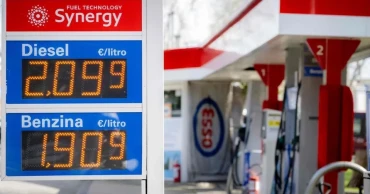
Slovenia has become the first European Union member to introduce fuel rationing as it grapples with supply disruptions and rising prices triggered by the ongoing conflict involving Iran.
The government moved to control fuel distribution following volatility in global energy markets linked to US-Israeli strikes on Iran and retaliatory actions affecting key Gulf producers.
Authorities said the situation had led to sharp price increases across Europe, while Slovenia has also seen a surge in so-called “fuel tourism,” with drivers from neighbouring countries, especially Austria, crossing the border to take advantage of comparatively lower, regulated prices.
Under the new rules, private motorists are limited to purchasing up to 50 litres of fuel per day, while businesses and farmers are allowed up to 200 litres.
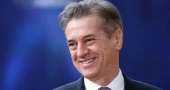
Prime Minister Robert Golob sought to reassure the public that supplies remain sufficient, saying there is no risk of shortages and that fuel reserves are adequate.
The government has tasked petrol stations with enforcing the restrictions, requiring staff to ensure customers do not exceed the set limits.
The unprecedented move has drawn strong reactions from the public, with some drivers saying they have never experienced such measures before.
With inputs from BBC
4 months ago
IEA urges work-from-home, less flying to ease energy price surge
The International Energy Agency (IEA) has recommended that governments, businesses, and households adopt measures such as working from home and avoiding air travel to help ease the burden of soaring energy prices caused by the US-Israeli war with Iran.
The conflict, which began on Feb 28, has sharply driven up global energy costs, raising inflation concerns worldwide. Brent crude has surged to around US$120 per barrel from about US$70 before the war, while natural gas prices have more than doubled.
In addition to these demand-side measures, the IEA highlighted other suggestions, including lowering highway speed limits by at least 10 km/h and using alternative transport where possible.
“We have recently launched the largest-ever release of IEA emergency oil stocks, and I am in close contact with governments globally, including major energy producers and consumers, as part of our international energy diplomacy,” IEA Executive Director Fatih Birol said.
On March 11, the IEA agreed to release a record 400 million barrels of oil from strategic reserves, with the United States providing the majority of the supply. #From The Straits Times/Reuters
4 months ago
Kremlin says Russian, US interests align after oil sanctions eased
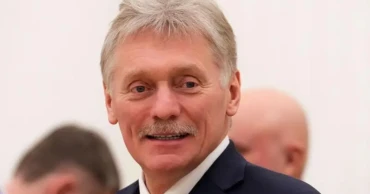
The Kremlin said on Monday that Russian and US interests coincide following the Trump administration’s decision to ease sanctions on Russian oil amid the Iran conflict.
Oil prices have surged in recent days as tensions escalate in the Middle East.
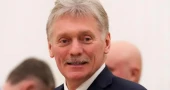
In a statement reported by Reuters, Kremlin spokesman Dmitry Peskov said, “The United States is taking action in an attempt to stabilise energy markets; in this regard, our interests align.”
With inputs from BBC
4 months ago
Ukraine strikes Russian missile component factory, casualties reported
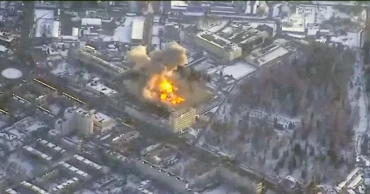
Ukrainian forces attacked a key Russian military factory in the Bryansk region on Wednesday, President Volodymyr Zelensky said. The factory produced electronics and components for Russian missiles used against Ukrainian cities and civilians.
Ukraine said British Storm Shadow missiles were used in the strike on the Kremniy El plant.
Russian authorities reported at least six civilians killed and 42 injured. President Vladimir Putin’s spokesman, Dmitry Peskov, said the attack was “impossible without British specialists” and described it as a terrorist missile strike. He added that Russia’s military operation continues to prevent such attacks and to demilitarise Ukraine.
The conflict has also seen Russian attacks using Iranian-made Shahed drones, including an attack in Kharkiv on Wednesday that killed two people and injured five. Another strike in Slovyansk on Tuesday killed four and injured 16.
Both sides continue military operations despite a recent stalemate. Russia claims slow advances, while Ukraine says it is reclaiming territory.
Zelensky said another round of talks may take place next week, led by US President Donald Trump. Proposals reportedly include Ukraine giving up parts of the Donbas region, which Russia currently controls over 80%, though Ukraine has rejected such terms.
With inputs from BBC
4 months ago