europe
Spain wildfire death toll rises to 12 as firefighters battle massive blaze
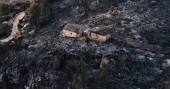
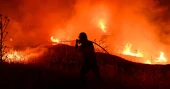
Hundreds of firefighters, supported by helicopters and fixed-wing aircraft, continued efforts on Saturday to contain one of Spain's deadliest wildfires, which has claimed at least 12 lives and scorched a vast area of southern Andalusia.
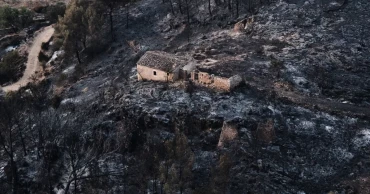
The wildfire, which broke out late Thursday near the Sierra de Los Filabres mountains in Almería province, has burned around 66 square kilometres of forest and farmland, regional authorities said.
Emergency officials said improved weather conditions, including light winds and higher humidity, have aided firefighting operations, although the scale of the blaze remains a major challenge. Fire crews also carried out controlled burns overnight to prevent the flames from spreading further.
Authorities expect favorable weather conditions to continue into Sunday, which could help contain the fire.
Most of the victims, believed to be foreign nationals, reportedly died after ignoring official shelter-in-place orders. Seven people lost their lives after abandoning their vehicles and attempting to flee on foot.
Regional officials said four of the victims are believed to be British nationals, based on the right-hand-drive vehicle in which they were found. Authorities have completed autopsies and collected DNA samples to confirm the identities of the victims.
Spain's Foreign Minister José Manuel Albares has been in contact with his counterparts from the United Kingdom, Belgium, Canada and the Netherlands, as Almería is home to a large foreign community.
Nearly all homes along the fire's perimeter have remained intact, Justice Minister Félix Bolaños said.
The wildfire comes as Western Europe experiences its third heatwave in six weeks, with Spain and neighboring France facing extreme temperatures. Climate experts have warned that Europe, the world's fastest-warming continent, is increasingly vulnerable to prolonged heatwaves and destructive wildfires.
Authorities have evacuated 1,448 residents from 11 affected areas as firefighters continue to battle the blaze.
22 days ago

Ukrainian PM Svyrydenko resigns as Zelenskyy unveils government shake-up
Ukrainian Prime Minister Yulia Svyrydenko announced her resignation on Sunday after President Volodymyr Zelenskyy revealed plans for a broad government reshuffle aimed at reshaping the country's political strategy.
In a statement posted on social media, Svyrydenko said she was proud to have led the government during one of the most challenging periods in Ukraine's modern history.
She said she had discussed her future role with Zelenskyy and remained ready to continue serving the country in any capacity that would help strengthen Ukraine, protect its national interests and advance efforts toward a just peace.
Svyrydenko, 39, took office as prime minister in July 2025 after serving as economy minister. She played a key role in negotiating a minerals agreement with the United States, which was widely viewed as an important step in reinforcing U.S. support for Ukraine's security.
Announcing the changes, Zelenskyy said Ukraine was revising its political strategy and that Svyrydenko had been offered responsibility for "a new, important area" of relations with one of the country's key international partners.
The president said each major area of Ukraine's foreign policy would be assigned to experienced officials capable of implementing agreements reached at the leadership level and meeting public expectations.
Zelenskyy also indicated that the reshuffle would include changes in the senior leadership of Ukraine's law enforcement agencies.
22 days ago

UK labour opens leadership contest with Burnham as sole candidate
Nominations opened on Thursday for the UK Labour Party leadership election to replace Prime Minister Keir Starmer, with former Greater Manchester Mayor Andy Burnham expected to emerge as the sole candidate.
Burnham began collecting nominations from Labour lawmakers and requires the backing of at least 80 MPs to qualify. Political observers expect him to comfortably surpass the threshold.
"It's all starting to feel very real," Burnham said in a video posted on social media after formally nominating himself.
The nomination period will remain open until July 16. If no other candidates enter the race, Burnham is expected to be confirmed as Labour leader on July 17 and formally appointed prime minister after meeting King Charles III on July 20.
Potential challengers have ruled out contesting the leadership. Former Defence Minister Al Carns, who had been considering a bid, announced late Wednesday that he would not stand against Burnham.
"I'd hoped a leadership contest would give us the opportunity for a proper debate," Carns said in a statement. "But months of internal Labour politics isn't what the country needs right now. We've got to get on with the job. Andy Burnham's earned this and he's got my full backing."
Starmer announced last month that he would step down once Labour selected a successor. He came to power with a landslide election victory in July 2024 but decided to resign after two years in office marked by political setbacks and declining public support.
Burnham returned to Parliament after winning a by-election last month, following nearly a decade as mayor of Greater Manchester.
He has pledged to revive Britain's economy through a strategy he calls "Manchesterism," aimed at boosting growth by combining public and private investment in transport, housing and infrastructure after years of sluggish economic performance.
If confirmed as prime minister, Burnham will inherit major challenges, including weak economic growth, strained public services and continued cost-of-living pressures.
On foreign policy, Burnham has pledged continuity, reaffirming Britain's commitment to NATO, its nuclear deterrent, its alliance with the United States and continued support for Ukraine.
25 days ago
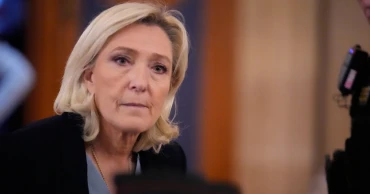
French appeals court to rule on Le Pen's eligibility for 2027 election
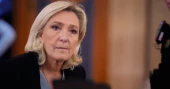
France's far-right leader Marine Le Pen faces a pivotal moment in her political career as a Paris appeals court is set to rule Tuesday on her conviction and whether she can contest the 2027 presidential election.
The court's decision, expected from 1:30 pm local time, could significantly reshape the race to succeed President Emmanuel Macron, who is constitutionally barred from seeking a third consecutive term.
Le Pen, 57, is appealing a March 2025 conviction that found her and several members of her National Rally party guilty of misusing European Parliament funds by paying party staff with money allocated for parliamentary assistants between 2004 and 2016.
The lower court sentenced her to a prison term, suspended pending appeal, and imposed a five-year ban from holding elected office. Le Pen has denied any wrongdoing.
If the appeals court upholds the five-year ban, it would almost certainly prevent her from making a fourth bid for the French presidency and could mark a major setback for the anti-immigration, Eurosceptic National Rally.
However, the court could also reduce the ban to two years or less—or remove it entirely. A shorter ban would expire before the first round of the 2027 presidential election, scheduled for April that year.
Even if allowed to run, Le Pen has said additional judicial restrictions, such as electronic monitoring or other conditions linked to a prison sentence, could affect her ability to campaign.
Prosecutors have asked the appeals court to sentence Le Pen to four years in prison, with three years suspended, along with a five-year ban from holding elected office. They accused her of leading a scheme that diverted European Union funds to benefit her party.
If Le Pen is barred from running, National Rally president Jordan Bardella, 30, is widely expected to become the party's presidential candidate.
Le Pen could still appeal to France's highest court, the Court of Cassation, although it remains uncertain whether any sentence would be suspended during the appeal process. The court has previously indicated it would seek to issue a final ruling before the 2027 presidential election if asked to review the case.
27 days ago
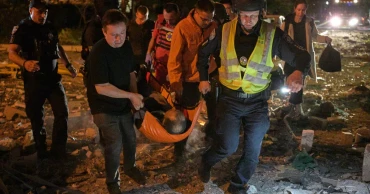
At least 22 killed in fresh Russian missile, drone strikes on Ukraine
Russia launched a fresh wave of missile and drone attacks across Ukraine early Monday, killing at least 22 people and highlighting growing concerns over the country's air defence capabilities more than four years into Moscow's full-scale invasion.
The capital, Kyiv, bore the brunt of the assault, with at least 15 people killed and 56 others injured, according to city authorities. Ukraine's emergency service said another seven people were killed and 29 injured elsewhere in the Kyiv region.
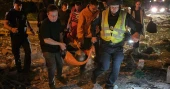
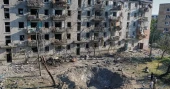
Emergency crews continued search-and-rescue operations at the sites of damaged residential buildings, where ballistic missiles directly struck apartment blocks.
Ukrainian officials said all of the ballistic missiles launched by Russia reached their intended targets, underscoring the country's urgent need for additional US-made Patriot air defence interceptors.
President Volodymyr Zelenskyy is expected to raise the issue during this week's NATO summit in Ankara, Turkey, as Kyiv seeks greater military support from its allies.
Russia's Defence Ministry said the intensified attacks were in retaliation for recent long-range Ukrainian strikes inside Russian territory, which Moscow claims have disrupted fuel supplies and increased pressure on the Kremlin.
The latest barrage came just days after another Russian strike on Kyiv killed 31 people, marking the deadliest attack on the Ukrainian capital this year.
While Ukraine has gained momentum in recent months through expanded use of long-range drones targeting Russian supply routes and logistics, analysts say Moscow is increasingly exploiting weaknesses in Ukraine's air defence network.
Ukraine remains heavily dependent on Patriot missile systems to intercept Russian ballistic missiles, but supplies of the interceptors have come under pressure due to growing global demand, including from conflicts in the Middle East, raising concerns over Kyiv's ability to defend against future large-scale attacks.
27 days ago
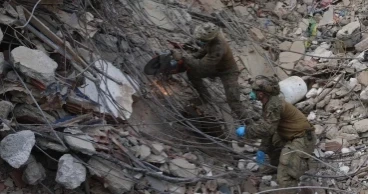
Death toll from Venezuela earthquakes rises to 2,954; over 16,592 injured
The death toll from the two powerful earthquakes that struck Venezuela last week has climbed to 2,954, while 16,592 people have been injured, National Assembly President Jorge Rodriguez said on Saturday.
In a message posted on his Telegram channel, Rodriguez said rescue teams have so far saved 6,462 people from areas affected by the disaster, including the central states of Aragua, Miranda and La Guaira, and the western states of Carabobo, Yaracuy and Falcon.
Death toll nears 2,000 as questions mount over Venezuela's quake response
He said 16,209 people have been left homeless. The earthquakes also damaged 856 buildings, while 190 structures collapsed.
Authorities have established 80 temporary camps to provide shelter and support for displaced and affected residents.
According to the latest update, 29,567 rescue workers, including 3,281 personnel from overseas, remain engaged in search-and-rescue operations.
The statement added that Venezuela has recorded 942 aftershocks since the magnitude 7.2 and 7.5 earthquakes struck the country on June 24.
29 days ago
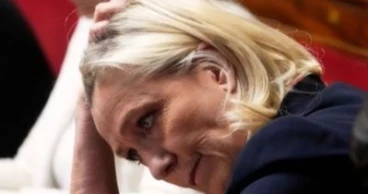
Court ruling may decide whether Marine Le Pen can run in France's 2027 election
A Paris appeals court is set to deliver a key ruling on Tuesday in Marine Le Pen's embezzlement case, with the decision likely to determine whether the French far-right leader can contest the 2027 presidential election.
Le Pen, 57, is appealing a March 2025 conviction that found her and several members of her National Rally party guilty of misusing European Parliament funds. Prosecutors said money meant to pay parliamentary assistants was instead used to pay party staff between 2004 and 2016.
The lower court handed Le Pen a prison sentence, which has been suspended while her appeal is heard, and banned her from holding elected office for five years. She denies any wrongdoing and hopes to make her fourth run for the French presidency.
If the ban remains in place, National Rally president Jordan Bardella, 30, is expected to become the party's candidate, potentially changing the race to succeed President Emmanuel Macron.
Acquittal would clear the way
The best outcome for Le Pen would be a full acquittal, allowing her to run without legal obstacles.
During the five-week appeal hearing earlier this year, Le Pen admitted there had been "a mistake" but insisted she believed it was legal for some parliamentary assistants to also work for her party, then known as the National Front.
She said there was never any attempt to hide the arrangement and argued that European Parliament officials had never warned the party that its hiring practices might violate the rules.
Her lawyer, Rodolphe Bosselut, urged the judges to allow Le Pen to rebuild her political career.
Even if she is cleared, prosecutors could still challenge the verdict before France's highest court, the Court of Cassation.
A shorter ban could keep her in the race
The appeals court could also uphold Le Pen's conviction but reduce her ban from public office to two years or less, or remove it altogether.
Because the original ban took effect immediately in March last year, a shorter ban would end before the first round of the presidential election, scheduled for April 2027.
However, Le Pen has said that even if she is legally allowed to run, any prison sentence, electronic monitoring or other court restrictions could make it impossible to campaign across the country.
"If I'm allowed to be a candidate but cannot campaign freely, then it wouldn't be possible," she told French broadcaster LCI this week.
She said she could not run a national campaign if she needed a judge's permission to travel or attend campaign events.
Court could impose a tougher punishment
Prosecutors have asked the appeals court to sentence Le Pen to four years in prison, with three years suspended, and to keep the five-year ban on holding elected office.
They accuse her of leading a system that diverted European Union funds for the benefit of her party.
Although prosecutors did not request it, the appeals court could again decide that any ban should take immediate effect.
Le Pen would still be able to appeal to the Court of Cassation, although it remains unclear whether such an appeal would suspend the sentence.
France's highest court has previously said it would try to issue a final ruling before the 2027 presidential election if it accepts the case.
Le Pen says she cannot wait until the last minute
Le Pen has said she will not delay deciding whether to run because a presidential campaign requires months of preparation.
She warned that lengthy legal proceedings could effectively prevent her from entering the race, even if she is later cleared.
France's presidential campaign is expected to begin gathering momentum in September before intensifying early next year.
Presidential candidates must also secure the endorsements of 500 elected officials to qualify for the ballot, making it difficult for parties to replace a candidate late in the campaign.
"If I'm prevented from running but the Court of Cassation rules in my favor three or four months later, it will already be too late to mount a proper presidential campaign," Le Pen said in an earlier interview with RTL radio.
29 days ago
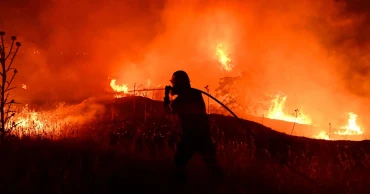
Fast-moving wildfire forces evacuations near Greece's Thessaloniki
A fast-moving wildfire broke out near the outskirts of Greece's second-largest city, Thessaloniki, on Saturday evening, forcing the evacuation of several communities and a care facility for people with special needs, authorities said.
The blaze erupted around 8:30 pm in a mountainous ravine north of the city before rapidly spreading across nearby plains, fueled by strong winds, according to the Hellenic Fire Service.
Residents of the settlements of Anthoupoli, Filothei and Galini were ordered to evacuate via emergency text alerts as thick smoke blanketed several western suburbs of Thessaloniki. Although homes were largely spared, a number of businesses sustained damage.
Authorities also evacuated a facility housing 157 people with special needs. Around 120 residents who were able to walk were moved to a local gymnasium, while the remaining residents were transferred to a psychiatric hospital.
Police arrested a 76-year-old man overnight on suspicion of starting the fire. The fire service said the suspect appeared to be under the influence of alcohol at the time of the incident.
More than 115 firefighters, supported by 38 fire engines and volunteers, were deployed to contain the blaze. Firefighting aircraft joined the operation briefly before being grounded after nightfall.
Officials said there was no immediate threat of the fire reaching Thessaloniki, but firefighters remained on high alert as strong winds continued to hamper containment efforts. Additional firefighting personnel were expected to reinforce operations.
Several other wildfires were also reported on Saturday, including in the popular tourist destination of the Halkidiki Peninsula and near the northern city of Kilkis.
The latest wildfire comes days after a major blaze in central Greece killed a man and his 12-year-old son and forced evacuations. While much of Europe has been affected by extreme heat in recent weeks, Greece has so far avoided the worst of the heatwave.
29 days ago
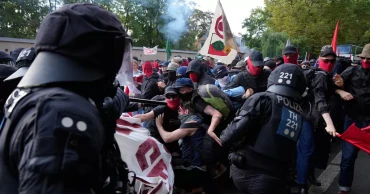
Germany's far-right AfD extends leadership amid protests in Erfurt
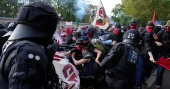
Germany's far-right Alternative for Germany (AfD) party on Saturday held its national convention in the eastern city of Erfurt to elect its leadership, while thousands of protesters gathered outside and some clashed with riot police.
The convention, held every two years, is expected to extend the leadership terms of co-chairs Alice Weidel and Tino Chrupalla, who have jointly led the party for the past four years.
Large demonstrations outside the venue underscored the deep political divisions surrounding the AfD, which has emerged as Germany's largest opposition party at the national level.
The gathering has also drawn criticism for coinciding with the 100th anniversary of a Nazi Party meeting held nearby that helped consolidate Adolf Hitler's leadership of the fascist movement. Historians and political opponents have argued that the timing carries symbolic significance, an allegation rejected by the AfD.
Weidel recently described 2026 as a "year of destiny" for the party.
Germany's mainstream political parties have maintained their long-standing refusal to cooperate with the AfD, a policy commonly referred to as the "firewall."
Despite its political isolation, the AfD has continued to gain support by capitalizing on public dissatisfaction with the government's handling of economic challenges, while broadening its appeal beyond its traditional anti-immigration platform.
The party is aiming for a strong performance in the Sept. 6 state election in Saxony-Anhalt, where it hopes to secure more than 40% of the vote. Such a result could put it within reach of an outright majority or strengthen its position to attract lawmakers from other parties, potentially paving the way for the AfD's first state governor.
30 days ago
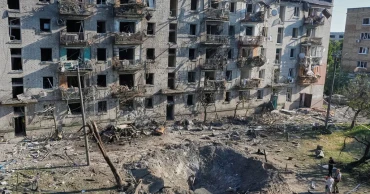
Russian attack kills 20 in Kyiv as Moscow cites retaliation for Ukrainian strikes
Russia launched a massive overnight missile and drone assault on Ukraine's capital, Kyiv, killing at least 20 civilians and injuring more than 90 others, Ukrainian officials said on Thursday, as Moscow described the attack as retaliation for recent Ukrainian strikes on Russian oil facilities.
The bombardment lasted about 11 hours, with repeated explosions rocking the capital overnight. Air raid sirens forced many residents to seek shelter in subway stations while emergency crews worked through the night to rescue people trapped beneath collapsed buildings.
Kyiv City Military Administration chief Tymur Tkachenko said the attack damaged about 30 sites across the city, most of them residential buildings and civilian infrastructure. Interior Minister Ihor Klymenko said around 20 apartment buildings sustained damage.
In one of the hardest-hit areas, people were trapped inside a damaged nine-storey residential building in the Desnianskyi district, while six floors of another apartment block collapsed in the Darnytskyi district.
Kyiv Mayor Vitali Klitschko said more than 90 people were injured in the strikes.
Ukraine's Foreign Minister Andrii Sybiha described the bombardment as a "night of horror" for the capital.
Russia's Defence Ministry said the attack was carried out in response to Ukraine's long-range strikes on Russian oil facilities, which Moscow said had disrupted fuel supplies and increased pressure on the country's energy sector.
Kremlin spokesman Dmitry Peskov said the military operation targeted only military or military-related facilities. However, Ukrainian authorities said the strikes heavily affected civilian neighbourhoods.
The latest attack came amid intensified Ukrainian long-range drone strikes targeting Russian oil refineries and energy infrastructure. Ukrainian officials say the campaign is intended to weaken Russia's war effort and increase pressure on President Vladimir Putin to engage in peace negotiations.
Despite diplomatic efforts, including initiatives backed by the administration of US President Donald Trump, no breakthrough has been achieved to end the war.
According to the United Nations, more than 16,000 Ukrainian civilians have been killed since Russia launched its full-scale invasion in February 2022.
Elsewhere in Ukraine, a Russian guided bomb struck the central Dnipropetrovsk region, killing a seven-year-old girl and injuring four members of her family, including an 11-year-old girl, regional authorities said.
1 month ago