europe
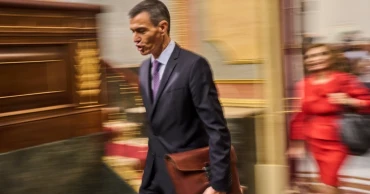
Spain's PM announces anti-graft measures as corruption inquiries ensnare his party
Spanish Prime Minister Pedro Sánchez presented anti-corruption measures in response to the mounting corruption cases involving his Socialist Party, and again said he would not step down from office.
Speaking in parliament Wednesday at an extraordinary session about a corruption probe involving a former Socialist Party official, the Spanish leader took responsibility for his poor judgement but repeatedly said he would not step down, calling himself “an honest politician” with “the pride of leading an exemplary party.”
“I will not throw in the towel,” Sánchez said.
The left-wing Spanish leader spoke about a week after a Supreme Court judge ordered the pretrial detention of Santos Cerdán, a former aide to the prime minister and previously the third-most senior member of the Socialist Party, over allegations that he received kickbacks for public works contracts.
On Wednesday, Sánchez presented 15 anti-corruption measures, including bringing more transparency to political and public financing, and working with the Organization for Economic Co-operation and Development to crack down on graft. Other measures involved blacklisting companies found guilty of corruption, using artificial intelligence to oversee public procurement contracts, and sanctioning political parties involved in graft.
The move immediately drew ridicule from opposition leader Alberto Núñez Feijóo, leader of the conservative People’s Party, who urged Sánchez to take responsibility for his party’s actions, report what he knew and call early elections.
Malaysian PM warns Southeast Asia that trade war is not ‘passing storm’
“It’s not that it’s the only decent way out,” Feijóo said, “but you have no alternative.”
A former Sánchez minister is also ensnared in the corruption investigation involving Cerdán, who has denied the allegations. Facing separate corruption or misconduct probes are the prime minister's former attorney general, brother and wife, all of whom have denied wrongdoing. Sánchez himself has not been accused in any of the cases.
Over the weekend, an official that Sánchez had just promoted as part of his Socialist Party’s shake-up resigned over sexual misconduct allegations.
The Spanish leader has been in power since 2018 and leads a minority coalition government with leftwing allies. His government has been unable to pass legislation and in recent weeks, its future has looked increasingly uncertain amid the corruption probes.
1 year ago
Russia launches record drone attack on Ukraine
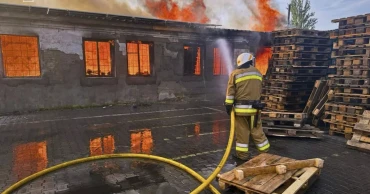
Russia launched a record-breaking 728 Shahed and decoy drones along with 13 missiles at Ukraine overnight, the Ukrainian air force reported Wednesday, marking a sharp escalation in the ongoing war now in its fourth year.
The western city of Lutsk, near the borders with Poland and Belarus, was the hardest hit in the wave of attacks, though President Volodymyr Zelenskyy said at least 10 other regions were also targeted. Lutsk, a key military hub with airfields frequently used by Ukrainian cargo planes and fighter jets, plays a crucial logistical role in receiving foreign military aid before it’s distributed to other parts of Ukraine. Russia has intensified its long-range strikes to disrupt these supply lines.
In recent weeks, Moscow has ramped up the scale and complexity of its aerial offensives, increasingly using decoy drones to try and overwhelm Ukrainian air defenses.
The latest barrage surpasses the previous record set on the night of July 4. These attacks come alongside renewed efforts by Russia’s larger army to break through weakened segments of the 1,000-kilometer (620-mile) frontline, where Ukrainian troops are under growing pressure.
U.S. President Donald Trump said Tuesday he was “not happy” with Russian President Vladimir Putin, who has remained unmoved on his ceasefire and peace demands since Trump took office in January.
Trump also said on Monday that the U.S. may need to send additional weapons to Ukraine, following a temporary pause in arms shipments that raised questions about Washington's commitment to Kyiv’s defense.
President Zelenskyy described the latest assault as a deliberate signal from the Kremlin amid faltering U.S.-led peace efforts. He called on Ukraine’s international partners to tighten sanctions on Russian oil and penalize those funding Moscow’s war by purchasing its energy exports.
“Everyone who wants peace must act,” Zelenskyy urged. During his visit to Italy on Wednesday, the Ukrainian leader was scheduled to meet Pope Leo XIV.
Ukrainian officials said two people were injured in the Kyiv region during the overnight strikes, while emergency teams continued to assess the full scale of damage.
In response to the assault, Poland scrambled fighter jets and raised its military alert level, according to a post by the Polish Armed Forces Operational Command on social media platform X.
Europe’s top court to rule on Russia-Ukraine cases
Elsewhere in Europe, Danish Prime Minister Mette Frederiksen issued a stark warning on Tuesday, saying Russia could become a serious security threat to the European Union within five years. She called for a rapid boost in defense manufacturing across both Europe and Ukraine.
According to Ukraine’s air force, 296 drones and seven missiles were successfully intercepted overnight. An additional 415 drones either crashed or were neutralized via jamming technologies.
President Zelenskyy noted growing success in using domestically developed interceptor drones, made specifically to counter Russia’s Shahed drones. He said production is increasing, aided by Western partnerships.
Military analysts warn that Russia is ramping up its own drone manufacturing and may soon be capable of launching up to 1,000 drones per night.
Ukraine, meanwhile, has expanded its own drone operations, recently conducting long-range strikes deep inside Russian territory.
Russia’s Defense Ministry reported Wednesday that its air defenses shot down 86 Ukrainian drones across six regions, including the area around Moscow. As a precaution, flights were temporarily halted at Moscow’s Sheremetyevo Airport and the Kaluga International Airport.
In Russia’s border region of Kursk, Governor Alexander Khinshtein said a Ukrainian drone strike on the regional capital just before midnight killed three people and injured seven others, including a five-year-old child.
1 year ago

Europe’s top court to rule on Russia-Ukraine cases
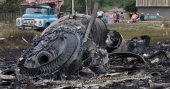
Europe’s highest human rights court is set to issue a ruling Wednesday on cases against Russia concerning its actions during the conflict in Ukraine, including alleged human rights violations throughout the full-scale invasion and the downing of Malaysia Airlines Flight MH17.
The European Court of Human Rights (ECHR) in Strasbourg will decide on four cases brought by Ukraine and the Netherlands against Russia, marking the first time an international court will assess Russia’s responsibility for the broader Ukraine conflict dating back to 2014.
While any decision will carry largely symbolic weight — as the court’s governing body expelled Moscow in 2022 following the full-scale invasion — families of MH17 victims view the ruling as a crucial milestone in their pursuit of justice.
“It’s a real step in understanding who was really responsible,” said Thomas Schansman, who lost his 18-year-old son Quinn in the tragedy.
The Boeing 777, en route from Amsterdam to Kuala Lumpur, was shot down on July 17, 2014, by a Russian-made Buk missile launched from territory in eastern Ukraine controlled by separatist rebels. All 298 people on board, including 196 Dutch citizens, were killed.
In May, the United Nations’ aviation agency officially held Russia responsible for the disaster.
The ECHR is a key institution within the Council of Europe, the continent’s premier human rights body. Russia was expelled from the council due to its invasion and ongoing war in Ukraine, but the court can still hear cases against Russia dating from before its expulsion.
Russia fires over 100 drones at Ukraine as Kremlin dismisses transport chief after travel chaos
Last year, the court ruled in favor of Ukraine and the Netherlands in a jurisdictional challenge, determining there was sufficient evidence to conclude that areas in eastern Ukraine controlled by separatists were “under the jurisdiction of the Russian Federation,” given Moscow’s provision of weapons and political and economic support.
Wednesday’s ruling will not be the last decision from the ECHR regarding the war. Kyiv has additional cases pending against Russia, and nearly 10,000 individual complaints have been filed against the Kremlin.
These decisions are separate from a criminal trial in the Netherlands where two Russians and a Ukrainian rebel were convicted in absentia for multiple murders linked to the MH17 downing.
Meanwhile, in 2022, the United Nations’ top court ordered Russia to cease military operations in Ukraine during ongoing proceedings—a directive Russia has ignored.
Last month, Ukrainian President Volodymyr Zelenskyy formally approved plans to establish a new international court to prosecute senior Russian officials for the full-scale invasion.
Schansman, who has also filed a personal case with the ECHR, said he intends to continue seeking justice more than a decade after his son’s death. “The worst thing we could do is stop fighting,” he told The Associated Press. “MH17 is not a case that will disappear for Russia.”
1 year ago
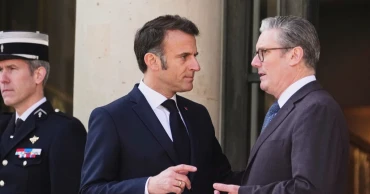
Macron begins UK visit focused on migration, Ukraine cooperation
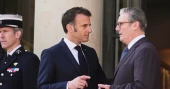
French President Emmanuel Macron has arrived in the United Kingdom for a three-day state visit marked by royal ceremony and high-stakes political discussions focused on curbing cross-Channel migration and supporting Ukraine.
Macron’s visit comes at the invitation of King Charles III and represents the first state visit by a European Union head of state to the UK since Brexit, symbolizing Britain’s efforts to rebuild ties with the EU following its 2020 departure from the bloc.
The French President and his wife, Brigitte Macron, were received at a Royal Air Force base by Prince William and Princess Catherine. They then traveled to Windsor Castle in a horse-drawn carriage, passing through streets decorated with Union Jacks and French tricolor flags.
Upon arrival at Windsor, the Macrons were welcomed with a military honor guard and will attend a state banquet hosted by King Charles and Queen Camilla. This visit follows a reciprocal state visit by the British royals to France in September 2023.
While the monarch is expected to avoid direct political commentary, King Charles will use his address at the banquet to make a broader call for international unity, stating that the UK and France “face a multitude of complex threats” that “know no borders,” adding that “no fortress can protect us against them.”
During his stay, President Macron will also address both houses of the British Parliament in the historic Royal Gallery before holding bilateral talks with UK Prime Minister Keir Starmer. Discussions will focus on migration, defense cooperation, and investment.
Focus on migration: "New tactics to stop boats"
A major item on the agenda is tackling illegal migration across the English Channel. At a UK-France summit scheduled for Thursday, senior officials from both governments will discuss joint efforts to reduce the number of small boats carrying migrants from northern France to the UK.
Though the UK receives fewer asylum seekers compared to southern European nations, it remains a popular destination for migrants. Thousands use northern France as a launching point, especially after increased security measures targeted truck stowaways.
In 2024, around 37,000 people crossed the Channel in small boats, making it the second-highest annual total after 2022. Over 20,000 crossings have already been recorded in the first half of 2025 — a nearly 50% increase over the same period last year. The journey remains perilous, with dozens losing their lives attempting it.
Ukraine pursues joint weapons production with allies as US pauses some arms shipments
Prime Minister Starmer, whose centre-left government came to power a year ago, has vowed to “smash the gangs” behind the human smuggling networks. His strategy emphasizes closer cooperation with France and countries along migrant routes in Africa and the Middle East. The UK is also pursuing bilateral agreements with individual countries to repatriate failed asylum seekers.
British officials have urged French police to take more aggressive action to prevent crossings. Recent footage of French officers slashing rubber dinghies was welcomed by the UK. Home Secretary Yvette Cooper commented that the French are “bringing in important new tactics to stop boats that are in the water.”
The UK is also pushing France to allow its officers to intervene in deeper waters, a proposal currently under consideration in Paris. However, some migrant rights advocates and a police union have warned that such moves could pose risks to both migrants and law enforcement personnel.
Tom Wells, spokesperson for Starmer, acknowledged the complexity of the discussions, stating, “Some of the tactics being discussed are operationally and legally complex, but we’re working closely with the French.”
Keeping Ukraine on the agenda
Macron and Starmer are also coordinating closely on Ukraine. Both leaders have championed efforts to establish an international peacekeeping force to help enforce a future ceasefire, should one be reached. The proposed force would involve European troops, military equipment, and U.S. security guarantees.
However, the plan has met resistance from Washington, with U.S. President Donald Trump showing limited enthusiasm for the idea. Russia, meanwhile, has continued its military aggression in Ukraine, making a ceasefire uncertain.
Despite these hurdles, British officials maintain that the initiative — referred to as a “coalition of the willing” — remains viable. Macron and Starmer are expected to participate in an international videoconference on Thursday to continue planning efforts.
Starmer spoke with Ukrainian President Volodymyr Zelenskyy on Monday and discussed the “significant progress being made by military planners,” according to a statement from the Prime Minister’s office.
1 year ago
Greece detains 1,200 migrants in three days as arrivals from Libya surge
Greek authorities have detained over 1,200 migrants on the island of Crete and the nearby islet of Gavdos over the past three days, following a sharp increase in arrivals from Libya.
The Greek coast guard reported intercepting multiple boats off Crete's southern coast between Saturday and Monday, prompting regional officials to call for additional support from the government.
The spike in arrivals comes as Greece’s Foreign Minister Giorgos Gerapetritis visited Libya for talks with both the internationally recognized government and a rival faction, seeking solutions to the escalating migration crisis and ongoing disputes over maritime boundaries.
Government spokesperson Pavlos Marinakis said patrol operations by the coast guard and navy in the area will likely be strengthened. According to him, around 8,000 migrants have landed on Crete so far this year.
“This is a complex and extremely serious situation. Crete and its residents are under immense pressure,” Marinakis said. “We hope diplomatic efforts succeed. If not, we’ll have to implement stricter, large-scale measures to safeguard the country.”
Many migrants undertake the dangerous 350-kilometer (220-mile) journey from Libya to Crete in unsafe, makeshift boats, often assembled to survive a single trip or converted from abandoned vessels.
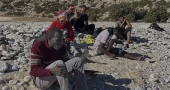
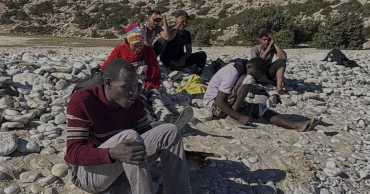
The small island of Gavdos, located south of Crete, has been overwhelmed by the influx. Stranded boats and dinghies litter its remote, pebble beaches, some accessible only on foot.
On one such beach, a migrant named David from conflict-ridden South Sudan sat with five others, resting as they considered their next steps. He told The Associated Press that smugglers mistreated many passengers during the journey and demanded extra payments.
“After you pay, everything is by force. If you speak, they beat you,” David said, describing the overcrowded and dangerous conditions on board. He expressed his hope to stay anywhere in Europe.
Australian woman convicted of killing 3 relatives by serving poisonous mushroom meal
“We didn’t come to cause problems. We came to save our lives,” he added. “If you stay [back home], you die.”
Meanwhile, European Commissioner Magnus Brunner is scheduled to visit Libya this week alongside officials from Greece, Italy, and Malta to urge Libyan authorities to step up efforts to prevent migrant departures to Europe.
1 year ago
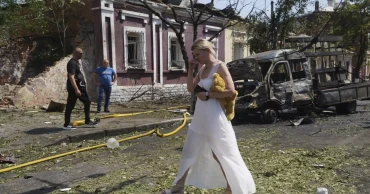
Russia fires over 100 drones at Ukraine as Kremlin dismisses transport chief after travel chaos
Russia launched over 100 drones targeting civilian areas in Ukraine overnight, Ukrainian officials said on Monday, as the Kremlin dismissed its transport minister following widespread travel disruptions over the weekend caused by fears of Ukrainian drone strikes.
At least 10 civilians were killed and 38 others, including three children, were injured in Russian attacks over the past 24 hours, according to Ukrainian authorities.
Russia has intensified its aerial assaults on Ukrainian civilian targets in recent weeks, more than three years into the war. Ukrainian President Volodymyr Zelenskyy stated Monday that Russia had deployed approximately 1,270 drones, 39 missiles, and nearly 1,000 glide bombs against Ukraine over the past week alone.
Meanwhile, Russia's military continues its efforts to break through certain sections of the roughly 1,000-kilometer (620-mile) front line, where Ukrainian forces remain stretched thin.
Amid mounting pressure from Russia’s invasion, limited progress in peace negotiations, and last week's suspension of some promised U.S. weapons deliveries, Ukraine has been pushing for increased military support from the U.S. and European allies.
Zelenskyy announced on Saturday that Ukraine had signed new agreements with European partners and a major U.S. defense manufacturer to ramp up drone production, with plans to deliver "hundreds of thousands" more drones this year.
Israel strikes Houthis in Yemen; rebels fire missile back
“Air defense is the key to protecting lives,” Zelenskyy wrote on Telegram Monday, noting the importance of producing interceptor drones to counter Russia’s long-range Shahed drones. Drones have also played a crucial role in helping Ukraine offset its manpower shortages along the front line.
In the latest Russian drone attacks, one person was killed in Odesa, 27 injured in Kharkiv, and falling debris damaged parts of Kyiv, according to Ukrainian officials.
In northern Ukraine’s Sumy region, Russian short-range drone strikes killed two people and wounded two more. Sumy has seen a significant Russian military buildup in recent weeks.
In the eastern Donetsk region, regional head Vadym Filashkin reported seven deaths and nine injuries, though he did not specify the type of weapons used.
Ukraine’s Army Ground Forces command said Russian long-range drone strikes targeted military recruitment centers for the third time in five days, apparently aiming to disrupt troop mobilization. Additional strikes in Kharkiv and Zaporizhzhia injured at least 17 people, regional officials said.
Meanwhile, Russia’s Defense Ministry claimed its forces intercepted 91 Ukrainian drones across 13 Russian regions, as well as over the Black Sea and Crimea, the peninsula annexed by Moscow in 2014.
On Monday, Russian President Vladimir Putin dismissed Transport Minister Roman Starovoyt, according to an official decree published on the Kremlin's website. His deputy, Andrey Nikitin, was appointed acting transport minister. Nikitin previously served as governor of Russia’s Novgorod region.
The Kremlin did not provide a reason for Starovoyt’s dismissal, and spokesman Dmitry Peskov declined to comment.
The minister’s removal follows a chaotic weekend of mass flight cancellations and delays at Moscow’s Sheremetyevo and St. Petersburg’s Pulkovo airports, as well as disruptions at other airports in western and central Russia, all linked to the threat of Ukrainian drone attacks. Thousands of passengers faced lengthy delays as a result.
1 year ago
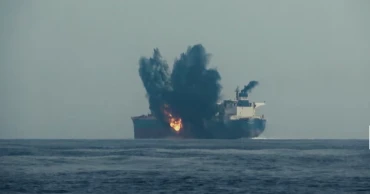
Ship attacked with gunfire, RPGs off Yemen coast: UK
A ship came under attack Sunday in the Red Sea off the coast of Yemen by armed men firing guns and launching rocket-propelled grenades, according to the United Kingdom Maritime Trade Operations center, a group overseen by the British military.
No group has yet claimed responsibility for the attack, which occurred amid heightened tensions in the Middle East due to the Israel-Hamas war and recent conflicts involving Iran and the United States.
The attack took place approximately 100 kilometers (60 miles) southwest of Hodeida, Yemen, a city controlled by Houthi rebels.
The UK Maritime Trade Operations center stated that an armed security team aboard the ship returned fire and described the situation as ongoing. “Authorities are investigating,” the center added.
Maritime security firm Ambrey issued a warning saying that a merchant ship was “attacked by eight skiffs while transiting northbound in the Red Sea” and believed the attack was still in progress.
Ukraine pursues joint weapons production with allies as US pauses some arms shipments
The U.S. Navy’s 5th Fleet referred questions to the U.S. Central Command, which had not immediately responded to requests for comment.
The Houthi rebels have previously launched missile and drone attacks against commercial and military vessels in the region, describing their actions as efforts to end Israel’s offensive against Hamas in Gaza. Their al-Masirah satellite news channel confirmed the attack but offered no further comments, instead airing a speech by their leader, Abdul Malik al-Houthi.
Between November 2023 and January 2025, the Houthis targeted more than 100 merchant vessels with missiles and drones, sinking two ships and killing four sailors.
These attacks significantly disrupted the flow of trade through the Red Sea corridor, which typically sees goods worth $1 trillion annually.
The Houthis had paused their attacks under a self-imposed ceasefire until mid-March, when the U.S. launched a broad assault against them. The ceasefire ended weeks later, and while the Houthis have not attacked any vessels since, they have continued missile attacks targeting Israel.
On Sunday, the group claimed to have launched a missile at Israel, which the Israeli military said was intercepted.
Meanwhile, the decade-long war in Yemen between the Houthis and the exiled government, supported by a Saudi-led coalition, remains at a stalemate. The Yemeni Coast Guard, loyal to the exiled government, has also engaged in firefights with vessels in the Red Sea.
In addition, Somali pirates have operated in the region, typically targeting vessels for robbery or ransom.
1 year ago
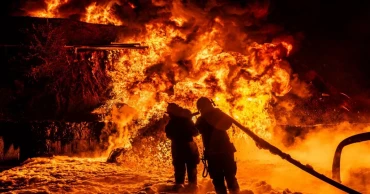
Ukraine strikes Russian airbase as drone attacks intensify
Ukraine on Saturday said it struck a Russian airbase as Russia launched hundreds of drones overnight in its latest wave of long-range attacks, further diminishing hopes of progress toward ending the war that has now dragged on for over three years.
Ukraine’s military General Staff confirmed that its forces targeted the Borisoglebsk airbase in Russia’s Voronezh region, which it described as the “home base” for Russia’s Su-34, Su-35S, and Su-30SM fighter jets.
In a statement on Facebook, the General Staff said the strike hit a depot containing glide bombs, a training aircraft, and “possibly other aircraft.”
Russian officials have not yet commented on the reported attack.
Strikes on Russian airbases are part of Ukraine’s efforts to weaken Russia’s military capability and demonstrate its reach into high-value targets deep inside Russian territory. Last month, Ukraine claimed to have destroyed over 40 Russian aircraft stationed at various airfields inside Russia during a surprise drone operation.
Meanwhile, Ukraine’s air force reported that Russia launched 322 drones and decoys into Ukrainian territory overnight into Saturday. Of these, 157 were intercepted and destroyed, while 135 were lost, likely due to electronic jamming, according to Ukrainian officials.
The western Khmelnytskyi region was the main target of the latest attacks. However, regional Governor Serhii Tyurin said no damage, injuries, or fatalities were reported.
Ukraine pursues joint weapons production with allies as US pauses some arms shipments
Russia has recently escalated its long-range aerial bombardments on Ukraine. On Friday, waves of drones and missiles targeted Kyiv in what officials described as the largest aerial assault since the invasion began. The attack killed one person and injured at least 26 others.
The renewed Russian offensive follows Ukrainian President Volodymyr Zelenskyy’s phone conversation with US President Donald Trump on Friday. Zelenskyy described the discussion as “very important and productive,” saying the leaders talked about strengthening Ukraine’s air defenses, the potential for joint US-Ukraine weapons production, and broader U.S.-led initiatives to end the war.
Speaking to reporters Friday night, Trump confirmed the call, saying, “We had a very good call, I think.”
When asked about the prospects of ending the war, Trump responded, “I don’t know. I can’t tell you whether or not that’s going to happen.”
The US has recently paused shipments of certain military aid to Ukraine, including vital air defense missiles. European allies are now considering how they can fill the gap. Zelenskyy has said plans are underway to expand Ukraine’s domestic arms production, though scaling up such efforts will take time.
Russia’s Defense Ministry claimed it shot down 94 Ukrainian drones overnight, along with an additional 12 drones on Saturday morning. No casualties have been reported in connection with those incidents.
1 year ago
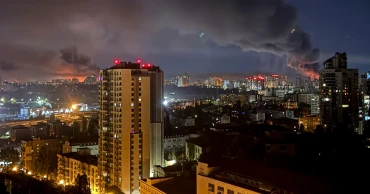
Russia launches largest air attack on Kyiv since war began
Russia launched the largest missile and drone barrage on Kyiv since the start of the war in Ukraine, officials said Friday, as Moscow steps up its efforts to capture more Ukrainian territory.
The overnight aerial assault lasted seven hours, killing one person and injuring at least 26 others, including a child, Ukrainian officials confirmed.
Ukrainian President Volodymyr Zelenskyy described it as “a harsh, sleepless night” for the capital.
Shortly after the attack, Zelenskyy held what he called a “very important and productive” phone conversation with US President Donald Trump to discuss ways to strengthen Ukraine's air defenses, joint weapons production, and broader US-led efforts to end the war with Russia, as reported by AP.
Zelenskyy’s office said they discussed the possibility of future meetings between their teams to explore ways of enhancing Ukraine’s protection, particularly through direct projects in drone technology and defense industry cooperation. They also exchanged views on military procurement, investment, and diplomatic efforts with international partners.
The White House did not immediately comment on the call.
The Ukrainian air force reported that Russia launched 550 drones and missiles across Ukraine during the night, including 11 missiles. Most of the aerial assault involved Shahed drones.
The attack caused severe damage across multiple districts of Kyiv. Emergency services removed more than 300 tons of rubble, while five ambulances responding to the aftermath were also damaged.
Blasts lit up the night sky and echoed across the city as air raid sirens wailed. “Absolutely horrible and sleepless night in Kyiv,” Ukrainian Foreign Minister Andrii Sybiha posted on X. He called it “one of the worst so far.”
Kyiv’s Economy Minister Yuliia Svyrydenko described “families running into metro stations, basements, underground parking garages, mass destruction in the heart of our capital.”
“What Kyiv endured last night cannot be called anything but a deliberate act of terror,” Svyrydenko wrote on X.
At least 14 people were hospitalized in Kyiv, according to Mayor Vitali Klitschko.
Ukraine pursues joint weapons production with allies as US pauses some arms shipments
Russia’s Defense Ministry claimed its forces targeted military production sites in Kyiv, including drone factories.
Meanwhile, another prisoner swap took place Friday. Zelenskyy said most of the Ukrainian soldiers freed had been in Russian captivity since 2022 and were classified as “wounded and seriously ill.” The total number of soldiers exchanged was not disclosed by either side.
The assault on Kyiv came hours after a phone call between President Trump and Russian President Vladimir Putin.
When asked if any progress was made toward ending the war, Trump said, “No, I didn’t make any progress with him today at all.” He added, “I’m very disappointed with the conversation I had today with President Putin because I don’t think he’s there. I don’t think he’s looking to stop (the fighting), and that’s too bad.”
Putin’s foreign affairs adviser Yuri Ushakov said the Russian leader told Trump that Moscow will continue its efforts to achieve its objectives in Ukraine and eliminate the “root causes” of the conflict.
“Russia will not back down from these goals,” Ushakov told reporters after the call.
Russia invaded Ukraine on February 24, 2022, with Putin falsely claiming it was necessary to protect Russian-speaking civilians in eastern Ukraine and to prevent Ukraine from joining NATO.
Ukraine's military is under pressure as Russia intensifies attacks along the 1,000-kilometer front line and escalates aerial strikes. Official data compiled by The Associated Press shows that Russia launched 5,438 drones and more than 330 missiles across Ukraine in June alone, a new monthly record.
Throughout Thursday night, AP journalists in Kyiv reported the constant buzzing of drones, explosions, and intense machine-gun fire as Ukrainian forces tried to intercept incoming threats.
Ukraine’s air defenses reportedly shot down 270 targets, including two cruise missiles, though another 208 targets were lost from radar and presumed jammed.
Russia struck eight locations with nine missiles and 63 drones, while debris from intercepted drones fell across 33 sites. In addition to Kyiv, damage was reported in the Dnipropetrovsk, Sumy, Kharkiv, and Chernihiv regions.
Zelenskyy condemned the attack on Kyiv as “cynical.” Emergency services reported damage in at least five of the capital's 10 districts.
1 year ago
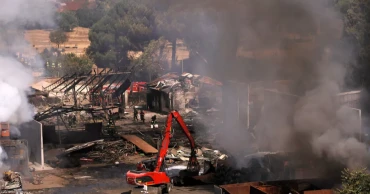
At Least 25 Injured as Gas Station Explodes in Rome
A gas station explosion in southeastern Rome on Friday morning left at least 25 people injured, including nine police officers and a firefighter, according to local authorities and rescue officials.
The explosion, which occurred shortly after 8 a.m., was heard across the Italian capital, sending a massive cloud of dark smoke and fire into the sky, visible from several parts of the city.
Rome Mayor Roberto Gualtieri said police and firefighters rushed to the scene after receiving reports of a gas leak. “Two explosions followed after they arrived,” he added.
Elisabetta Accardo, spokeswoman for Rome police, confirmed that 16 residents were injured, including two who were in “severe conditions” and hospitalized at Rome's Casilino Hospital.
“Nine of the injured are from law enforcement corps — police and carabinieri — and one is a firefighter," she added. "But luckily they are not in life-threatening conditions.”
Fifteen firefighting teams were deployed to the site and worked to bring the fire under control.
Rome prosecutors have launched an investigation into the cause of the explosion, which may be linked to a reported gas leak during the unloading of liquefied petroleum gas at the station.
Ukraine pursues joint weapons production with allies as US pauses some arms shipments
Police swiftly evacuated a nearby sports center following the first explosion, bringing several children to safety. Officers also searched surrounding areas for people who may have been injured or trapped in nearby buildings.
Barbara Belardinelli, a local resident, said she and her daughter were slightly injured after leaving their home to investigate the initial blast. “As soon as we heard the second explosion, we were also hit by a ball of fire. I thought that a car near us exploded, metal fragments were flying in the air,” she recalled. “We felt the fire on the skin, the arm of my daughter is still red, it was horrible.”
Other residents described the explosion as so powerful it shook nearby buildings “like an earthquake,” breaking windows and tearing off shutters.
Pope Leo XIV expressed his concern and solidarity, stating he was praying for those affected by the explosion, which occurred “in the heart of my Diocese.”
Prime Minister Giorgia Meloni said she was closely monitoring the situation.
1 year ago