europe
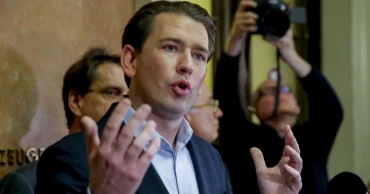
Former Austrian Chancellor Sebastian Kurz Cleared of Perjury Charges by Court
A court in Vienna on Monday acquitted former Austrian Chancellor Sebastian Kurz of making false statements during a parliamentary inquiry into alleged corruption in his administration, overturning a previous ruling that had handed him a suspended prison sentence.
According to the Austria Press Agency, judges at Vienna’s upper state court dismissed Kurz’s conviction after a brief appeal hearing.
Austria's new government takes office after a record 5-month wait
The case focused on Kurz’s testimony before a parliamentary inquiry that examined the coalition government he led from 2017 until 2019. During that period, his conservative Austrian People’s Party governed in partnership with the far-right Freedom Party. The coalition ultimately collapsed in 2019.
Prosecutors had accused the 38-year-old of providing false testimony in June 2020 about his involvement in establishing the state holding company OeBAG and the appointment of his former confidant Thomas Schmid as its head. OeBAG is responsible for managing the government's stakes in various companies.
In February 2024, Kurz was convicted of making false statements regarding the appointment of OeBAG’s supervisory board members, although he was cleared of providing misleading information about Schmid’s appointment. He was sentenced to eight months in prison, suspended.
That conviction followed a four-month trial and marked the first time in over three decades that a former Austrian chancellor had faced trial.
Austrian FM Schallenberg appointed as interim govt leader
Reacting to Monday’s acquittal, Kurz told reporters outside the courtroom, “What came out is what I have always said — namely, that I did not tell untruths to the parliamentary inquiry.” He added, “I now have a long time in (legal) proceedings behind me, and to be honest I'd like to set out my position in detail, but I ask for your understanding that I'm going home to family and my two children first.”
However, the court upheld the conviction of Kurz’s former chief of staff, Bernhard Bonelli, who was found guilty of making a false statement to the same inquiry concerning his and Kurz’s roles in selecting OeBAG supervisory board members. Bonelli received a six-month suspended sentence in 2024. Kurz expressed deep regret over the decision on Bonelli.
Once viewed as a rising star among Europe’s conservatives, Kurz resigned in 2021 following a separate corruption investigation and has since withdrawn from politics. His Austrian People’s Party remains in power under Chancellor Christian Stocker, although the party placed second in the September elections.
Kurz, who rose to prominence on an anti-immigration platform, became the People’s Party leader and then chancellor at just 31 years old in 2017. He ended his first government in 2019 after a video scandal involving then–Vice Chancellor and Freedom Party leader Heinz-Christian Strache, who appeared to offer political favors to a supposed Russian investor.
Kurz returned as chancellor in early 2020 in a new coalition with the Greens but stepped down in October 2021. His resignation followed pressure from the Greens after prosecutors named him a target in a second probe involving suspected bribery and breach of trust — allegations that Kurz has consistently denied.
Speculation has occasionally surfaced about the potential for a political comeback by Kurz.
1 year ago
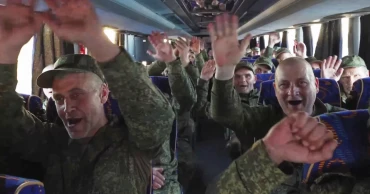
Russia and Ukraine swap hundreds more prisoners hours after a massive attack on Kyiv
Russia and Ukraine exchanged hundreds more prisoners Saturday as part of a major swap that amounted to a rare moment of cooperation in otherwise failed efforts to reach a ceasefire. The exchange came hours after Kyiv came under a large-scale Russian drone and missile attack that left at least 15 people injured.
Ukraine's President Volodymyr Zelenskyy and Russia’s defense ministry said each side brought home 307 more soldiers on Saturday, a day after each released a total of 390 combatants and civilians. Further releases expected over the weekend are set to make the swap the largest in more than three years of war.
“We expect more to come tomorrow,” Zelenskyy said on his official Telegram channel. Russia's defense ministry also said it expected the exchange to be continued, though it did not give details.
Hours earlier, explosions and anti-aircraft fire were heard throughout Kyiv as many sought shelter in subway stations as Russian drones and missiles targeted the Ukrainian capital overnight.
In talks held in Istanbul earlier this month — the first time the two sides met face to face for peace talks since Russia's 2022 full-scale invasion — Kyiv and Moscow agreed to swap 1,000 prisoners of war and civilian detainees each.
‘A difficult night’
Officials said Russia attacked Ukraine with 14 ballistic missiles and 250 Shahed drones overnight while Ukrainian forces shot down six missiles and neutralized 245 drones — 128 drones were shot down and 117 were thwarted using electronic warfare.
The Kyiv City Military Administration said it was one of the biggest combined missile and drone attacks on the capital.
“A difficult night for all of us,” the administration said in a statement.
Posting on X, Ukraine's Foreign Minister Andrii Sybiha called it “clear evidence that increased sanctions pressure on Moscow is necessary to accelerate the peace process."
Posting on X, U.K. Foreign Secretary David Lammy spoke of “another night of terror for Ukrainian civilians.”
“These are not the actions of a country seeking peace,” Lammy said of the Russian strike.
Katarina Mathernová, the European Union's ambassador to Kyiv, described the attack as “horrific."
“If anyone still doubts Russia wants war to continue — read the news,” Katarina Mathernová wrote on the social network.
Air raid alert in Kyiv
The debris of intercepted missiles and drones fell in at least six Kyiv city districts. According to the acting head of the city's military administration, Tymur Tkachenko, six people required medical care after the attack and two fires were sparked in Kyiv's Solomianskyi district.
The Obolon district, where a residential building was heavily damaged in the attack, was the hardest hit with at least five wounded in the area, the administration said.
Kyiv hit by massive Russian missile and drone attack
Yurii Bondarchuk, a local resident, said the air raid siren “started as usual, then the drones started to fly around as they constantly do.” Moments later, he heard a boom and saw shattered glass fly through the air.
“The balcony is totally wiped out, as well as the windows and the doors,” he said as he stood in the dark, smoking a cigarette to calm his nerves while firefighters worked to extinguish the flames.
The air raid alert in Kyiv lasted more than seven hours, warning of incoming missiles and drones.
Kyiv's mayor, Vitalii Klitschko, warned residents ahead of the attack that more than 20 Russian strike drones were heading toward the city. As the attack continued, he said drone debris fell on a shopping mall and a residential building in Obolon. Emergency services were headed to the site, Klitschko said.
Separately, 13 civilians were killed on Friday and overnight into Saturday in Russian attacks in Ukraine's south, east and north, regional authorities said.
Three people died after a Russian ballistic missile targeted port infrastructure in Odesa on the Black Sea, local Gov. Oleh Kiper reported. Russia later said the strike Friday targeted a cargo ship carrying military equipment.
Russia’s defense ministry on Saturday claimed its forces overnight struck various military targets across Ukraine, including missile and drone-producing plants, a reconnaissance center and a launching site for anti-aircraft missiles.
A complex deal
The prisoner swap on Friday was the first phase of a complicated deal involving the exchange of 1,000 prisoners from each side.
It took place at the border with Belarus, in northern Ukraine, according to a Ukrainian official who spoke on condition of anonymity because he was not authorized to speak publicly.
The released Russians were taken to Belarus for medical treatment, the Russian Defense Ministry said.
POWs arrived at the medical facility in the Chernihiv region for a second day on Saturday. But for many their arrival was bittersweet.
Those who were not reunited with their loved ones took solace in the released POWs providing some information about when their relatives were last seen.
Anna Marchenko, the daughter of a missing Ukrainian serviceman, was elated when a released POW said they had seen her father.
“This is such a big news. It’s like a fresh breath of air,” she said. “I didn’t see him, but at least it’s some news. At least it’s news that gives us the opportunity to continue to breathe and live in peace."
However, the exchange — the latest of dozens of swaps since the war began and the biggest involving Ukrainian civilians so far — did not herald a halt in the fighting.
What to know about the battle for Russia's Kursk region
Battles continued along the roughly 1,000-kilometer (620-mile) front line, where tens of thousands of soldiers have been killed, and neither country has relented in its deep strikes.
After the May 16 Istanbul meeting, Turkish Foreign Minister Hakan Fidan called the prisoner swap a “confidence-building measure” and said the parties had agreed in principle to meet again.
But Kremlin spokesman Dmitry Peskov said on Friday that there has been no agreement yet on the venue for the next round of talks as diplomatic maneuvering continued.
Russian Foreign Minister Sergey Lavrov said Moscow would give Ukraine a draft document outlining its conditions for a “sustainable, long-term, comprehensive” peace agreement, once the ongoing prisoner exchange had finished.
Far apart on key conditions
European leaders have accused Russian President Vladimir Putin of dragging his feet in peace efforts while he tries to press his larger army’s battlefield initiative and capture more Ukrainian land.
The Istanbul meeting revealed that both sides remained far apart on key conditions for ending the fighting. One such condition for Ukraine, backed by its Western allies, is a temporary ceasefire as a first step toward a peaceful settlement.
Putin visits Russia’s Kursk for first time since Moscow claims to oust Ukrainian forces
Russia’s Defense Ministry said that overnight and early on Saturday its forces shot down over 100 Ukrainian drones over six provinces in western and southern Russia.
The drone strikes injured three people in the Tula region south of Moscow, local Gov. Dmitriy Milyaev said, and sparked a fire at an industrial site there.
Andriy Kovalenko, of Ukraine’s National Security and Defense Council, said Saturday the drones hit a plant in Tula that makes chemicals used in explosives and rocket fuel.
1 year ago
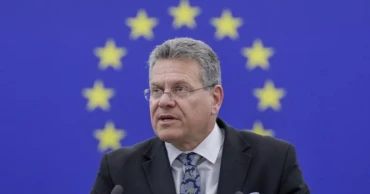
EU urges ‘respect’ after Trump threatens 50% tariffs
The European Union has called for mutual respect in trade relations after US President Donald Trump threatened to impose a 50% tariff on all EU goods entering the United States.
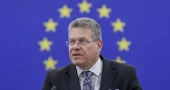
Speaking after a call with US Trade Representative Jamieson Greer and Commerce Secretary Howard Lutnick, EU Trade Commissioner Maros Sefcovic said, “The EU's fully engaged, committed to securing a deal that works for both.”
"EU-US trade is unmatched & must be guided by mutual respect, not threats. We stand ready to defend our interests."
Earlier on Friday, Trump expressed impatience with the pace of ongoing EU-US trade negotiations, saying his plan to raise tariffs on June 1 was set.
Writing on social media, Trump said, "Our discussions with [the EU] are going nowhere," adding that there would be no tariffs for products built or manufactured in the US.
"I'm not looking for a deal - we've set the deal," he told reporters later, before immediately adding that a big investment in the US by a European company might make him open to a delay.
Judge halts Trump administration’s attempt to ban foreign student at Harvard
The EU is one of the Washington's largest trading partners, sending more than $600bn (€528bn; £443bn) in goods last year and buying $370bn worth, US government figures show.
Reacting to Trump's threats, European governments warned that higher tariffs would be damaging to both sides.
"We do not need to go down this road," said Ireland's Taoiseach (Prime Minister) Micheál Martin. "Negotiations are the best and only sustainable way forward."
France's Trade Minister Laurent Saint-Martin, said: "We are maintaining the same line: de-escalation, but we are ready to respond."
German Economy Minister Katherina Reiche said the bloc "must do everything" to reach a solution with the US.
While Dutch Prime Minister Dick Schoof told reporters that he backed the EU's strategy in trade talks and "we have seen before that tariffs can go up and down in talks with the US."
With inputs from BBC
1 year ago
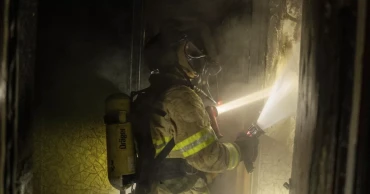
Kyiv hit by massive Russian missile and drone attack
Ukraine’s capital, Kyiv, faced a large-scale Russian attack early Saturday, with both drones and missiles. Explosions and bursts of machine gun fire echoed across the city, prompting many residents to seek shelter in subway stations. The overnight attack coincided with a major prisoner exchange between Russia and Ukraine—the first phase of a deal reached in Istanbul last week—marking a rare instance of cooperation during the ongoing three-year conflict.
According to Tymur Tkachenko, acting head of Kyiv's military administration, debris from intercepted drones and missiles fell across at least four districts of the city. Six people required medical treatment, and fires were reported in the Solomianskyi district.
Greece deploys record firefighters and drones for wildfire season
Local resident Yurii Bondarchuk recounted the experience, noting that the air raid siren began as usual, followed by the sound of drones overhead. A sudden explosion shattered glass in his apartment. “The balcony is totally wiped out, as well as the windows and the doors,” he said, standing outside in the darkness while firefighters worked nearby. To steady his nerves, he smoked a cigarette.
The air raid alert lasted over seven hours through the night, with repeated warnings of incoming threats. Prior to the strike, Kyiv Mayor Vitalii Klitschko warned that more than 20 Russian strike drones were en route. As the attack unfolded, he reported that drone debris struck a shopping mall and a residential building in Kyiv’s Obolon district, with emergency crews dispatched to the scene.
The missile and drone attack came just hours after Ukraine and Russia began executing a prisoner exchange deal involving 1,000 captives from each side. Ukrainian President Volodymyr Zelenskyy confirmed that 390 Ukrainians were returned in the initial phase, with more expected over the weekend—making it the largest exchange of the war to date. Russia’s Defense Ministry said it received an equal number of Russian nationals. A Ukrainian official, speaking anonymously, said the handover took place at the Belarus border in northern Ukraine.
The Russian prisoners were transported to Belarus for medical care. At the medical facility, relatives of the released men gathered, holding signs and shouting names or brigade numbers in hopes of finding loved ones. “Vanya!” cried Nataliia Mosych, calling out for her husband.
Despite the large-scale exchange, fighting has not abated along the roughly 1,000-kilometer (620-mile) front line, where tens of thousands of soldiers have already died. Both sides continue their deep-strike operations.
Following the May 16 meeting in Istanbul, Turkish Foreign Minister Hakan Fidan described the prisoner swap as a “confidence-building measure” and said the parties had agreed in principle to meet again. However, Kremlin spokesperson Dmitry Peskov stated on Friday that no venue has been finalized for further negotiations.
UK net migration expected to halve in 2024: ONS
Meanwhile, Russian Foreign Minister Sergey Lavrov said that Moscow plans to present Ukraine with a draft document detailing its terms for a “sustainable, long-term, comprehensive” peace agreement once the ongoing exchange concludes. Yet, significant gaps remain in the positions of both sides. One of Ukraine’s key demands—backed by Western allies—is the implementation of a temporary ceasefire as a starting point for peace talks.
European leaders have accused Russian President Vladimir Putin of stalling negotiations while seeking to gain more territory through military advances.
In the days leading up to the latest attack, Russia’s Defense Ministry reported it had shot down 788 Ukrainian drones between May 20 and May 23. Meanwhile, Ukraine’s air force said that Russia had launched 175 Shahed and decoy drones, along with a ballistic missile, since late Thursday.
1 year ago
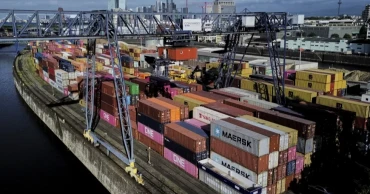
Germany's economy grew by 0.4% in the 1st quarter. That's double the initial estimate
Germany’s economy, the largest in Europe, recorded a 0.4% growth in the first quarter of the year, driven by stronger-than-expected performance in exports and manufacturing, according to official data released on Friday. This marks a doubling of the initial estimate.
The Federal Statistical Office had previously stated at the end of last month that the economy grew by 0.2% in the January to March period compared to the previous quarter. Ruth Brandt, the head of the office, attributed the upward revision to “the surprisingly good economic development seen in March.”
UK inflation hits highest level in over a year as domestic bills spike
The last time Germany experienced higher growth was in the third quarter of 2022, when GDP rose by 0.6%. The country has faced persistent challenges in achieving strong economic growth, with the economy contracting in each of the past two years. In the final quarter of last year, GDP declined by 0.2%.
In its initial projection since the new government led by Chancellor Friedrich Merz assumed office earlier this month, the government’s panel of independent economic advisers forecast on Wednesday that GDP will stagnate in the current year and rise by 1% in 2026.
The panel cited challenges from tariffs and trade threats imposed by U.S. President Donald Trump but also highlighted the potential benefits from a significant infrastructure investment initiative introduced by Merz’s coalition.
Carsten Brzeski, global head of macro at ING bank, noted that the improved performance in the first quarter is likely “a positive one-off” in the short term, driven by companies rushing to act before Trump's tariffs take effect.
German police arrest a suspect, injured 5 people outside bar attack
“Due to the announced tariffs and in anticipation of ‘Liberation Day,’ German industrial production and exports surged in March,” Brzeski wrote in a research note.
1 year ago
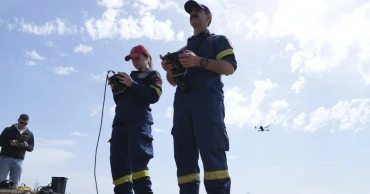
Greece deploys record firefighters and drones for wildfire season
Greece is deploying a record number of firefighters and nearly doubling its drone fleet this summer to address growing wildfire risks driven by climate change, officials said Thursday.
Civil Protection Minister Ioannis Kefalogiannis said 18,000 permanent and seasonal personnel, supported by thousands of volunteers, would be mobilized as wildfire damage has increased steadily over the past two decades.
Gaza's main hospital overwhelmed with children in pain from malnutrition
“It is clear that the conditions this year will be particularly difficult,” Kefalogiannis told reporters after attending a firefighting exercise south of Athens.
Rising average temperatures and low rainfall have significantly worsened conditions in recent years.
Greek Fire Chief Lt. Gen. Theodoros Vagias said that additional elite firefighting units would be deployed to high-risk areas during the May–October fire season.
“The climate crisis is here to stay, and we must be more effective in surveillance, preparedness, and how we mobilize our resources,” Vagias said.
Wildfire damage surged to more than 1,300 square kilometers (500 square miles) in 2021 and 1,745 square kilometers (675 square miles) in 2023 — roughly three times the 2011–2020 average — according to data from the European Union’s Forest Fire Information System.
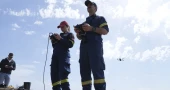
Firefighters held an exercise Thursday to test Greece’s evolving wildfire response, which increasingly relies on advanced technologies such as drone surveillance and mobile command centers.
Israeli strikes kill 51 in Gaza as limited aid begins to arrive
Fire planes skimmed treetops, releasing plumes of water in coordinated low-altitude drops, as commanders on the ground huddled over tablets streaming real-time drone footage. The coast guard and armed forces took part in a drill simulating the evacuation of a children’s summer camp threatened by fires on multiple fronts.
Officials said the number of firefighting personnel has increased by roughly 20% over the past two years, while the fleet of fire-surveillance drones has grown to 82, up from 45.
Around 300 firefighters from the Czech Republic, France, Romania, Moldova, and Bulgaria are being sent to Greece under a European Union prepositioning program, officials said.
1 year ago
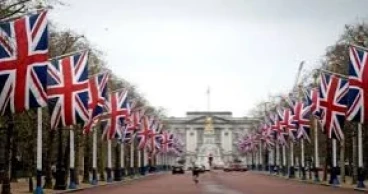
UK net migration expected to halve in 2024: ONS
Net migration to the UK is projected to decline by nearly 50% in 2024, largely due to a significant drop in arrivals from non-EU nations and an increase in departures of international students, according to the Office for National Statistics (ONS) on Thursday.
Provisional ONS data shows that net migration for the year ending December 2024 is estimated at 431,000, a sharp fall from 860,000 in 2023.
The decrease is mainly attributed to fewer arrivals on work and student visas from non-EU+ countries—which include all nations outside the EU, European Economic Area, and Switzerland—and a rise in emigration, particularly among former international students.
The total number of long-term arrivals is expected to fall to 948,000, down from 1.33 million in 2023—a drop of nearly one-third, and the first time this figure has dipped below one million since March 2022. Meanwhile, long-term emigration rose by about 11% to 517,000, the highest level since mid-2017.
Among non-EU+ nationals, work-related immigration experienced the largest decline, with the number of primary applicants for work visas decreasing by 108,000—nearly 49% lower than the previous year. There was also a steep drop in the number of student dependents (down 105,000 or 86%) and work dependents (down 81,000 or 35%). The number of main applicants for student visas fell by around 17%.
The ONS report also noted that Indian nationals were the most common non-EU+ group to leave the UK in 2024. Emigration among the top five non-EU+ nationalities was primarily driven by education-related reasons, especially among Indian and Chinese students who left the country after completing their studies.
The data comes shortly after the UK’s Labour government introduced its Immigration White Paper, which outlines stricter rules to curb legal migration. The proposals include tougher residency requirements, higher visa income thresholds, and the closure of some work visa routes.
1 year ago
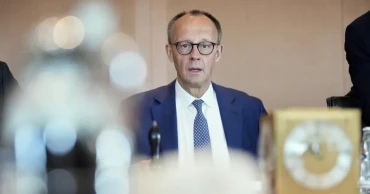
Germany's economy will stagnate this year as tariffs cast a shadow: advisers
Germany’s economy is expected to stagnate this year amid rising pressure from U.S. President Donald Trump’s tariffs and trade threats, according to a report released Wednesday by the country’s panel of independent economic advisers.
Although Germany has the largest economy in Europe, it has not experienced meaningful growth over the past five years, with its gross domestic product contracting in both of the last two years.
In its first forecast since Chancellor Friedrich Merz’s new government assumed office earlier this month, the advisory panel projected that the economy will remain stagnant this year, followed by a modest 1% growth in 2026. This marks a downgrade from its previous forecast in November, which anticipated 0.4% growth in 2025.
UK inflation hits highest level in over a year as domestic bills spike
The updated outlook aligns with the forecast issued by Germany’s previous government about a month ago.
Chancellor Merz, who assumed office on May 6, has committed to reducing bureaucratic hurdles, enhancing digital infrastructure, offering tax incentives to businesses, and supporting new European trade agreements.
“Trump’s tariff policies are fueling uncertainty and threatening global economic growth,” said Monika Schnitzer, head of the advisory panel. However, she noted that a substantial investment package from Merz’s coalition “creates opportunities for infrastructure modernization in Germany and a shift back to a stronger growth trajectory,” offering hope for improved performance in the coming year.
Germany, long a powerhouse in global exports, especially in sectors like industrial machinery and luxury automobiles, has come under growing competitive pressure from Chinese firms. Now, Trump’s trade measures are presenting an additional threat to German exports.
UK inflation hits highest level in over a year as domestic bills spike
In 2024, the United States overtook China as Germany’s largest single trading partner for the first time since 2015, amid a decline in exports to China.
1 year ago
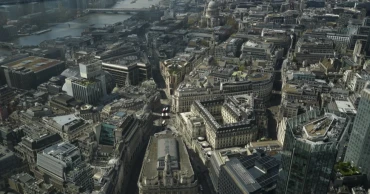
UK inflation hits highest level in over a year as domestic bills spike
Inflation in the United Kingdom climbed to its highest point in over a year this April, driven by a wave of rising domestic expenses, including energy and water bills, according to official data released Wednesday.
The Office for National Statistics reported that the Consumer Prices Index, its primary inflation gauge, rose by 3.5% in the year to April, up from 2.6% in March.
This marks the highest rate since January 2024 and surpassed forecasts, which had predicted a more modest increase to 3.3%. The scale of the rise was also the largest recorded since October 2022, during the peak of the energy crisis following Russia’s full-scale invasion of Ukraine.
Economists had expected a notable jump in inflation due to steep annual increases in a range of household bills in April, along with higher business taxes and a significant hike in the minimum wage.
EU to lift Syria sanctions, keep measures on former Assad regime
Inflation is projected to remain above 3% throughout the rest of the year, potentially tempering hopes for further interest rate cuts from the Bank of England, which targets a 2% inflation rate.
On Tuesday, the Bank’s chief economist, Huw Pill, indicated that interest rates may have been lowered too quickly, reflecting concerns about persistent inflationary pressures.
Since beginning to reduce borrowing costs last August from a 16-year high of 5.25%, the Bank has made gradual cuts—lowering its main interest rate by 0.25 percentage points every three months. Earlier this month, it was reduced to 4.25%.
Commenting on the latest inflation figures, Rob Wood, chief UK economist at Pantheon Macroeconomics, said further rate cuts on a “precise quarterly schedule” now appear “far from certain.”
Although inflation is set to stay above the Bank’s target this year, economists expect it to decline in 2025, partly due to the recent U.S.-UK trade agreement, which scrapped many of the tariffs previously proposed by U.S. President Donald Trump.
1 dies, another goes missing as migrant-loaded boat sinks in English Channel
1 year ago
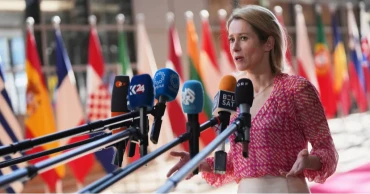
EU to lift Syria sanctions, keep measures on former Assad regime
The European Union will lift sanctions on Syria's economy but keep those in place targeting the former Assad regime, the EU's top diplomat announced Tuesday.
Foreign policy chief Kaja Kallas spoke after chairing a meeting of foreign ministers from the 27-member bloc. She said the decision was designed to avert poverty and radicalism in the country after more than a decade of civil war sent millions fleeing, including to Europe, AP reports.
The sanctions are “conditional” and could be resumed if the new government of Ahmad al-Sharaa doesn’t keep the peace, Kallas said.
“Saving lives must be our top priority on Syria," she said.
The announcement came a week after US President Donald Trump's meeting with al-Sharaa and his announcement that the US would ease sanctions on Syria. Lifting sanctions could bring much-needed investment to Syria, which needs tens of billions of dollars to restore its battered infrastructure.
An insurgency late last year unseated former Syrian President Bashar Assad and ended the civil war that decimated much of the country’s infrastructure. The United Nations estimates that 90% of Syrians live in poverty and state-supplied electricity comes as little as two hours every day.
UK halts trade talks with Israel, announces sanctions over West Bank settlers
Earlier in the day, Kallas acknowledged concerns about sectarian conflict but said “we don't have a choice” but to lift sanctions and bolster the Syrian economy: “We actually either give them possibility to stabilize the country or we don’t do that and we have something like what we have in Afghanistan.”
Kallas added, “There can be no peace without the path to economic recovery, and we all need a stable Syria."
She did not provide details or timing on the lifting of sanctions. But a European Council statement said it would keep “sanctions based on security grounds, including arms and technology that might be used for internal repression. In addition, the EU will introduce additional targeted restrictive measures against human rights violators and those fueling instability in Syria.”
Syrians had celebrated in streets across the country after Trump's announcement, and Arab leaders in neighbouring nations that host millions of refugees who fled Syria’s war praised it.
1 year ago