europe
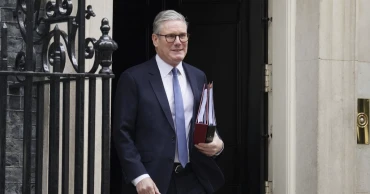
Starmer urges world leaders keep pressure on Putin for ceasefire
UK Prime Minister Keir Starmer has urged global leaders to maintain pressure on Russian President Vladimir Putin to support a ceasefire in Ukraine.
US resumes military aid as Ukraine signals ceasefire possibility
Speaking on Saturday at the opening of a virtual meeting of what he calls the “coalition of the willing,” Starmer stated that Putin will “sooner or later” have to “come to the table.”
Ukraine says it is open to a 30-day ceasefire; US resumes military aid and intelligence sharing
The discussion is set to explore ways countries can provide military and financial assistance to Ukraine while also assessing support for any potential future peacekeeping mission.
1 year ago

Portugal’s govt falls prompting early election after confidence vote
Portugal’s minority government suffered a defeat in a parliamentary confidence vote on Tuesday, leading to its resignation and setting the stage for the country's third general election in three years.
This marks the most severe period of political instability since Portugal embraced democracy over 50 years ago, following the 1974 Carnation Revolution that ended a four-decade dictatorship.
Ukraine says it is open to a 30-day ceasefire; US resumes military aid and intelligence sharing
Successive minority governments have struggled to form alliances that would allow them to complete a full four-year constitutional term, as opposition parties have repeatedly united to bring them down.
With the election likely to take place in May, the country of 10.6 million people faces months of political uncertainty while it moves forward with plans to invest over 22 billion euros ($24 billion) in EU development funds. Meanwhile, Europe continues to grapple with pressing security and economic challenges.
Voter frustration with repeated elections could benefit the radical-right populist party Chega (Enough), which has capitalised on dissatisfaction with mainstream parties. Portugal has followed the broader European trend of rising populism, with Chega securing third place in last year’s election.
The government had called for the confidence vote, arguing it was necessary to "dispel uncertainty" about its future amid a deepening political crisis centred on Social Democrat Prime Minister Luis Montenegro, which had diverted attention from government policy.
Following over three hours of heated debate, including dramatic last-minute proposals by the government to avoid its downfall, lawmakers took an hourlong recess for negotiations. The government claimed to have made a last-minute offer to the Socialists.
A hush fell over the chamber when the result was announced.
“Things are how they are. We gave our all,” Prime Minister Montenegro told reporters as he left the National Assembly.
Pedro Nuno Santos, leader of the Socialist Party and the largest opposition group, criticised the government’s actions as “shameful,” accusing it of resorting to “manoeuvres, games, tricks” to stay in power.
The political controversy revolves around possible conflicts of interest concerning Montenegro’s family law firm.
Montenegro, who intends to seek reelection, has denied any wrongdoing, stating that he transferred control of the firm to his wife and children upon becoming Social Democratic leader in 2022 and has had no involvement in its management since.
Recently, reports emerged that the firm has been receiving monthly payments from a company holding a significant government-granted gambling concession, among other revenue sources.
The exact vote tally was not immediately available, but parliamentary speaker José Pedro Aguiar-Branco confirmed the centre-right government had been defeated.
Moscow faces ‘massive’ drone attack ahead of US-Ukraine peace talks
The governing two-party coalition, led by the Social Democratic Party and in power for less than a year, controlled only 80 seats in the 230-seat legislature. A vast majority of opposition lawmakers had pledged to vote against it, with the centre-left Socialists and Chega—together holding 128 seats—leading the charge.
Opposition parties have demanded further clarification from Montenegro, while the Socialist Party is pushing for a parliamentary inquiry that could continue to trouble the government for months.
The Social Democrats hope that Portugal’s economic performance—an estimated 1.9% growth last year compared to the EU’s 0.8% average, and a 6.4% unemployment rate, close to the EU average—will help sustain their support.
The next general election had originally been scheduled for January 2028.
1 year ago

Ukraine says it is open to a 30-day ceasefire; US resumes military aid and intelligence sharing
The Trump administration lifted its suspension of military aid and intelligence sharing for Ukraine, and Kyiv signaled that it was open to a 30-day ceasefire in the war with Russia, pending Moscow’s agreement, American and Ukrainian officials said Tuesday following talks in Saudi Arabia.
The administration's decision marked a sharp shift from only a week ago, when it imposed the measures in an apparent effort to push Ukrainian President Volodymyr Zelenskyy to enter talks to end the war with invading Russian forces. The suspension of U.S. assistance came days after Zelenskyy and President Donald Trump argued about the conflict in a tense White House meeting.
Secretary of State Marco Rubio, who led the U.S. delegation to the talks in Jeddah, said Washington would present the ceasefire offer to the Kremlin, which has so far opposed anything short of a permanent end to the conflict without accepting any concessions.
“We’re going to tell them this is what’s on the table. Ukraine is ready to stop shooting and start talking. And now it’ll be up to them to say yes or no," Rubio told reporters after the talks. “If they say no, then we’ll unfortunately know what the impediment is to peace here.”
Trump's national security adviser, Mike Waltz, added: "The Ukrainian delegation today made something very clear, that they share President Trump’s vision for peace.”
Tuesday's discussions, which lasted for nearly eight hours, appeared to put to rest — for the moment at least — the animosity between Trump and Zelenskyy that erupted during the Oval Office meeting last month.
Ukraine-US talks begin in KSA amid ongoing conflict
Waltz said the negotiators “got into substantive details on how this war is going to permanently end,” including long-term security guarantees. And, he said, Trump agreed to immediately lift the pause in the supply of billions of dollars of U.S. military aid and intelligence sharing.
Seeking a deal with Russia
Trump said he hoped that an agreement could be solidified “over the next few days.”
“I’ve been saying that Russia’s been easier to deal with so far than Ukraine, which is not supposed to be the way it is," Trump said later Tuesday. "But it is, and we hope to get Russia. But we have a full ceasefire from Ukraine. That’s good.”
The Kremlin had no immediate comment on the U.S. and Ukrainian statements. Russian Foreign Ministry spokesperson Maria Zakharova said only that negotiations with U.S. officials could take place this week.
Trump 's special envoy, Steve Witkoff, is expected to travel later this week to Moscow, where he could meet with Russian President Vladimir Putin, according to a person familiar with the matter but not authorized to comment publicly. The person cautioned that scheduling could change.
Officials met in Saudi Arabia only hours after Russia shot down over 300 Ukrainian drones in Ukraine’s biggest attack since the Kremlin's full-scale invasion. Neither U.S. nor Ukrainian officials offered any comment on the barrage.
Russia also launched 126 drones and a ballistic missile at Ukraine, the Ukrainian air force said, as part of Moscow’s relentless pounding of civilian areas.
Zelenskyy renews calls for lasting peace
In an address posted shortly after Tuesday's talks ended, Zelenskyy reiterated Ukraine’s commitment to a lasting peace, emphasizing that the country has sought an end to the war since its outset.
“Our position is absolutely clear: Ukraine has strived for peace from the very first second of this war, and we want to do everything possible to achieve it as soon as possible — securely and in a way that ensures war does not return,” Zelenskyy said.
Ukrainian presidential aide Andriy Yermak, who led the Ukrainian delegation, described the negotiations as positive. He said the two countries “share the same vision, and that we are moving in the same direction toward the just peace long awaited by all Ukrainians.”
In Kyiv, Lena Herasymenko, a psychologist, accepts that compromises will be necessary to end the war, but she said they must be “reasonable.”
Moscow faces ‘massive’ drone attack ahead of US-Ukraine peace talks
“We had massive losses during this war, and we don’t know yet how much more we’ll have,” she told The Associated Press. “We are suffering every day. Our kids are suffering, and we don’t know how the future generation will be affected.”
Oleksandr, a Ukrainian soldier who could give only his first name because of security restrictions, warned that Ukraine cannot let down its guard.
“If there is a ceasefire, it would only give Russia time to increase its firepower, manpower, missiles and other arms. Then they would attack Ukraine again,” he said.
Hawkish Russians push back against a ceasefire
In Moscow, hawkish politicians and military bloggers spoke strongly against a prospective ceasefire, arguing that it would play into Kyiv’s hands and damage Moscow’s interests at a time when the Russian military has the advantage.
“A ceasefire isn’t what we need,” wrote hardline ideologue Alexander Dugin.
Viktor Sobolev, a retired general who is a member of the Russian parliament’s lower house, warned that a 30-day truce would allow Ukraine to beef up arms supplies and regroup its troops before resuming hostilities.
Sergei Markov, a pro-Kremlin political commentator, suggested that Moscow could demand a halt on Western arms supplies to Ukraine as part of a ceasefire. “An embargo on arms supplies to Ukraine could be a condition for a truce,” he wrote.
The Kremlin sticks to its conditions for peace
Russia has not publicly offered any concessions. Putin has repeatedly declared that Moscow wants a comprehensive settlement, not a temporary truce.
Russia has said it’s ready to cease hostilities on the condition that Ukraine drops its bid to join NATO and recognizes regions that Moscow occupies as Russian. Russia has captured nearly a fifth of Ukraine's territory.
What to know ahead of the talks between the US and Ukraine in Saudi Arabia
Russian forces have held the battlefield momentum for more than a year, though at a high cost in infantry and armor, and are pushing at selected points along the 1,000-kilometer (600-mile) front line, especially in the eastern Donetsk region.
Ukraine has invested heavily in developing its arms industry, especially high-tech drones that have reached deep into Russia.
1 year ago

Moscow faces ‘massive’ drone attack ahead of US-Ukraine peace talks
Russia has accused Ukraine of launching a large-scale overnight drone attack on Moscow and its surrounding areas, just hours before crucial peace discussions between Ukraine and the United States.
At least one person, reportedly a 38-year-old car park security guard, was killed.
BBC’s Russia Editor Steve Rosenberg reported this may be Ukraine’s most significant drone assault on Moscow to date.
What to know ahead of the talks between the US and Ukraine in Saudi Arabia
Moscow Mayor Sergei Sobyanin said that air defenses intercepted 73 drones targeting the city, while four airports temporarily suspended operations.
The attack precedes high-level talks in Saudi Arabia between US and Ukrainian officials on ending the war, as well as a meeting in Paris where military leaders from around 30 nations will discuss forming a "coalition of the willing."
Source: BBC
1 year ago
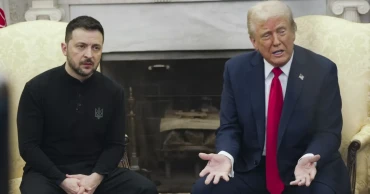
What to know ahead of the talks between the US and Ukraine in Saudi Arabia
Saudi Arabia is to host talks on Tuesday between the United States and Ukraine in a new diplomatic push after an argument erupted during President Volodymyr Zelenskyy's Feb. 28 visit to the White House.
The oil-rich kingdom may seem like an unusual venue for talks aimed at smoothing over relations after the blowup. But Saudi Arabia under its assertive Crown Prince Mohammed bin Salman has been positioning itself as an ideal location for possible peace negotiations between Kyiv and Moscow — and even the first face-to-face talks between Russian President Vladimir Putin and U.S. President Donald Trump.
Here’s what to know about why this meeting is taking place and Saudi Arabia's role:
Why are these talks happening?
U.S. and Ukrainian officials will meet after the Oval Office meeting between Zelenskyy, Trump and U.S. Vice President JD Vance descended into an extraordinary 10-minute argument before journalists.
Trump at one point admonished Zelenskyy by angrily saying: "You’re gambling with World War III, and what you’re doing is very disrespectful to the country." Zelenskyy ended up leaving the White House without signing a deal that included granting the U.S. access to Ukraine’s rare earth minerals. Kyiv hoped that deal would ensure the continued flow of U.S. military support that Ukraine urgently needs as it battles Russia in the war that began after Moscow's full-scale invasion in February 2022.
Where will these talks take place?
Saudi Arabia's Foreign Ministry in a statement on Friday identified the location for the talks as Jeddah, a port city on the Red Sea. It's not clear why the kingdom picked Jeddah as opposed to Riyadh, the Saudi capital where the initial Russia-U.S. talks took place on Feb. 18. However, Jeddah has hosted other diplomatic engagements in the past and is home to royal palaces.
The Foreign Ministry said the kingdom would continue to pursue “a lasting peace to end the Ukrainian crisis.”
“The kingdom has continued these efforts over the past three years by hosting many meetings on this matter,” the ministry said.
Who will attend the talks?
Zelenskyy plans to visit Saudi Arabia on Monday ahead of the talks. He earlier delayed a trip to the kingdom after traveling to the neighboring United Arab Emirates, which also has been considered as a possible venue for peace talks between Kyiv and Moscow.
EU leaders hold crisis talks on Ukraine amid declining US support
“We continue working on the relevant steps with our partners who want peace, who want it just as much as we do,” Zelenskyy said Friday. “There will be a lot of work here in Europe, with America in Saudi Arabia — we are preparing a meeting to accelerate peace and strengthen the foundations of security.”
Zelenskyy wrote online that a team including his chief of staff Andriy Yermak, Foreign Minister Andriy Sybiha and Defense Minister Rustem Umerov traveling with him to Saudi Arabia will take part in the talks. U.S. Secretary of State Marco Rubio will lead the American team for the Ukrainian talks and meet with Prince Mohammed.
Sybiha also spoke on Friday with Rubio ahead of the talks. Sybiha described it as a “constructive call." A two-sentence readout from the State Department said Rubio “underscored President Trump is determined to end the war as soon as possible and emphasized that all sides must take steps to secure a sustainable peace.”
Trump himself sounded upbeat on Air Force One on Sunday when speaking to journalists.
“I think you’re gonna have eventually — and maybe not in the distant future — you’re gonna have some pretty good results coming out of Saudi Arabia this week,” Trump said.
Why are these talks in Saudi Arabia?
Since assuming power in Saudi Arabia, Prince Mohammed took an aggressive posture both at home and abroad. His public image reached its nadir with the 2018 slaying of Washington Post columnist Jamal Khashoggi at the Saudi Consulate in Istanbul, believed by the United States and others to be at the prince’s orders.
In the last two years, however, Prince Mohammed instead has reached a détente with Iran, hosted Zelenskyy for an Arab League summit and been involved in negotiations over the wars in Sudan and the Gaza Strip. Riyadh also maintained ties to Russia through the OPEC+ oil cartel while Western nations levied sanctions against it. That's reasserted the role the kingdom long has perceived itself as having — being the leader of the Sunni Muslim world and a dominant force in the Middle East.
US pauses intelligence sharing with Ukraine amid diplomatic spat
Hosting Russia-U.S. talks, possibly drawing Trump to the kingdom for his first foreign trip in this term through investments and other possible meetings only raise Saudi Arabia's profile further as a neutral territory for high-stakes negotiations. Saudi Arabia's autocratic government, compliant media and distance from the war also allows for talks to take place in a tightly controlled country with relative privacy.
What does this mean for the war and the wider world?
Trump remains focused on reaching some kind of peace deal to stop the war. His approach toward Ukraine so far has relied far more on stick than carrot — limiting their access to intelligence and weaponry. While conciliatory toward Putin, Trump recently also threatened new sanctions against Russia over its ceaseless attacks on Ukrainian cities.
If Ukraine and the U.S. reach some sort of understanding acceptable to Trump, that could accelerate his administration’s push to talks. However, the rest of Europe remains skeptical as they have been sidelined from the talks. The European Union last week agreed to boost the continent’s defenses and to free up hundreds of billions of euros for security.
1 year ago

Russia expels 2 British diplomats from embassy in Moscow over espionage claims
Russia said on Monday it was expelling two British diplomats based at the embassy in Moscow over spying allegations that the U.K. called "malicious and baseless."
Russia’s Federal Security Service, or FSB, said in a statement quoted by the state news agency RIA Novosti that the two diplomats had provided false personal data while seeking permission to enter the country and had engaged in alleged intelligence and subversive activities that threatened Russia's security. It didn't offer any evidence.
According to the RIA Novosti report, a decision has been made to revoke the diplomats' accreditations and they have been ordered to leave Russia within two weeks. The Russian Foreign Ministry said in a separate statement that it summoned a British embassy official. “Moscow will not tolerate the activities of undeclared British intelligence officers on Russian territory,” it said.
The Foreign Office in London said in a statement: “This is not the first time that Russia has made malicious and baseless accusations against our staff.” It did not say whether the U.K. planned any retaliatory moves.
Myanmar's military head visits Russia for cooperation talks with Putin
The FSB last year accused seven British diplomats of spying. Six expulsions were announced in September, and one more in November. The U.K. called the moves at the time “baseless.” The expulsions came amid soaring tensions over the war in Ukraine and after London decided to revoke the credentials of an attaché at the Russian Embassy and limit Moscow’s diplomatic activities in Britain.
Last month, London expelled a Russian diplomat in response to the November expulsion.
In May 2024, the U.K. expelled Russia’s defense attaché in London, alleging he was an undeclared intelligence officer, and it closed several Russian diplomatic properties in Britain that it said were being used for spying. Days later Russia reciprocated and expelled Britain’s defense attaché.
Expulsions of diplomats — both Western envoys working in Russia and Russians in the West — have become increasingly common since Moscow launched its invasion of Ukraine in 2022.
UK, France and Ukraine agree to work on ceasefire plan for Russia's war in Ukraine
In 2023, the Russian news outlet RBC said Western countries and Japan had expelled a total of 670 Russian diplomats between the start of 2022 and October 2023, while Moscow responded by expelling 346 diplomats. According to RBC, that was more than in the previous 20 years combined.
1 year ago

Over 40,000 passengers affected by flight cancellations in Germany
Flight cancellations at Hamburg Airport after a surprise strike by workers affected more than 40,000 passengers on Sunday, a day before a planned wider protest across Germany amid new contract negotiations.
Only 10 of more than 280 scheduled flights went as planned early Sunday, the airport said. Many service desks sat empty as would-be passengers lined up to seek information about the cancellations. One big electronic departure board overhead had “canceled” in red next to the list of all flights.
The surprise walkout, which reportedly took place with only about a half-hour advance notice, came before a broader series of preannounced strikes across 13 airports in Germany on Monday, organized by the ver.di union.
The union, whose members work in areas including passenger services and cargo and goods screening, called for Sunday's strike by security control staff to put pressure on company representatives amid collective bargaining talks.
“The behavior of the trade union ver.di is dishonorable: The strike without notice hits Hamburg Airport at the start of the vacation season," airport spokeswoman Katja Bromm said in a statement. She said that on Monday, arrivals would be possible, and that “considerable disruptions and cancellations” were expected.
Bromm said that Sunday's walkouts were "excessive and unfair to tens of thousands of travelers who have nothing to do with the disputes.”
For months, ver.di has been negotiating a new agreement that aims to improve occupational health and safety, provide more vacation days, an increase in the annual bonus to 50% and the freedom to choose a doctor for employees’ regular, mandatory medical exams, among other things.
Lars Stubbe, a trade union official, said that “a strike must cause economic damage.”
“We know that it is a massive burden for passengers. Our colleagues know that too. But they have said we have to go on strike. It must be effective, so that we have a reasonable offer to negotiate,” he said.
Some would-be passengers didn't hide their frustration.
“I also wonder why it’s like this, because it was supposed to be a big strike tomorrow (Monday) — and why is it today?” said Alva Wetzel, who had hoped to travel. “It’s just stupid.”
1 year ago

Italian govt approves femicide law, punishing with life imprisonment
The Italian government has approved a draft law that officially recognises femicide as a distinct crime within the country's criminal law, with penalties of up to life imprisonment, reports AP.
This decision, announced just before International Women's Day on Saturday, aims to address the alarming rate of homicides and violence against women in Italy. The law proposes stronger measures against gender-based crimes such as stalking and revenge porn.
Italy Embassy in Dhaka reaffirms commitment to combating visa corruption
The proposal, agreed upon late Friday, still requires approval by both houses of parliament to become law.
“This is a highly significant bill, which introduces femicide as an independent crime in our legal framework, with a life sentence as the penalty,” said conservative Prime Minister Giorgia Meloni, a strong supporter of the measure. “It also includes aggravating factors and harsher sentences for crimes like personal abuse, stalking, sexual violence, and revenge porn,” she added.
While the centre-left opposition welcomed the initiative, they noted that the law focuses only on the criminal aspect, leaving economic and cultural disparities unaddressed.
Femicide has become a systemic issue deeply rooted in Italy’s patriarchal culture, with some violent incidents sparking renewed discussions on gender-based violence. A notable case was the murder of Giulia Cecchettin, a 22-year-old university student fatally stabbed by her ex-boyfriend Filippo Turetta in November 2023. In December, Turetta was sentenced to life imprisonment.
Italy contributes €3 million to support Rohingyas in Bangladesh
Recent studies show that, although homicides are decreasing in Italy, femicides remain stable or decline only slightly, with the majority linked to domestic or emotional relationships. According to the Italian Interior Ministry, 113 femicides were recorded in 2024, 99 of which were committed by family members, partners, or ex-partners.
1 year ago

Unexploded WWII bomb in Paris halts Eurostar, northern trains
Eurostar services to and from London, along with other trains traveling north from Paris, came to a standstill on Friday after an unexploded bomb from World War II was found near the tracks serving the busy Gare du Nord station, reports AP.
France’s national railway operator, SNCF, stated that train traffic was halted at the request of the police.
French Transport Minister Philippe Tabarot warned that travel would be "strongly disrupted" throughout the day, with only limited services resuming in the afternoon, and advised passengers to delay their journeys.
The bomb was discovered at around 4 a.m. by workers conducting earth-moving operations near the tracks in the Seine-Saint-Denis region. Minesweepers were deployed to the site, and their operation remains ongoing. Meanwhile, stranded passengers gathered at the station as it opened on Friday.
Gare du Nord is a key European transit hub, connecting Paris to international destinations north of France, including Brussels and the Netherlands, as well as the city’s main airport and numerous regional locations.
Assad loyalists kill at least 13 police officers in ambush on Syrian forces in coastal town
While unexploded bombs from World War I and World War II are frequently uncovered across France, finding one in such a densely populated area is highly unusual.
Speaking on broadcaster Sud Radio, Tabarot reassured local residents and those near the train station that there was “no fear” of an explosion, emphasising that proper procedures were in place for defusing and removing the bomb.
Eurostar, which operates passenger trains through the Channel Tunnel between Britain and mainland Europe, cancelled all services between London and Paris on Friday morning and advised travellers to reschedule their trips.
Friday is among the busiest days of the week at Eurostar’s London terminal, St. Pancras Station, with thousands of passengers departing and arriving for weekend getaways.
New Zealand's top diplomat in London loses his job over remarks about Trump
Trains between London and Eurostar’s other major destination, Brussels, remained unaffected.
1 year ago
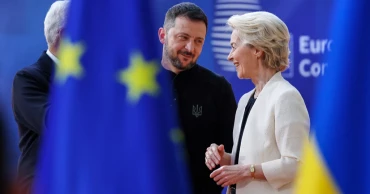
EU leaders hold crisis talks on Ukraine amid declining US support
With the possibility of losing US support under President Donald Trump, European Union leaders convened an emergency meeting on Thursday to strengthen their security and ensure Ukraine remains adequately protected, reports AP.
Germany’s likely next chancellor, Friedrich Merz, and summit chairman Antonio Costa discussed ways to bolster Europe’s defence over breakfast in Brussels. Merz has been advocating for easing the country’s debt constraints to facilitate increased military spending.
US pauses intelligence sharing with Ukraine amid diplomatic spat
At the same time, EU leaders woke up to reports that French President Emmanuel Macron was set to consult them on the potential role of France’s nuclear deterrent in safeguarding Europe from Russian threats.
These discussions highlight the significant shift in dynamics over the past two months since Trump assumed office and began reshaping the long-standing US-Europe alliance, which has underpinned Western security since World War II.
“Invest, invest, invest in defence and deterrence. That is the key message,” said Danish Prime Minister Mette Frederiksen.
This marks a sharp break from Europe’s decades-long trend of deprioritising military expenditure in favour of other budgetary concerns.
Macron, addressing the French public on Wednesday night, emphasised that the bloc would take “decisive steps forward.” He stated that member states would be able to increase military spending, with “massive joint funding” allocated to procure and manufacture advanced weapons, tanks, munitions, and other military equipment within Europe.
Reinforcing his point, Macron asserted that “Europe’s future does not need to be determined in Washington or Moscow.”
Ukraine's President Receives Warm Reception
Ukrainian President Volodymyr Zelenskyy, who attended the summit, was met with strong expressions of solidarity from most EU leaders— a stark contrast to the harsh criticism he faced from Trump less than a week ago.
“I want to thank all our European leaders,” Zelenskyy said. “From the very start of the war, throughout this entire period, and even last week, you have stood by us.”
Boosting Defence Budgets
European Commission President Ursula von der Leyen has proposed easing budgetary constraints to enable countries to significantly increase their defence spending. Her plan includes €150 billion ($162 billion) in loans to help acquire essential military equipment.
Given that most of the increased military expenditure would have to come from national budgets, von der Leyen has proposed measures to prevent struggling member states from being penalised for additional debt incurred for defence purposes.
“Europe is facing a clear and present danger, and therefore it must be able to protect and defend itself,” she stated.
France, for instance, is grappling with a high budget deficit of 5% of GDP after accumulating debt—now at 112% of GDP—due to economic relief measures during the COVID-19 pandemic and subsequent energy crisis following Russia’s invasion of Ukraine.
Five other eurozone nations—Belgium, Greece, Spain, Italy, and Portugal—have debt levels exceeding 100% of GDP. In contrast, Germany, Europe’s largest economy, has more fiscal flexibility with a debt level of 62% of GDP.
Addressing Ukraine’s Security
A crucial part of the EU’s security strategy is ensuring Ukraine remains supported.
On Wednesday night, a Russian missile strike on a hotel in Zelenskyy’s hometown killed four people. The hotel, located in Kryvyi Rih in central Ukraine, had recently become a base for humanitarian volunteers, including Ukrainian, American, and British nationals. It was unclear whether any of these foreign aid workers were among the 31 injured.
Earlier this week, Trump ordered a halt to US military supplies to Ukraine, pressing Zelenskyy to negotiate an end to the war with Russia. This development has injected fresh urgency into Thursday’s summit discussions.
However, the meeting is not expected to immediately resolve Ukraine’s most pressing needs. It will not be focused on rapidly increasing arms and ammunition supplies to compensate for the US freeze. Nor is there consensus on whether to release the estimated €183 billion ($196 billion) in frozen Russian assets held in a Belgian clearing house.
Zelenskyy wants peace, ready to accept minerals deal: Trump
A Divided EU Faces a Defining Moment
Despite these limitations, EU leaders acknowledged the significance of the moment.
“This is a turning point for Europe and for Ukraine as part of our European family,” von der Leyen said, standing alongside Zelenskyy before entering the summit.
The greatest challenge, however, may lie in forging a unified EU stance at a time of internal division. Many key decisions require unanimous agreement, and Hungary, along with Slovak Prime Minister Robert Fico, is threatening to veto parts of the summit's statement on Ukraine.
“We must make decisions, regardless of one or two dissenters,” said Lithuanian President Gitanas Nauseda. “Otherwise, history will judge us, and we will pay a steep price.”
While Thursday’s summit is not expected to yield immediate financial commitments for Ukraine or EU defence, the upcoming EU summit on 20–21 March is expected to offer clearer decisions on these matters.
1 year ago