europe

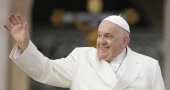
Pope Francis diagnosed with pneumonia
The Vatican reported that Pope Francis had a restful night and had breakfast on Wednesday after being diagnosed with pneumonia in both lungs, adding to concerns about the 88-year-old pontiff’s ability to combat the infection, reports AP.
A Vatican spokesperson shared an early morning update on Wednesday, stating that Francis spent his fifth night at Rome's Gemelli hospital without issues. "He had a peaceful night, woke up, and had breakfast," the spokesperson said.
Pope Francis has named the first woman to head a major Vatican office
On Tuesday, the Vatican confirmed the pneumonia diagnosis and added that Francis' respiratory infection is accompanied by asthmatic bronchitis, requiring cortisone antibiotic treatment. "Laboratory tests, chest X-rays, and the Holy Father’s clinical condition continue to present a complex picture," the Vatican said.
Despite the situation, the pope, who had part of his right lung removed in his youth, remains in good spirits and is thankful for the prayers for his recovery, according to a late update from Vatican spokesperson Matteo Bruni.
Francis was admitted to the Gemelli hospital on Friday in "fair" condition after his bronchitis worsened. On Monday, doctors determined that he had a polymicrobial respiratory tract infection, meaning a mix of viruses, bacteria, and potentially other organisms had infected his airways.
A follow-up CT scan on Monday revealed the development of bilateral pneumonia, prompting the need for additional medication, Bruni noted.
Bronchitis can lead to pneumonia, a serious infection of the lungs. Pneumonia is more dangerous when it affects both lungs, as there is no healthy tissue to compensate for the damage.
Treatment depends on severity but may involve oxygen support, intravenous fluids, and addressing the underlying infection. So far, Pope Francis has not needed supplemental oxygen, has had breakfast daily, read the newspapers, and worked from his hospital room.
Pope Francis reprimands Vatican staff for gossiping in annual Christmas message
The Vatican has not disclosed how the pope is responding to his medication, other than confirming he does not have a fever.
Dr. Carmelo D’Asero, an infectious disease expert, pointed out that the absence of a fever is not necessarily a good sign given the severity of the infection. "A high fever indicates the body’s immune response," he said. "A low fever in the presence of a serious bronchial infection suggests a weaker immune response, which is concerning. It might actually be better if he had a fever."
The Vatican has not specified how long the pope might stay in hospital, but noted that his treatment for this "complex clinical picture," which has already led to multiple changes in his medication, will require an "adequate" period of hospitalization.
In a hopeful sign, a rainbow appeared over the Gemelli hospital on Tuesday afternoon, and Francis received well-wishes in the form of drawings and cards from children in the hospital’s oncology ward.
1 year ago
Migrant groups report surge in racist attacks across German city
When Haben Gebregergish moved to the German city of Magdeburg seven years ago, the Eritrean immigrant was on her way to the supermarket with her child when an intoxicated woman approached her on the street, reports Ap.
At the time, Gebregergish did not know enough German to understand the woman’s words. However, when the woman threw a beer bottle at her head, the message became immediately clear.
Bangladeshis among 235 undocumented immigrants detained in Malaysia
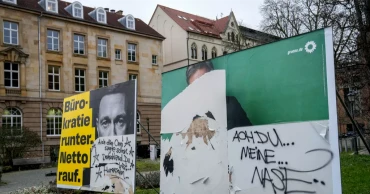
It was one of her earliest encounters with racism, but far from the last. Following a deadly attack at a Christmas market in Magdeburg late last year, Gebregergish and other migrants living in the city say they have witnessed a sharp rise in racism and anti-immigrant sentiment.
“We are just like you,” Gebregergish said earlier this month. “We are no different. Like you, we have emotions. Sometimes we feel sad, sometimes we feel happy, just like everyone else.”
The Christmas market attack was one of five high-profile incidents involving immigrants over the past nine months, making migration a central issue as the country heads towards an early election on Sunday. The suspect, a Saudi doctor, drove into the crowded holiday market, killing five women and a nine-year-old boy and injuring 200 others.
The suspect arrived in Germany in 2006 and was granted permanent residency. Authorities say he does not fit the typical profile of those responsible for extremist attacks. He remains in custody as investigations continue.
Pakistan says at least 16 nationals died in migrant boat sinking near Libya
A day after the December 20 attack, a large right-wing demonstration took place in Magdeburg, and verbal and physical assaults on people of migrant backgrounds have increased significantly in the city since then, according to the German-Syrian Cultural Association in Magdeburg.
“The migrant community and advice centres report that attacks have risen by more than 70% in the city,” said Saeeid Saeeid, a member of the association who moved to Germany from Syria seven years ago. “Racism already existed here and elsewhere. But since the attack, it has escalated dramatically.”
Ketevan Asatiani-Hermann, recently elected chair of the board for the Advisory Council for Integration and Migration in Magdeburg, stated that victims of racist attacks in the city often feel unsupported by politicians or the police.
“The hatred has always been there, but people were not as open about expressing it before,” said Asatiani-Hermann, who relocated to Magdeburg from Georgia in 2011.
She claimed that officers sometimes search or question victims before addressing the perpetrator, and many migrants fear that reporting an attack could negatively affect their residence status.
The Magdeburg Police Department did not respond to multiple requests for comment.
In a statement, Mayor Simone Borris said: “Cohesion and community are fundamental values of a city that must remain inviolable.” She also directed media to online services for migrants and announced that the city’s cooperation with the Advisory Council for Integration and Migration would be expanded.
Magdeburg is situated in the former communist east, a region where the far-right and anti-immigrant Alternative for Germany (AfD) party enjoys its strongest support. Heading into the election, the party is polling in second place with around 20% support and is fielding its first candidate for national leadership.
Although it is unlikely to gain power soon, the party has become a force that other politicians cannot ignore, significantly influencing Germany’s migration debate.
The election’s outcome—and a potential increase in AfD’s influence—could have a profound impact on Magdeburg’s politics and daily life, Asatiani-Hermann said.
Saeeid stated that the city’s migrant community feels isolated and wants direct engagement from elected officials to address their concerns.
“We will not allow Magdeburg to become a battleground for racism and hatred,” he said.
1 year ago

4 candidates want to be Germany's next chancellor. Who are they?
Four candidates are bidding to be Germany's next leader in Sunday's election. The would-be chancellors are the incumbent, the opposition leader, the current vice chancellor and — for the first time — a leader of a far-right party.
Olaf Scholz
The 66-year-old has been Germany's chancellor since December 2021. The center-left Social Democrat has a wealth of government experience, having previously served as Hamburg's mayor and as German labor and finance minister. As chancellor, he quickly found himself dealing with unexpected crises. He launched an effort to modernize Germany's military after Russia's invasion of Ukraine and made Germany Ukraine's second-biggest weapons supplier. His government prevented an energy crunch and tried to counter high inflation. But his three-party coalition became notorious for infighting and collapsed in November as it argued over how to revitalize the economy — Europe's biggest, which has shrunk for the past two years.
Germany's economy shrinks again
Friedrich Merz
Germany's 69-year-old opposition leader has been the front-runner in the election campaign, with his center-right Union bloc leading polls. He became the leader of his Christian Democratic Union party after longtime Chancellor Angela Merkel — a former rival — stepped down in 2021. Merz has taken his party in a more conservative direction. In the election campaign, he has made curbing irregular migration a central issue. Merz lacks experience in government. He joined the European Parliament in 1989 before becoming a lawmaker in Germany five years later. He took a break from active politics for several years after 2009, practicing as a lawyer and heading the supervisory board of investment manager BlackRock’s German branch.
Germany extends border controls for six more months
Robert Habeck
The 55-year-old is the candidate of the environmentalist Greens. He's also Germany's current vice chancellor and the economy and climate minister, with responsibility for energy issues. As co-leader of the Greens from 2018 to 2022, he presided over a rise in the party's popularity, but in 2021 he stepped aside to let Annalena Baerbock — now Germany's foreign minister — make the party's first run for the chancellor's job. Habeck's record as a minister has drawn mixed reviews, particularly a plan his ministry drew up to replace fossil-fuel heating systems with greener alternatives that deepened divisions in the government.
Alice Weidel
The 46-year-old is making the first bid of the far-right, anti-immigration Alternative for Germany, or AfD, for the country's top job. An economist by training, Weidel joined the party shortly after it was founded in 2013. She has been co-leader of her party's parliamentary group since the party first won seats in the national legislature in 2017. She has been a co-leader of the party itself since 2022, along with Tino Chrupalla. In December, she was nominated as the candidate for chancellor — though other parties say they won't work with the AfD, so she has no realistic path to the top job at present.
1 year ago
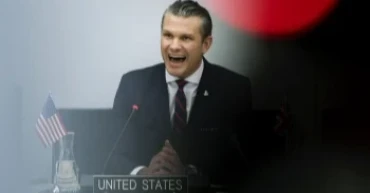
US defense chief suggests Ukraine should abandon hope of winning all territory back from Russia
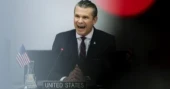
U.S. Defense Secretary Pete Hegseth said Wednesday that NATO membership for Ukraine was unrealistic and suggested Kyiv should abandon hopes of winning all its territory back from Russia and instead prepare for a negotiated peace settlement to be backed up by international troops.
Hours later, President Donald Trump said he and Russian President Vladimir Putin had agreed to begin negotiations on ending the Ukraine war. In a social media post that upended three years of U.S. policy toward Ukraine, the Republican disclosed a call between the two leaders and said they would “work together, very closely.” Ukrainian President Volodymyr Zelenskyy's office said Zelenskyy and Trump also had a phone conversation.
Taken together, the statements by Trump and Hegseth offered the clearest look yet at how the new administration might try to end Europe's largest land war in generations.
Hegseth’s warning to Ukraine that it should abandon its NATO bid and its push to reclaim all Russian-occupied territory signaled starkly to Kyiv that the administration’s view of a potential settlement is remarkably close to Moscow’s vision. Putin has declared that any peace deal must ensure that Ukraine gives up its NATO ambitions and withdraws its troops from the four regions that Russia annexed in September 2022 but never fully captured.
In sweeping remarks to NATO allies eager to hear how much support Washington intends to provide to the Ukrainian government, Hegseth indicated that Trump is determined to get Europe to assume most of the financial and military responsibilities for Ukraine's defense, including a possible peacekeeping force that would not include U.S. troops.
Making the first trip to NATO by a member of the new administration, the defense secretary also said the force should not have Article 5 protections, which would require the U.S. or the 31 other nations of the NATO alliance to come to the aid of those forces if they are attacked by Russia.
The secretary's comments were sure to dim Ukraine’s hopes of making itself whole again and to complicate talks later this week between Zelenskyy and U.S. Vice President JD Vance and other senior American officials at a major security conference in Munich.
“The United States does not believe that NATO membership for Ukraine is a realistic outcome of a negotiated settlement,” Hegseth told Kyiv’s backers as they gathered at NATO headquarters for a meeting to drum up more arms and ammunition for the war, which will soon enter its fourth year.
All 32 allies must agree for a country to join NATO, meaning that every member has a veto.
“Instead, any security guarantee must be backed by capable European and non-European troops,” Hegseth said. “To be clear, as part of any security guarantee, there will not be U.S. troops deployed to Ukraine.”
At the White House later in the day, Trump commented briefly on Hegseth’s pronouncements on no NATO membership for Ukraine and no return to the country’s previous boundaries. Without calling Hegseth by name, he said: “I know that a new secretary of defense, who is excellent, made a statement today saying that he thinks it’s unlikely or impractical. I think probably that’s true.”
Other Western allies said the possibility of Ukraine joining NATO needs to stay on the table.
Ukraine ‘may be Russian someday’, says Trump
French Foreign Minister Jean-Noël Barrot said NATO “is still the main guarantee of security for European countries.”
Asked about Trump’s phone call with Putin, Barrot said that abandoning Ukraine would “entrench the law of the strongest. It would be an invitation to all the world’s tyrants and despots to invade their neighbors with complete impunity.”
Hegseth insisted that NATO should play no role in any future military mission to police the peace in Ukraine and that any peacekeeping troops should not be covered by the part of NATO’s founding treaty that obliges all allies to come to the aid of any member under attack.
Article 5 has been activated only once, when European allies and Canada used it to help the United States in the wake of the Sept. 11, 2001, al-Qaida attacks on New York and Washington.
Hegseth also said Europe "must provide the overwhelming share of future lethal and nonlethal aid to Ukraine.” Ukraine currently relies equally on Europe and the U.S. for about 30% each of its defense needs. The rest is produced by Ukraine itself.
Speaking with the allies of Ukraine known as the Ukraine Defense Contact Group, Hegseth also insisted that Ukraine’s Western backers must abandon the “illusionary goal” of returning the country to its pre-2014 borders, before Russia annexed the Crimean Peninsula and seized parts of eastern Ukraine.
“Members of this contact group must meet the moment,” Hegseth said to the approximately 50 member countries that have provided support to Ukraine since Russia’s full-scale invasion in 2022.
In his social media post, Trump said he and Putin “talked about the strengths of our respective Nations, and the great benefit that we will someday have in working together. But first, as we both agreed, we want to stop the millions of deaths taking place" in the war.
Trump said the two leaders “agreed to have our respective teams start negotiations immediately."
Zelenskyy said he had a “meaningful conversation" with Trump about “opportunities to achieve peace.” He said Trump shared details of his conversation with Putin.
Russian drone and missile attacks kill 8 in Ukraine
“No one wants peace more than Ukraine,” Zelenskyy posted on X. "Together with the U.S., we are charting our next steps to stop Russian aggression and ensure a lasting, reliable peace. As President Trump said, let’s get it done. We agreed to maintain further contact and plan upcoming meetings.”
Talking to reporters after the NATO meeting, U.K. Defense Secretary John Healey said Hegseth’s words would not go unheeded.
“We heard his call for European nations to step up. We are, and we will,” Healey said.
Healey underlined that “Ukraine’s rightful place is in NATO. That is a process that will take some time.”
He also announced that Britain would provide Ukraine with a fresh $187 million “firepower package,” including drones, tanks and air-defense systems.
Over nearly three years, those 50 countries have collectively provided Ukraine with more than $126 billion in weapons and military assistance, including more than $66.5 billion from the U.S., which has served as the chair of the group since its creation.
Hegseth's trip comes less than two weeks before the third anniversary of Russia’s invasion on Feb. 24, 2022. Most U.S. allies fear that Putin won’t stop at Ukraine’s borders if he wins.
Trump has promised to end the war quickly. He’s complained that it’s costing American taxpayers too much money and suggested that Ukraine should pay for U.S. support with access to its rare earth minerals, energy and other resources.
Also on Wednesday, U.S. Treasury Secretary Scott Bessent was in Kyiv to discuss a potential economic cooperation agreement with Ukraine that Trump is pushing as part of the foundation for a larger peace deal.
1 year ago
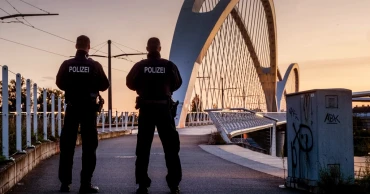
Germany extends border controls for six more months
Germany's outgoing government on Wednesday extended by six months the border checks it imposed on all its frontiers last fall as it attempts to cut the number of migrants arriving in the country, an issue that has become a top issue in the campaign for the Feb. 23 election.
Chancellor Olaf Scholz said his government notified the European Union's executive commission of the extension to Sept. 15. “With the border controls, we are pushing irregular migration down successfully. The figures prove this," he said.
Germany turned back 47,000 people back at its borders, seeing one-third fewer asylum requests year-on-year and arresting 1,900 smugglers.
The country was already controlling its borders with Poland, the Czech Republic, Austria and Switzerland before it extended the checks last September to its remaining borders, with France, Luxembourg, the Netherlands, Belgium and Denmark.
Ukraine ‘may be Russian someday’, says Trump
The EU has a visa-free travel area known as Schengen that allows citizens of most member states to travel easily across borders for work and pleasure. Switzerland also belongs to Schengen although it is not an EU member.
According to the EU, member states are allowed can temporarily reintroduce border controls in cases of a serious threat, like internal security. But it also says border controls should be applied as a last resort in exceptional situations, and must be limited in time.
German opposition leader Friedrich Merz, the front-runner in the election, wants to go further than the current government. He has said that if he becomes chancellor, he would order the Interior Ministry on his first day in office to control all of Germany’s borders permanently and “turn back all attempts at illegal entry without exception.” He argued that EU rules are “recognizably dysfunctional” and Germany must exert a right to the primacy of national law.
Scholz argues that Merz's proposal is incompatible with German and EU law and would lead to the EU’s most populous member undermining the bloc.
1 year ago
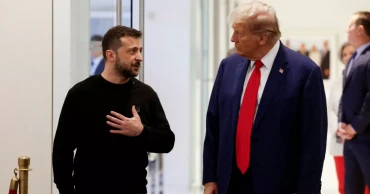
Ukraine ‘may be Russian someday’, says Trump
US President Donald Trump has suggested that Ukraine may come under Russian control “someday” as he pushed for the war-ravaged country to offer its natural resources in exchange for continued US assistance.
Speaking in an interview with Fox News on Monday, Trump claimed that he had proposed Kyiv hand over “$500 billion worth of rare earth” as a condition for US support. He further asserted that Ukrainian officials had “essentially agreed” to the proposal.
“Ukraine has tremendously valuable land in terms of rare earth, in terms of oil and gas, in terms of other things,” Trump said. “I want to have our money secured because we’re spending hundreds of billions of dollars.”
Trump’s remarks have sparked fresh concerns over the future of US aid to Ukraine, especially as his return to the political arena casts uncertainty over billions of dollars in future military and economic assistance to the embattled nation.
“They may make a deal, they may not make a deal. They may be Russian someday, or they may not be Russian someday. But we are going to have all this money in there and I say I want it back,” Trump added.
Russian drone and missile attacks kill 8 in Ukraine
Diplomatic Developments
Trump’s comments come just ahead of a planned meeting between Ohio Senator J.D. Vance and Ukrainian President Volodymyr Zelensky. The meeting, reportedly scheduled to take place later this week, is expected to touch on US support for Ukraine and potential paths to ending the ongoing war with Russia.
Meanwhile, Trump’s envoy to Ukraine and Russia, retired General Keith Kellogg, has announced that he will discuss US diplomatic efforts at the upcoming Munich Security Conference, set for February 14-16. Following the conference, Kellogg is expected to visit Kyiv on February 20 for what would be his first trip to Ukraine in this capacity, according to Ukrainian state media.
Hungary wants the EU to intervene in gas dispute with Ukraine
Ukrainian Response
There has been no official response from Kyiv regarding Trump’s claims that they had “essentially agreed” to a resource-sharing arrangement. However, Ukrainian leaders have previously maintained that international support should be based on shared democratic values and security interests rather than economic transactions.
As Trump continues to voice skepticism over continued US aid, analysts warn that his stance could further complicate Ukraine’s ability to secure long-term military and economic support from Western allies.
Starmer pledges 100-year partnership with Ukraine
International Reactions
Trump’s latest remarks are likely to fuel debates in Washington and among NATO allies over the US’s role in the conflict. While some of his supporters argue for a more transactional approach to foreign aid, critics contend that his statements could embolden Russian President Vladimir Putin and weaken Ukraine’s negotiating position.
With Kellogg’s upcoming visits to Munich and Kyiv, further clarity may emerge on the direction of US policy toward Ukraine, particularly if Trump secures a stronger foothold in shaping future diplomatic efforts.
Source: Revised version of a CNN story
1 year ago
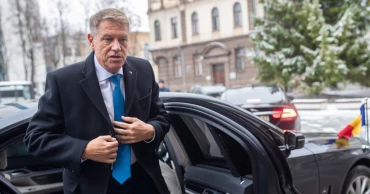
Romanian President Iohannis resigns under pressure
Romanian President Klaus Iohannis announced his resignation on Monday, succumbing to increasing pressure from populist opposition groups, just two months after a top court annulled a presidential election in the European Union nation, reports AP.
"I am stepping down as president of Romania to spare the country from this crisis," Iohannis stated in an emotional speech, confirming he would leave office on February 12.
Iohannis, 65, had been president since 2014, serving the maximum two five-year terms. However, his tenure was extended in December after the Constitutional Court invalidated the presidential election two days before the December 8 runoff. This decision followed an unexpected victory in the first round by far-right populist Calin Georgescu, which prompted allegations of Russian interference and electoral fraud.
Several opposition parties, including the far-right Alliance for the Unity of Romanians (AUR), the nationalist S.O.S party, the Party of Young People, and some members of the reformist Save Romania Union (USR) party, filed a motion in Parliament seeking Iohannis' removal. It was expected that some members of the governing coalition would also support the motion.
“This is a futile effort because, in any case, I will depart office in a few months after the new president is elected,” Iohannis said. “It is an unjustified move as I have never—repeat, never—violated the constitution. And it is a harmful effort because... everyone loses, and no one wins.”
He warned that the consequences of his ouster would be “long-lasting and highly detrimental” to Romania, an EU member since 2007 and a NATO member since 2004. "None of our partners will understand why Romania is removing its president when the process for electing a new one is already underway," he said.
New dates have been set for the presidential election, with the first round on May 4. If no candidate secures more than 50% of the vote, a second round will be held two weeks later, on May 18. It remains uncertain whether Georgescu will be eligible to participate in the new election.
Following Iohannis' resignation announcement, clashes erupted between Georgescu’s supporters and police outside the government building in Bucharest.
Elena Lasconi from the USR, who was set to face Georgescu in the runoff, expressed in a statement that Iohannis' resignation was "far too late to be seen as honorable."
"I am glad that the pressure USR exerted in Parliament stirred Iohannis from his inaction, and we will not stop here," she said. "We must realign state institutions to serve the citizens, not temporary leaders holding power."
She added, "We need truth, justice, and a true leader who will keep us firmly aligned with the West!"
AUR leader George Simion posted on X, declaring, "The usurper is finally gone," and added that “if he had not resigned, he would have been impeached by the Romanian Parliament and thrown out.”
1 year ago
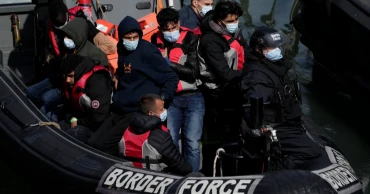
UK cracks down on illegal work to appear tough on immigration
On Monday, the British government highlighted its success in conducting raids on businesses employing unauthorised workers and deporting thousands of migrants without legal status in the UK, reports AP.
Described as a “blitz on illegal working,” the initiative is part of the centre-left Labour government’s commitment to reducing immigration—a key concern for many voters—and countering the rising popularity of the hard-right party, Reform UK.
Two years on, survivors of Turkish earthquake still struggle with loss and hardship
However, for migrant advocacy groups and some Labour Party members, the images evoke uncomfortable memories of a previous Conservative government’s pledge to create a “hostile environment” for illegal migration. This policy resulted in thousands of long-term legal residents being denied housing, employment, or medical care due to difficulties in proving their status. Many were detained or deported to countries they had not visited in decades.
The government reported on Monday that immigration enforcement teams have conducted over 5,000 raids since Labour took office in July, targeting businesses such as nail salons, convenience stores, vape shops, restaurants, and car washes. Nearly 4,000 arrests have been made—figures that are notably higher than those recorded under the previous Conservative administration.
Additionally, Britain has deported over 16,000 people within the same timeframe. Later on Monday, the government plans to release video footage of migrants being deported, a public relations move that has drawn criticism for being crude and insensitive.
Home Office Minister Angela Eagle defended the government’s firm stance, stating:
“We must have a system where rules are respected and enforced,” she told the BBC. “It is important to demonstrate what we are doing and to send a clear message to those who may have been misled about what awaits them in the UK if they attempt to enter illegally.”
New tough immigration bill set to pass on Monday
The government argues that the perception of easy access to employment in Britain acts as a “dangerous pull factor” for migrants attempting to cross the English Channel in small boats. Both UK and French authorities have struggled for years to prevent these perilous crossings, which brought over 38,000 people to Britain in 2024. More than 70 individuals lost their lives attempting the journey.
Prime Minister Keir Starmer has equated the criminal networks facilitating these crossings with terrorist organisations, asserting they pose a global security threat. The Border Security, Asylum and Immigration Bill, which faces a crucial parliamentary vote on Monday, introduces new powers, including the ability to confiscate suspected traffickers' phones before their arrest.
The bill will also formally repeal the Safety of Rwanda Act, which supported the previous Conservative government’s contentious plan to send some asylum seekers arriving by boat to Rwanda. Starmer dismissed the scheme as an expensive gimmick and scrapped it shortly after taking office.
Given Labour’s large parliamentary majority, the new immigration bill is almost certain to pass. However, some remain uneasy. Human rights group Liberty has warned that the bill establishes a “dangerous precedent” by incorporating counterterrorism-style powers for offences unrelated to terrorism.
Meanwhile, the Conservatives have criticised the bill as “weak” and unlikely to deter boat crossings.
Support for anti-immigrant Reform UK surges
Although Labour secured a landslide victory just seven months ago, the government’s approval ratings have declined. Polls indicate growing support for Reform UK, the populist anti-immigration party led by Nigel Farage. Despite holding only five seats in the 650-member House of Commons, Reform UK is now polling on par with both Labour and the main opposition Conservatives, even though the next general election is likely four years away.
Reform UK’s rise has prompted both Labour and the Conservatives to adopt tougher rhetoric on immigration.
However, Rob Ford, a political science professor at the University of Manchester, cautioned that trying to win back Reform UK voters with strong rhetoric on Farage’s key issues is a risky strategy with limited chances of success.
3 Baltic states leave Soviet grid, join European energy network
“Labour won last summer with a ruthless focus on uniting a broad coalition around growth, public services, and the cost of living,” he wrote in The Observer. “Shifting the focus to divisive issues that play to Farage’s strengths is not a wise strategy.”
1 year ago
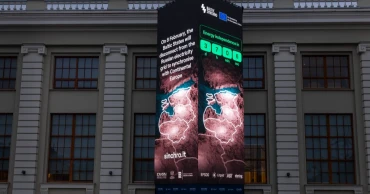
3 Baltic states leave Soviet grid, join European energy network
The Baltic nations of Estonia, Latvia, and Lithuania officially severed their electricity links with Russia on Saturday morning, as officials deactivated the Soviet-era grid’s transmission lines in preparation for integration with the European energy network on Sunday, reports AP
This marked the end of the Baltics' last connection to oil- and gas-rich Russia, more than thirty years after the Soviet Union's collapse. The transition held profound geopolitical and symbolic significance for both the Baltic states and the rest of Europe.
Estonian keen to strengthen ICT collaboration with Bangladesh
“The Baltic energy system is finally in our hands; we are in full control,” Lithuania’s Energy Minister, Žygimantas Vaičiūnas, told reporters.
On Saturday, the final transmission lines linking the Baltic states with Russia, Belarus, and the Russian exclave of Kaliningrad—situated between EU members Poland and Lithuania and the Baltic Sea—were switched off one by one. Lithuania led the process, with a specially designed 9-metre (about 29-foot) tall countdown clock in downtown Vilnius marking the final seconds. Latvia followed a few minutes later, with Estonia completing the disconnection.
For the first 24 hours after detaching from the Soviet-era grid, the Baltic Power System will function independently. If all goes according to plan, the system will connect with European energy networks on Sunday afternoon via multiple links to Finland, Sweden, and Poland.
A ceremony in Vilnius on Sunday evening will be attended by European Commission President Ursula von der Leyen, the presidents of Poland and the Baltic states, and other dignitaries.
The Baltic countries, all NATO members, have had tense relations with Russia since declaring independence from the USSR in 1990. These ties deteriorated further following Russia’s full-scale invasion of Ukraine in 2022.
In Baltics, Poland, grassroots groups strive to help Ukraine
Over the past few years, sixteen power lines that once linked the Baltic states with Russia and Belarus have been dismantled, as a new grid connecting them with the European Union was established, including underwater cables across the Baltic Sea.
“This is a physical disconnection from the last remaining element of our dependence on the Russian and Belarusian energy system,” Lithuanian President Gitanas Nausėda told The Associated Press in a recent interview.
The three Baltic states, which share a combined 1,633-kilometre (1,015-mile) border with Russia and Belarus, informed Moscow and Minsk of their disconnection plans in 2024 to mitigate any hostile reactions.
“We have a protocol with the Russians detailing how everything should be disconnected,” Rokas Masiulis, CEO of Litgrid, stated on Saturday.
Leaders of all three countries reassured their citizens that the transition would proceed smoothly, but precautionary measures were taken to counter potential provocations.
In Latvia, the National Armed Forces and the National Guard were placed on heightened alert, though no incidents were reported early Saturday.
Lithuanian, Latvian presidents discuss maritime border treaty, energy issues
Meanwhile, Kaliningrad, which has no direct land connection to mainland Russia, already relies on its own power generation, according to Litgrid.
1 year ago
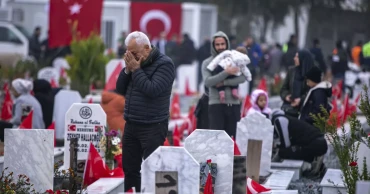
Two years on, survivors of Turkish earthquake still struggle with loss and hardship
Two years have passed since a devastating earthquake shattered Turkey’s southern region, but for Omer Aydin and many other of its survivors the memory and the suffering remain fresh.
While struggling with a third winter in the cold inside a shipping container-like temporary housing unit, the single father of three is grappling with a cost-of-living crisis that is affecting the whole country as well as still trying to heal the scars from the disaster.
The magnitude 7.8 earthquake on Feb. 6, 2023, and a second powerful tremor that came hours later, destroyed or damaged hundreds of thousands of buildings in 11 southern and southeastern Turkish provinces, leaving more than 53,000 people dead. Another 6,000 people were killed in the northern parts of neighboring Syria.
It was one of Turkey’s worst disasters.
Aydin, a 51-year-old electrician who survived along with his elderly mother and his children, said sounds from the earthquake still echo in his mind.
“The sounds of the homes crashing down, the sounds of the cries for help ... I still shake when they come to my mind,” Aydin told The Associated Press over the phone.
The house Aydin shared with his mother and children in the Mediterranean port city of Iskenderun — in the worst-hit province of Hatay — split into two, he said. The family were lucky to get out without injuries, he said, but ended up spending four days in the cold inside a makeshift tent he constructed with plastic sheets and pieces of wood.
Aydin now lives in a container home at a temporary housing settlement called a “container city” in Iskenderun but is struggling to make ends meet on a small state pension that he says barely covers anything.
Magnitude 6.4 Earthquake in Taiwan Injures 27
He occasionally finds work as an electrician but jobs in Iskenderun are scarce, he says.
He is the sole provider for his family. His oldest son, who is 26, is receiving cancer treatment and needs to travel regularly to a hospital in the city of Adana, some 135 kilometers (84 miles) away, adding to the financial burden. His youngest child, a daughter, is at school while his middle son is also unemployed while waiting to start his military service.
Life in the container city is a daily struggle, and sanitary conditions can be poor, he says.
His family will qualify to receive one of the hundreds of thousands of government houses that are under construction, but Aydin is worried about furnishing it or paying the bills once they move in.
“I don’t even own a pin, what will I do once I move in?” he said.
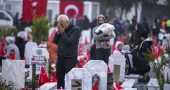
On Thursday, special prayers seeking blessings for the dead were recited from mosques, the state-run Anadolu Agency reported. Survivors visited cemeteries to pay respects to their loved ones, leaving carnations on their graves and offering their condolences to fellow visitors.
Mourners held a minute of silence to remember the dead at 04:17 a.m. — the time the earthquake struck. Shouts of “can anyone hear me?” marked the ceremonies, echoing the cries of those who were trapped under the rubble two years ago.
In Kahramanmaras, the epicenter of the earthquake, mourners gathered at the site of a large residential complex where several buildings were destroyed, leaving 1,400 people dead.
Small scuffles broke out between police and mourners in Antakya, the provincial capital of Hatay, after officers set up barriers to prevent people marching to a main square. The barriers were eventually lifted, allowing mourners to place flowers on the surface of the Orontes River.
Attending a commemoration event in the city of Adiyaman, where more than 8,000 people died, Turkish President Recep Tayyip Erdogan said the government was aiming to deliver a total of 453,000 homes, shops and other work spaces by the end of 2025.
6.2 earthquake jolts southwestern Mexico
“Not one single citizen will be left without a home or without claiming their workplaces,” Erdogan said. He later presided over an event where some families were handed keys to their new homes.
Justice Minister Yilmaz Tunc said 118 people have been sentenced so far to various prison terms for negligence, while more than 1,300 prosecution cases, filed for alleged negligence or violation of zoning laws, were in progress.
Jessie Thomson, the head of the International Federation of Red Cross and Red Crescent Societies in Turkey, said nearly half a million people remain in temporary container cities two years after the earthquake struck.
“Hundreds of thousands continue to face immense challenges securing sustainable incomes, with depression and despair rising,” Thomson said. “The road to recovery is long and arduous, demanding continued support and solidarity.”
Aydin told the AP that when he rests his head on a pillow, he prays that he won’t wake up to face another day.
“I swear, every day when I go to bed and put my head on the pillow, I pray to God to not wake me up in the morning,” he said.
Songul Erol, a 29-year-old mother of two girls aged 7 and 3, is slowly rebuilding her life in Samandag, another town in Hatay province, after spending months in tents and a container home.
With the help of funds provided by the Turkish Red Crescent to small businesses, she was able to rent a shop and reopen her business selling bait, nets, knives or other gear used by fishermen and hunters. She has turned a room at the back of the shop into a living space for herself and her daughters, whose severe allergies were exacerbated by the conditions in the tents and the container home.
Earthquake kills 126 people in China near Mount Everest
Haunted by memory of buildings that tumbled in Samandag, she told the AP in a video call that she has only one dream: “That is to move to a one-story house that is not surrounded by apartment buildings.”
1 year ago