europe
German leader faces tough road ahead after election defeats, no sign of leadership challenge
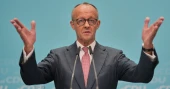
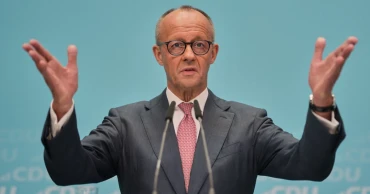
German Chancellor Friedrich Merz reaffirmed Monday that he would remain in office after his party suffered two more regional election defeats and, for the first time, lost its representation in a state legislature, in a humiliating setback that could make it harder for him to pursue his reform agenda.
Shortly after polls closed Sunday, the unpopular Merz said he intended to remain leader of both Germany and his center-right party and pledged to continue pushing reforms aimed at strengthening Europe's largest economy.
But final results released hours later highlighted the scale of what Merz himself described as a "disaster" in Mecklenburg-Western Pomerania, an eastern state on the Baltic Sea coast.
His center-right Christian Democratic Union (CDU) received just under the 5% threshold required to retain seats in the state parliament, marking the first time this has happened in the 77-year history of modern Germany's federal republic. The CDU lost more than half of its support, while the far-right Alternative for Germany (AfD) emerged as the strongest party.
In Sunday's other election, the CDU fell to second place in Berlin, behind the hard-left Left Party, which is in a strong position to lead the next city government. However, depending on the outcome of coalition negotiations, Merz's party could still retain control of city hall.
Despite days of speculation over Merz's political future, there were no prominent public calls for his resignation Monday and no indication of a leadership challenge.
Merz said no one had raised any "personnel questions" at party leadership meetings on Sunday or Monday.
"It is the historic task of the (governing) coalition here in Berlin and the political center as a whole to make our country fit for the coming years," Merz said.
"Extremists suggest that there are easy solutions. But everyone who has ever governed knows there are no easy solutions," he said.
At the same time, Merz acknowledged that the CDU needs to strengthen its political profile.
He said the party "no longer has satisfactory answers to too many questions, and we will and must change that."
Far-right party makes further gains
Neither of the two states that held elections Sunday is considered a major political heavyweight.
The CDU's victory in Berlin in 2023 was its only election win there in the past 25 years, while the capital has traditionally leaned to the left. The party was already relatively weak in Mecklenburg-Western Pomerania.
However, the latest results add to the political difficulties facing Merz following the CDU's stinging defeat by the far-right, anti-immigration AfD two weeks ago in Saxony-Anhalt, another region of the former communist east.
That defeat weakened Merz's authority and triggered speculation that he could eventually be replaced.
Although the AfD emerged as the strongest party in Mecklenburg-Western Pomerania, the center-left Social Democrats, the junior partner in Merz's national governing coalition, finished relatively close behind.
Their campaign focused heavily on state Governor Manuela Schwesig as a defender against the far right. That polarization helped squeeze other mainstream parties, including the CDU.
A left-leaning three-party coalition led by Schwesig would hold a majority in the new state legislature.
Dispute over Germany's reform plans
Schwesig and other figures in the governing parties have questioned parts of the federal government's reform agenda, which is intended to address Germany's chronically sluggish economy.
The proposed reforms include potentially painful changes to the pension and healthcare systems.
One particularly controversial proposal would scrap a rule allowing people who have paid pension contributions for 45 years to retire early without suffering a financial penalty. The proposal has faced strong criticism.
The Social Democrats' national leaders said Monday that they remain committed to the coalition, but made clear that they want at least some changes to the government's plans.
Vice Chancellor Lars Klingbeil, who is also finance minister, said that "saying we will ignore what voters told us in three state elections won't work."
"We need reforms, but these reforms must be fair and they need support in the population," he said.
The party's other co-leader, Labor Minister Bärbel Bas, said the reform plans need a "reality check" as well as a "fairness check."
However, she said she was optimistic that solutions could be found on pension reform, which is the most controversial of the government's plans.
"There would be nothing more lethal than letting this coalition break apart over some technical question," Bas said.
Merz said he would not speculate about "where we must make corrections."
There are no further state elections scheduled for the remainder of this year. Five state elections are due to be held next year, including three in April.
One of them will take place in North Rhine-Westphalia, Germany's most populous state, which is currently led by prominent CDU figure Hendrik Wüst, who is often mentioned as a possible successor to Merz.
None of the five elections next year will be held in the east, where the AfD has its strongest support.
Looking ahead, much could depend on the CDU's influential regional leaders. But there was no indication Monday that they or others were preparing a challenge to Merz.
"You get the feeling that the stronger figures are trying to stay away from Berlin at the moment," Thomas Poguntke, a longtime political science professor at Heinrich Heine University in Duesseldorf, told Phoenix television.
"Swapping out a leadership figure wouldn't achieve so terribly much now," he said, while noting that the chancellor had made avoidable mistakes in the past and that "the government's handicraft simply must improve."
1 month ago
Russia wraps up wartime parliamentary election with Kremlin dominance assured
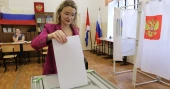
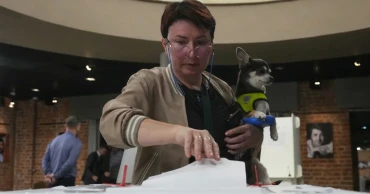
Russia's first wartime parliamentary election was due to conclude Sunday, with the absence of genuine opposition to President Vladimir Putin's policies making it all but certain that the Kremlin will retain its dominance.
The final day of voting came as Ukrainian forces launched more than 1,000 drones at Russia overnight, including hundreds targeting Moscow.
The three-day election began Friday, with authorities encouraging online voting in an effort to boost turnout among the country's 111 million eligible voters.
For the first time, the election included residents of four Ukrainian regions that Moscow illegally annexed after the war began but does not fully control. Voting is also taking place in Crimea, the Black Sea peninsula that Russia illegally annexed in 2014.
Authorities in Kyiv condemned the voting in the Russian-held areas as illegal and urged foreign governments not to recognize the results. The European Union on Friday described the move as a "blatant violation of international law."
Kremlin expected to retain control
The Kremlin wants the parliamentary election — the first since Russia launched its full-scale invasion of Ukraine in 2022 — to demonstrate popular support for the war and lend legitimacy to its actions. It has sought to minimize political risks by suppressing dissent.
A massive state media campaign and tight control over the election, combined with the absence of genuine opposition, are expected to help the Kremlin maintain its grip on Russian politics amid rising economic costs and increasingly frequent Ukrainian drone attacks deep inside Russia.
Voters cast two separate ballots, with half of the State Duma's 450 seats filled through party-list voting. The remaining seats are contested in single-member constituencies, where voters choose individual candidates.
Preliminary results are expected within hours after voting ends in western Russia.
United Russia, the main Kremlin-backed party, is widely expected to retain its overwhelming control of the lower house, the State Duma. Several smaller parties forming the "systemic opposition," which generally vote in line with Putin's views on key issues, are also expected to retain their presence.
Opposition sidelined as observers report violations
The liberal Yabloko party, the only registered political entity to openly criticize the war, was removed from the party-list ballot by Russia's Supreme Court last month and has only a few dozen candidates contesting single-member constituencies.
Several anti-war politicians were also imprisoned or forced to flee the country ahead of the campaign.
Yabloko and the Communist Party, which has criticized some aspects of government policy while avoiding direct criticism of Putin, said many of their election observers were denied access to polling stations.
Russia did not invite observers from the Organization for Security and Cooperation in Europe (OSCE), while the Russian Foreign Ministry accused the body of applying "double standards" in its criticism of Russia.
OSCE Parliamentary Assembly President Pere Joan Pons said the decision breached Russia's commitments as a member state of the organization.
Yabloko said one of its observers lost consciousness while being detained by police at a polling station in St. Petersburg on Saturday after election officials accused him of trying to "disrupt the elections" and called the police.
The parties reported several violations, including sealed ballot boxes being opened, polling station doors not being secured overnight and officials refusing to issue paper ballots. The allegations could not be independently verified.
At a polling station in the Russian-held part of the Donetsk region, voters cast their ballots while an armed Russian soldier stood nearby and watched.
Electronic voting problems reported in Moscow
Ella Pamfilova, head of Russia's Central Election Commission, said Sunday that Moscow's electronic voting system had been targeted by cyberattacks.
SotaVision, an independent Russian news outlet, reported Sunday that voters had complained of glitches in electronic registration systems at polling stations across Moscow.
The outlet said some voters were not issued paper ballots and were instead instructed to vote through electronic terminals.
Leonid Volkov, a close associate of the late Russian opposition leader Alexei Navalny, suggested that the reported failure of the system used to issue paper ballots in Moscow may have been deliberate to push voters toward electronic voting.
"Demand a paper ballot!" he wrote on X on Sunday.
Yabloko leader Nikolai Rybakov, who had urged supporters to spoil their party-list ballots, cast his vote in St. Petersburg on Sunday. His ballot was covered in bright green writing saying "For freedom," "For peace" and "Yabloko."
Russian opposition abroad stages protests
Russia's exiled opposition, including Yulia Navalnaya, widow of late opposition leader Alexei Navalny, called on anti-war Russians to cast their ballots at noon Sunday.
Thousands of Russians living in Armenia took part in the voting. Russian citizens lined up outside the Russian Embassy in Yerevan on Sunday to join the "Noon for a Peaceful Russia" anti-war demonstration. Some held posters criticizing the war and Putin.
In Germany, Russian voters cast their ballots at the Russian Embassy in Berlin, while Andrei Pivovarov, a Russian dissident and former head of the Open Russia group, addressed protesters gathered outside the embassy.
Ukraine launches more than 1,000 drones at Russia
The final day of the election unfolded against the backdrop of a major wave of Ukrainian drone attacks.
Russia's Defense Ministry said Sunday that its forces had shot down a total of 1,110 Ukrainian drones across Russia, as well as over Crimea and the Black Sea.
Two people were killed and 20 others wounded across the wider Moscow region, local Gov. Andrei Vorobyov said.
The election follows a summer of Ukrainian long-range drone strikes targeting oil refineries, triggering a widespread fuel crisis.
Warehouses belonging to online retailers Wildberries and Ozon were also attacked. The strikes have added to Russia's economic difficulties and brought the war closer to millions of people.
1 month ago
Russians begin 3-day voting in parliamentary election set to cement Kremlin power
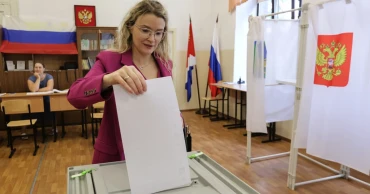
Russians began three days of voting Friday in the country’s first parliamentary election since the start of the full-scale war in Ukraine, with virtually no opposition and the Kremlin expected to retain its political dominance.
The authorities have spread voting over the weekend in an effort to increase turnout among the 111 million eligible voters and have also allowed electronic voting. Polling began Friday and will continue until Sunday.
The Kremlin seeks to use the parliamentary election to demonstrate public support for the war and lend legitimacy to its actions. At the same time, it has moved to eliminate political risks by suppressing even limited signs of dissent.
“Your choice and resolve will once again demonstrate that millions of people stand behind our fighters, that we are a united people, bound by shared values, historical memory, and love for the Motherland,” President Vladimir Putin told the nation ahead of the vote.
The Kremlin’s main political party, United Russia, is virtually certain to maintain its dominant position in the lower house, the State Duma. Several smaller parties considered part of the “systemic opposition,” which generally support the government on key issues, are also expected to retain their seats.
Voters are casting two separate ballots. Half of the Duma’s 450 seats will be filled through party-list voting, while the remaining seats are being contested in single-member constituencies, where voters choose individual candidates.
Russia silences anti-war voices
The liberal Yabloko party, the only registered political group that openly criticized the war, was removed from the ballot by Russia’s Supreme Court last month. It has only a few dozen candidates running in single-member constituencies.
Several anti-war politicians have also been jailed or forced to leave the country ahead of the campaign.
The election comes after a summer of Ukrainian long-range drone strikes on Russian oil refineries that caused a widespread fuel crisis. Warehouses belonging to online retailers Wildberries and Ozon were also attacked.
The damage has deepened economic problems in Russia and brought the effects of the war closer to millions of people.
For the first time, the parliamentary election includes residents of four Ukrainian regions that Moscow annexed after the war began. Voting is also taking place in Crimea, the Black Sea peninsula that Russia annexed in 2014.
Authorities in Kyiv condemned the voting in Russian-controlled areas as illegal and called on foreign governments and international organizations not to recognize the election. They also warned Ukrainians that participating in organizing the voting could lead to criminal liability.
1 month ago
Swedish PM Kristersson to resign as opposition wins narrow majority
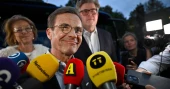
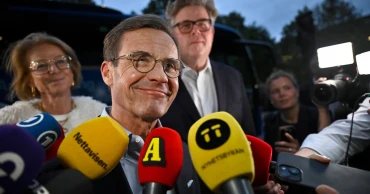
Sweden’s left-leaning opposition has secured a narrow majority in the country’s parliament, prompting center-right Prime Minister Ulf Kristersson to announce his resignation.
According to the Swedish Election Authority, the four opposition parties won 176 of the 349 seats in the Riksdag, while the four parties that make up or support the outgoing conservative-led government secured 173 seats in Sunday’s election.
Following the announcement of the final results, Kristersson said in a letter to the parliament’s speaker, posted on X, that he would step down as head of government.
The center-left Social Democrats, led by former Prime Minister Magdalena Andersson, emerged as the largest single party with 99 seats, despite losing eight seats compared with the 2022 election.
Andersson now faces the challenge of forming a government amid differences within the opposition bloc.
The narrow opposition lead was confirmed after the counting of early votes that had not reached polling stations by election day, including ballots cast from abroad.
Kristersson has governed through a three-party center-right coalition that relied on support from the Sweden Democrats, an anti-immigration party with far-right roots that has moved closer to the political mainstream.
Before the election, Kristersson had indicated that the Sweden Democrats could be offered Cabinet positions if the governing coalition retained power.
However, the Sweden Democrats suffered a setback, finishing third behind Kristersson’s Moderates with 62 seats, 11 fewer than they won in the 2022 election.
Andersson will have to overcome differences among the opposition parties to form a government. The Center Party, which aligned with the left because it does not want to govern with the Sweden Democrats, has also ruled out joining a government with the Left Party, which occupies the opposite end of the political spectrum.
Any attempt to form a government involving parties from both sides of Sweden’s traditional political divide would also face significant challenges.
1 month ago
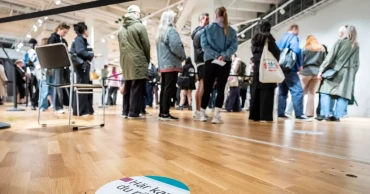
Swedes vote as conservative government, far-right party vie for power
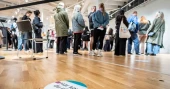
Swedish voters are heading to the polls Sunday in a parliamentary election that will decide whether Prime Minister Ulf Kristersson secures a second term and whether the anti-immigration Sweden Democrats enter government for the first time, or the center-left returns to power.
Kristersson is seeking another four-year term leading the European Union's newest NATO member, while former Prime Minister Magdalena Andersson is seeking to bring the center-left Social Democrats back to power.
The campaign has largely focused on which parties can form the next government rather than policy issues such as healthcare, with experts describing it as fragmented and lacking coherence.
“Crime has come down, inflation has come down. So these topics are not really what people discuss,” said Zeth Isaksson, a sociologist specializing in electoral behavior at Stockholm University and a political scientist at the European University Institute in Florence, Italy.
“People discuss who is going to be in government, and that’s what the election is about,” he said.
Kristersson has governed since 2022 through a three-party center-right coalition that depends on support from the Sweden Democrats to maintain a parliamentary majority.
The Sweden Democrats, an anti-immigration party with far-right roots that has moved closer to the political mainstream, are expected to receive Cabinet positions if the right retains power.
Andersson, leader of the Social Democrats, previously served as prime minister from 2021 until her party lost power in the 2022 election. The Social Democrats have historically dominated Swedish governments, leading most administrations since World War II.
Swedish politics is broadly divided into two four-party blocs, one on the right and another on the left. The key question is therefore which bloc can secure enough support to form a government. Parties must win at least 4% of the vote to gain seats in parliament.
The Sweden Democrats won 20.5% of the vote in 2022, making them the largest party on the right.
Kristersson announced in April that his Moderate Party would allow the Sweden Democrats to join the government if the right wins a majority. He also said he would remain prime minister even if the Sweden Democrats emerge as the strongest party in the bloc.
The Sweden Democrats were founded in the 1980s by members of right-wing extremist groups, including neo-Nazis. Under leader Jimmie Åkesson, who has headed the party since 2005, it has moderated its rhetoric, expelled openly racist members and grown from a marginal political force.
The party's potential role in government has gained added attention amid the rise of populist and far-right movements across Europe, including the far-right Alternative for Germany's first-place finish in a regional election on Sept. 6.
More than 8 million people in Sweden, which has a population of about 10.6 million, are eligible to vote for the 349-member Riksdag, the country's parliament that will determine the next prime minister.
The Swedish Election Authority said the first preliminary results are expected around 9 p.m. local time Sunday, or 1900 GMT.
1 month ago
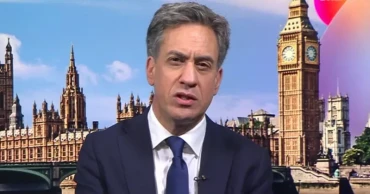
UK acted before it was ‘too late’ for two-state solution: Miliband
British Foreign Secretary Ed Miliband has defended the UK government’s decision to impose sanctions on Israeli settlements in the occupied West Bank, saying Britain had to act before it became too late to preserve the prospect of a two-state solution.
Speaking to BBC Breakfast, Miliband said he did not believe British Jews were at greater risk following the sanctions and stressed that combating antisemitism was a responsibility shared by the government and wider society.
He said there were differing views within the British Jewish community, with some groups supporting the measures.
Miliband said he had consulted representatives of British Jewish organisations as well as Palestinian groups before the decision. Palestinian representatives, he said, expressed concern that the international community was standing by as the prospect of Palestinian statehood was being undermined.
He said the government acted out of “deep concern” that further delay could make a two-state solution impossible.
In the House of Commons on Tuesday, Miliband described himself as a “proud British Jew” and recalled having close family ties to Israel.
He said achieving a two-state solution remained the “North Star” of the government’s policy, but warned that the expansion of illegal settlements in the West Bank was making that prospect increasingly unviable.
Miliband said the UK government agreed with the United Nations that Palestinians were facing ethnic cleansing in parts of the West Bank carried out by settler groups, accusing Israel of failing to prevent it.
Under the measures announced by the government, Britain will ban imports of goods from Israeli settlements in the occupied West Bank and impose sanctions on companies and individuals involved in settlement expansion through construction, infrastructure, financing and real estate services.
The UK will also prohibit advertising promoting illegal Israeli settlements and restrict arms sales and other exports that materially contribute to Israel’s occupation of Palestinian territories.
Miliband told lawmakers that those facilitating illegal settlement expansion would face UK sanctions.
He said Britain wanted strong relations with Israel but maintained that such relations must respect international law and Israel’s recognised borders.
Miliband rejected suggestions that the sanctions could encourage Israeli Prime Minister Benjamin Netanyahu to take a harder line or further undermine the two-state solution.
He also warned against holding British Jews responsible for actions of the Israeli government, saying such treatment would itself constitute antisemitism.
Miliband said he was proud of his Jewish identity and remained committed to combating antisemitism while supporting the rights, dignity and rule of law for all communities.
Source: BBC
1 month ago
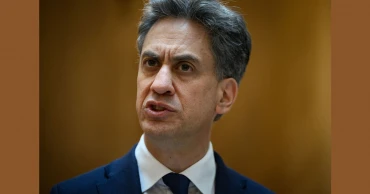
UK bans trade with Israeli settlements, accuses settlers of ethnic cleansing
Britain on Tuesday announced a ban on trade in goods from Israeli settlements in the occupied West Bank, accusing settler groups of carrying out “ethnic cleansing” against Palestinians.
France and Canada also announced similar measures, saying expanding settlements and rising settler violence could undermine prospects for establishing a Palestinian state.
Israel condemned the move and said it would close the British consulate in Jerusalem.
British Foreign Secretary Ed Miliband said the UK would prohibit imports of goods produced in the settlements and prevent companies from providing services there, including financing, construction, infrastructure, real estate and advertising.
He said the British government did not want to support the occupation by allowing settlement products to be sold in British shops and supermarkets.
In a joint statement, British Prime Minister Andy Burnham, French President Emmanuel Macron and Canadian Prime Minister Mark Carney said settlement expansion and settler violence posed an urgent threat to the two-state solution.
The economic impact of the ban is expected to be limited because Israeli settlements produce relatively small quantities of mainly agricultural goods. However, the decision represents a significant political signal from countries that have traditionally maintained close ties with Israel.
Miliband said Britain would not accept actions that undermine the possibility of a two-state solution.
Settlements and settler violence
Settlement construction in the West Bank has expanded significantly under Israeli Prime Minister Benjamin Netanyahu’s ultranationalist government.
Israel captured the West Bank in the 1967 Middle East war. The international community overwhelmingly considers Israeli settlements there illegal.
Miliband said Britain now considered Israel’s occupation of the West Bank, as well as the settlements themselves, illegal.
He accused settler groups of displacing Palestinian families, demolishing homes and destroying roads and other infrastructure.
The trade ban is expected to take effect within six to nine months. Miliband said Denmark, Finland, Iceland, Poland, Portugal and Sweden had pledged support for further measures.
He also said the UK had tightened restrictions on weapons sales to Israel for use in Gaza to include arms that materially contribute to the occupation of Palestinian territories.
Britain’s recognition of Palestine
The move follows Britain’s recognition of Palestinian statehood last year as part of efforts to revive the two-state solution.
The decision is likely to receive support from Labour lawmakers and voters who have called for stronger measures against Israel and greater support for Palestinians.
However, some British officials and Jewish leaders warned that the measures could deepen divisions and fuel antisemitism.
Israeli Foreign Minister Gideon Sa’ar condemned Britain’s decision and said Israel would remove UK representatives from a joint military center monitoring the Gaza ceasefire and end British training for Palestinian Authority security forces in the West Bank.
Israel also barred a number of British lawmakers and other UK citizens from entering the country, accusing them of involvement in antisemitic and anti-Israel activities.
Israeli President Isaac Herzog called the British move a serious mistake, while US Ambassador to Israel Mike Huckabee criticized the decision as discrimination against Jews and warned that Washington could respond.
Miliband, who is Jewish and has expressed support for Israel, said the British government’s disagreement was with the conduct of the Israeli government, not the Israeli people.
1 month ago
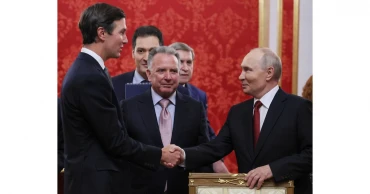
Putin meets US envoys for renewed Ukraine peace talks
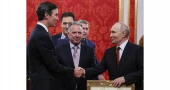
Russian President Vladimir Putin held more than three hours of talks with US envoys Steve Witkoff and Jared Kushner at the Kremlin on Saturday as Washington renewed efforts to broker an end to the war in Ukraine.
The closed-door meeting ended without any immediate announcement of a breakthrough. Putin's foreign policy adviser Yuri Ushakov later described the talks as constructive, frank and useful, but did not disclose specific outcomes.
Witkoff and Kushner, US President Donald Trump's son-in-law, are scheduled to travel to Kyiv on Sunday for talks with Ukrainian officials. It will be their first visit to the Ukrainian capital as part of the current peace process.
The meeting took place amid an escalation in Russian and Ukrainian aerial attacks. Putin and Ukrainian President Volodymyr Zelenskyy agreed to temporarily suspend strikes on each other's capitals while the US delegation conducted its talks.
At the start of the Kremlin meeting, Putin asked the US envoys to convey his greetings and gratitude to Trump, while acknowledging that the situation surrounding Ukraine remained difficult.
Russian presidential spokesman Dmitry Peskov said Putin had ordered a three-day halt to strikes on Kyiv beginning at midnight Saturday. Zelenskyy separately said Ukraine was prepared to refrain from attacking Moscow through Monday and expected Russia to reciprocate.
Ushakov said Moscow provided the US delegation with a detailed assessment of the battlefield situation in Ukraine. He added that the discussions also covered economic issues and possible large-scale projects that could benefit both Russia and the United States.
The latest talks come after the US-led peace process lost momentum amid Washington's focus on the war involving Iran over the past six months. Witkoff and Kushner last visited Moscow in January, when they also met Putin.
Meanwhile, fighting has continued along the roughly 1,250-kilometre front line, with both sides stepping up long-range attacks.
Zelenskyy said Russia carried out overnight strikes on Kyiv and Boryspil international airports, suggesting the attacks were linked to preparations for the US delegation's planned trip to Ukraine.
“Clearly, these Russian strikes on the airports are a reaction to the discussions and preparations for the possibility of the US side using an aircraft to travel to Ukraine,” he said in a social media post.
The latest Russian attacks also caused civilian casualties in several parts of Ukraine.
In the southern Dnipropetrovsk region, Russian strikes killed five workers and wounded others at an industrial facility, according to regional officials. Separate attacks in the region's Nikopol district and around Dnipro also killed one person and injured several others while damaging residential and commercial buildings.
In the eastern Kharkiv region, a Russian drone struck a house in Chuhuiv, killing three people, including an 11-year-old boy, and injuring a woman, regional officials said.
Two people were also killed and another wounded in a Russian drone attack in the Bucha district of the Kyiv region. Officials said dozens of facilities across five districts were damaged, including homes, warehouses, railway infrastructure and vehicles.
In the southern Mykolaiv region, Russian drones repeatedly struck a shopping center, damaging shops and triggering fires. A 72-year-old man and a 17-year-old girl were wounded, according to Ukraine's emergency services.
Ukraine's air force said Russia launched ballistic missiles and 167 attack drones overnight, including Shahed-type drones, many of them jet-powered. Ukrainian air defenses said they shot down or otherwise neutralised 128 drones.
Ukraine also continued attacks inside Russia. Authorities in Russia's Belgorod region, which borders Ukraine, said two people were killed and three wounded in Ukrainian attacks on Saturday.
Russia's Defense Ministry said its forces had intercepted 53 Ukrainian drones overnight.
Despite the renewed diplomatic push, the continued attacks underscore the difficulty of securing a lasting ceasefire, with both sides still seeking military and political leverage on the battlefield.
1 month ago

Greek air force jet crashes at an annual aerial show, killing 2 pilots
A Greek air force jet crashed at an air show north of Athens on Saturday, killing the two pilots, officials said, as thousands of people were in attendance at the event.
The crash of the twin-seat Phantom F4 jet occurred during a low-altitude maneuver. A fire after the crash sent up large plumes of black smoke. There were no injuries among the spectators.
“The sense of grief is widespread, and our thoughts are with the families of the two pilots we lost,” Prime Minister Kyriakos Mitsotakis said. “It is a reminder of the daily danger faced by Greece’s aviators, who remain on constant standby to protect Greece's skies.”
Air force officials in Greece said the bodies of the two pilots were located during a rescue operation, hampered in the early stages by the fire on the grounds of Tanagra air force base, 60 kilometers (about 40 miles) north of Athens.
Eleven water-dropping planes and helicopters assisted 85 firefighters to contain the blaze, which remained at some distance from the viewing area at Athens Flying Week, an annual air show.
Organizers canceled remaining events planned over the weekend, while the fire prompted an evacuation order in an area near the base.
Video footage of the crash showed a plume of smoke rising from the point of the impact followed by a larger, second explosion that occurred nearby as the plane broke apart.
Cyprus' Defense Minister Vasilis Palmas said that he had called his Greek counterpart, Nikos Dendias, to express the condolences of his government.
“It is with deep sadness that I learned of the death of the two officers of the Hellenic Air Force, who lost their lives in the tragic accident that occurred during the air show at Tanagra Air Base,” Palmas wrote in an online post.
The air force declared three days of mourning following the crash.
1 month ago
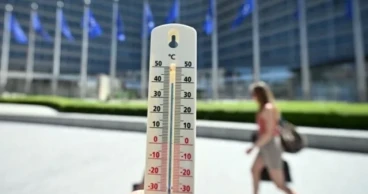
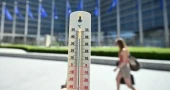
Belgium records nearly 3,000 excess deaths during summer heatwaves
Belgium recorded nearly 3,000 excess deaths during three summer heatwaves, according to data released Thursday by the national public health institute, Sciensano.
Sciensano's Belgian Mortality Monitoring (Be-MOMO) system, which tracks all-cause mortality against statistical expectations, showed the first heatwave from June 18 to July 3 was the most severe. It caused 2,035 deaths (a 48.8 percent increase), disproportionately affecting those aged 15 to 64 and marking Belgium's highest excess mortality in absolute numbers and percentages since 2000.
The second heatwave (July 4–17) saw 535 excess deaths (14.8 percent increase), and the third (July 28 to Aug. 16) recorded 365 deaths (7 percent spike).
Sciensano attributed the severity to duration, heat intensity and ozone concentrations.
Temperatures hovered around 30 degrees Celsius for 10 consecutive days from June 18, including three days near 35, while ozone levels remained above 100 micrograms per cubic meter for 10 consecutive days.
The figures may be revised as mortality data is further consolidated.
1 month ago