europe
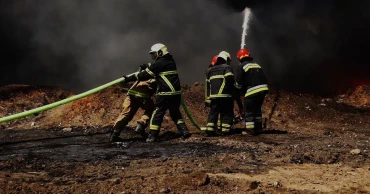
Russia launches 800 drones across Ukraine despite talk of possible peace
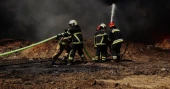
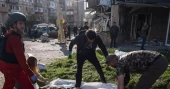
Russia launched at least 800 drones at nearly 20 regions across Ukraine on Wednesday, killing at least six people and injuring dozens, including children, in one of the longest and most extensive attacks of the four-year war, Ukrainian President Volodymyr Zelenskyy said.
The barrage began in midmorning and continued for hours, targeting Kyiv, the western city of Lviv near Poland and the Black Sea port of Odesa, along with other population centers, Zelenskyy said on Telegram.
“Our soldiers are defending Ukraine, but Russia’s clear goal is to overload our air defenses,” he said, warning that cruise and ballistic missile strikes could follow.
Zelenskyy described it as “one of the longest, massive Russian attacks against Ukraine.”
The assault also heightened tensions in neighboring Hungary. Prime Minister Péter Magyar said his government had summoned the Russian ambassador after a drone strike near Hungary’s border in Ukraine’s Transcarpathia region.
“The Hungarian government strongly condemns the Russian attack on Transcarpathia,” Magyar told reporters. He said Foreign Minister Anita Orbán would ask Moscow when Russia and President Vladimir Putin plan to end what he called a “bloody war.”
Zelenskyy later thanked Hungary on X for its “compassion and strong position.”
In Kyiv, debris from intercepted drones fell in an open area in the Obolonskyi district, but no casualties were reported, city officials said. Mayor Vitali Klitschko said emergency services were sent to the site. Explosions were heard across the capital earlier in the day.
In the Rivne region west of Kyiv, three people were killed in a drone strike, according to regional governor Oleksandr Koval.
The attacks came despite renewed optimism about a possible end to the war. On Tuesday, Zelenskyy said 14 Ukrainian regions had come under attack, including overnight strikes on residential areas, energy facilities and railway infrastructure.
“It is important to support Ukraine and not remain silent about Russia’s war,” Zelenskyy said, suggesting that global attention has shifted to the conflict involving Iran. “Every time the war disappears from the headlines, it encourages Russia to become even more savage.”
US President Donald Trump said Tuesday that he believes Russia and Ukraine may soon reach a deal.
“The end of the war in Ukraine is getting very close,” Trump said as he left the White House for a summit in Beijing.
Putin said last weekend that Russia’s invasion may be “coming to an end.”
Neither leader explained why they believe peace could be near. US-led diplomatic efforts over the past year have made little progress on key issues, including whether Russia will keep the Ukrainian territory it has seized and what guarantees can prevent another invasion.
Kremlin spokesman Dmitry Peskov said Wednesday that Moscow’s core demands remain unchanged.
Russia continues to insist that Ukraine withdraw its forces from the Donetsk, Luhansk, Kherson and Zaporizhzhia regions, which Moscow illegally annexed in September 2022 but does not fully control.
“At that point, a ceasefire will be established, and the parties can calmly engage in negotiations,” Peskov said, adding that any talks would be complex and involve many important details.
Speaking in Bucharest, Romania, to representatives of countries on NATO’s eastern flank, Zelenskyy said Ukraine would continue pressing Moscow through diplomacy and other means.
“We’re not giving up on diplomatic efforts, and we hope that pressure on Russia, together with negotiations in different formats, will help bring peace,” he said.
“Sanctions are working, our long-range capabilities are working, and every form of pressure is working.”
European governments are also considering whether to reopen talks with Putin after years of isolating him and imposing broad sanctions on Russia.
2 months ago
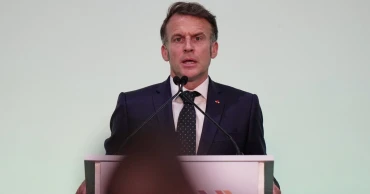
Macron faces backlash after interrupting Africa summit panel in Kenya
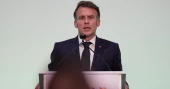
French President Emmanuel Macron is facing backlash after he interrupted a panel at the Africa Forward Summit in Kenya to demand silence from the audience.
Macron reportedly stormed the stage to rebuke audience members for what he called a “total lack of respect,” accusing them of disrupting speakers during a presentation by artists and young entrepreneurs. He had earlier described himself as a “Pan-Africanist” during a news conference.
The summit is meant to showcase France’s new policy for the continent — a shift from a former colonial power seen as dominating to what Paris describes as a partnership of equals. On Tuesday, Macron announced a $27 billion investment into various sectors in Africa, including energy, artificial intelligence and agriculture.
Videos of Macron’s heated intervention on Monday quickly spread across social media, drawing a mix of mockery, praise and criticism.
Appearing visibly frustrated by the noise in the room, Macron abruptly walked onto the stage and asked the speaker to hand him the microphone, saying he would “restore order.”
Addressing the audience in English, he criticized attendees for talking over the speakers and creating disruptions during the session.
Some audience members applauded the intervention, but Macron also drew criticism over his response.
“Just imagine what would happen if an African leader did the same thing in America or Europe,” said Thierno Mbaye, a history student at a university in Senegal’s capital, Dakar.
“He acted like a schoolteacher scolding children,” Mbaye told The Associated Press.
The intervention also drew criticism in France.
“It’s stronger than him: as soon as he sets foot on the African continent, he can’t help but behave like a colonizer,” Danièle Obono, a lawmaker for the hard-left party France Unbowed, said in a post on X.
Diplomatic and military setbacks in West Africa
The Africa Forward Summit, which is set to close on Tuesday with a declaration that is expected to be signed by all 30 heads of state, comes amid a fallout between France and its former colonies, mostly in West Africa.
France has long maintained a colonial policy of economic, political and military sway dubbed Françafrique, which included keeping thousands of troops in the region it controlled.
After years of criticism from leaders and opposition parties in many West African countries over what they described as a demeaning and heavy-handed approach, France has withdrawn most of its troops from the region. It completed the withdrawal of troops from Senegal in July.
Macron had already faced a backlash ahead of the summit for claiming Sunday at news conference alongside Kenyan President William Ruto that “we are the true Pan-Africanists.”
“We believe that Africa is a continent, and that this continent has an enormous amount to build,” Macron said.
Pan-Africanism refers to an ideology seeking the unity of Africans and the elimination of colonialism. Given France’s colonial history across the continent, the remark went viral on social media and drew swift backlash.
“Pan Africanism is not a brand, Mr. Macron, neither is it a diplomatic posture,” Farida Nabourema, a Togolese human rights activist, said in an open letter on Monday.
“It is a political philosophy that said no to everything France spent three centuries saying yes to: slavery, colonialism and neocolonialism,” she added.
Beverly Ochieng, a senior analyst at geopolitical risk consultancy Control Risks, said Macron is trying to distance France from its diplomatic and military setbacks in West Africa by turning to the east of the continent, signaling that its strategic priorities now follow where it finds goodwill.
She said Macron’s remarks were raising questions about whether France’s renewed engagement with Africa represented a genuine equal partnership or merely convenient rhetoric.
The French presidency and Foreign Ministry did not immediately respond to a request for comment.
Paris will be respectful of each African country’s independence, Macron said on Tuesday, adding that “sovereignty and autonomy is shared, and your success is our success.”
‘Inauthentic or politically manipulated’
Alioune Tine, founder of the Afrikajom Center think tank, said Macron’s remark might also be a subtle jab at Russia, which has replaced France as the main security partner in some West African countries.
“When Macron describes himself as the ‘true’ pan-Africanist, it is also a subtle response to the pro-Russian pan-Africanist voices online, which French officials tend to view as inauthentic or politically manipulated,” Tine said.
He said relations between Western powers and African states are inherently paternalistic and France is no exception, but that Macron has shifted policy away from the colonial legacy through a more informal diplomatic style aimed at rebuilding trust.
According to an Ipsos survey conducted on behalf of the French Foreign Ministry in nine African countries ahead of the summit, 74% of respondents said they have a positive image of France. Support was highest in English-speaking countries and among respondents under 35.
Macron, who is the first French president born after the colonial era, had pledged after his first election in 2017 that he would reset French relations with Africa.
2 months ago
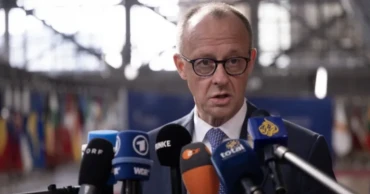
Europe committed to preserving NATO, says German chancellor
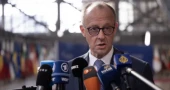
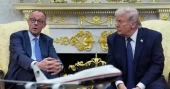
German Chancellor Friedrich Merz said Europe remains firmly committed to preserving the North Atlantic Treaty Organization despite differences with the United States over the conflict involving Iran.
Speaking at a joint news conference with Swedish Prime Minister Ulf Kristersson, Merz said European countries are determined to keep the transatlantic alliance strong.
“We are really willing to keep this alliance alive for the future,” he said.
Merz acknowledged that disagreements exist but stressed that Europe and the United States share the same objective: ending the conflict and ensuring that Iran does not develop nuclear weapons.
“We know that there are some differences. We know that we are seeing challenges, all of us,” he said. “But our final goal is to bring this conflict to an end and to guarantee that Iran is not able to produce nuclear weapons.”
He added that preventing Iran from acquiring nuclear weapons remains a common goal for both Europe and the United States.
#From Al Jazeera
2 months ago
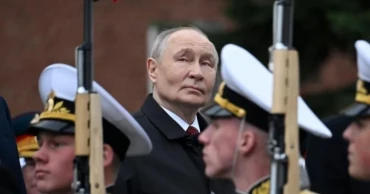
Putin criticises NATO, defends Ukraine war at subdued Victory Day parade
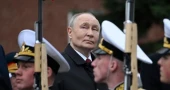
Russian President Vladimir Putin used his Victory Day address in Moscow’s Red Square to defend the war in Ukraine and criticise NATO, as the annual parade took place on a reduced scale this year.
Addressing military personnel and a limited number of foreign leaders, Putin described the conflict in Ukraine as a “just” war and accused NATO of backing Kyiv.
“They are confronting an aggressive force armed and supported by the whole bloc of NATO. And despite this, our heroes move forward,” he said, referring to Russian troops involved in what Moscow calls its “special military operation.”
The ceremony marked Russia’s most important national holiday, commemorating the Soviet Union’s victory over Nazi Germany in World War II. However, celebrations were more subdued compared to previous years.
For the first time in recent years, the parade did not feature armoured vehicles or ballistic missiles, though large numbers of troops marched across Red Square under heightened security.
Putin began his speech by honouring the sacrifices of Soviet soldiers during World War II, saying their legacy continues to inspire Russian forces today.
“The great feat of the generation of victors inspires the soldiers carrying out the goals of the special military operation today,” he said.
He also praised the contributions of ordinary citizens, including scientists, doctors, teachers and workers, to the country’s war effort.
Ahead of the event, Russia and Ukraine agreed to observe a three-day ceasefire, announced by US President Donald Trump.
Among the leaders present at the parade were Belarusian President Alexander Lukashenko, Kazakhstan’s President Kassym-Jomart Tokayev and Uzbekistan’s President Shavkat Mirziyoyev. Fewer international leaders attended compared to last year’s event.
Following the ceremony, Putin laid flowers at the Tomb of the Unknown Soldier and later hosted a reception at the Kremlin.
Victory Day events were also held earlier in Russia’s eastern regions, including Vladivostok, where people took part in the traditional “Immortal Regiment” march to honour war veterans.Source: BBC
2 months ago
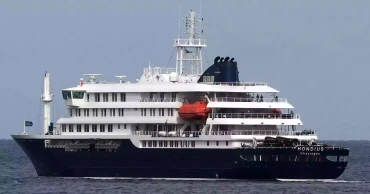
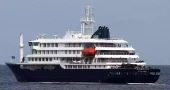
Spain prepares evacuation as hantavirus-hit cruise ship heads to Canary Islands
Spanish authorities are preparing to evacuate more than 140 passengers and crew from a cruise ship affected by a hantavirus outbreak as it heads toward the Canary Islands, health officials said Friday.
The vessel is expected to arrive near the island of Tenerife, off the northwest coast of Africa, on Saturday or Sunday. Authorities said passengers will be transferred in a strictly controlled and isolated area.
“They will arrive at a completely isolated, cordoned-off area,” said Virginia Barcones, head of Spain’s emergency services.
Spain is coordinating with multiple governments to arrange evacuation plans for their nationals on board. The United States has agreed to send an aircraft to repatriate 17 American citizens, while the United Kingdom will charter a plane to evacuate nearly two dozen British passengers.
At least three people have died in the outbreak, while several others have fallen ill. The World Health Organization has assessed the risk to the general public as low, noting that hantavirus is mainly transmitted through contact with contaminated rodent droppings and is not easily spread between humans.
Health officials said none of the remaining passengers or crew currently show symptoms. The cruise operator, Oceanwide Expeditions, confirmed the situation on Thursday.
However, international health agencies are still tracing passengers who disembarked earlier, including more than two dozen people from at least 12 countries who left the ship without formal contact tracing after an April 24 stop.
Some countries are now tracking potential secondary exposures. UK health authorities on Friday said a third British national is suspected of being infected while on Tristan da Cunha, a remote British territory in the South Atlantic.
Two other British passengers have already tested positive, with one hospitalized in the Netherlands and another in South Africa.
South African authorities are also tracking contacts linked to passengers who left the ship earlier, including travelers who passed through Johannesburg after disembarking in St. Helena.
Officials continue to monitor the situation as evacuation preparations intensify in the Canary Islands.
2 months ago
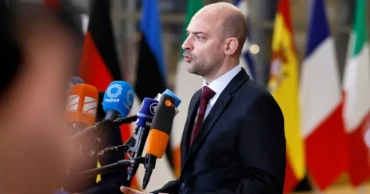
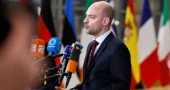
Sanctions on Iran to continue until Hormuz reopens: French Minister
French Foreign Minister Jean-Noel Barrot has said that sanctions on Iran will not be lifted unless the Strait of Hormuz is fully reopened and free of restrictions imposed by Iranian forces.
“We ourselves have imposed significant sanctions on Iran. But it is out of the question that any sanction whatsoever be lifted as long as the Strait of Hormuz remains blocked,” Barrot told French broadcaster RTL.
“It cannot be blocked, subjected to tolls, or used as leverage or blackmail.”
France must ensure it never finds itself again in a situation where it’s forced to pay the price for wars it didn’t choose to launch, Barrot said.
“That is why we must focus on … how Europe can rid itself of all these dependencies on hydrocarbons and oil – no longer being dependent on oil, no longer being dependent on digital technologies. In short, no longer being dependent on things that, in one way or another, draw us into conflicts, disasters, and crises in which we are not participants.”
Input from Al Jazeera
2 months ago
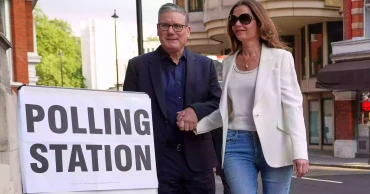
UK local elections seen as key test for Keir Starmer as polls open
Voting began across the United Kingdom on Thursday in local and regional elections widely viewed as a major test of Prime Minister Keir Starmer’s leadership, with his governing Labour Party bracing for significant losses.
Millions of voters are choosing around 5,000 local council members, along with several mayors in England, and representatives for semi-autonomous parliaments in Scotland and Wales. Polls opened at 7:00am and are set to close at 10:00pm (2100 GMT), with most results expected on Friday.
Although local elections typically focus on municipal services, analysts say this vote has taken on national significance and is being treated as a midterm verdict on Starmer’s government.
Labour, which holds about 2,500 council seats, is expected to lose ground after a difficult period for the prime minister, whose popularity has declined amid economic challenges, strained public services, and rising living costs. His government has also faced criticism over policy missteps and political controversies, including the appointment of Peter Mandelson as ambassador to Washington, which drew backlash due to his past association with Jeffrey Epstein.
Political analysts say the election could further weaken Starmer’s position within his party, though immediate leadership change is considered unlikely.
Far-right Reform UK, led by Nigel Farage, is expected to be one of the biggest winners, targeting working-class voters in former Labour strongholds with an anti-establishment and anti-immigration platform. The Green Party is also projected to gain seats in urban and university areas, while the Conservative Party is expected to suffer losses, with the Liberal Democrats making modest gains.
Experts say the results could signal a fragmentation of Britain’s traditional two-party system, with smaller parties increasingly challenging Labour and the Conservatives.
Despite internal pressure, Starmer did not directly mention the Conservatives in his final campaign message, instead framing the vote as a choice between Labour’s “progress and a better future” and what he described as the “anger and division” of Reform and “empty promises” from the Greens.
Reform UK leader Farage has suggested that a strong performance for his party could threaten Starmer’s leadership within months, while both Reform and the Greens have faced scrutiny over funding and candidate controversies.
In Scotland and Wales, nationalist parties are expected to maintain strong positions, even as Reform seeks to expand its influence.
Observers say Labour is contesting a highly fragmented political landscape, facing competition on multiple.
2 months ago
Russia launches drone attacks despite Ukraine’s unilateral ceasefire
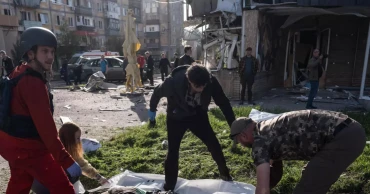
Russia carried out dozens of overnight drone attacks on Ukraine, ignoring a unilateral ceasefire declared by Kyiv that came into effect at midnight, Ukrainian officials said on Wednesday.
According to Ukraine’s Foreign Minister Andrii Sybiha, Russian forces launched 108 drones and three missiles, with strikes continuing through the night into Wednesday morning.
Meanwhile, Russia’s Defense Ministry accused Ukraine of violating its own ceasefire, claiming its air defenses intercepted 53 Ukrainian drones over Russian territory, the annexed Crimean Peninsula and the Black Sea between Tuesday evening and early Wednesday.
Russia-installed governor of Crimea Sergei Aksyonov said a Ukrainian drone strike killed five people in the city of Dzhankoi shortly after midnight.
There had been no indication from Moscow that it would observe Kyiv’s ceasefire, with prospects for a pause in fighting remaining slim as the war enters its fifth year following Russia’s full-scale invasion.
On Tuesday, Russian drone and missile strikes killed 27 civilians and injured 120 others in Ukraine, Interior Minister Ihor Klymenko said. The United Nations estimates that more than 15,000 civilians have been killed since the war began.
Fighting has continued along the roughly 1,250-kilometer front line, where Russia’s larger forces are engaged in a prolonged and costly battle against Ukraine’s defense systems.
Ukrainian President Volodymyr Zelenskyy announced the unilateral ceasefire after Russia signaled it would observe a separate pause later this week to mark the 81st anniversary of the defeat of Nazi Germany in World War II. Zelenskyy warned that any violation of the ceasefire would prompt a military response.
European leaders had welcomed Ukraine’s move as a sign of willingness to pursue peace.
However, Sybiha said Russia’s continued attacks showed a lack of sincerity in its own ceasefire proposals linked to upcoming commemorations.
“Moscow once again ignored a realistic and fair call to end hostilities, supported by other states and international organizations,” he said.
He urged the international community to increase pressure on Moscow through additional sanctions, diplomatic isolation, accountability for alleged war crimes, and enhanced military and humanitarian support for Ukraine.
2 months ago
Trump renews threat to cut US troop presence in Germany amid tensions over Iran war
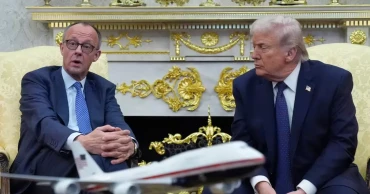
Donald Trump has again threatened to reduce the United States’ military presence in Germany, reviving long-standing concerns among European allies about Washington’s commitment to regional security.
The warning came in a social media post on Wednesday after German Chancellor Friedrich Merz criticised the US approach to diplomacy with Iran, saying Washington risked being “humiliated” by Tehran amid the ongoing US-Israel conflict.
Trump has repeatedly questioned the role of NATO and criticised allies for what he sees as insufficient support, particularly during the current conflict. He has long floated the idea of scaling back US troop deployments in Germany, a key NATO member and Europe’s largest economy.
The latest remarks have reignited concerns across Europe, where officials have been bracing for a potential shift in US military strategy since Trump returned to office.
Analysts say any reduction in American forces could have significant implications for European security, including support for Ukraine and broader deterrence efforts in the region.
European allies have increasingly warned that they may need to assume greater responsibility for their own defence if US commitments weaken further.
3 months ago
Iran’s exiled crown prince targeted with red liquid in Berlin
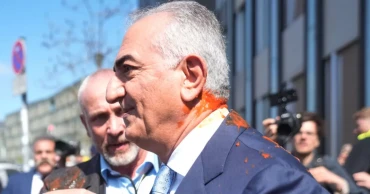
Iran’s exiled Crown Prince Reza Pahlavi was splattered with red liquid on Thursday as he left a building following a news conference in the German capital.
Despite the incident, Pahlavi waved to supporters before getting into a vehicle that drove away from the scene.
Police immediately detained the suspected perpetrator, though further details about the motive were not immediately available.
Pahlavi has lived in exile for nearly five decades following the overthrow of his father, Mohammad Reza Pahlavi, during the Iranian Revolution. The revolution saw millions take to the streets, forcing the shah from power.
In recent years, Pahlavi has sought to reassert his role as a political figure and position himself in discussions about Iran’s future.
3 months ago