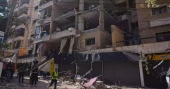
Middle-East
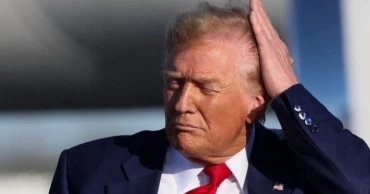
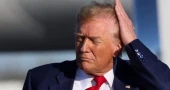
Trump says US to hit Iran ‘very hard’ tonight
US President Donald Trump on Thursday said the United States would launch a major attack on Iran later in the day and signaled plans to take control of key Iranian oil and gas infrastructure, including Kharg Island.
In a post on his Truth Social platform, Trump said the US would hit Iran “very hard tonight,” while claiming that Iran’s naval, air and air defense capabilities, along with much of its offensive military capacity, had already been eliminated.
Three Indian seafarers killed in U.S. attack near Oman
Trump also said that the United States would, in the near future, take control of Kharg Island and other strategic energy facilities and assume control of Iran’s oil and gas markets. He compared the proposed move to what he described as US involvement in Venezuela’s energy sector.
The remarks marked a further escalation in tensions between Washington and Tehran amid continuing hostilities and ongoing diplomatic efforts aimed at securing a ceasefire and reviving negotiations.
With inputs from Al Jazeera
1 month ago
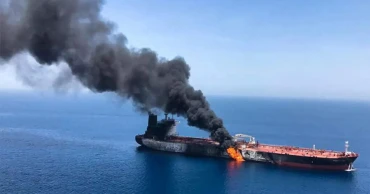
Three Indian seafarers killed in U.S. attack near Oman
Three Indian seafarers who had been reported missing following a US attack on a commercial vessel off the coast of Oman have been confirmed dead, India's Minister for Ports, Shipping and Waterways Sarbananda Sonowal said on Thursday.
According to India's Ministry of External Affairs, the vessel was carrying 24 Indian crew members when it came under attack on Wednesday.
US launches second consecutive day of strikes on Iran as Tehran retaliates against Gulf states and Jordan
India condemned the attack the same day, describing assaults on shipping in the region as "deeply worrisome" and attributing them to the ongoing conflict in the Middle East.
In a statement, the foreign ministry called for the "immediate de-escalation of tensions" and urged an end to "the targeting of commercial shipping and civilian infrastructure in the region."
Media reports said India also lodged a demarche with the top US diplomat in New Delhi over the incident.
1 month ago
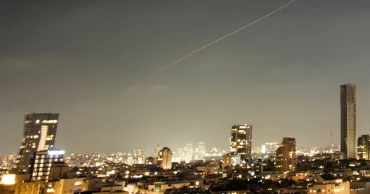
US launches fresh strikes on Iran as tensions escalate over stalled talks
The United States carried out a new wave of airstrikes on Iran early Thursday, intensifying hostilities after President Donald Trump warned Tehran of consequences over stalled negotiations.
The latest attacks targeted multiple locations across Iran as diplomatic efforts to end the conflict remained deadlocked. Iran continued to maintain pressure on shipping through the Strait of Hormuz, a key global energy route, contributing to rising oil prices and concerns over energy supplies.
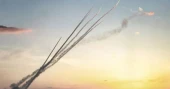
Following the strikes, Iran threatened retaliation. Air raid sirens sounded in Bahrain, which hosts the headquarters of the U.S. Navy's Fifth Fleet, while Kuwait reported that its air defense systems were activated. Iran had earlier launched missiles toward Bahrain, Kuwait and Jordan after a previous round of American strikes.
The U.S. Central Command said the operation was completed shortly before sunrise and targeted Iranian military surveillance networks, communications infrastructure and air defense facilities. The military described the action as a response to what it called Iran's continued aggression.
Explosions were reported in Tehran, the southern port city of Bandar Abbas and other areas near the Strait of Hormuz.
The renewed exchange marked the third major escalation this week, testing a fragile two-month ceasefire. Wednesday had already seen missile exchanges involving Iran and several Gulf countries hosting American forces.
Trump has repeatedly urged Iran to agree to a deal that would end the conflict, suggesting earlier this week that a breakthrough could come within days.
However, Iran's Ambassador to the United Nations, Amir Saeid Iravani, told the UN Security Council that Tehran would not negotiate under pressure or threats.
Despite the rhetoric, observers believe both sides are looking for a way to end the conflict while preserving political gains at home.
Iran appears to be relying on its ability to disrupt shipping through the Strait of Hormuz as leverage in negotiations. The strategic waterway is one of the world's most important routes for oil and natural gas exports.
Meanwhile, Israeli Prime Minister Benjamin Netanyahu has continued to pursue broader objectives, including dismantling Iran's nuclear programme, weakening its regional allies and pressuring the country's ruling establishment. Iran and Israel also exchanged attacks earlier this week.
The conflict, which began with US and Israeli attacks on Iran on February 28, has rattled global markets and driven up energy prices. International benchmark crude oil prices climbed above $93 per barrel on Wednesday, more than 25 percent higher than before the conflict began.
Trump claimed the U.S. military has been helping commercial oil shipments move through the Strait of Hormuz despite Iranian attempts to restrict traffic. He said more than 100 million barrels of oil had passed through the area since last month, though no independent confirmation of the figure was immediately available.
The U.S. military also denied Iranian claims that the Strait had been fully closed, saying commercial shipping continued to operate.
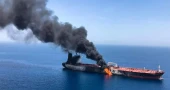
Earlier Wednesday, the U.S. military reported disabling a tanker carrying Iranian oil that allegedly attempted to breach a naval blockade. The vessel, sailing under the Palau flag, was struck in its engine room using precision-guided munitions.
India later said three of its sailors aboard the vessel were missing, while 21 others were rescued.
Iran condemned the American strikes, with Foreign Minister Abbas Araghchi describing them as violations of Iranian sovereignty.
Diplomatic efforts continued alongside the fighting. A Qatari delegation arrived in Tehran for discussions after consultations with Washington, according to officials familiar with the talks.
The latest military exchanges followed the crash of a U.S. Army helicopter near the Strait of Hormuz earlier this week. A U.S. official said the aircraft collided with an Iranian drone, though it remains unclear whether the collision was deliberate. Both crew members were rescued and were not injured, according to Trump.
Major disagreements continue to hinder any quick peace agreement. Washington wants Iran to surrender its stockpile of highly enriched uranium, arguing it could be used for nuclear weapons development.
Iran rejects that demand, insisting its nuclear programme is peaceful. Tehran is also seeking sanctions relief and the release of frozen assets before any final agreement is reached.
Another obstacle is Iran's insistence that any settlement must include an end to hostilities between Israel and Hezbollah. Israel, however, has intensified military operations against the Lebanon-based group, further complicating prospects for a broader peace deal.
1 month ago
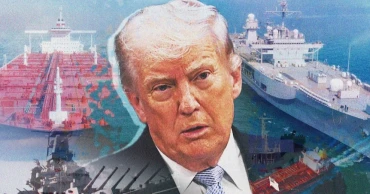
Trump claims over 100 million barrels of oil passing through Strait of Hormuz
US President Donald Trump has claimed that more than 100 million barrels of oil are currently moving through the Strait of Hormuz, saying he had ordered the US military to carry out a “secret mission” to assist oil tankers and other vessels navigating the strategically important Gulf waterway.
In a post on social media, Trump said over 200 commercial ships had safely passed through the strait.
Iran will stand firm against threats and pressure, says Pezeshkian
However, he did not provide any evidence to support the claims.
Trump also asserted that the United States-not Iran-controls the Strait of Hormuz.
With inputs from Al Jazeera
1 month ago
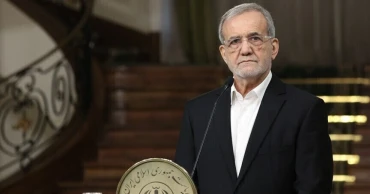
Iran will stand firm against threats and pressure, says Pezeshkian
Iranian President Masoud Pezeshkian has said on that Iran will remain steadfast in the face of threats and pressure following fresh warnings from US President Donald Trump of possible military action against the country.
In a post on X, Pezeshkian said Iran would “stand firm” against any intimidation and condemned threats targeting the country's infrastructure.
US-Iran strikes rattle Middle East
He said that threats aimed at transportation networks, as well as the electricity and water sectors, do not demonstrate strength but rather reflect desperation when confronted with the determination of a nation.
The remarks came shortly after Trump said his administration would be “attacking very hard,” escalating tensions between the two countries.
With inputs from Al Jazeera
1 month ago
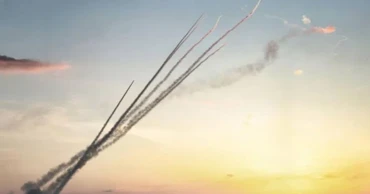
US-Iran strikes rattle Middle East
Since the U.S. and Israel started the war with attacks on Iran on Feb. 28, the conflict has shaken the global economy, driven up energy prices around the world, and made many basics, including food, more expensive. Brent crude oil, the international standard, was at more than $91 a barrel on Wednesday, up more than 25% since the start of the war.
In the latest strikes, U.S. fighter jets targeted “air defense, ground control stations, and surveillance radar sites,” the military’s Central Command said. Iran acknowledged strikes around Bandar Abbas and Qeshm Island, but gave no details on the damage.
“The operation was a proportional response to recent attacks on U.S. forces and international commercial ships transiting regional waters,” Central Command said.
Iran’s top diplomat vowed that there would be a response, and Tehran later claimed attacks in Kuwait, Bahrain and Jordan.
Jordan said it shot down five incoming missiles, which Iran said targeted the Muwaffaq Salti Air Base. The base has hosted American F-35 fighter jets and other aircraft.
Jordan’s state-run Petra news agency carried a military statement saying there were no injuries and that explosives experts examined the debris from the interceptions.
Bahrain and Kuwait said they intercepted incoming fire, without elaborating.
Iranian Foreign Minister Abbas Araghchi condemned the American attacks as a violation of Iranian sovereignty in calls with his counterparts from Turkey and Saudi Arabia “and emphasized the inherent right of self-defense, including reciprocal action,” according to a post on his office’s Telegram channel.
The exchanges of fire came a day after a U.S. Army attack helicopter crashed near the Strait of Hormuz after colliding with an Iranian drone, according to a U.S. official, who spoke on condition of anonymity to discuss an ongoing investigation. It wasn’t clear whether the collision was intentional.
A drone boat rescued both of the helicopter’s aviators, and Trump said they were uninjured.
1 month ago
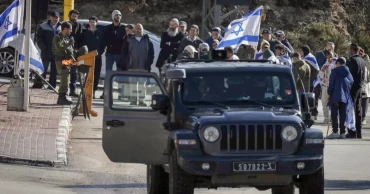
UK, allies impose sanctions on networks linked to settler violence in West Bank
The United Kingdom, together with Australia, Canada, France, New Zealand and Norway, has announced coordinated sanctions targeting individuals and entities accused of financing, enabling and carrying out violence by Israeli settlers against Palestinians in the occupied West Bank.
In a statement to Parliament on Wednesday, Foreign Secretary Yvette Cooper said the UK would impose sanctions on six entities and one individual involved in supporting settler violence. Australia and New Zealand announced similar coordinated sanctions last week.
The move comes amid growing international concern over rising settler violence and continued expansion of Israeli settlements in the occupied West Bank.
According to the UK government, those designated under the sanctions regime will face asset freezes and, where applicable, travel bans and director disqualifications. The measures are intended to disrupt financial networks that enable extremist settler groups to operate in the West Bank.
The UK government said settlements are illegal under international law and undermine efforts to achieve a lasting peace and a viable two-state solution.
For the first time, the UK has also updated its official business guidance to explicitly advise British companies against economic and financial activities in Israeli settlements in the occupied territories. While the UK continues to support trade with Israel within its internationally recognised borders, it said there should be no economic involvement in illegal settlements.
"Today we are acting with our international partners to sanction those who support and sponsor violence against Palestinian communities in the West Bank," Cooper is expected to tell Parliament.
She said settler expansion and violence are illegal and pose a serious threat to the viability of a two-state solution as well as long-term peace and security for both Palestinians and Israelis.
The UK said the measures come amid continued settlement expansion, including the E1 project, and record levels of settler violence that have resulted in the destruction of Palestinian homes and livelihoods.
The government reiterated its call on Israel to halt settlement expansion, take action against settler violence, prosecute those responsible and ease restrictions affecting the Palestinian economy.
The sanctions announcement forms part of a broader UK initiative aimed at advancing peace and security in Israel and Palestine, including support for the implementation of the 20 Point Peace Plan for Gaza.
The Foreign Secretary is also expected to announce an additional £1 million in humanitarian mine-clearing assistance for Gaza, supplementing the £4 million already committed by the UK. She will also call on Israel to open all border crossings and remove restrictions on humanitarian aid deliveries.
In addition, Cooper will confirm at least £10 million in financial and technical assistance for the Palestinian Authority in 2026 to help address its fiscal challenges and maintain essential public services, including healthcare.
The Foreign Secretary is scheduled to travel to Paris later this week ahead of a peace-building conference bringing together Israeli and Palestinian civil society representatives and international partners working to support a two-state solution.
The sanctioned entities and individual include The Farms Association, Ahavat Gilad, Ari Yshag, Artzenu, Shivat Zion Lerigvey Admata, Eyal Hari Yehuda and Itamar Yehuda Levi.
The UK government said the sanctions have been imposed under the Global Human Rights Sanctions Regulations 2020.
1 month ago

US, Iran launch airstrikes after Trump blamed Tehran for downing Army helicopter
The United States launched airstrikes on Iran and Tehran retaliated with attacks targeting Gulf states on Wednesday after President Donald Trump blamed Iran for the crash of a US Army helicopter near the Strait of Hormuz, further escalating tensions in the Middle East.
Iran said it carried out attacks against Bahrain and Kuwait, prompting both countries to activate air-defense systems and issue alerts. Tehran also claimed it targeted an air base in Jordan that hosts US troops, though neither US nor Jordanian officials immediately confirmed the strike.
The latest exchange of attacks has raised fresh concerns over regional stability and threatens efforts to preserve a fragile ceasefire reached in April after months of conflict.
The US military's Central Command said Air Force and Navy fighter jets struck Iranian air-defense systems, ground-control facilities and surveillance radar sites.
"The operation was a proportional response to recent attacks on US forces and international commercial ships transiting regional waters," Central Command said.
Iran acknowledged that strikes hit areas around Bandar Abbas and Qeshm Island in southern Iran but did not provide details on casualties or damage.
Earlier, Trump said on social media that Iran had shot down an Army helicopter during a patrol mission over the Strait of Hormuz and insisted the United States had to respond.
Iranian Foreign Minister Abbas Araghchi rejected the accusation and warned that foreign military forces operating near Iranian territory faced increasing risks.
"Iranian forces will leave no attack or threat unanswered," Araghchi said in a post on X, adding that foreign forces should leave the region if they wanted to remain safe.
The latest confrontation came a day after Iran and Israel exchanged fire for the first time since the two-month ceasefire took effect. Iranian state media reported that Israeli attacks killed at least two members of the country's air-defense forces.
The conflict has continued to disrupt global markets since US and Israeli strikes on Iran began on Feb. 28, contributing to higher energy prices and rising costs of essential goods worldwide.
According to a US official familiar with the investigation, the Army AH-64 Apache helicopter crashed after colliding with an Iranian drone while operating near the Strait of Hormuz.
The official, who spoke on condition of anonymity, said investigators have not determined whether the collision was accidental or deliberate. US authorities have said the incident remains under investigation.
The two crew members aboard the helicopter were rescued in an unprecedented operation involving an unmanned surface vessel, US Central Command said.
The rescue took place about two hours after the helicopter went down off the coast of Oman early Tuesday. Trump said both service members escaped unharmed.
Capt. Tim Hawkins, a spokesman for US Central Command, said a drone boat located the pilots and transported them to another position at sea, where they were later picked up by a helicopter.
He described the mission as the first known rescue at sea conducted by a drone vessel in US military history.
The unmanned vessel used in the operation was a 24-foot Corsair boat built by Saronic Technologies and assigned to the Navy's Task Force 59, a unit specialising in autonomous and artificial intelligence-based maritime security operations across the Middle East.
Apache helicopters have played an important role in US efforts to monitor regional waterways and enforce restrictions on Iranian oil shipments. The aircraft have also been used by the United Arab Emirates to intercept Iranian drones.
Before the latest escalation, Trump had expressed optimism about reaching a nuclear agreement with Iran, although no breakthrough has been announced.
Pakistan has been leading mediation efforts between Washington and Tehran, but major differences remain over Iran's nuclear programme and sanctions relief.
The United States wants Iran to surrender its stockpile of highly enriched uranium, while Tehran insists on sanctions relief and access to frozen assets before any final agreement is reached.
Meanwhile, the conflict involving the Iran-backed Hezbollah group remains a major concern for Tehran.
Lebanese Army chief Gen. Rodolphe Haykal visited Pakistan on Tuesday and met Pakistan's army chief, Field Marshal Asim Munir, who has played a central role in efforts to mediate between Iran and the United States.
The visit came as Lebanon's government adopts a tougher stance on Hezbollah while continuing to face difficulties in disarming the powerful armed group.
Hezbollah on Tuesday thanked Iran for attacking Israel "in defense of our Lebanese people" and suggested Beirut should take steps to improve relations with Tehran.
1 month ago
Iran, Israel pause attacks but warn of renewed retaliation if truce violated
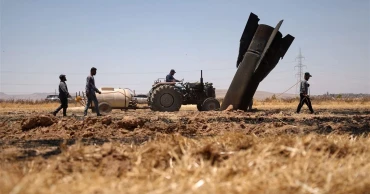
Iran and Israel have announced a halt to direct attacks against each other following a fresh exchange of fire, while both sides warned of strong retaliation if the fragile ceasefire is violated again.
Israeli Prime Minister Benjamin Netanyahu said on Monday that Israel was holding fire “at the moment” but stressed that the campaign against Iran and the Iran-backed Hezbollah movement was “not finished.”
His remarks came hours after Iran’s armed forces announced that they had suspended military operations after delivering what they described as a “painful response” to Israel. Tehran also warned that any new Israeli attacks, including strikes in Lebanon, would trigger “more severe and crushing measures.”
The latest escalation began after Iran launched missiles at Israel on Sunday in retaliation for an Israeli strike on Beirut. Israel responded early Monday with air strikes targeting what it described as military facilities inside Iran.
US President Donald Trump denied suggestions that Netanyahu had ignored his requests by carrying out the strikes, saying the Israeli operation was already underway when he intervened.
The White House confirmed that Trump spoke with Netanyahu regarding the crisis. Trump said he urged restraint, citing ongoing efforts to secure a broader agreement with Iran aimed at preventing the development of nuclear weapons.
According to US media reports, Trump also warned Netanyahu that Israel could find itself isolated if it resumed a full-scale conflict with Iran.
Despite the ceasefire announcement, hostilities continued into Monday morning. Israeli authorities reported additional Iranian missile launches targeting Jerusalem and central and southern Israel.
The Israeli military said it subsequently carried out another wave of strikes, targeting a petrochemical complex in Mahshahr in southwestern Iran, alleging the facility was involved in producing materials used for ballistic missiles.
Iranian officials said at least 15 people were injured in the latest Israeli strikes, including 14 in Mahshahr and one in Tehran.
Meanwhile, violence continued in Lebanon. The Lebanese Health Ministry said an Israeli strike on the southern city of Tyre killed five people and injured eight others on Monday. Four members of the Red Cross were among those wounded.
Hezbollah said it launched rockets at Israeli military vehicles and troops in southern Lebanon earlier in the day.
Trump publicly urged both sides to stop military actions, warning that continued attacks could undermine ongoing diplomatic efforts.
The conflict began on February 28 when Israel and the United States launched a joint military operation against Iran, resulting in the deaths of Supreme Leader Ayatollah Ali Khamenei and several senior Iranian officials, according to reports cited in the conflict.
The war quickly expanded across the region, with Iran retaliating through missile and drone attacks against Israel and Gulf states hosting US military facilities. The conflict later spread to Lebanon after Hezbollah launched attacks on Israel in support of Iran.
A US-brokered ceasefire between Israel and Lebanon has so far failed to end hostilities, with Hezbollah demanding a complete Israeli withdrawal from Lebanese territory.
According to figures cited by Iranian and international rights groups, more than 3,400 people have been killed in Iran since the conflict began. Lebanese authorities report over 3,600 deaths from Israeli attacks in Lebanon.
Israeli authorities say 20 civilians have been killed in Iranian missile strikes, while dozens of Israeli soldiers and civilians have died during fighting involving Hezbollah. Additional casualties have also been reported across several Gulf countries and among US military personnel stationed in the region.
Source: BBC
1 month ago
Israeli strike hits Beirut suburbs days after US-backed ceasefire takes effect
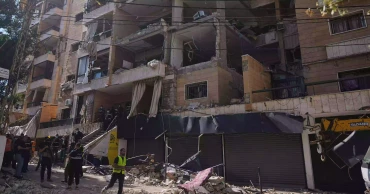
Israeli forces carried out airstrikes on Beirut’s southern suburbs on Sunday, just days after a ceasefire agreement brokered in Washington came into effect, according to Lebanese and Israeli officials.
Lebanon’s state-run National News Agency reported that at least two people were killed and 11 others injured in the strikes, based on preliminary figures.
The attack came despite reported US efforts to prevent strikes on the Lebanese capital and amid renewed diplomatic efforts to revive talks between Iran and the United States.
Israeli Prime Minister Benjamin Netanyahu’s office said the strikes were launched in response to alleged rocket fire from the Iran-backed Hezbollah group into northern Israel earlier in the day.
In a statement, Netanyahu’s office said the attacks targeted Hezbollah “command centers” in the densely populated southern suburbs of Beirut.
“We are striking them very hard, and we know that Hezbollah is on the run,” Netanyahu told his cabinet.
Hezbollah did not immediately claim responsibility for the reported attacks on northern Israel.
The latest escalation occurred only days after Lebanese and Israeli officials met in Washington and renewed discussions aimed at maintaining a ceasefire and ending months of hostilities.
Despite previous ceasefire understandings, Israeli forces have continued near-daily strikes in southern Lebanon, while ground troops remain deployed in parts of the country following military operations against Hezbollah.
Earlier this week, Israel had threatened to strike Beirut’s southern suburbs after Hezbollah claimed attacks on northern Israel. However, urgent diplomatic contacts mediated through Washington reportedly helped avert those strikes after Hezbollah agreed to halt attacks on Israeli border communities.
According to local reports, Sunday’s strike hit a residential building, damaging four of its seven floors. The Lebanese military later cordoned off the area after an unexploded munition was discovered in the rubble.
The latest developments have raised concerns over the stability of the ceasefire and the broader regional security situation.
1 month ago