Middle-East
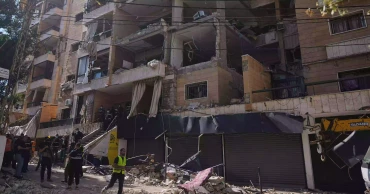
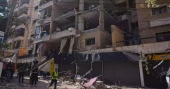
Israeli strike hits Beirut suburbs days after US-backed ceasefire takes effect
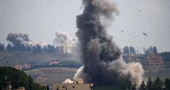
Israeli forces carried out airstrikes on Beirut’s southern suburbs on Sunday, just days after a ceasefire agreement brokered in Washington came into effect, according to Lebanese and Israeli officials.
Lebanon’s state-run National News Agency reported that at least two people were killed and 11 others injured in the strikes, based on preliminary figures.
The attack came despite reported US efforts to prevent strikes on the Lebanese capital and amid renewed diplomatic efforts to revive talks between Iran and the United States.
Israeli Prime Minister Benjamin Netanyahu’s office said the strikes were launched in response to alleged rocket fire from the Iran-backed Hezbollah group into northern Israel earlier in the day.
In a statement, Netanyahu’s office said the attacks targeted Hezbollah “command centers” in the densely populated southern suburbs of Beirut.
“We are striking them very hard, and we know that Hezbollah is on the run,” Netanyahu told his cabinet.
Hezbollah did not immediately claim responsibility for the reported attacks on northern Israel.
The latest escalation occurred only days after Lebanese and Israeli officials met in Washington and renewed discussions aimed at maintaining a ceasefire and ending months of hostilities.
Despite previous ceasefire understandings, Israeli forces have continued near-daily strikes in southern Lebanon, while ground troops remain deployed in parts of the country following military operations against Hezbollah.
Earlier this week, Israel had threatened to strike Beirut’s southern suburbs after Hezbollah claimed attacks on northern Israel. However, urgent diplomatic contacts mediated through Washington reportedly helped avert those strikes after Hezbollah agreed to halt attacks on Israeli border communities.
According to local reports, Sunday’s strike hit a residential building, damaging four of its seven floors. The Lebanese military later cordoned off the area after an unexploded munition was discovered in the rubble.
The latest developments have raised concerns over the stability of the ceasefire and the broader regional security situation.
1 month ago
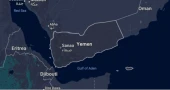
Yemeni Commander Killed in Roadside Bomb Attack
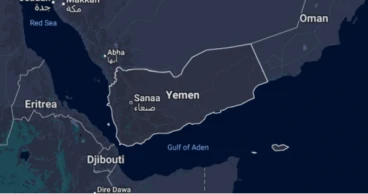
A senior commander of Yemen's pro-government forces was killed in a roadside bomb attack targeting his convoy in the Red Sea province of Hodeidah on Saturday.
The force said the victim was Yahya Wahish, commander of its First Division. He was killed when an explosive device detonated as his convoy was traveling through the Al Khawkhah district in southern Hodeidah.
The statement said one of Wahish's escorts was also killed in the explosion, while two other escorts sustained injuries.
The National Resistance Forces blamed the Houthi group for planting the bomb. However, there was no immediate response from the Houthis, and no group had claimed responsibility for the attack.
The National Resistance Forces are led by Tariq Saleh, a member of Yemen's Presidential Leadership Council (PLC) and nephew of former President Ali Abdullah Saleh. The force was established with backing from the Saudi-led coalition and is based in the strategic coastal city of Mocha near the Bab al-Mandab Strait.
Yemen has remained embroiled in conflict since late 2014, when the Houthis took control of the capital, Sanaa, prompting a Saudi-led coalition to intervene in support of the internationally recognized government in 2015.
Although a UN-brokered truce between the Yemeni government and the Houthis, reached in April 2022, expired after six months, both sides have largely observed a de facto ceasefire since then.
The prolonged conflict has caused one of the world's worst humanitarian crises, with millions of people facing food insecurity and limited access to essential services.
1 month ago
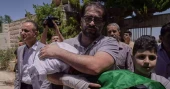
Palestinian baby killed in West Bank shooting as Israel reviews incident
A seven-month-old Palestinian baby was killed and his parents wounded after Israeli troops opened fire on their vehicle in the occupied West Bank, according to Palestinian health officials.
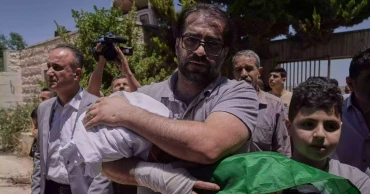
The Palestinian Health Ministry said the incident occurred Friday evening in the Tel Rumeida area south of Hebron. The infant, identified as Sam Fahd Abu Haikal, was struck in the face by a bullet and later died. His father, Fahd Abu Haikal, a lecturer at Bethlehem University, was shot in the hand, while his mother was also injured.
According to the family, they were travelling to visit relatives in Hebron when the shooting occurred. The father said a bullet pierced the child’s face before hitting his wife.
The Israeli military said soldiers fired at a vehicle they believed was accelerating toward them in the Hebron area. It added that troops fired several shots, wounding three Palestinians, and that an initial inquiry indicated the occupants were uninvolved civilians. The incident is under review.
Family members said the mother remains in critical condition, with shrapnel lodged near her heart.
During the funeral, the infant’s body was wrapped in a Palestinian flag as mourners gathered to pay their respects. The father called for accountability, rejecting suggestions that the shooting could be dismissed as a mistake.
The British Consulate in Jerusalem expressed shock over the child's death and called for an immediate, transparent investigation.
The incident comes amid heightened tensions in the West Bank, where violence has surged since the outbreak of the Gaza war in October 2023. According to the United Nations, more than 1,000 Palestinians, including at least 240 children, have been killed in the West Bank and East Jerusalem since the conflict began.
Separately on Saturday, the Palestinian Red Crescent reported that eight people were injured during clashes involving Israeli settlers and Palestinians in the town of Huwara near Nablus.
Israel’s military said the violence erupted following a reported livestock theft and that troops intervened to disperse the confrontation. It also said footage showing a soldier using force against a Palestinian was under review.
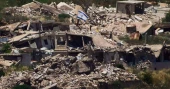
Meanwhile, in Gaza, an Israeli airstrike on a tent near a school in Gaza City killed at least six people, including two women, according to officials at Shifa Hospital.
Israel’s military said it had targeted militants operating in the area.
At the same time, Hamas announced that a new round of ceasefire negotiations had begun in Cairo with mediators from Egypt, Qatar and Turkey. The talks are aimed at advancing implementation of the Gaza ceasefire agreement and addressing issues related to a possible second phase of the deal.
Hamas spokesperson Hazem Qassem said discussions would focus on ending Israeli attacks in Gaza, advancing ceasefire arrangements and exploring proposals related to an international stabilization force and the future of weapons held by Palestinian armed groups.
1 month ago
Hezbollah rejects ceasefire deal as Israeli strikes kill 4 in Lebanon
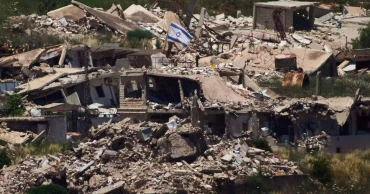
Hezbollah on Thursday rejected the latest ceasefire agreement reached between Israel and the Lebanese government, insisting on a full Israeli withdrawal from Lebanese territory, as fresh Israeli strikes killed at least four people and a United Nations peacekeeper died in crossfire.
In a televised statement, Hezbollah Secretary-General Naim Kassem said the group's fighters would not leave southern Lebanon under fire, describing such a move as “surrender” and a victory for Israel. He reiterated that Hezbollah remains committed to resisting what it considers Israeli occupation and stressed that its priority is ending Israeli attacks, securing a ceasefire and ensuring Israel’s withdrawal from Lebanon.
The latest developments threaten broader diplomatic efforts aimed at ending the ongoing regional conflict and restoring stability in the strategically important Strait of Hormuz, a key route for global oil and gas shipments.
Iran has maintained that any lasting ceasefire arrangement must also include Lebanon, while Israeli Prime Minister Benjamin Netanyahu has signaled that military operations will continue until Hezbollah no longer poses a security threat.
Meanwhile, a Serbian peacekeeper serving with the UN Interim Force in Lebanon (UNIFIL) was killed and two others were wounded when a mortar struck their position near the southern town of Marjayoun. Authorities have not determined whether the shell was fired by Israeli forces or Hezbollah.
Lebanon’s state-run National News Agency reported that an Israeli drone strike killed a motorcyclist and wounded four others in Maaroub village. Separate airstrikes in Sohmor, located in the Bekaa Valley, reportedly killed three more people and injured several others.
Additional Israeli strikes were reported across southern Lebanon. The Israeli military did not immediately comment on the incidents but has repeatedly warned civilians to avoid areas where it says Hezbollah infrastructure is being targeted.
1 month ago
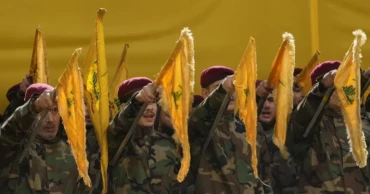
Hezbollah may seek assurances of Israeli withdrawal under ceasefire deal
Hezbollah is likely to demand firm guarantees that Israeli forces will withdraw from southern Lebanon before committing to any ceasefire arrangement, according to a regional expert.
Randa Slim, Middle East programme director at the Stimson Center, said previous ceasefire agreements between Israel and Lebanon have not been fully implemented.
“Even the last one that has been mediated by Mr Trump himself has not been implemented,” Slim told Al Jazeera.
She said Israel has continued to insist on maintaining operational freedom in southern Lebanon.
“Israel has demanded and insisted on having the freedom of manoeuvring in the south of Lebanon, targeting Hezbollah assets, targeting Hezbollah officials,” she said.
According to Slim, Hezbollah is expected to seek assurances that Israel will honour any withdrawal commitments under a future ceasefire agreement.
“Hezbollah… in response to this ceasefire announcement, will say: What’s going to be the guarantee if we leave the south, that Israel will withdraw from the south of Lebanon?
“What’s the guarantee that they will respect the sovereignty of Lebanon and not attack us in the southern suburbs of Beirut or somewhere else?” she said.
Her comments come amid ongoing discussions over efforts to reinforce a ceasefire arrangement between Israel and Lebanon. #From Al Jazeera
2 months ago
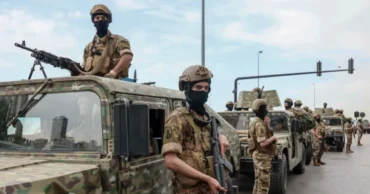
US-backed Israel-Lebanon agreement reinforces existing ceasefire
A statement issued by the US State Department said Israel and Lebanon have agreed to implement a ceasefire following US-led negotiations.
According to the statement, the ceasefire depends on the complete halt of Hezbollah attacks and the withdrawal of all Hezbollah fighters from areas south of the Litani River.
However, the agreement does not establish a new ceasefire. Rather, it reaffirms adherence to an existing truce that was extended in May for an additional 45 days after an earlier ceasefire arrangement.
One of the key outcomes of the talks is the creation of pilot zones in southern Lebanon, where the Lebanese Armed Forces would take sole responsibility for security and prevent the presence of any non-state armed groups.
US diplomats had expressed optimism ahead of the latest round of negotiations. Earlier on Wednesday, a State Department official indicated that while the discussions began slowly, significant progress was made over the course of the day.
Throughout the process, US officials have stressed that the continuation of dialogue itself represents an important achievement, regardless of the pace of progress. #From Al Jazeera
2 months ago
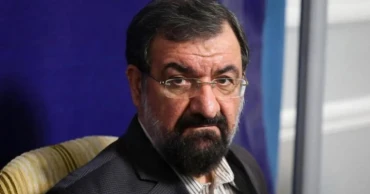
Iran warns against US ‘overreach’ in talks, ceasefire process
A senior Iranian official has warned that Tehran will not allow the United States to “overreach” in ongoing negotiations or in any ceasefire process, while vowing a strong response to any future attacks.
Mohsen Rezaee, a member of Iran’s Expediency Discernment Council and former commander of the Islamic Revolutionary Guard Corps (IRGC), said any aggression against Iran would be met with a forceful military response.
“The response to every shot and aggression will be a barrage of missiles and drones,” Rezaee wrote in a post on X. “History will not turn back, and the aggressor will be swiftly punished.”
Rezaee also stressed that Iran would not permit Washington to exert excessive influence in either diplomatic negotiations or efforts related to a ceasefire.
“Neither in negotiations nor in the ceasefire process will we allow America to overreach,” he added.
The remarks come amid heightened regional tensions and continuing diplomatic efforts involving Iran, the United States and other regional actors. Rezaee’s comments reflect Tehran’s firm stance on safeguarding its interests while warning against any perceived external pressure or military escalation.
Source: Al Jazeera
2 months ago
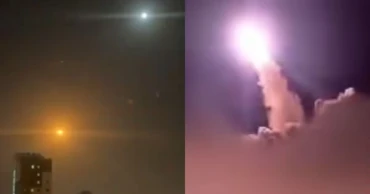
US military says it attacked Iran’s Qeshm Island; Tehran targets Kuwait, Bahrain
The US military said it carried out what it described as “self-defense” strikes on Iran’s Qeshm Island in the Strait of Hormuz, while Iran launched missiles towards Kuwait and Bahrain, according to a statement from the US military’s Central Command (CENTCOM).
In a post shared on X, CENTCOM said US forces also “successfully defeated multiple Iranian ballistic missiles and drones”.
The command said the strikes were launched after Iran “launched several ballistic missiles towards regional neighbours” and that the missiles “all failed to hit their intended targets”.
“Two Iranian missiles fired at Kuwait fell short or broke apart en route, and three missiles launched at Bahrain were immediately intercepted by US and Bahrain air defense forces,” CENTCOM said.
Air raid sirens were heard earlier in both Bahrain and Kuwait amid the heightened tensions in the region.
Meanwhile, Iran’s Mehr News Agency reported that explosions were heard in Qeshm city, adding that authorities were investigating the incident.
2 months ago
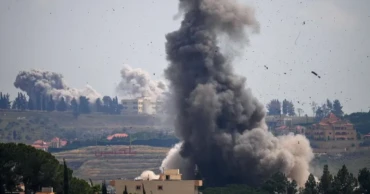
Hezbollah claims 13 attacks on Israeli forces in southern Lebanon
Hezbollah on Tuesday said it carried out 13 separate attacks on Israeli forces in southern Lebanon, targeting troop concentrations, military vehicles and command centres as fighting continued in the border region.
In a statement, the Iran-backed group said its fighters used rockets, artillery shells, guided missiles and attack drones in operations aimed at Israeli positions and advancing troops across several areas of southern Lebanon.
According to Hezbollah, its fighters targeted a number of Israeli Merkava tanks and detonated an explosive device against a military vehicle in the Haddatha and al-Balou’ areas. The group claimed the attack forced Israeli troops to stop their advance and retreat under the cover of Israeli air strikes.
Hezbollah also said it launched attacks on Israeli forces stationed near the historic Beaufort Castle and in the town of Biyyada. The group claimed that guided missiles and rocket barrages hit an Israeli command post and armoured units in those locations.
The claims could not be independently verified. Israeli authorities did not immediately comment on the reported attacks. #From Al Jazeera
2 months ago
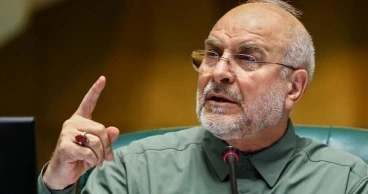
Iran warns of suspending US talks if Israeli attacks on Lebanon continue
Iran’s Parliament Speaker and chief negotiator in talks with the United States, Mohammad Bagher Ghalibaf, has warned that Tehran could halt its dialogue with Washington if Israel continues its military operations in Lebanon.
In a statement posted on X following a phone conversation with Lebanese Parliament Speaker Nabih Berri on Monday, Ghalibaf said he had stressed Iran’s position regarding the ongoing conflict.
He said that if what he described as the “crimes of the Zionist regime” in Lebanon continue, Iran would not only suspend the negotiation process but would also take a firm stand against Israel.
Ghalibaf reaffirmed Iran’s support for Lebanon and the resistance movement, expressing solidarity between the Iranian and Lebanese people.
His remarks came amid heightened tensions in the region as Israeli military operations in Lebanon continue and diplomatic efforts involving Iran and the United States remain under way.
Source: Al Jazeera
2 months ago