Middle-East
China urges Pakistan to intensify Iran-US mediation efforts
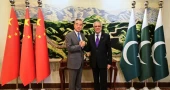
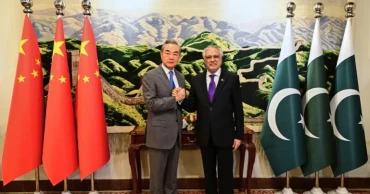
Chinese Foreign Minister Wang Yi has called on Pakistan to step up its mediation efforts between the United States and Iran, including initiatives aimed at reopening the Strait of Hormuz, according to the Xinhua News Agency.
Wang made the appeal during a phone conversation with Pakistan’s Deputy Prime Minister and Foreign Minister Mohammad Ishaq Dar.
During the call, Dar briefed Wang on Islamabad’s recent diplomatic engagement efforts to facilitate dialogue between Washington and Tehran. He also expressed appreciation for China’s continued support and called for closer coordination between the two countries, Xinhua reported.
Wang praised Pakistan’s role in facilitating talks and helping extend a temporary ceasefire. He said Islamabad’s efforts were important for regional stability and urged it to maintain momentum in supporting peace initiatives.
The Chinese foreign minister also reiterated Beijing’s backing for Pakistan’s mediation efforts, saying China would continue to support and contribute to diplomatic initiatives aimed at easing tensions in the region. #From Al Jazeera
2 months ago
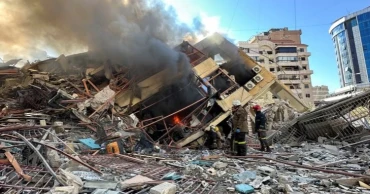
Pentagon says US war on Iran has cost $29bn
The US-Israeli war on Iran has cost the United States approximately $29 billion so far, according to a senior Pentagon official.
Jules Hurst, who is performing comptroller duties, told US lawmakers that the total includes updated costs for equipment repair and replacement as well as operational expenses.
He said the figure marks an increase of $4 billion from an estimate provided late last month.
Iran war raises fears of bunker fuel shortage, higher shipping costs
The conflict of US-Israeli war on Iran spread across the Middle East after the United States and Israel launched wide-ranging strikes on Iran, killing the country’s supreme leader on February 28.
Iran retaliated by launching attacks on Israel and US-allied states in the Gulf region.
The fighting escalated rapidly and extended to Lebanon, with casualties and damage mounting on all sides.
The United States and Iran later agreed to a conditional two-week ceasefire starting on April 7.
Source: Al Jazeera
2 months ago
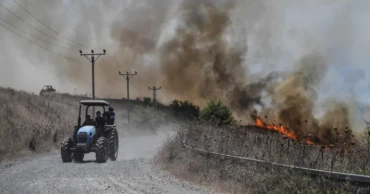
Israel to set up factory to produce suicide drones
Israel is setting up a military production facility to manufacture a large number of suicide drones in response to the growing threat posed by Hezbollah’s explosive unmanned aircraft, according to Israel Army Radio.
The report said Hezbollah’s attack drones have created a major challenge for Israeli forces operating in southern Lebanon and along the country’s northern border.
Army Radio said the drones have killed a number of Israeli soldiers and civilians in the area since the start of the ceasefire.
Hezbollah has increasingly used fibre-optic drones that are difficult to detect and cannot be disrupted by electronic jamming.
According to the report, these relatively low-cost drones have recently penetrated Israel’s advanced air defence systems and tested the effectiveness of its sophisticated radar network.
The move to establish a dedicated production facility reflects Israel’s efforts to strengthen its drone capabilities amid ongoing tensions with Hezbollah along the Lebanon border.
#From Al Jazeera
2 months ago
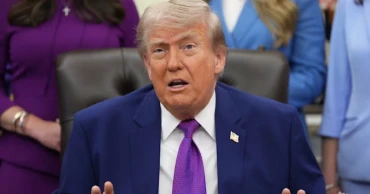
Trump rejects Iran proposal as fragile ceasefire faces uncertainty
US President Donald Trump on Monday said the ceasefire with Iran is “on life support,” rejecting Tehran’s latest proposal to end the conflict and describing it as “totally unacceptable.”
Speaking at an unrelated White House event, Trump also termed Iran’s response to a US-backed peace plan as “stupid” and “unbelievably weak,” though he noted that a diplomatic resolution remains “very possible.”
Iranian officials, however, pushed back against Washington’s position. Foreign Ministry spokesperson Esmaeil Baghaei said the US had made “unreasonable demands,” while Parliament Speaker Mohammad Bagher Ghalibaf warned that Tehran is prepared to respond to “any aggression.”
Ghalibaf said the US should accept Iran’s proposal, cautioning that any alternative approach would be “inconclusive” and could impose greater costs on American taxpayers if delays continue.
Amid the diplomatic tensions, the US and the UK have imposed new sanctions targeting Iranian individuals and entities.
Meanwhile, violence continues elsewhere in the region. Israeli airstrikes in southern Lebanon reportedly killed four people in Nabatieh, including a 78-year-old woman and her 11-year-old grandson. The Israeli military says it is targeting positions linked to Hezbollah, which in turn claimed to have carried out 20 attacks against Israel.
UN humanitarian chief Tom Fletcher expressed concern over the escalating impact on civilians, citing more than 100 Israeli strikes within 24 hours.
With tensions persisting on multiple fronts, the already fragile ceasefire between Washington and Tehran appears increasingly uncertain.
Source: Al Jazeera
2 months ago
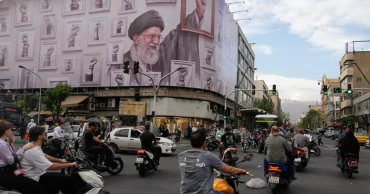
Trump says Iran ceasefire on ‘life support’ after rejecting new proposal
US President Donald Trump on Monday said the Iran ceasefire is on “life support” after he rejected Tehran’s latest proposal aimed at ending the ongoing conflict.
Officials said Iran’s proposal included limited concessions on its disputed nuclear programme, but Trump dismissed it as “garbage” and said he did not even finish reading it.
Speaking at an unrelated White House event, Trump said the ceasefire was “unbelievably weak” and described its current condition as being on “life support.”
“I would call it the weakest right now after reading that piece of garbage they sent us,” he said, adding, “I didn’t even finish reading it.”
The stalled negotiations and recent exchanges of fire have raised concerns of renewed conflict in the Middle East, potentially deepening a global energy crisis linked to the war. The situation has also kept tensions high over control of the Strait of Hormuz, a key global oil route.
Trump said he would consider suspending the federal tax on gasoline to help Americans cope with rising fuel prices, though such a move would require approval from Congress.
He is expected to raise the issue during a planned visit to China this week, where he is likely to urge President Xi Jinping to put pressure on Iran, China being the largest buyer of Iranian crude oil.
Meanwhile, diplomatic gaps remain wide between the two sides. Trump has demanded a major rollback of Iran’s nuclear activities, while Tehran is seeking a more limited agreement that would ease restrictions and reopen key trade routes ahead of further talks.
According to regional officials quoted by The Associated Press, Iran has proposed diluting part of its highly enriched uranium and transferring the rest to a third country, with Russia previously offering to host it.
However, Trump has insisted that all nuclear material be removed completely and is reportedly unlikely to accept Iran’s broader conditions, including formal arrangements over maritime control and compensation demands.
2 months ago
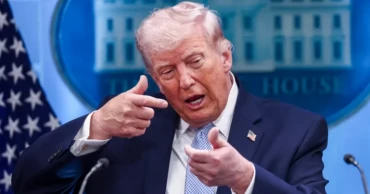
Buried Iranian enriched uranium under close watch, says Trump
US President Donald Trump has said that the United States is closely monitoring Iranian enriched uranium reportedly buried under rubble, adding that the US Space Force is handling the issue.
In an interview with independent journalist Sharyl Attkisson, recorded last week and aired on Sunday, Trump warned that if anyone attempts to approach the material, the United States would detect it and “blow them up.”
He also claimed that US forces would need only two more weeks to strike “every single target” in Iran, which he described as already “militarily defeated.”
Netanyahu says Iran war is ‘not over’; Trump rejects Tehran proposal
“We could go in for two more weeks and do every single target. We have certain targets that we wanted to… And we’ve done probably 70 percent of them, but we have other targets that we could conceivably hit,” Trump said.
Meanwhile, Iran’s latest response to a US-proposed text aimed at ending the war was sent on Sunday to mediator Pakistan, according to Iran’s official news agency IRNA.
The report said the proposed framework suggests that negotiations at this stage would focus on ending the regional conflict.
US Secretary of State Marco Rubio has said Iran must “make it clear” that it does not seek nuclear weapons, a condition Washington considers essential for any peace agreement.
2 months ago
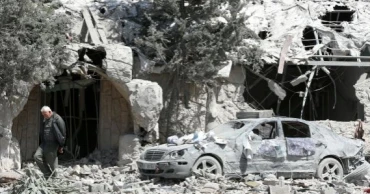
Netanyahu says Iran war is ‘not over’; Trump rejects Tehran proposal
Israeli Prime Minister Benjamin Netanyahu has said the war with Iran is “not over,” stressing that key objectives remain unmet, including the dismantling of uranium enrichment sites and addressing Tehran’s support for regional proxy groups.
“There is work to be done,” Netanyahu said, indicating that Israel will continue its efforts until those targets are achieved.
Meanwhile, US President Donald Trump has outright rejected Iran’s latest proposal aimed at ending the conflict, though he has not specified the exact reasons behind the decision.
Iran responds to US ceasefire proposal as drones hit Gulf nations
According to the proposal, Iran has sought an end to the naval blockade, the lifting of sanctions imposed by the United States and international organisations, and the right to retain control over its nuclear programme and foreign policy. These demands directly relate to issues Washington had cited as justification for launching the war.
Observers suggest that each of Iran’s key demands conflicts with longstanding US positions. In particular, Washington has opposed Tehran’s ambitions to become the 12th or 13th nuclear power in the world and has repeatedly warned against Iran’s capacity to conduct offensive operations against neighbouring countries, especially Israel.
The US has also been seeking to cut Iran’s support for groups such as Hamas and Hezbollah, while aiming to significantly reduce its regional influence.
It remains unclear whether Trump’s rejection of the proposal will push negotiations in a new direction or further complicate efforts to bring the war to an end.
Source: Al Jazeera
2 months ago
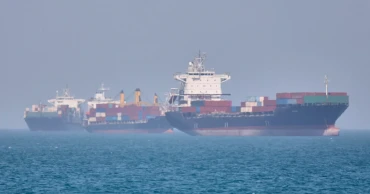
Iran responds to US ceasefire proposal as drones hit Gulf nations
Iran has sent its response to the latest U.S. ceasefire proposal via Pakistani mediators and wants negotiations to focus on permanently ending the war, Iran’s state-run media said Sunday. Pakistan confirmed receiving it.
Iran seeks to end the war on all fronts, including in Lebanon, where Israel is fighting the Iranian-backed Hezbollah militant group, and to ensure the security of shipping, its state TV said. Washington’s latest proposal addressed a deal to end the war, reopen the Strait of Hormuz and roll back Iran’s nuclear program, an issue that Tehran would rather discuss later.
The White House had no immediate comment about Iran’s reply but U.S. President Donald Trump on social media accused Tehran of “playing games” with the United States for nearly 50 years, adding: “They will be laughing no longer!”
Trump is giving diplomacy “every chance we possibly can before going back to hostilities,” the U.S. ambassador to the United Nations, Mike Waltz, told ABC earlier Sunday.
Iran’s new supreme leader, Mojtaba Khamenei, who has not been seen or heard publicly since the war began, “issued new and decisive directives for the continuation of operations and the powerful confrontation with the enemies” while meeting with the head of the joint military command, the state broadcaster reported, with no details.
Drone attacks target Gulf Arab nations
The fragile ceasefire was tested when a drone ignited a small fire on a ship off Qatar and the United Arab Emirates and Kuwait reported drones entering their airspace. The UAE’s Defense Ministry said it shot down two drones and blamed Iran. No casualties were reported, and no one immediately claimed responsibility.
Qatar’s Foreign Ministry called it a “dangerous and unacceptable escalation that threatens the security and safety of maritime trade routes and vital supplies in the region.” The United Kingdom Maritime Trade Operations Center said the ship attack happened 23 nautical miles (43 kilometers) northeast of Doha. It gave no details about the ship’s owner or origin.
Kuwait Defense Ministry spokesperson Brig. Gen. Saud Abdulaziz Al Otaibi said forces responded to drones “in accordance with established procedures” but did not say where they came from.
Iran and armed allied groups like Hezbollah in Lebanon have used drones to carry out hundreds of strikes since the war began with U.S. and Israeli attacks on Feb. 28.
Iran says it’s on ‘full readiness’ to protect nuclear sites
Trump has reiterated threats to resume full-scale bombing if Iran does not accept an agreement to reopen the strait and roll back its nuclear program. Iran has largely blocked the strategic waterway that’s key to the global flow of oil, natural gas and fertilizer since the war began, rattling world markets.
The U.S. in turn has blockaded Iranian ports and on Friday struck two Iranian oil tankers it said were trying to breach the blockade. Iran’s Revolutionary Guard navy says any attack on Iranian oil tankers or commercial vessels would be met with a “heavy assault” on one of the U.S. bases in the region and enemy ships.
The American military said Sunday that it has turned back 61 commercial vessels and disabled four since the blockade began April 13.
Another sticking point in negotiations is Iran’s highly enriched uranium. The U.N. nuclear agency says Iran has more than 440 kilograms (970 pounds) of uranium that is enriched up to 60% purity, a short, technical step from weapons-grade levels.
In an interview with state media posted late Saturday, an Iranian military spokesperson said its forces were on “full readiness” to protect nuclear sites where uranium is stored.
“We considered it possible that they might intend to steal it through infiltration operations or heli-borne operations,” Brig. Gen. Akrami Nia told the IRNA news agency.
Israeli Prime Minister Benjamin Netanyahu in an excerpt of an interview with CBS scheduled to air later Sunday said the war isn’t over because the enriched uranium needs to be taken out of Iran. “Trump has said to me, ‘I want to go in there,’ and I think it can be done physically,” he said.
Russian President Vladimir Putin said Saturday that Moscow’s proposal to take enriched uranium from Iran to help negotiate a settlement remains on the table.
The majority of Iran’s highly enriched uranium is likely at its Isfahan nuclear complex, the International Atomic Energy Agency director-general told The Associated Press last month. The facility was bombarded by U.S.-Israeli airstrikes in the 12-day war last year and faced less intense attacks this year.
Pakistan oversaw face-to-face talks between the U.S. and Iran last month and continues to pursue mediation. In rare public comments, army chief Field Marshal Asim Munir said Islamabad remains committed to helping end the conflict. Prime Minister Shehbaz Sharif spoke by phone with his Qatari counterpart.
Iran warns against French-British effort in the strait
Iran’s deputy foreign minister warned against a planned French-British effort that aims to support maritime security in the Strait of Hormuz after hostilities are over.
“The presence of French and British vessels, or those of any other country, for any possible cooperation with illegal U.S. actions in the Strait of Hormuz that violate international law will be met with a decisive and immediate response from the armed forces,” Kazem Gharibabadi said on social media.
French President Emmanuel Macron responded by saying it won’t be a military deployment but an international mission to secure shipping once conditions allow.
Several attacks against ships in the Persian Gulf have occurred over the past week, and a U.S. effort to “guide” ships through the strait was quickly paused.
South Korea announced initial findings from an investigation that said two unidentified airborne objects struck the South Korean-operated vessel HMM NAMU about one minute apart while it was anchored in the strait last week, causing an explosion and fire. A foreign ministry spokesperson said officials have yet to determine who was responsible.
2 months ago
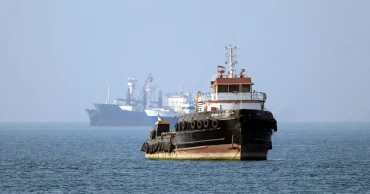
Strait of Hormuz sees new escalation after US attack
U.S. forces fired on and disabled two Iranian oil tankers on Friday after exchanging fire with Iranian forces in the Strait of Hormuz overnight. The United Arab Emirates, meanwhile, reported another Iranian missile and drone attack.
The attacks cast more doubt on a tenuous month-old ceasefire that the United States has insisted is still in effect. Washington is awaiting an Iranian response to its latest proposal for a deal to end the war, reopen the strait and roll back Tehran’s disputed nuclear program.
U.S. Secretary of State Marco Rubio said he hopes to receive “a serious offer” from Iran later Friday.
The U.S. military said Friday that its forces had disabled two Iranian tankers that were trying to breach an American blockade of Iran’s ports. Hours earlier, the military said it thwarted attacks on three Navy ships and struck Iranian military facilities in the strait.
Iran has mostly blocked the critical waterway for global energy since the U.S. and Israel launched the war on Feb. 28, causing a global spike in fuel prices and rattling world markets. The U.S. has imposed its own blockade of Iran’s ports.
The UAE’s Defense Ministry meanwhile said three people were wounded after air defenses engaged two ballistic missiles and three drones launched by Iran. It was not clear if all were successfully intercepted.
US says it responded to an attack in the strait
The U.S. military posted video of the two Iranian tankers as their smokestacks were struck by an American fighter jet on Friday. Earlier in the week, an American military jet shot out the rudder of a tanker the U.S. military said was attempting to breach its blockade.
Late Thursday, the U.S. military said it thwarted Iranian attacks on three Navy ships in the Strait of Hormuz and struck Iranian military facilities in response. It said no American ships were hit.
“They threaten Americans, they are going to be blown up,” Rubio told reporters Friday.
Iran’s Foreign Ministry condemned what it called “hostile” U.S. military action, saying it violated the ceasefire. “Every time a diplomatic solution is on the table, the U.S. opts for a reckless military adventure,” Iranian Foreign Minister Abbas Araghchi posted on X.
A U.S. strike overnight killed at least one sailor and injured 10 others aboard a cargo vessel that caught fire, a news agency affiliated with Iran’s judiciary reported. It was not clear if the ship was one of the two tankers the U.S. acknowledged striking.
U.S. President Donald Trump has insisted the ceasefire is holding. He also has reiterated threats to resume full-scale bombing if Iran doesn’t accept an agreement to reopen the strait and roll back its nuclear program.
Pakistani Prime Minister Shehbaz Sharif said his country has been in contact with the U.S. and Iran “day and night” in an effort to extend the ceasefire and reach a peace deal.
Images show apparent oil slick off Iranian terminal
Satellite images reviewed by The Associated Press show what appears to be an oil slick in the Persian Gulf emanating from the western side of Kharg Island, Iran’s main crude export terminal.
Images taken Friday show the slick covering about 71 square kilometers (27 square miles) and appear to show oil still leaking from the terminal, said Ami Daniel, CEO of maritime intelligence firm Windward AI.
Daniel estimated that the equivalent of roughly 80,000 oil barrels has spilled from Kharg Island since the slick was first detected by satellite images Tuesday. It’s unknown whether the spill was caused by a malfunction, an airstrike or something else.
“This is the risk of fighting in an oil-rich area,” said Daniel, adding that it’s unlikely any cleanup efforts will be launched in Gulf waters that have become an active war zone.
He said the spill appears to be spreading southwest and within the next two weeks could potentially reach the shores of the UAE, Qatar or Saudi Arabia.
Nina Noelle, an international crisis operations expert with Greenpeace Germany, said Friday that preliminary assessment and recent images show the spill beginning to disperse and it appears unlikely that it will impact land. She said depending on wind, waves and current conditions, parts of the slick could still possibly affect some sensitive marine habitats.
“More likely, it will dissipate offshore under prevailing conditions,” Noelle said.
The Pentagon declined to comment on whether the U.S. military was tracking the spill or whether there had been recent strikes on the Iranian island. Based on the imagery taken earlier this week, the spill occurred before the most recent round of U.S. strikes.
Rubio says `unacceptable’ for an Iranian agency to control strait
Rubio said Friday that it’s “unacceptable” for Iran to have a government agency that vets and taxes ships seeking passage through the strait.
Lloyd’s List Intelligence, a shipping data company, reported Thursday that Iran has created such an agency, known as the Persian Gulf Strait Authority.
The Iranian effort to formalize control over the channel raised new concerns about international shipping, with hundreds of commercial vessels bottled up in the Persian Gulf and unable to reach the open sea.
“Is the world going to accept that Iran now controls an international waterway?” Rubio said. “What is the world prepared to do about it?”
Iran has effectively closed the strait, a vital waterway for the shipment of oil, gas, fertilizer and other petroleum products, while the U.S. is blockading Iranian ports.
A Chinese-crewed oil tanker was attacked near the strait. China has continued to import oil from Iran despite the effective closure of the waterway.
China’s Foreign Ministry expressed concern, saying the tanker was registered in the Marshall Islands with Chinese crew on board. There were no casualties reported.
An oil tanker that passed through the Strait of Hormuz in mid-April arrived off South Korea’s coast on Friday with 1 million barrels of crude. South Korea, which last year imported more than 60% of its crude through the strait, has capped prices of gasoline and other petroleum products.
2 months ago
Iran warns sanctions enforcers over Hormuz transit
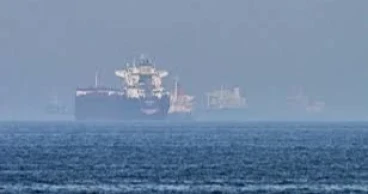
Iran has warned that countries enforcing US sanctions against it could face difficulties transiting the Strait of Hormuz, according to remarks by a military spokesperson carried by local media.
Brigadier General Akrami Nia said any country implementing the sanctions would “definitely face difficulties passing through the Strait of Hormuz,” the Tasnim news agency reported.
He also claimed that Iran had thwarted its adversaries’ goals during the recent conflict, stating that “none of the enemy’s objectives were achieved” and that the country’s political system remained stable.
“Rather, unity and cohesion inside were strengthened, which we still witness with the presence of people in the streets,” he said, adding that the opposing side was “forced to accept a ceasefire.”
Nia further said that during the ceasefire, Iran has reinforced its military capabilities, updated its target list and adjusted both defensive and offensive positions.
Bulk carrier hit by ‘unknown projectile’ off Qatar coast
The United Kingdom Maritime Trade Operations (UKMTO) has reported that a bulk carrier was struck by an “unknown projectile” about 23 nautical miles (43 km) northeast of Qatar’s capital, Doha.
According to UKMTO, the impact caused a small fire onboard, which was later extinguished.
No casualties were reported, and there was no environmental damage from the incident, the agency added.
Source: Al Jazeera
2 months ago