Middle-East
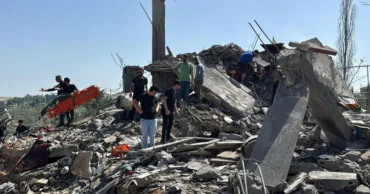
Israeli strikes killed 39 in Lebanon amid continued cross-border hostilities
At least 39 people were killed in a fresh wave of Israeli airstrikes across Lebanon, the country’s health ministry said, as hostilities between Israeli forces and Hezbollah persist despite a ceasefire announcement.
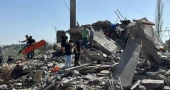
One of the deadliest strikes hit the southern town of Saksakiyeh, where at least seven people, including a child, were killed and 15 others injured, among them three children, according to the ministry.
The Israeli military said it targeted Hezbollah operatives using a structure for military purposes and acknowledged reports of civilian casualties. It added that precautions were taken to minimise harm to civilians, including the use of precision weapons and aerial surveillance, and that the incident is under review.
Lebanon’s state-run National News Agency reported multiple Israeli strikes across southern regions on Saturday.
In another incident, an Israeli drone strike in Nabatieh targeted a motorbike carrying a Syrian man and his 12-year-old daughter. The health ministry said the pair were hit in successive strikes, killing the father and critically injuring the girl, who was undergoing surgery.
Hezbollah also launched a drone attack into northern Israel, wounding three Israeli soldiers, one of them seriously, according to the Israeli military.
Clashes between Israel and Hezbollah have continued since a ceasefire deal announced on April 16. Israel says its strikes are aimed at Hezbollah-linked targets, while the group has responded with rocket and drone attacks.
According to Lebanon’s health ministry, more than 120 people have been killed in Israeli attacks over the past week, including women and children, though it does not distinguish between civilians and combatants.
Israeli forces continue to occupy parts of southern Lebanon along the border, aiming to establish what they describe as a Hezbollah-free buffer zone. Reports indicate widespread destruction in some villages, drawing concern from rights groups.
Since early March, nearly 2,800 people have been killed in Lebanon, while Israeli authorities report 17 soldiers and three civilians killed in related violence on both sides of the border.
Source: BBC
2 months ago
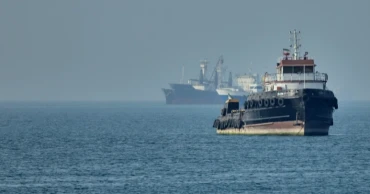
Iran warns the US against attacks on its vessels as fragile ceasefire holds
Iran’s Revolutionary Guard navy warned it would launch a “heavy assault” on U.S. bases and vessels in the region if Iranian oil tankers or commercial ships come under attack, even as a fragile ceasefire between Tehran and Washington appears to be holding.
The warning, reported by Iranian state media on Saturday, came a day after the United States struck two Iranian oil tankers, raising fresh concerns over the stability of the month-long ceasefire. The U.S. military said the vessels were attempting to breach its blockade of Iranian ports.
Meanwhile, Bahrain, host to the U.S. Navy’s Fifth Fleet, said it had arrested 41 individuals allegedly linked to Iran’s Revolutionary Guard. Authorities claimed the group had been in contact with the Guard and collected funds intended to support what they described as “terrorist operations.”
Iran cautioned Bahrain against aligning with the U.S., warning of “severe consequences” and highlighting the strategic importance of the Strait of Hormuz, a vital global energy route that has largely been blocked since the conflict began on Feb. 28.
The ongoing blockade of the strait has disrupted global oil supplies, driven up fuel prices and unsettled international markets. The U.S. Central Command said its forces have turned back dozens of vessels and disabled several since enforcing the blockade in April.
Amid rising tensions, Britain announced it was deploying a warship to the Middle East in preparation for a possible multinational mission to safeguard commercial shipping in the Strait of Hormuz once hostilities subside. France has also moved its aircraft carrier group into the Red Sea as part of preparations.
Diplomatic efforts to end the conflict continue, with the United States awaiting Iran’s response to a proposed agreement aimed at reopening the strait and curbing Tehran’s nuclear programme. U.S. President Donald Trump has reiterated threats of intensified military action if Iran does not agree to the deal.
Pakistan said it has been engaged in continuous diplomatic contacts with both Washington and Tehran to help sustain the ceasefire and reach a broader peace agreement. Russia and Saudi Arabia have also called for a long-term diplomatic solution.
Russian President Vladimir Putin said Moscow’s proposal to take custody of Iran’s enriched uranium remains under consideration as part of potential negotiations, suggesting it could be placed under international monitoring.
Despite ongoing diplomacy, uncertainty remains over Iran’s leadership, with its new Supreme Leader Mojtaba Khamenei yet to make a public appearance since the conflict began. However, Iranian officials have said he is in good health.
Officials from Egypt and Qatar have also emphasized that dialogue remains the only viable path to resolving the crisis.
2 months ago
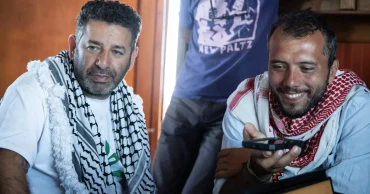
Israel to release two Gaza flotilla activists, rights group says
Israel will release two foreign activists detained after a Gaza-bound flotilla was intercepted last week and will later transfer them to immigration authorities for deportation, according to the rights group representing them.
Adalah said in a statement: “Today, the Shabak Israeli intelligence agency informed Adalah’s legal team that Global Sumud Flotilla (GSF) activists and leaders Thiago Avila and Saif Abukeshek would be released from Israeli detention today, Saturday 9 May 2026.”
It added that the two activists “will be handed to Israel’s immigration authorities later today and kept in custody pending their deportation”.
The activists are Saif Abu Keshek, a Spanish national, and Thiago Avila of Brazil.
They were detained and taken to Israel for questioning after the flotilla was intercepted by the Israeli navy in international waters off Athens last week. #From Al Jazeera
2 months ago
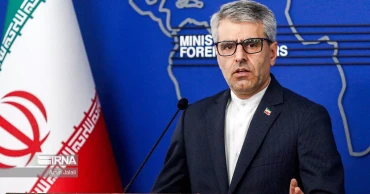
Iran says response to US proposal will come at ‘appropriate time’
Iran said it is still reviewing the latest US proposal aimed at ending the ongoing conflict and will send its response at an “appropriate time.”
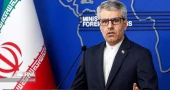
Foreign Ministry spokesman Esmail Baghaei said Tehran would not be pressured by deadlines set by Washington, dismissing them as meaningless.
“Iran does not respond to deadlines or ultimatums,” he said.
Iranian officials said the delay is due to the technical complexity of the proposed agreement and the need for approval from several key institutions in Tehran.
According to media report, the review process involves parliamentary leaders, including Mohammad Bagher Ghalibaf, the Islamic Revolutionary Guard Corps, the Supreme National Security Council and ultimately Supreme Leader Ali Khamenei.
Khamenei’s approval is required before Iran sends its final response to Washington.
#From Middle East Eye
2 months ago
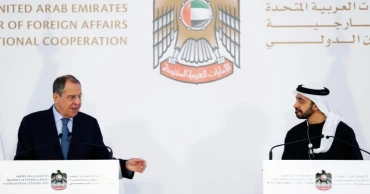
Top diplomats of Russia, UAE hold talks on Hormuz Strait tensions
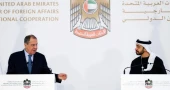
Russian Foreign Minister Sergey Lavrov and his UAE counterpart Sheikh Abdullah bin Zayed Al Nahyan held a telephone conversation to discuss regional developments amid the US-Israel war on Iran, according to a statement from the Russian Foreign Ministry.
The ministry said the discussions focused on the situation surrounding the Strait of Hormuz, including deliberations on the issue at the United Nations.
It added that the Russian side emphasised the importance of supporting ongoing negotiation efforts between Iran and the United States.
US disables two more Iranian tankers as Strait of Hormuz tensions escalate
Moscow also reaffirmed its position that prospects for stabilisation should not be undermined by a renewed outbreak of hostilities, which could lead to civilian casualties and damage to civilian infrastructure in Iran as well as neighbouring countries.
The statement further said both foreign ministers agreed to remain in contact and work towards aligning the approaches of all parties involved in seeking a long-term and sustainable settlement.
Source: Al Jazeera
2 months ago
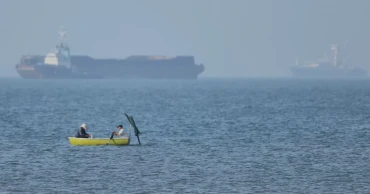
US disables two more Iranian tankers amid rising Strait of Hormuz tensions
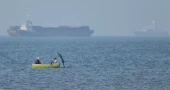
US forces disabled two Iranian oil tankers in the Strait of Hormuz after overnight exchanges of fire with Iranian forces, as tensions continued to rise despite a fragile month-old ceasefire.
The US military said Friday the tankers were attempting to breach an American blockade of Iranian ports. Earlier, Washington said it had thwarted attacks on three US Navy ships and struck Iranian military facilities in the strategic waterway. No American ships were hit.
Meanwhile, the United Arab Emirates said three people were wounded after Iranian ballistic missiles and drones targeted the country. It remained unclear whether all projectiles were intercepted.
US Secretary of State Marco Rubio said Washington was awaiting “a serious offer” from Tehran regarding a deal to end the conflict, reopen the strait and curb Iran’s nuclear programme.
Iran condemned the US actions as “hostile” and accused Washington of violating the ceasefire. Iranian Foreign Minister Abbas Araghchi said the US was choosing “reckless military adventure” over diplomacy.
Iran has largely blocked the vital shipping route since the war began on February 28, disrupting global energy supplies and increasing fuel prices worldwide. Satellite images also showed a large oil slick near Iran’s Kharg Island export terminal.
2 months ago
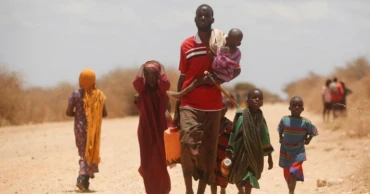
Strait of Hormuz closure deepening Somalia’s hunger crisis: WFP
The closure of the Strait of Hormuz and the fallout from the ongoing war have triggered increases in fuel and food prices, disrupting supply chains in several countries, including Somalia, where an already severe hunger crisis has worsened, according to the World Food Programme (WFP).
The WFP said Somalia is currently facing one of the “most complex hunger crises in recent years” due to prolonged drought, conflict and limited humanitarian assistance.According to the agency’s latest findings, the number of people experiencing “crisis-level hunger or worse” in Somalia has nearly doubled over the past year to 6.5 million.
Malnutrition worsens in Gaza, women and children severely affected
Of them, around two million people are suffering from “emergency hunger”, described as the second-highest level of food insecurity.
Hameed Nuru, WFP country director in Somalia, told Al Jazeera that many families are once again being forced to make extremely difficult decisions.
“Entire families have had to once again make the toughest choices,” Nuru said.“Sell the little assets they had, reduce or completely cut meals, and leave everything behind to find help – but this time there’s no help available,” he added.
Source: Al Jazeera
2 months ago

Malnutrition worsens in Gaza, women and children severely affected
A severe malnutrition crisis is deepening in the war-battered Gaza Strip amid restrictions on food and humanitarian aid imposed on Palestinians, according to Doctors Without Borders.
The organisation said pregnant women, newborns and young children are among the worst affected, with data from its supported clinics showing a rise in premature births, miscarriages, low birth weight babies and infant deaths, alongside increasing cases of acute child malnutrition.
Spain demands ‘immediate release’ of Gaza flotilla activist
Field workers reported witnessing the crisis firsthand. “We are seeing this every day as we work in the field. We are meeting mothers, we are seeing these premature births and miscarriages, and all of these women are telling us the main reason behind this malnutrition is Israel’s restriction on food,” the statement said.
The group further said that nearly six months into the so-called ceasefire, restrictions on aid entry remain in place despite an agreement allowing 600 trucks of humanitarian assistance to enter Gaza daily.
“In reality, only about 150 trucks are entering, and people here do not have access to food or basic supplies,” it added.
Source: Al Jazeera
2 months ago
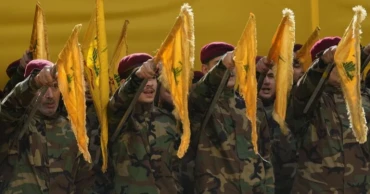
Israeli army says 220 Hezbollah fighters killed since ‘ceasefire’
The Israeli military has claimed that its forces killed 220 Hezbollah fighters since a Washington-brokered “ceasefire” between Israeli and Lebanese officials took effect in mid-April.
In a statement, Israeli military spokesman Avichay Adraee said Israeli forces killed 85 Hezbollah members over the past week and struck more than 180 military facilities belonging to the group.
Meanwhile, Lebanon’s Health Ministry said Israeli attacks have killed more than 2,700 people since March 2, including dozens since the supposed truce began.
Trump says US held “very good” talks with Iran in last 24 hours
Source: Al Jazeera
2 months ago

Trump says US held “very good” talks with Iran in last 24 hours
US President Donald Trump on Wednesday said Washington had held “very good” talks with Iran over the past 24 hours regarding ending the war that has continued for more than two months.
Speaking at an event at the White House, Trump said Iran was eager to reach an agreement.
“They want to make a deal,” Trump told reporters, repeating his earlier claim that Iran wants “to make a deal badly.”
Iran reviews latest US proposal as Trump pushes for deal to end conflict
“We’ve had very good talks over the last 24 hours, and it’s very possible that we’ll make a deal,” he added.
Trump also reiterated that if the United States withdrew from Iran at this moment, the country would need 20 years to rebuild because of the extensive damage caused by the US-Israeli strikes launched on Feb. 28.
2 months ago