Middle-East
Iran rial hits record low as fragile ceasefire with US, Israel holds
Iran’s national currency, the rial, has fallen to a record low wednesday of 1.8 million against the US dollar as a fragile ceasefire between the United States and Israel continues to hold.
The rial, which remained relatively stable in the early weeks of the conflict that began on February 28 due to limited trade and imports, started declining two days ago. Analysts warn the continued depreciation is likely to intensify inflation in Iran, where the value of the dollar heavily influences prices of imported goods, including food, medicine, electronics and raw materials.
Trump Declares “NO MORE MR. NICE GUY” in Sharp Warning to Iran
The currency’s slide comes as a US naval blockade during the ceasefire adds pressure on Iran’s struggling economy by restricting oil shipments, a key source of government revenue and foreign currency.
Meanwhile, Pakistani Prime Minister Shehbaz Sharif said on Wednesday that his government is continuing efforts to ease tensions between Washington and Tehran following an initial round of direct talks held on April 11.
The latest downturn follows earlier currency instability that contributed to nationwide protests in January, when the rial weakened from about 1.4 million to 1.6 million per dollar in under a week, fueling public anger over rising prices.
Iran’s economy, already affected by decades of sanctions, inflation and exchange rate disparities, has seen rising prices of basic goods such as milk, yogurt, cooking oil, bread, rice, cheese and detergents over the past two weeks.
The economic strain has also affected employment, with reports of layoffs including 500 workers at Pinak in Rasht and 700 at Borujerd Textile Factory after contract terminations since the start of the new Iranian calendar year in late March.
3 months ago
Trump Declares “NO MORE MR. NICE GUY” in Sharp Warning to Iran
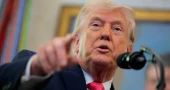
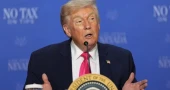
US President Donald Trump has criticized Iran over its handling of nuclear negotiations, saying the country has failed to move toward a deal.
In a post on his Truth Social platform, Trump wrote, “Iran can’t get their act together. They don’t know how to sign a nonnuclear deal. They better get smart soon!”
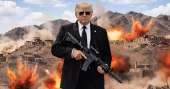
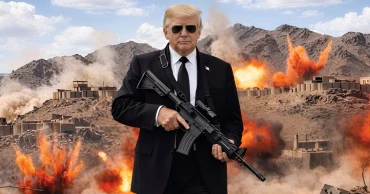
The post was accompanied by an AI-generated image of Trump holding a weapon amid explosions, with the caption: “NO MORE MR. NICE GUY.”
Trump plans to extend blockade on Iran: report
Trump’s remarks come amid rising tensions over Tehran’s nuclear programme, which escalated ahead of the recent war. He has repeatedly vowed that Iran must be prevented from developing a nuclear weapon.
Iran, however, has long maintained that its nuclear programme is peaceful in nature, although it has enriched uranium to levels close to weapons-grade.
3 months ago
Trump plans to extend blockade on Iran: report
Donald Trump has directed his administration to prepare for an extended blockade of Iran, aiming to intensify economic pressure while ceasefire conditions remain in place and diplomatic talks stay stalled, The Wall Street Journal reported Wednesday, citing U.S. officials.
According to the report, Trump made the decision in recent White House meetings with senior security officials, choosing to continue restricting Iranian oil exports and shipping to and from Iranian ports.
Officials said the strategy is designed to squeeze Iran’s economy and force concessions over its nuclear programme, particularly demands that Tehran suspend uranium enrichment for up to 20 years.
The report said Trump views the blockade as a “high-risk bid” but considers it less risky than restarting military strikes or abandoning the confrontation altogether.
He has also reportedly rejected Iran’s proposal to reopen the Strait of Hormuz and defer nuclear negotiations, arguing it shows a lack of good faith.
A White House spokesperson said the U.S. has achieved its military objectives in the conflict and now holds “maximum leverage” over Iran through the blockade, which has significantly reduced maritime activity through the key shipping route.
However, the prolonged blockade has also contributed to rising global energy prices and increased political pressure domestically in the United States.
The report added that the ongoing conflict has led to the lowest levels of shipping through the Strait of Hormuz since the escalation of hostilities earlier this year, with uncertainty persisting over whether the crisis will end in a negotiated settlement or continued confrontation.
3 months ago
What to know about OPEC and OPEC+ after United Arab Emirates exit
The United Arab Emirates’ decision to quit OPEC and the broader OPEC+ alliance, effective May 1, marks a significant shift in global energy politics. Here’s what’s behind the move and why it matters:
Why is the UAE leaving?
The UAE said its decision followed a review of its energy strategy, focusing on national interests and future production capacity.
Analysts say the real driver is flexibility. OPEC quotas had capped the UAE’s oil output at about 3.2 million barrels per day, despite its capacity nearing 5 million. By leaving, Abu Dhabi can boost production and better respond to market demand.
The move also comes amid disruptions in the Strait of Hormuz, pushing the UAE to rely more on export routes like Fujairah that are less exposed to regional tensions.
Long-standing disagreements
The exit reflects deeper tensions within OPEC, particularly with Saudi Arabia over production quotas.
Energy experts say these disagreements have evolved from routine disputes into structural conflicts. The UAE has long sought greater autonomy over its oil policy, especially as it aims to expand output and maximize revenue.
At the same time, the country is trying to accelerate economic diversification before global demand for fossil fuels declines.
What impact could it have?
The UAE’s departure could weaken OPEC’s influence over global oil supply, reducing its share from about 30% to roughly 26%.
It may also increase market volatility. With one of the group’s key producers stepping away, coordination on output levels could become more difficult.
The move comes amid ongoing geopolitical tensions involving Iran and broader regional instability, further complicating supply dynamics.
Experts say the decision signals a broader shift: the era of tightly coordinated Gulf oil policy may be fading, with countries prioritising national strategies over collective action.
Bottom line
The UAE’s exit is less about a sudden break and more about long-building pressure—balancing production ambitions, regional tensions, and long-term economic transformation. Its ripple effects could reshape how global oil markets are managed in the years ahead.
3 months ago
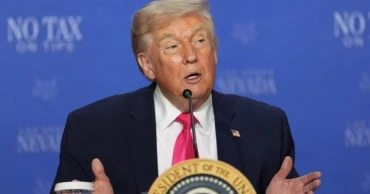
Trump claims Iran wants Hormuz reopened, U.S. energy chief says limited mine clearance sufficient
U.S. President Donald Trump claimed Tuesday that Iran wants the United States to reopen the Strait of Hormuz, though he did not clarify how the message was conveyed.
In a social media post, Trump also alleged that Iran is in a “state of collapse,” without providing evidence or further details.
Meanwhile, U.S. Secretary of Energy Chris Wright said it may not be necessary to remove all naval mines reportedly placed in the strait to resume maritime traffic.
“You just need a pathway for ships to move in and out. I think that can happen quickly,” Wright told Bloomberg, suggesting a limited clearance operation could restore shipping.
The developments come as Trump is reportedly dissatisfied with Iran’s latest proposal aimed at ending the conflict. According to U.S. media reports citing White House officials, the proposal includes reopening the Strait of Hormuz and ending the U.S. naval blockade on Iranian ports, while postponing negotiations on Tehran’s nuclear programme.
Trump reiterated last week that any potential agreement would be on U.S. terms and timeline, stressing there is “no time frame” for ending the war involving the United States, Israel and Iran, and no urgency regarding the extended ceasefire or stalled negotiations.
3 months ago
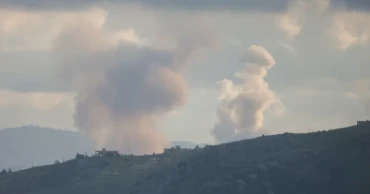
Israeli strikes continue in southern Lebanon, houses destroyed
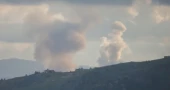
Israeli forces have carried out fresh air attacks in southern Lebanon, hitting several towns and causing widespread damage, according to Lebanon’s National News Agency (NNA).
The agency reported that air raids targeted the town of Hanine at dawn, destroying a number of houses.
The latest strikes came after overnight explosions were reported in the coastal town of Naqoura. Separate air raids and ground fire were also reported in the town of Khiam, NNA said.
There were no immediate reports of casualties, while the situation in the affected areas remained tense following the repeated attacks.
#From Al Jazeera
3 months ago
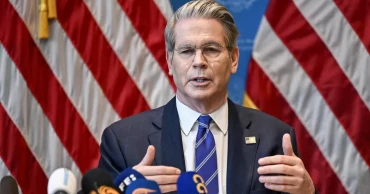
US Treasury chief says blockade will soon force Iran to reduce oil production
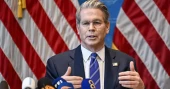
US Treasury Secretary Scott Bessent has said Washington’s intensified economic pressure on Tehran is likely to force Iran to scale back its oil production.
Bessent said the Treasury Department has increased financial measures aimed at weakening the networks that support Iran’s economy.
“The Treasury Department, through Economic Fury, has targeted Iran’s international shadow banking infrastructure, access to crypto, shadow fleet, and weapons procurement networks,” Bessent said in a post on X.
He added that the steps also target funding channels for Iran-linked groups in the region as well as “independent Chinese ‘teapot’ refineries that support Iran’s oil trade”.
Bessent claimed that “these actions have disrupted tens of billions of dollars in revenue that would be used to fund” the Iranian government, adding that “Tehran’s inflation has doubled and its currency has rapidly depreciated.”
He also said Washington’s “maximum pressure campaign” against Iran, including a blockade on Iranian ports, was affecting the country’s oil exports.
“Kharg Island, Iran’s primary oil export terminal, is soon nearing storage capacity, which will force the regime to reduce oil production,” he said.
Bessent added that the situation was leading to “an additional approximately $170 million per day in lost revenue and causing permanent damage to Iran’s oil infrastructure”. #By Al Jazeera
3 months ago
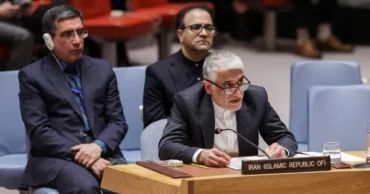
Iran urges UN Security Council to enforce Lebanon ceasefire, stop Israeli attacks
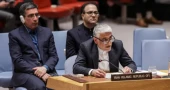
Iran has called on the United Nations Security Council to take firm action to ensure Israel abides by the ceasefire in Lebanon and halts its military operations.
Iran’s ambassador to the UN, Amir Saeid Iravani, urged the council to “act decisively” to compel Israel to fully respect the truce. He also called for immediate steps to stop all attacks on civilians and civilian infrastructure in Lebanon.
Iravani further demanded that Israel withdraw all its forces from Lebanese territory.
The Iranian envoy also condemned what he described as US and Israeli attacks on Iran, alongside Israel’s ongoing actions in Gaza, the occupied West Bank and the Syrian Golan Heights.
#From Al Jazeera
3 months ago
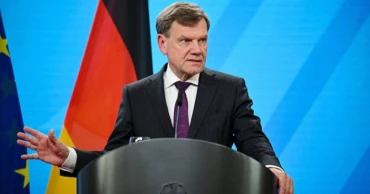
Germany urges UN Security Council action over Hormuz crisis
German Foreign Minister Johann Wadephul has called for Iran to end its blockade of the Strait of Hormuz, warning that rising oil prices are worsening the global economic outlook.
In a post on X, Wadephul said the UN Security Council “must play a role” following its high-level discussion on the escalating situation in the key shipping route. The crisis has left thousands of cargo vessels and around 20,000 seafarers stranded.
He said the Security Council should “assume responsibility and pass a resolution”, adding that Germany is ready to “take on responsibility” and is seeking a seat on the UN body.
The 15-member Security Council includes five permanent members with veto power — China, France, Russia, the United States and the United Kingdom — along with 10 non-permanent members elected on a rotating regional basis. #From Al Jazeera
3 months ago
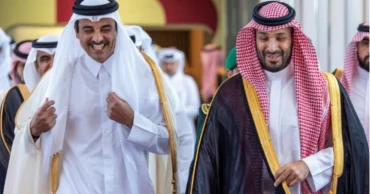
GCC leaders discuss Hormuz reopening, unity in Jeddah
Gulf Cooperation Council (GCC) leaders held discussions in Jeddah focusing on reopening the Strait of Hormuz and strengthening unity and coordination among member states, according to reports.
Two key issues dominated the meeting agenda - efforts to reopen the strategically vital Strait of Hormuz and the development of a coordinated approach demonstrating solidarity among GCC countries.
Since the war began on February 28, some GCC states have been more heavily affected than others, with the United Arab Emirates bearing the brunt of Iranian munitions.
United Arab Emirates says it will leave OPEC
Leaders convened in Jeddah for what was described as a brief meeting, held shortly after the UAE announced its decision to withdraw from the Organization of the Petroleum Exporting Countries (OPEC).
Source: Al Jazeera
3 months ago