Middle-East
Attack on Iran’s nuclear facility a ‘dangerous precedent’: China
China has strongly condemned Israel’s recent strikes on Iran’s nuclear facilities, warning that such actions set a “dangerous precedent” with the potential for serious consequences.
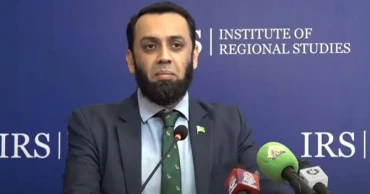
Fu Cong, China’s Permanent Representative to the United Nations, issued the remarks during an emergency session of the UN Security Council, urging Israel to immediately cease its military operations to prevent further escalation in the already volatile Middle East.
“The attacks on Iran’s nuclear infrastructure by Israel have set a highly dangerous precedent,” Fu said.
“Such moves risk spiralling out of control and could endanger not only regional stability but also global peace and security," he said.
Iran launches new missiles at Israel, Israel preparing public for ‘prolonged’ conflict
Expressing deep concern over the growing conflict between Iran and Israel, Fu warned that escalating tensions between the two regional powers—particularly involving nuclear-related sites—could trigger a much broader and more devastating confrontation.
He called on the international community to act swiftly and responsibly, reaffirming China’s commitment to peaceful resolution through diplomacy and multilateral dialogue.
Fu also reiterated Beijing’s support for the principles enshrined in the United Nations Charter and the Treaty on the Non-Proliferation of Nuclear Weapons (NPT).
The Chinese envoy further cautioned that ongoing military activities near or targeting sensitive nuclear installations could undermine global non-proliferation efforts and erode confidence in international mechanisms designed to prevent the spread of nuclear arms.
Fu’s comments came during a Security Council meeting convened in response to the latest escalation, including reported Israeli airstrikes on several Iranian sites—among them, the Khondab Heavy Water Research Reactor.
Several UN member states echoed China’s concerns during the session, calling for urgent de-escalation, restraint, and a return to diplomatic efforts.
END/UNB/JS/SAM
5 months ago
Iran launches new missile barrage on Israel; Tel Aviv warns of prolonged war
Iran launched a fresh wave of ballistic missile attacks on central Israel, igniting a major fire in the city of Holon as conflicts enter 9th day.
Besides, Israeli attacks were reported at strategic sites in Iran including facilities near Isfahan, home to a key nuclear research center.
In a televised address, Israel's military chief Lt. Gen. Eyal Zamir said the country must brace for a “prolonged campaign” against Iran, marking the ninth consecutive day of Israeli airstrikes.
“This is a critical moment for national security,” Zamir stated. “We will not relent in neutralizing the threats posed by Iranian proxies and their command structures.”
Amid the escalating hostilities, Iranian Foreign Minister Abbas Araghchi maintained that Iran’s nuclear programme remains peaceful and reaffirmed Tehran's openness to diplomacy.
However, he insisted that Israel must halt its military actions first. “We do not seek war, but we will defend our sovereignty,” Araghchi said.
Attack on Iran’s nuclear facility a ‘dangerous precedent’: China
The Iranian Revolutionary Guards Corps (IRGC) confirmed the latest assault, calling it their 18th strike on Israeli targets.
According to Iranian state-affiliated media Tasnim, the IRGC said the operation focused on military installations and operational support centers, including areas near Ben Gurion International Airport.
The attack reportedly involved Shahed-136 drones and both solid- and liquid-fueled missiles.
“The most advanced defence systems were unable to intercept them,” the IRGC claimed, vowing that such combined drone and missile operations “will continue continuously and purposefully.”
Israeli military officials announced the killing of a second commander from Iran’s Islamic Revolutionary Guards Corps’ unmanned aerial vehicle (UAV) unit.
Identified as Amin Pour Jodkhi, the commander was accused of overseeing the launch of hundreds of drones targeting Israeli positions from southwestern Iran. Israel claimed that Jodkhi had assumed leadership responsibilities after the June 13 assassination of Tahar Fur, another top drone commander.
The International Atomic Energy Agency (IAEA) expressed grave concerns following reports of Israeli strikes on the Natanz nuclear facility. In a statement, the agency warned of potential “radiological and chemical contamination” within the site but noted no change in radioactivity levels outside the facility.
Adding to the geopolitical rift, U.S. President Donald Trump publicly rebuked his intelligence chief, Tulsi Gabbard, after she told lawmakers that there was no solid evidence Iran was developing nuclear weapons.
“She is wrong. We know what they’re doing,” Trump said during a press conference at the White House.
As both sides harden their rhetoric and escalate military actions, international observers fear the conflict may spiral into a wider regional war. Diplomatic efforts by European and UN officials have so far failed to de-escalate the situation.
The United Nations Security Council is expected to convene an emergency session to discuss the deteriorating situation and assess the potential for broader conflict in the region.
Over the past week, Israeli air strikes have destroyed Iranian military facilities and weapons, and killed senior military commanders and nuclear scientists.
Iran-Israel conflict escalates amid diplomatic talks in Geneva
Iran's health ministry said on Sunday that at least 224 people had been killed, while a human rights group put the unofficial death toll at 639 on Thursday.
Iran has launched hundreds of ballistic missiles at Israel in response to the air strikes.
Source: Al Jazeera, BBC
5 months ago
Iran-Israel conflict escalates amid diplomatic talks in Geneva
The conflict between Iran and Israel intensified Friday as the Islamic Revolutionary Guard Corps (IRGC) launched its 17th wave of missile attacks targeting Israeli military bases, while diplomatic efforts resumed in Geneva in a bid to contain the spiralling hostilities.
In a statement, the IRGC said it struck Israeli military facilities including the Nevatim and Hatzerim airbases. “Precise hits on Tel Aviv, Haifa, and Beersheba demonstrate that our offensive missile power is growing,” the IRGC said, signalling Iran’s increased missile capabilities and willingness to sustain its campaign, reports AL Jazeera.
Meanwhile, Iran’s state news agency IRNA reported ongoing diplomatic discussions in Geneva between Iranian and European officials. Although the talks paused for internal consultations by the European parties, the Iranian delegation maintained a positive outlook.
“The first round of talks was held with a respectful and serious approach, encompassing the perspectives of all parties involved,” IRNA quoted the delegation as saying. “Some of the issues raised could benefit from greater clarity to help pave the way for diplomacy.”
“Only a halt to aggression can open the path to diplomacy.” It added, “Iran has not walked away from the negotiating table, and this round of talks does not mark the end of dialogue.”
The European countries—specifically the UK, France, and Germany—known collectively as the E3, were said to still aspire to play “a historic role” in facilitating renewed negotiations, particularly amid fears of broader regional instability.
Thousands of Afghans flee Iran amid crisis
Iran’s Foreign Minister Abbas Araghchi also travelled to Switzerland for meetings with the European Union’s top diplomat and foreign ministers from the UK, France, and Germany.
Speaking earlier at the UN Human Rights Council in Geneva, Araghchi called Israel’s actions an “unprovoked aggression.”
Meanwhile, at the United Nations Security Council meeting in New York, Iran’s UN Ambassador Amir-Saeid Iravani urged the council to take action against Israeli airstrikes that he said had caused severe civilian casualties, including children.
“At least two pregnant women and their unborn children were killed on the same day Israel struck the national broadcaster IRIB during a live broadcast,” Iravani said. He described Israel’s actions as “gross violations of international law” and warned of global consequences.
He warned that if the council fails to act now, it will send a message that international law and resolutions apply selectively and if the non-proliferation regime collapses, this council will share responsibility with the Israeli regime.
On the other hand, in response to Iran’s latest missile strikes, the Israeli military claimed it had targeted three surface-to-surface missile launchers in western Iran that were “ready to fire.” It further stated that a drone strike had killed a group of Iranian soldiers during the overnight operation, including a commander of an IRGC base.
Earlier same day, thousands of people protested after Friday prayers in Tehran and other cities, chanting slogans such as “Death to America! Death to Israel!” and “No compromise! No surrender! Fight with America!”
Some demonstrators waved Iranian flags while others held placards condemning Israel. Iranian state television aired footage of the demonstrations, including one scene where a protester pulled a mock figure dressed as US President Donald Trump by the necktie.
5 months ago
Thousands of Afghans flee Iran amid crisis
Thousands of Afghans are fleeing Iran every day to escape war and forced deportation, according to a major international aid agency and a Taliban official.
According to AP, Iran has hosted millions of Afghans for decades, but the numbers leaving have surged since October 2023, when Iranian authorities began cracking down on foreigners residing in the country illegally. Around the same time, Pakistan launched a similar campaign targeting undocumented Afghans.
The situation has worsened since Iran’s war with Israel erupted last Friday. Israeli airstrikes targeting Iran have added to the fear and instability, prompting even more Afghans to return home.
World Vision International reports that around 5,000 Afghans are returning daily through the Islam Qala border crossing in western Herat province.
The agency noted that among the 500,000 forcibly returned from Iran to Herat this year, there were people “at risk, distressed, and in great need.”
Israel threatens Iran’s supreme leader as over 200 injured in Iranian missile strikes
“Many require support to find food and shelter, get hold of everyday essentials, and connect with their families before travelling to their hometowns or villages,” said Mark Calder, the agency's communications and advocacy director for Afghanistan. “But they are returning to a country in which basic services are already in crisis.”
Years of conflict and aid reductions have crippled Afghanistan’s basic infrastructure. Cuts in US aid and a funding shortfall for humanitarian operations have forced the closure of hundreds of health facilities and severely limited services such as education.
The United Nations said Thursday that its Afghanistan Humanitarian Needs and Response Plan had received only 18% of the required annual funding as of June 19. The shortfall has disrupted assistance for millions of vulnerable people, including women and children, refugees, returnees, displaced communities, and other marginalized groups.
Calder warned that the number of people requiring lifesaving aid could “spiral further” if the international community does not step in to support emergency needs and help Afghans rebuild their lives.
Ahmadullah Muttaqi, head of Herat’s Refugee Information and Public Affairs Committee, said Friday that before June 13, between 3,500 and 4,000 undocumented Afghans were entering Herat daily due to Iran’s deportation campaign. That number has doubled since the outbreak of the war.
He added that between 800 and 1,000 Afghans with valid passports were arriving in Herat each day before the war began. Now, that number is approximately 4,000.
5 months ago
Geneva hosts talks on Iran-Israel conflict
Iran’s Foreign Minister Abbas Araghchi held talks with top European diplomats in Geneva on Friday, amid heightened tensions over Iran’s nuclear program that recently flared into open conflict between Tehran and Tel Aviv.
According to AP, Araghchi met with foreign ministers from France, Germany, and the United Kingdom, along with the European Union’s foreign policy chief, at a hotel in the Swiss city. The gathering marks the first direct engagement between Iranian and Western officials since the Israel-Iran conflict erupted last week.
Speaking ahead of the meeting, Araghchi stated that Iran has “nothing to discuss” with the United States as long as Israeli strikes on Iranian targets continue. However, he signaled openness to “dialogue” with European nations, while ruling out negotiations at this stage.
The ongoing hostilities have seen Israeli airstrikes targeting Iranian nuclear and military facilities, with Iran retaliating in turn.
British Foreign Secretary David Lammy emphasized the urgency of the situation, noting that “a window now exists within the next two weeks to achieve a diplomatic solution.” Lammy arrived in Geneva following high-level discussions in Washington with US Secretary of State Marco Rubio and President Donald Trump’s Middle East envoy, Steve Witkoff.
Israel and Iran exchange new strikes as US weighs military role, diplomatic efforts intensify
Meanwhile, President Trump is reportedly considering whether to authorise a direct US military strike on Iran, specifically targeting the fortified Fordo uranium enrichment facility. The underground site is heavily protected and is believed to be accessible only to US “bunker-buster” bombs.
Trump said Wednesday that he would decide within two weeks whether the US military will become directly involved in the conflict, citing a “substantial chance” for renewed nuclear negotiations.
French President Emmanuel Macron announced that European leaders would present Iran with a “comprehensive, diplomatic and technical offer of negotiation” aimed at defusing the crisis.
Israel has defended its ongoing air campaign as a necessary measure to prevent Iran from moving closer to developing a nuclear weapon. The conflict comes as earlier US-Iran negotiations on a possible new diplomatic deal appeared to stall. Trump has said the Israeli offensive followed a 60-day deadline he had set for progress in talks with Tehran.
5 months ago
Israel and Iran exchange new strikes as US weighs military role, diplomatic efforts intensify
A week into their escalating conflict, Israel and Iran launched fresh attacks Friday amid signs of renewed diplomacy and growing speculation over possible U.S. military involvement.
Former U.S. President Donald Trump is reportedly considering direct intervention, including a potential strike on Iran’s fortified Fordo uranium enrichment facility. Trump said he would make a decision within two weeks, citing a “substantial chance” of revived nuclear negotiations with Tehran.
Meanwhile, Iranian Foreign Minister Abbas Araghchi appeared en route to Geneva for talks with the EU’s foreign policy chief and diplomats from the UK, France, and Germany. Flight data from Van, Turkey, near the Iranian border, showed a plane bearing his usual call sign. While Iran has yet to confirm his trip, such announcements typically follow hours later.
Before his departure, Araghchi told Iranian state television that Tehran would not consider negotiations as long as Israeli attacks continued. He also accused the U.S. of actively supporting Israel, referencing Trump’s repeated use of “we” when discussing strikes on Iran.
Israel, for its part, said over 60 aircraft conducted overnight strikes on Iranian targets, including missile production sites and the headquarters of Iran’s Organization of Defensive Innovation and Research (SPND), which the U.S. has linked to nuclear weapons research.
Russian missile experts visit Iran, warn Israel
Airstrikes reportedly hit Iran’s Caspian Sea city of Rasht, while Israel warned civilians to evacuate nearby industrial zones. With internet access restricted across Iran, the extent of the damage remains unclear.
In southern Israel, missiles damaged a six-story residential building, injuring five people. This followed a strike on Beersheba’s Soroka Medical Center a day earlier, which wounded at least 80.
Defense Minister Israel Katz issued a direct threat to Iranian Supreme Leader Ayatollah Ali Khamenei, declaring, “this man absolutely should not continue to exist.”
Since the war began on June 13, at least 657 people — including 263 civilians — have been killed in Iran, according to a U.S.-based Iranian rights group. Iran has launched more than 450 missiles and 1,000 drones at Israel, killing at least 24 people.
Sirens sound in Beersheba as Iranian missiles strike
Iran insists its nuclear program is peaceful, though it enriches uranium up to 60%, near weapons-grade. Israel, believed to possess nuclear weapons, continues to target Iran’s enrichment sites, missile facilities, and centrifuge operations in a bid to dismantle its military capacity.
Source: With inputs from agency
5 months ago
Russian missile experts visit Iran, warn Israel
Russia on Thursday strongly condemned Israel’s attacks on Iran’s nuclear infrastructure, calling them illegal and warning they could trigger a global crisis. Moscow also expressed deep concern for the safety of its personnel working at Iranian nuclear facilities.
“We consider the Israeli side’s attacks on peaceful nuclear facilities in the Islamic Republic of Iran to be absolutely unacceptable,” Russian Foreign Ministry spokeswoman Maria Zakharova said at a briefing during the St. Petersburg International Economic Forum.
She said the strikes violate international law, pose grave risks to global security, and move the world closer to “nuclear catastrophe.” Zakharova specifically highlighted fears over the safety of Russian workers at the Bushehr nuclear power plant.
Calling the Israeli strikes “unprovoked aggression,” Zakharova also condemned Tel Aviv’s justification based on nuclear non-proliferation concerns as “outright cynicism.” She urged Israel to immediately stop its attacks and called on the United States to avoid military involvement, warning that any such step would lead to “unpredictable and dangerous consequences.”
Sirens sound in Beersheba as Iranian missiles strike
The Russian statement comes amid a dramatic escalation in hostilities between Iran and Israel. Tensions spiked after Israel launched sweeping airstrikes last week on Iranian nuclear sites, military facilities, and senior scientists. Iran, which insists its nuclear program is peaceful, responded with missile and drone attacks.
Iran’s Health Ministry says over 220 people have been killed and at least 1,800 injured, while the country’s ambassador to Russia claims the civilian death toll nears 300. Israel has reported more than 20 deaths and 800 injuries.
Iran Fires Cluster Bomb-Bearing Missiles At Israel As Conflict Enters 8th Day
Despite calls for de-escalation, both nations remain locked in deadly confrontation.
Source: With inputs from Anadolu
5 months ago
Sirens sound in Beersheba as Iranian missiles strike
The Israeli military reported detecting a new wave of missiles launched from Iran, with defense systems actively attempting to intercept the incoming threats.
According to The Times of Israel, air raid sirens sounded in the southern city of Beersheba and nearby towns. The Quds News Network reported that a missile struck a building in Beersheba.
Israel’s Yedioth Ahronoth news outlet cited confirmation from the Beersheba Municipality that the Iranian missile directly hit the target, rather than being debris from a missile intercepted in midair.
Channel 12 news also reported that the Israeli military confirmed the Iranian missile was not successfully intercepted by air defense systems.
Internet disruptions in Iran hinder communication with loved ones
Several people were injured in the attack, the news outlets said.
Fires and large plumes of black smoke erupted at the site of an Iranian missile strike in southern Israel. Israeli rescue service Magen David Adom shared a photo of the aftermath and reported no casualties so far, with teams being sent to the area.
With inputs from Al Jazeera.
5 months ago
Iran Fires Cluster Bomb-Bearing Missiles At Israel As Conflict Enters 8th Day
Iran launched at least one missile at Israel that dispersed cluster bombs intended to increase civilian casualties, the Israeli military reported on Thursday. This marks the first known use of cluster munitions in the ongoing seven-day conflict.
Israeli military officials did not provide further specifics, but local media cited the military saying the missile’s warhead opened at an altitude of about 7 kilometers (4 miles), releasing roughly 20 submunitions across an area of about 8 kilometers (5 miles) over central Israel.
One of these small bombs hit a house in the central Israeli town of Azor, causing some damage. There were no reports of injuries, according to Times of Israel military correspondent Emanuel Fabian.
Cluster bombs are controversial because they scatter multiple smaller explosives indiscriminately, some of which may fail to detonate immediately and pose a lasting threat to civilians after conflicts end.
The Israeli military issued a graphic warning the public about the dangers of unexploded ordnance.
Brigadier General Effie Defrin, spokesperson for the Israeli military, said at a briefing, “The terror regime seeks to harm civilians and even used weapons with wide dispersal in order to maximize the scope of the damage.”
Iran’s mission to the United Nations and Israel’s embassy in Washington had not responded to requests for comment at the time of reporting.
Israel threatens Iran’s supreme leader as over 200 injured in Iranian missile strikes
Daryl Kimball, executive director of the advocacy group Arms Control Association, called cluster munitions “egregious weapons” due to their wide-area destructive effect, especially when used near civilian populations, and noted their potential to leave behind unexploded remnants.
He added that given the inaccuracy of Iranian missiles, Tehran should be aware that cluster munitions are likely to strike civilian rather than military targets.
Both Iran and Israel have refused to join the 2008 international treaty banning the production, stockpiling, transfer, and use of cluster bombs—a treaty signed by 111 countries and 12 other entities.
In 2023, after significant debate, the U.S. supplied Ukraine with cluster munitions for use against Russian forces. Kyiv has stated that Russian troops also have used such weapons. None of these three countries are parties to the Convention on Cluster Munitions.
Source: NDTV
5 months ago
‘Says one thing, does another’: What’s Trump’s endgame in Iran?
Over the past week, U.S. President Donald Trump has made a series of conflicting statements regarding Iran, raising questions about his strategy and intentions. While at times he has spoken of ending conflict and hinted that peace might arrive “soon,” he has also floated the idea of targeting Iran’s Supreme Leader Ali Khamenei and aligning with Israel’s military campaign against Iran.
In the latest development, the White House announced on Thursday that Trump will decide within the next two weeks whether the U.S. will enter the conflict. This inconsistency in messaging has led some analysts to suggest that Trump lacks a coherent strategy and may be getting drawn into a war at the urging of Israeli Prime Minister Benjamin Netanyahu, who has long advocated for U.S. military action against Iran.
Others believe Trump’s increasingly aggressive rhetoric might be a tactic aimed at pressuring Iran into fully abandoning its nuclear program. However, experts caution that such brinkmanship could spiral into a full-scale war between the U.S. and Iran.
Jamal Abdi, president of the National Iranian American Council, said Trump might be trying to gain leverage by making extreme threats in order to force Iran into a position of “total surrender.”
“I think he’s trying to present himself as this madman who is unpredictable, and in so doing, he can then insist on this very hard line that Iran has refused to accept for decades—full dismantlement of its enrichment programme,” Abdi told.
He also suggested another possible scenario: that Trump is being manipulated by Netanyahu into committing the U.S. to a direct and potentially catastrophic military conflict with Iran.
‘He says one thing. He does another’Iranian American analyst Negar Mortazavi has criticized U.S. President Donald Trump for what she describes as inconsistent actions and statements regarding Iran, accusing him of being “outmaneuvered” by Israeli Prime Minister Benjamin Netanyahu.
“I don’t even know if President Trump knows what he wants,” Mortazavi told Al Jazeera. “He campaigned as the president of peace… he promised to end conflicts. Russia-Ukraine hasn’t ended. Gaza has escalated, and now he’s allowed a third major Middle East war—which resembles a regime-change operation—to begin under his watch. So, he says one thing and does another.”
The latest conflict erupted after Israel launched a bombing campaign against Iran last week, just two days before a scheduled sixth round of talks between U.S. and Iranian officials in Oman. Mere hours before the attacks began, Trump reaffirmed his support for diplomacy, and the U.S. initially distanced itself from the strikes, stating it was not involved.
However, Trump’s tone quickly shifted. Days later, he appeared to take partial credit for Israel’s actions. In a social media post on Tuesday, he claimed, “We now have complete and total control of the skies over Iran,” though he did not clarify who he meant by “we.”
“Iran had good sky trackers and other defensive equipment, and plenty of it, but it doesn’t compare to American made, conceived, and manufactured ‘stuff.’ Nobody does it better than the good ol’ USA,” Trump added.
Israel’s ongoing air campaign has struck Iran’s air defense systems, military installations, nuclear facilities, oil infrastructure, and residential areas. The attacks have resulted in the deaths of hundreds of people, including senior military and political figures, as well as many civilians. In retaliation, Iran has launched hundreds of ballistic missiles, killing at least 24 Israelis and causing widespread destruction.
While Israeli officials claim their aim is to eliminate Iran’s nuclear and missile programs, they also acknowledge that the strikes could lead to the collapse of Iran’s ruling system—an outcome they would welcome. However, experts widely believe that Israel alone lacks the capability to destroy Iran’s heavily fortified uranium enrichment site at Fordow, which lies deep inside a mountain, without U.S. military assistance.
Mortazavi warned that hawkish advisors and Israeli leaders appear to be persuading Trump that such a strike on Fordow would be simple. “They’re making it look like it’s a one-and-done deal—just drop your bunker busters and that’s it,” she said. “But in reality, this would be a catastrophic and unnecessary war with Iran—the very kind of war Trump campaigned against.”
A wider conflict would put thousands of U.S. troops in the region at risk of Iranian missile attacks. Additionally, if tensions escalate, Iran could retaliate by disrupting global energy supplies through the Gulf. Iranian lawmakers have already indicated that Tehran might close the Strait of Hormuz—a key maritime passage linking the Gulf to the Indian Ocean—through which roughly 20 percent of the world’s oil supply is transported.
‘Catastrophic’ warIranian American analyst Negar Mortazavi has warned that escalating the conflict with Iran could have devastating consequences for the entire region. “It will look like Iraq and Afghanistan combined, if not worse. Iran is a big country,” she told Al Jazeera.
She drew parallels to past U.S. regime-change interventions: in Iraq, President George W. Bush’s war led to prolonged sectarian violence and the emergence of extremist groups like ISIL (ISIS), while in Afghanistan, the U.S. fought a two-decade-long war after removing the Taliban from Kabul, only to see the group reclaim power swiftly after American troops withdrew.
Even if Iran’s leadership is brought down by joint U.S.-Israeli military action, experts caution that such an outcome may unleash chaos rather than stability. With a population exceeding 90 million, Iran's collapse could spark internal strife, mass displacement, and significant regional — possibly even global — instability.
“This isn’t a colour revolution. This would be outright war and chaos — possibly civil war and widespread unrest,” Mortazavi warned.
Sarah Leah Whitson, executive director of the rights group DAWN, echoed these concerns, saying that even if President Trump is using threats merely as a bargaining tool rather than actively seeking war or regime change, the risk is dangerously high.
“The chances of these assaults on Iran expanding into a broader regional war — or even a global one — are extremely high,” Whitson told Al Jazeera. “Trump’s continued belligerent and aggressive rhetoric is only adding fuel to the fire.”
Source: Al Jazeera
5 months ago