Middle-East
Saudi Arabia executes journalist over social media posts
Saudi Arabia has executed a journalist, nearly seven years after his arrest over corruption allegations he allegedly made against members of the Saudi royal family on social media.
The Saudi Press Agency reported on Saturday that the journalist Turki Al-Jasser was put to death following the upholding of his death sentence by the kingdom’s highest court.
He had been in custody since 2018 after authorities raided his home, confiscated his computer and phones, and accused him of operating a social media account critical of the ruling elite, reports AP.
Al-Jasser was convicted on charges of terrorism and treason, though human rights activists argue the accusations were politically motivated and intended to silence dissent.
According to the New York-based Committee to Protect Journalists (CPJ), Saudi authorities claimed Al-Jasser was behind a pseudonymous X (formerly Twitter) account that accused royal family members of corruption. He was also said to have shared controversial posts about militant groups.
CPJ strongly condemned the execution. Carlos Martínez de la Serna, the group’s program director, said, “The international community’s failure to deliver justice for Jamal Khashoggi did not just betray one journalist,” adding that it had “emboldened de facto ruler Crown Prince Mohammed bin Salman to continue his persecution of the press.”
FIFA faces human rights complaint over 2034 Saudi World Cup
The case has drawn comparisons to the killing of Saudi journalist Jamal Khashoggi, a Washington Post columnist who was murdered inside the Saudi consulate in Istanbul in 2018. US intelligence concluded that Crown Prince Mohammed bin Salman ordered the operation, though Saudi officials deny his involvement.
Al-Jasser was known for his writings on the Arab Spring, women’s rights, and corruption. He ran a personal blog between 2013 and 2015 and was considered a vocal advocate for reform in the kingdom.
Details about his trial remain unclear, including the length of proceedings and the legal process followed. Rights groups have long criticised the opaque judicial practices in Saudi Arabia, particularly in cases involving political dissent.
Saudi Arabia continues to face international criticism for its high rate of executions and use of capital punishment. In 2024 alone, 330 executions were reported by rights monitors.
The execution of Al-Jasser follows other high-profile cases, including the 2021 sentencing of dual US-Saudi citizen Saad Almadi over tweets posted while in the United States. Almadi was released in 2023 but remains under a travel ban.
6 months ago
Trump says he, Putin agree ‘war in Israel-Iran should end’
US President Donald Trump said that he had a phone call with his Russian counterpart Vladimir Putin on Saturday over the tensions in the Middle East and Russia-Ukraine peace talks and both of them agreed that "this war in Israel-Iran should end."
"He feels, as do I, this war in Israel-Iran should end," Trump wrote on his social media platform Truth Social, adding that Putin knows Iran "very well."
Saturday was Trump's 79th birthday. Trump said that Putin wished him a happy birthday during the phone call, reports Xinhua.
Trump said he also explained to the Russian president that the Russia-Ukraine conflict "should also end" during the one-hour call.
Israel and Iran exchange strikes for a third consecutive day as Nuclear talks collapse
"We talked at length. Much less time was spent talking about Russia/Ukraine, but that will be for next week."
"He (Putin) is doing the planned prisoner swaps -- large numbers of prisoners are being exchanged, immediately, from both sides," said Trump.
6 months ago
Jordan reopens airspace after repeated temporary closures amid regional tensions
Jordan reopened its airspace to civilian flights on Sunday morning after multiple temporary closures over the weekend due to the ongoing military escalation between Israel and Iran, the Jordanian Civil Aviation Regulatory Commission (CARC) said.
CARC Chief Haitham Misto said the closures were tactical and short-term, based on continuous risk assessments of developments in the region, the state-run Petra news agency reported.
According to news agency Xinhua, the airspace was first closed Friday evening, then reopened Saturday morning, and then closed again Saturday night, before being reopened Sunday.
Israel and Iran exchange strikes for a third consecutive day as Nuclear talks collapse
Misto said the CARC is closely monitoring the situation and will take further action as needed.
Airlines have been notified to resume scheduled operations and redirect previously diverted flights back to Amman.
The CARC reaffirmed that the safety of passengers and civil aviation remain its top priorities.
6 months ago
Iran threatens UK, US, France with retaliation if they intervene in Israel conflicts
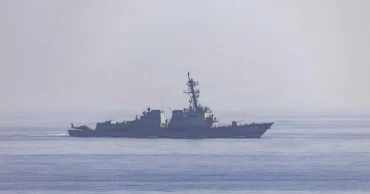
Iran has issued a stark warning that it will target military bases and naval vessels belonging to the United Kingdom, United States and France in the region if any of the three nations intervene in defence of Israel.
The threat follows a dramatic escalation in hostilities, with Iran launching waves of missiles at Israel overnight in retaliation for Israeli strikes that reportedly targeted Iran’s nuclear facilities on Friday.
Loud explosions were heard in major cities including Tel Aviv, Jerusalem and Tehran, as both nations exchanged direct strikes in what analysts fear could spiral into a broader regional war.
Israel's Defence Minister responded sharply to the Iranian attack, warning, "Tehran will burn" if the barrage of missiles continues.
Israeli officials confirmed three people were killed and dozens more injured in the overnight attacks. Meanwhile, Iranian state television has reported that 60 people were killed in a strike on Tehran.
The Iranian regime, through state media, stated that if the UK, US or France attempt to intercept further Iranian strikes or provide military assistance to Israel, their assets in the region will be considered legitimate targets.
'Tehran will burn' if it continues firing missiles: Israel’s defence minister
Despite the gravity of the threat, Downing Street has yet to issue an official response. However, a political correspondent has confirmed that the UK has not participated in any military action so far, including defensive measures for Israel.
BBC Chief International Correspondent Lyse Doucet reports that Israeli Prime Minister Benjamin Netanyahu has effectively opened a new front in the ongoing Middle East conflict. "The Iranian regime is going to see this as a battle for survival," she added.
The situation remains volatile, with fears mounting over the potential for further escalation that could drag multiple global powers into a prolonged and deadly confrontation.
Source: With inputs from BBC
6 months ago
Why did Israel decide to attack Iran?
Israel has launched its long-anticipated strikes on Iran with Prime Minister Benjamin Netanyahu stating the operations will continue “as long as necessary.”
The attacks, which began early Friday, were carefully targeted at Iranian military and government sites.
High-ranking officials, including the commander of Iran’s Revolutionary Guard, Hossein Salami, and military chief Mohammad Bagheri, were reportedly killed. Some prominent Iranian nuclear scientists also died in the strikes.
These strikes happened while the U.S.—Israel’s key ally—was in talks with Iran over its nuclear program. This timing has led many to believe Israel’s move was part of a broader strategy to pressure Iran.
The U.S. plays a critical role in supporting Israel, both militarily and diplomatically, often shielding it from criticism in forums like the United Nations.
Still, attacking Iran—a powerful country with allies throughout the region—poses serious risks.
Both Israel and the U.S. now brace for possible retaliation.
Was Iran an Immediate Nuclear Threat?
Israel views Iran’s potential to develop nuclear weapons as a major threat because it would undermine Israel’s regional advantage, especially since Israel is believed to possess nuclear arms (though it has never confirmed this).
Netanyahu claims Iran could produce a nuclear weapon in just months. Israeli military sources say Iran already has enough enriched uranium for multiple bombs.
What Do Other Countries Say?
The International Atomic Energy Agency (IAEA) recently criticised Iran for failing to meet its obligations under the Nuclear Non-Proliferation Treaty. Iran rejected the claim.
The IAEA also noted Iran’s lack of cooperation, though it did not state that Iran currently has nuclear weapons.
Back in 2015, Iran agreed to limit its nuclear program under a deal with global powers in exchange for sanctions relief. That deal collapsed in 2018 when then-President Trump pulled the U.S. out and reimposed sanctions.
As of March, U.S. intelligence assessments still found that Iran was not actively pursuing nuclear weapons.
Are There Other Reasons for the Attack?
Netanyahu has long portrayed Iran as the main force behind anti-Israel groups like Hamas, Hezbollah, and the Houthis—a network sometimes called the “axis of resistance.”
Since the Gaza war began in late 2023, Israel has managed to significantly weaken both Hamas and Hezbollah, eliminating many of their top leaders.
Encouraged by the limited retaliation from Hezbollah, some Israeli officials believe they now have a rare opportunity to strike Iran and reshape the regional power balance.
Some even speculate that regime change in Iran could be a long-term goal—though such a campaign would require much more time and resources than Israel may have.
Importantly, until Israel’s latest strikes, there had been no direct hostilities between Israel and Iran or its allies since the previous year—only the threat of retaliation if Israel made the first move.
Source: Al Jazeera
6 months ago
'Tehran will burn' if it continues firing missiles: Israel’s defence minister
Israel’s defence minister issued an warning to Iran on Saturday saying “Tehran will burn” if the Islamic Republic persists in its missile attacks against Israel.
Following a meeting with Israel’s military chief, Defence Minister Israel Katz stated that Iran would face grave consequences for endangering Israeli citizens.
His remarks came after Iran fired a volley of missiles in retaliation for Israeli airstrikes that targeted Iran’s nuclear facilities a day earlier.
Iran's Retaliation After Israeli Strikes
In the early hours of Saturday, Iran launched drones and missiles at Israel in response to Israeli attacks that struck deep within Iran’s nuclear infrastructure and military leadership. At least three Israelis were killed and dozens injured in the Iranian strikes, according to Israeli officials.
The Israeli offensive, carried out using both aircraft and drones reportedly pre-positioned inside Iran, targeted sensitive military and nuclear sites, killing high-ranking generals and scientists. Iran’s ambassador to the U.N. reported 78 fatalities and over 320 injuries from the attacks.
In response, Iran sent waves of ballistic missiles and drones toward Israeli cities, lighting up the skies over Jerusalem and Tel Aviv. The Israeli military, already strained after nearly two years of war following Hamas’ October 7, 2023 attack, urged civilians to take shelter.
Both nations signaled their readiness to continue hostilities, raising concerns of a prolonged regional conflict. Prime Minister Benjamin Netanyahu stated his aim is to eliminate any threat from Iran, and called on the Iranian people to resist their rulers. He added that while Israel was not directly working toward regime change, it would welcome such an outcome.
Nuclear Talks in Jeopardy
The escalation cast a shadow over U.S.-Iran nuclear talks scheduled for Sunday in Oman. Iran’s Foreign Ministry spokesperson said Israel’s strikes made further negotiations “meaningless,” blaming Washington for enabling the attack.
“The U.S. did a job that made the talks become meaningless,” said Esmail Baghaei, as quoted by state TV. He condemned Israel’s actions as a “criminal act” that crossed all red lines, though he stopped short of declaring the talks canceled. Iran’s judiciary-run Mizan news agency reported that a final decision had not yet been made regarding Sunday’s meeting.
Iranian Missiles Hit Israeli Cities
Ayatollah Ali Khamenei, Iran’s Supreme Leader, vowed consequences for Israel’s actions, saying: “We will not allow them to escape safely from this great crime they committed.”
Missiles launched from Iran struck several targets across Israel late Friday and into Saturday morning. In Tel Aviv, seven people were treated for injuries, and a woman died after a projectile hit a building. Later, two more people were killed and 19 injured in Rishon Lezion when another missile landed near homes.
In Iran, residents heard explosions and saw Tehran’s air defenses activated shortly after midnight. A fire was reported at Mehrabad International Airport, with video footage showing smoke and flames. The Israeli military confirmed it had struck air defense targets near Tehran.
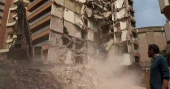
In the Tel Aviv area, 34 people were reportedly injured in the attacks. A critically wounded woman was pulled from rubble. AP journalists observed significant damage in Ramat Gan, including destroyed cars and houses with extensive structural damage.
“We thought, that’s it, the house is gone, and in fact half of the house was gone, it fell apart,” said Moshe Shani, a resident of a city hit Friday night.
U.S. officials confirmed American ground-based air defenses assisted in intercepting Iranian missiles.
Fears of Regional War Mount
The latest strikes raised fears of a full-scale war between Israel and Iran. The broader region, already tense due to Israel’s ongoing campaign in Gaza, now faces even greater instability. In Gaza, 27 people were reportedly killed by Israeli airstrikes overnight.
While regional governments condemned Israel’s initial attack, global leaders urged both countries to deescalate immediately.
Despite longstanding American concerns that such a move could trigger a broader Middle East war, a mix of developments — including Hamas’ 2023 attack and the reelection of President Donald Trump — gave Israel the conditions it needed to proceed. Netanyahu stated the U.S. was informed in advance of the offensive.
Israel’s strikes came just a day after the U.N.’s nuclear watchdog censured Iran for non-compliance with safeguards meant to prevent nuclear weapons development.
Airspace across the Middle East was temporarily disrupted, but by Saturday morning, both Jordan and Lebanon announced they had reopened their skies to civilian flights.
Key Iranian Nuclear Sites Hit
Among Israel’s key targets was Iran’s main uranium enrichment facility in Natanz, where black smoke was seen rising. Israel also appeared to hit the Fordo enrichment site and a nuclear research facility in Isfahan.
According to the U.N.’s nuclear chief, Rafael Grossi, the above-ground portion of the Natanz facility was destroyed, though the underground centrifuge hall remained intact. Still, the damage to infrastructure may be significant due to power loss.
Netanyahu revealed that the operation had been planned months ago and was initially scheduled for April but was postponed.
Two Israeli security officials said Mossad had planted drones and weapons inside Iran in advance, which were used to take out air defense systems and missile launchers near Tehran. These claims could not be independently verified.
Over the past year, Israel has targeted Iran’s air defenses several times, including striking a radar system in April 2024 and missile production sites last October.
An Israeli military official said that the first wave of strikes gave Israel “significant freedom of movement” in Iranian airspace and suggested further attacks were planned. The official noted that Israel was prepared for an operation lasting up to two weeks.
Senior Iranian Military Leaders Killed
Among those killed in the strikes were some of Iran’s top military commanders: Gen. Mohammad Bagheri, chief of Iran’s armed forces; Gen. Hossein Salami, leader of the Revolutionary Guard; and Gen. Amir Ali Hajizadeh, head of its missile program. Iran later confirmed the deaths of two additional senior officers: Gen. Gholamreza Mehrabi and Gen. Mehdi Rabbani.
Former U.S. President Donald Trump, addressing the conflict on his Truth Social platform, warned Iran to strike a deal with the U.S., stating, “Iran must make a deal, before there is nothing left.”
6 months ago
Iran’s strikes against Israel will continue, threaten officials
Senior Iranian military officials have warned that Tehran’s military response against Israel is far from over, declaring that further strikes are imminent and will be “very painful and regrettable for the aggressors”.
“This confrontation will not end with last night’s limited actions,” one unnamed official was quoted as saying by Iran’s semi-official Fars news agency.
“Iran’s strikes will continue,” he said.
The development follows a dramatic escalation in hostilities between the two long-standing rivals, with Iran and Israel exchanging missile and air strikes overnight. The confrontation began after Israel launched its largest-ever air offensive against Iran early on Friday, targeting key military and nuclear infrastructure.
In retaliation, Iran launched a barrage of missiles and drones early Saturday morning, resulting in the deaths of at least three people and injuring dozens more, according to Iranian state media reports cited by AP and Al Jazeera.
Iran strikes back after Israeli attacks on nuclear and military sites
The Israeli strikes, reportedly involving warplanes and drones—some of which had allegedly been smuggled into Iran in advance—targeted strategic facilities, military commanders, and nuclear scientists.
Iran’s ambassador to the United Nations claimed the Israeli attacks left 78 people dead and more than 320 injured.
Israel defended its actions, stating that the operation aimed to prevent Iran from nearing nuclear weapons capability. This stance, however, contrasts with assessments from international experts and the United States, who have said Tehran was not actively pursuing nuclear arms at the time of the attack.
Iran strikes Israel in retaliation, 3 dead
The UN and several international actors have called for de-escalation, warning that further conflict could have catastrophic consequences across the region. Yet, with both nations vowing continued action, fears of a broader war continue to mount.
Source: AP/Al Jazeera
6 months ago
Iran strikes Israel in retaliation, 3 dead
In a major escalation, Iran launched missile strikes on Israel early Saturday, killing at least three people and injuring dozens.
The attack came in retaliation for recent Israeli airstrikes that targeted critical components of Iran’s nuclear program and military infrastructure, resulting in the deaths of top scientists and generals.
Iran’s ambassador to the United Nations said the Israeli strikes killed 78 people and wounded over 320.
Israel defended the strikes as a preemptive measure to prevent Iran from nearing nuclear weapons capability—despite assessments from the U.S. and experts that Tehran was not actively pursuing a bomb.
The developments have thrown upcoming nuclear talks between the U.S. and Iran into uncertainty, just days ahead of their planned meeting in Oman.
Missiles strike Israel as Iran retaliates over attacks on nuclear, military targets
Iran’s Foreign Ministry condemned the Israeli strikes and said continuing nuclear negotiations with the U.S. no longer made sense. Spokesman Esmail Baghaei said Israel had crossed all red lines with what he called a “criminal act.” While he didn’t confirm cancellation of Sunday’s scheduled talks, he noted that Iran’s final decision remained unclear.
Jordan, which had temporarily closed its skies due to the conflict, announced it would reopen airspace to civilian flights Saturday morning. The move suggests Amman sees no immediate risk of continued missile activity, despite earlier Iranian projectiles and Israeli fighter activity passing through its territory.
Casualties in IsraelA woman was confirmed dead in Tel Aviv following a missile strike, and two more were killed in central Israel when a missile hit residential areas. A total of 19 people were wounded in that attack. Another seven were injured, including one moderately, in a second barrage.
UN Chief Calls for CalmUN Secretary-General António Guterres urged both Iran and Israel to halt their military actions and return to diplomacy, saying, “Enough escalation. Time to stop. Peace and diplomacy must prevail.”
Tehran Airport BlazeIran’s Mehrabad International Airport reported a fire, with local media sharing footage of smoke and flames. The cause remains unclear.
Second Wave of Iranian StrikesIran launched a fresh wave of missiles early Saturday. Explosions and sirens were heard over Tel Aviv and Jerusalem, with several missiles appearing to strike the ground. Israeli military confirmed the new assault and urged residents to seek shelter.
Iranian Air Defenses ActiveLoud explosions and the firing of Iranian air defense systems were heard across central Tehran shortly after midnight, as Israeli attacks reportedly continued. Air raid sirens were also activated in the capital.
6 months ago
UN conference on Palestinian state postponed because of Middle East tensions
A top-level U.N. conference on a two-state solution for Israel and the Palestinians scheduled for next week has been postponed amid surging tensions in the Middle East, French President Emmanuel Macron said Friday.
France and Saudi Arabia were due to co-chair the conference hosted by the U.N. General Assembly in New York on June 17-20, and Macron had been among leaders scheduled to attend. The Palestinian Authority hoped the conference would revive the long-defunct peace process.
Macron expressed his “determination to recognize the state of Palestine” at some point, despite the postponement. France has pushed for a broader movement toward recognizing a Palestinian state in parallel with recognition of Israel and its right to defend itself.
After Israel's strikes on Iran on Friday, Macron said that France’s military forces around the Middle East are ready to help protect partners in the region, including Israel, but wouldn't take part in any attacks on Iran.
Missiles strike Israel as Iran retaliates over attacks on nuclear, military targets
Macron told reporters that the two-state conference was postponed for logistical and security reasons, and because some Palestinian representatives couldn’t come to the event. He insisted that it would be held “as soon as possible” and that he was in discussion with Saudi Crown Prince Mohammed bin Salman about a new date.
The U.N. ambassadors from France and Saudi Arabia said in a letter to the 193 U.N. member nations that the delay is “due to the current circumstances in the Middle East that prevent regional leaders from attending the conference in New York.”
France’s Jerome Bonnafont and Saudi Arabia’s Abdulaziz Alwasil said the conference will open on June 17 in the General Assembly hall, but only to propose and agree to its suspension. They invited all countries to attend the opening.
“We are determined to resume the conference at the earliest possible date,” the two ambassadors said.
Macron said the aim of the conference "is a demilitarized Palestinian state recognizing the existence and the security of Israel.” Any such state would exclude any Hamas leaders, he said.
Macron said that the Israel-Iran conflict, the war in Gaza and the situation for Palestinians around the region are all “interlinked.”
Macron spoke on Friday with 10 world leaders, including U.S. President Donald Trump and Israeli Prime Minister Benyamin Netanyahu, about the Israeli strikes on Iran and consequences.
One of the aims at the U.N. conference was to increase the number of countries recognizing Palestinian territories as an independent state. So far, more than 145 of the 193 U.N. member nations have done so. The Palestinians view their state as encompassing Gaza and the West Bank with east Jerusalem as the capital.
Netanyahu has rejected the creation of a Palestinian state, and Israel refused to participate in the conference.
6 months ago