Middle-East
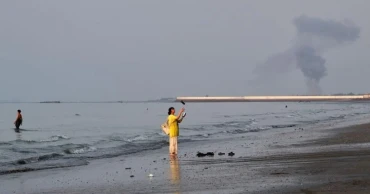
US strikes strategic Greater Tunb Island as tensions with Iran escalate
The United States on Wednesday launched airstrikes on Iran's Greater Tunb Island in the Strait of Hormuz, targeting military facilities that Washington said were being used to threaten commercial shipping in one of the world's most critical energy corridors.
The US military's Central Command (CENTCOM) said the 90-minute operation targeted Iranian defence positions and missile sites on the island, which has been under Iranian control since 1971 after being seized from what later became the United Arab Emirates.
According to CENTCOM, the strikes were intended to further reduce Iran's ability to launch attacks on commercial vessels transiting the Strait of Hormuz.
"The strikes further degraded Iran's ability to attack commercial shipping in the Strait of Hormuz," the command said in a statement.
The latest operation comes as the United States has reinstated a naval blockade on Iran and expanded its military campaign in response to Tehran's attacks on vessels operating in the strategic waterway.
The renewed confrontation has effectively derailed a temporary agreement reached last month that had paused hostilities for 60 days to allow negotiations over Iran's nuclear programme and other disputes.
Tensions have intensified in recent days as both countries exchanged military strikes across the region, raising fears that the conflict could escalate into a broader regional war.
Iran's Islamic Revolutionary Guard Corps (IRGC) warned earlier Wednesday that it could halt all oil and gas exports from the Middle East in response to the renewed US blockade.
"The export of oil and gas from the region will be either for everyone or for no one," the IRGC said.
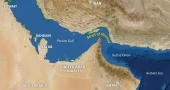
The Strait of Hormuz remains at the centre of the confrontation. The narrow waterway handles roughly one-fifth of the world's seaborne oil and natural gas trade, making any disruption a major concern for global energy markets.
Washington first imposed the naval blockade on Iran in April before lifting it last month following the interim agreement. However, negotiations later stalled amid renewed clashes over shipping in the Strait of Hormuz, prompting the United States to restore the blockade and intensify its military operations against Iranian targets.
19 days ago
Iran threatens to halt regional energy exports as US reinstates blockade
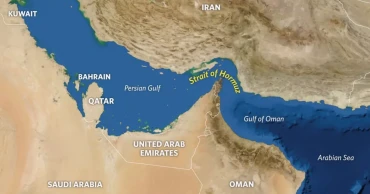
Iran on Wednesday threatened to stop all oil and gas exports from the Middle East after the United States reinstated its naval blockade and intensified airstrikes against the country, further escalating tensions that have pushed the region closer to a wider conflict.
The latest exchange of attacks follows the collapse of an interim agreement aimed at ending hostilities between Washington and Tehran, with renewed fighting centred on the Strait of Hormuz, a vital global energy shipping route.
According to Iranian officials, US airstrikes targeted several military sites, including a barracks belonging to Iran's 388th Mechanized Infantry Brigade in Sistan and Baluchestan province. At least seven Iranian troops were killed and more than 260 people were wounded in overnight strikes, while government spokeswoman Fatemeh Mohajerani said more than 30 people had been killed in recent days.
Iran's state television reported that at least 13 missiles struck the military base, killing both conscripts and professional soldiers. Iranian authorities said the army would respond decisively to what it described as American aggression.
The US military's Central Command said it carried out strikes on dozens of targets during a seven-hour overnight operation and resumed attacks during daylight hours, signalling an increase in the pace of military operations.
The renewed hostilities come after Washington restored the naval blockade it had first imposed in April before lifting it last month following an interim deal that suspended fighting for 60 days to allow negotiations on Iran's nuclear programme and other issues. Those talks have since stalled as tensions over the Strait of Hormuz intensified.
Iran's Islamic Revolutionary Guard Corps (IRGC) warned that if the blockade continues, no country in the region would be allowed to export oil or gas.
"The export of oil and gas from the region will be either for everyone or for no one," the IRGC said in a statement.
The Strait of Hormuz remains central to the dispute, with about one-fifth of the world's oil and natural gas trade passing through the waterway during normal times. Iran had effectively disrupted shipping through the strait during the early stages of the conflict, causing global energy prices to surge.
Although some commercial vessels resumed using an alternative route near Oman under US military protection during the ceasefire, Iran recently targeted ships using that corridor, triggering another round of military exchanges.
Iran also launched missile and drone attacks on Bahrain, Kuwait and Jordan on Wednesday, according to regional authorities. Missile warning sirens sounded in Bahrain and Kuwait, while Jordan said it intercepted three incoming Iranian missiles. Tehran claimed responsibility for the attacks, targeting countries that host US military forces.
US Central Command chief Adm. Brad Cooper said Iran had launched dozens of missiles and drones toward Gulf Arab states in recent days.
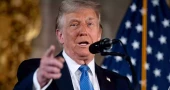
US President Donald Trump warned that American military operations would continue unless negotiations resumed.
"You better make a deal, or you're not going to have anything left," Trump said, indicating that bridges, power plants and other infrastructure could become future targets.
Iran's Ambassador to the United Nations, Amir Saeid Iravani, accused Washington of escalating the conflict, saying in a letter to the UN that "the US is the aggressor, not the victim."
The renewed fighting has also affected global energy markets. Brent crude traded above $85 per barrel on Wednesday, more than 15 percent higher than before the conflict began, although still below the peak levels reached earlier during the war.
Trump had earlier proposed imposing a 20 percent fee on ships transiting the Strait of Hormuz but later abandoned the plan, saying Gulf allies instead pledged major investment in the United States.
Regional mediators continue efforts to bring the United States and Iran back to the negotiating table, though prospects for renewed diplomacy remain uncertain amid the ongoing military escalation.
19 days ago
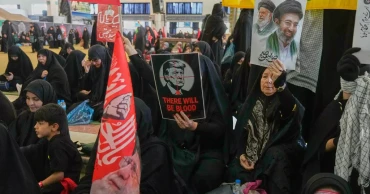
US reimposes blockade on Iran after Strait of Hormuz attacks as tensions escalate
The United States early Wednesday reimposed a blockade on Iranian ports following Tehran's attacks on ships passing through the Strait of Hormuz, triggering fresh strikes on countries hosting American forces as an interim peace deal continued to unravel.
Days of retaliatory attacks by Iran and the United States, along with both sides' efforts to assert control over the strategic waterway through which about one-fifth of the world's oil and natural gas passes during peacetime, have raised fears of a return to full-scale war in the Middle East.
The US first imposed the blockade in mid-April and lifted it in mid-June, a day after signing an interim agreement that allowed a 60-day period for negotiations on issues including Iran's nuclear programme. However, talks have stalled as fighting around the Strait of Hormuz has intensified.
When US President Donald Trump announced the return of the blockade on Monday, he also proposed imposing a 20% fee on ships passing through the strait. Hours later, however, he dropped the plan, saying Gulf allies had requested an alternative approach.
Fresh attacks after blockade resumes
Ahead of reimposing the blockade, the US military launched another wave of strikes, according to US Central Command.
Missile alerts were issued in Bahrain and Kuwait early Wednesday as Iranian missiles targeted the two countries, continuing a pattern of daily attacks that has further strained the fragile ceasefire.
Hours after the blockade was reinstated, Iranian state media reported an exchange of fire in the Strait of Hormuz without providing further details.
Adm. Brad Cooper, commander of US Central Command, said Iran had launched dozens of missiles and drones at neighbouring Gulf Arab countries.
"US forces are holding Iran accountable for unwarranted aggression that continues to endanger innocent lives," Cooper said.
The US currently has at least 19 warships in the Arabian Sea, including two aircraft carriers and an amphibious assault ship carrying more than 1,000 Marines. Central Command also said hundreds of military aircraft are operating across the Middle East.
Since the war between the US, Israel and Iran began on Feb. 28, Tehran has repeatedly targeted and threatened commercial vessels, disrupting shipping through the Strait of Hormuz and driving up global prices for oil, fertiliser and other goods.
More recently, Iran has attacked ships travelling through a US-monitored shipping route near Oman, outside Tehran's control, fuelling the latest escalation. The US has warned it could reopen the strait by force, although experts say such an operation would require a much larger military deployment.
Iran's ambassador to the United Nations, Amir Saeid Iravani, accused Washington of being the aggressor.
"The US is the aggressor, not the victim," he wrote to the UN chief, according to Iran's state-run IRNA news agency.
Trump drops shipping fee proposal
Trump said Tuesday that Gulf leaders had urged him to replace the proposed shipping fees with increased investments in the United States.
"They said we'd love to do it a different way. We'd love to invest in the United States with billions and billions of dollars," Trump told reporters in the Oval Office.
He said he preferred that arrangement because "I don't think anybody should be able to charge a fee for the strait."
It remains unclear whether the proposed investments would be in addition to commitments announced during Trump's visit to the region last year.
Trump's proposal to charge ships for using the strait would have marked a major shift from longstanding US policy supporting free navigation through the waterway.
In an interview with Fox News on Tuesday night, Trump warned that additional US strikes on Iran would continue over the next two days, with bridges and power plants among possible future targets unless negotiations resumed.
"You better make a deal, or you're not going to have anything left," he said.
Strikes continue across the region
US Central Command said it carried out strikes at several locations in Iran on Tuesday. Iranian authorities acknowledged the attacks but did not provide an overall assessment of casualties or damage.
Hours after the US announced the end of its operations, Iran's Bushehr city on the Persian Gulf was struck at four locations, according to IRNA. Explosions were also reported in Ahvaz in southwestern Iran and the southern port city of Bandar Abbas.
The attacks have raised speculation that Gulf Arab states may be responding militarily to Iran without publicly acknowledging it.
Kuwait separately said an Iranian strike wounded four members of its navy on Tuesday and set a building on fire.
Interim peace deal under pressure
Under the interim agreement, Iran pledged to allow free passage through the Strait of Hormuz for 60 days. However, the deal did not address what would happen afterward. Tehran maintains it has the right to regulate shipping through the strait and potentially charge fees, a position disputed by Washington.
Brent crude oil briefly rose above $87 a barrel on Tuesday before falling to around $78 after Trump withdrew his shipping fee proposal.
Meanwhile, regional mediators are continuing efforts to bring the United States and Iran back to the negotiating table.
Two regional officials, speaking on condition of anonymity because of the sensitive diplomatic efforts, said Pakistan-led mediation is working around the clock to restore the ceasefire.
20 days ago
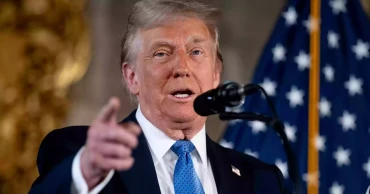
Trump drops Strait of Hormuz fee plan as renewed attacks threaten interim peace deal
U.S. President Donald Trump on Tuesday abandoned plans to impose fees on ships using the Strait of Hormuz, saying Gulf nations would instead boost investment in the United States, as renewed U.S. strikes on Iran and Iranian attacks on shipping and American allies further undermined an interim peace agreement.
The temporary deal had been expected to reopen the strategic waterway, a vital route for global energy supplies, while giving negotiators time to work toward a permanent settlement to the conflict. Instead, fighting has escalated again, raising concerns over the global economy and prompting new warnings for commercial airlines.
The Strait of Hormuz, through which about one-fifth of the world's traded crude oil and natural gas passes during peacetime, has become the centre of the conflict. During the war, Iran effectively disrupted traffic by attacking and threatening vessels, pushing up global prices for oil, fertiliser and other commodities.
More recently, Iran has targeted ships using a U.S.-supervised shipping route outside its territorial waters, triggering a series of retaliatory strikes. Washington has warned it could reopen the strait by force, although experts say such an operation would require a much larger military deployment.
Trump replaces shipping fees with Gulf investment plan
On Monday, Trump announced that the U.S. would reimpose a blockade on Iranian ports and charge ships fees equal to 20% of their cargo value to help cover the cost of securing the strait. However, he reversed the fee proposal a day later, while confirming that the blockade would still take effect in the coming hours.
"Based on highly productive conversations with Middle East leadership, I have decided to replace the 20% United States Reimbursement Fee with Trade and Investment Deals that the various Gulf States will be making into the United States," Trump wrote on social media.
He said the expected investments would be "massive," although it remains unclear whether they represent new commitments beyond those announced during his Middle East visit last year.
US-Iran exchanges continue
The U.S. military's Central Command said it had struck several targets in Iran, including coastal defence systems, missile and drone sites, and maritime facilities. Iran confirmed the attacks but did not immediately report casualties or damage.
The U.S. military said the strikes were aimed at reducing Iran's ability to target civilians and commercial shipping in the Strait of Hormuz.
Iran responded by launching attacks targeting Bahrain, Jordan and three tankers travelling through the strait. Kuwait's military also reported responding to an aerial attack but provided no further details.
Two of the targeted tankers, linked to the United Arab Emirates, caught fire temporarily. The International Maritime Organization said the attacks on the Mombasa and Al Bahiyah killed two mariners and injured 14 others. The UAE warned it would retaliate.
Dutch shipping company Stolt Tankers said one of its vessels, Stolt Magnesium, came under attack off the coast of Oman, causing a fire in its engine room. The company said all crew members were safe.
Iran's Revolutionary Guard claimed the Mombasa and Al Bahiyah had ignored repeated warnings. Tehran has previously targeted vessels using a shipping route near Oman that lies outside Iranian territorial waters.
Hours after Washington announced it had ended its latest round of strikes, Iran's state-run IRNA news agency reported that at least four locations in the Gulf city of Bushehr had come under attack, raising speculation that Gulf Arab states may have carried out retaliatory strikes without publicly acknowledging them.
The European Union Aviation Safety Agency advised airlines to avoid the airspace of Bahrain, Kuwait, Qatar, the United Arab Emirates and the Gulf of Oman, warning that the volatile military situation posed a high risk to civilian flights.
Interim agreement under growing strain
The renewed violence has placed the interim peace agreement under increasing pressure. The 60-day deal was intended to provide time for negotiations on a broader accord, including Iran's disputed nuclear programme and other regional issues.
Trump's decision to restore the blockade further complicates those efforts. The United States had lifted a blockade imposed in mid-April as part of the temporary agreement, but the U.S. military said it would reinstate it from midnight Wednesday in Dubai.
The proposed shipping fees would also have marked a major shift in longstanding U.S. policy, departing from recent assurances by U.S. Secretary of State Marco Rubio that the strait would remain open to all vessels without tolls.
Under the interim agreement, Iran agreed to allow free passage through the Strait of Hormuz for 60 days, but the arrangement did not specify what would happen afterward. Tehran maintains it has the right to regulate traffic through the waterway and potentially impose charges, a position disputed by Washington.
Brent crude oil briefly climbed above $87 a barrel early Tuesday, well below the nearly $120 peak seen during the height of the conflict but still high enough to fuel inflation concerns. Prices later fell to around $78 after Trump announced he was dropping the fee plan.
Mediation efforts continue
Regional mediators are continuing efforts to bring the United States and Iran back to the negotiating table, according to two regional officials familiar with the talks. Speaking on condition of anonymity, they said Pakistan-led mediation was working around the clock to revive the ceasefire.
Meanwhile, Lebanese and Israeli delegations were scheduled to meet in Rome on Tuesday for another round of U.S.-mediated negotiations.
Hezbollah entered the conflict in support of Iran shortly after the war began on Feb. 28, launching attacks on Israel that prompted an Israeli ground offensive in Lebanon.
Last month, Lebanon and Israel announced a framework agreement calling for the withdrawal of Israeli forces from southern Lebanon in exchange for Hezbollah's disarmament, but implementation has stalled.
Although a ceasefire currently holds in Lebanon, uncertainty remains over whether it can survive if fighting between the United States and Iran escalates into a full-scale war once again.
20 days ago
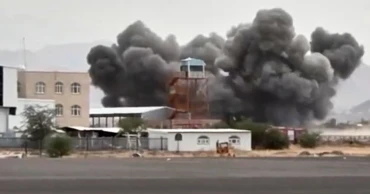
Houthis launch missiles, drones at Saudi airport amid renewed escalation
Yemen's Iran-backed Houthi rebels said they launched missiles and drones targeting Saudi Arabia's Abha International Airport on Monday, hours after blaming Saudi airstrikes for hitting Sanaa International Airport in a sharp escalation of tensions.
No casualties were immediately reported from either attack.
Houthi military spokesperson Brig. Gen. Yahya Saree said the group carried out the strike in retaliation for what it described as Saudi attacks on Sanaa airport. He also warned commercial airlines against using Saudi airspace until what he called the blockade on Sanaa International Airport is lifted.
Saudi authorities did not immediately comment on the reported strikes. However, the spokesperson for the Saudi-led coalition, Maj. Gen. Turki al-Malki, later said Saudi air defenses had intercepted ballistic missiles launched toward the kingdom's southern region without providing further details.
Earlier in the day, Yemen's internationally recognized government said the strike on Sanaa airport was intended to prevent an Iranian aircraft from landing. Yemeni Defense Minister Gen. Taher al-Aqili said the airport runway was targeted to stop an Iranian plane from returning a Houthi delegation from Tehran following the funeral of Iran's late Supreme Leader Ayatollah Ali Khamenei.
According to the Houthis, the Iranian aircraft was diverted to Hodeida Airport instead.
The Yemeni government also announced the closure of all airports across the country until further notice and ordered the evacuation of Sanaa airport and surrounding areas.
The Presidential Leadership Council said it had rejected Iran's request to allow a Mahan Air flight from Tehran to Sanaa, accusing the Houthis of attempting to receive the aircraft outside established civil aviation procedures.
The latest exchange marks the most serious confrontation between the Houthis and Saudi Arabia since a UN-brokered truce took effect in 2022, ending years of frequent cross-border attacks.
The developments prompted an emergency meeting of the UN Security Council, where UN Assistant Secretary-General for Political Affairs Khaled Khiari warned against a renewed cycle of violence.
"Yemen and the wider region cannot afford another cycle of escalation," he said, urging all parties to return to negotiations under UN mediation.
UN Special Envoy for Yemen Hans Grundberg also voiced concern over the deteriorating situation and called for dialogue to preserve the relative calm that has largely held since 2022.
Yemen's civil war began in 2014 when the Houthis seized the capital, Sanaa, prompting a Saudi-led military intervention the following year in support of the internationally recognized government.
21 days ago
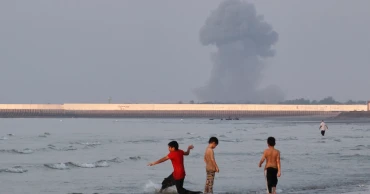
US launches fresh strikes on Iran as Tehran retaliates in Strait of Hormuz, Bahrain
The United States launched a new wave of military strikes on Iran early Tuesday, targeting coastal military infrastructure, while Tehran retaliated by attacking Bahrain and two United Arab Emirates-linked tankers in the Strait of Hormuz, further escalating tensions in the Gulf.
The US Central Command (CENTCOM) said American forces struck military targets in Bushehr, Chabahar, Jask, Konarak, Abu Musa and Bandar Abbas, targeting Iran's coastal defense systems, missile and drone sites, and maritime capabilities.
CENTCOM said the strikes were intended to reduce Iran's ability to threaten commercial shipping and regional security.
US President Donald Trump confirmed the operation, saying the attacks would continue and asserting that Washington had "reinstated" a blockade in the Strait of Hormuz.
Speaking at the White House, Trump said the United States was regaining control of the strategic waterway and indicated that his administration planned to seek compensation from commercial vessels for providing maritime security, marking a major departure from longstanding US policy supporting unrestricted freedom of navigation.
Iran responded by launching attacks on Bahrain and targeting two UAE-associated oil tankers transiting the Strait of Hormuz.
According to the UAE Defense Ministry, two cruise missiles struck the tankers Mombasa and Al Bahiyah, killing one Indian crew member and injuring eight others, including six Indians and two Ukrainians. Fires broke out aboard both vessels but were later extinguished.
Iran's Islamic Revolutionary Guard Corps claimed responsibility for the tanker attack, alleging the ships had ignored repeated warnings and entered a restricted area.
Bahrain also came under renewed missile attack, prompting authorities to activate air raid sirens and advise residents to seek shelter. No casualties or damage were immediately reported.
The UAE condemned the attacks and said it reserved the right to take all necessary measures to protect its territory, citizens and residents.
The latest escalation comes amid an ongoing dispute between Washington and Tehran over control of the Strait of Hormuz, a critical maritime route for global energy supplies. Oil prices rose following the renewed hostilities, with Brent crude climbing above $84 per barrel in early trading.
The US Embassy in Abu Dhabi and the US Consulate in Dubai canceled consular appointments through Wednesday, citing the deteriorating regional security situation.
21 days ago
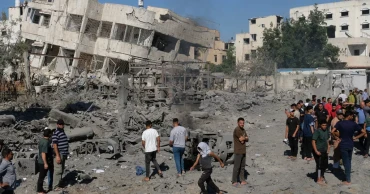
At least 6 Palestinians killed in Israeli attacks across Gaza
Israeli military fire killed at least six Palestinians, including a nine-year-old girl, and injured more than a dozen others in separate incidents across the Gaza Strip on Sunday, according to Palestinian health officials.
Four people were killed in a drone strike on a blacksmith shop in Gaza City's Sabra neighborhood, officials at Shifa Hospital said. The Israeli military confirmed carrying out strikes in the area, saying it had targeted what it described as "terrorist infrastructure" and later identified the site as a Hamas weapons production facility.
Following the initial strike, the Israeli military issued an evacuation order for the area. About an hour later, additional airstrikes hit the same location. The Palestinian Red Crescent Society said 14 people were wounded in the attacks.
In central Gaza, nine-year-old Tala Abu Matar was killed by Israeli gunfire at a displacement camp, according to Gaza's Health Ministry. The Israeli military said it was not aware of the reported incident.
In a separate attack in the southern city of Khan Younis, an Israeli strike on a tent sheltering displaced people killed one Palestinian, health officials at Nasser Hospital said. The Israeli military did not immediately comment on the incident.
Although hostilities have eased significantly since a ceasefire took effect on Oct. 10, Israeli strikes continue to occur almost daily. The Israeli military says it targets Hamas fighters and military infrastructure, while Palestinian officials say civilians continue to be among the casualties.
According to Gaza's Health Ministry, at least 1,098 Palestinians, including more than 260 children, have been killed since the ceasefire began. During the same period, five Israeli soldiers have also been killed.
Efforts to advance the second phase of the ceasefire agreement remain stalled, with Israel and Hamas divided over key issues, including Hamas' disarmament and the reconstruction of Gaza. Meanwhile, much of Gaza's population remains displaced, with many families living in overcrowded tent camps or damaged buildings under difficult humanitarian conditions.
22 days ago
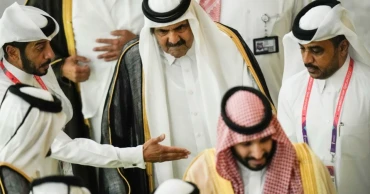
Former Qatar emir Sheikh Hamad bin Khalifa Al Thani dies at 74
Sheikh Hamad bin Khalifa Al Thani, the former emir of Qatar who transformed the Gulf nation into a global force in diplomacy, media and investment, has died at the age of 74, according to the state-run Qatar media.
The media announced his death but did not disclose the cause.
Sheikh Hamad ruled Qatar from 1995 until his voluntary abdication in June 2013, when he handed power to his son, Sheikh Tamim bin Hamad Al Thani, in a rare peaceful transfer of power in the Gulf. During his 18-year reign, Qatar emerged as a major international player, backed by its vast oil and natural gas wealth.
He oversaw the launch of Al Jazeera, expanded Qatar Airways into a leading global airline, and helped secure Qatar's successful bid to host the 2022 FIFA World Cup. He also promoted Qatar as a mediator in regional conflicts, including those involving Sudan, Lebanon, the Palestinians and Afghanistan.
Sheikh Hamad pursued an independent foreign policy that included ties with Iran, Hamas and the Muslim Brotherhood, drawing criticism from some regional and Western allies. Qatar also supported opposition groups during the Arab Spring and hosted talks between the United States and the Taliban.
His leadership reshaped Qatar's global influence, making the small Gulf state a key diplomatic, economic and media power.
22 days ago
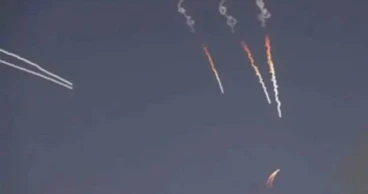
US launches third round of strikes on Iran
The US military has launched a third round of strikes on Iran after accusing the Islamic Revolutionary Guard Corps (IRGC) of carrying out an attack on a Cyprus-flagged container ship in the Strait of Hormuz, US Central Command (CENTCOM) said.
According to CENTCOM, the vessel caught fire and suffered engine damage during the alleged attack, leaving it unable to continue its voyage. It also said one crew member remains missing.
Iran FM visits Oman for Strait of Hormuz transit talks
The command said Iran had been given another opportunity to comply with the Memorandum of Understanding signed on June 16 after being held responsible for previous attacks on commercial vessels, but had failed to do so.
In response, the United States launched further strikes aimed at weakening Iran's ability to target civilian mariners and commercial ships transiting through the Strait of Hormuz, CENTCOM said.
With inputs from Al Jazeera
23 days ago
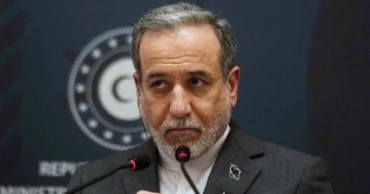
Iran FM visits Oman for Strait of Hormuz transit talks
Iranian Foreign Minister Abbas Araghchi is visiting Oman as part of ongoing consultations between Tehran and Muscat on arrangements for managing passage through the Strait of Hormuz.
The two countries have been holding consultations on the issue for the past two months. Iranian officials have repeatedly maintained that Tehran has the sovereign right to oversee management of the strategic waterway to ensure its safety and security.
Iran slams fresh US strikes targeting southern provinces, bridges
Meanwhile, Iranian Foreign Ministry spokesperson Esmaeil Baghaei said the United States has a history of violating or failing to honor agreements. He said Iran has not sought negotiations at the current stage, but remains open to receiving mediators visiting Tehran.
Baghaei also accused Washington of breaching the memorandum of understanding (MoU) by carrying out air strikes and revoking the exemption that had allowed Iranian oil exports.
With inputs from Al Jazeera
23 days ago