Middle-East
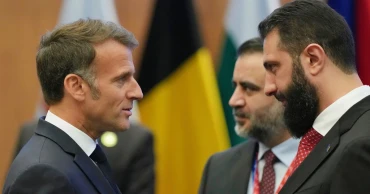
Macron becomes first major Western leader to visit Syria under new leadership
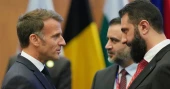
French President Emmanuel Macron arrived in Syria on Monday, becoming the first major Western leader to visit the war-ravaged country since the ouster of Bashar al-Assad in 2024.
Although Ukrainian President Volodymyr Zelenskyy visited Syria in April, Macron is the first leader from Western Europe or North America to make the trip.
His visit comes during a period of relative calm in the Middle East following the monthlong conflict involving Iran and Lebanon. After Syria, Macron will travel to Ankara, Turkey, for the NATO summit, where Syrian President Ahmad al-Sharaa is also expected to attend and hold a high-profile meeting with U.S. President Donald Trump.
Syria's state-run SANA news agency said Macron was accompanied by a business delegation and would discuss regional security, along with trade and investment opportunities.
Macron was received at Damascus International Airport by Syrian Foreign Minister Asaad al-Shibani.
"I have come to express France's commitment to the Syrian people. For a sovereign Syria, united in its diversity and at peace with its neighbors," Macron wrote on X. "Together, let us open a new chapter of stability and peace."
According to the French president's office, France supports everyone who can help build a new Syria in line with the aspirations expressed during the 2011 Arab Spring, when widespread protests across the Middle East called for political reform and change.
Macron is scheduled to meet President al-Sharaa at the presidential palace and engage with representatives of different sections of Syrian society.
His office said meetings will continue throughout Tuesday, beginning with members of Syrian civil society, although no further details were provided. Macron will then hold talks with al-Sharaa, participate in economic discussions, sign several memorandums of understanding, and later address a joint news conference with the Syrian president.
Macron hosted al-Sharaa in Paris in May 2025 and urged European and U.S. leaders to lift long-standing sanctions on Syria. Most of those sanctions have since been removed.
France backed Syria's new leadership even when some countries remained sceptical because of al-Sharaa's Islamist-led administration and his previous role as head of the Hayat Tahrir al-Sham group, which had earlier been linked to al-Qaida.
Western governments had expressed concerns over the treatment and inclusion of women and minority communities, as well as whether Syria's new leadership would move toward a more democratic system.
Although Syria has largely avoided the region's recent conflicts, the country continues to struggle with the consequences of 13 years of war, which devastated much of its infrastructure, pushed millions into poverty and left reconstruction expected to cost hundreds of billions of dollars.
While Syria has signed a number of memorandums of understanding with countries and major companies for large-scale investment projects, those initiatives have yet to be implemented.
28 days ago
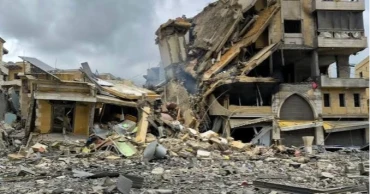
Over 90,000 homes damaged by Israeli attacks in Lebanon
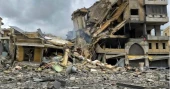
More than 90,000 homes in southern Lebanon have been damaged or destroyed by Israeli attacks, according to a government survey, while continued violence has prevented over 600,000 displaced residents from returning to their homes.
Israel has released videos showing its military demolishing neighbourhoods, with soldiers carrying out operations that have continued for months. Rights groups say the destruction of entire villages violates international law.
Resident Hussein Sabra said he can see his hometown of Hadatha, only a few kilometres away, but is unable to return. From a distance, he continues to witness and hear explosions.
"It is hard to watch your homes, livelihoods and childhood memories being destroyed," Sabra said.
Media reported that the damage has left Lebanon facing an estimated reconstruction bill of more than $1 billion, a cost many affected families cannot afford.
Residents said they are making only basic repairs to make their homes habitable, fearing renewed violence.
"People are only making minor repairs because they worry the fighting could escalate again," Tibnine resident Ahmed Hamza said.
Even those who have returned remain fearful.
"The children are always frightened by the explosions. The whole house shakes," said another Tibnine resident, Abu Hussein. #By Al Jazeera
28 days ago
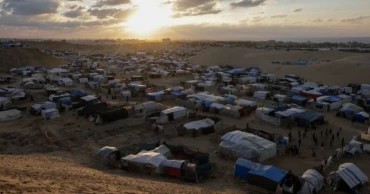
Palestinian technocratic committee says ready to govern Gaza after Hamas dissolves administrative body
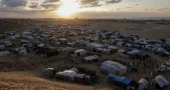
A 15-member Palestinian technocratic committee said Monday it is ready to take over the administration of the Gaza Strip after Hamas dissolved its Government Emergency Committee and transferred governing responsibilities to the new body.
Committee head Ali Shaath said in a social media statement that the committee is fully prepared to begin its work once the necessary resources and capabilities are provided. He stressed that its success depends on having "one authority, one law with a clear mandate, and one armed force" under a single governing body.
UN experts accuse Israel of targeting Gaza children, renew genocide allegation
Earlier Monday, Hamas announced the dissolution of its Government Emergency Committee. Committee chief Mohammed al-Farra formally submitted his resignation, Hamas media office director general Ismail Thawabta told a press conference in Deir al-Balah.
Thawabta said only technical and professional staff would remain to prevent an administrative vacuum, in line with a roadmap agreed by Palestinian factions in Cairo. He said the move aims to ease the suffering caused by the ongoing war, delays in reconstruction, the continued blockade, closed border crossings and the Israeli military's failure to withdraw.
Hamas spokesperson Hazem Qassem said the decision removes excuses for Israeli interference and confirms Hamas' commitment to handing over governance. The committee, established during the second phase of the Gaza ceasefire process announced in January, has yet to enter Gaza, reportedly because of Israeli obstruction. Palestinian factions submitted their response to the Cairo roadmap in mid-June, which includes plans for reconstruction, disarmament, Israeli withdrawal and an international peacekeeping force.
28 days ago
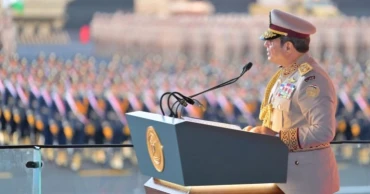
No normal ties with Israel until Palestinian occupation ends, says Egypt
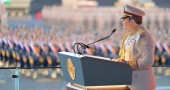
Egyptian President Abdel Fattah el-Sisi has said there can be no normalisation of relations with Israel until its occupation of Palestinian territory comes to an end.
In a speech, el-Sisi said lasting peace, real stability and public acceptance of normal ties with Israel would only be possible through a just peace that ends the occupation, stops injustice and aggression, restores the rights of Palestinians and ensures security for everyone.
Egypt, the first Arab country to sign a peace treaty with Israel in 1979, believes the path to resolving conflicts in the Middle East lies in a comprehensive peace agreement between Israel and Palestine, he said.
El-Sisi added that a just peace would give people across the region the opportunity to live in stability and prosperity.
He also urged support for the Gaza ceasefire that took effect in October 2025.
Source: Al Jazeera
29 days ago

UN raises alarm over growing water crisis in Afghan capital
The United Nations has warned of a worsening drinking water shortage in Afghanistan's capital Kabul, saying the crisis poses serious challenges to the city's future development, local media TOLOnews reported on Sunday.
According to the report, declining groundwater levels, rapid population growth and climate change have significantly intensified pressure on Kabul's water resources, making the city one of the worst-hit urban areas in the region.
Officials said efforts are underway to address the water shortage through several major infrastructure projects.
Kabul has struggled with drinking water shortages for years. Despite repeated efforts by the authorities to improve water supply, the problem remains a major challenge for the city's growing population, the report added.
29 days ago
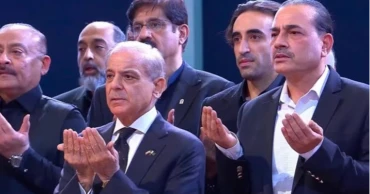
Khamenei's influence will be remembered for generations: Pakistan PM
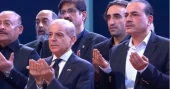
Pakistan Prime Minister Shehbaz Sharif attended the funeral ceremony of Iran's Supreme Leader Ayatollah Ali Khamenei in Tehran on Saturday.
Sharif, whose country has played a key mediating role between the United States and Iran, said in a post on social media that Khamenei's "wisdom, leadership and profound influence on Iran and the wider region will be remembered for generations."
The Pakistani prime minister was accompanied by a high-level delegation that included Pakistan People's Party Chairman Bilawal Bhutto Zardari, National Assembly Speaker Sardar Ayaz Sadiq and Pakistan Army Chief General Asim Munir.
Source: Al Jazeera
30 days ago
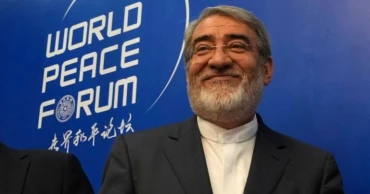
Friendly nations to get special treatment in Strait of Hormuz, envoy says
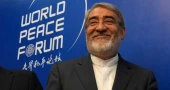
Iran's ambassador to China has said Beijing and other countries friendly to Tehran will receive special treatment under a new arrangement in the Strait of Hormuz.
Speaking at the World Peace Forum in Beijing on Saturday, Ambassador Abdolreza Rahmani Fazli said the new mechanism would be implemented in coordination with Oman to facilitate the passage of China and other friendly countries through the strategic waterway.
Iran begins dayslong funeral for Ayatollah Ali Khamenei after his death in war
He said the arrangement would include the imposition of fees on vessels transiting the Strait of Hormuz.
According to the ambassador, the proposed fees would not violate international maritime law.
No further details about the proposed arrangement were immediately provided.
Source: Al Jazeera
30 days ago
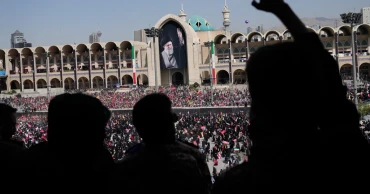
Iran begins dayslong funeral for Ayatollah Ali Khamenei after his death in war
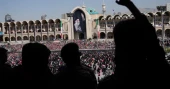
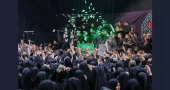
Hundreds of thousands of mourners gathered in Tehran on Saturday as Iran began a dayslong funeral for late Supreme Leader Ayatollah Ali Khamenei, beating their chests in grief before his flag-draped coffin and chanting calls for revenge against Israel and the United States.
Khamenei, who led Iran for decades, was killed at the age of 86 in a Feb. 28 airstrike during the opening phase of the Iran war.
The funeral is expected to strengthen support for Iran's ruling establishment and its new supreme leader, Ayatollah Mojtaba Khamenei, the late leader's son.
The ceremonies come at a critical time as Iran seeks to use its influence over the Strait of Hormuz in negotiations with the United States on a permanent end to the war, while concerns remain over the possibility of another Israeli attack.
During Saturday's ceremony, Iran's chief negotiator warned France and the United Kingdom against comments about launching joint naval patrols in the Strait of Hormuz, the narrow entrance to the Persian Gulf through which about one-fifth of the world's oil and natural gas once passed during peacetime.
Many mourners cried as they viewed Khamenei's coffin alongside those of family members who were also killed in the airstrike. Crowds repeatedly chanted, "Our word is one! Revenge! Revenge!" while carrying flags and banners bearing Khamenei's image. Groups of men beat their chests in a traditional Shiite mourning ritual.
"Imam Khamenei was our heart, our father, our everything," mourner Masoumeh Mohammadi said. "I still can't believe they martyred him. We will not rest until we avenge his death."
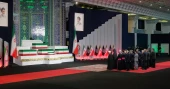
An outdoor stage at Tehran's Grand Mosalla was designed to resemble the setting where Khamenei had often delivered speeches. It featured a chair similar to the one he used, along with a microphone and a small table. Above the stage hung a portrait of Iran's first Supreme Leader, Ayatollah Ruhollah Khomeini, who died in 1989.
Khomeini's funeral drew millions of mourners and was marked by chaotic scenes. Khamenei's death, only the second time Iran has lost a supreme leader since the 1979 Islamic Revolution, allowed authorities several months to prepare for the ceremonies.
Volunteers sprayed water on mourners to help them cope with the summer heat, while food and drinks were distributed outside the venue. Men and women gathered separately inside the Grand Mosalla after passing through metal detectors and security checks. Armed police guarded nearby streets, while many people remained outside under the shade of trees after much of the city was shut down for the funeral.
The coffins of Khamenei's family members were placed beneath his own coffin, which was topped with his black turban, signifying his descent from the Prophet Muhammad. Among those killed was the wife of Mojtaba Khamenei. It remained unclear whether Mojtaba would appear at the funeral. Reports said he was wounded in the same airstrike that killed his father.
"We attended the funeral to show that we are all committed to defend our country and religion," said Ali Kazemi, who travelled from the northwestern city of Tabriz, about 530 kilometres (330 miles) from Tehran.
Iran began the funeral on July 4, the 250th anniversary of the founding of the United States. Although authorities did not mention the timing, crowds at the ceremony chanted, "Death to America!" and "Death to Israel!" The anti-American slogan has been common in Iran since the 1979 Islamic Revolution and the U.S. Embassy hostage crisis.
At about the same time, U.S. President Donald Trump, speaking in South Dakota near Mount Rushmore, said: "We knocked the hell out of Iran. They want to settle so badly. We gave them a week off for a funeral."
Some mourners at the Grand Mosalla also carried a large flag displaying the message "#KillTrump."
Meanwhile, Iran's chief negotiator Kazem Gharibabadi criticised a joint statement issued overnight by British Prime Minister Keir Starmer and French President Emmanuel Macron suggesting their militaries were prepared to help patrol the Strait of Hormuz.
Iran has sought to use control over the strategic waterway as leverage and has suggested charging ships that pass through it, challenging its long-standing status as an international waterway.
"The security of Hormuz lies with the coastal states. The crisis-makers will be held accountable for the consequences of their adventurism," Gharibabadi wrote on X. "This is a serious warning."
Khamenei's body will be taken to several cities in Iran and neighbouring Iraq before he is buried on Thursday at the Imam Reza shrine in Mashhad, his birthplace.
Authorities have closed roads, restricted airspace and suspended many daily activities during the mourning period.
No official estimate of Saturday's attendance was released, although large crowds continued to move through the Grand Mosalla and surrounding streets. Mourning ceremonies were also held in other cities across Iran.
A prayer for the dead is scheduled at the Grand Mosalla on Sunday. On Monday, Khamenei's body and those of his family members will be carried through the streets of Tehran in a procession expected to draw even larger crowds.
"I am here to say goodbye to my beloved leader Ali Khamenei," said 27-year-old Hananeh Mousavi, who attended the funeral with her mother. "I never expected to see such a day. I wish I had died before this tragedy."
30 days ago
Powerful Iranian general reappears publicly as Tehran prepares for Khamenei's funeral
A powerful Iranian general who commands the country's paramilitary Revolutionary Guard has appeared in public for the first time in months as Tehran prepares for the dayslong funeral of late Supreme Leader Ayatollah Ali Khamenei.
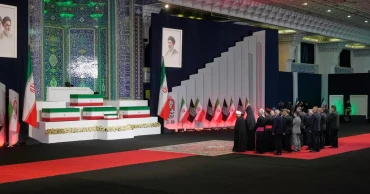
Photos released by Iranian state media showed Gen. Ahmad Vahidi attending a meeting on arrangements for Khamenei's funeral before sitting beside the late leader's coffin during a smaller mourning ceremony held Thursday night near Khamenei's former residence in central Tehran.
Experts say Vahidi has become a key figure in shaping Iran's hardline position in negotiations over a possible permanent end to the war with the United States. He is believed to be among a small group in direct contact with Iran's new Supreme Leader Ayatollah Mojtaba Khamenei, who has remained out of public view after reportedly being wounded in Israeli strikes on Feb. 28 that killed his father, the elder Khamenei.
Vahidi himself had not been seen publicly since Feb. 8, weeks before the Iran war began. During the conflict, Israel killed several senior Iranian military and government leaders and has also threatened the life of Ayatollah Mojtaba Khamenei.
Video released by Iranian state media showed the mourning ceremony held near the husseiniyah at Khamenei's compound in Tehran. An Israeli airstrike at the start of the war killed Khamenei and several members of his family. State media showed his coffin placed on a stage decorated with red tulips, while paper butterflies hung from the ceiling in front of it.
Mourners dressed in black, identified by state media as relatives of those killed in the 12-day war in 2025 and the recent Iran war, threw scarves and other personal items toward attendants to touch against the coffin, a traditional practice in Iran.
Later, state media broadcast images of Khamenei's coffin draped with a red flag bearing the white calligraphy "Ya Hussein," a Shiite expression commemorating the 7th-century martyrdom of the Prophet Muhammad's grandson. The flag had previously flown over the golden-domed Imam Hussein shrine in Karbala, Iraq. It traditionally symbolizes the unjust shedding of blood and a call for vengeance.
On Friday morning, security personnel carried Khamenei's coffin, now covered with the Iranian flag, by hand as it arrived at the Grand Mosalla in Tehran. Religious leaders, government officials and foreign dignitaries paid their respects by walking past the coffin, along with those of several slain family members, including his 14-month-old granddaughter, Zahra Mohammadi Golpayegani.
Iran will begin Khamenei's dayslong funeral on Saturday. His body will later be taken to several cities in Iran and neighboring Iraq. Authorities are expected to shut down streets, close airspace and disrupt daily activities in Tehran as mourners honor Khamenei, who ruled Iran for decades with an iron grip while maintaining a confrontational stance toward the West.
1 month ago
Powerful Iranian general emerges before Khamenei funeral
A powerful general who leads Iran's paramilitary Revolutionary Guard emerged from hiding as Tehran prepared Friday for the dayslong funeral for the late Supreme Leader Ayatollah Ali Khamenei.
Photos published online by Iranian state media showed Gen. Ahmad Vahidi attending a meeting about the funeral of Khamenei, 86, then sitting alongside his casket as Iran's theocracy held a smaller service for him Thursday night near the supreme leader's former home in downtown Tehran.
Vahidi has become a major player in formulating Iran’s tough stance in negotiating a possible permanent end to the war with the United States, experts say. He is believed to be part of a small clique in direct contact with Iran’s new Supreme Leader Ayatollah Mojtaba Khamenei, who remains in hiding after being reportedly wounded in the Feb. 28 Israeli strikes that killed his father, the elder Khamenei.
Vahidi himself hasn’t been seen publicly since Feb. 8, weeks before the Iran war began.
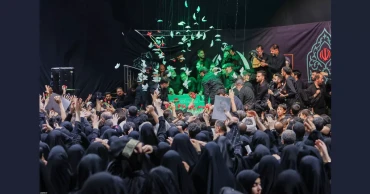
Video published by Iranian state media showed the mourning ceremony for Khamenei near the husseiniyah at his compound in Tehran. An Israeli airstrike in the war's first moments killed Khamenei and some of his family members. State media said Khamenei's body sat within a coffin on a stage, with red tulips lined up in front of it. What appeared to be paper butterflies hung from the ceiling in front of it.
The black-clad mourners, whom state media identified as coming from families of those who lost loved ones in the 12-day war in 2025 and the recent Iran war, threw scarves and other items for attendants to brush against the coffin, a common practice in Iran.
Later, state media showed images of Khamenei's casket draped by a red flag with white calligraphy reading "Ya Hussein,” a Shiite expression in remembrance of the 7th-century martyrdom of the Prophet Muhammad’s grandson. It had been flying over the Imam Hussein golden-domed shrine in Karbala, Iraq. The flag also traditionally symbolizes both the spilled blood of someone unjustly killed and a call for vengeance.
Beginning Saturday, Iran will hold a dayslong funeral for Khamenei, and his body will be transported to cities in both Iran and neighboring Iraq. The funeral will begin at the Grand Mosalla in Tehran, where authorities plan to shut down streets and daily life as mourners commemorate the life of Khamenei, who led Iran for decades with an iron fist while confronting the West.
1 month ago