middle-east
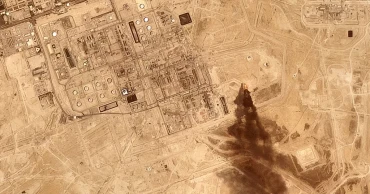
Jordan intercepts Iranian missiles as US, Saudi forces strike militia targets in Iraq
Jordan said its air defense systems intercepted and destroyed five missiles fired from Iran early Wednesday, hours after the United States said it had repelled an Iranian missile attack targeting American forces in the Middle East, ending a brief lull in hostilities.
Jordan's military confirmed the interceptions, while Iran's state-run IRNA news agency quoted the Islamic Revolutionary Guard Corps (IRGC) as saying its Aerospace Force had launched ballistic missiles targeting Jordan's Muwaffaq Salti Air Base and the headquarters of the US military's Central Command in the country.
The renewed exchange of attacks rattled global energy markets, with Brent crude, the international benchmark, rising 3.1 percent to $84.58 per barrel.
Earlier, the US Central Command (CENTCOM) said American forces remained on high alert and had joined Saudi forces in carrying out strikes against sites in Iraq allegedly used by Iran-backed militias to launch recent attacks.
The United States warned that any further attacks on American troops or Saudi Arabia's energy infrastructure could trigger additional military action.
In Baghdad, Iraqi Prime Minister Ali al-Zaidi convened an emergency meeting of the National Security Council to assess the situation following the strikes.
The latest escalation follows a short period of relative calm between Washington and Tehran, during which neither side reported attacks for about three days after weeks of heightened tensions centered on the Strait of Hormuz, the strategic waterway through which roughly one-fifth of the world's traded oil passes.
The renewed violence adds to mounting pressure on US President Donald Trump after weeks of conflict in the region. Four American service members have been killed in recent fighting, while the Pentagon has sought additional funding from Congress to cover the growing costs of military operations.
5 days ago
US intercepts Iran missiles, strikes Iraq militias
The US military said Tuesday it intercepted a barrage of Iranian missiles targeting American forces in the Middle East and, along with Saudi forces, struck sites in Iraq used by Iran-backed militias to launch attacks in recent days.
US Central Command said all Iranian missiles fired at American forces were intercepted and that US troops “remain vigilant and at a high state of readiness.”
The United States also warned that further attacks on its troops or Saudi Arabia’s energy infrastructure could trigger additional military action.
The latest strikes ended a brief lull in fighting between the United States and Iran after weeks of tensions over the strategic Strait of Hormuz, a key Persian Gulf waterway through which about 20% of the world’s traded oil normally passes.
There was no immediate response from Tehran to the US military’s statement or the strikes.
The renewed fighting came as President Donald Trump faced growing pressure over the conflict. Four US troops have been killed in recent weeks, while the Pentagon has sought additional funding from an increasingly skeptical Congress to cover the war’s rising costs.
High gasoline prices linked to disruptions in the Strait of Hormuz have also raised concerns for Republicans ahead of November’s midterm elections. The US House narrowly passed a resolution last week calling for an end to military action against Iran.
Trump has repeatedly backed away from threats to target bridges, power plants and other infrastructure in Iran. But speaking to Fox News Channel on Tuesday, he said Iran knows he will “finish the job” if its leaders fail to reach a deal to end the war.
US, Saudi forces strike Iraq sites
Iran launched its ballistic missiles before US and Saudi forces carried out strikes in Iraq, according to a US official who said the two operations were not connected. The official spoke on condition of anonymity because of the sensitive military operations.
US and Saudi fighter aircraft struck several logistics and weapons sites in eastern Iraq in response to more than 30 drone attacks directed by Iran’s Islamic Revolutionary Guard Corps (IRGC) over the previous 72 hours, US Central Command said.
The command warned that the IRGC and its Iran-backed groups must stop the attacks to avoid further US military action.
Saudi Arabia’s Defense Ministry confirmed the strikes, saying the kingdom does not seek escalation but would respond to any aggression.
Saudi Arabia also said its air defenses intercepted and destroyed several drones launched by Iran-backed militias in Iraq for a second straight day. The drones had targeted petroleum facilities in the kingdom’s eastern region.
Iraqi Prime Minister Ali al-Zaidi ordered security agencies to investigate after Saudi Arabia accused Iran-backed groups of carrying out a similar attack Monday.
The Iraqi military said it was committed to preventing its territory from being used as a route or launching point for attacks against friendly countries.
The Iraqi militias denied involvement. The Islamic Resistance in Iraq, an umbrella group of Iran-backed armed groups, called Saudi Arabia’s allegations “fabrications” and suggested that Yemen’s Houthi rebels could have carried out Monday’s attacks.
Houthis target Saudi tanker
The Houthis claimed they fired missiles at the Saudi oil tanker NCC Ghazal, forcing it to turn back. Last week, they announced a blockade of Saudi shipping, raising concerns over another key waterway, the Bab el-Mandeb Strait leading to the Red Sea.
The United Kingdom Maritime Trade Operations Center said a tanker reported hearing explosions while sailing in the southern Red Sea. It did not identify the vessel but said the ship and its crew were safe.
The Houthis also fired on at least one Saudi tanker in the Red Sea last week.
Iran and the United States had paused their fighting over the weekend, although tensions remained high. Officials said mediators had made progress toward bringing the two sides back to negotiations.
Iran said Tuesday that earlier US strikes had destroyed an airport and a marine control tower and damaged 12 bridges and two tunnels, among other infrastructure.
Iran had effectively closed the Strait of Hormuz after the war began by firing at or threatening freighters and tankers off its coast. After an interim ceasefire deal was signed in June, a struggle for control of the waterway followed.
Trump meets Netanyahu
The latest strikes came on the same day Israeli Prime Minister Benjamin Netanyahu met Trump at the White House for the first time since the two countries launched the war against Iran on Feb. 28.
Israel has largely stayed out of the latest fighting with Iran.
Netanyahu called the meeting “excellent,” while Trump described it as “very good” and said “many important subjects were discussed.”
Meanwhile, concerns have grown over the US military’s ability to intercept Iranian missiles as lawmakers, military officials and experts warn that the country’s stockpile of missile interceptors is declining.
Sean Parnell, the Pentagon’s chief spokesperson, rejected those concerns, saying the US military “has everything it needs to execute at the time and place of the president’s choosing.”
5 days ago

Iran hangs 2 men over killing of 4 police officers in January protests
Iran on Tuesday hanged two men convicted in a case of killing four police officers during January protests, state media reported.
A report by Mizanonline.ir, affiliated to the country’s judiciary, identified the two as Abolfazl Sepahi Badjani and Amir Hossein Safari Hosseinabadi, saying they also set a police station on fire and damaged public properties in the central city of Isfahan, some 400 kilometers (250 miles) south of the capital, Tehran.
The two men are the latest executed from among the tens of thousands who were arrested during a January crackdown on nationwide protests. Rights groups say more could face death sentences. The protests that began late December and extended to January faced a heavy crackdown by security forces.
Earlier in July Iran hanged two other men in the same case.
Iran put the death toll of the protests at more than 3,000. Right groups activists put the number at more than 7,000.
6 days ago
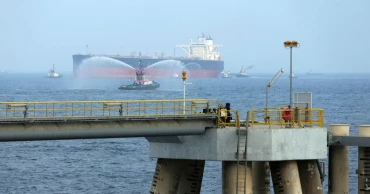
Mediators see progress in efforts to halt Iran war: regional officials
Mediators have made progress in efforts to bring the United States and Iran back to negotiations and prevent an all-out war in the Middle East, two regional officials said Monday, as attacks remained halted after nearly two weeks of rapidly escalating tensions.
The comments came after neither the US nor Iran reported attacks for three consecutive days, offering a brief respite following sustained bombardments that had raised fears of a return to full-scale conflict.
However, Saudi Arabia said it had intercepted drones launched by Iran-backed militias in Iraq that targeted its petroleum facilities, highlighting the risk that tensions could flare up again. The Saudi Defense Ministry, in a social media post, did not report any casualties or damage.
The two regional officials, speaking on condition of anonymity because of the sensitivity of the talks, said mediators led by Qatar and Pakistan were working to narrow differences between Washington and Tehran and revive an interim ceasefire agreement that had been largely undermined by recent exchanges of fire.
No strikes over weekend
The US has paused its attacks after targeting Iranian coastal areas and infrastructure during nearly two weeks of escalation that began after Iran fired on ships attempting to pass through the Strait of Hormuz, a key waterway for global oil shipments.
The Pentagon did not respond to questions about the pause.
US Ambassador to the United Nations Mike Waltz told Fox News that President Donald Trump was “giving talks some space” and allowing them some time.
Waltz also rejected suggestions that the US was running short of interceptor missiles needed to defend against Iranian attacks. However, experts have questioned how long either side can sustain the current level of military operations.
Iran also halted attacks after the US stopped its strikes for two nights, an Iranian army spokesperson said on state television Sunday.
In recent days, Tehran had launched retaliatory attacks against countries in the region that host US military forces, killing at least three service members at a base in Jordan and another in Iraq.
Regional officials cite progress in talks
One of the regional officials told AP Monday that progress in the mediation efforts was “significant.” He said mediators were working with Iran and Oman on a mechanism to manage vessel traffic through the Strait of Hormuz, which has emerged as a major flashpoint in the latest escalation.
Iranian Foreign Ministry spokesperson Esmail Baghaei said at a news conference in Tehran Monday that mediators were passing messages between the two sides, but there were no direct negotiations between Washington and Tehran.
“Mediators may convey messages to us from the American side regarding ongoing developments in the region. But at present, we have no negotiations with the American side,” Baghaei said.
He said Iran and Oman, which lies across the Strait of Hormuz, had already held talks on Friday and Saturday over how to manage shipping through the waterway.
The aim, Baghaei said, was for Iran and Oman, as the two coastal states, to establish mechanisms to ensure safe navigation through the strait while respecting their sovereignty and Iran’s security and national interests.
He stressed, however, that the waterway remained closed.
Tehran has maintained that the interim agreement with the US allows it to manage shipping through the strait for now. Iran has also opposed US efforts to support a shipping route passing close to Oman instead. Before the war, the Strait of Hormuz was regarded as an international waterway.
The US military said Saturday that its recently reinstated naval blockade of Iran remained in place, with 12 commercial ships redirected, two disabled and two boarded.
US forces “remain highly vigilant, focused, lethal, and ready,” it said.
The 60-day period set under the interim agreement in mid-June is now well into its second half. Major issues that were supposed to be discussed, particularly Iran’s nuclear programme, which lies at the centre of the tensions, remain on hold as mediators focus on keeping both sides engaged.
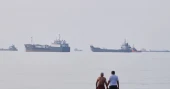
Shipping through Strait of Hormuz hits three-week lowConcerns also remain over shipping through another key regional waterway, the Bab al-Mandeb Strait leading to the Red Sea.
Iran-backed Houthi rebels in Yemen last week threatened to block Saudi shipping there and fired on at least one Saudi tanker, setting it on fire.
Global energy supplies and the broader economy remain at risk as gasoline prices have risen again.
Commercial shipping through the Strait of Hormuz fell to a three-week low, a maritime body overseen by the US Navy said Sunday. It added that no new attacks had been confirmed in the previous 72 hours.
Shipping traffic through the Bab al-Mandeb remained steady, the body said.
Netanyahu backs Trump’s efforts
Meanwhile, Israeli Prime Minister Benjamin Netanyahu is scheduled to travel to the United States and meet with Trump in Washington on Tuesday, his office said.
The two leaders last met in Washington in February, weeks before the US and Israel launched the war against Iran that killed senior Iranian leaders, including Supreme Leader Ayatollah Ali Khamenei.
Iran-backed Hezbollah fired at Israel two days after the war began, prompting Israel to respond with airstrikes and ground operations in southern Lebanon.
Since then, the US has backed landmark direct talks between Lebanon and Israel aimed at easing tensions on that front and finding a way to disarm Hezbollah.
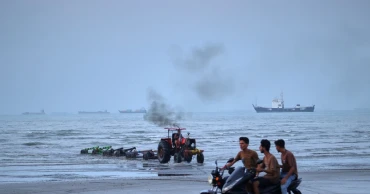
Iran criticizes Ukraine over Caspian Sea strikeSeparately, Baghaei criticized Ukrainian President Volodymyr Zelenskyy after he said over the weekend that Ukraine had attacked “vessels used in military cargo shipments involving Iran” in the Caspian Sea.
Iranian Foreign Minister Abbas Araghchi said Sunday that the Ukrainian strike on an Iranian vessel killed a sailor.
In a post on X, Araghchi condemned the attack as a “blatant U.N. Charter violation” carried out at Israel’s behest to draw Europe into the war.
He said he had made clear in phone calls with EU foreign policy chief Kaja Kallas and Russian Foreign Minister Sergey Lavrov that the attack “can’t go unanswered.”
Iran is an ally of Russia in its war against Ukraine and has helped Moscow strengthen its drone capabilities.
At Monday’s news conference in Tehran, Baghaei said that “all parties that consider themselves in some way supporters of the Ukrainian regime must be held accountable.”
He also compared Zelenskyy’s actions to those of anarchists who, before World War I, carried out “theatrical and highly dangerous actions” whose consequences eventually engulfed Europe.
7 days ago
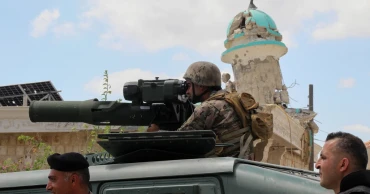
US pauses attacks on Iran for second straight day as Tehran also holds fire
The United States paused its attacks on Iran for a second consecutive day on Sunday, while Tehran said it had also halted its strikes, as efforts continued to bring the two sides back to negotiations on an interim ceasefire deal that has been badly undermined by recent exchanges of fire.
It remained unclear why the US paused its attacks after nearly two weeks of escalation that saw it target Iranian coastal areas and infrastructure following Iran’s firing on ships attempting to pass through the Strait of Hormuz. The Pentagon did not immediately respond to questions on Sunday.
“President (Donald) Trump has always been consistent in saying he prefers a diplomatic solution, but he continues to retain all options if Iran continues terrorist activities in the Strait of Hormuz or against allies,” White House communications director Steven Cheung said.
“It would be wise for Iran to work toward a negotiated deal. Otherwise, they know what will happen,” he added.
Iran also halted attacks for the past two nights, an Iranian army spokesperson told state television on Sunday. Tehran has in recent days launched counterattacks against countries in the region that host US military forces, killing at least three people at a base in Jordan.
The status of mediation efforts by Pakistan, Qatar and other countries was not immediately clear as concerns persisted over shipping through the Strait of Hormuz and another key waterway, the Bab al-Mandeb Strait leading to the Red Sea. Iran-backed Houthi rebels in Yemen threatened last week to block Saudi shipping there.
Global energy supplies and the economy remain at risk as gasoline prices have risen again.
Iran said Sunday that it was continuing talks with Oman on ensuring the safe passage of ships through the Strait of Hormuz, which lies between the two countries. Iranian Foreign Ministry spokesperson Esmail Baghaei said the talks had made progress and were continuing.
Baghaei also said there had been no change in the status of the strait. Tehran has maintained that the interim agreement with the US allows it to manage shipping through the waterway for now. It has also opposed US efforts to support a shipping route through the strait that passes close to Oman.
The US military said Saturday that its recently reinstated naval blockade against Iran remained in place. It said a dozen commercial ships had been redirected, two disabled and two boarded.
US forces “remain highly vigilant, focused, lethal, and ready,” the military said.
The 60-day period that began after the interim agreement was signed by the two countries in mid-June is now well into its second half. Major issues that were supposed to be negotiated, particularly Iran’s nuclear program at the center of the tensions, remain unresolved as mediators work to keep both sides engaged in talks.
A regional official involved in the mediation said diplomacy was continuing and described the pause in US and Iranian strikes as a “positive signal that helps their efforts to de-escalate.”
The official said both countries wanted to return to the interim ceasefire agreement and that a compromise under discussion focused on allowing Iran to manage vessel traffic through the Strait of Hormuz with fewer restrictions on ships. The official spoke on condition of anonymity because they were not authorized to discuss the negotiations publicly.
Meanwhile, Israeli Prime Minister Benjamin Netanyahu is scheduled to travel to the United States and meet with Trump in Washington on Tuesday, his office said.
The two last met in Washington in February, weeks before they launched the war against Iran, which killed senior Iranian leaders, including Supreme Leader Ayatollah Ali Khamenei.
Iran-backed Hezbollah fired at Israel two days after the war began, prompting Israel to respond with airstrikes and ground forces in southern Lebanon.
Since then, the US has backed landmark direct talks between Lebanon and Israel aimed at easing tensions on that front and finding a way to disarm Hezbollah.
8 days ago
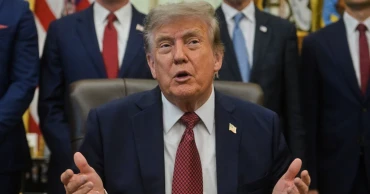
US pauses Iran strikes as diplomacy gains momentum, but uncertainty remains
The United States has suspended its airstrikes on Iran after nearly two weeks of escalating military operations, while diplomatic efforts have intensified in an attempt to prevent the conflict from returning to full-scale war.
It remains uncertain, however, whether Washington and Tehran are moving toward a lasting breakthrough as the conflict approaches its fifth month on Tuesday.
President Donald Trump has sent mixed signals, warning that further military action remains an option while also saying negotiations with Iran are continuing. He has dismissed concerns that rising fuel prices linked to the conflict could hurt Republicans in November's midterm elections.
The situation is further complicated by Israeli Prime Minister Benjamin Netanyahu's planned visit to Washington next week. Israel, which joined the United States in launching military operations against Iran on Feb. 28, has so far stayed out of the latest U.S. strikes following Iran's effective closure of the Strait of Hormuz, through which about one-fifth of global oil supplies normally pass.
Analysts say Israel's absence from the latest phase of the conflict could signal either a desire to avoid widening the war or leave open the possibility of greater military pressure if diplomacy fails.
Regional mediation efforts are continuing, with officials involved in the talks describing the pause in military operations as a positive development that could help reduce tensions.
According to a regional official familiar with the negotiations, discussions are focused on restoring an interim ceasefire while reaching a compromise over shipping through the Strait of Hormuz. The proposal under discussion would allow Iran to oversee vessel transit with fewer restrictions on commercial shipping.
Iran tightened control over the strategic waterway after the conflict began by targeting commercial vessels, contributing to sharp increases in global oil prices. The disruption has raised economic concerns in the United States, where higher fuel costs have become a political issue ahead of the congressional elections.
The U.S. military has expanded its operations in recent weeks, targeting Iran's coastal defenses, transport infrastructure and military positions in an effort to weaken Tehran's ability to threaten shipping in the Gulf.
Analysts believe the military campaign is intended to pressure Iran into returning to negotiations. However, they note that Iran's divided political leadership may complicate diplomatic progress, as some factions could view concessions to Washington as a sign of weakness.
Despite their differences, both countries have strong economic incentives to restore normal shipping through the Strait of Hormuz, although they remain divided over how the waterway should be managed.
Regional tensions remain high despite the pause in direct U.S.-Iran fighting.
Yemen's Iran-backed Houthi rebels said Saturday they launched missiles and drones at Saudi Arabia in response to Saudi airstrikes on the Red Sea port city of Hodeida. The group also claimed it had closed the Bab el-Mandeb Strait, another strategically important shipping route.
Meanwhile, the U.S. military said it continues enforcing its naval blockade of Iranian ports and disabled a Mozambique-flagged vessel in the Gulf of Oman after it allegedly attempted to breach the blockade.
Trump said Friday that Washington has two options: continue military operations or pursue diplomacy.
"We can keep doing exactly what we're doing... or we can negotiate with them, which we're also doing right now," he told reporters.
While saying he does not believe Iran is yet ready to reach an agreement, Trump added that Tehran appears to be taking negotiations more seriously as the conflict continues.
The president also met senior national security advisers on Friday to review U.S. strategy toward Iran, including whether to maintain the current approach or expand military operations. No American airstrikes were reported overnight, ending a streak of 13 consecutive nights of attacks.
Trump insisted he is not rushing to end the conflict because of domestic political considerations, saying his administration's priority is to "do it right" rather than focus on the approaching elections.
8 days ago
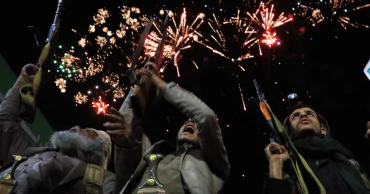
Houthis fire missiles at Saudi Arabia in response to airstrikes in Yemen
Yemen’s Iran-backed Houthi rebels said Saturday that they fired missiles and drones at Saudi Arabia in response to Saudi airstrikes on the strategic Red Sea city of Hodeida, in an escalation over vital shipping routes in the Middle East while the United States and Iran vie for control of the Strait of Hormuz.
Brig. Gen. Yahya Saree, the Houthis’ military spokesperson, said in a prerecorded statement that the attack targeted facilities in the Red Sea cities of Yanbu and Jizan that belong to Aramco, the world’s largest oil company.
Saudi Arabia’s civil defense said alerts sounded multiple times early Saturday in both cities, but the kingdom didn’t comment further.
There were no reported strikes overnight in Iran, in an apparent break from nearly two weeks of consecutive nights of U.S. attacks, though tension remains high following an escalation over the Strait of Hormuz.
Red Sea escalation further threatens global shipping
The Houthis have said they would close the Bab el-Mandeb Strait to Saudi-linked shipping in retaliation for the kingdom’s blockade on Yemen and a recent attack on the international airport in Yemen’s rebel-held capital, Sanaa.
“Nothing short of ending the aggression and lifting the blockade, otherwise, it’s all illusion and mirage,” Mahdi al-Mashat, head of the Houthi-led Supreme Political Council governing rebel-controlled territories in Yemen, said of what it would take for the Houthis to not blockade the Bab-El-Mandeb.
The Bab el-Mandeb, at the southern tip of the Arabian Peninsula, is a vital shipping chokepoint connecting the Red Sea to the Gulf of Aden. Around 12% of the world’s trade, including a quarter of its container traffic, passes through the narrows.
The Houthis targeted two Saudi oil tankers in the Red Sea this week. In response, Saudi Arabia struck Hodeida, the Saudi-led coalition opposing the rebels said Saturday. The strikes late Friday hit the port and the state-run telecommunications corporation, injuring two people, said Anees al-Asbahi, a spokesperson for the Houthi-run health ministry.
The Saudi-led coalition said it didn’t hit the port but struck “legitimate military targets” in Hodeida province that “were linked to threats to commercial vessels in the Red Sea.”
Iran’s foreign minister, Abbas Araghchi, called for “diplomacy and dialogue” to solve the Yemen conflict without “military confrontations” in an interview published Saturday by the state-run newspaper called Iran.
No new strikes overnight in Iran
“Iran had a peaceful night,” Hossein Kermanpour, a spokesperson for Iran’s Health Ministry, posted on X.
U.S. Central Command didn’t immediately respond to a request for comment. Unlike the previous 13 nights, it didn’t announce new strikes.
Israeli Prime Minister Benjamin Netanyahu plans to travel to the United States next week and meet with President Donald Trump in Washington on Tuesday, his office said Friday. They last met in Washington in February, weeks before they launched the war.
A tenuous ceasefire that halted major operations for weeks has seemed to unravel this month. The U.S. accused Iran of striking three ships in the Strait of Hormuz and responded by striking dozens of targets in Iran, which retaliated by firing at U.S.-allied Gulf Arab states.
The U.S. military has renewed its blockade of Iran’s ports. Iran’s Revolutionary Guard has advised residents of neighboring countries to stay away from bases with U.S. troops.
The war has killed more than 3,400 people in Iran, according to its Health Ministry. Eighteen U.S. service members, 24 civilians in Israel and smaller numbers of civilians including foreign workers and mariners have been reportedly killed across the region.
In Lebanon, more than 4,000 people have been killed since Iran-backed Hezbollah militants fired at Israel in support of the Islamic Republic two days after the war began and Israel responded with strikes and ground forces. Thirty-eight Israeli troops have also died.
9 days ago
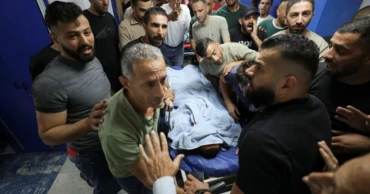
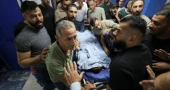
Israeli rights group condemns military raid on Nablus hospital
An Israeli human rights organisation has condemned the military's raid on Nablus Specialised Hospital in the occupied West Bank, warning that the operation is disrupting access to emergency medical care.
In a post on X, Physicians for Human Rights-Israel (PHRI) said the raid, along with widespread road closures imposed after recent deadly violence in the area, has blocked ambulances and prevented emergency medical teams from reaching patients.
The organisation described the growing military restrictions and increasing settler violence as a form of "collective punishment" and called for urgent international action to ensure emergency medical workers can move freely and continue providing care.
PHRI said a woman in labour was unable to reach the hospital on Friday morning because of the restrictions and was forced to give birth in her village without proper medical assistance.
The group also said the incident reflects a broader pattern of escalating settler violence, which it alleged has taken place with the backing and protection of the Israeli military and the state.
It further criticised the international community for what it described as years of inaction, saying repeated warnings over the situation in the West Bank have largely been ignored.
10 days ago

Israeli forces kill 4 Palestinians after settler dies in West Bank
Israeli forces shot dead four Palestinians in the village of Tell in the northern occupied West Bank on Friday, the Palestinian Health Ministry said, after an Israeli settler was killed during a confrontation with local residents.
The incident also left two Israelis and four Palestinians injured, according to health officials. The Israeli military said it was preparing an “extensive” counterterrorism operation in the West Bank and had surrounded the city of Nablus.
Israeli Prime Minister Benjamin Netanyahu and Defence Minister Israel Katz called for deploying more troops, demolishing the homes of the suspects in Tell, confiscating weapons and revoking work permits for villagers. Finance Minister Bezalel Smotrich urged tougher military action and said the villages of Tell, Iraq Burin and Beit Furik should face measures similar to those imposed on refugee camps in Nablus and Tulkarm, including evacuating residents and dismantling what he described as terrorist infrastructure.
The Palestinian news agency WAFA reported that Israeli settlers attacked five Palestinian villages around Nablus on Friday. The area has witnessed frequent settler attacks, army raids and violent confrontations in recent years.
According to the Israeli military, a Palestinian resident seized a settler's weapon and fatally shot 32-year-old settlement security guard Benayahu Mellet. Videos verified by the military showed armed civilians and soldiers confronting Palestinians before gunfire erupted. Another verified video showed Israeli troops firing repeatedly at Palestinians already lying on the ground. The military said the suspected gunman was among those killed but did not explain why the other three, all relatives, were also shot. Army chief Eyal Zamir later announced additional troop deployments to the West Bank.
10 days ago
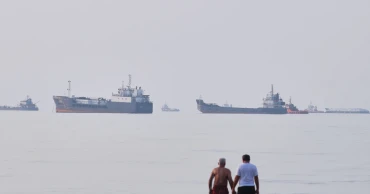
US carries out strikes on Iran as both sides threaten civilian infrastructure
The United States carried out a 12th consecutive night of airstrikes on Iran on Thursday as both countries intensified attacks on civilian infrastructure amid their widening conflict.
The U.S. Central Command (CENTCOM) said the latest strikes were aimed at "further degrading Iran's ability to threaten civilian mariners and commercial vessels transiting regional waters," as Washington seeks to restore the free flow of shipping through the Strait of Hormuz.
Earlier in the day, President Donald Trump warned that the U.S. would target one Iranian bridge or power plant every time Iran attacks a ship in the strategic waterway.
"From this point forward, any time the Islamic Republic of Iran shoots at a ship in the Strait of Hormuz, whether it be by missile, rocket, drone or any other weapon, the United States will bomb and destroy ONE BRIDGE OR POWER PLANT," Trump wrote on social media.
The latest U.S. strikes came as diplomatic efforts showed little visible progress, with both sides maintaining firm positions over the Strait of Hormuz, a key global energy route that remains largely closed. The conflict has raised concerns over further disruption to the global economy and pushed fuel prices higher ahead of the U.S. midterm elections later this year.
Iranian Foreign Minister Seyed Abbas Araghchi said Tehran would follow an "eye for an eye" approach.
"Any aggression against Iran, including our infrastructure, will compel a powerful and decisive response," he wrote on X.
Iranian state media reported that U.S. missiles struck areas near the western cities of Ahvaz, Ramshir and Andimeshk late Wednesday. It also said two people were killed in a U.S. missile strike in the border town of Shalamcheh near Iraq early Thursday.
Meanwhile, Kuwait's military said on social media that its air defence systems were intercepting hostile drones following what it described as Iranian attacks.
Iran has responded to U.S. operations by targeting energy facilities and desalination plants that supply drinking water in neighbouring Gulf states. Under international law, attacks on civilian infrastructure are generally prohibited unless such facilities are being used for military purposes.
War's economic impact grows
The continued closure of the Strait of Hormuz, through which about one-fifth of the world's traded oil and gas passed during peacetime, has rattled the global economy. Adding to concerns, Yemen's Iran-backed Houthi rebels have threatened to target Saudi shipping in the Red Sea, placing another major trade route at risk.
Trump travelled to Dover Air Force Base on Wednesday to receive the remains of four U.S. service members. A day earlier, Defence Secretary Pete Hegseth told a Senate hearing that the war had already cost the United States an estimated $37.5 billion.
Brent crude oil climbed above $93 a barrel, compared with less than $72 earlier this month before the conflict intensified. Gasoline prices have also continued to rise.
Iran maintains that it has the right to regulate traffic through the Strait of Hormuz and potentially charge transit fees. It has attacked vessels using a shipping lane monitored by U.S. forces and intended to remain outside Tehran's control.
Parliament Speaker Mohammad Bagher Qalibaf said the situation in the strait would not return to prewar conditions.
"We have repeatedly said that the situation of the strait will not return to prewar conditions," he wrote on social media.
Diplomatic efforts remain stalled
Before the latest strikes, Iranian Interior Minister Eskandar Momeni visited Pakistan, which has been acting as a mediator, in an effort to revive diplomatic talks. However, there was no indication of any breakthrough in efforts to end the conflict.
Iranian Interior Ministry spokesman Ali Zeinivand said diplomacy was continuing and messages were still being exchanged, according to the state-run IRNA news agency.
An Arab diplomat, speaking on condition of anonymity, said Gulf countries were becoming increasingly pessimistic about prospects for de-escalation despite continued mediation efforts by Pakistan and Turkey.
Speaking at a regional summit in the Philippines, U.S. Secretary of State Marco Rubio criticised Iran's actions in the Strait of Hormuz.
He said allowing any country to control an international waterway, impose tolls and attack ships that refuse to pay would set a dangerous global precedent.
Rubio added that Washington remained open to negotiations, but said Iran did not appear serious about talks at this stage, leaving the U.S. focused on protecting international shipping.
Following Iran's attacks, the United States also reimposed a blockade on Iranian ports.
Trump hints at strike on nuclear facility
Speaking from the Oval Office on Tuesday, Trump said the U.S. had "no interest in meeting" Iran for talks at present.
He also indicated that the U.S. could target Pickaxe Mountain, an underground Iranian nuclear facility under construction near the Natanz enrichment site. While the nearby Natanz complex was bombed during the 12-day Iran-Israel war in 2025, Pickaxe Mountain has remained untouched as Iran continues work there.
Iran has consistently maintained that its nuclear programme is peaceful, despite resuming uranium enrichment to near weapons-grade levels after Trump withdrew the U.S. from the 2015 nuclear agreement during his first term.
11 days ago