middle-east
Iran denies any ceasefire agreement with Israel at present
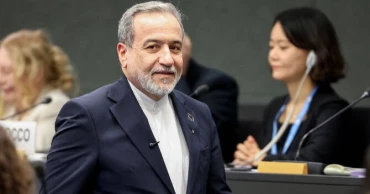
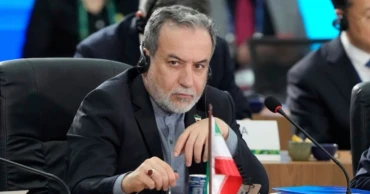
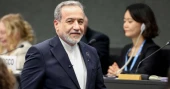
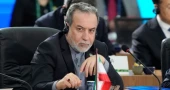
Iran's foreign minister said early Tuesday that there is currently “no agreement” on a ceasefire between Iran and Israel.
“As Iran has repeatedly stated, it was Israel that initiated this war, not Iran. At this moment, there is NO ‘agreement’ on any ceasefire or halt to military operations,” Abbas Araghchi posted on X.
His comments followed US President Donald Trump’s announcement that Iran and Israel had reached a “complete and total” ceasefire amid escalating tensions in the region.
“However, if the Israeli regime halts its unlawful aggression against the Iranian people by no later than 4 am Tehran time, we do not intend to continue our military response,” Araghchi added.
He further said that Iran’s military operations to “punish Israel for its aggression” continued until the final moment, 4 am local time (0030 GMT).
Trump announces Israel-Iran truce after attack on US base in Qatar
“Alongside all Iranians, I express gratitude to our courageous Armed Forces, who stand ready to defend our beloved nation to their last drop of blood and who responded to every enemy attack until the very last minute,” he stated.
On Monday, Iran launched a wave of missiles at the US military’s Al Udeid Air Base in Qatar, marking a major escalation after the US struck three Iranian nuclear sites on Sunday.
The US strikes were part of the broader Israeli military offensive against Iran, which began on June 13 with Washington’s backing, triggering Tehran’s retaliatory attacks on Israel.
Source: With inputs from Andolu
5 months ago
Iran Strikes U.S. Air Base in Qatar: What we know so far
Iran has launched an attack on the United States military presence at Al Udeid Air Base in Qatar, describing it as retaliation for recent U.S. strikes on Iranian nuclear facilities.
The attack occurred on Monday and was confirmed by Iran’s Islamic Revolutionary Guard Corps (IRGC) in an official statement to the Iranian public. Multiple flares and loud explosions were witnessed across Doha and other parts of Qatar.
Why Did Iran Carry Out the Strike?
According to the IRGC, the missile attack—referred to as part of Operation Annunciation of Victory—was a direct response to what it described as “blatant military aggression” by the U.S. targeting Iran’s nuclear infrastructure.
In the statement, the IRGC emphasized that its actions were meant to send a strong message to Washington and its allies: Iran will not tolerate any threats to its sovereignty, territorial integrity, or national security. “U.S. bases and mobile military assets in the region are not strategic strengths but critical vulnerabilities,” the IRGC warned.
US confirms Iran missile attack on Qatar air base
Target and Justification
Iran stated that the strike specifically targeted Al Udeid Air Base, identifying it as the operational headquarters of the U.S. Air Force and the most significant American military installation in West Asia.
Iran’s leadership clarified that the missiles were aimed away from residential zones in Qatar. In a statement, Iran’s Supreme National Security Council stressed that the attack posed no danger to Qatari civilians and reaffirmed Iran’s commitment to preserving its “friendly and historic ties” with Qatar.
Source: With inputs from Al Jazeera
5 months ago
Trump announces Israel-Iran truce after attack on US base in Qatar
U.S. President Donald Trump has announced that Israel and Iran have agreed to a "complete and total" ceasefire, expected to take effect within hours.
His announcement on Monday followed an Iranian missile strike targeting Al Udeid Air Base in Qatar, which hosts American forces. In a social media post, Trump stated, "Assuming all goes as planned — and it will — I want to commend both Israel and Iran for their Stamina, Courage, and Intelligence in ending what should be called ‘THE 12 DAY WAR.’"
He added, “This is a war that could have lasted for years and devastated the entire Middle East. But it hasn’t — and it never will. God bless Israel, God bless Iran, God bless the Middle East, God bless the United States of America, and GOD BLESS THE WORLD!”
However, neither Iran nor Israel has officially confirmed the ceasefire.
According to Trump, Iran would halt its attacks on Israel several hours before Israel is expected to end its military operations.
Reporting from Tehran, Al Jazeera’s Tohid Asadi pointed out that more than an hour after Trump’s declaration, there was still no formal confirmation. “Just minutes ago, explosions were heard due to air defense systems being activated here in the capital,” he reported, suggesting ongoing Israeli airstrikes that could trigger further Iranian retaliation.
Iran launches missiles at US military base in Qatar
Middle East analyst Omar Rahman told Al Jazeera that key details were missing from Trump’s message, including whether any negotiations would follow the ceasefire. He accused Trump of previously misleading statements supporting Israel and noted that the U.S. president had spoken about diplomacy just hours before Israel's initial attack on Iran.
Last week, Trump mentioned he would decide within two weeks whether to join the war, but ended up authorizing strikes on Iran just two days later.
Rahman also warned that if Israel carries out a major operation — including the potential assassination of Iranian Supreme Leader Ayatollah Ali Khamenei — it could collapse the ceasefire entirely. “Would that end the war? Of course not,” he said.
Israel launched a large-scale offensive on Iran in the early hours of June 13, claiming it was a “preemptive” move to target Iran’s missile and nuclear programs. The unprovoked assault killed hundreds, including several high-ranking Iranian generals.
Iran condemned the attack as a violation of the UN Charter and responded with a barrage of missiles that caused extensive damage within Israel.
On Saturday, Trump authorized U.S. strikes on three Iranian nuclear sites. In response, Iran fired missiles at Al Udeid Air Base in Qatar. Trump brushed off the retaliation, calling it “weak” and indicating that the U.S. would not respond militarily.
Qatar, Saudi condemn Iran’s attack
Liqaa Maki of the Al Jazeera Media Institute suggested that the U.S. might refrain from counterattacks unless its forces suffer casualties. He emphasized that the U.S. should now convert its military success into a diplomatic agreement.
Maki also noted that despite setbacks, Iran still possesses enriched uranium and the technical expertise to rebuild its nuclear program. “In two to three years, Iran could resume its nuclear activities without inspections and possibly develop a bomb undetected,” he warned.
The extent of the damage to Iran’s nuclear infrastructure remains uncertain. While Iran maintains that it is not pursuing nuclear weapons, Israel is widely believed to possess an undeclared nuclear arsenal.
Source: Al Jazeera
About 250 Americans have been evacuated from Israel, official says
The U.S. has evacuated some 250 American citizens and their immediate family members from Israel by government, military and charter flights that began over the weekend, a State Department official says.
Since June 21, the official says the U.S. has organized seven flights, most of which have to gone to Athens, Greece, but also to Rome, Italy, and Larnaca, Cyprus.
Other Americans, including nonessential embassy staff and their families, have left via land to Jordan and Egypt, while others have departed Israel by ship. The official did not have statistics for those departures, which do not necessarily involve U.S. government assistance.
There are roughly 700,000 American citizens, most of them dual U.S.-Israeli citizens, believed to be in Israel.
Source: AP
5 months ago
Blasts rock Qatar as Iran threatens retaliation over US strikes on nuclear facilities
Explosions rocked Qatar on Monday night, shortly after the country closed its airspace amid Iranian threats of retaliation following U.S. strikes on Iranian nuclear facilities. Witnesses reported seeing what appeared to be missiles in the sky, though Qatari officials have yet to confirm any attack.
Iran also has not officially acknowledged any action, but President Masoud Pezeshkian posted on social media shortly before the blasts, saying, “We did not start this war, nor do we seek it. But we will not leave aggression against the great Iran unanswered.”
Qatar, home to the U.S. Al Udeid Air Base and a close neighbor to Iran, shut its airspace earlier after Tehran vowed revenge for the American airstrikes on three Iranian nuclear sites Sunday.
Meanwhile, Israel widened its offensive against Iran, targeting symbols of the regime’s authority, including the gates of Tehran’s notorious political prison and the headquarters of the military force responsible for suppressing protests.
The Israeli military said more strikes are planned in Tehran, aiming at both military and symbolic targets, while urging civilians to stay away from potential strike zones. Internet outages continue to disrupt communications across Iran.
This escalation follows Israeli attacks on Iranian territory in response to Tehran’s nuclear ambitions, alongside a new barrage of Iranian missiles and drones targeting Israel.
Adding to tensions U.S. President Donald Trump openly questioned the future of Iran’s government on social media, suggesting regime change might be inevitable if current leaders cannot “MAKE IRAN GREAT AGAIN.” The White House clarified that Trump was merely posing a question, but Tehran reacted angrily, ruling out negotiations and warning of further retaliation against U.S. forces or interests in the already volatile Middle East, still reeling from the ongoing Israel-Hamas conflict.
Oman plans to impose personal income tax, a first among Gulf states
Tehran strikes open new chapter of war
During its latest strikes on Tehran, Israel targeted Evin Prison, blowing open a gate at the notorious facility known for detaining dual nationals and Western citizens often used by Iran as leverage in negotiations with the West. Iranian state television released black-and-white surveillance footage showing the blast at the prison.
Evin Prison, which is partly controlled by the Revolutionary Guard — a paramilitary force reporting directly to Supreme Leader Ayatollah Ali Khamenei — also holds political prisoners in special units. Both the U.S. and European Union have sanctioned the facility for human rights abuses.
There were no immediate reports of casualties or major damage, though Iran's semi-official Tasnim news agency reported power outages on the outskirts of Tehran after the Israeli strikes.
State TV later broadcast footage from inside the prison, showing prisoners under control. However, the Washington-based Abdorrahman Boroumand Center for Human Rights in Iran expressed concern about the welfare of inmates, saying many families fear for their loved ones' safety.
Meanwhile, Iranian military officials issued new warnings to the U.S. Iranian Gen. Abdolrahim Mousavi, chief of joint staff of the armed forces, declared that recent American strikes had given Iran the "green light" to retaliate against U.S. forces and interests. Thousands of U.S. troops stationed in the region are within range of Iranian missiles.
Separately, Israel confirmed hitting roads near Iran's Fordo nuclear enrichment site to block access. The underground facility was one of three Iranian nuclear sites targeted by U.S. airstrikes on Sunday. Israel did not provide further details.
In a statement, Israel’s Defense Ministry vowed harsh retaliation for Iran's missile attacks on Israeli cities, warning, "The Iranian dictator will be punished with full force."
A senior Israeli official, speaking anonymously, said Israel’s strategy is to apply pressure on Iran’s leadership but stop short of pushing for regime change.
Nuclear fears mount after US strikes
In Vienna, the head of the United Nations nuclear watchdog said he expected there to be heavy damage at the Fordo facility following Sunday's U.S. airstrike there with sophisticated bunker-buster bombs.
With the strikes Sunday on Iranian nuclear sites, the United States inserted itself into Israel’s war, prompting fears of a wider regional conflict. Iran said the U.S. had crossed “a very big red line” with its risky gambit to strike the three sites with missiles and 30,000-pound bunker-buster bombs.
Several Iranian officials, including Atomic Energy Organization of Iran spokesman Behrouz Kamalvandi, have claimed Iran removed nuclear material from targeted sites ahead of time.
Rafael Grossi, the head of the International Atomic Energy Agency, told the agency's board of governors Monday that Iranian Foreign Minister Abbas Araghchi informed him on June 13 that Iran would “adopt special measures to protect nuclear equipment and materials.”
“I indicated that any transfer of nuclear material from a safeguarded facility to another location in Iran must be declared,” Grossi said, without saying whether Iran had responded.
Iran presses on attacking Israel
Iran described its Monday attack on Israel as a new wave of its “Operation True Promise 3,” saying it was targeting the Israeli cities of Haifa and Tel Aviv, according to Iranian state television.
Explosions were also heard in Jerusalem, possibly from air defense systems in action, and Israel's Magen David Adom emergency rescue service said there had been no reports of injuries.
In Israel, at least 24 people have been killed and more than 1,000 wounded in the war. Israeli strikes on Iran have killed at least 950 people and wounded 3,450 others, according to the Washington-based group Human Rights Activists.
The group, which has provided detailed casualty figures from Iranian unrest such as the protests surrounding the death of Masha Amini in 2022, said of those killed, it identified 380 civilians and 253 security force personnel.
Israel launches fresh attacks on Iran’s Fordo as tensions soar
Calls for de-escalation
The U.S. described its attack on the Fordo and Natanz enrichment facilities, as well as the Isfahan nuclear site, as a one-off to take out Iran's nuclear program, but Trump has warned of additional strikes if Tehran retaliates.
Mousavi described the American attacks as violating Iran’s sovereignty and being tantamount to invading the country, the state-run IRNA news agency reported.
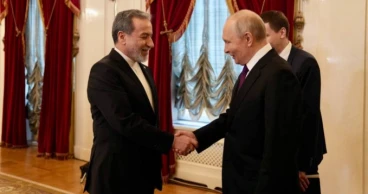
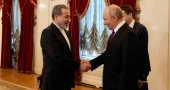
Russia is one of Iran’s closest allies and on Monday, President Vladimir Putin said after meeting in Moscow with Araghchi, the Iranian foreign minister, that they had explored “how we can get out of today’s situation.”
Putin called the Israeli and American attacks on Iran an “absolutely unprovoked aggression.”
Iran, which insists its nuclear program is for civilian purposes only, previously agreed to limit its uranium enrichment and allow international inspectors access to its nuclear sites under a 2015 deal with the U.S., France, China, Russia, Britain and Germany in exchange for sanctions relief.
But after Trump pulled the U.S. unilaterally out of the deal during his first term, Iran began enriching uranium up to 60% — a short, technical step away from weapons-grade levels of 90% — and restricting access to its nuclear facilities.
5 months ago
Qatar shuts airspace amid Iranian retaliation threats on US
Qatar temporarily closed its airspace on Monday following growing threats from Iran to retaliate against the United States.
The Qatari Foreign Ministry confirmed the move, describing it as a temporary measure. Qatar hosts the Al Udeid Air Base, a key hub for U.S. military operations in the region, and is also home to the major regional airline Qatar Airways.
Israel Expands Tehran Strikes as Iran Warns of Retaliation
Israel on Monday intensified its military campaign against Iran by targeting sensitive symbols of the Iranian regime, including a Tehran prison infamous for detaining political dissidents and the headquarters of Iran’s military force responsible for suppressing recent protests.
Thick black smoke billowed over Tehran after the attacks, while Israel itself faced renewed barrages of Iranian missiles and drones. Such exchanges have become a harsh daily reality for civilians in both nations since Israel launched its offensive to disrupt Iran’s fast-advancing nuclear program.
On the 11th day of fighting, Israeli forces confirmed they had struck “government repression sites” within central Tehran. Israeli officials, however, stressed they had no intention of overthrowing the Iranian regime, their adversary since the 1979 Islamic Revolution.
The Israeli military warned that attacks on Tehran’s military infrastructure would continue "over the coming days," with symbolic locations also becoming targets. The statement, posted on X, comes as Iran faces severe internet blackouts, limiting external communications.
The latest Israeli strikes followed former U.S. President Donald Trump’s controversial remarks questioning Iran's leadership, a day after U.S. stealth bombers targeted three Iranian nuclear facilities.
“If the current Iranian Regime is unable to MAKE IRAN GREAT AGAIN, why wouldn’t there be a Regime change???” Trump posted on his Truth Social platform.
White House defends its massive bombing campaign against Iran
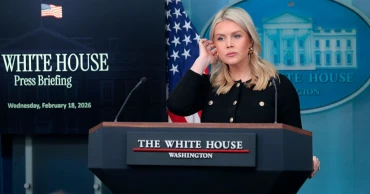
White House Press Secretary Karoline Leavitt later downplayed the remarks, saying Trump was merely posing a question. Nevertheless, Tehran reacted angrily, warning of direct retaliation against American troops or interests, particularly in the already volatile Middle East, where Israel’s conflict with Hamas in Gaza continues.
Evin Prison and Military Sites Targeted
In Tehran, Israeli missiles damaged the gate of Evin Prison, known for holding dual nationals and Western detainees used by Iran as leverage in negotiations. The prison is also notorious for its political prisoner units, run by the elite Revolutionary Guard, which answers directly to Supreme Leader Ayatollah Ali Khamenei. Both the U.S. and EU have sanctioned the facility.
There were no immediate reports of casualties or severe damage, though the semi-official Tasnim news agency mentioned power outages outside Tehran following the Israeli strikes.
Iranian state television aired footage allegedly from inside Evin Prison, showing the situation under control. However, the Washington-based Abdorrahman Boroumand Center for Human Rights expressed deep concern over detainees' safety, citing family members' fears.
Meanwhile, Iran’s top military officer, Gen. Abdolrahim Mousavi, warned Washington that its actions had granted Iranian forces the “free hand” to strike U.S. interests and personnel.
Tens of thousands of American troops are stationed across the region, many within reach of Iran’s short-range missiles.
Israel also confirmed it targeted roads near Iran's Fordo nuclear enrichment site, aiming to block access. This follows Sunday’s U.S. airstrikes on three key Iranian nuclear locations, including Fordo. Israel provided few details on the attack.
“The Iranian dictator will face the full force of punishment for targeting Israeli civilians,” Israel’s Defense Ministry declared.
An Israeli official, speaking anonymously, said Israel aimed to pressure Iran’s leadership but was not actively pursuing regime change.
Nuclear Tensions Escalate
In Vienna, Rafael Grossi, head of the UN nuclear watchdog, warned of extensive damage to Fordo following the U.S. airstrikes using powerful bunker-buster bombs.
Sunday’s attacks marked Washington’s formal entry into Israel’s conflict with Iran, sparking fears of regional escalation. Tehran denounced the U.S. strikes as crossing a "very big red line."
Iranian officials, including Atomic Energy Organization spokesman Behrouz Kamalvandi, claimed nuclear materials were moved from targeted sites beforehand.
Israel launches fresh attacks on Iran’s Fordo as tensions soar
Grossi told the IAEA board Monday that Iran's Foreign Minister Abbas Araghchi had informed him Iran would take "special measures to safeguard nuclear materials." Grossi emphasized that moving nuclear materials within Iran must be declared, but did not confirm compliance.
Iran Continues Retaliatory Strikes on Israel
Iranian state media reported new missile attacks on Haifa and Tel Aviv as part of “Operation True Promise 3.” Explosions were also heard in Jerusalem, with Israeli defense systems believed to be intercepting incoming projectiles. No injuries were reported.
The ongoing conflict has claimed at least 24 Israeli lives, with over 1,000 injured. Iranian casualties are far higher, with the Washington-based Human Rights Activists group reporting at least 950 dead and 3,450 wounded, including civilians and security personnel.
Global Calls for Calm
The U.S. described its strikes on Fordo, Natanz, and Isfahan as one-off operations to cripple Iran's nuclear ambitions but warned of further action if Iran retaliates.
Mousavi accused the U.S. of violating Iranian sovereignty, equating the strikes to an invasion.
Russia, a key Iranian ally, condemned the Israeli and U.S. attacks as "unprovoked aggression." President Vladimir Putin, after meeting Iran’s Foreign Minister in Moscow, called for de-escalation.
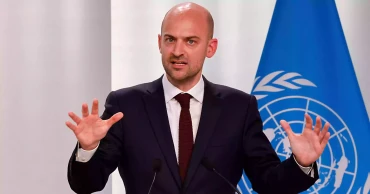
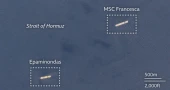
Amid international concern, European Union foreign policy chief Kaja Kallas urged a return to diplomacy, stressing that threats to close the Strait of Hormuz—a vital oil transit route—would have catastrophic global consequences.
Thousands without power in Israel following Iranian missile strike
Iran has repeated its longstanding threat to shut the waterway, further raising fears of broader conflict.
Source: With inputs from agency
5 months ago
Oman plans to impose personal income tax, a first among Gulf states
Oman has announced plans to introduce personal income tax as part of efforts to diversify its economy and reduce dependence on oil revenues, according to the state-run Oman News Agency on Sunday.
The new tax, established through a royal decree, marks the first of its kind among the six oil-rich member states of the Gulf Cooperation Council (GCC). However, the 5% income tax will not take effect until 2028 and will apply only to individuals earning more than $109,000 annually, placing the burden solely on the top 1% of income earners in Oman.
It remains unclear whether this move will influence other Gulf nations to adopt similar policies. The International Monetary Fund (IMF) has previously forecast that Gulf states may need to introduce new forms of taxation to reduce their reliance on oil and broaden state revenue streams.
Oil prices jump following US strikes on Iran
The Gulf region’s longstanding absence of personal income tax has been a major factor in attracting expatriate workers, supporting economic development across the area.
For Oman, however, the introduction of income tax is aimed at bolstering financial stability by expanding revenue sources beyond oil and gas, said Minister of Economy Said bin Mohammed Al-Saqri. He noted that depending on market conditions, oil and gas can contribute up to 85% of Oman’s public revenues.
"The tax serves as a new revenue stream to diversify public income sources and mitigate risks associated with reliance on oil as the primary revenue source," Al-Saqri stated.
Thousands without power in Israel following Iranian missile strike
Oman has been considering the implementation of personal income tax for several years. The decision follows earlier economic reforms, including a 2020 program aimed at reducing public debt and promoting economic growth. According to Al-Saqri, the tax is part of Oman’s broader Vision 2040 strategy, which seeks to transition the sultanate into a technology-driven economy.
5 months ago
Israel launches fresh attacks on Iran’s Fordo as tensions soar
Israel has launched a fresh wave of attacks targeting "access routes" to Iran’s Fordo nuclear facility, escalating tensions just a day after the site reportedly sustained damage from US airstrikes.
According to Israeli Defence Minister Yoav Gallant, the military is now striking Tehran with "unprecedented force". Iran’s judiciary confirmed that the capital’s notorious Evin prison has been hit in the ongoing bombardment.
The situation comes amid a flurry of remarks from US President Donald Trump, who has floated the possibility of a leadership change in Iran—despite earlier reassurances from his administration that regime change was not the goal of recent US strikes. Those weekend attacks, Trump claimed, caused "monumental damage" to Iran's nuclear infrastructure.
Iran has vowed a "decisive response", while the International Atomic Energy Agency (IAEA) has called for an immediate ceasefire to allow inspectors to assess the extent of the damage.
Tensions surge as Trump hints at regime change in Iran
Meanwhile, the European Union is urging Iran to refrain from blocking the Strait of Hormuz, a vital global shipping lane. The United States has also called on China to use its influence to pressure Tehran into de-escalation over the strategic waterway.
As diplomatic channels scramble to regain control, the region remains on edge, with fears of further escalation looming large.
5 months ago
Thousands without power in Israel following Iranian missile strike
Around 8,000 people across southern Israel have been left without electricity following Iran’s missile strikes early Monday, according to Israeli Energy Minister Eli Cohen.
The Israel Electric Corporation (IEC) confirmed that the outages stemmed from “damage near a strategic infrastructure facility” in the south, which affected power supply in several communities.
Minister Cohen said the authorities had “prepared in advance for the possibility of damage to electrical installations” and were working swiftly to restore electricity. “We aim to have power fully restored within three hours,” he added.
In a statement, the IEC said its teams had been dispatched to various locations to carry out emergency repairs and ensure public safety.
Israeli strikes kill 10 IRGC members in central Iran
“IEC teams are en route to multiple locations on the ground with the aim of restoring power as soon as possible,” the statement said. “The operations include infrastructure repairs and the neutralisation of safety hazards, and are being carried out in coordination with security forces.”
Israel has been on high alert following escalating tensions with Iran. Monday’s strikes mark one of the most significant escalations in recent months. Further updates are awaited as restoration efforts continue.
Source: With inputs from BBC
5 months ago
Tensions surge as Trump hints at regime change in Iran
Tensions in the Middle East have intensified after former US President Donald Trump suggested the possibility of a leadership change in Iran — just hours after his team had insisted that regime change was not the objective of recent American strikes.
The situation deteriorated further after Iran’s military vowed a “decisive response” to what Trump described as “monumental damage” inflicted on Iranian nuclear sites by US attacks.
The International Atomic Energy Agency (IAEA), the UN’s nuclear watchdog, has since called for an immediate ceasefire to allow inspectors access to the affected areas.
In a sign of growing international concern, Iran’s Foreign Minister is currently in Moscow for high-level talks with Russian President Vladimir Putin, discussing what both sides termed “common challenges and threats.”
Iran vows retaliation over US strikes; Trump hints at regime change
Meanwhile, the UK’s Foreign Secretary has joined other Western leaders in urging Tehran to exercise restraint and avoid further escalation.
Despite diplomatic calls for calm, hostilities have continued. Israel launched what it described as “one of the most intense attacks” on Iranian military infrastructure overnight, followed by a fresh “series of strikes” directed towards Tehran earlier this morning.
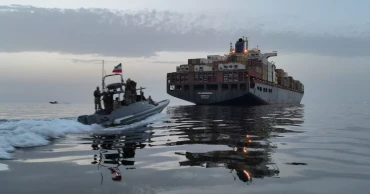
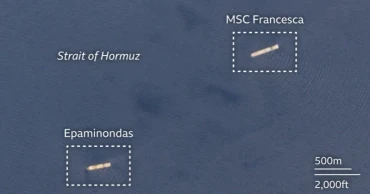
Adding to the geopolitical strain, the United States has called on China to use its influence to persuade Iran not to shut down the Strait of Hormuz — a vital maritime corridor through which a significant portion of the world’s oil supply passes.
Trump says Iran 'must now make peace' after US strikes nuclear sites
With the situation deteriorating rapidly, global powers are scrambling to prevent a wider regional conflict, even as the rhetoric and military actions on all sides continue to escalate.
#With inputs from BBC
5 months ago
Israeli strikes kill 10 IRGC members in central Iran
At least 10 members of Iran’s Islamic Revolutionary Guard Corps (IRGC) were killed in Israeli airstrikes targeting Yazd province on Sunday, according to Tasnim news agency. The report also mentioned that several other IRGC personnel were injured, though the exact number remains unclear.
Israel claims it has eliminated two dozen Iranian military commanders and nuclear scientists since launching its surprise offensive on June 13.
Meanwhile, tensions in the Middle East continue to mount, with Iran vowing retaliation for the recent US airstrikes on its nuclear facilities, while US President Donald Trump has suggested the possibility of regime change in Tehran.
In his first public remarks since the US joined Israel’s military operations against Iran, Iranian Supreme Leader Ali Khamenei vowed to punish “the Zionist enemy.” His comments come amid ongoing cross-border attacks between Israel and Iran.
Speaking on the situation, President Trump questioned Iran’s political future, saying, “If the current Iranian regime is unable to make Iran great again, why wouldn’t there be a regime change?” His remarks have fuelled further speculation about Washington’s broader intentions.
Iran’s ambassador to the United Nations has accused the US of "waging war" under what he described as an "absurd pretext" following American strikes on three major Iranian nuclear sites—Fordo, Natanz, and Isfahan.
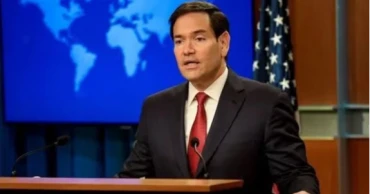
The escalating conflict has rattled global energy markets, with oil prices surging. US Secretary of State Marco Rubio has called on China to use its influence on Tehran to prevent the closure of the vital Strait of Hormuz, a key global energy shipping route.
In light of the heightened tensions, the US State Department has issued a worldwide security alert for American citizens, warning of potential retaliatory attacks.
Uncertainty remains regarding the scale of damage inflicted on Iran’s nuclear programme. While President Trump has claimed the strikes effectively crippled Iran’s nuclear ambitions, stating the US action took "the 'bomb' right out of their hands," the UN’s nuclear watchdog says it is still unable to assess the current situation at the Fordo site.
Despite the US strikes, hostilities between Israel and Iran have continued over the past day, raising concerns of an escalating regional conflict.
Iranian officials report that over 400 people have been killed and at least 3,056 wounded since Israel began its offensive on June 13. In response, at least 24 people have been killed in Israeli territory due to Iranian counterattacks, according to reports.
With inputs from Al Jazeera
5 months ago