middle-east
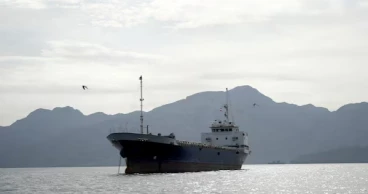
Iran, US say Strait of Hormuz is fully open to commercial vessels
Iran and the United States on Friday said the Strait of Hormuz has been reopened and is fully operational for commercial shipping after nearly seven weeks of disruption that had affected global energy trade.
“IRAN HAS JUST ANNOUNCED THAT THE STRAIT OF IRAN IS FULLY OPEN AND READY FOR FULL PASSAGE. THANK YOU!,” US President Donald Trump said on social media, using an unofficial name for the strategic waterway.
Iranian Foreign Minister Abbas Araghchi confirmed that commercial vessels would be allowed to pass in line with the ongoing ceasefire arrangement, reports South China Morning Post.
Araghchi said ships would be required to follow designated routes set by Iran’s Ports and Maritime Organisation.
The announcement comes alongside a 10-day ceasefire between Israel and Iran-backed Hezbollah, under which passage through the strait will remain open for the duration of the truce.
Trump, however, said US naval blockade on Iranian vessels and supplies would remain in place until a final agreement is reached.
The apparent breakthrough eased market concerns, with oil prices falling nearly 10 percent following the announcement.
3 months ago
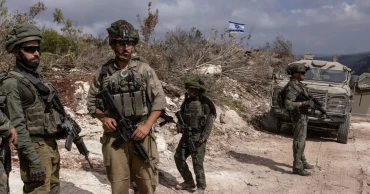
Israeli army to maintain control of positions it has ‘cleared and captured’ in Lebanon
Israel’s Defence Minister Israel Katz has said that the Israeli military will continue to hold all positions in Lebanon that it has “cleared and captured,” according to Israeli newspaper Haaretz.
Citing Katz, the report said the central objective of the Israeli military remains the disarmament of Hezbollah “by military or diplomatic means.”
He added that this goal is supported by a “significant diplomatic lever” involving direct US involvement and pressure on the Lebanese government.
Katz also said the Israeli army “holds and will continue to hold” all positions it has “cleared and captured.”
#From Al Jazeera
3 months ago
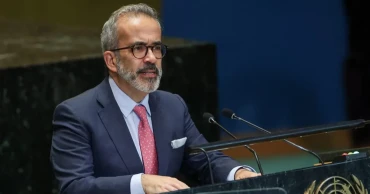
Portugal offers full support for Lebanon after ceasefire
Portugal has expressed its “full support for Lebanon” following the recent ceasefire, as both countries discussed efforts to restore stability in the region.
Lebanon’s Foreign Minister Youssef Rajji met his Portuguese counterpart Paulo Rangel for talks on the situation in Lebanon and rapid developments in the region, according to Lebanon’s foreign ministry.
The two sides also discussed ongoing efforts being made to “restore stability” after the ceasefire.Rangel conveyed Portugal’s “full support for Lebanon, for its sovereignty and the unity of its territories”, the ministry said.
He also welcomed the ceasefire and the negotiating path Lebanon intends to pursue, describing it as “a real opportunity” to reach a “comprehensive and sustainable solution” that would “enhance stability and put an end to the conflict”.
3 months ago
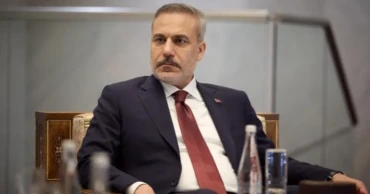
Turkiye, regional foreign ministers to discuss Iran war at Antalya forum
Foreign ministers from Turkiye, Egypt, Pakistan and Saudi Arabia are set to meet on the sidelines of a three-day forum beginning in Antalya on Friday, where talks are expected to focus on the ongoing Iran war and the blockade of the Strait of Hormuz.
The schedule for the meeting has not yet been disclosed.
Pakistan Prime Minister Shehbaz Sharif is also due to attend the forum and is expected to hold a meeting with Turkish President Recep Tayyip Erdogan on the sidelines, as Islamabad seeks to facilitate a second round of peace talks between the United States and Iran.
Turkiye, a strong critic of Israel, has joined diplomatic efforts alongside Egypt and Pakistan to help secure a ceasefire in the Iran conflict. #From Al Jazeera
3 months ago
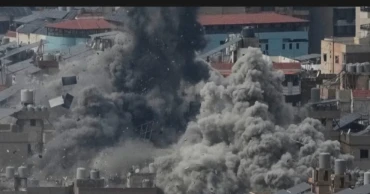
Israel–Lebanon truce begins
A 10-day truce began in Lebanon on Friday that could pause fighting between Israel and the Hezbollah militant group and boost attempts to extend the ceasefire between Iran, the United States and Israel after weeks of devastating war.
U.S. President Donald Trump announced the agreement as a ceasefire between Israel and Lebanon. However, Israel has not been fighting with Lebanon itself, but rather with the Iranian-backed Hezbollah militants inside the country, who were not formally part of the agreement.
Barrages of gunshots rang out across Beirut as residents fired into the air just after midnight to celebrate the beginning of the truce.
Displaced families began moving toward southern Lebanon and Beirut’s southern suburbs, despite warnings by officials not to attempt to return to their homes until it became clear whether the ceasefire would hold.
Earlier, Israeli Prime Minister Benjamin Netanyahu said he agreed to the ceasefire “to advance” peace efforts with Lebanon, but said Israeli troops would not withdraw.
Israeli forces have engaged in fierce battles with Hezbollah in the border area as they pushed into southern Lebanon to create what officials have called a “security zone.” Netanyahu, in his video address, said it will extend 10 kilometers (6 miles) into Lebanon.
“That is where we are, and we are not leaving,” he said.
Hezbollah said that “Israeli occupation on our land grants Lebanon and its people the right to resist it, and this matter will be determined based on how developments unfold” — a stance that could complicate the ceasefire.
Israel reserves right to defend itself
The U.S. State Department said that according to the agreement, Israel reserves the right to defend itself “at any time, against planned, imminent, or ongoing attacks.” But otherwise, Israel “will not carry out any offensive military operations against Lebanese targets, including civilian, military, and other state targets.”
The wording suggested Israel would maintain the freedom to strike at will, as it did in the months following the ceasefire that ended the previous war. This time, Hezbollah said it would respond to any strikes by Israel.
It's unclear when the 1 million people displaced by the war will be able to safely return.
Lebanon’s state-run National News agency reported that Israeli shelling continued in the villages of Khiam and Dibbine about a half hour after the truce went into effect. Israel’s military said it was looking into reports of shelling and artillery fire in southern Lebanon.
Hezbollah kept firing rockets at northern Israeli towns and communities right up to the start of the ceasefire. Air raid sirens went off in some often-targeted border towns less than 10 minutes before midnight.
Flurry of diplomacy
The agreement came after a meeting between Israel's and Lebanon’s ambassadors in Washington and a flurry of subsequent phone calls from Trump and Secretary of State Marco Rubio, according to a White House official.
They were the first direct diplomatic talks between the two countries in decades. Hezbollah had opposed direct talks between Lebanon and Israel.
Trump spoke Wednesday evening with Netanyahu, who agreed to a ceasefire with certain terms, according to the official, who was not authorized to comment publicly and spoke on condition of anonymity.
Rubio then called Lebanon’s president, Joseph Aoun, who got on board. Trump then spoke with Aoun, and again with Netanyahu.
The State Department worked with both governments to formulate a memorandum of understanding for the truce.
Trump extends White House invitation
Lebanon has insisted on a ceasefire to stop the fighting between Israel and Hezbollah before engaging in more talks, while vowing to commit to disarming the group.
Israel and Lebanon have technically been at war since Israel was established in 1948, and Lebanon remains deeply divided over diplomatic engagement with Israel.
Trump also invited the leaders of Israel and Lebanon to the White House for what he said would be “the first meaningful talks" between the countries since 1983.
“Both sides want to see PEACE, and I believe that will happen, quickly,” Trump wrote on social media.
Lebanon and Israel signed an agreement in 1983 saying Lebanon would formally recognize Israel, and Israel would withdraw from Lebanon. The deal fell apart during Lebanon’s civil war and was formally rescinded a year later.
A Hezbollah official said the ceasefire was a result of Iran’s negotiations with the U.S., in which Iran had insisted Lebanon be included in its own ceasefire, and came about through efforts by mediator Pakistan. The official spoke on condition of anonymity because he was not authorized to speak publicly.
Pakistan army chief meets with Iranian parliament speaker
Meanwhile, Pakistan’s army chief met Thursday with Iran’s parliament speaker as part of international efforts to press for an extension to a ceasefire that has paused almost seven weeks of war between Israel, the U.S. and Iran.
It was unclear whether the frantic diplomacy could lead to a lasting deal before the ceasefire ends next week. The Iran war has killed thousands of people and upended global markets by disrupting the flow of oil.
Iranian state television did not provide details on the meeting between Pakistani Army Gen. Asim Munir and Iranian Parliament Speaker Mohammad Bagher Qalibaf, his country’s chief negotiator.
There was no immediate comment from Pakistan, a key mediator after hosting the talks between the U.S. and Iran that authorities said helped narrow differences between the sides.
The White House said any further talks regarding Iran would likely take place in the Pakistani capital of Islamabad, though no decision had been made on whether to resume negotiations. The fragile ceasefire is holding despite a U.S. naval blockade of Iranian ports and Iranian counter-threats to target regional ports across the Red Sea.
Trump suggested the ceasefire could be extended.
“If we’re close to a deal, would I extend?” Trump said in an exchange with reporters. “Yeah, I would do that.”
The war has jolted markets and rattled the global economy as shipping has been cut off and airstrikes have pounded military and civilian infrastructure. Oil prices have fallen amid hopes for an end to fighting, and U.S. stocks on Wednesday surpassed records set in January.
Officials say US and Iran are making progress
Even as the U.S. blockade on Iranian ports and renewed Iranian threats strained the ceasefire, regional officials reported progress, telling AP the United States and Iran had an “in-principle agreement” to extend it to allow for more diplomacy. They spoke on condition of anonymity to discuss sensitive negotiations.
But tensions simmered.
The commander of Iran’s joint military command, Ali Abdollahi, threatened to halt trade in the region if the U.S. does not lift its naval blockade, and a newly appointed military adviser to Iranian Supreme Leader Mojtaba Khamenei said he does not support extending the ceasefire.
Mediators seek compromise on sticking points
The fighting has killed at least 3,000 people in Iran, more than 2,100 in Lebanon, 23 in Israel and more than a dozen in Gulf Arab states. Thirteen U.S. service members have also been killed.
Mediators are pushing for a compromise on three main sticking points: Iran’s nuclear program, the Strait of Hormuz and compensation for wartime damages, according to a regional official involved in the mediation efforts.
Since the war began, Iran has curtailed maritime traffic through the strait, which a fifth of global oil transited through in peacetime. Tehran’s effective closure of the strait sent oil prices skyrocketing, raising the cost of fuel, food and other basic goods far beyond the Middle East.
3 months ago
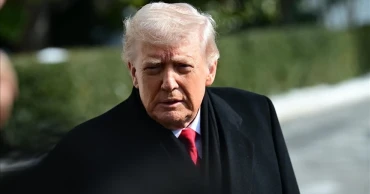
Trump says Iran agreed not to have nuclear weapon, signals progress in talks
US President Donald Trump has said Iran has agreed not to develop nuclear weapons, expressing optimism about ongoing negotiations and the prospects of a long-term deal.
Speaking to reporters at the White House, Trump said the agreement under discussion would extend “beyond 20 years” and described the outlook for a deal as “looking very good.”
He added that the next round of talks with the Iranian delegation could take place over the weekend, reports Al Jazeera.
Trump also said the recently announced ceasefire between Israel and Lebanon includes Hezbollah, indicating broader involvement in the truce arrangement.
The US president further said he plans to meet Israeli Prime Minister Benjamin Netanyahu and Lebanese President Joseph Aoun, though he did not specify a timeline for the meetings.
3 months ago
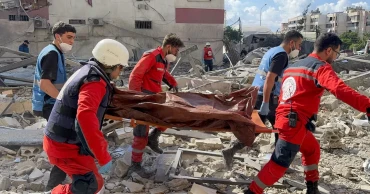
Israeli strikes kill 8 in Lebanon despite Trump’s ceasefire announcement
At least eight civilians were killed and dozens injured in an Israeli strike in southern Lebanon, as US President Donald Trump announced a 10-day ceasefire between Israel and Lebanon set to begin later on Thursday.
Lebanon’s National News Agency (NNA) reported that Israeli forces struck the town of Ghaziyeh in the Zahrani area, leaving at least 33 people wounded, while several others remain missing under the rubble. Rescue operations are ongoing, reports Al Jazeera.
In a separate incident, the Lebanese Health Ministry said an Israeli strike targeted an ambulance in Tebnine in the Bint Jbeil district, seriously injuring two paramedics. The ministry condemned the attack, saying strikes on medical personnel violate international humanitarian law.
According to official figures, the death toll from ongoing Israeli attacks in Lebanon has risen to 2,196, with 7,185 people injured, highlighting the growing humanitarian toll of the conflict.
Amid the escalating violence, Trump said Lebanon and Israel had agreed to a ceasefire following talks with Lebanese President Joseph Aoun and Israeli Prime Minister Benjamin Netanyahu.
In a post on Truth Social, Trump said the ceasefire would begin at 5pm EST (2100 GMT) and last for 10 days, expressing hope it would lead to a lasting peace.
However, Israeli media reported anger within the country over the announcement, with some officials caught off guard as the truce was declared before formal cabinet approval.
The announcement comes as Israeli operations in Lebanon continue, raising questions over the implementation of the ceasefire and whether hostilities will halt as scheduled.
3 months ago
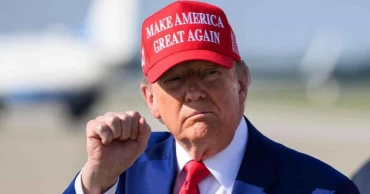
Trump announces ceasefire between Lebanon, Israel
US President Donald Trump has announced that Lebanon and Israel have agreed to a 10-day ceasefire, set to begin at 5pm EST, following what he described as “excellent conversations” with the two countries’ leaders.
In a post on Truth Social, Trump said he spoke with Lebanese President Joseph Aoun and Israeli Prime Minister Benjamin Netanyahu, adding that both sides had agreed to the temporary truce “in order to achieve PEACE between their Countries.”
He said the agreement follows the first direct meeting between officials of the two countries in 34 years, held in Washington, D.C. on Tuesday with US Secretary of State Marco Rubio, reports Al Jazeera.
No date fixed yet for 2nd round of U.S.-Iran talks: Pakistan
Trump said he had directed Vice President JD Vance, Secretary of State Rubio and the Chairman of the Joint Chiefs of Staff, Dan Razin’ Caine, to work with Israel and Lebanon to achieve a “lasting PEACE.”
“It has been my Honor to solve 9 Wars across the World, and this will be my 10th, so let’s, GET IT DONE!” he added.
3 months ago
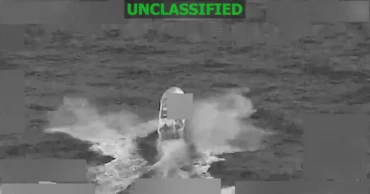
US strike on vessel in Eastern Pacific kills 3 over alleged drug trafficking
US military forces struck a vessel in the eastern Pacific Ocean on Wednesday, killing three men the Pentagon said were involved in drug trafficking.
The United States Southern Command confirmed that no US personnel were harmed in the operation.
The command described the attack as a “lethal kinetic strike” on a vessel allegedly operated by a designated “terrorist organization” and travelling along known narcotics trafficking routes.
However, officials did not identify the organisation or the individuals killed, nor did they provide evidence supporting claims of drug trafficking.
The strike is part of an ongoing campaign by the administration of Donald Trump targeting suspected cartel-linked vessels in international waters.
Several similar operations have been reported in recent days, with at least 178 people killed since the campaign began in early September, according to official figures.
The military has provided limited details about the operations, which have drawn scrutiny from observers over transparency and verification of targets.
3 months ago
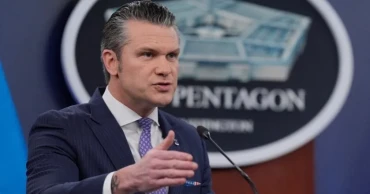
US ready to resume combat if Iran rejects deal: Hegseth
The United States is prepared to resume military operations if Iran refuses to agree to a deal, US Defense Secretary Pete Hegseth said on Thursday.
Speaking to reporters in Washington, DC, Hegseth warned that US forces remain on standby to restart combat if diplomatic efforts fail, reports Al Jazeera.
He also claimed that the US Navy is currently controlling maritime traffic through the Strait of Hormuz, asserting that Iran “does not have a navy any more”.
Hegseth further said the United States would continue its naval blockade of Iran for “as long as it takes”, signalling no immediate plans to ease pressure on Tehran.
Delivering a direct warning, he added that Washington is closely monitoring Iran’s military movements.
“We are watching you,” Hegseth said, referring to Iranian activities and assets.
3 months ago