middle-east
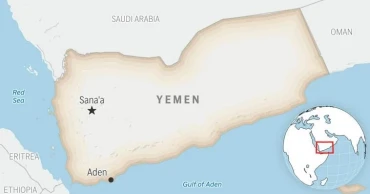
Houthis announce maritime embargo on Saudi shipping through Bab al-Mandeb
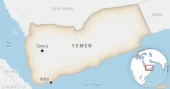
Yemen's Iran-backed Houthi rebels on Monday announced a maritime embargo on Saudi Arabia, saying they will block Saudi shipping through the Bab al-Mandeb Strait in response to what they described as the Saudi-led blockade on Yemen and a recent strike on Sanaa International Airport.
Houthi military spokesperson Yahya Saree said in a video statement that the embargo would take effect immediately, calling it an "eye for an eye" response.
The group did not provide details on how the embargo would be enforced. However, Nasruddin Amer, deputy head of the Houthi media office, wrote on X that the Bab al-Mandeb Strait would be closed to Saudi shipping in retaliation for what he called Saudi Arabia's "unjust blockade on Yemenis for over 10 years."
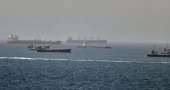
Located at the southern entrance to the Red Sea, the Bab al-Mandeb Strait is one of the world's busiest maritime routes. About 12% of global trade passes through the waterway, while roughly one-quarter of global container traffic travels through the 32-kilometre (20-mile) strait to and from the Suez Canal.
The Houthis previously demonstrated their ability to disrupt shipping in the area by attacking more than 100 vessels during the Israel-Hamas war in Gaza. It remains unclear whether they intend to resume attacks on that scale against Saudi-linked shipping.
Saudi Arabia did not immediately comment on the announcement. The kingdom has already been relying heavily on its East-West Pipeline to transport crude oil to the Red Sea as an alternative to the Strait of Hormuz, where Iran tightened control following U.S. and Israeli strikes on Feb. 28. Millions of barrels of Saudi crude are transported daily through the pipeline.
Saudi Arabia has led a military coalition against the Houthis since 2015 and imposed an air and sea blockade on Yemen after the rebels seized the capital, Sanaa, and much of northern Yemen in 2014, forcing the internationally recognised government into exile. Although a UN-brokered truce was reached in 2022, tensions have risen again in recent days.
The Houthis recently accused Saudi Arabia of targeting Sanaa International Airport in an attempt to stop a flight carrying senior Houthi officials returning from Iran, where they had attended the funeral of Supreme Leader Ayatollah Ali Khamenei. The aircraft landed safely at another airport.
In response, the Houthis launched missiles and drones at Saudi Arabia's Abha International Airport, marking the most serious escalation between the two sides in years.
According to analysts quoted by AP, the Houthis sought to establish greater control over Yemen's airspace by allowing an international flight to land without approval from the Saudi-led coalition.
"We affirm the right of our great people to respond to the blockade with a blockade," Saree said, warning that the group was ready to respond to any further Saudi action with what he described as a "comprehensive and decisive escalation."
The Houthis are a key member of Iran's so-called "Axis of Resistance," an alliance that also includes armed groups in Lebanon, Iraq and the Palestinian territories.
Although the rebels have built up a large arsenal of drones, several Houthi members previously told AP that supplies had been depleted following prolonged attacks during the Israel-Hamas war. They also said the recent conflict involving Iran has further disrupted the flow of weapons.
Earlier Houthi attacks on commercial shipping prompted a sustained U.S. and Israeli air campaign targeting Houthi-controlled areas in Yemen until an agreement was reached that led the group to halt those assaults.
Any major disruption to shipping through the Bab al-Mandeb Strait would force vessels to take the much longer route around the Cape of Good Hope, significantly increasing shipping time and costs.
14 days ago
Iraq studies new oil pipeline to Turkey, Syria to reduce Hormuz dependence
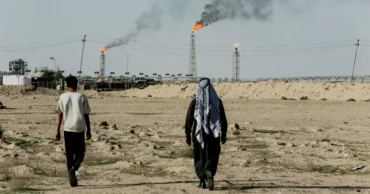
Iraq is studying the construction of a strategic oil pipeline linking the southern city of Basra with Kirkuk and extending to Turkey and Syria as part of efforts to reduce its dependence on the Strait of Hormuz for crude exports, said Oil Minister Basim Mohammed Khudair.
Speaking to the Iraqi News Agency (INA) in Washington on Saturday, Khudair said the government is pursuing a long-term strategy to diversify the country’s oil export routes and strengthen energy security.
“The ministry has a clear vision and strategy based on diversifying Iraqi oil export routes and not relying solely on the Strait of Hormuz,” he said.
According to the minister, Iraq has signed a memorandum of understanding with a consortium that includes US energy company Chevron, TE Capital and Qatar-based UCC to support the initiative.
Khudair said the proposed project involves a feasibility study for a pipeline running from Basra to Kirkuk and onward to the Turkish Mediterranean port of Ceyhan. Authorities are also examining the possibility of extending a branch of the pipeline to the Syrian coastal city of Baniyas.
Located in northwestern Syria, Baniyas is home to one of the country’s main oil refineries and a Mediterranean export terminal. It previously served as the endpoint of an overland pipeline carrying Iraqi crude from Kirkuk, although that route has remained largely inactive for years due to conflict and international sanctions.
Iraq, the second-largest oil producer in the Organization of the Petroleum Exporting Countries (OPEC), has long relied on the Strait of Hormuz as its principal route for exporting crude oil. The proposed pipeline is expected to provide an alternative outlet and improve the resilience of the country’s energy export infrastructure.
Source: Al Jazeera
15 days ago
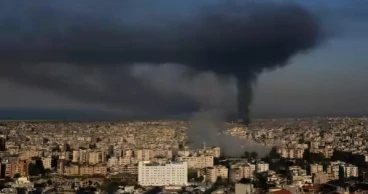
US launches fresh strikes on Iran after deadly attack on American troops in Jordan
The United States launched a new wave of airstrikes against Iran early Sunday, saying the attacks were intended to "swiftly punish" Iran's Revolutionary Guard after a drone and missile strike on a military base in Jordan killed two American service members, left another missing and injured four others.
The U.S. Central Command (CENTCOM) said the strikes targeted locations linked to Iran's military operations near the Strait of Hormuz, aiming to further weaken Tehran's ability to disrupt maritime traffic through the strategic waterway.
The latest military action followed Friday's attack on a U.S. base in Jordan, marking the first direct combat deaths of American troops from Iranian fire since the early days of the conflict. CENTCOM did not release the identities of the two service members killed.
According to the U.S. military, 16 American personnel have been killed and more than 430 wounded since the conflict between the United States, Israel and Iran began on February 28.
Iranian state media reported that several locations in the southern province of Hormozgan were struck, including areas near Sirik, Hajiabad, Bandar Abbas and Qeshm Island. Explosions were reported across parts of the province, which overlooks the Strait of Hormuz.
The previous day, Iranian authorities said U.S. airstrikes had damaged an electricity and desalination facility, as well as bridges and tunnels in Hormozgan, disrupting a key highway leading to Bandar Abbas, Iran's largest commercial port.
President Donald Trump has repeatedly threatened to target Iran's infrastructure, including power stations and bridges, in an effort to pressure Tehran to ease its restrictions on shipping through the Strait of Hormuz. The U.S. has also reinstated a naval blockade on Iranian ports to curb crude oil exports. CENTCOM said it had redirected five vessels and disabled another since the blockade resumed.
Iranian officials said U.S. strikes over the past three weeks have killed at least 50 people and injured more than 500, including eight people killed in a bridge attack on Friday.
The conflict also spilled into neighboring Iraq, where a drone struck a base of the Kurdistan Freedom Party near Irbil, wounding eight members of the Iranian Kurdish opposition group, according to a military official. Air defense systems were activated in Irbil after additional explosions were heard.
The Kurdish regional capital has experienced repeated drone attacks over the past several days, coinciding with Iraqi Prime Minister Ali al-Zaidi's recent visit to Washington and heightened tensions between Washington and Tehran.
No group claimed responsibility for the attacks, although Iran and Iran-backed militias have previously targeted sites in Iraq's Kurdish region, where U.S. troops and Iranian Kurdish opposition groups are present.
Meanwhile, Iran's supreme leader, Mojtaba Khamenei, warned that continued U.S. attacks would bring "unforgettable lessons" for Washington and its allies. In remarks broadcast on state television, he also dismissed President Trump's authority, calling his signature "worthless and invalid."
Iran's Deputy Foreign Minister Kazem Gharibabadi announced that Tehran was suspending its commitments under the interim agreement reached about a month ago to reduce hostilities, accusing Washington of violating the deal.
The conflict has increasingly centered on control of the Strait of Hormuz, a vital global energy corridor. Before the war, the waterway handled about one-fifth of the world's oil shipments. The widening military campaign has also raised concerns over growing civilian casualties and damage to critical infrastructure, including desalination plants that provide drinking water across the Gulf region.
Iranian missile and drone attacks continued to threaten neighboring countries. Kuwait reported damage to an oil facility and a desalination plant, with several people injured and fires breaking out at key installations. The country temporarily closed its airspace because of missile threats, while its national carrier rescheduled most flights.
Jordan said its air defense systems intercepted Iranian missiles, while Bahrain and Saudi Arabia also activated air raid alerts.
The Secretary-General of the Gulf Cooperation Council (GCC), Jasem Mohamed Al-Budaiwi, condemned Iran's attacks on civilian infrastructure, accusing Tehran of committing war crimes by targeting facilities essential to public services.
15 days ago
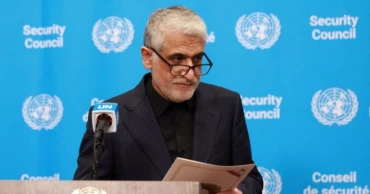
Iran urges UN action over alleged US attacks on civilian facilities
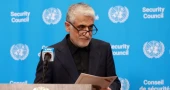
Iran’s Permanent Representative to the United Nations, Amir-Saeid Iravani, has condemned the United States over what he described as attacks on Iran’s civilian infrastructure in a letter addressed to UN Secretary-General Antonio Guterres.
According to the letter, the US attacks caused extensive damage to key civilian facilities, including ports, transportation networks, communications infrastructure, logistics hubs, radar installations, coastal defence systems and other assets essential to the civilian population and the functioning of Iran’s national economy.
Israeli forces arrest 10 Palestinians in Hebron raids
Iravani also said the United States bears full international responsibility for all deaths, injuries, destruction of critical infrastructure and environmental damage resulting from the attacks.
He further warned that the continued attacks constitute a serious threat to international peace and security, freedom of navigation, regional stability, and the security of the Persian Gulf and the Strait of Hormuz.
With inputs from Al Jazeera
16 days ago
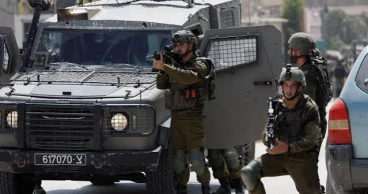
Israeli forces arrest 10 Palestinians in Hebron raids
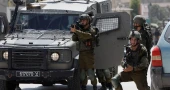
Israeli forces arrested 10 Palestinians, including an elderly man, during raids across the Hebron Governorate in the occupied West Bank on Friday morning.
Osama Makhamra, an activist monitoring settlement activities in southern Hebron, told media that Israeli troops detained elderly resident Ibrahim Ismail Al-Jabour and his son, Anas, after raiding their home in Khirbet Hawara, east of Yatta.
Makhamra said the father and son had confronted illegal Israeli settlers who had released their livestock near Palestinian homes in the area before their arrest.
Latest Israeli strikes kill at least 12 people in Gaza, including police officers
Meanwhile, Israeli soldiers established several military checkpoints at the entrances to Hebron city as well as its surrounding towns, villages and refugee camps. Troops also closed a number of main and secondary roads, restricting movement across the governorate.
With inputs from Al Jazeera
16 days ago
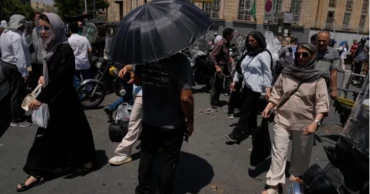
Fresh US strikes on Iran deepen Strait of Hormuz standoff
The United States widened its airstrike campaign in Iran early Friday by targeting bridges, as President Donald Trump intensified pressure on Tehran to ease its control over the Strait of Hormuz. Iran responded with fresh missile attacks on U.S.-allied countries in the Middle East, warning that further retaliation would intensify.
Qatar urged residents to take shelter after Iranian missiles targeted the country. Air defense systems intercepted the barrage, though falling debris injured a child, according to Qatar’s Interior Ministry. Iran also targeted Bahrain and Kuwait following overnight U.S. strikes.
The collapse of last month’s interim ceasefire has led to continued exchanges of attacks. Iranian officials said U.S. strikes have killed more than 35 people and wounded over 300, with additional casualties reported on Friday.
Iranian military spokesperson Col. Ebrahim Zolfaghari warned that Tehran could target regional infrastructure if Washington attacks Iranian bridges or power plants, describing the Strait of Hormuz as Iran’s “invincible red line.”
Iranian state media reported that overnight U.S. strikes hit bridges in Bandar Khamir in Hormozgan province, killing at least seven people. The U.S. Central Command said dozens of targets were struck during its sixth consecutive night of operations. Meanwhile, shipping through the Strait of Hormuz has dropped sharply as the U.S. tightened its naval blockade and regional security risks escalated.
17 days ago
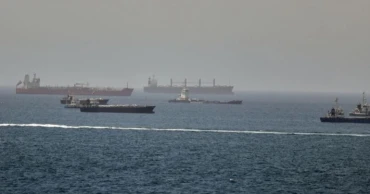
IEA warns global energy security at risk if Strait of Hormuz remains shut
International Energy Agency (IEA) Executive Director Fatih Birol has cautioned that global energy security will remain under threat unless oil shipments through the Strait of Hormuz increase.
Speaking at a Council on Foreign Relations event, Birol said oil security continues to be a major concern and warned that the situation could worsen if conditions fail to improve over the coming weeks.
The Strait of Hormuz, a strategic waterway between Iran and Oman that previously carried around one-fifth of global energy supplies, has remained largely closed since the conflict erupted on February 28.
Birol said the disruption to oil and gas flows has affected economies worldwide, with Asian countries bearing the brunt of the crisis. According to him, Asia had relied on the strait for 80 to 90 percent of its energy imports.
While Japan and South Korea have been significantly affected, Birol said developing countries such as Pakistan, Bangladesh and India have suffered the greatest impact from the supply disruption.
With inputs from Al Jazeera
17 days ago
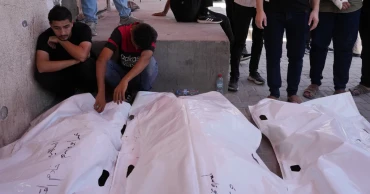
Latest Israeli strikes kill at least 12 people in Gaza, including police officers
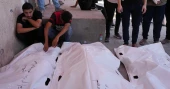
Israeli airstrikes have killed at least 12 people in Gaza over the past two days, local health officials said Wednesday, as attacks continue almost daily despite a ceasefire with Hamas that has been in place for months.
On Wednesday, three members of the same family were killed in central Gaza, according to officials at Al Aqsa Hospital.
On Tuesday, a woman and six police officers were killed when an Israeli airstrike hit a police station in the densely populated Jabaliya refugee camp in northern Gaza, hospital officials said. In separate incidents, a man was killed in a strike on a tent camp in Khan Younis in the south, while a child was shot dead by Israeli forces in the Muwasi area outside the southern city of Rafah, according to hospital officials.
The Israeli military did not immediately comment on the strikes in central and southern Gaza. Regarding the attack on Jabaliya, it said four of the police officers killed were Hamas militants, though it did not provide evidence linking them to the planning or execution of attacks.
The Hamas-run Interior Ministry identified one of those killed as Col. Mohamad Marwan Salem, a senior police commander and head of the Jabaliya police station.
Hamas, which governed Gaza for years, operates both an armed wing and civilian police and security services under its Interior Ministry. Throughout the conflict, Israel has repeatedly targeted local police, including officers assigned to protect humanitarian aid convoys.
The Israeli military has said it considers police stations legitimate military targets if they are being used to support military operations or if personnel there are involved in terrorist activities.
However, it did not specify what military activities it believed were taking place at the Jabaliya police station or provide evidence to support its claim. Hamas has maintained that its police force is responsible for maintaining law and order.
Israeli attacks on Gaza's police have drawn criticism from the United Nations human rights office, which said police personnel had been targeted at least a dozen times in 2026, including while directing traffic and conducting routine patrols.
"The pattern of attacks raises concerns that Israeli forces apply no distinction between police personnel and fighters belonging to armed groups in Gaza," the UN human rights office said in a June 3 statement.
Ofer Guterman, a researcher at Israel's Institute for National Security Studies, said Israel appears to view parts of Hamas' policing system as closely linked to its military infrastructure through dual-role personnel and the use of police facilities for storing weapons and supporting military operations.
The ceasefire agreement reached in October sought to end the two-year war between Israel and Hamas.
Although large-scale fighting has eased, Gaza's Health Ministry says at least 1,123 people have been killed since the ceasefire took effect. The ministry, which operates under the Hamas-led government, keeps detailed casualty records that are generally regarded as credible by UN agencies and independent experts. It does not distinguish between civilians and militants but says women and children account for most of the fatalities.
Militants have continued carrying out shooting attacks on Israeli troops, and Israel says its strikes are in response to those attacks and other ceasefire violations. Five Israeli soldiers have been killed since the truce began.
The war started after the Hamas-led attack on southern Israel on Oct. 7, 2023, which killed about 1,200 people and saw 251 others taken hostage. Since then, Israel's military campaign in Gaza has killed more than 73,264 Palestinians, including those killed after the ceasefire took effect, according to Gaza's Health Ministry.
18 days ago
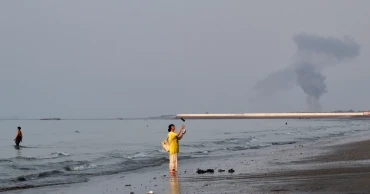
US strikes expand into northern Iran as blockade enforcement intensifies
The United States stepped up its military campaign against Iran early Thursday, carrying out strikes deeper into northern parts of the country while also disabling a vessel it accused of attempting to breach its naval blockade. Iran responded before dawn by launching missiles and drones toward Bahrain and Kuwait.
The latest exchange of attacks between the US and Iran across the Middle East, along with renewed tensions over the Strait of Hormuz, has undermined the interim agreement aimed at ending the conflict and raised fears of another full-scale war. Iranian officials said US strikes have killed more than 35 people and injured over 300. The attacks also reached areas around Tehran for the first time during this latest escalation.
After the US and Israel launched military operations against Iran on Feb. 28, Tehran effectively shut the Strait of Hormuz to commercial shipping. The move drove up global prices of oil, fertilizer and other commodities while giving Iran added leverage in negotiations.
US, Iran exchange warnings as conflict escalates
The sharp rise in energy prices has created political challenges for US President Donald Trump and his Republican Party ahead of November's congressional elections. However, Washington has struggled to reopen the key shipping route, prompting Trump to restore the naval blockade on Wednesday.
Iranian Parliament Speaker and chief negotiator Mohammad Bagher Qalibaf said Tehran was ready for a broader military confrontation if the US failed to honor the terms of the interim agreement. Iran's paramilitary Revolutionary Guard also warned it could stop all energy exports from the Middle East in response to the blockade.
"The export of oil and gas from the region will be either for everyone or for no one," the Guard said.
Trump again claimed Iran wanted a peace agreement but gave no further details.
"They don't like what we're doing, and they do want to settle. We'll find out whether or not we settle with them, or we just finish it off," he said Wednesday at the US Army War College in Pennsylvania.
Fresh attacks launched by both sides
Iranian state media reported that US strikes early Thursday targeted areas around Tehran as well as Semnan province, home to Iran's ballistic missile production facilities and space program.
On Wednesday, the US resumed conducting daylight strikes, reflecting an increased pace of military operations. US Central Command said its attack on Greater Tunb Island, a strategically important location in the Strait of Hormuz, targeted Iranian missile and defense positions.
The US military also said it fired on the Curacao-flagged oil tanker Belma, which was heading toward Kharg Island, Iran's main oil export terminal in the Persian Gulf. According to the military, the vessel ignored repeated warnings, prompting a US aircraft to disable it by firing a missile into its smokestack.
Another US strike on Wednesday hit barracks belonging to Iran's 388th Mechanized Infantry Brigade in Sistan and Baluchestan province, Iranian state television reported. The report said at least 13 missiles were fired, killing seven soldiers, including both conscripts and career personnel, while several others were wounded.
Strait of Hormuz remains central to the conflictThe Strait of Hormuz continues to be the main focus of the conflict. Reopening the strategic waterway has remained a major challenge for Washington since Iran restricted shipping during the early days of the war.
During the interim agreement, some commercial vessels resumed using a US-monitored route near Oman that lay outside Iran's control.
In recent days, however, Iran has attacked ships using that route, triggering further exchanges with US forces. Washington has warned it could reopen the strait by force, although military experts say such an operation would require a significantly larger naval deployment and possibly tens of thousands of ground troops. Reimposing the blockade is seen as another means of increasing pressure on Tehran.
Meanwhile, oil prices continue to climb. Brent crude, the global benchmark, traded above $85 per barrel on Thursday, more than 15% higher than before the war, though still below the nearly $120 per barrel recorded at the peak of the conflict.
18 days ago
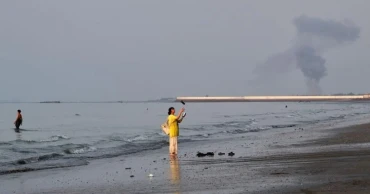
US strikes strategic Greater Tunb Island as tensions with Iran escalate
The United States on Wednesday launched airstrikes on Iran's Greater Tunb Island in the Strait of Hormuz, targeting military facilities that Washington said were being used to threaten commercial shipping in one of the world's most critical energy corridors.
The US military's Central Command (CENTCOM) said the 90-minute operation targeted Iranian defence positions and missile sites on the island, which has been under Iranian control since 1971 after being seized from what later became the United Arab Emirates.
According to CENTCOM, the strikes were intended to further reduce Iran's ability to launch attacks on commercial vessels transiting the Strait of Hormuz.
"The strikes further degraded Iran's ability to attack commercial shipping in the Strait of Hormuz," the command said in a statement.
The latest operation comes as the United States has reinstated a naval blockade on Iran and expanded its military campaign in response to Tehran's attacks on vessels operating in the strategic waterway.
The renewed confrontation has effectively derailed a temporary agreement reached last month that had paused hostilities for 60 days to allow negotiations over Iran's nuclear programme and other disputes.
Tensions have intensified in recent days as both countries exchanged military strikes across the region, raising fears that the conflict could escalate into a broader regional war.
Iran's Islamic Revolutionary Guard Corps (IRGC) warned earlier Wednesday that it could halt all oil and gas exports from the Middle East in response to the renewed US blockade.
"The export of oil and gas from the region will be either for everyone or for no one," the IRGC said.
The Strait of Hormuz remains at the centre of the confrontation. The narrow waterway handles roughly one-fifth of the world's seaborne oil and natural gas trade, making any disruption a major concern for global energy markets.
Washington first imposed the naval blockade on Iran in April before lifting it last month following the interim agreement. However, negotiations later stalled amid renewed clashes over shipping in the Strait of Hormuz, prompting the United States to restore the blockade and intensify its military operations against Iranian targets.
19 days ago