middle-east
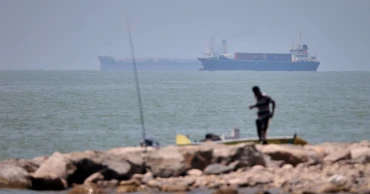
Iranian drones target Bahrain, ship attacked in Strait of Hormuz after US strikes on Iran
Iran launched a drone attack targeting Bahrain on Saturday while a commercial vessel in the Strait of Hormuz also came under attack, in what appeared to be Tehran's response to overnight U.S. airstrikes on Iranian targets.
The latest incidents have heightened fears of a renewed escalation in the Gulf despite an interim agreement between Washington and Tehran aimed at ending the conflict and paving the way for a final accord.
The U.S. strikes came after an Iranian drone attack on a vessel attempting to leave the Strait of Hormuz on Thursday, extending a series of confrontations that have undermined the fragile ceasefire.
Bahrain, home to the U.S. Navy's Fifth Fleet and one of Iran's strongest regional critics, condemned the drone attack.
In a statement, Bahrain's Foreign Ministry said a number of Iranian drones targeted the kingdom, describing the attack as "a flagrant threat to the security of citizens and residents."
Earlier on Saturday, Iran's paramilitary Revolutionary Guard said it had targeted several locations linked to the "U.S. terrorist army in the region," but did not specify the sites.
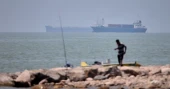
Separately, the British military's United Kingdom Maritime Trade Operations (UKMTO) said a tanker was attacked in the Strait of Hormuz. The crew was reported safe and no environmental damage was recorded. No group immediately claimed responsibility for the attack, though suspicion quickly fell on Iran.
Following the incident, the U.S. Navy-supervised Joint Maritime Information Center announced an expansion of a maritime route near Oman's coast to facilitate both inbound and outbound shipping traffic.
Iran has insisted that vessels transiting the strait comply with its directives and has warned that it could begin charging transit fees in the strategic waterway, through which around one-fifth of the world's oil and natural gas supplies traditionally pass.
The United States and Gulf Arab states have rejected Tehran's demands, maintaining that the Strait of Hormuz is an international waterway despite lying within the territorial waters of Iran and Oman.
The Joint Maritime Information Center warned that the threat to commercial shipping in the region remains "substantial" and advised mariners to exercise caution due to the presence of mines and ongoing naval clearance operations.
1 month ago
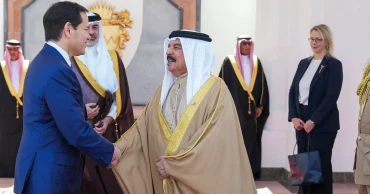
Rubio seeks to reassure Gulf allies amid lingering concerns over Iran talks
US Secretary of State Marco Rubio has sought to reassure Gulf Arab allies that Washington remains committed to their security, despite concerns among regional partners about being sidelined in negotiations aimed at ending the conflict with Iran.
Speaking in Bahrain on Thursday at the end of a three-day tour of the United Arab Emirates, Kuwait and Bahrain, Rubio said the United States wants Gulf Cooperation Council (GCC) members to be fully informed and involved as negotiations with Iran progress.
Rubio said Gulf leaders had shared "concrete concerns and ideas," adding that their main demand is to remain informed at every stage of both technical and political negotiations.
"We want them to be involved and we want the views of all these countries to be reflected," he said, stressing that Washington would not make decisions that undermine the security or stability of its Gulf partners.
The trip comes amid regional unease following the war launched by the United States and Israel against Iran on February 28, a conflict that disrupted oil exports and exposed several Gulf states to Iranian missile and drone attacks.
Following the meeting, the United States and the six-member GCC—Bahrain, Kuwait, Oman, Qatar, Saudi Arabia and the United Arab Emirates—issued a joint statement reaffirming their shared objective of preventing Iran from obtaining a nuclear weapon and maintaining unity as negotiations move toward a permanent end to hostilities.
The statement also rejected any Iranian attempt to impose fees or assert control over the Strait of Hormuz, while welcoming Oman's initiative to establish a safe maritime corridor for stranded sailors. It noted that any economic benefits for Iran would depend on its compliance with both the temporary agreement and a future final deal.
Despite the optimistic tone of the joint statement, comments from GCC Secretary-General Jasem Mohamed Albudaiwi suggested that concerns persist within the bloc. He stressed that any future arrangements involving Iran must address the security interests of Gulf states and adhere to principles of sovereignty, good neighbourliness and non-interference.
Bahraini Foreign Minister Abdullatif bin Rashid Al Zayani also welcomed recent diplomatic progress but said many questions remained unresolved. He underscored the need for Iran to fully meet its obligations, including preventing nuclear proliferation, ensuring freedom of navigation, ending missile and drone attacks, halting support for proxy groups and refraining from interference in neighbouring countries.
The remarks highlight continuing Gulf concerns over the direction of US-Iran diplomacy and the long-term security implications for the region.
1 month ago
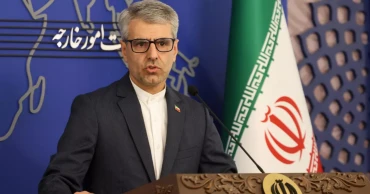
Iran accuses NATO of supporting US-Israeli strikes
Iran’s Foreign Ministry has accused NATO of being complicit in what it described as an “unlawful war of aggression” after the alliance’s chief said European allies had assisted the United States and Israel during strikes on Iran.
Foreign Ministry spokesman Esmaeil Baghaei said comments by NATO Secretary-General Mark Rutte amounted to “a clear and damning admission of NATO’s active complicity” in the conflict.
Baghaei said NATO and the member states involved “must be held accountable for all the consequences” of their actions. He also named Italy and Romania among the countries that, he said, should explain “why they chose to collude”.
Earlier, speaking to Fox News, Rutte said Italy had allowed about 500 US aircraft to take off from American bases on its territory in support of President Donald Trump’s military operation against Iran, known as “Operation Epic Fury”.
Rutte also said authorities in the Romanian capital, Bucharest, had reduced commercial flights because airports were being used to support tanker aircraft involved in the operation.
1 month ago
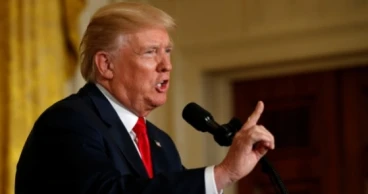
Trump warns negotiations will end if Iran imposes charges on ships in Strait of Hormuz
US President Donald Trump on Wednesday said Iran had assured Washington that it was not seeking tolls, insurance fees or any other charges from vessels transiting the Strait of Hormuz, warning that negotiations between the two countries would end immediately if that information proved untrue.
In a post on his Truth Social platform, Trump said Iran had informed the United States that, despite what he described as misleading reports by the “Fake News” media, it was not pursuing or collecting any fees from ships passing through the strategically important waterway.
Hormuz Strait reopening eases shipping crisis, but 1,200 cargo vessels remain stranded
According to Trump, Iran conveyed that there were “no tolls, no insurance costs and no other charges of any kind” being sought or received from vessels travelling through the Strait of Hormuz.
“If this is false information, negotiations would end, immediately!” Trump wrote.
1 month ago
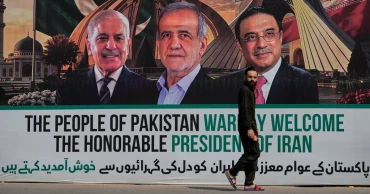
US, Iran differ over nuclear inspections as talks continue to end war
The United States and Iran appeared divided on Tuesday over whether Tehran had agreed to allow U.N. inspections of its nuclear facilities, as both sides continued negotiations aimed at reaching a permanent agreement to end the war in Iran. At the same time, efforts were underway to ease a shipping crisis in the Strait of Hormuz.
The disagreement surfaced as Iranian President Masoud Pezeshkian met Pakistani leaders in Islamabad and technical teams from the U.S. and Iran held discussions in Switzerland.
A United Nations agency said a plan is being implemented to help move stranded vessels and thousands of crew members through the Strait of Hormuz, a crucial route for global energy supplies that Iran blocked after the U.S. and Israel launched military action against Iran on Feb. 28.
Earlier Tuesday, Iranian Foreign Ministry spokesperson Esmail Baghaei told reporters in Tehran that U.N. inspectors were not scheduled to visit nuclear sites targeted by U.S. strikes last year. His remarks contradicted comments made a day earlier by U.S. Vice President JD Vance.
Speaking to reporters, President Donald Trump warned that if Iran had not agreed to inspections, Washington would immediately end the talks. However, he said there was no urgency for inspections to begin.
The International Atomic Energy Agency (IAEA) has not commented on whether it would play a role in any inspection process. The agency has operated intermittently in Iran since the 12-day war with Israel in 2025 but has not been allowed to inspect uranium enrichment facilities hit by U.S. strikes.
Iran continues to insist that its nuclear programme is peaceful. However, the IAEA has said Iran possesses highly enriched uranium that could potentially be used to develop nuclear weapons if Tehran chose to do so.
The U.S. and Iran reached an agreement last week under which Tehran would dilute its stockpile of enriched uranium. The deal also includes the lifting of U.S.-backed sanctions, while both sides have 60 days to negotiate broader arrangements.
Efforts are also underway to evacuate around 11,000 crew members stranded aboard ships in the Strait of Hormuz.
According to International Maritime Organization Secretary-General Arsenio Dominguez, the operation is being coordinated with Iran, Oman, other regional coastal states, the United States and the maritime industry.
“We have secured the necessary safety guarantees and have thoroughly verified the conditions for safe navigation to support these operations,” Dominguez said.
The organization said ship movements would be carried out gradually to minimize the risk of collisions.
Marcus Baker, global head of marine, cargo and logistics at Marsh in London, welcomed the development, saying it would benefit all parties involved.
However, concerns remain over the fragile ceasefire, as Iran said it had once again closed the strait due to renewed fighting between Israel and the Iran-backed Hezbollah group in Lebanon. Violence flared again in Lebanon on Tuesday.
The U.S. has said negotiators are discussing ways to ensure the strait remains open. While shipping traffic has started to recover, uncertainty remains over who will ultimately control access to the waterway.
Data and analytics firm Kpler reported that 39 ships passed through the strait on Monday, compared with about 92 crossings recorded between Friday and Sunday. Before the war, roughly 100 vessels used the route each day.
The U.S. military's Central Command said two American aircraft carriers remain deployed in the Middle East.
During his first visit to Pakistan since the war began, Iranian President Pezeshkian held talks with Pakistani President Asif Ali Zardari on regional peace and economic cooperation, according to a statement from the Pakistani presidency.
At a joint news conference, Pezeshkian said Iran’s missile programme was not included in the memorandum of understanding signed with the United States.
“If it was not for Iran’s missile capabilities, our country would have been plundered and destroyed,” he said, adding that Tehran would never negotiate away its missile programme.
Pakistani Prime Minister Shehbaz Sharif later announced that he would attend the funeral in Tehran of Supreme Leader Ayatollah Ali Khamenei, who was killed in the opening airstrikes of the war.
Meanwhile, Iran said negotiations in Switzerland had produced working groups focused on sanctions relief, nuclear issues, reconstruction and monitoring.
According to Iran’s state-run IRNA news agency, Deputy Foreign Minister Kazem Gharibabadi, who is leading the talks, said the two countries also established a mechanism to discuss shipping through the Strait of Hormuz.
At the beginning of the 60-day negotiation period, Iran and the U.S. also agreed to create a “de-confliction cell” to address tensions involving Israel and Hezbollah.
In southern Lebanon, Israeli troops shot and killed two people on Tuesday, ending two days of relative calm following a ceasefire brokered on Saturday.
The Israeli military said its forces opened fire after four Hezbollah members entered a security zone on a bulldozer and motorcycle and ignored warning shots. Lebanon’s state-run National News Agency said the two men were killed while clearing a road with a bulldozer.
No Israeli airstrikes or shelling have been reported since Sunday, and Hezbollah has not claimed any attacks, marking the longest pause in hostilities since the latest Israel-Hezbollah conflict began in March.
Israeli Prime Minister Benjamin Netanyahu said Monday that Israel retained “full freedom of action” in Lebanon to counter any threats.
Neither Israel nor Hezbollah is a party to the U.S.-Iran agreement. Netanyahu has vowed to keep Israeli troops in southern Lebanon until all threats are removed, while Hezbollah says it will not stop attacks unless Israel agrees to withdraw.
Asked about Netanyahu’s remarks, Trump said, “We’re going to take a look at it,” adding that the issue would eventually be resolved.
On Tuesday, the main highway from Beirut to southern Lebanon was crowded with displaced residents returning home.
Among them was Hawraa Nour El-Din from Khirbet Selm village.
“We don’t want the negotiations done by the government,” she said. “We want Iran to negotiate on our behalf, and we are returning victorious, whether everyone likes it or not.”
In Washington, the U.S. State Department said a new round of Israel-Lebanon talks began Tuesday, covering both political and security issues.
1 month ago
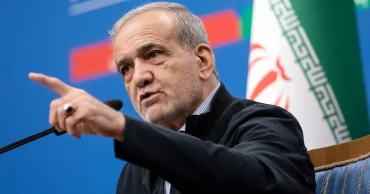
Iran's ballistic missiles not up for negotiation with US: Pezeshkian
Iranian President Masoud Pezeshkian on Tuesday said no negotiations had taken place, nor would take place, regarding Iran's ballistic missile programme, as Tehran continues talks with Washington.
Speaking in Pakistan's capital Islamabad, Pezeshkian said Iran remains ready for dialogue and peace despite its distrust of the United States.
"We do not trust America because it attacked us twice during the negotiations, but we are still ready for dialogue and peace," he said.
The Iranian president said Tehran would safeguard its strengths in the upcoming negotiations and reiterated that the country's ballistic missile programme was not on the negotiating table.
Pezeshkian also praised Pakistan's role in facilitating the talks, saying Prime Minister and the country's Army chief had made significant efforts to advance the negotiations.
He expressed appreciation for Pakistan's role in helping facilitate discussions and in reaching a memorandum of understanding.
The Iranian president said peace, security and regional cooperation are essential for the progress and development of West Asia.
"We believe that the progress of the West Asia region depends on peace, security and regional cooperation," he said.
Source: Al Jazeera
1 month ago
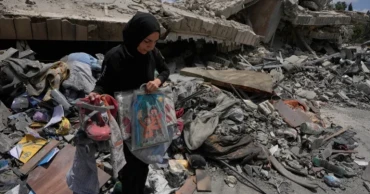
Israeli fire kills 2 in Lebanon as Hezbollah condemns truce 'violation'
Israeli troops opened fire in southern Lebanon on Tuesday, killing two people and injuring two others, according to Lebanon's state-run National News Agency (NNA), in the first reported fatalities from Israeli fire in three days under a fragile US-brokered ceasefire.
The two men were killed in a town near the southern city of Nabatieh when Israeli soldiers opened machine-gun fire as they stood near an excavator clearing a blocked road, the NNA reported.
The incident threatens the ceasefire that has largely held since Sunday.
The Lebanese armed group Hezbollah denounced the incident as a "treacherous attack" and a "blatant" violation of the truce, though it did not indicate whether it would retaliate.
The Israeli military said it had "struck armed terrorists who posed an immediate threat" to its troops in the Ali al-Taher ridge area, located within a self-declared Israeli "security zone" in southern Lebanon.
Earlier in the day, Mahmoud Qamati, deputy head of Hezbollah's political council, warned that the group would respond to any Israeli ceasefire violation "in kind."
"Hezbollah remains fully alert with its finger on the trigger, ready to confront any violation by the Israeli regime," Iran's Press TV quoted him as saying.
Qamati also said there would be no return to the pre-war situation, when Israeli forces carried out near-daily attacks on Lebanon while Hezbollah refrained from responding.
According to reports, Israeli attacks on Lebanon have killed at least 4,106 people since March 2 and displaced more than 1.2 million others.
Israel's death toll in its latest conflict with Hezbollah includes at least 32 soldiers and four civilians.
Israeli Prime Minister Benjamin Netanyahu, Defence Minister Israel Katz and Chief of the General Staff Eyal Zamir said in a joint statement on Tuesday that the Israeli military would continue to act "with determination" to eliminate threats against its soldiers and citizens.
The statement said the military would continue to destroy Hezbollah infrastructure and maintain the security zone in southern Lebanon.
In a separate video statement, Netanyahu insisted that Israeli forces would retain "full freedom of action" in Lebanon and remain in the security zone for as long as necessary.
Meanwhile, Iranian Foreign Ministry spokesman Esmaeil Baghaei said the United States was obligated to ensure Israel halted its attacks on southern Lebanon.
"The obligation to put an end to the war in Lebanon is part and parcel of the previous and current arrangements," he said, adding that there was no justification for Israel to continue its attacks.
Baghaei described the Israel-Hezbollah conflict as a "very complicated issue" but said final arrangements could be reached in the coming days.
A new round of US-mediated talks between Israel and Lebanon is scheduled to begin in Washington on Tuesday and continue through Thursday.
Lebanon is being represented by Ambassador Nada Moawad, while Israel's delegation is led by Ambassador Yechiel Leiter. US officials are also participating in the negotiations.
Lebanon is seeking a full Israeli withdrawal from southern Lebanon, where Israeli forces have established a so-called buffer zone covering about six percent of Lebanese territory.
Israel, meanwhile, is pushing for Hezbollah's disarmament, while Hezbollah insists the talks should focus solely on mutual security issues and that its weapons should not be part of the negotiations.
Many Lebanese residents remain sceptical about the ceasefire.
Mohammed Yassin, 60, told Reuters that he would return to his home in the southern town of Hula only when authorities declared the area safe.
"We don't trust the ceasefire, because Israel is deceitful," he said.
Another resident, Suzanne, 60, said she and her family had been displaced after Israeli attacks destroyed homes in Beirut's southern suburbs, known as Dahiyeh.
"We don't have trust, because several times they've said there was a ceasefire, and then they go back to attacking again," she said.
Source: Al Jazeera
1 month ago
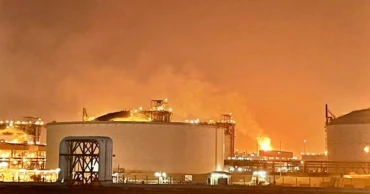
18 missing, 54 injured in factory explosion in Qatar
At least 54 people were injured and 18 others remained missing after an explosion tore through a factory in Qatar's Ras Laffan Industrial City late Sunday, according to the country's Interior Ministry.
The blast occurred in Ras Laffan, home to Qatar's principal natural gas export terminal located about 80 kilometres north of Doha. Authorities said the explosion resulted from what was described as a technical incident.
Qatar prioritises defence after Iran targets key LNG facility
In a statement issued Monday, the Interior Ministry said search and rescue operations were underway to locate the missing individuals, while emergency response teams continued their work at the site.
Earlier, authorities said no leaks posing a threat to public safety had been detected following the explosion.
Ras Laffan was previously targeted by Iran during the war and remained closed for several weeks afterward. Qatari authorities said the latest blast occurred while workers were attempting to resume operations at the Barzan gas plant.
1 month ago

US Vice President Vance arrives in Switzerland for nuclear talks with Iran
US Vice President JD Vance arrived in Switzerland on Sunday to formally launch negotiations with Iran aimed at curbing Tehran's nuclear programme and advancing a fragile interim agreement intended to end the war in Iran.
Vance and Second Lady Usha Vance landed at Emmen Air Base near Lucerne shortly before 6 am local time, according to his office.
The two sides are now entering a 60-day period to negotiate the technical details of the framework agreement signed last week, with the outcome expected to have significant implications for global security and the world economy.
The opening days of the negotiation period have already been complicated by renewed fighting in Lebanon between Israel and the Iran-backed militant group Hezbollah and by Iran's announcement that it had again closed the Strait of Hormuz, a key shipping route for global oil and natural gas supplies.
Vance had originally been scheduled to arrive in Switzerland on Friday, but his trip was delayed after the escalation in Lebanon prompted Iranian officials to cancel their initial plans to attend the talks.
The US Central Command disputed Iran's claim that the Strait of Hormuz had been shut, saying American forces were continuing to monitor the situation to ensure maritime traffic remained uninterrupted. Vance has said millions of barrels of oil have continued to pass through the waterway in recent days.
The vice president departed the United States shortly after Iranian state television reported that Tehran's delegation had arrived in Switzerland.
Iran's negotiating team includes Parliament Speaker Mohammad Bagher Qalibaf, Foreign Minister Abbas Araghchi and senior officials from the country's central bank and oil sector.
Vance joins US special envoy Steve Witkoff and Jared Kushner, President Donald Trump's son-in-law, who have already begun working on the technical aspects of the negotiations.
The talks are also expected to involve Pakistani Prime Minister Shehbaz Sharif, Army Chief Field Marshal Asim Munir and Qatari mediators.
Vance said he expected to remain in Switzerland for only "a day or two", leaving much of the detailed negotiations to Witkoff and Kushner.
The negotiations have drawn criticism from some Republican hardliners, who have compared the interim deal to the 2015 nuclear agreement reached under former President Barack Obama, arguing that it may fail to permanently halt Iran's nuclear ambitions.
Under the agreement signed by President Trump and Iranian President Masoud Pezeshkian, Iran is allowed to resume unrestricted oil sales and could eventually gain access to billions of dollars in frozen assets. The deal also requires Tehran to dilute its stockpile of highly enriched uranium.
The agreement permits commercial vessels to pass through the Strait of Hormuz without charge for 60 days, although it leaves open the possibility of future Iranian fees.
Meanwhile, tensions remain high in Lebanon, as neither Israel nor Hezbollah is a party to the US-Iran agreement. Israeli Prime Minister Benjamin Netanyahu has vowed to maintain Israeli forces in southern Lebanon until all threats to Israel are removed, while Hezbollah has refused to halt attacks unless Israel withdraws from Lebanese territory.
The fighting in Lebanon in the days following the US-Iran agreement has reportedly killed 47 people in Lebanon and four Israeli soldiers.
1 month ago
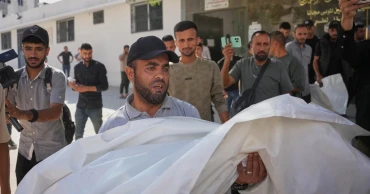
Israeli strikes in Gaza kill six, including two children and Al Jazeera cameraman
Israeli airstrikes in the Gaza Strip killed at least six people on Saturday, including two children and an Al Jazeera cameraman, Palestinian health officials said.
The latest attacks came despite a ceasefire reached in October between Israel and the militant group Hamas. According to Gaza's Health Ministry, more than 1,000 Palestinians have been killed in near-daily Israeli strikes since the truce took effect.
The first strike occurred around 2 am and targeted an apartment building in Gaza City, the ministry said.
The victims included two sisters, four-year-old Zina and 14-year-old Lana, whose bodies were taken to Shifa Hospital. An Associated Press reporter at the scene saw blood-stained rubble and chunks of concrete scattered around the damaged building.
Mohammad Safadi, a cousin of the girls who sustained a forehead injury in the attack, said his wife was also wounded.
"I was sitting at home. The rocket fell on us without a warning," he said, questioning the effectiveness of the ceasefire.
The Israeli military said it was investigating the incident.
Later in the day, three separate Israeli strikes killed four more people and injured at least a dozen others.
One of the strikes hit a house in the Bureij refugee camp in central Gaza, killing three people, including Al Jazeera cameraman Ahmed Wishah, according to Al-Aqsa Hospital. The broadcaster later confirmed his death.
Ahmed Wishah's brother, Mohamed Wishah, who also worked as an Al Jazeera correspondent, was killed in an Israeli strike in April.
Another strike targeted a group of people in the Muwasi tent camp in southern Gaza, killing one person and injuring eight others, according to Nasser Hospital.
A third attack in Gaza City wounded at least four people after striking a group gathered in the area, Shifa Hospital said.
In a statement, the Israeli military said Ahmed Wishah had been killed in a "precise strike," alleging that he was a member of Hamas' military wing and posed a threat to Israeli forces. No evidence was immediately provided to support the claim.
Israel says its military operations target Hamas fighters and other militants who pose a threat to its security. Since the ceasefire, five Israeli soldiers have reportedly been killed.
The war began on October 7, 2023, when Hamas-led militants attacked southern Israel, killing around 1,200 people and taking 251 hostages.
According to Gaza's Health Ministry, Israel's subsequent military campaign in the territory has killed 73,018 Palestinians, including those killed since the ceasefire came into effect.
The ministry, which operates under the Hamas-run government, says women and children account for about half of the fatalities. Its casualty figures are generally regarded as credible by United Nations agencies and independent experts, although it does not distinguish between civilians and combatants.
1 month ago