USA-&-Canada

Canadian PM Justin Trudeau slams Facebook for blocking Canada wildfire news
Canadian Prime Minister Justin Trudeau on Monday accused Facebook of putting profits over people’s safety during the emergencies created by Canada’s record wildfire season.
Meta, the parent company of Facebook and Instagram, announced earlier this summer it would keep its promise to block news content from Canada on its platforms because of a new law that requires tech giants to pay publishers for linking to or otherwise repurposing their content online.
Fires raging in Canada have pushed tens of thousands of people from their homes and threatened cities such as Yellowknife, the capital of the Northwest Territories. About 30,000 people were under evacuation orders in British Columbia.
Read: Survivors of Maui's wildfires return home to blackened ruins as death toll rises to 67
“Right now, in an emergency situation where up to date local information is more important than ever, Facebook is putting corporate profits ahead of people's safety,” Trudeau said at a news conference in Cornwall on Prince Edward Island.
“It is so inconceivable that a company like Facebook is choosing to put corporate profits ahead of insuring that local news organizations can get up to date information to Canadians,” the prime minister said.
Government ministers called on Meta on Friday to lift its Canada news ban, which applies to local outlets as well as national media such as the Canadian Broadcasting Corporation.
Read: Poor air quality from Canadian wildfires affects people as far as away as North Carolina
The company, which is headquartered in Northern California, stood by its decision and said in a statement about the wildfires that people in Canada can continue to use Instagram and Facebook “to connect with their communities and access reputable information, including content from official government agencies, emergency services and non-governmental organizations.”
The country's residents and visitors are not able to view or share news on the Meta-owned social networks, including news articles, videos and audio posted by outlets inside or outside of Canada.
Meta has not been alone in its action. Google’s owner, Alphabet, also said it planned to remove Canadian news links in response to the new law, although it hasn’t followed through yet. The Online News Act, passed in late June after lengthy debate, is set to take effect later this year.
“This is Facebook’s choice," Trudeau said. “In a democracy, quality local journalism matters, and it matters now more than ever before when people are worried about their homes, worried about their communities, worried about the worst summer for extreme events that we’ve had in a very long time.”
British Columbia Premier David Eby said it is unacceptable that Meta hasn't reversed its decision to block Canadian news from being shared online.
Read: Millions breathing hazardous air as smoke from Canadian wildfires streams south over US
“I find it astonishing that we are at this stage of the crisis and the owners of Facebook and Instagram have not come forward and said ‘We’re trying to make a point with the federal government, but it’s more important that people are safe,'" Eby said.
He added that many people in British Columbia rely on media shared through Facebook to access information about the wildfires.
Meta took similar steps in the past. In 2021, it briefly blocked news from its platform in Australia after the country passed legislation that would compel tech companies to pay publishers for using their news stories. It later struck deals with Australian publishers.
2 years ago

Rain from Tropical Storm Hilary lashes California and Mexico, swamping roads and trapping cars
Tropical Storm Hilary inundated streets across Mexico’s arid Baja California Peninunsula with deadly floodwaters Sunday before moving over Southern California, where it swamped roads and downed trees, as concerns mounted that flash floods could strike in places as far north as Idaho that rarely get such torrential rain.
Forecasters said Hilary was the first tropical storm to hit Southern California in 84 years, bringing flash floods, mudslides, high winds, power outages and the potential for isolated tornadoes.
Hilary made landfall along the Mexican coast in a sparsely populated area about 150 miles (250 kilometers) south of Ensenada, then moved through mudslide-prone Tijuana, threatening the improvised homes that cling to hillsides just south of the U.S. border.
Read: Powerful Hurricane Hilary heads for Mexico's Baja. Rare tropical storm watch issued for California
At least 9 million people were under flash-flood watches and warnings as heavy rain fell across normally sunny Southern California ahead of the brunt of the storm. Desert areas were especially susceptible along with hillsides with wildfire burn scars, forecasters warned.
Mud and boulders spilled onto highways, water overwhelmed drainage systems and tree branches fell in neighborhoods from San Diego to Los Angeles. Dozens of cars were trapped in floodwaters in Palm Springs and surrounding desert communities across the the Coachella Valley. Crews pumped floodwaters out of the emergency room at Eisenhower Medical Center in Rancho Mirage.
The National Weather Service's Los Angeles office reported in the evening via X, formerly known as Twitter, that “very heavy rain” was continuing in much of Los Angeles and Ventura counties. The highest rainfall totals so far were 6.15 inches (15.62 centimeters) at Leona Valley and 5.94 inches (15.1 centimeters) at Lewis Ranch, the agency added, saying there was significant flooding and urging people to stay off the roads.
The Los Angeles Unified School District, the nation's second largest school system, said all campuses would be closed on Monday.
Read: China's Xi calls for measures to mitigate disastrous flooding amid economic slowdown
“There is no way we can compromise the safety of a single child or an employee, and our inability to survey buildings, our inability to determine access to schools makes it nearly impossible for us to open schools," Superintendent Alberto Carvalho said at a media briefing. San Diego schools postponed the first day of classes from Monday to Tuesday.
Southern California got another surprise in the afternoon as an earthquake with a preliminary magnitude of 5.1 hit near Ojai, about 80 miles (130 km) northwest of downtown Los Angeles, according to the U.S. Geological Survey. It was felt widely and was followed by smaller aftershocks. There were no immediate reports of major damage or injury, according to a dispatcher with the Ventura County Sheriff's Office.
Hilary could wallop other Western states with once-in-a-century rains, with a good chance of it becoming the wettest known tropical cyclone to douse Nevada, Oregon and Idaho. Hilary was expected to remain a tropical storm into central Nevada early Monday before dissipating.
By Sunday evening, Hilary had moved over San Diego and was headed north into inland desert areas. Around midday, it had maximum sustained winds of 60 mph (97 kph).
Read: More than 60 Senegalese migrants are feared dead on a monthlong voyage to Spain
Hurricane Center Director Michael Brennan said that while Hilary had weakened from a Category 4 hurricane, it’s the water, not the wind, that people should watch out for most — some areas could get as much rain in hours that they typically get in a year.
“You do not want to be out driving around, trying to cross flooded roads on vehicle or on foot," Brennan said during a briefing from Miami. “Rainfall flooding has been the biggest killer in tropical storms and hurricanes in the United States in the past 10 years, and you don’t want to become a statistic.”
Hilary is just the latest major climate disaster to wreak havoc across the U.S., Canada and Mexico. Hawaii’s island of Maui is still reeling from a blaze that killed over 100 people and ravaged the historic town of Lahaina, making it the deadliest U.S. wildfire in more than a century. Firefighters in Canada are battling that nation’s worst fire season on record.
The Mexican cities of Ensenada and Tijuana closed all beaches and opened a half-dozen shelters at sports complexes and government offices.
One person drowned Saturday in the Mexican town of Santa Rosalia when a vehicle was swept away in an overflowing stream. Rescue workers saved four other people, said Edith Aguilar Villavicencio, the mayor of Mulege township.
Mexican army troops fanned out across Mulege, where some of the worst damage occurred Saturday on the eastern side of the Baja Peninsula. Soldiers used bulldozers and dump trucks to help clear tons of boulders and earth clogging streets and roads that were turned into raging torrents a day earlier.
Power lines were toppled in many places, and emergency personnel were working to restore power and reach those cut off by the storm.
Read: Rescuers recover 33 bodies from a landslide at a Myanmar jade mine, with 3 people still missing
Brennan said rainfall could reach between 3 and 6 inches (7 centimeters and 15 centimeters) in many areas. Forecasters warned it could dump up to 10 inches (25 centimeters) — a year’s worth of rain — in some isolated areas.
California Gov. Gavin Newsom declared a state of emergency. The Federal Emergency Management Agency said it has officials inside California’s emergency preparedness office and teams on standby with food, water and other help.
In coastal Carlsbad, just north of San Diego, 19-year-old Jack Johnson and his friends kept an eye on the huge waves, determined to surf them at some point Sunday.
“It’s really choppy out there, not really surfable yet, but I think we can find a good break somewhere later,” Johnson said. “I can’t remember a storm like this.”
The weather service said tornadoes were possible in eastern San Diego County.
Los Angeles authorities scrambled to get homeless people off the streets and into shelters, and officials ordered all state beaches in San Diego and Orange counties closed.
Across the region, municipalities ran out of free sandbags and grocery shelves emptied as people stockpiled supplies. California’s Joshua Tree National Park, Mojave National Preserve and Death Valley National Park were closed.
Death Valley's Furnace Creek Visitor Center received more than 1 inch (2.5 centimeters) of rain by 1:30 p.m., with up to 3 inches (7.6 centimeters) more possible overnight. “For comparison, Furnace Creek’s average annual rainfall is 2.2 inches (5.6 centimeters),” the park said in a statement, calling the rainfall “unprecedented.”
To the north in Nevada, Gov. Joe Lombardo declared a state of emergency and activated 100 National Guard troops to assist with problems from predicted flooding in western Clark and Nye counties and southern Esmeralda County. In Arizona, wind gusts neared 60 mph (97 kph) in Yuma County, where officials gave out thousands of sandbags.
“I urge everyone, everyone in the path of this storm, to take precautions and listen to the guidance of state and local officials,” President Joe Biden said. Biden said in a later statement that he was being briefed on the storm and was prepared to provide federal assistance.
Meanwhile, one of several budding storm systems in the Atlantic Ocean became Tropical Storm Emily on Sunday, according to the National Hurricane Center. It was far from land, moving west in the open ocean. Also, Tropical Storm Franklin formed in the eastern Caribbean. Tropical storm watches were issued for the southern coasts of Haiti and the Dominican Republic.
In Sept. 1939, a tropical storm that roared into California ripped apart train tracks, tore houses from their foundations and capsized many boats, killing nearly 100 people on land and at sea.
2 years ago

Google set to remove news links in Canada over online news law
Google said Thursday it will remove links to Canadian news on its platforms across Canada over a new law that will require digital giants to compensate media outlets for content they share or otherwise repurpose.
The tech giant said it will remove Canadian news links from Google News — a personalized aggregator service available by web or app that highlights local news — and from Google Discover, a feature on mobile phones that helps people find content.
Canadian Heritage Minister Pablo Rodriguez accused Google of trying to bully Canadians, but added that “big tech isn’t biggr than Canada.”“Big tech would rather spend money changing their platforms to block news from Canadians instead of paying a small share of the billions they make in advertising dollars,” Rodriguez tweeted.
Google said it informed Prime Minister Justin Trudeau’s Liberal government of its decision. It did not say exactly when it would begin to remove news, but indicated it would happen before the law takes effect by the end the year. That law was passed last week.
Only Canadian news will be blocked, so Canadian users will still be able to see content from outlets like Fox News or BBC, for example.
Meta made a similar announcement last week, saying it would remove news from its social media platforms Facebook and Instagram before the law comes into force. It is also ending existing deals with local publishers.
Meta is already running a test to block news for up to 5% of its Canadian users. Google ran a similar test earlier this year.
Kent Walker, president of global affairs for Google and its parent company, Alphabet, said the law is “unworkable.”
Read: Google should break up digital ad business over competition concerns, European regulators say
In a blog post published to Google’s website Thursday, Walker said the bill creates a price on links, resulting in an uncapped financial liability “simply for facilitating Canadians’ access to news from Canadian publishers.”
“We don’t take this decision or its impacts lightly and believe it’s important to be transparent with Canadian publishers and our users as early as possible,” Walker wrote.
The Online News Act requires both Google and Meta to enter into agreements with news publishers to pay them for news content that appears on their sites if it helps them generate money.
Google had been seeking assurances about how much that could cost it and how the bargaining process would unfold. Those details are likely to become clear after the bill’s regulatory process is complete.
Legacy media and broadcasters have praised the bill, which promises to “enhance fairness” in the digital news marketplace and help bring in more money for shrinking newsrooms. Tech giants including Meta and Google have been blamed in the past for disrupting and dominating advertising, eclipsing smaller, traditional players.
Read: Google Pixel 7a Review: Mid-range Smartphone with Enhanced Camera Features
Rodriguez had previously expressed hope the government could come to a positive resolution with both companies to prevent them from removing news. He also said the government would continue to support newsrooms if Google and Meta pulled news from their platforms, though he did not say exactly how that would be done.
Since 2008, nearly 500 newsrooms have closed across Canada, Rodriguez said.
Read more: Google is giving its dominant search engine an artificial-intelligence makeover
2 years ago

Canadian PM Justin Trudeau, wife announce separation
Canadian Prime Minister Justin Trudeau and his wife, Sophie Gregoire Trudeau, announced Wednesday that they are separating after 18 years of marriage.
The two said in statements posted on Instagram that they made the decision after “many meaningful and difficult conversations.” A statement from the prime minister's office said they both have signed a legal separation agreement.
Also read: PM Trudeau fondly recalls travelling to Bangladesh with his father: Canadian Minister
Trudeau, the 51-year-old scion of one of Canada’s most famous politicians, was sworn into office in 2015. Sophie Trudeau is a former model and TV host. The couple were married in 2005. Together, they brought star power to the prime minister's office and appeared in the pages of Vogue magazine.
They have three children, 15-year-old Xavier, 14-year-old Ella-Grace and 9-year-old Hadrien.
The first lady has played a less visible role in recent years, rarely traveling with the prime minister on official trips. The two were seen together publicly at Canada Day events in Ottawa last month.
Also read: Canada's government to stop advertising on Facebook and Instagram after Meta says it will block news
“They remain a close family, and Sophie and the prime minister are focused on raising their kids in a safe, loving and collaborative environment,” the statement from Trudeau's office said. "The family will be together on vacation, beginning next week.”
His office requested respect for their privacy.
Justin Trudeau and Sophie Gregoire met as children when she was a classmate of his youngest brother, Michel, and they reconnected as adults when they co-hosted a 2003 charity gala.
Trudeau is the second prime minister to announce a separation while in office.
Also read: Canada's Trudeau wins 2nd term but loses majority
His father, Pierre Trudeau, and mother, Margaret Trudeau, separated in 1979 and divorced in 1984 during the elder Trudeau's final year in the prime minister's office.
Justin Trudeau channeled the star power of his Liberal icon father when he first won office in 2015. Scandals, voter fatigue and economic inflation have taken a toll on his popularity after eight years in power.
3 years ago

Thumbs-up emoji can mean contract agreement, Canadian judge rules
A Canadian judge declared that the "thumbs-up" emoji is just as acceptable as a signature, noting that courts must adapt to the "new reality" of how people interact as he ordered a farmer to pay C$82,000 ($61,442) for an “unmet” contract.
A grain buyer with South West T
3 years ago

Canada's government to stop advertising on Facebook and Instagram after Meta says it will block news
Canada's government said Wednesday it would stop advertising on Facebook and Instagram, in response to Meta's decision to block access to news content on their social platforms as part of a temporary test.
Heritage Minister Pablo Rodriguez announced Prime Minister Justin Trudeau's government's decision at a news conference.
Canada's move is the latest episode in a dispute that started after Trudeau's administration proposed a bill that would require technology companies to pay publishers for linking to or otherwise repurposing their content online.
Meta promised at the time to block Canadian news content on its Facebook and Instagram platforms to address Canada’s recently passed Online News Act.
Rodriguez said the decision from Meta was “unreasonable” and “irresponsible,” and as a result Canada would stop advertising on their platforms.
Read: Toxic gas leak in South Africa has killed 16 people, including 3 children, police say
He said the federal government spends about 10 million Canadian dollars (around $7.5 million) a year to advertise on the platforms. This money, he added, will be put into other ad campaigns.
Soon after the federal announcement, Quebec Premier Francois Legault tweeted that the province was also suspending advertising on Facebook and Instagram, and Montreal Mayor Valerie Plante said on Twitter that the city would stop ads on Facebook.
Reacting to the latest Canadian announcement, a Meta spokesperson said the Online News Act is “flawed legislation that ignores the realities of how our platforms work.” He said that the company does not collect links to news content to show on their social platforms and that publishers are the ones deciding to post them on Facebook or Instagram.
“Unfortunately, the regulatory process is not equipped to make changes to the fundamental features of the legislation that have always been problematic, and so we plan to comply by ending news availability in Canada in the coming weeks,” the spokesperson said in a statement sent to The Associated Press.
Read: New UN survey highlights progress in global trade facilitation despite polycrisis disruptions
Google has also promised to start blocking Canadian news when the bill takes effect in six months.
Rodriguez said the government is in talks with the company and believes its concerns will be managed by the regulations that will come to implement the bill.
3 years ago

US Supreme Court strikes down race-based college admissions
The Supreme Court on Thursday struck down affirmative action in college admissions, declaring race cannot be a factor and forcing institutions of higher education to look for new ways to achieve diverse student bodies.
The court's conservative majority overturned admissions plans at Harvard and the University of North Carolina, the nation's oldest private and public colleges, respectively.
Chief Justice John Roberts said that for too long universities have "concluded, wrongly, that the touchstone of an individual's identity is not challenges bested, skills built, or lessons learned but the color of their skin. Our constitutional history does not tolerate that choice."
Justice Clarence Thomas, the nation's second Black justice who had long called for an end to affirmative action, wrote separately that the decision "sees the universities' admissions policies for what they are: rudderless, race-based preferences designed to ensure a particular racial mix in their entering classes."
Also read: US Supreme Court keeps asylum limits in place for now
Justice Sonia Sotomayor wrote in dissent that the decision "rolls back decades of precedent and momentous progress."
Both Thomas and Sotomayor, the two justices who have acknowledged affirmative action played a role in their admissions to college and law school, took the unusual step of reading a summary of their opinions aloud in the courtroom.
In a separate dissent, Justice Ketanji Brown Jackson — the court's first Black female justice — called the decision "truly a tragedy for us all."
Jackson, who sat out the Harvard case because she had been a member of an advisory governing board, wrote, "With let-them-eat-cake obliviousness, today, the majority pulls the ripcord and announces 'colorblindness for all' by legal fiat. But deeming race irrelevant in law does not make it so in life."
The vote was 6-3 in the North Carolina case and 6-2 in the Harvard case. Justice Elena Kagan was the other dissenter.
Also read: Supreme Court weighs Biden student loan plan worth billions
The Supreme Court had twice upheld race-conscious college admissions programs in the past 20 years, including as recently as 2016.
But that was before the three appointees of former President Donald Trump joined the court. At arguments in late October, all six conservative justices expressed doubts about the practice, which had been upheld under Supreme Court decisions reaching back to 1978.
Lower courts also had upheld the programs at both UNC and Harvard, rejecting claims that the schools discriminated against white and Asian American applicants.
The college admissions disputes are among several high-profile cases focused on race in America, and were weighed by the conservative-dominated, but most diverse court ever. Among the nine justices are four women, two Black people and a Latina.
Also read: Judges rule on state abortion restrictions, shape Roe impact
The justices earlier in June decided a voting rights case in favor of Black voters in Alabama and rejected a race-based challenge to a Native American child protection law.
The affirmative action cases were brought by conservative activist Edward Blum, who also was behind an earlier affirmative action challenge against the University of Texas as well as the case that led the court in 2013 to end use of a key provision of the landmark Voting Rights Act.
Blum formed Students for Fair Admissions, which filed the lawsuits against both schools in 2014.
The group argued that the Constitution forbids the use of race in college admissions and called for overturning earlier Supreme Court decisions that said otherwise.
Also read: Overturning of Roe v Wade abortion law huge blow to women's rights: Bachelet
Roberts' opinion effectively did so, both Thomas and the dissenters wrote.
The only institutions of higher education explicitly left out of the ruling are the nation's military academies, Roberts wrote, suggesting that national security interests could affect the legal analysis.
Blum's group had contended that colleges and universities can use other, race-neutral ways to assemble a diverse student body, including by focusing on socioeconomic status and eliminating the preference for children of alumni and major donors.
The schools said that they use race in a limited way, but that eliminating it as a factor altogether would make it much harder to achieve a student body that looks like America.
At the eight Ivy League universities, the number of nonwhite students increased by 55% from 2010 to 2021, according to federal data. That group, which includes, Native American, Asian, Black, Hispanic, Pacific Islander and biracial students, accounted for 35% of students on those campuses in 2021, up from 27% in 2010.
The end of affirmative action in higher education in California, Michigan, Washington state and elsewhere led to a steep drop in minority enrollment in the states' leading public universities.
They are among nine states that already prohibit any consideration of race in admissions to their public colleges and universities. The others are: Arizona, Florida, Georgia, Nebraska, New Hampshire and Oklahoma.
In 2020, California voters easily rejected a ballot measure to bring back affirmative action.
A poll last month by The Associated Press-NORC Center for Public Affairs Research showed 63% of U.S. adults say the court should allow colleges to consider race as part of the admissions process, yet few believe students' race should ultimately play a major role in decisions. A Pew Research Center survey released last week found that half of Americans disapprove of considerations of applicants' race, while a third approve.
The chief justice and Jackson received their undergraduate and law degrees from Harvard. Two other justices, Elena Kagan and Neil Gorsuch, went to law school there, and Kagan was the first woman to serve as the law school's dean.
Every U.S. college and university the justices attended, save one, urged the court to preserve race-conscious admissions.
Those schools — Yale, Princeton, Columbia, Notre Dame and Holy Cross — joined briefs in defense of Harvard's and UNC's admissions plans.
Only Justice Amy Coney Barrett's undergraduate alma mater, Rhodes College, in Memphis, Tennessee, was not involved in the cases.
3 years ago

Canada's largest city elects first woman of color as mayor
Leftist candidate Olivia Chow was elected Monday as mayor of Canada’s largest city, ending more than a decade of conservative rule.
She is the first woman of color to lead Toronto which is one of the world’s most multicultural cities.
Read: Canada is investigating why the Titanic-bound submersible imploded
Her win marks the second time Toronto residents have selected a mayor since October, after former mayor John Tory resigned a few months into his third term following his admission to an affair with a staffer.
There were a record 102 candidates on the ballot Monday, with roughly a half-dozen high-profile names rising to the top of the field over the 12-week campaign.
Chow received 37% support, topping Ana Bailao with 33%. Tory endorsed Bailao late in the campaign.
Read: Out-of-control wildfires cause evacuations in western Canada
“It’s a city where a immigrant kid from St. James Town can be standing in front of you as your new mayor,” Chow said, in reference to a high rise immigrant community downtown.
Tory was known as a straight-laced, button down moderate conservative — almost the polar opposite of previous Toronto Mayor Rob Ford, whose term was plagued by scandals involving public drinking and illegal drug use.
Read: Biden's Canada agenda stacked: NORAD, migration deals likely
Chow spent 13 years on Toronto’s city council and represented a downtown district of Toronto at the federal level for eight years.
She has promised to purchase more affordable housing.
3 years ago
Canada is investigating why the Titanic-bound submersible imploded
The Transportation Safety Board of Canada said Saturday that it’s conducting an investigation into the loss of the Titan submersible and has been speaking with those who traveled on Titan’s mothership, the Polar Prince.
The development comes as authorities from the U.S. and Canada began the process of probing the cause of the underwater implosion and grappled with questions of who was responsible for determining how the tragedy unfolded.
Maritime agencies are searching the area in the North Atlantic where the vessel was destroyed, killing all five people aboard. Debris was located about 12,500 feet (3,810 meters) underwater, several hundred feet away from the Titanic wreckage it was on its way to explore.
“We are conducting a safety investigation in Canada given that this was a Canadian-flagged vessel that departed a Canadian port and was involved in this occurrence, albeit in international waters,” said Kathy Fox, chair of the transportation board. “Other agencies may choose to conduct investigations and that's up to them.”
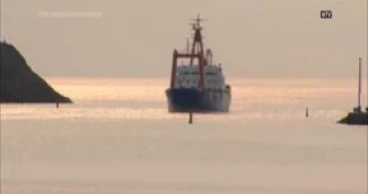
The Polar Prince left Newfoundland on June 16, towing the ill-fated Titan. There were 41 people on board — 17 crew members and 24 others — including the five who died when Titan imploded.
Fox said she understands the international interest and that the TSB will share information they collect with other agencies, like the U.S. National Transportation Safety Board and the U.S. Coast Guard, within the limits of Canadian law. Voice recordings and witness statements are protected under Canadian law, she said.
“Our investigation will go where the evidence leads us,” she added. “We don’t want to duplicate efforts. We want to collaborate.”
The Royal Canadian Mounted Police also announced Saturday that they've initiated an examination of the circumstances that led to the Titan deaths to decide whether a full investigation is warranted. That full probe will only take place if it appears criminal, federal or provincial law may have been broken, officials said.
Read: What the Titanic submersible saga and the Greek migrant shipwreck say about our reactions to tragedy
The Coast Guard led the initial search and rescue mission, a massive international effort that likely cost millions of dollars.
It was not entirely clear who would have the authority to lead what is sure to be a complex investigation involving several countries. OceanGate Expeditions, the company that owned and operated the Titan, is based in the U.S. but the submersible was registered in the Bahamas. OceanGate is based in Everett, Washington, but closed when the Titan was found. Meanwhile, the Titan’s mother ship, the Polar Prince, was from Canada, and those killed were from England, Pakistan, France, and the U.S.
The National Transportation Safety Board said Friday that the U.S. Coast Guard has declared the loss of the Titan submersible to be a “major marine casualty” and the Coast Guard will lead the investigation.
The Coast Guard has not confirmed that it will take the lead.
The deep-sea investigations promise to be long and painstaking, given the murky depths of the ocean.
“This is an incredibly unforgiving environment down there on the seafloor,” said Rear Adm. John Mauger, of the Coast Guard First District.
How the overall investigation will proceed is complicated by the fact that the world of deep-sea exploration is not well-regulated.
A key part of any investigation is likely to be the Titan itself. Questions have been raised about whether the vessel was destined for disaster because of its unconventional design and its creator’s refusal to submit to independent checks that are standard in the industry
The Titan was not registered as a U.S. vessel or with international agencies that regulate safety. And it wasn't classified by a maritime industry group that sets standards on matters such as hull construction.
Read: With the fate of Titanic-bound submersible clear, focus turns to cause of the fatal implosion
OceanGate CEO Stockton Rush, who was piloting the Titan when it imploded, complained that regulations can stifle progress.
“Bringing an outside entity up to speed on every innovation before it is put into real-world testing is anathema to rapid innovation,” Rush wrote in a blog post on his company’s website.
One question that seems at least partially resolved is when the implosion likely happened. After the Titan was reported missing, the Navy went back and analyzed its acoustic data and found an “anomaly” Sunday that was consistent with an implosion or explosion in the general vicinity of where the vessel was operating when communications were lost, said a senior U.S. Navy official.
The Navy passed on the information to the Coast Guard, which continued its search because the data was not considered definitive, according to the official, who spoke on condition of anonymity to discuss a sensitive acoustic detection system.
The Titan launched at 8 a.m. that day and was reported overdue that afternoon about 435 miles (700 kilometers) south of St. John’s, Newfoundland. Rescuers rushed ships, planes and other equipment to the area.
Any sliver of hope that remained for finding the crew alive was wiped away early Thursday, when the Coast Guard announced that debris had been found near the Titanic.
Killed in the implosion were Rush, two members of a prominent Pakistani family, Shahzada Dawood and his son Suleman Dawood; British adventurer Hamish Harding; and Titanic expert Paul-Henri Nargeolet.
A flurry of lawsuits is expected, but filing them will be complex and it's unclear how successful they will be. Plaintiffs will run into the problem of establishing jurisdiction.
Read more: Titan submersible imploded, killing all 5 on board, US Coast Guard says
At least 46 people successfully traveled on OceanGate’s submersible to the Titanic wreck site in 2021 and 2022, according to letters the company filed with a U.S. District Court in Norfolk, Virginia, that oversees matters involving the Titanic shipwreck.
But questions about the submersible's safety were raised by both by a former company employee and former passengers.
3 years ago

Titan submersible imploded, killing all 5 on board, US Coast Guard says
A submersible carrying five people to the Titanic imploded near the site of the shipwreck and killed everyone on board, authorities said Thursday, bringing a tragic end to a saga that included an urgent around-the-clock search and a worldwide vigil for the missing vessel.
The sliver of hope that remained for finding the five men alive was wiped away early Thursday, when the submersible's 96-hour supply of oxygen was expected to run out following its Sunday launch and the Coast Guard announced that debris had been found roughly 1,600 feet (488 meters) from the Titanic in North Atlantic waters.
"This was a catastrophic implosion of the vessel," said Rear Adm. John Mauger, of the First Coast Guard District.
Also read: Titan submersible imploded, killing all 5 on board, US Coast Guard says
After the craft was reported missing, the U.S. Navy went back and analyzed its acoustic data and found an anomaly that was "consistent with an implosion or explosion in the general vicinity of where the Titan submersible was operating when communications were lost," a senior Navy official told The Associated Press on Thursday.
The official spoke on condition of anonymity to discuss a sensitive acoustic detection system.
The Navy passed on that information to the Coast Guard, which continued its search because the Navy did not consider the data to be definitive.
Also read: Debris field found in search for missing submarine
OceanGate Expeditions, the company that owned and operated the submersible, said in a statement that all five people in the vessel, including CEO and pilot Stockton Rush, "have sadly been lost."
The others on board were two members of a prominent Pakistani family, Shahzada Dawood and his son Suleman Dawood; British adventurer Hamish Harding; and Titanic expert Paul-Henri Nargeolet.
"These men were true explorers who shared a distinct spirit of adventure, and a deep passion for exploring and protecting the world's oceans," OceanGate said in a statement. "We grieve the loss of life and joy they brought to everyone they knew."
OceanGate has been chronicling the Titanic's decay and the underwater ecosystem around it via yearly voyages since 2021. The company has not responded to additional questions about the Titan's voyage this week.
Also read: Search for the missing Titanic submersible nears the critical 96-hour mark for oxygen supply
The company's office was "closed indefinitely while the staff copes with the tragic loss of their team member," according to a statement Thursday by the Port of Everett, which is about 30 miles (50 kilometers) north of downtown Seattle and is home to OceanGate.
The Coast Guard will continue searching for more signs about what happened to the Titan.
While the Navy likely detected the implosion Sunday through its acoustics system, underwater sounds heard Tuesday and Wednesday — which initially gave hope for a possible rescue — were probably unrelated to the submersible. The Navy's possible clue was not known publicly until Thursday, when The Wall Street Journal first reported it.
With a search area covering thousands of miles — twice the size of Connecticut and in waters 2 1/2 miles (4 kilometers) deep — rescuers all week rushed ships, planes and other equipment to the site of the disappearance.
Broadcasters around the world started newscasts at the critical hour Thursday with news of the submersible. The Saudi-owned satellite channel Al Arabiya showed a clock on air counting down to their estimate of when the air could potentially run out.
The White House thanked the U.S. Coast Guard, along with Canadian, British and French partners who helped in the search and rescue efforts.
"Our hearts go out to the families and loved ones of those who lost their lives on the Titan. They have been through a harrowing ordeal over the past few days, and we are keeping them in our thoughts and prayers," it said in a statement.
The Titan launched at 6 a.m. Sunday and was reported overdue that afternoon about 435 miles (700 kilometers) south of St. John's, Newfoundland. By Thursday, when the oxygen supply was expected to run out, there was little hope of finding the crew alive.
In 2021 and 2022, at least 46 people successfully traveled on OceanGate's submersible to the Titanic site, according to letters the company filed with a U.S. District Court in Norfolk, Virginia, that oversees matters involving the shipwreck. But questions about the submersible's safety were raised by former passengers.
One of the company's first customers likened a dive he made to the site two years ago to a suicide mission.
"Imagine a metal tube a few meters long with a sheet of metal for a floor. You can't stand. You can't kneel. Everyone is sitting close to or on top of each other," said Arthur Loibl, a retired businessman and adventurer from Germany. "You can't be claustrophobic."
During the 2 1/2-hour descent and ascent, the lights were turned off to conserve energy, he said, with the only illumination coming from a fluorescent glow stick.
The dive was repeatedly delayed to fix a problem with the battery and the balancing weights. In total, the voyage took 10 1/2 hours.
Nicolai Roterman, a deep-sea ecologist and lecturer in marine biology at the University of Portsmouth, England, said the disappearance of the Titan highlights the dangers and unknowns of deep-sea tourism.
"Even the most reliable technology can fail, and therefore accidents will happen," Roterman said. "With the growth in deep-sea tourism, we must expect more incidents like this."
3 years ago