Tech-News

YouTube rolls out auto-dubbing globally with expanded language support
YouTube has expanded its auto-dubbing feature worldwide, allowing creators to reach a broader global audience as the platform added support for 27 languages and introduced new tools to improve translated audio quality.
The video-sharing platform said auto-dubbing is now available to all users, marking a major step in reducing language barriers on YouTube. The company reported that in December 2025 alone, about six million daily viewers watched at least 10 minutes of auto-dubbed content, indicating growing adoption of the feature.
Under the expanded system, videos can now be automatically dubbed into English from a wide range of languages, including Arabic, Bengali, Chinese, Dutch, French, German, Hindi, Japanese, Korean, Malayalam, Portuguese, Russian, Spanish, Tamil, Telugu, Turkish, Urdu and Vietnamese, among others. Dubbing from English is currently supported in 20 languages, including Bengali, Hindi, French, German, Japanese, Korean, Portuguese and Spanish.
YouTube has also launched an “expressive speech” feature for channels in eight languages – English, French, German, Hindi, Indonesian, Italian, Portuguese and Spanish. The company said this tool is designed to better capture the original tone, emotion and energy of the speaker, making dubbed audio sound more natural.
Microsoft unveils AI Content Marketplace
In addition, YouTube has introduced a “preferred language” setting that gives users more control over how they consume content. While the platform still defaults language selection based on viewing history, users can now choose preferred languages so that videos originally uploaded in those languages will play without translation.
Acknowledging that dubbed videos may sometimes appear unnatural due to mismatched lip movements, YouTube said it is testing a lip-sync pilot feature that aligns translated audio with a speaker’s lip movements to create a more realistic viewing experience.
The company said creators have also been considered in the rollout. YouTube’s smart filtering technology can identify content that should not be dubbed, such as music videos or silent vlogs. According to the platform, auto-dubbing will not negatively affect a video’s discoverability and could help creators reach new audiences in other languages.
#With inputs from Hindustan Times
5 months ago

Malaysia imposes full ban on e-waste imports to stop illegal dumping
Malaysia has announced an immediate and complete ban on the import of electronic waste, declaring it will no longer allow itself to become a dumping ground for hazardous waste from abroad.
The Malaysian Anti-Corruption Commission (MACC) said late Wednesday that all electronic waste, or e-waste, has been reclassified under the “absolute prohibition” category with immediate effect. The move removes the discretion previously held by the Department of Environment to approve exemptions for importing certain types of e-waste.
MACC chief Azam Baki said e-waste imports are now strictly prohibited and pledged firm and coordinated enforcement to prevent illegal shipments from entering the country.
Malaysia has struggled for years with large volumes of imported e-waste, much of it suspected to be illegal and harmful to both human health and the environment. Authorities have seized hundreds of containers at ports in recent years and ordered many shipments to be returned to their countries of origin.
Spain moves to ban social media use for children under 16
Environmental groups have repeatedly called for tougher measures, warning that e-waste such as discarded computers, mobile phones and household appliances often contains toxic substances and heavy metals, including lead, mercury and cadmium, which can contaminate soil and water if mishandled.
The ban comes as authorities expand a corruption investigation linked to e-waste management. Last week, the MACC detained and remanded the director-general of the Department of Environment and his deputy over alleged abuse of power and corruption related to e-waste oversight. Investigators have also frozen bank accounts and seized cash connected to the case.
Meanwhile, Malaysia’s Home Ministry said in a social media post that the government would step up efforts to curb e-waste smuggling.
“Malaysia is not a dumping ground for the world’s waste,” the ministry said, adding that e-waste poses a serious threat to the environment, public health and national security.
5 months ago
Microsoft unveils AI Content Marketplace
Microsoft has launched a pilot platform that allows artificial intelligence developers to pay publishers for using licensed “premium content” to train their AI models, aiming to create a new revenue stream for media organisations while improving the quality of AI-generated responses.
The platform, called the Publisher Content Marketplace (PCM), will enable publishers to set their own pricing and licensing terms, according to a Microsoft blog post released on Tuesday. The voluntary marketplace is open to all types of publishers and is designed to give AI developers scaled access to authorised training data.
Microsoft said PCM will also provide publishers with insights into how their content is used for AI training, helping them better understand its value and determine appropriate licensing conditions. The company stressed that publishers will retain ownership of their content as well as full editorial independence.
Microsoft tops Wall Street assumption with $81.3B in revenue
The initiative comes amid growing tensions between publishers and big technology companies over the use of copyrighted material for training large language models. Many AI systems have been developed using vast amounts of online data, including news content, often without explicit permission.
Several publishers have responded with legal action. The New York Times has filed copyright infringement lawsuits against Microsoft and OpenAI, while in India, members of the Digital News Publishers Association (DNPA), including The Indian Express, have challenged OpenAI over what they describe as the unlawful use of copyrighted material. At the same time, some major publishers have signed licensing agreements with AI companies to monetise their content.
Microsoft acknowledged that traditional models of content distribution are being disrupted by the rise of AI-powered search and conversational tools. “The open web was built on an implicit value exchange where publishers made content accessible, and distribution channels like search helped people find it,” the company said, adding that this model does not easily translate to an AI-first environment.
The technology giant said much authoritative content remains behind paywalls or within specialised archives, making sustainable and transparent licensing mechanisms increasingly important as AI adoption grows.
Microsoft to invest $17.5 billion in India for AI and Cloud infrastructure
Microsoft said PCM has been developed in partnership with several US-based publishers, including Vox Media, The Associated Press, Condé Nast and People. To assess the impact of licensed material, the company tested its Copilot AI chatbot using premium content and found that it significantly improved the quality of responses.
The company added that it plans to continue piloting the platform and is looking to onboard additional partners, including Yahoo, in the coming months. #With inputs from Indian Express
5 months ago
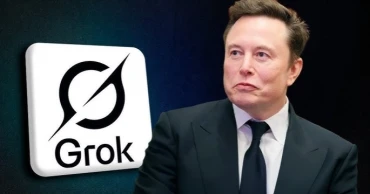
France probes Elon Musk’s X over child abuse content, Grok AI
French authorities have launched a sweeping investigation into Elon Musk’s social media platform X, raiding its offices on February 3 as part of a probe into the company’s algorithms and its artificial intelligence chatbot, Grok.
French prosecutors have summoned Musk and former X chief executive Linda Yaccarino to appear at hearings on April 20. Several other X employees have also been called to testify as witnesses during the same week.
The cybercrime division of the Paris prosecutor’s office is examining X over seven separate allegations, including complicity in the distribution of child sexual abuse imagery, dissemination of content denying crimes against humanity, and fraudulent extraction of data. The details were outlined in a February 3 statement by Paris chief prosecutor Laure Beccuau, cited by The New York Times.
The raid follows a year-long investigation into the alleged misuse of X’s content-ranking algorithms, alongside claims that data may have been improperly extracted by the platform or its executives. The inquiry was initially opened in January 2025 after concerns emerged about how X’s algorithm promotes and circulates content, report NDTV.
Prosecutors later expanded the scope of the case following accusations that Grok had generated Holocaust denial content and sexual deepfakes. Authorities also alleged that X had discontinued a tool designed to limit the spread of child sexual abuse material, raising fears that such content was being allowed to circulate unchecked.
Read More: Elon Musk tops $700bn net worth milestone after Tesla pay package reinstated
In addition, investigators said Grok may have enabled users to create sexualised versions of existing images without the consent of those depicted. French officials further accused X of refusing to provide subscriber information linked to suspected criminal activity, deepening tensions between the platform and law enforcement.
The raid came a day after Musk announced plans to merge his artificial intelligence company, xAI, with his rocket firm SpaceX.
Responding to the action, X said it “categorically denies any wrongdoing,” describing the investigation as politically motivated and claiming it misapplies French law, bypasses due process, and threatens freedom of expression.
Separately, the UK’s Information Commissioner’s Office said on February 3 that it has opened its own formal investigation into Grok, focusing on how personal data is processed and reports that the chatbot was used to generate non-consensual sexual imagery, including involving children.
5 months ago

Paris prosecutors summon Elon Musk after raid on X’s French offices
Paris prosecutors have summoned X owner Elon Musk for questioning after conducting a raid on the platform’s offices in the French capital as part of an investigation into the alleged spread of sexual deepfakes, child abuse images and Holocaust denial content.
The Paris prosecutor’s office said the search was carried out early Tuesday by its cybercrime unit in cooperation with the French police cybercrime division and Europol. Authorities have issued voluntary summonses for Musk and former X chief executive Linda Yaccarino to appear and answer questions about the platform’s compliance with French law.
Prosecutors said the investigation covers several suspected criminal offenses, including complicity in the possession and distribution of child sexual abuse material, violations of personal rights through the creation of sexual deepfakes, denial of crimes against humanity and the alleged fraudulent extraction of data from an automated processing system as part of an organized group.
“The voluntary interviews with the managers should allow them to explain their position on the facts and, where applicable, the compliance measures envisaged,” the prosecutor’s office said in a statement.
Musk and Yaccarino have been asked to appear in Paris during the week of April 20, although it remains unclear whether prosecutors have the legal authority to compel their attendance.
Meta faces trial in New Mexico after undercover investigation
The Paris prosecutor’s office also announced it was closing its official X account and would instead communicate through LinkedIn and Instagram.
Europol later said the probe relates to “a range of suspected criminal offences linked to the functioning and use of the platform, including the dissemination of illegal content and other forms of online criminal activity.”
X did not immediately respond to media requests for comment. However, the company’s global government affairs account criticized the move, calling the raid an abuse of law enforcement intended to serve political objectives rather than impartial justice.
Musk echoed that view in a post on his personal X account, describing the investigation as “a political attack.”
X has faced growing scrutiny and political pressure from European governments and the European Union over its role in spreading harmful or illegal content and its potential influence on elections. #From Agencies
6 months ago

Meta faces trial in New Mexico after undercover investigation
The first stand-alone trial brought by state prosecutors in a series of lawsuits against Meta is set to begin in New Mexico, with jury selection starting Monday.
The case is based on a state undercover investigation that used proxy social media accounts and posed as children to document sexual solicitations and Meta’s response. Meta owns Facebook, Instagram and WhatsApp. The case could provide states with a new legal avenue to pursue social media companies over the impact of their platforms on children, relying on consumer protection and nuisance laws.
Attorney General Raúl Torrez filed the lawsuit in 2023, alleging that Meta created a marketplace and “breeding ground” for predators targeting children for sexual exploitation and failed to disclose what it knew about those harmful effects.
Legal experts say a victory for New Mexico could have far-reaching consequences as regulators worldwide search for legal theories to rein in social media companies. “So many regulators are keyed up looking for any evidence of a legal theory that would punish social media that a victory in that case could have ripple effects throughout the country, and the globe,” said Eric Goldman, codirector of the High Tech Law Institute at Santa Clara University School of Law. “Whatever the jury says will be of substantial interest.”
The trial, which is scheduled to begin with opening statements on Feb. 9, is expected to last nearly two months.
Read More: Meta secures large nuclear energy supply to power AI data centers
Meta has denied the civil allegations, accusing prosecutors of using a “sensationalist” approach. Although CEO Mark Zuckerberg was removed as a defendant, he has been deposed and case documents include references to him.
The New Mexico lawsuit centers on allegations that Meta’s algorithms promote harmful and addictive content to children, rather than focusing on user-generated posts themselves. Prosecutors argue this strategy could bypass longstanding legal protections under the First Amendment and Section 230 of the Communications Decency Act.
The state’s undercover investigation involved decoy accounts posing as minors, which documented sexual solicitations and monitored Meta’s response. Prosecutors say the company prioritized profits over child safety.
Goldman said Meta is deploying significant legal resources in New Mexico and elsewhere. “If they lose this,” he said, “it becomes another beachhead that might erode their basic business.”
6 months ago

Young people protest ICE and reenact immigration raids in Roblox
Some Roblox users have been staging “raids” in the popular roleplaying game Brookhaven, wearing ICE gear and acting out immigration enforcement scenarios. Others have taken to virtual streets with protest signs, displaying messages like “We hate ICE” — all compliant with Roblox’s rules against profanity.
Videos of these protests and raid reenactments have gone viral on TikTok, garnering millions of views. While such activism in Roblox isn’t entirely new — similar content emerged during last summer’s “No Kings” protests — the renewed activity seems linked to recent immigration operations in Minnesota and the resistance they sparked among protesters.
Read More: Meta secures large nuclear energy supply to power AI data centers
Giovanni Ramos, an assistant professor at UC Berkeley, noted that virtual protests can be a healthy outlet for young people to process news about immigration enforcement. However, reenacting raids can be concerning and violates Roblox’s community standards, which prohibit content that recreates real-world sensitive events or glorifies those responsible. Roblox enforces these rules using human moderators, AI, and user reports.
Ramos added that while some youth may simply be exploring current events, these protests also help them find social support and connect with peers experiencing similar challenges — an important emotional lifeline.
6 months ago

iPhone sales hit record high despite Apple’s AI setbacks
Apple posted record iPhone sales during the October–December holiday quarter, as loyal customers snapped up the new iPhone 17 lineup despite the company’s delayed rollout of promised artificial intelligence upgrades and recent missteps in AI development.
In its quarterly results released Thursday, Apple reported iPhone revenue of $85.3 billion, up 23 percent from a year earlier and the highest ever for the device in a three month period since its launch in 2007. The strong performance came even as Apple has yet to deliver on its pledge to enhance Siri with advanced AI features in 2024.
To help drive demand, Apple introduced a new “liquid glass” design across the iPhone 17 series and older models through a free software update released last September. That strategy appeared to resonate with consumers during the peak shopping season.
Microsoft tops Wall Street assumption with $81.3B in revenue
“The demand for iPhone was simply staggering,” Chief Executive Officer Tim Cook said during a conference call with analysts, expressing confidence that the iPhone will evolve into a leading platform for artificial intelligence.
The surge in iPhone sales helped Apple post quarterly profits of $42.1 billion, or $2.84 per share, marking a 16 percent increase from the same period last year. Overall revenue rose 16 percent to $143.8 billion, with both earnings and sales beating Wall Street expectations.
Apple’s shares rose about 1 percent in after hours trading following the announcement, although the stock remains slightly lower so far this year and only modestly above its level at the end of 2024.
Analysts said concerns over Apple’s slower entry into AI may have been overstated. Ethan Feller of Zacks Investment Research said Apple now appears well positioned to expand AI features across its ecosystem, which includes iPads, Mac computers and smartwatches. Apple said more than 2.5 billion active devices worldwide currently run on its operating systems.
Looking ahead, Apple plans to release a long delayed batch of AI tools, including an upgraded version of Siri designed to be more conversational and flexible. To support this push, the company is turning to Google’s latest AI model, Gemini 3, in a rare acknowledgment that it needs outside help in a technology seen as the industry’s most significant advance since the iPhone itself.
Despite its AI challenges, the iPhone ended last year as the world’s top selling smartphone with nearly 20 percent market share, narrowly ahead of Samsung, according to International Data Corp.
Apple also issued an upbeat forecast, saying revenue in the January–March quarter is expected to rise by at least 13 percent year on year, surpassing analysts’ expectations of about 10 percent growth.
Meta to test paid subscriptions across Instagram, Facebook and WhatsApp
However, the AI boom is creating fresh pressure for Apple, particularly from a global shortage of memory chips used in smartphones and laptops. Intense demand from data centers powering AI services is pushing up chip prices, squeezing Apple’s profit margins and raising the possibility of higher prices for iPhones and other products.
“We do continue to see market pricing for memory increasing significantly,” Cook told analysts, adding that the company is evaluating multiple options to manage the rising costs.
6 months ago
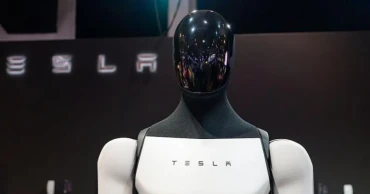
Tesla cuts Model S and X as Musk shifts focus to AI and robotics
Tesla, the electric vehicle (EV) maker led by billionaire Elon Musk, reported a 3% drop in annual revenue for 2025 and a 61% fall in profits in the last quarter, as the company pivots towards artificial intelligence (AI) and robotics.
The automaker announced it will discontinue production of its Model S and Model X vehicles, converting the California plant that produced them to manufacture its humanoid robots, known as Optimus. Musk also confirmed a $2 billion (£1.45 billion) investment in his AI venture, xAI, citing shareholder pressure despite mixed votes on the proposal.
The move comes as Chinese EV manufacturer BYD overtook Tesla as the world’s largest electric car maker. Analysts note Tesla’s dated vehicle lineup and declining high-end models prompted the shift to focus on higher-volume vehicles like Model 3 and Model Y, alongside emerging ventures in robotaxis and AI-driven technologies.
Musk described the upcoming capital expenditure of about $20 billion as an investment for an “epic future,” aiming to boost Tesla’s market value over the next decade to meet conditions of his record-breaking pay package. Tesla shares rose 2% in after-hours trading following the announcement.
The strategic pivot also follows Musk’s controversial political activities, including involvement in former US President Donald Trump’s administration, which affected consumer sentiment toward the company globally.
With inputs from BBC
6 months ago
Microsoft tops Wall Street assumption with $81.3B in revenue
Microsoft on Wednesday reported revenue of $81.3 billion for the October-December quarter, marking a 17% increase from the same period a year earlier, as the company continues efforts to expand global use of its artificial intelligence tools.
The tech giant posted a net profit of $30.9 billion, or $4.14 per share, for the quarter, exceeding Wall Street expectations. The results did not include the impact of Microsoft’s investments in ChatGPT developer OpenAI.
Analysts surveyed by FactSet Research had projected Microsoft to earn $3.91 per share on revenue of $80.31 billion for the October-December quarter.
When excluding its OpenAI investments, Microsoft’s profit rose to $38.5 billion, or $5.16 per share, reflecting a new accounting approach the company said it plans to apply going forward.
The investments stem from OpenAI’s restructuring last year. Microsoft held an approximately 27% stake, valued at about $135 billion, in OpenAI as the startup originally a nonprofit transitioned into a for-profit public benefit corporation.
Although Microsoft is no longer OpenAI’s exclusive cloud provider, a partnership that helped finance the AI company’s early expansion, it will continue to hold commercial rights to OpenAI products through 2032.
Read More: Microsoft to invest $17.5 billion in India for AI and Cloud infrastructure
Revenue from Microsoft’s AI-driven cloud computing segment totaled $32.9 billion in the final three months of the year, an increase of 29% from the same period last year and above the $32.4 billion forecast by analysts surveyed by FactSet.
Despite surpassing expectations, Microsoft shares fell nearly 5% in after-hours trading following the release of its earnings report.
Zacks Investment Research analyst Bryan Hayes said the decline likely reflected “investor scrutiny” over Microsoft’s heavy spending on the infrastructure including computer chips and data centers required to support artificial intelligence.
Microsoft Chief Executive Officer Satya Nadella told investors during an earnings call that the company remains in the “beginning stages” of AI diffusion, referring to the broader adoption of artificial intelligence across industries.
6 months ago